低速电动车

Search documents
《淄博市电动自行车消防安全管理办法》3月1日起施行
Qi Lu Wan Bao· 2026-02-10 10:33
Core Viewpoint - The introduction of the "Zibo City Electric Bicycle Fire Safety Management Measures" aims to enhance fire safety regulations for electric bicycles, addressing the increasing fire hazards associated with their use in Zibo City [1][2]. Legislative Background - The Zibo City government has developed the "Measures" based on extensive research and public consultation, ensuring that the legislation aligns with practical needs and has broad consensus [2]. Key Provisions of the Measures - The Measures consist of 23 articles, emphasizing a people-centered approach and a comprehensive fire safety responsibility system applicable throughout the city [3]. - Responsibilities are clearly defined for various government levels and departments, ensuring effective management and coordination in fire safety efforts [3]. - Quality management standards for electric bicycles and their components are established, prohibiting illegal modifications and ensuring compliance with national product quality laws [3]. Infrastructure and Charging Facilities - Regulations are set for the construction of centralized parking and charging facilities to address issues related to parking and charging difficulties [4]. - A transparent fee management system for centralized charging facilities is introduced to enhance affordability and utilization [4]. Fire Safety Management Measures - The Measures outline specific responsibilities for electric bicycle owners and users regarding safe parking and charging practices [5]. - Property management companies are tasked with enforcing compliance and preventing violations related to improper parking and charging [5]. Broader Scope of Management - The Measures extend to the management of electric bicycles used for commercial purposes, such as delivery services, ensuring comprehensive fire safety oversight [6]. - A regulatory mechanism is established to enhance coordination among various departments for effective enforcement of fire safety regulations [6]. Legal Accountability - The Measures incorporate a framework for legal accountability, focusing on educational approaches and minimal penalties for non-compliance, while adhering to existing laws for other violations [6].
新股前瞻 | “A+H”双重上市,涛涛车业能否打开资本与增长新空间?
智通财经网· 2025-11-21 06:41
Core Viewpoint - The company TaoTao Automotive is seeking to list on the Hong Kong Stock Exchange to establish an "A+H" dual capital platform, aiming to leverage Hong Kong's financial advantages to attract international investors and optimize its capital structure for future growth and technological advancements [1] Business Overview - TaoTao Automotive holds the second position in the global low-speed electric vehicle market, capturing approximately 8.4% of the market share as of 2024 [2] - The company focuses on high-value overseas markets, with over 99% of its revenue generated from international sales, particularly in North America [1][2] - The business is centered around two key segments: electric mobility products and outdoor specialty vehicles, avoiding intense domestic competition [1] Financial Performance - The company has demonstrated robust revenue growth, with projected revenues of approximately RMB 17.66 billion, RMB 21.44 billion, and RMB 29.77 billion for 2022, 2023, and 2024 respectively, marking a year-on-year increase of 38.82% in 2024 [2] - For the first seven months of 2025, revenue reached approximately RMB 20.68 billion, continuing the strong growth trend [3] - The net profit for 2024 is estimated at around RMB 4.31 billion, reflecting a year-on-year growth of over 50% [2] Competitive Advantages - The company has established a multi-layered sales network and diversified distribution strategies, partnering with major retailers like Walmart and Amazon to enhance market penetration [2] - TaoTao Automotive's competitive edge lies in its flexible supply chain and rapid product iteration capabilities, allowing it to meet changing consumer demands effectively [2] - The company has a strong gross margin, which improved from 35.2% in 2022 to 40.2% in the first seven months of 2025, attributed to its integrated supply, production, and sales system [3] Strategic Initiatives - The upcoming H-share issuance is aimed at enhancing production capacity and R&D, with a significant portion of the funds allocated to upgrading existing facilities and establishing new ones overseas [6] - The company plans to expand its product offerings in the electric low-speed vehicle sector and explore advanced technologies, including artificial intelligence and automation [6][7] - Strategic partnerships have been formed to enter the humanoid robotics sector, indicating a commitment to innovation and long-term growth [7] Governance and Compliance - The dual listing structure will require the company to adhere to stricter regulatory standards in both markets, enhancing corporate governance and compliance [7] - The company has maintained a consistent cash dividend policy, distributing approximately RMB 3.82 billion in dividends from 2022 to 2024, which represents about 41.6% of its net profit during that period [7]

新股前瞻 | “A+H”双重上市,涛涛车业(301345.SZ)能否打开资本与增长新空间?
智通财经网· 2025-11-21 06:36
Core Viewpoint - The company TaoTao Automotive is seeking to list on the Hong Kong Stock Exchange to establish an "A+H" dual capital platform, aiming to leverage Hong Kong's financial advantages to attract international investors and optimize its capital structure for growth and technological advancement [1][6]. Group 1: Business Strategy and Market Position - TaoTao Automotive holds the second position in the global low-speed electric vehicle market, capturing approximately 8.4% of the market share as of 2024 [2]. - The company focuses on high-value overseas markets, with over 99% of its revenue generated from international sales, particularly in North America, avoiding intense domestic competition [1][2]. - The business model includes a diversified distribution strategy, partnering with major retailers like Walmart and Amazon, and utilizing a multi-layered sales network to penetrate niche markets [2]. Group 2: Financial Performance - The company has shown robust revenue growth, with projected revenues of approximately RMB 17.66 billion, RMB 21.44 billion, and RMB 29.77 billion for 2022, 2023, and 2024 respectively, marking a year-on-year increase of 38.82% in 2024 [2]. - For the first seven months of 2025, revenue reached approximately RMB 20.68 billion, continuing the strong growth trend [3]. - The gross profit margin improved from 35.2% in 2022 to 40.2% in the first seven months of 2025, attributed to a comprehensive supply chain and high self-manufacturing rates [3]. Group 3: Challenges and Risks - The company faces structural challenges due to its heavy reliance on foreign markets, with over 90% of revenue coming from abroad, and 70% from the U.S. market [4]. - Trade tensions between the U.S. and China pose risks, including potential tariffs that could impact profitability [5]. Group 4: Future Growth and Investment - The funds raised from the Hong Kong listing will be directed towards expanding production capacity, enhancing smart manufacturing infrastructure, and developing new products [6]. - The company plans to introduce innovative electric vehicles and explore advanced technologies, including artificial intelligence and automation [6][7]. - A commitment to shareholder returns is evident, with cash dividends totaling approximately RMB 3.82 billion from 2022 to 2024, representing about 41.6% of net profits during that period [7].
政策护航 我国新能源汽车出口加速
Zhong Guo Chan Ye Jing Ji Xin Xi Wang· 2025-11-20 00:40
Core Insights - China's automotive exports are experiencing rapid growth, with a significant increase in new energy vehicle (NEV) exports, which are projected to exceed 200,000 units by September 2025, supporting high-quality development in the automotive industry [1][2] Export Performance - In September 2025, China's total automotive exports reached 652,000 units, marking a month-on-month increase of 6.7% and a year-on-year increase of 21%. NEV exports accounted for 222,000 units, representing a 100% year-on-year growth [2] - From January to September 2025, total automotive exports were 4.95 million units, up 14.8% year-on-year, with NEV exports at 1.758 million units, reflecting an 89.4% increase [2] - The top ten countries for NEV exports from January to September 2025 included Belgium, the Philippines, the UK, Brazil, Mexico, Australia, Thailand, the UAE, Indonesia, and India [2] Market Dynamics - The shift from subsidy-driven to market-driven growth in China's NEV sector has significantly enhanced its competitiveness. Despite challenges from EU policies in 2024, NEV exports still reached 2.01 million units, a 16% increase [3] - The performance of NEV exports in 2025 has been strong, particularly in plug-in hybrid and hybrid models, with robust demand in Western Europe and Asia [2][3] Regulatory Developments - To promote healthy development in NEV trade, the Ministry of Commerce and other departments have implemented export license management for pure electric passenger vehicles as of September 2025 [4][5] - The new regulations require that only automotive manufacturers and their authorized dealers can apply for export licenses, aiming to cut off unauthorized exports and improve product quality [6] Quality Control Measures - The export license management aims to address issues of low-quality exports that have tarnished the reputation of "Made in China" products. The lack of targeted management has led to a proliferation of low-quality vehicles in international markets [5][6] - The new policy stipulates that companies must be listed in the Ministry of Industry and Information Technology's announcement of vehicle production enterprises and products, and their products must pass mandatory certification to ensure compliance with national safety standards [6] Strategic Recommendations - Industry experts suggest that companies should focus on technological innovation and differentiation to enhance brand competitiveness, investing in areas such as smart driving, solid-state batteries, and ultra-fast charging technologies [6][7] - There is a call for strengthening overseas compliance and risk management to ensure sustainable development, including adherence to local regulations and fostering partnerships with local enterprises [7]

同兴科技:公司钠离子电池材料可适配启停电源、UPS电源等产品需求
Zheng Quan Shi Bao Wang· 2025-10-27 07:56
Core Viewpoint - The company, Tongxing Technology, is actively developing sodium-ion battery materials with a wide range of applications in energy storage and various power supply products [1] Group 1: Product Development - The sodium-ion battery materials are suitable for energy storage, start-stop power sources, UPS power supplies, low-speed electric vehicles, and two-wheeled vehicles [1] - A general-purpose NFPP has successfully completed the trial production of a 50Ah short blade cell in a third-party laboratory, demonstrating high pressure density and excellent processing performance [1] Group 2: Market Strategy - The company plans to accelerate the verification of energy storage scenarios and expand its market outreach [1]

崔东树:电动车出口的许可证新政堵塞漏洞实现高质量发展
Zhi Tong Cai Jing· 2025-09-27 12:09
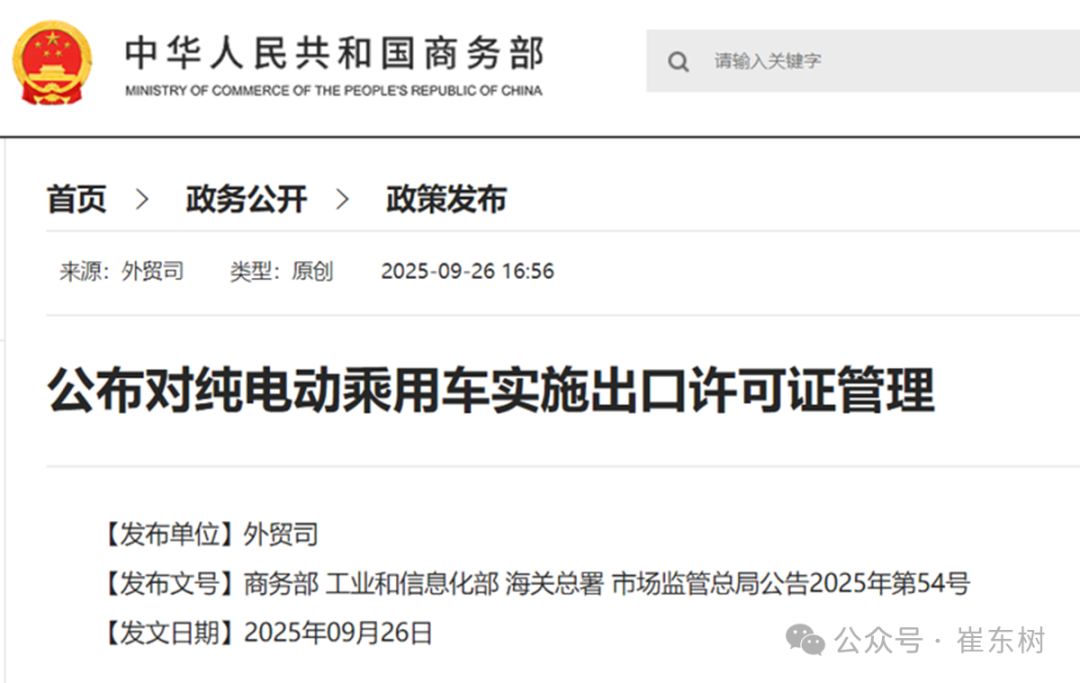
Core Viewpoint - The Chinese government has implemented export license management for pure electric passenger vehicles to promote healthy development in the electric vehicle trade, aiming to regulate export entities and ensure product quality [1][2][7]. Group 1: Export License Management - The new export license policy aims to regulate export entities, allowing only automobile manufacturers and their authorized dealers to apply for export licenses, thereby cutting off unauthorized export channels [2][11]. - Strict qualification thresholds are set, including listing in the Ministry of Industry and Information Technology's announcement and obtaining CCC certification, to prevent low-price dumping and promote a shift from price competition to technology competition [2][13]. - The policy requires companies to establish overseas service networks to enhance user trust and brand image, ensuring accountability for exported products [2][12]. Group 2: Market Dynamics and Product Categories - The export of pure electric passenger vehicles is complex, with low-speed electric vehicles being a significant part of the initial export phase, which lacked strict regulation [5][6]. - Low-speed electric vehicles, often priced between 0.5 to 3 million yuan, cater to economically limited groups and are primarily exported to emerging markets like Southeast Asia and Africa, where they enjoy competitive advantages due to favorable policies [6][10]. - The average price of compliant products in the 87038010 category is approximately $20,640, while the average price for non-VIN products in the 87038090 category is around $2,050, indicating a significant price disparity [9][10]. Group 3: Regulatory Framework and Quality Control - The export license management is part of a comprehensive regulatory framework that includes production access, license application, and customs inspection, ensuring traceability and compliance of exported products [12][13]. - The customs classification and regulatory system for electric vehicles have been improved, with 70% of the 870380 category products being compliant vehicles produced by standard manufacturers [9][10]. - The new regulations aim to address the chaotic export order and prevent low-quality vehicles from being exported, which has harmed the international reputation of Chinese-made electric vehicles [7][11]. Group 4: Future Development and Innovation - The policy encourages companies to invest in research and development, focusing on core areas such as smart driving and solid-state batteries, to enhance product competitiveness and avoid price wars [14]. - Companies are urged to strengthen brand building through international exhibitions and overseas marketing channels, leveraging unique technologies as selling points in foreign markets [14]. - There is an emphasis on compliance with international regulations and risk management to ensure sustainable development in the global market [14].

理想汽车战略(李想第一人称)
数说新能源· 2025-09-15 03:03
Core Viewpoint - The company emphasizes that consensus is the key to execution, and strategic discussions should start from the mission, vision, and strategy before product planning [1][29]. Mission and Vision - The mission is to change transportation through technology for the benefit of more people [2]. - The vision is to become a leader in the automotive transportation sector [3]. Corporate Culture - The corporate culture focuses on creating value for customers, improving efficiency for the company, and fostering continuous growth for employees [4]. Strategic Direction - The essence of strategy is to clearly define the market, timing, and competitors, which involves significant trade-offs in market selection [4][30]. - The company aims to target high-growth markets and ensure victory within those markets [15][30]. Market Segmentation - The company anticipates that by 2020, the domestic new energy vehicle production and sales will reach 2 million units, with specific market segments including: - 1 million range-extended and plug-in hybrid vehicles [6]. - 1 million pure electric vehicles, primarily serving daily commuting needs [8]. - 200-300 million low-speed electric vehicles, filling a gap in the market [11]. Target Market - The focus is on creating popular models in three market segments, particularly in the 300,000 to 500,000 price range, which is expected to grow despite economic challenges [13][14]. Competition - The company recognizes that competition is primarily with fuel vehicles, and it must offer competitive pricing to capture market share [31][16]. Technology and Innovation - The company prioritizes technology and innovation to meet user needs, eliminate competition, and achieve cost advantages [19]. - Key technological focuses include range-extended systems, smart technology, and advanced driver assistance systems [20][21][22]. Quality and Cost Control - Quality control is critical, as safety is a result of quality management throughout the design, supply chain, and manufacturing processes [24]. - The company aims to minimize costs by optimizing operations and leveraging innovative business models [26]. Product Planning - Product planning should integrate user needs and business requirements, ensuring a long-term value proposition [27]. - The planning process involves designing from the user's perspective, establishing a commercial framework, and creating a technical architecture [28].


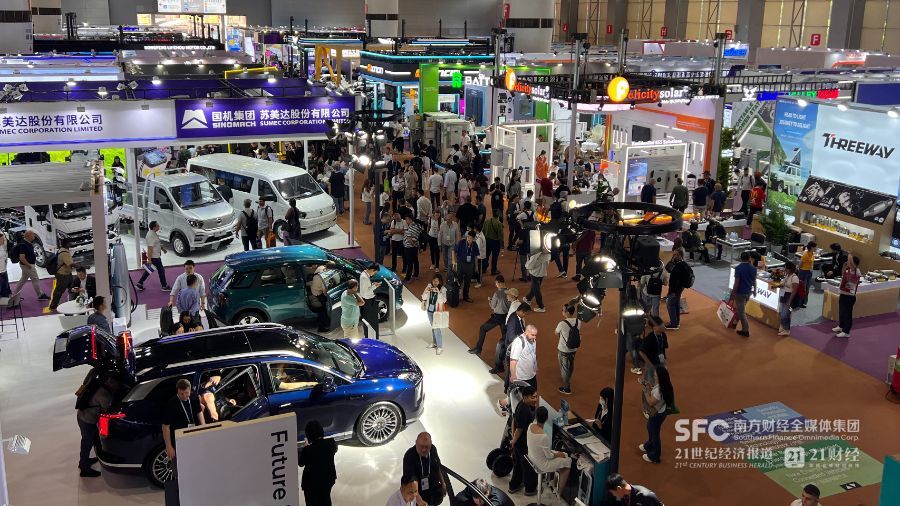
从广交会出发:中国智造改写全球汽车坐标系
2 1 Shi Ji Jing Ji Bao Dao· 2025-04-17 12:03
Core Viewpoint - The 137th Canton Fair highlighted the rapid growth of China's electric vehicle (EV) exports, with significant participation from various provinces and a focus on differentiation in a competitive market [1][3][11] Group 1: Export Growth and Market Dynamics - In Q1 2025, China's electric vehicle exports increased by 8.2%, with a total of 441,000 units exported, marking a year-on-year growth of 43.9% [1][3] - The provinces of Anhui, Shaanxi, and Jiangsu led in EV production, indicating a shift in the automotive industry landscape [1][7] Group 2: Regional Competitive Advantages - The Yangtze River Delta, centered around Shanghai, benefits from a complete supply chain and international talent, enhancing its competitive edge in high-end R&D and brand operations [7][9] - The Pearl River Delta's strength lies in its market vitality and the migration of consumer electronics, with companies like BYD and Xpeng leveraging their technological expertise [9][10] Group 3: Differentiation Strategies - Companies are focusing on technological and service differentiation to stand out in a crowded market, with an emphasis on local market adaptation and innovative features [2][6] - The establishment of local service teams and advancements in autonomous driving technology are part of the strategy to enhance competitiveness [6][11] Group 4: Government Role and Support - Local governments play a crucial role in promoting the EV industry, with examples of investment in companies like NIO and the establishment of supportive ecosystems [10][11] - There is a call for increased support for innovation and the establishment of mechanisms to encourage technological advancements within the industry [10][11]