兰蔻小黑瓶

Search documents
谁在围剿雅诗兰黛?
远川研究所· 2026-02-03 13:05
Core Viewpoint - Estée Lauder is experiencing a paradoxical situation in 2026, marked by significant layoffs and restructuring alongside a recovery in performance driven by cost-cutting measures. Despite this, major Wall Street firms have raised their ratings and target prices for the company [5]. Group 1: Company Performance - Over the past five years, Estée Lauder's market value has decreased by $110 billion, but it managed to recover $21 billion last year. However, its stock performance has diverged sharply from that of competitors like L'Oréal [5]. - The main brand, Estée Lauder, saw its average price on the Taobao platform drop below ¥600, leading to questions about the brand's perceived value among consumers [7]. - In the fiscal year 2025, Estée Lauder reported a net sales increase of 4% year-over-year, but its operating profit margin fell to 7.3%, a decline of over 300 basis points [7][10]. Group 2: Market Challenges - The company has faced a continuous decline in operating profit for five consecutive years, with a projected loss of $11.33 billion in fiscal year 2025 [10]. - In 2023, Estée Lauder's sales dropped by 7% and net profit fell by 69%, attributed to a weak high-end beauty market in the Asia-Pacific region [12]. - The company launched a "Profit Recovery and Growth Plan" in November 2023, which was later expanded into a major operational transformation under new CEO Fabrizio Freda [12][14]. Group 3: Competitive Landscape - Estée Lauder's reliance on travel retail has become a liability, with a 45% decline in organic sales in this channel in Q1 2023, primarily due to reduced replenishment orders [20]. - The competitive landscape has shifted, with domestic brands like Perfect Diary gaining significant market share, leading to a decline in Estée Lauder's high-end market position [25][29]. - The company has struggled with internal conflicts between travel retail and local market teams, which has contributed to pricing issues and a fragmented market strategy [23][24]. Group 4: Strategic Adjustments - Estée Lauder is attempting to integrate its travel retail and conventional retail strategies to address pricing conflicts and improve overall performance [23]. - The company is also facing challenges from a saturated market where high-end brands are increasingly competing with affordable alternatives, making it difficult to maintain premium pricing [27][29]. - The shift in consumer preferences towards domestic brands and value-driven products has forced Estée Lauder to reconsider its market approach and product offerings [25][29].



遍地“骆驼”,只是因为消费降级吗?
虎嗅APP· 2025-12-29 00:11
Core Viewpoint - The article discusses the rising popularity of the Camel brand in the outdoor apparel market, particularly its down jackets, driven by effective marketing strategies and a shift in consumer behavior towards value-oriented purchases [4][11]. Group 1: Brand Strategy and Marketing - Camel has signed Wang Junkai as its brand ambassador, leveraging his massive social media following of over 200 million across platforms to enhance brand visibility among young consumers [6][7]. - The brand's marketing strategy includes a broad approach on platforms like Douyin (TikTok) and Xiaohongshu (Little Red Book), utilizing a large number of influencers to ensure constant exposure and engagement with potential customers [9][10]. - Camel's pricing strategy positions its products between 400 to 800 yuan, making them significantly cheaper than premium outdoor brands while still appealing to consumers seeking quality [12]. Group 2: Consumer Behavior and Market Trends - The popularity of Camel's products reflects a shift in consumer preferences, where young consumers prioritize cost-effectiveness and functionality over brand prestige, indicating a move towards "value equality" rather than mere consumption downgrade [11][13]. - The article highlights that consumers are increasingly discerning, with 67% of respondents in a McKinsey survey indicating they compare prices across multiple platforms to ensure they get the best deal [18]. - There is a notable trend of consumers extending the replacement cycles for big-ticket items like smartphones and cars, indicating a cautious approach to spending [19]. Group 3: Economic Context and Implications - The article points out a dual trend of rising savings and declining consumer spending, with household deposits increasing significantly while consumer willingness to spend remains low [22][23]. - This cautious consumer sentiment is reflected in the retail sales growth, which has slowed down, suggesting a potential negative feedback loop affecting demand and business profitability [24]. - The article concludes that brands like Camel, which offer high-quality products at reasonable prices, can still find opportunities in a market characterized by cautious spending and a shift in consumer values [24].

换季敏感又暗沉?国货美白榜首谷雨一瓶搞定
Cai Fu Zai Xian· 2025-10-29 02:47
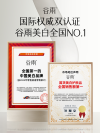
Core Insights - A Chinese brand, Gu Yu, is gaining recognition in the previously monopolized skin whitening market, achieving dual certification as "China's No. 1 Whitening Brand" from Euromonitor International and Frost & Sullivan in 2025, based on sales data and scientific research capabilities [1][11] International Brand Limitations - International brands face challenges in the Chinese market due to mismatched ingredient systems and skin types, with products often causing irritation for Chinese consumers [3] - Specific issues include high active ingredient concentrations in Western products that do not cater to the unique skin characteristics of Chinese women, leading to mixed user experiences [3] Gu Yu's Technological Breakthroughs - Gu Yu has made significant advancements in whitening technology by focusing on the unique skin characteristics of Chinese consumers, launching the proprietary "Extreme Licorice" whitening ingredient in 2024 after 18 years of research [4][6] - The brand's patented "Melted Crystalline Purification Technology" has achieved a 99% purity level for licorice extract, the highest in the industry, and improved transdermal absorption efficiency by 3.4 times [6] Tailored Solutions for Chinese Skin - Gu Yu has developed a scientific whitening solution specifically for Chinese skin, addressing the common issues of "easy darkening, yellowing, and redness" through a comprehensive approach [7] - The brand has published guidelines for developing whitening products suitable for Chinese skin, establishing a measurable evaluation system for facial skin tone [7] Product Efficacy and Innovation - The Gu Yu Whitening Milk Can Pro is designed to address the three major skin issues of Chinese consumers, combining effective whitening with skin repair [8][9] - Clinical tests show that using the product reduces skin redness by 27.09%, demonstrating its dual function of whitening and repairing [9] Brand Recognition and Future Strategy - In 2025, Gu Yu was included in the People's Daily "Brand Strong Country Plan," alongside leading companies, highlighting its market position and innovative capabilities [11] - The brand aims to continue its dual-driven strategy of "technology and culture," focusing on Chinese ingredients and efficacy to build a trusted global skincare brand [11]
“精明悦己”的年轻人,在折扣店挖宝
Sou Hu Cai Jing· 2025-08-28 12:26
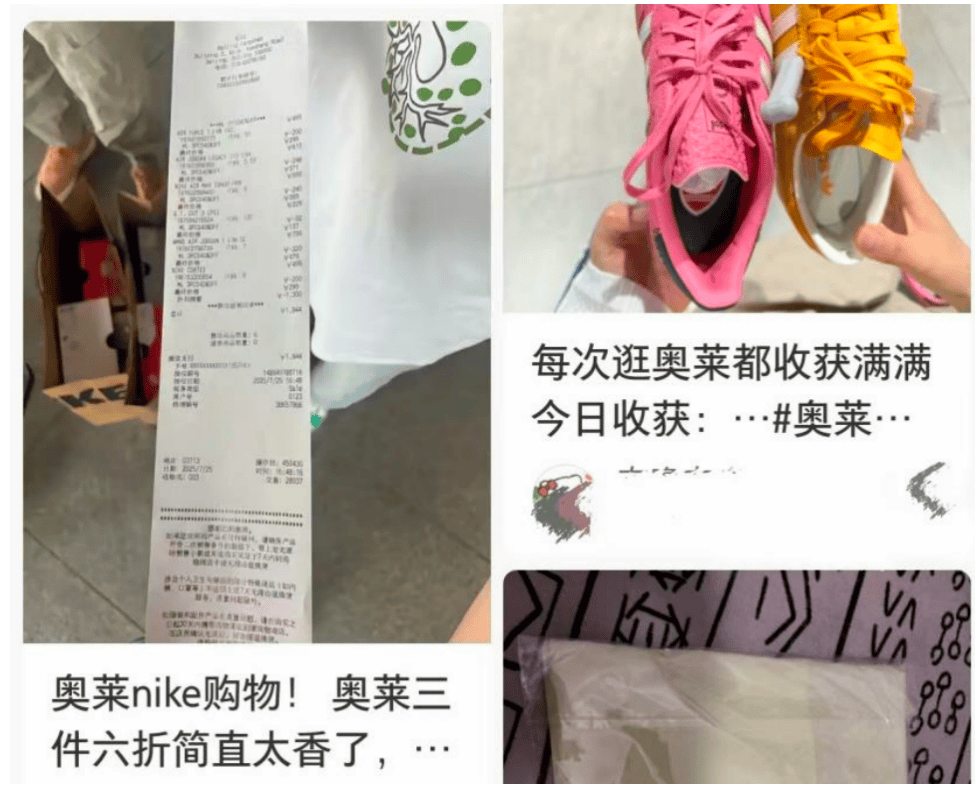
Core Insights - Young consumers are becoming more savvy in their spending habits, focusing on getting value for money while still indulging in emotional purchases [1][5][7] - The trend of "treasure hunting" for discounted luxury items is prevalent, with many young people sharing their successful finds on social media [1][3] - There is a notable willingness among young consumers to spend on experiences, such as concert tickets, even while being frugal with material goods [5][7] Spending Behavior - Young consumers are increasingly adopting a "penny-pinching" approach to material purchases, often seeking significant discounts on luxury brands [1][5] - Data shows that in the first half of the year, 15 new outlet malls opened across the country, with a total of 251 expected by the end of 2024, indicating a growing preference for discounted shopping [5] - Online platforms like Vipshop have seen a 15% increase in active SVIP users in Q2, contributing to 52% of online sales, highlighting the popularity of discount shopping among young people [5] Emotional Spending - Approximately 60% of young consumers are willing to spend on emotional purchases, as evidenced by the popularity of products like the "Labubu" doll, which many claim helps alleviate stress [5] - Young consumers are willing to invest time and money in experiences that bring them joy, such as waiting in line for a trendy coffee despite wearing discounted clothing [5][7] - The concept of "Citywalk economy" reflects this trend, where young people prioritize emotional value over material savings [5] Financial Considerations - Many young consumers face financial pressures, such as student loans and housing costs, leading them to be strategic about their spending [7] - The careful comparison of prices in outlet stores and the enthusiasm for live events demonstrate a balanced approach to spending that prioritizes personal happiness [7] - This "smart self-indulgence" spending behavior is seen as a coping mechanism for the pressures of modern life [7]

十年来销售额首次下滑,欧莱雅中国的“挑战与三板斧”
Jing Ji Guan Cha Wang· 2025-04-04 05:14
Core Insights - L'Oréal is facing unprecedented challenges in the Chinese market, with a decline in sales for the first time in a decade, while global sales grew by 5.1% in 2024 [2][6] - The company is launching initiatives focused on beauty technology and AI innovation, including the first Beauty Tech Hackathon in China [1][5] - L'Oréal has established two new investment funds aimed at supporting emerging beauty brands and related industries in China [3][4] Investment Strategies - The "Kaihui Chuangmei Future Fund" will invest in growing beauty brands and related enterprises, while the "Meili Linghang Fund" will focus on early-stage beauty projects with technological innovation and sustainability [3] - L'Oréal's investment strategy has shifted towards growth-oriented beauty projects, with the establishment of "Meici Fang" to invest in beauty startups and breakthrough technologies [4][5] Market Dynamics - The Chinese beauty market is experiencing a slowdown, with a 1.1% decline in retail sales and a 9.4% drop in imported cosmetics in 2024 [2][6] - Domestic beauty brands have gained market share, reaching 50.4% in 2023, surpassing foreign brands [7] - L'Oréal is adapting to changing consumer preferences, focusing on the "Z generation," mature consumers, and male demographics as key growth segments [6][12] Consumer Engagement - The company emphasizes the importance of understanding consumer behavior, noting a shift towards value, quality, and cultural resonance in brand connections [6][7] - L'Oréal aims to expand its consumer base from 100 million to 150 million by 2030 [6] Retail Strategy - L'Oréal is transforming offline stores from sales points to experience centers, enhancing customer engagement through service and product experience [9][10] - The company plans to deepen its presence in lower-tier cities, with a focus on expanding its retail footprint in these markets [11][12]