司康

Search documents
安井食品(02648) - 海外监管公告 - 2025年年度报告摘要(A股)
2026-03-30 22:08
香港交易及結算所有限公司及香港聯合交易所有限公司對本公告的內容概不負責,對其準確性 或完整性亦不發表任何聲明,並明確表示,概不對因本公告全部或任何部份內容而產生或因倚 賴該等內容而引致的任何損失承擔任何責任。 ANJOY FOODS GROUP CO., LTD. 安井食品集團股份有限公司 (於中華人民共和國註冊成立的股份有限公司) (股份代號:2648) 本公告乃根據《香港聯合交易所有限公司證券上市規則》第13.10B條而作出。 茲 載 列 安 井 食 品 集 團 股 份 有 限 公 司(「 本公司 」)在 上 海 證 券 交 易 所 網 站 ( www.sse.com.cn )刊登的本公司2025年年度報告摘要(A股),僅供參閱。 承董事會命 安井食品集團股份有限公司 董事長兼執行董事 劉鳴鳴先生 中國廈門,2026年3月30日 於本公告日期,本公司董事會成員包括:(i)執行董事劉鳴鳴先生、張清苗先生、 章高路先生及黃建聯先生;(ii)非執行董事鄭亞南博士、戴凡先生及張光璽先生; 及(iii)獨立非執行董事張梅女士、劉曉峰博士、趙蓓博士及張躍平先生。 安井食品集团股份有限公司 2025 年年度报告摘要 1 ...
200个肯尼亚孩子的 “白色黄金”——一捧面粉的百年坚守与力量
东京烘焙职业人· 2026-03-20 08:33
Core Insights - The article highlights the significance of flour in the lives of children at the Dream Children's Home in Kenya, emphasizing its role as a fundamental source of nutrition and energy for their growth and education [6][7][10] - It also marks March 20 as World Flour Day, symbolizing the cycle of sowing and harvesting, and aims to raise awareness about the importance of flour beyond just being a food item [9][10] Group 1: Dream Children's Home - The Dream Children's Home, founded by Rachel Gichia in 2004, provides shelter and education for abandoned and orphaned children in Kenya, currently housing over 200 children [6] - The staple foods for these children are chapati and ugali, made from wheat and maize flour, which fulfill most of their daily caloric needs [6][7] Group 2: Flour's Broader Impact - Flour is portrayed as a vital element supporting children's education and health, serving as a cornerstone for their future [7][10] - The article discusses the global issue of hunger, with approximately 733 million people facing food insecurity, particularly in Africa, where one in five people is affected [15] - The Millers for Nutrition alliance, initiated by Mühlenchemie, aims to enhance the nutritional quality of flour in eight countries, targeting to benefit 1 billion people by 2024 [15] Group 3: Mühlenchemie's Role - Mühlenchemie, a German brand established in 1923, collaborates with over 2,000 flour mills worldwide, advocating that flour is not just a commodity but a source of life energy [13][15] - The company is recognized as a pioneer in flour fortification, addressing hidden hunger caused by micronutrient deficiencies [15]


【独家专访】十年死磕一粒麦!粗粮新语如何重新定义好吃的粗粮面包?
东京烘焙职业人· 2026-03-04 08:33
Core Viewpoint - The article highlights the journey and philosophy of the brand "粗粮新语" (Grain New Language), which focuses on creating healthy and delicious whole grain baked goods, breaking the stereotype that whole grain products are unappetizing [2][4][29]. Company Overview - Founded in 2017, "粗粮新语" has established two modern factories, an online presence across major platforms, and supplies to over 1,000 bakeries around Suzhou, achieving over 500 million in cumulative sales [2][7]. - The brand's mission is to promote a healthy and beautiful life by making healthy food delicious and delicious food healthy [7]. Product Philosophy - The brand aims to change consumer perceptions that "whole grain equals rough and unappetizing" by using clean ingredient lists and maintaining strict quality control [4][10]. - The founders emphasize that health is the goal, but taste is the prerequisite, as healthy food must be enjoyable to integrate into daily life [8][10]. Target Audience - The core customer base consists of women aged 20-40 in first and second-tier cities who prioritize health, body management, and convenient eating [7][23]. - The brand has identified three key considerations for this demographic when choosing healthy baked goods: clean ingredient lists, pleasant taste, and the ability to fit into a fast-paced lifestyle [23][26]. Product Development - The product line includes a variety of items such as whole grain European bread, alkaline water bread, and whole grain snacks, with over 100 SKUs [7][14]. - The brand's iterative logic focuses on addressing real user pain points while maintaining the core of whole grains [14][22]. Innovation and Trends - Future product development will explore flavor innovations by incorporating traditional Chinese health ingredients and enhancing sensory experiences with natural aromas [27][38]. - The brand anticipates a shift in consumer focus from merely eating to deriving emotional value and enjoyment from food, positioning itself as a proponent of a healthy lifestyle [27][46]. Competitive Advantage - The brand's competitive edge lies in its founder's personal story and commitment to health, its own manufacturing facilities ensuring quality control, and a focus on clean labels rather than adding unnecessary ingredients [29][32]. - The brand has established a "trust system" that is difficult for competitors to replicate, emphasizing transparency and quality in its production processes [29][32]. User Engagement - The brand engages users through a "product tester" system, allowing core users to provide feedback on new products before they launch, fostering a community around healthy living [39][40]. - Feedback from users has revealed unexpected consumption scenarios, prompting the brand to consider new product lines tailored for families and children [38][43]. Future Plans - The brand plans to expand its product matrix beyond bread to include more healthy staples and snacks, potentially opening offline experience stores to enhance customer engagement [45][46]. - The company aims to maintain its role as a "guardian of basic values" in the health baking industry while exploring innovative and delicious options for consumers [46].
在晚上八点的超市,消费者终于成为“上帝”
3 6 Ke· 2026-02-03 03:45
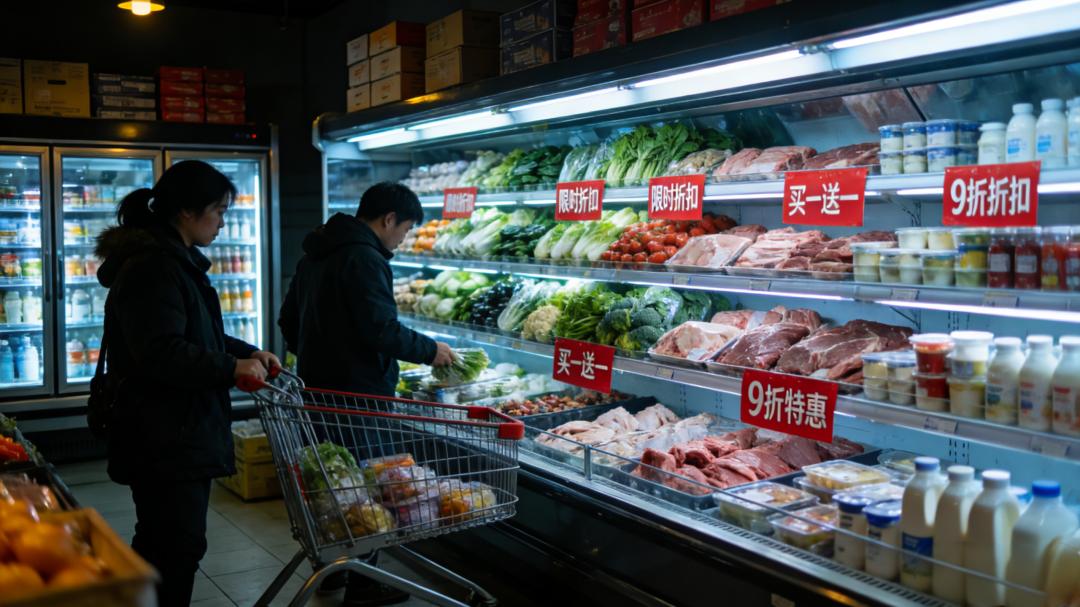
Core Insights - The article highlights the growing trend of nighttime discount shopping in Chinese supermarkets, where consumers are increasingly attracted to significant price reductions on various food items after 8 PM [2][3][12] - This phenomenon reflects a shift in consumer behavior towards seeking value and efficiency in shopping, particularly among urban professionals who prioritize convenience and cost-effectiveness [4][11] Group 1: Consumer Behavior - Many consumers are now actively participating in nighttime discount shopping, often sharing their experiences on social media, indicating a cultural shift towards valuing discounted goods [1][6] - The primary demographic engaging in this trend consists of urban white-collar workers who are time-constrained and prefer ready-to-eat meals at reduced prices [4][11] - Consumers perceive that the quality of discounted items is comparable to full-priced products, leading to a mindset that values both savings and sustainability by reducing food waste [7][11] Group 2: Supermarket Strategies - Supermarkets like Wumart, Hema, and others have adopted structured discount strategies, offering significant markdowns on perishable goods to manage inventory and minimize waste [3][8] - The implementation of dynamic pricing strategies based on real-time sales data and consumer behavior is becoming common, allowing supermarkets to optimize their discount offerings [11][12] - Nighttime discounts are not only effective for clearing inventory but also serve to enhance overall sales by attracting customers who may purchase full-priced items alongside discounted goods [8][12] Group 3: Market Trends - The rise of nighttime discounts signifies a broader transformation in the retail industry from a focus on price wars to more sophisticated inventory and supply chain management [11][14] - The trend is indicative of a more rational and mature consumer culture in China, where shoppers are becoming more discerning and strategic in their purchasing decisions [13][14] - Supermarkets are increasingly leveraging data analytics to predict demand and tailor their offerings, reflecting a shift towards precision in retail operations [11][12]


司康 VS 达克瓦兹,谁才是中国烘焙市场的下午茶之神?
东京烘焙职业人· 2025-11-04 08:41
Core Viewpoint - The article discusses the evolving trends in the Chinese afternoon tea dessert market, highlighting the rise of scones and dacquoise as popular choices among young consumers, showcasing their unique appeal and market strategies. Group 1: Scones - Scones have gained popularity through a successful "localization reversal," transforming from a mere accompaniment in high-end hotel afternoon teas to a beloved dessert due to innovations in texture and flavor [6][41]. - The Shanghai brand "Carter Scone" played a pivotal role in this transformation by adjusting the cream and butter ratios, creating a new style of scone that resonates with Chinese consumers' preference for a flaky texture [7][41]. - Scones are now seen as versatile afternoon tea options, pairing well with various beverages and fitting seamlessly into Chinese tea-drinking habits, thus proving the success of their "Chinese adaptation" [47][60]. Group 2: Dacquoise - Dacquoise, a classic French dessert, has recently gained traction in China, particularly since 2022, due to its appealing aesthetics and lower sugar content, making it suitable for modern tastes [9][49]. - The dessert's success is attributed to its visual appeal, light sweetness, and diverse flavor possibilities, which have evolved from traditional French recipes to more localized versions [51][53]. - Dacquoise has emerged as a "main character" in the dessert scene, leveraging social media for marketing and appealing to gifting occasions, thus establishing itself as a popular choice for various social settings [56][60]. Group 3: Market Trends - The popularity of scones and dacquoise reflects a shift in consumer preferences towards "experiential consumption," where the focus is on the overall experience rather than just the taste [11][14]. - Major restaurant brands are exploring the baking segment, indicating a growing trend in the market where baked goods are integrated into their offerings [13]. - The competition between scones and dacquoise highlights the importance of understanding local taste preferences and adapting products accordingly to succeed in the rapidly growing Chinese baking market [14][62]. Group 4: Insights and Strategies - The article emphasizes that the success of these desserts is not merely due to their cultural origins but rather their ability to resonate with local taste preferences and provide a "good reason to eat" [62][64]. - Both scones and dacquoise have successfully created social and emotional value beyond just being food items, positioning themselves as "social currency" in various contexts [65][67]. - The adaptability of both desserts allows for continuous innovation and the potential for seasonal variations, making them sustainable products in the evolving market landscape [68][70].
上海烘焙,怎么就成了全国最卷市场No.1?
东京烘焙职业人· 2025-11-03 09:29
Core Insights - Shanghai is the leading city in China's baking industry, with over 8,000 baking stores, accounting for a significant portion of the 338,000 nationwide [1][4] - The city's baking culture has evolved through distinct phases, each reflecting changes in consumer preferences and market dynamics [6][8] Group 1: Historical Development of Baking in Shanghai - The baking industry in Shanghai can be divided into four key phases, each marked by unique characteristics and consumer trends [8][10] - The first phase (1990s) saw the emergence of local brands and a mix of traditional and modern baking styles, with brands like 凯司令 and local shops gaining popularity [8][10] - The second phase (late 1990s to early 2000s) marked the entry of foreign and Taiwanese brands, leading to a brand-centric market with chains like 面包新语 and 克莉丝汀 becoming household names [12][14] - The third phase (mid-2000s) introduced boutique bakeries focusing on artisanal products, emphasizing quality ingredients and craftsmanship, with brands like Sunflour and 百丘 leading the way [17][20] - The fourth phase (late 2010s to early 2020s) saw a resurgence of local flavors and innovative concepts, blending traditional Chinese elements with Western baking techniques [22][24] Group 2: Factors Contributing to Shanghai's Dominance - Shanghai's unique consumer base, characterized by a willingness to experiment and a high aesthetic standard, has fostered a vibrant baking culture [32][34] - The city's dense urban structure and strong social media presence facilitate rapid brand visibility and consumer engagement, making it a trendsetter in the baking industry [35][37] - The evolution of baking entrepreneurs, often with international experience, has led to a focus on brand storytelling and lifestyle integration, enhancing product differentiation [38][40] - The discerning nature of Shanghai consumers drives continuous innovation among baking brands, ensuring that they remain at the forefront of market trends [41][46] Group 3: Current Trends and Consumer Behavior - The current baking landscape in Shanghai is marked by a diverse range of offerings, catering to various consumer segments and preferences [27][29] - The rise of health-conscious consumers has led to an emphasis on ingredient transparency, with terms like "French flour" and "natural yeast" becoming essential in brand positioning [48][50] - A shift in aesthetic preferences has emerged, with consumers favoring simplicity and authenticity over ostentation, reflecting a broader cultural trend towards minimalism [51][53] - The concept of baking as a lifestyle and cultural expression has solidified, with products serving as social currency and identity markers among consumers [55][57]

透视安井食品(02648)半年报:营收稳健,战略组合拳深筑长期价值
智通财经网· 2025-08-28 03:17
Core Viewpoint - Anjiu Foods' first half-year report post "A+H" listing reveals a new growth logic amidst a mixed environment in the frozen food industry, with revenue of 7.604 billion yuan, a 0.80% year-on-year increase, and a net profit of 676 million yuan, down 15.79% [1][2] Financial Performance - The decline in profit is attributed to both external and internal factors, including rising raw material costs, which increased sales costs by 5.8%, and a 3.5 percentage point drop in gross margin to 19.9% [2] - The company is undergoing strategic adjustments that require significant investment, impacting short-term profits but aiming for long-term growth [3][4] Industry Context - The frozen food industry, while having a market size exceeding 100 billion yuan, has entered a mature competitive phase with growth rates declining to single digits, projected at a 6.0% CAGR from 2024 to 2029 [2][4] - Competition is shifting from price wars to a focus on product strength, channel effectiveness, and brand power [2] Strategic Initiatives - Anjiu Foods is enhancing its product line and channel strategies, focusing on product innovation and expanding into new retail and e-commerce channels [4][5] - The company recorded a 9.4% revenue increase in frozen dishes, driven by strong performance in shrimp products, and a 21.5% increase in sales from new retail and e-commerce channels [6] Growth Opportunities - Strategic acquisitions and international expansion are seen as key to unlocking new growth potential, with the acquisition of 70% of Jiangsu Dingwei Thai Foods and 100% of Dingyifeng Foods marking entry into the frozen baking sector [7][8] - The recent "A+H" listing enhances the company's international profile and supports future global expansion efforts [8] Long-term Vision - The strategic investments, while causing short-term financial pressure, are expected to yield significant long-term growth and competitive advantages, positioning Anjiu Foods for a transformation from "China's Anjiu" to "World's Anjiu" [8][9]

【独家专访】“上海最强司康”:在上海卷不动的烘焙市场开启一场单品传奇
东京烘焙职业人· 2025-08-11 08:33
Core Viewpoint - The article highlights the success story of "SKROLL卡特司库," a bakery in Shanghai that specializes in scones, which has become a standout in a competitive market by focusing on a niche product and leveraging unique recipes and operational strategies [3][10][44]. Group 1: Company Background - "SKROLL卡特司库" is recognized as the "ceiling" for scones in Shanghai, a city known for its intense baking competition [3]. - The founder, Alan, has over 30 years of baking experience, including significant roles in well-known brands and previous entrepreneurial ventures in Taiwan [5][9]. - The brand was built around the scone, which was initially an overlooked product in the Chinese market, leading to a surprising demand that prompted rapid growth [10][11]. Group 2: Product Differentiation - The scones are distinguished by a unique recipe that uses cream instead of water, resulting in a richer flavor and better texture compared to traditional scones [16][17]. - The production process emphasizes hand-made techniques over machine production, enhancing the quality and freshness of the scones [19]. - A diverse product matrix includes 15 flavors, with popular options like classic, cinnamon walnut, and innovative savory flavors [21][24]. Group 3: Market Strategy - The brand maintains a clear positioning, targeting a niche market rather than pursuing mass-market appeal, which allows for a focused and refined product offering [27]. - "SKROLL卡特司库" operates three stores in Shanghai, emphasizing a small but effective scale while utilizing strong private domain operations and online-offline integration [29][30]. - The use of a pre-sale production model minimizes waste and ensures that products are made to order, enhancing customer satisfaction [33]. Group 4: Future Plans and Insights - The company plans to expand further in Shanghai while continuing to innovate within its product lines, including potential new store concepts that enhance customer experience [41][42]. - Alan's philosophy emphasizes the importance of differentiation, product quality, and sustainable customer engagement over rapid expansion or gimmicky marketing [42][45].
中产超市,被抠门人抢成菜场甩卖了
创业邦· 2025-06-30 10:49
Core Viewpoint - The article discusses the phenomenon of "discount supermarkets" that have become popular among working-class individuals, highlighting their strategies for attracting customers through late-night discounts and the cultural shift in consumer behavior towards seeking value in food purchases [6][29]. Group 1: Consumer Behavior - Working-class individuals have adapted to shopping at supermarkets after hours to take advantage of discounts on perishable goods, transforming their shopping experience into a form of entertainment [6][8]. - Social media challenges related to late-night shopping have emerged, showcasing the excitement of finding bargains and the community aspect of this shopping behavior [8][27]. - The types of products being purchased have shifted from traditional staples to more gourmet items like sushi and baked goods, indicating a change in consumer preferences [23][25]. Group 2: Supermarket Strategies - Supermarkets like Hema, Yonghui, and Walmart are implementing strategies to manage food waste and ensure freshness by offering discounts on items nearing their expiration dates [34][41]. - The article notes that these supermarkets are not only responding to consumer demand for lower prices but are also addressing food safety concerns by promoting fresh and safe food options [29][30]. - The "discount supermarket" model is not a new concept but has been adapted from smaller businesses that have long utilized similar strategies to minimize waste and attract price-sensitive customers [42][45]. Group 3: Market Trends - The market for near-expiry food products is growing, with the industry expected to reach a scale of 401 billion yuan by 2025, reflecting a significant shift in consumer attitudes towards food waste and value [50][51]. - The rise of online platforms and apps for purchasing discounted food items indicates a trend towards digital solutions in the food retail sector, catering to the needs of budget-conscious consumers [48][49].
五个餐饮老板,在这个夏天
YOUNG财经 漾财经· 2025-06-27 10:50
Core Viewpoint - The restaurant industry is facing significant challenges post-pandemic, with many owners expressing a sense of struggle and uncertainty about the future, leading to a cautious approach in operations and decision-making [2][3][4]. Group 1: Industry Challenges - The overall sentiment among restaurant owners is one of concern, as economic activity has declined, leading to reduced social and consumer engagement [2][3]. - A significant drop in profitability has been observed, with only 2% to 5% of restaurants remaining profitable compared to 30% previously [4]. - Many restaurant owners are experiencing a decrease in customer frequency and spending, with average revenue down by 30% [9][12]. Group 2: Adaptation Strategies - Some restaurants are adjusting their pricing strategies to attract a wider range of customers, including lowering entry barriers and diversifying menu options [6][7]. - Regular menu updates based on local tastes have been implemented to retain customer interest and improve sales [7][18]. - Owners are exploring new marketing strategies, such as focusing on private domain traffic and community engagement, to enhance customer loyalty and increase revenue [16][23]. Group 3: Individual Experiences - Specific restaurant owners have shared their experiences, highlighting the emotional and operational toll of the current market conditions, with some feeling overwhelmed by the need to adapt [10][18][22]. - The shift in customer demographics has been noted, with younger customers becoming more prominent, and spending habits changing significantly [9][15]. - Some owners express a sense of optimism despite challenges, finding new opportunities in supportive business environments and community engagement [19][20].