基带芯片

Search documents
英伟达,谜之操作
半导体行业观察· 2026-03-11 02:00
Core Viewpoint - The article discusses the interest of chip giant Nvidia in the 5G and 6G RAN business, questioning the rationale behind this investment given the conservative nature of the telecom industry and Nvidia's significant market size compared to the RAN market [2][3]. Group 1: Nvidia's Investment and Market Dynamics - Nvidia has encouraged the industry to view its GPUs as dual-purpose solutions for RAN workloads and AI inference in telecom networks, which could potentially lower latency and create new profit opportunities for telecom operators [3]. - Despite Nvidia's significant sales of approximately $68.1 billion, the RAN market's annual sales are only about half of that, raising questions about the viability of Nvidia's investment in this conservative sector [2][6]. - The potential market for RAN products, as estimated by Nokia, is projected to remain stable at around €39 billion ($45.1 billion) by 2028, indicating limited growth prospects [6][7]. Group 2: Skepticism Among Telecom Operators - Most telecom operators, except for T-Mobile and SoftBank, are skeptical about the benefits of AI-RAN, recalling past disappointments with edge computing initiatives that failed to generate new services or revenue [5][6]. - Executives from larger countries express a preference for deploying GPUs in core network facilities rather than RAN, suggesting that AI inference does not necessarily require RAN [6][7]. - The slow growth in the 5G service market has led many operators to cut back on network investments, further complicating Nvidia's entry into the RAN market [6][7]. Group 3: Risks and Challenges for Nokia - Nokia's investment in Nvidia may not be entirely beneficial, as it challenges the traditional strategy of deploying RAN computing on custom chips, raising concerns about market share loss [7][9]. - Historical precedents show that Nokia has struggled to quickly gain market share in RAN computing, leading to significant losses and a shift in focus towards profitability rather than sales volume [9][10]. - The collaboration with Marvell Technology is under scrutiny, as it may not be sustainable given the competitive landscape and the shift towards Nvidia's GPUs [7][10]. Group 4: Technical Considerations and Future Outlook - The article highlights the debate over the efficiency of RAN algorithms and the potential for AI to enhance performance, though skepticism remains regarding the actual improvements achievable [14][16]. - Nvidia's GPUs are seen as a costly option, and there are concerns about whether the software developed for Nvidia's GPUs can be easily adapted to other hardware [10][11]. - The future of Nokia's RAN strategy may involve maintaining multiple development paths, which could incur additional costs and complicate their market position [10][11].



海格通信:公司深度参与天通卫星通信系统,新一代卫星通信系统与国家卫星互联网重大工程
Zheng Quan Ri Bao Zhi Sheng· 2026-02-01 12:44
Core Viewpoint - The company is actively involved in the satellite communication sector, particularly in the TianTong satellite communication system and the national satellite internet project, positioning itself as a leading supplier in the ground terminal market for special institutions [1] Group 1: Company Developments - The company has achieved a full industry chain layout, including chips, terminals, ground stations, and system operations [1] - Recent investments in chip research and development have led to the successful validation of self-developed RF and baseband chips, establishing the company as a key supplier of critical chips for satellite internet [1] - The low-orbit narrowband communication chip has completed its tape-out, while the low-orbit broadband chip has jointly won the first national science and technology major project in this field, reinforcing its competitive advantage in low-orbit broadband satellite internet resources [1]

海格通信:公司近年来持续加大芯片领域研发投入
Zheng Quan Ri Bao Wang· 2026-01-20 13:52
Core Viewpoint - The company, Haige Communication, is actively involved in the satellite communication sector, positioning itself as a leading supplier in the ground terminal market and has established a comprehensive layout across the entire industry chain, including chips, terminals, gateway stations, and system operations [1] Group 1: Industry Involvement - The company is deeply engaged in the Tiantong satellite communication system and the new generation satellite communication system, which are significant projects under the national satellite internet initiative [1] - The company has become a mainstream supplier and advantageous enterprise in the special institution market for ground terminals [1] Group 2: Technological Advancements - The company has increased its investment in chip research and development, successfully developing RF and baseband chips that have passed user verification, making it a key supplier of critical chips for satellite internet [1] - The Tiantong chip has been applied to numerous mainstream mobile phone manufacturers, and the company is actively expanding into the "automobile direct connection" market through partnerships with well-known domestic automotive manufacturers [1] Group 3: Product Development and Testing - The company has won bids for user productized narrowband data terminals and narrowband handheld terminals, with several communication and navigation enhancement terminals having passed in-orbit testing verification, and some terminals have been delivered for user trials [1] - The company has completed the construction of a certain gateway station and the deployment and trial operation of an air interface automation testing system, which will strongly support the data landing and system operation management of low-orbit satellites [1] Group 4: Market Expansion - The company is actively exploring new fields in the space segment, leveraging its existing technology and market advantages to expand into the satellite communication payload sector, aiming to open up new markets and profit growth points [1]
国信证券:商业航天万亿市场蓄势待发 建议重点关注高壁垒、高弹性的核心环节
智通财经网· 2026-01-07 02:05
Core Viewpoint - The report from Guosen Securities highlights the transformation of China's commercial aerospace industry from a "national heavy machinery" model to an "industrial consumer goods" model, marking a critical development turning point [1] Group 1: Commercial Aerospace Transformation - The industry is shifting from the "state-led" Old Space model to a "private-led, cost-first" New Space model, necessitating technological innovation for cost reduction [1] - 2015 marked a pivotal moment for global commercial aerospace with SpaceX's successful recovery, while 2024-2025 is expected to be a breakout year for China's commercial aerospace [1] Group 2: Key Technological Drivers - The current explosion in the industry is driven by the convergence of four technological dimensions: launch, manufacturing, payload, and propulsion, leading to exponential cost reductions [2] - Reusable launch technology is transforming rockets from "single-use consumables" to "reusable assets," with launch costs decreasing from $50,000/kg to $2,000/kg and aiming for $200/kg [2] - Liquid oxygen-methane is emerging as the next-generation fuel, addressing maintenance issues and enabling high-frequency launches [2] - 3D printing and automotive-grade materials are reducing rocket engine components by 90% and shortening manufacturing cycles from months to weeks [2] - Industrial and consumer-grade components are replacing expensive aerospace-grade chips, significantly lowering the cost of satellite production [2] Group 3: Policy Support and Market Demand - There is a favorable policy environment for commercial aerospace development from central to local levels [3] - The "Thousand Star Constellation" and "GW Constellation" plans in China aim for over 25,000 satellites, with a projected launch demand of approximately 8,750 tons from 2026 to 2030, corresponding to a manufacturing and launch market worth thousands of billions [3] - The primary constraint is the insufficient low-cost launch capacity, making the mature application of reusable rockets a critical threshold [3]

蓝盾光电:公司持有上海星思半导体有限责任公司4.9533%的股权
Zheng Quan Ri Bao Zhi Sheng· 2025-12-26 12:11
Group 1 - The core point of the article is that Landun Optoelectronics holds a 4.9533% stake in Shanghai Xingsi Semiconductor through its wholly-owned subsidiary Anhui Lanxin Information Technology Co., Ltd, with a registered capital of RMB 1,146,381 [1] - Shanghai Xingsi Semiconductor is a company focused on baseband chip design, with applications in 5G CPE, satellite smartphones, low-orbit satellite communication terminals, satellite IoT terminals, and satellite measurement terminals [1]
东兴证券晨报-20251226
Dongxing Securities· 2025-12-26 06:55
Economic News - The Ministry of Ecology and Environment proposed to strengthen cybersecurity and information technology infrastructure, integrating big data, AI, and blockchain with ecological governance [1] - The Fengtai District of Beijing has registered a government industrial investment fund matrix with an initial scale of no less than 10 billion yuan, expected to launch in 2026 [1] - Hainan Province reported over 400 million yuan in "zero tariff" imports during the first week of its customs closure, indicating ongoing policy benefits and enhanced industrial momentum [1] - The National Development and Reform Commission emphasized industry management, focusing on reducing crude steel output while promoting technological innovation in key industries [1] - The National Venture Capital Guidance Fund has officially launched, with a target scale of 50 billion yuan for the Beijing-Tianjin-Hebei region fund [1] - Japan's government approved a record budget of approximately 122.3092 trillion yen for the fiscal year 2026 [1] - As of the end of November, China's total installed power generation capacity reached 3.79 billion kilowatts, a year-on-year increase of 17.1% [1] - The photovoltaic industry association confirmed the establishment of a polysilicon capacity integration acquisition platform to address intense competition in the sector [1] - The State-owned Assets Supervision and Administration Commission initiated pilot projects for data resource development among state-owned enterprises [1] - A new national standard for electric vehicle energy consumption will be implemented starting January 1, 2026, marking a global first [1] Company News - Landun Optoelectronics holds a 4.9533% stake in Shanghai Xingsi Semiconductor through its wholly-owned subsidiary, focusing on 5G and satellite communication applications [2] - Defang Nano plans annual equipment maintenance from December 26, 2025 [2] - Zhongwei Co. signed a strategic cooperation framework agreement with Xinwanda Power Technology to develop solid-state battery materials [4] - Jinlongyu intends to establish an industrial merger and acquisition fund with a subscribed scale of 1.5 billion yuan [4] - Del's shares are advancing the construction of a solid-state battery pilot line, expected to be completed in the first half of 2026 [4] Industry Research - The Ministry of Commerce announced anti-dumping duties on EU pork imports, effective December 17, 2025, with rates ranging from 4.9% to 19.8% [5] - EU pork imports accounted for 51% of China's total pork imports, but only 2.03% of total consumption, indicating a limited impact on the overall market [6] - The anti-dumping duties are expected to reduce EU pork imports, leading to a diversification of import sources for China [6] - The domestic pork market remains under pressure, with a breeding sow inventory of 39.9 million heads, indicating a continued oversupply [7] - The anti-dumping measures are anticipated to improve the domestic supply-demand balance in the short term, with a focus on enhancing breeding efficiency and reducing costs [7] - The dairy industry is facing challenges due to low domestic milk prices, with a need to accelerate the development of deep processing of dairy products [12] - The temporary anti-subsidy measures on EU dairy products are expected to benefit domestic companies engaged in high-value-added processing [12]
蓝盾光电:上海星思半导体相关芯片可应用于低轨卫星通信终端等产品上
Zheng Quan Shi Bao Wang· 2025-12-26 00:59
Core Viewpoint - The company Blue Shield Optoelectronics (300862) holds a 4.9533% stake in Shanghai Star Semiconductor Co., Ltd. through its wholly-owned subsidiary Anhui Blue Core Information Technology Co., Ltd. This investment positions the company in the semiconductor industry, particularly in baseband chip design for various advanced applications [1] Group 1 - Blue Shield Optoelectronics has a 4.9533% equity interest in Shanghai Star Semiconductor [1] - Shanghai Star Semiconductor specializes in baseband chip design [1] - The chips designed by Shanghai Star Semiconductor are applicable in 5G CPE, satellite smartphones, low-orbit satellite communication terminals, satellite IoT terminals, and satellite joint measurement terminals [1]
【干货】北斗导航行业产业链全景梳理及区域热力地图
Qian Zhan Wang· 2025-12-23 08:09
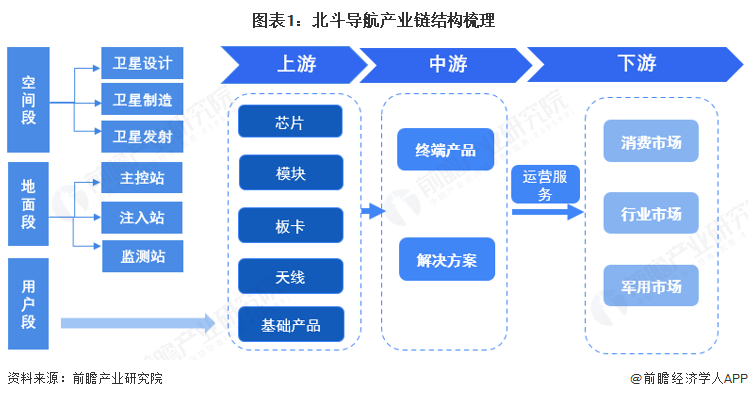
Core Insights - The article provides a comprehensive overview of the Beidou navigation industry, highlighting key companies, their business layouts, and the industry chain structure [1][8][12]. Industry Chain Overview - The Beidou navigation industry relies on satellite support, encompassing satellite design, manufacturing, launching, and operation [1]. - The upstream components are crucial for self-control, primarily consisting of baseband chips, RF chips, boards, and antennas [1]. - The midstream focuses on terminal integration and system integration, which are key development areas [1]. - The downstream service clientele includes consumer markets, industrial markets, and military markets [1]. Key Companies and Their Business Layouts - Major listed companies in the Beidou navigation sector include Beidou Star Communication, Haige Communication, Huace Navigation, and others [1][2]. - By the first half of 2025, Huace Navigation, Hezhong Shizhuang, and Tongyu Communication are expected to achieve over 500 million yuan in Beidou-related revenue, leading other listed companies [8]. - Companies like Zhenlei Technology, Haige Communication, and Huace Navigation have gross profit margins exceeding 50%, outperforming their peers [8]. Regional Distribution of Companies - Upstream satellite manufacturing enterprises are primarily located in Beijing and Jiangsu [6]. - Upstream component suppliers are distributed across Beijing, Guangdong, Zhejiang, and Chongqing [6]. - Midstream navigation product and solution providers are mainly found in Beijing, Shanghai, Guangdong, and Sichuan [6]. - Downstream application companies are concentrated in Liaoning and Beijing [6]. Recent Investment Trends - In 2023, Haige Communication and Beidou Star Communication established subsidiaries to expand their business scale [12]. - Reiko Defense set up an investment fund to focus on advantageous projects, while other companies like Aerospace Intelligence and Zhenlei Technology increased capital in their subsidiaries to advance project construction [12][14]. - Notable investments include Huace Navigation's 1 billion yuan increase in its subsidiary and Haige Communication's establishment of a new subsidiary in Chongqing to enhance market presence [14].



蓝盾光电8000万元收购终止,苏州富豪家族掌舵,实控人今年套现超1500万元
3 6 Ke· 2025-12-12 04:19
Core Viewpoint - The acquisition momentum of Blue Shield Optoelectronics in the semiconductor sector has been halted, as the company announced the termination of the equity transfer agreement with Shanghai Xingsi Semiconductor, aiming to control investments and protect the interests of shareholders, especially minority shareholders [1][2]. Group 1: Acquisition and Financial Details - Blue Shield Optoelectronics planned to invest 180 million yuan to acquire approximately 5% equity in Shanghai Xingsi Semiconductor, which had a post-investment valuation of about 3.6 billion yuan, reflecting a significant appreciation rate of 5142.86% [2]. - Shanghai Xingsi Semiconductor has reported continuous losses exceeding 800 million yuan over 2022 and the first three quarters of 2023 [2]. - The equity transfer agreement was signed on September 13, 2024, but the transaction has faced delays and was ultimately terminated [3][4]. Group 2: Shareholder Actions and Market Reactions - The controlling shareholder of Blue Shield Optoelectronics, Yuan Yonggang, and associated parties have engaged in multiple share reductions, including a significant cash-out of 221 million yuan through share transfers [3][5]. - The stock price of Blue Shield Optoelectronics increased nearly 30% from July 26, 2024, to February 20, 2025, during which time the controlling shareholder executed several reduction plans [5]. - On December 11, 2025, the company's stock closed at 24.56 yuan per share, down 2.50%, with a total market capitalization of 4.534 billion yuan [9]. Group 3: Company Performance and Industry Context - Blue Shield Optoelectronics reported a revenue of 272 million yuan for the first three quarters of the year, a year-on-year decline of 21.33%, and a net loss attributable to shareholders of 59.02 million yuan, a staggering year-on-year decrease of 827.61% [8]. - The company operates in a challenging environment, with its main business under pressure and ongoing controversies regarding external investments, raising concerns about governance and strategic stability [8].
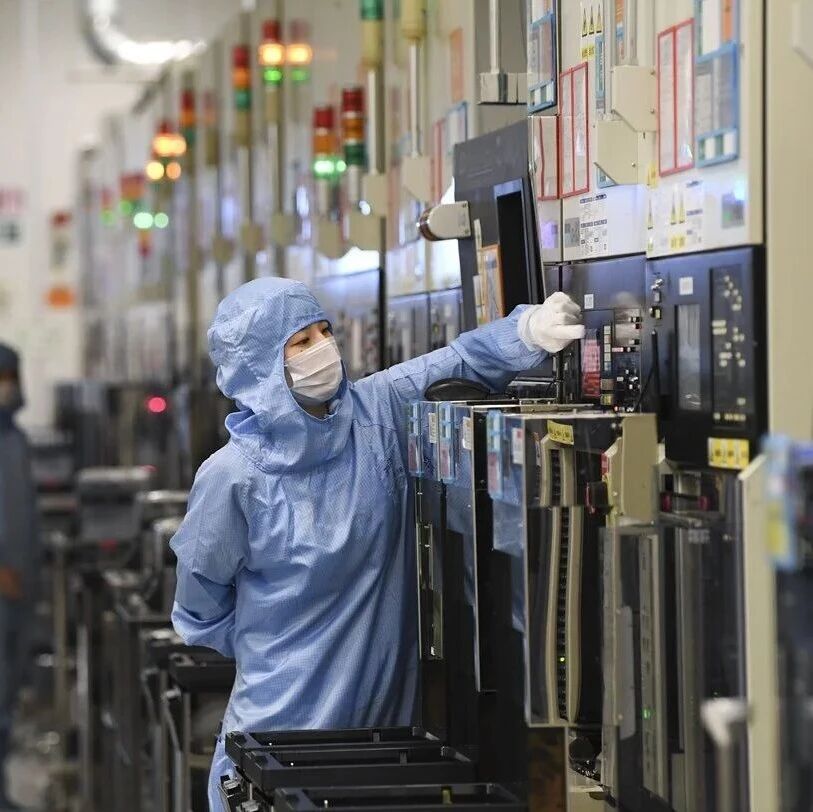
加价100%!台积电3nm客户抢单!
国芯网· 2025-11-12 13:22
Core Insights - TSMC's 3nm advanced process capacity is facing significant constraints due to surging demand from AI chip giants like NVIDIA, leading to a supply-demand gap that is expected to drive TSMC's overall gross margin above 60% by 2026 [2][4]. Group 1: Capacity Constraints - TSMC's 3nm monthly capacity is projected to reach only 140,000 to 145,000 wafers by the end of 2026, which will not meet the total orders [2]. - Major clients including NVIDIA, Apple, Qualcomm, MediaTek, Google, Amazon, Meta, and Microsoft have fully booked the 3nm capacity, covering critical areas such as AI training chips and flagship smartphone processors [4]. Group 2: Profitability and Pricing - The scarcity of capacity is translating into profitability for TSMC, with some clients willing to pay 50% to 100% above normal prices for expedited orders [4]. - If this trend continues, combined with planned price increases in 2026, TSMC's gross margin is expected to remain above 60%, with growth momentum likely to exceed market expectations [4]. Group 3: Capacity Expansion Strategies - To alleviate capacity pressure, TSMC is implementing flexible strategies, such as converting part of the 4nm production line at the Tainan Fab18 to 3nm, which will increase monthly output by approximately 25,000 wafers [5]. - TSMC is also collaborating across factories to utilize 6nm/7nm lines at Fab14 for 3nm backend processes, potentially releasing an additional 5,000 to 10,000 wafers per month in the second half of 2026 [5]. - The 3nm capacity at TSMC's Arizona facility is not expected to contribute until early 2027 [5].