
多旋翼飞行汽车GOVY AirCab

Search documents
广汽集团的2025年:改革筑堤坝,韧性谋生长
Di Yi Cai Jing· 2026-03-31 10:51
Core Insights - In 2025, GAC Group achieved a total revenue of 96.542 billion yuan, with total vehicle sales of 1.7215 million units and terminal sales of 1.8135 million units, marking a significant transformation in the automotive industry towards intelligent and electric vehicles [1][2] - GAC Group's sales of energy-saving and new energy vehicles exceeded 50% for the first time, indicating a strategic shift from traditional fuel vehicles to a dual-driven model of new energy and energy-saving technologies [2][3] - The company implemented a comprehensive reform strategy, focusing on organizational change, R&D breakthroughs, and global expansion, which resulted in a continuous recovery of operational fundamentals and a positive growth trend in sales [1][4] Revenue and Sales Performance - GAC Group's total revenue for 2025 was 96.542 billion yuan, with a notable increase in energy-saving and new energy vehicle sales, which reached 888,200 units, accounting for 51.60% of total sales, a 6 percentage point increase from 2024 [2] - The company reported a continuous quarter-on-quarter sales growth for three consecutive quarters, with the fourth quarter sales exceeding 537,800 units, reflecting a recovery trend in operational fundamentals [5] Product and Technology Development - GAC Group adopted a "multi-energy approach" strategy, covering a full range of technologies including pure electric, plug-in hybrid, hybrid, range-extended, and fuel cell vehicles, to meet diverse consumer needs [2][6] - The company invested over 62 billion yuan in R&D by the end of 2025, with over 24,900 patent applications, including more than 11,200 invention patents, establishing a strong technological foundation for future growth [6][7] Organizational and Efficiency Improvements - GAC Group underwent a significant organizational transformation, shifting from a traditional hierarchical structure to a market and user-centric matrix organization, resulting in a 30% improvement in product planning efficiency and an 85% increase in decision-making efficiency [4][5] - The company achieved a reduction in new vehicle development cycles to 18-21 months, enhancing its responsiveness to market changes [4] Global Expansion and Market Strategy - GAC Group's overseas sales reached nearly 130,000 units in 2025, a year-on-year increase of approximately 48%, with the establishment of over 280 overseas marketing service points [6][8] - The company plans to double its overseas sales target to 250,000 units in 2026 and aims to add 1,000 new overseas service points, transitioning from merely selling products to offering comprehensive solutions [8] Future Growth and Innovation - GAC Group is actively developing future mobility ecosystems, including flying cars and humanoid robots, with significant orders and production plans set for 2026 [8] - The company is focused on creating a synergistic development model that integrates vehicles with energy technology, smart connectivity, and automotive finance, ensuring sustainable long-term growth [8][9]



广汽集团改革落地首年:销售连续3个季度环比增长,Robotaxi、飞行汽车和具身智能进入商业化窗口期
Jin Rong Jie· 2026-03-31 02:58
Core Insights - GAC Group reported a total revenue of approximately 96.54 billion yuan and annual vehicle sales of 1.7215 million units for 2025, indicating a positive trend in sales following the implementation of the "Panyu Action" reform [1][2] Group 1: Sales and Market Performance - Since Q2 2025, GAC Group has experienced continuous sales growth, with a nearly 30% increase in sales in the second half of the year compared to the first half [3] - In January and February 2026, cumulative sales reached 203,100 units, a year-on-year increase of 3%, with self-owned brand sales exceeding 84,800 units, up 43.25% [3] Group 2: Reform and Efficiency Improvements - The "Panyu Action" reform initiated at the end of 2024 has led to significant efficiency improvements, with product planning efficiency up by 30%, project approval efficiency up by 67%, and decision-making efficiency up by 85% [2] - The new model development cycle has been shortened to 18-21 months, reflecting the effectiveness of the reform [2] Group 3: International Expansion - GAC Group's overseas terminal sales reached nearly 130,000 units in 2025, a year-on-year increase of approximately 48%, with overseas revenue of 17.022 billion yuan, up 44.99% [4] - The company aims for overseas sales of 250,000 units in 2026, supported by localized operational strategies [6] Group 4: Research and Development - Cumulative R&D investment exceeded 62 billion yuan by the end of 2025, with over 24,900 patent applications, focusing on solid-state batteries, intelligent cockpits, and intelligent driving technologies [7] - GAC has entered a critical commercialization window for technologies related to Robotaxi, flying cars, and embodied intelligence [7][8]
转型阵痛下 广汽集团去年亏损超87亿
Guo Ji Jin Rong Bao· 2026-03-30 15:00
Core Viewpoint - GAC Group is facing significant challenges in the automotive industry's electrification and intelligence transformation, resulting in a decline in revenue and profit for the year 2025, despite progress in brand reform and overseas market expansion [2][6]. Financial Performance - The total revenue for GAC Group in 2025 was 96.542 billion yuan, a year-on-year decrease of 10.43% [2]. - The net profit attributable to shareholders was a loss of 8.784 billion yuan, a dramatic decline of 1166.51% compared to the previous year [2]. - Basic earnings per share were -0.85 yuan, falling short of the consensus forecast of 0.05 yuan [2]. Sales and Production - Total vehicle sales for the year were 1.7215 million units, down 14.06% year-on-year [3]. - Sales of GAC's self-owned brands, GAC Trumpchi and GAC Aion, decreased by 23.02% and 22.62%, respectively, to 319,200 and 290,100 units [3]. - GAC Honda's sales fell by 25.22% to 351,900 units, while GAC Toyota's sales increased by 2.44% to 756,000 units [3]. Cost and Profitability - The revenue from the vehicle manufacturing segment was 69.01 billion yuan, down 12.57% year-on-year [4]. - Despite controlling operating costs, the total gross profit was -2.701 billion yuan, with a gross margin decrease of 6.65 percentage points to -2.8% [4]. - The vehicle manufacturing segment's gross margin fell to -7.35% due to a combination of structural adjustments in self-owned brand new energy products and industry price wars [4]. Asset Impairment - The company recorded asset impairments totaling approximately 3 billion yuan, significantly contributing to the net loss [5]. - The inventory impairment provision at the end of 2025 was 1.496 billion yuan, with a provision rate of 9.12%, up from 3.85% in 2024 [5]. International Expansion - GAC Group's international business saw significant growth, with overseas sales of nearly 130,000 units, an increase of about 48% year-on-year [6]. - The company launched five new models and four mid-cycle updates, entering 16 new markets including Brazil, Poland, and Australia [6]. - GAC aims to challenge an export target of 250,000 units in 2026, a 92.3% increase from the 2025 sales [7]. Research and Development - GAC's R&D investment exceeded 7.7 billion yuan, accounting for 7.98% of total revenue, an increase of 1.01 percentage points year-on-year [7]. - The company filed over 3,000 new patent applications in 2025, with advancements in technologies such as the "Star Source Range Extender" and ADiGO 6.0 intelligent cockpit [7]. Strategic Initiatives - GAC is focusing on three main strategies: stabilizing joint ventures, strengthening self-owned brands, and expanding its ecosystem [8]. - The company is also venturing into new growth areas such as flying cars and robotics, with significant orders for its flying car model and plans for small-scale production of its fourth-generation robot by 2026 [8]. - Despite short-term performance pressures, GAC's comprehensive industry chain layout, ongoing technological investments, and rapid overseas market expansion are expected to provide a foundation for navigating industry cycles [8].

转型阵痛下,广汽集团去年亏损超87亿
Guo Ji Jin Rong Bao· 2026-03-30 14:58
Core Viewpoint - GAC Group faced significant challenges in 2025, resulting in a decline in revenue and a substantial net loss, while simultaneously advancing reforms in its domestic brands and joint ventures, with initial successes in overseas markets and core technology development [1][6]. Financial Performance - Total revenue for GAC Group in 2025 was 96.542 billion yuan, a year-on-year decrease of 10.43% [1]. - The net profit attributable to shareholders was a loss of 8.784 billion yuan, a dramatic decline of 1166.51% compared to the previous year [1]. - Basic earnings per share were -0.85 yuan, significantly lower than the consensus forecast of 0.05 yuan [1]. Sales and Production - Total vehicle sales for the year were 1.7215 million units, down 14.06% year-on-year [2]. - Sales of GAC's self-owned brands, GAC Trumpchi and GAC Aion, fell by 23.02% and 22.62%, respectively, to 319,200 and 290,100 units [2]. - GAC Honda's sales decreased by 25.22% to 351,900 units, while GAC Toyota's sales increased by 2.44% to 756,000 units [2]. Cost and Profitability - Despite controlling operating costs, which fell by 3.64%, the decline was insufficient to offset the revenue drop, leading to a gross profit of -2.701 billion yuan and a gross margin decrease of 6.65 percentage points to -2.8% [3]. - The automotive manufacturing sector's gross margin fell to -7.35% due to intense price competition and structural adjustments in the product lineup [3]. - Asset impairments, including intangible assets and inventory write-downs, totaled approximately 3 billion yuan, contributing significantly to the net loss [5]. International Expansion - GAC Group's international business saw notable growth, with overseas sales of nearly 130,000 units, a year-on-year increase of about 48% [6]. - The company launched five new models and four mid-cycle updates, entering 16 new markets, including Brazil, Poland, and Australia [6]. - GAC aims to challenge an export target of 250,000 units in 2026, representing a 92.3% increase from the 2025 sales [7]. Research and Development - GAC Group invested over 7.7 billion yuan in R&D, accounting for 7.98% of total revenue, an increase of 1.01 percentage points from the previous year [7]. - The company filed over 3,000 new patent applications in 2025, with advancements in technologies such as the "Star Source Range Extender" and ADiGO 6.0 intelligent cockpit [7]. Strategic Initiatives - GAC Group is focusing on three main strategies: stabilizing joint ventures, strengthening self-owned brands, and expanding its ecosystem [8]. - The company is also exploring new growth avenues in flying cars and robotics, with significant interest in its GOVY AirCab and GoMate Mini products, although these segments are still in early investment stages [8].

从造车到造未来:汽车产业迎接智融时代
Shang Hai Zheng Quan Bao· 2025-12-29 00:40
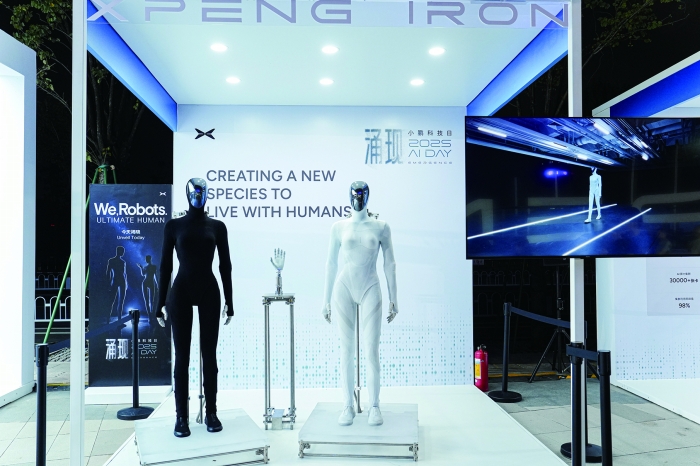
Core Insights - The automotive industry in China is rapidly expanding beyond traditional vehicle manufacturing into areas such as robotics and low-altitude economy, driven by advancements in technology and strategic planning for future industries [1][2][8]. Group 1: Industry Trends - The automotive supply chain is evolving to support new intelligent sectors, including robotics and low-altitude flying vehicles, indicating a significant shift in industry focus [2][4]. - Companies like Chery and Horizon Robotics are leading the charge in integrating robotics into their operations, with Chery's Argos robot dog showcasing advanced capabilities for safety management [3][4]. - The emergence of flying cars, such as those produced by XPeng and GAC, highlights the industry's commitment to innovation and the commercialization of new technologies [5][7]. Group 2: Technological Advancements - The development of intelligent driving chips by Horizon Robotics has captured a 9.4% market share in China, demonstrating the importance of software and hardware integration in the automotive sector [4][5]. - The introduction of advanced models like HoloMotion and HoloBrain by Horizon Robotics aims to enhance the capabilities of robots, emphasizing the convergence of automotive and robotic technologies [4][5]. - The production of flying vehicles at XPeng's facility marks a significant milestone in the global automotive landscape, showcasing the potential for mass production of innovative transportation solutions [6][7]. Group 3: Market Dynamics - The automotive industry's transition into robotics and low-altitude flying vehicles is supported by a robust manufacturing base and a mature supply chain, which are essential for scaling new technologies [8][10]. - The cost of key components, such as LiDAR, has significantly decreased, making advanced robotics more accessible and driving innovation in the sector [15][16]. - The integration of AI technologies is reshaping the automotive landscape, with companies increasingly positioning themselves as AI-driven entities rather than traditional car manufacturers [25][26]. Group 4: Future Opportunities - The concept of "crossing the remaining 15%" highlights the need for companies to innovate and adapt to new market demands, particularly in emerging fields like embodied intelligence [21][22]. - The automotive industry is expected to play a crucial role in the development of smart cities and interconnected ecosystems, transforming vehicles into integral components of urban infrastructure [28][29]. - As the industry evolves, there is a growing emphasis on quality and global competitiveness, with companies encouraged to specialize in niche areas or develop integrative platform capabilities [27][28].
跨越15%——从造车到造“未来”:汽车产业迎接“智融时代”
Shang Hai Zheng Quan Bao· 2025-12-23 19:06
Core Insights - The automotive industry is rapidly expanding beyond traditional vehicle manufacturing into new domains such as robotics and low-altitude aviation, driven by technological innovation and cross-industry collaboration [10][11][12] Group 1: Industry Trends - The automotive sector is witnessing a shift towards "intelligent integration," with companies exploring opportunities in embodied intelligence, low-altitude economy, and commercial aerospace [10][11] - The "14th Five-Year Plan" emphasizes the need for forward-looking strategies in emerging industries, indicating a significant transformation in the automotive landscape [10][11] - Companies like Chery and GAC are developing products such as the Argos robotic dog and GOVY AirCab flying car, showcasing the industry's commitment to innovation [10][11][12] Group 2: Technological Advancements - The Argos robotic dog features advanced capabilities, including 13 degrees of freedom and a maximum load of 5 kg, enabling it to navigate complex terrains and enhance safety management [11][12] - Horizon Robotics has captured a 9.4% market share in China's automotive intelligent driving chip market, indicating the growing importance of AI in the automotive sector [12] - The development of flying cars, such as the "陆地航母" by XPeng, represents a significant milestone in the integration of automotive and aerospace technologies [13][14] Group 3: Market Dynamics - The automotive industry's extensive supply chain and manufacturing capabilities are facilitating the transition into robotics and low-altitude aviation, creating new market opportunities [15][16] - The cost of key components, such as LiDAR, has significantly decreased due to automotive industry advancements, making them more accessible for robotics applications [19][20] - The emergence of new business models and investment strategies is reshaping the competitive landscape, with companies actively seeking to extend their industrial boundaries [21][22] Group 4: Future Outlook - The automotive industry is expected to evolve into a key player in the AI-driven economy, with companies increasingly emphasizing their AI capabilities [23][24] - The integration of vehicles into smart city ecosystems is anticipated to redefine the role of automobiles, transforming them into energy storage and computing units [27] - The future of the automotive sector is characterized by a focus on quality and global competitiveness, moving away from mere scale [26]
广汽发布2025年第三季度报告
Huan Qiu Wang· 2025-10-27 06:12
Core Insights - GAC Group's R&D investment is projected to exceed 10 billion yuan in 2025, focusing on key areas such as intelligent assisted driving, smart cockpits, and electronic electrical architecture [1] - The self-developed ADiGO GSD intelligent driving assistance system covers 99.9% of road scenarios and over 99.5% of parking types [1] Group 1: Intelligent Driving and Safety - GAC has established the GAC Star Spirit Safety Guardian System, which includes a comprehensive safety R&D system, all-domain safety technology, and all-time safety assurance [3] - The L3 system's failure rate is reported at 1 FIT, with eight key systems employing dual redundancy design [3] - GAC is involved in the "Vehicle-Road-Cloud Integration" collaborative development testing initiative, demonstrating cloud-supported applications such as C-AEB and C-GLOSA [3] Group 2: Electric Vehicle Technology - GAC launched the "Star Source Range Extender" technology to address range anxiety and power depletion issues for electric vehicle users, achieving an oil-electric conversion rate of 3.73 kWh/L and an electric drive system efficiency of 93% [3] - The V2G demonstration project has been established, with over 250,000 kWh of discharge and 11,260 cumulative orders as of October 19 [3] Group 3: Advanced Technology Exploration - GAC's multi-rotor flying car, GOVY AirCab, has completed prototype deliveries in Hong Kong and Beijing in Q3 [4] - The company has introduced three embodied intelligent robots, planning to demonstrate applications in healthcare and security [4] - GAC is transitioning from a traditional automobile manufacturer to a technology-driven mobility company through systematic technological layout [4]
广汽集团:第三季度汽车销量环比增长11.49% “启境”首车完成设计
Zhong Zheng Wang· 2025-10-26 07:09
Core Insights - GAC Group reported a consolidated revenue of 24.318 billion yuan for Q3 2025, with a quarter-on-quarter growth of 6.98% and total vehicle sales reaching 428,400 units, reflecting an 11.49% increase [1] - The company is accelerating its internationalization strategy, viewing overseas markets as crucial for growth, with a 36.5% year-on-year increase in overseas sales from January to September [2] - GAC Group plans to invest over 10 billion yuan in R&D for 2025, focusing on key areas such as intelligent driving and electric vehicle technologies [3] Financial Performance - GAC Group's Q3 2025 revenue was 24.318 billion yuan, marking a 6.98% increase from the previous quarter [1] - Total vehicle sales for Q3 reached 428,400 units, up 11.49% quarter-on-quarter [1] - Cumulative vehicle sales for the first three quarters of the year amounted to 1.1837 million units, with total consolidated revenue reaching 66.929 billion yuan [1] International Expansion - GAC Group has expanded its overseas operations to cover 85 countries and regions, with 570 sales outlets and five overseas factories [2] - The company has entered key European markets such as the UK, Poland, Portugal, and Finland in Q3, with plans to deliver two global strategic models in Europe by Q1 2026 [2] - GAC aims for full coverage of the European market by 2028, focusing on building a comprehensive market channel and local production [2] R&D and Technological Advancements - The company expects its R&D investment to exceed 10 billion yuan in 2025, targeting advancements in intelligent driving and electric vehicle technologies [3] - GAC's ADiGO GSD intelligent driving system covers 99.9% of roads and over 99.5% of parking types [3] - The company has made significant progress in new energy technologies, achieving industry-leading metrics in energy conversion and efficiency [3] Strategic Partnerships - GAC Group is actively collaborating with partners like Huawei, CATL, Tencent, and JD.com in areas such as smart technology and electrification [4] - The high-end smart electric vehicle brand "Qijing," developed in partnership with Huawei, has completed its design and is set to launch in mid-2026 [4] - GAC, in collaboration with JD.com and CATL, is launching the "National Good Car" Aion UT Super, featuring advanced battery technology and a planned release during the 2025 Double Eleven shopping festival [4]
广汽集团发布第三季度业绩:合并总营收243.18亿元,汽车销量42.84万辆,“启境”首车完成设计
Xin Lang Ke Ji· 2025-10-24 11:59
Core Insights - GAC Group reported a consolidated revenue of 24.318 billion yuan for Q3 2025, a quarter-on-quarter increase of 6.98% [1] - The total vehicle sales reached 428,400 units, reflecting a quarter-on-quarter growth of 11.49% [1] - The "Panyu Action" integrated reform has led to consecutive quarterly increases in sales and revenue metrics [1] Group Performance - All automotive enterprises under GAC achieved positive quarter-on-quarter sales growth [1] - GAC's self-owned brands sold over 159,500 units in Q3, marking a quarter-on-quarter increase of 15.09% [1] - GAC Trumpchi sold 86,805 units, up 12.63% quarter-on-quarter, while GAC Aion's sales reached 72,739 units, increasing by 18.13% [1] - Joint venture brands also saw a quarter-on-quarter sales increase of 9.30%, totaling 267,800 units [1] - GAC Honda accelerated its smart electric transformation with sales of 69,258 units, up 11.85% quarter-on-quarter [1] - GAC Toyota's Q3 sales were 198,511 units, reflecting an 8.43% quarter-on-quarter increase and a 9.15% year-on-year increase [1] International Expansion - GAC Group is accelerating its international strategy, viewing overseas markets as a key to growth [2] - From January to September, GAC's overseas terminal sales grew by 36.5%, with operations in 85 countries and regions [2] - The company plans to deliver two global strategic models, AION V and AION UT, in Europe by Q1 2026, aiming for full market coverage by 2028 [2] R&D and Technological Advancements - GAC's R&D investment is expected to exceed 10 billion yuan in 2025, focusing on smart driving assistance, intelligent cockpits, and electronic architecture [2] - The company has made progress in advanced technology, with the GOVY AirCab flying car prototype delivered in Hong Kong and Beijing, receiving over 1,000 intent orders [2] - GAC has launched three intelligent robots for demonstration applications in healthcare and security [2] Strategic Partnerships - GAC's collaboration with Huawei has made significant strides, with the announcement of the high-end smart electric vehicle brand "Qijing" [3] - The CEO of "Qijing," Liu Jiaming, was appointed to accelerate project implementation [3] - The first model of "Qijing" is set to launch in mid-2026, with a nationwide dealer recruitment initiative already underway [3]
3小时车程缩短至15分钟!无人驾驶低空飞行器集中亮相链博会
Cai Jing Wang· 2025-07-21 07:45
Core Insights - The eVTOL (electric Vertical Take-Off and Landing) industry is poised to replicate the explosive growth seen in China's electric vehicle market a decade ago, becoming a key element in China's manufacturing upgrade and international presence [2] Industry Overview - The low-altitude economy, centered around low-altitude flight activities, is expected to drive the development of infrastructure, aircraft manufacturing, operational services, and flight safety, spanning across various industries [1] - The market size for China's low-altitude economy is projected to reach 1.5 trillion yuan by 2025 and 3.5 trillion yuan by 2035, indicating a significant growth opportunity [1] Technological Developments - The eVTOL aircraft showcased at the China International Supply Chain Promotion Expo can carry five passengers and operate autonomously, with ground control ensuring safety during flight [1] - Various companies, including GAC Group and XPeng, are introducing their own eVTOL models, indicating a competitive landscape in the low-altitude flight sector [3] Environmental Impact - The eVTOL industry is seen as a crucial area for promoting green and low-carbon transformation, with the potential to alleviate ground traffic pressure and contribute to achieving China's carbon emission goals [3]