嫦娥七号探测器

Search documents
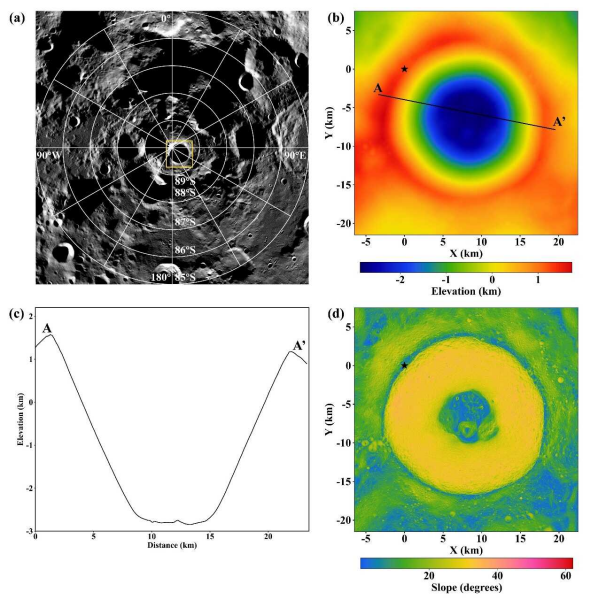
【央视新闻】月球南极水冰稳定性研究取得新进展
Yang Shi Xin Wen· 2026-02-28 01:26
Core Insights - The research team from the National Space Science Center of China has made significant progress in studying the stability of water ice in the Shackleton region of the Moon's South Pole, which is a candidate landing area for the Chang'e 7 mission [2][3] - A thermal stability model for water ice in the lunar polar regions has been developed, taking into account the thermal properties of lunar regolith under low-temperature conditions [3] - The study's findings, published in the journal "Planetary Science Journal," are crucial for understanding the distribution characteristics of water ice in the Moon's polar regions and will guide the Chang'e 7 mission's exploration efforts [2][3] Research Findings - The model calculates the stable distribution areas of sunlight, lunar regolith temperature, and volatile substances like water ice, which can be applied to analyze the thermal stability of water ice in the South Pole, particularly in the Chang'e 7 landing zone [3] - The research discusses the significance of water ice stability in terms of the ease of sublimation loss over long geological timescales, which is essential for identifying regions likely to preserve water ice [2][3] - The study emphasizes the importance of high-resolution thermal stability simulations for understanding surface radiation and temperature in the Shackleton region, which will aid in the precise remote sensing and in-situ detection of water ice by the Chang'e 7 mission [2][3]

中国航天 更多精彩
Ren Min Ri Bao Hai Wai Ban· 2026-01-14 22:50
Core Viewpoint - China's space industry is experiencing significant advancements, with multiple successful missions and the introduction of new technologies, aiming to establish itself as a leading space power by 2026 [7][12][14]. Group 1: Manned Spaceflight Progress - The Shenzhou 21 crew has been working in orbit for over 70 days, conducting key training and scientific experiments [8]. - In 2025, China executed its first emergency launch mission in response to unexpected issues with the Shenzhou 20 spacecraft, demonstrating its capabilities [8]. - The Chinese space station has successfully conducted 265 scientific and application projects in three major fields by December 2025 [8]. Group 2: Deep Space Exploration - The Tianwen-2 mission successfully launched in 2025, marking China's first asteroid exploration and sample return mission, targeting asteroid 2016 HO3 [12]. - The mission aims to return to Earth by the end of 2027 after conducting scientific investigations on the asteroid and later on comet 311P [12]. - The Chang'e 7 mission is planned for 2026, focusing on lunar south pole exploration and ice detection [13]. Group 3: Commercial Space Development - In 2025, various commercial rockets, including Ceres-1 and Zhuque-3, were launched, indicating a surge in China's commercial space activities [14]. - The National Space Administration has initiated a plan to enhance the quality and safety of commercial space development from 2025 to 2027 [14]. - New generation rockets are expected to enter their maiden flights, supporting large-scale satellite networks and low-cost cargo transport [14].

《自然》前瞻2026年科学大事件:科研AI、基因编辑、深空与深海的全面探索 | 红杉爱科学
红杉汇· 2026-01-14 00:03
Group 1 - The article predicts that AI will transition from being an assistant to an independent researcher, with the potential for AI to achieve its first significant scientific discovery by 2026 [2][3] - AI agents, which integrate multiple large language models, will be capable of executing complex scientific processes with minimal human intervention, including hypothesis generation, experiment design, data analysis, and paper writing [2] - Smaller, specialized AI models are emerging as efficient alternatives for specific scientific problems, requiring less data and focusing on mathematical representations rather than text generation [2] Group 2 - Two clinical trials for personalized gene therapies targeting rare genetic diseases in children are expected to start in 2026, building on the case of KJ Muldoon, who received CRISPR treatment [4] - A clinical trial in the UK is anticipated to reveal results for a single blood test that can detect approximately 50 types of cancer before symptoms appear, involving over 140,000 participants [5] Group 3 - 2026 is projected to be a busy year for lunar exploration, with NASA's Artemis II mission sending four astronauts on a ten-day mission to orbit the Moon, marking the first crewed lunar mission since the 1970s [6] - China's Chang'e 7 mission is planned for 2026, aiming to land near the Moon's south pole to search for water ice and study moonquakes [8] Group 4 - The European Space Agency plans to launch the Plato exoplanet survey satellite by the end of 2026, which will monitor over 200,000 stars to search for Earth-like planets [8] - The Chinese deep-sea drilling vessel "Dream" is set to conduct its first scientific mission in 2026, aiming to drill 11 kilometers deep in the Mariana Trench to collect upper mantle samples [11] Group 5 - The Large Hadron Collider at CERN will undergo a major upgrade in 2026, halting operations for three years to install a high-luminosity LHC, which will enhance data collection for rare process observations [11] - The Mu2e detector at Fermilab is expected to be completed in April 2026, focusing on the exploration of the mysterious subatomic particle, the muon [11]
生命、家园、深空与智能…… 今年可能迎来哪些关键性科技突破?
Xin Lang Cai Jing· 2026-01-12 18:00
Group 1: Scientific and Technological Advances - In 2026, significant breakthroughs in gene editing are anticipated, with clinical trials for personalized gene therapies for rare metabolic diseases planned in Philadelphia [8] - A major cancer detection clinical trial involving over 140,000 participants is expected to reveal results in 2026, potentially allowing for the detection of approximately 50 types of cancer through a single blood test [9] - AI is predicted to play a crucial role in the life sciences sector, particularly in biomarker detection, with the potential to move from detection to prediction [9] Group 2: Climate Change and Renewable Energy - The global average temperature is projected to exceed pre-industrial levels by 1.4 degrees Celsius in 2026, continuing a trend of rising temperatures [9] - Renewable energy is expected to surpass traditional energy sources in various sectors, with China leading the transition towards green and low-carbon energy [10] - China plans to add over 20 million kilowatts of wind and solar power capacity in 2026 as part of its commitment to increasing the share of renewable energy [10] Group 3: Space Exploration - 2026 is set to be a busy year for lunar exploration, with China's Chang'e 7 mission targeting the challenging lunar south pole [11] - Multiple crewed space missions are scheduled by China, including the Tianzhou 10 and Shenzhou 22 and 23 missions, marking significant advancements in their space program [11] - The European Space Agency plans to launch the Plato space telescope in late 2026 to monitor over 200,000 stars in search of habitable exoplanets [11] Group 4: AI in Research - AI is transforming research processes, with predictions of significant scientific breakthroughs driven by AI in 2026 [12] - The integration of multiple large language models for complex tasks is expected to become more common, reducing the need for human intervention [12] - Generative AI is leading technological change, with over two-thirds of chief economists anticipating its commercial value to materialize within the next year [12]

生命、家园、深空与智能
Xin Lang Cai Jing· 2026-01-11 21:22
Key Insights - The year 2026 is anticipated to witness significant breakthroughs in scientific experiments, climate actions, and space missions, driven by advancements in artificial intelligence (AI) technology [1][2][3] Group 1: Medical Innovations - Gene editing technology is expected to gain momentum in 2026, with two clinical trials focusing on rare diseases, including personalized treatments for children with rare metabolic disorders [1][2] - AI is predicted to play a crucial role in disease screening and diagnosis, with a focus on AI-driven biomarker detection that may surpass traditional methods [2][3] - The intersection of gene editing and AI is expected to lead to effective new therapies for cancer and various genetic diseases [2] Group 2: Climate Action - The global average temperature is projected to exceed pre-industrial levels by 1.4 degrees Celsius in 2026, continuing a trend of rising temperatures [3] - The transition to renewable energy is deemed essential in combating climate change, with significant advancements in renewable energy sources outpacing traditional energy [3] - China aims to increase its renewable energy supply, with plans to add over 20 million kilowatts of wind and solar power capacity in 2026 [3] Group 3: Space Exploration - 2026 is set to be a busy year for lunar exploration, with China planning to launch the Chang'e 7 mission targeting the challenging lunar south pole [4] - The U.S. will focus on lunar missions, including the Artemis 2 mission, which will send astronauts to orbit the Moon [4][5] - Various space telescopes and observatories are expected to be active in 2026, including the launch of the Plato space telescope by the European Space Agency [5] Group 4: AI in Research - AI is transforming research processes, with predictions of significant scientific breakthroughs driven by AI in 2026 [6] - The development of small-scale AI models capable of learning from limited data is expected to be a focus area [6] - The integration of generative AI is anticipated to create commercial value across various sectors in the coming year [6]
生命、家园、深空与智能——2026年全球科技展望
Xin Hua She· 2026-01-08 14:02
Group 1: Medical Innovations - In 2026, gene editing technology is expected to gain momentum, with two significant clinical trials focusing on rare metabolic diseases and immune system genetic disorders [2] - A cancer detection clinical trial involving over 140,000 participants is anticipated to reveal results in 2026, potentially identifying around 50 types of cancer through a single blood test [2] - AI is predicted to play a crucial role in disease screening and diagnosis, with a focus on AI-driven biomarker detection in the life sciences sector [2][3] Group 2: Climate Change and Renewable Energy - The global average temperature is projected to exceed pre-industrial levels by 1.4 degrees Celsius in 2026, continuing a trend of rising temperatures [3] - Renewable energy is expected to surpass traditional energy sources, with significant contributions from China, which plans to add over 20 million kilowatts of wind and solar power capacity in 2026 [3][4] Group 3: Space Exploration - 2026 is set to be a busy year for lunar exploration, with China's Chang'e 7 mission targeting the challenging lunar south pole [5] - The U.S. Artemis 2 mission aims to send astronauts on a lunar flyby, marking the first crewed lunar mission in over 50 years [6] - Various countries, including India and Japan, have planned significant space missions, including crewed flights and solar observation [6][7] Group 4: AI in Research - AI is transforming research processes, with predictions of significant scientific breakthroughs driven by AI in 2026 [8] - The integration of multiple large language models for complex tasks is expected to become more common, enhancing research efficiency [8] - AI's influence is anticipated to expand across various sectors, with over two-thirds of economists expecting it to generate commercial value within the year [8]
向“四极”突破 中国科技加速推进高水平自立自强
Yang Shi Wang· 2026-01-07 11:56
Core Insights - China's technological innovation is accelerating towards four fronts: macro expansion, micro exploration, extreme conditions advancement, and interdisciplinary integration [1][2] Group 1: Macro Expansion - The scientific team at the National Astronomical Observatory is receiving data from the Tianwen-2 probe, which is over 40 million kilometers away, ensuring its smooth operation [1] - In 2026, the Chang'e 7 probe will be the first to explore the lunar south pole, with a 50-meter antenna in Beijing's Miyun area entering critical testing to support data reception [1] Group 2: Micro Exploration - China has deployed key research projects in quantum technology, particle physics, life sciences, and nanotechnology [1] - The Jiangmen neutrino experiment facility, located 700 meters underground, has released its first results and is beginning a new round of data collection to explore the mysteries of ancient cosmic particles [1] - The construction of Asia's first advanced attosecond laser facility is accelerating, expected to be completed by 2029, enabling direct observation of electron movements to support research in physics, chemistry, and materials [1] Group 3: Extreme Conditions - Continuous breakthroughs have been achieved in extreme environments such as deep sea, high cold, and polar conditions, with the "artificial sun" set to undergo upgrades after achieving a world record of one billion degrees for a thousand seconds [2] - In 2026, interdisciplinary integration is becoming a key driver for accelerating technological innovation, with AI and life sciences combining to efficiently predict protein structures, aiding in new drug development [2] - The convergence of materials science, clinical neuroscience, and engineering technology is expected to lead to breakthroughs in brain-machine interface technology [2] Group 4: Future Outlook - The breakthroughs in the "four fronts" of Chinese technology are expected to generate more original and disruptive results, injecting new momentum into the construction of a strong technological nation [2]
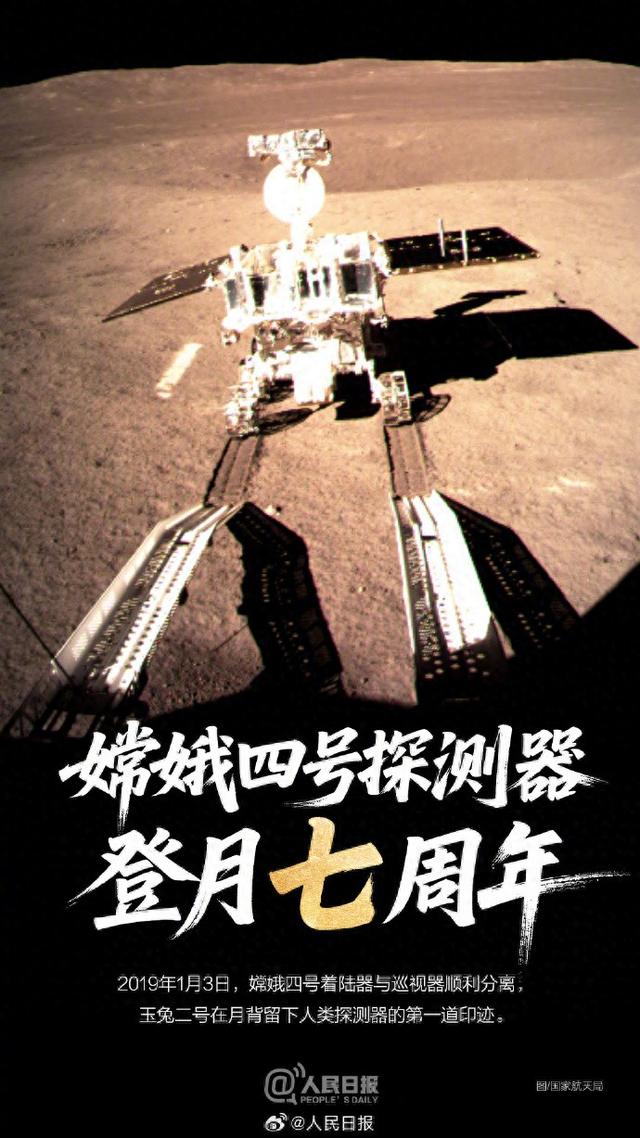
嫦娥四号探测器登月7周年,今年嫦娥七号将出发
Xin Lang Cai Jing· 2026-01-02 23:42
Core Insights - The Chang'e 4 mission, which landed on the far side of the moon on January 3, 2019, marked a significant achievement in China's lunar exploration efforts, with the Yutu-2 rover becoming the first to leave tracks on the moon's far side [1] Group 1 - The Chang'e 4 mission represents a milestone in human space exploration, showcasing China's capabilities in lunar research [1] - The upcoming Chang'e 7 mission aims to explore the lunar south pole and search for evidence of water ice [1]
视频丨追星、探月、深空探测……向极宏观拓展中国不断突破
Yang Shi Xin Wen Ke Hu Duan· 2026-01-02 13:13
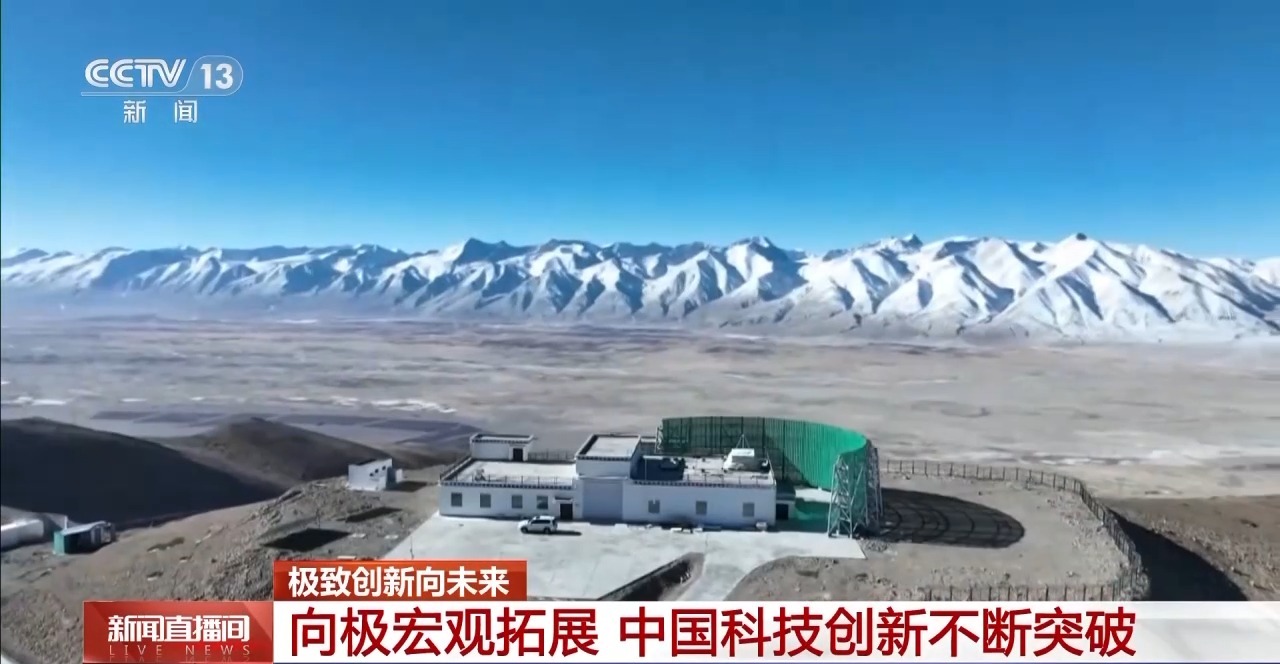
Core Insights - The article discusses China's advancements in scientific research and technology as it aims for breakthroughs in macro-scale exploration by 2025, highlighting significant achievements in space and astronomical research. Group 1: Major Scientific Infrastructure Developments - The "Meridian Project" Phase II was accepted by the state in March 2025, featuring 31 stations and nearly 300 devices for comprehensive detection of space weather, enhancing China's forecasting capabilities [3] - The Ali Gravitational Wave Detection Experiment, located at an altitude of 5250 meters, achieved its first light observation in July 2025, capturing clear images of radiation from the Moon and Jupiter at 150GHz [6] Group 2: Astronomical Discoveries - The Guo Shoujing Telescope (LAMOST) has released a total of 28.07 million spectra and 11.59 million stellar parameters by October 2025, maintaining the largest data volume globally [9] - The FAST telescope discovered over 1,170 pulsars by the end of 2025, surpassing the total number found by other telescopes during the same period, significantly enhancing China's research capabilities in cosmic navigation and gravitational wave detection [12] Group 3: Lunar and Deep Space Exploration - The Tianwen-2 probe was launched in May 2025 to study the asteroid 2016HO3, equipped with 11 scientific payloads for comprehensive data collection [18] - Research on samples from the Chang'e 6 mission revealed significant findings regarding lunar volcanic activity, ancient magnetic fields, and water content in the lunar mantle, marking a breakthrough in understanding the Moon's evolution [24] Group 4: Future Exploration Plans - The Chang'e 7 mission is planned for 2026, targeting the Moon's south pole for scientific exploration, with a new 50-meter antenna under construction to support data reception [29] - The "14th Five-Year Plan" includes ambitious projects like the "Hongmeng Plan" and "Kuafu II," focusing on cosmic origins and space weather, aiming for breakthroughs in various fields of space exploration [31]
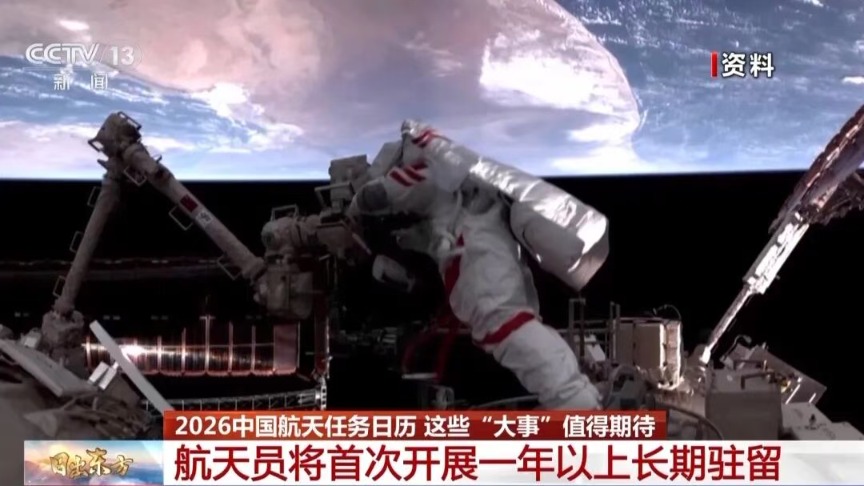
中国航天,2026年日程排满
Zhong Guo Ji Jin Bao· 2026-01-01 14:17
Core Insights - In 2026, China's space program is expected to achieve significant breakthroughs, including crewed missions to the Chinese space station and the launch of new spacecraft [1][3]. Group 1: Crewed Space Missions - The Shenzhou 23 and Shenzhou 24 missions will send astronaut crews from the Jiuquan Satellite Launch Center to the Chinese space station [1]. - A crew member from the Shenzhou 23 mission will conduct a long-term stay experiment lasting over one year [3]. Group 2: New Spacecraft Developments - The new generation crewed spacecraft "Dream Boat" will make its maiden flight, designed for near-Earth space station operations and crewed lunar exploration [3]. Group 3: Lunar Exploration - The Chang'e 7 lunar probe will be launched to explore the Moon's south pole, focusing on surface environment surveys and water ice detection [5]. - If successful, China could become the first country to discover water on the Moon [5]. Group 4: Deep Space Exploration - The Tianwen-2 probe is set to reach asteroid 2016 HO3 for exploration and sample collection, with a return to Earth expected by the end of 2027 [6]. - Following this, the probe will conduct scientific exploration of main belt comet 311P [6]. Group 5: Commercial Space Development - 2026 will mark a year of accelerated development for China's commercial space sector, with the establishment of the Commercial Space Administration [8]. - New rocket developments, including Lijian-2, Tianlong-3, and Hyperbola-3, are highly anticipated [8].