
客机

Search documents
谈判进入“决定性回合”,美舰机仍向中东集结,世界紧盯美伊“摊牌”时刻
Huan Qiu Shi Bao· 2026-02-26 22:59
Group 1 - The core point of the article revolves around the third round of indirect negotiations between Iran and the United States, which is seen as a decisive moment that could determine the future of U.S.-Iran relations, whether it leads to peace or conflict [1][6]. - Iran's Foreign Minister Zarif emphasized that the success of the negotiations depends on the seriousness of the U.S. and its ability to avoid contradictory actions [1]. - The U.S. continues to exert pressure on Iran through sanctions and military deployments, including the addition of F-22 fighter jets to Israel [1][7]. Group 2 - Iran's proposed agreement includes maintaining a symbolic uranium enrichment capability, with plans to suspend nuclear activities for 3 to 5 years and keep enrichment levels at a low 1.5% for medical research [4]. - The proposal also involves gradually diluting its stock of 400 kilograms of high-enriched uranium and allowing international oversight of the process [4]. - Iran is open to discussing a multilateral verification mechanism for its nuclear program, although it is unlikely to accept a zero enrichment requirement [4]. Group 3 - Iranian President Raisi expressed optimism about the negotiations, stating that there is no intention to develop nuclear weapons, and sees the talks as a historic opportunity [5]. - Iran is considering offering business opportunities to U.S. companies, including investments in oil, gas, and mining sectors, to persuade the U.S. to reach a nuclear agreement [5]. - The negotiations are viewed as a critical test of U.S. sincerity and willingness to engage in a mutually beneficial agreement [6]. Group 4 - The U.S. continues to impose sanctions on Iran, targeting over 30 entities and individuals involved in what it describes as illegal oil sales and missile production [5]. - The upcoming negotiations are expected to focus on nuclear issues while Iran aims to push for the lifting of economic sanctions [5]. - The international community is closely monitoring the situation, with many countries advising their citizens to leave Iran amid rising tensions [7].


日本一架客机因故障紧急返航 机上载有51人
Zhong Guo Xin Wen Wang· 2026-02-14 08:34
Core Viewpoint - A Japan Air Commuter aircraft experienced a hydraulic system failure shortly after takeoff, leading to an emergency return to Osaka Itami Airport with 51 people on board, and no injuries were reported [1][3]. Group 1 - The aircraft was scheduled to fly to Tajima Airport in Hyogo Prefecture [3]. - The incident involved a total of 51 individuals, including crew members and passengers [3].
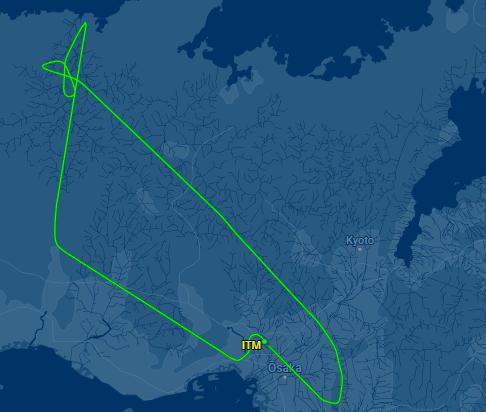
美客机与黑鹰直升机相撞事故一年后 第一视角模拟画面公布
Xin Jing Bao· 2026-01-28 07:30
Core Viewpoint - The National Transportation Safety Board (NTSB) released a simulation video of the collision between a passenger plane and a Black Hawk helicopter, indicating that the accident was "100% avoidable" [1] Group 1: Accident Details - The simulation shows the last three minutes before the collision, highlighting that the two aircraft were unable to see each other prior to the incident [1] - The air traffic controller did not warn the passenger plane of the helicopter's proximity until 26 seconds before the collision [1] Group 2: Investigation Findings - NTSB Chairman Homendy stated that the investigation revealed the accident could have been completely prevented [1]
美媒:莫迪给西方上了一课,只要有中国在,美国就不敢跟印度翻脸
Sou Hu Cai Jing· 2026-01-05 13:28
Core Viewpoint - The article discusses the geopolitical implications of the U.S. imposing a 50% tariff on Indian textiles in 2025, which is seen as an attempt to pressure India into aligning with U.S. interests against China. Modi's strategic visit to China is highlighted as a counter-move to U.S. pressure, indicating a shift in India's foreign policy towards a more multipolar approach [1][3][5]. Group 1: U.S. Tariff Impact - The U.S. trade deficit with India surged to $48 billion, providing a justification for the tariff increase [3]. - The 50% tariff is viewed as a significant threat to India's textile industry, which relies heavily on exports for job creation [3][5]. - The U.S. aims to use economic pressure to force India to choose sides in the geopolitical landscape, particularly against China [5][7]. Group 2: India's Strategic Response - Modi's government responded to U.S. pressure with a diplomatic visit to China, which was unexpected and strategic [12][14]. - The visit aimed to strengthen India-China relations, providing India with leverage against U.S. demands [12][16]. - This move is seen as a way for India to assert its independence and avoid being cornered by U.S. unilateralism [18][20]. Group 3: Economic and Military Dynamics - Modi's actions included submitting a retaliation list to the WTO targeting U.S. agricultural products, which could impact key swing states for Trump [22][24]. - India continues to engage in military purchases from Russia, such as the S-400 system, while also utilizing U.S. technology, showcasing a dual strategy [28][30]. - The economic ties between the U.S. and India are complex, with significant investments from U.S. companies in India making it difficult for the U.S. to fully impose sanctions [30][37]. Group 4: Future of U.S.-India Relations - The relationship between the U.S. and India is likely to remain in a state of "conflict without rupture," balancing mutual interests despite ongoing tensions [32][34]. - The U.S. recognizes the importance of India in its Indo-Pacific strategy and is willing to make concessions to maintain this partnership [35][37]. - The evolving dynamics suggest a new era where countries like India seek strategic autonomy, influenced by the rise of China [39][41].

韩国一客机起飞前冒烟 22人紧急疏散
Xin Lang Cai Jing· 2026-01-03 02:47
Core Viewpoint - A Korean Air passenger plane experienced smoke in the cabin before takeoff, leading to the emergency evacuation of 122 individuals, including passengers and crew members [1] Group 1: Incident Details - The incident occurred at Jeju International Airport, where the flight was scheduled to depart for Pohang at 12:25 PM local time [1] - Smoke appeared in the cabin during the boarding process, prompting immediate action [1] - The airline confirmed that the incident did not lead to a fire, and the fire department was not deployed [1] Group 2: Cause of the Incident - An investigation revealed that the smoke was caused by overheating due to a defect in the aircraft's auxiliary power unit located at the rear [1]
日本载26人客机穿越云层时右侧引擎停止运转 紧急降落
Xin Jing Bao· 2025-12-11 07:08
Core Viewpoint - A passenger aircraft operated by Hokkaido Air System experienced an engine failure during flight, leading to an emergency landing at Hakodate Airport, with no injuries reported among the 26 individuals on board [1] Group 1: Incident Details - The incident occurred on December 11, when the right engine of the aircraft stopped functioning while flying through clouds [1] - The aircraft is scheduled for inspection at Hakodate Airport following the emergency landing [1] Group 2: Potential Causes - Hokkaido Air System indicated that the possible cause of the engine failure may be related to icing conditions [1]
日本一客机因故障紧急着陆 尚未确认人员伤亡
Zhong Guo Xin Wen Wang· 2025-12-11 06:04
Core Viewpoint - A passenger plane operated by Hokkaido Air System made an emergency landing due to a malfunction in one of its engines, with no casualties reported as of now [1]. Group 1 - The incident occurred on December 11, local time, at Hakodate Airport in Hokkaido, Japan [1]. - The aircraft experienced a failure in one side of its engine, prompting the emergency landing [1].
美媒:押上整个美国,让中国倒退25年,特朗普的豪赌真的值得吗?
Sou Hu Cai Jing· 2025-12-10 10:29
Core Viewpoint - The U.S.-China trade war has become normalized, with the U.S. seemingly achieving a decoupling from China, but the economic benefits of this strategy are questionable [1] Group 1: Trade Policies and Tariffs - In 2017, China held a 21% share of U.S. imports, but this changed dramatically under the Trump administration, which imposed tariffs on over 2,800 Chinese goods, with rates soaring to 145% by April 2025 [3][5] - The U.S. government has also placed hundreds of Chinese companies on an entity list, restricting their access to U.S. technology and components, while encouraging multinational companies to relocate production out of China [5][7] Group 2: Manufacturing Sector Impact - Despite initial optimism, signs of decline in U.S. manufacturing began to emerge by the end of 2024, with over 50,000 blue-collar jobs lost in 2025 alone, and manufacturing output only increasing by 1.6%, failing to recover to 2023 levels [7][9] - The anticipated manufacturing boom from the Biden administration's policies, such as the CHIPS Act, has not materialized, with construction spending by manufacturers declining for seven consecutive months in 2025 [9][11] Group 3: Labor and Cost Challenges - Labor shortages and high costs are significant barriers to the recovery of U.S. manufacturing, exacerbated by strict immigration policies that have limited the labor supply [11] - Tariff-induced increases in raw material costs have diminished the price competitiveness of U.S. manufacturing, leading to a challenging environment for domestic producers [11] Group 4: Global Supply Chain Reconfiguration - The decline in Chinese goods' market share in the U.S. has not led to a resurgence of American manufacturing but rather a reconfiguration of global supply chains, with Mexico and Canada becoming the primary beneficiaries [13][15] - Many Chinese companies have established production bases in Mexico and Vietnam to circumvent U.S. tariffs, maintaining ties to Chinese supply chains for critical components [15] Group 5: Economic Consequences - The "decoupling" strategy has resulted in significant economic costs for the U.S., with consumer price indices rising to 4.2% in July 2025, the highest since 2008, largely due to tariffs [17] - The U.S. trade deficit surged past $900 billion by August 2025, indicating that the strategy failed to replace Chinese manufacturing with domestic production [17][19] Group 6: Broader Economic Implications - The economic strain has affected various sectors, including agriculture and defense, with rising bankruptcy rates among farmers and delays in military production due to supply chain disruptions [19][21] - Financial markets have reacted negatively, with the yield curve inverting for the first time since 2008, reflecting concerns about the economic outlook [21][23]
马克龙访华后,欧洲才明白,200亿美元的大单,人民币结算有多香
Sou Hu Cai Jing· 2025-12-06 16:43
Group 1 - The international landscape is shifting as countries begin to recognize and criticize the U.S. dollar's dominance in global financial markets, with Japan reducing its U.S. Treasury holdings by over $200 billion in the past year [1] - The U.S. is attempting to counteract this trend by pressuring Japan to increase its U.S. debt holdings, while the Federal Reserve's continuous interest rate hikes and domestic bank failures are undermining the dollar's credibility [1] - The crisis surrounding the dollar is prompting multiple nations to explore de-dollarization and seek new economic growth avenues [1] Group 2 - Following the outbreak of the Russia-Ukraine conflict, the EU's blind adherence to U.S. sanctions against Russia has led to significant energy supply issues, with the U.S. providing expensive energy alternatives to the EU [2][3] - French President Macron's visit to the U.S. aimed to negotiate better energy prices, but he received no clear commitments from President Biden [2] - Macron's realization of the economic disadvantages faced by the EU due to U.S. policies has led to a reevaluation of France's foreign dependencies and a search for new partnerships, particularly with China [3] Group 3 - During Macron's visit to China, France secured a historic $20 billion Airbus deal, with a focus on using the renminbi for trade settlements, which directly challenges U.S. economic hegemony [4] - The cooperation between China and France extends beyond aviation, encompassing sectors like renewable energy and food security, with over 40 business agreements signed [4] - Macron's advocacy for an independent EU development strategy and balanced relations with China reflects a growing awareness among EU nations of the economic costs associated with U.S. sanctions [5] Group 4 - The outcomes of Macron's visit to China serve as a significant example for other countries considering de-dollarization, showcasing France's intent to reduce reliance on the U.S. [5] - As the credibility of the dollar continues to decline, the era of dollar dominance is expected to wane, leading to a more multipolar global economy [5]

今日国际国内财经新闻精华摘要|2025年11月17日
Sou Hu Cai Jing· 2025-11-17 00:11
Group 1: International News - Gold prices in the New York futures market experienced volatility, initially falling below $4,070 per ounce, down 0.57%, before recovering to surpass $4,090 and $4,100 per ounce, with daily increases of 0.01% and 0.18% respectively [1][2][3] - Spot gold also broke the $4,100 per ounce mark, with a daily increase of 0.42% [4] - The cryptocurrency market remains sluggish, with Bitcoin erasing all gains for the year, dropping 1.8% to nearly $93,500, below the 2024 closing price of $93,714.04, indicating a worsening bear market [5] - Major cryptocurrencies such as Ethereum, Solana, Dogecoin, and XRP also saw declines of 3.37%, 3.36%, 4.51%, and 2.44% respectively [6][7] - In trade policy, New Zealand welcomed the U.S. decision to remove additional tariffs on its beef, offal, and kiwifruit but urged the U.S. to eliminate all extra tariffs on New Zealand goods [8] - The Thai government plans to continue negotiations for a reciprocal trade agreement with the U.S., emphasizing that these discussions are separate from the border dispute with Cambodia [9] - During the Dubai Airshow, Airbus is expected to outperform Boeing in securing a significant share of large aircraft orders, breaking Boeing's monopoly on orders from low-cost airlines [10] Group 2: Domestic News - No domestic financial news content is provided in the current information [4]