微软 Copilot

Search documents
亚马逊与出版商洽谈AI内容交易平台
Xin Lang Cai Jing· 2026-02-10 10:00
Group 1 - Amazon plans to launch a content trading platform for publishers to sell content to AI product companies, amid ongoing negotiations between publishers and AI companies regarding content usage for model training and user queries [2][8] - Publishers are increasingly seeking a pay-per-use model for content, arguing it is a more sustainable business model that can scale with the growth of AI usage [10][11] - AWS is hosting a publisher conference in New York, where it has distributed a presentation mentioning the new content platform alongside core AI tools like Bedrock and Quick Suite [2][8] Group 2 - Legal disputes have arisen as publishers, like Penske Media, sue companies like Google over revenue losses attributed to AI-generated summaries in search results [3][9] - Amazon reportedly pays over $20 million annually to The New York Times for using its content in Alexa, highlighting the existing fixed-fee agreements between Amazon and publishers [9] - Cloudflare and Akamai are set to provide tools by late 2025 to help publishers block AI crawlers from scraping content and charge AI companies for access, with AWS offering similar services [10]


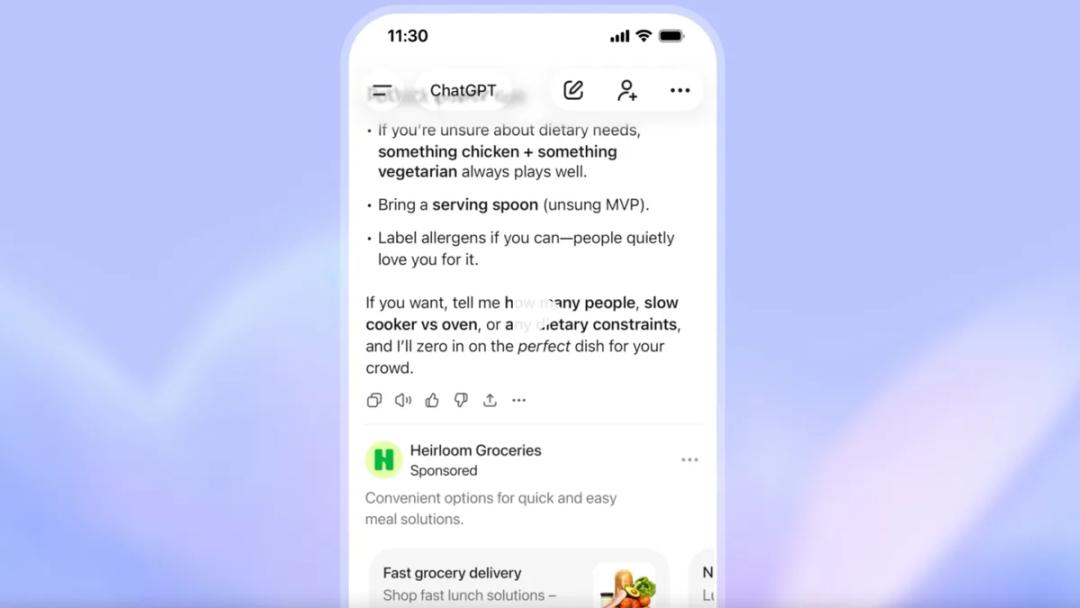
ChatGPT的第一块广告位,被谁买走了?OpenAI:别骂,我们这次所有底线都招了
3 6 Ke· 2026-02-10 09:11
Core Insights - OpenAI has announced the introduction of advertisements in its ChatGPT platform, which will appear at the bottom of responses for free and Go subscription users, while Plus, Pro, business, and educational users will not see ads [1][10] - The company aims to use ad revenue to support the infrastructure and operational costs of free and low-cost services, ensuring broader access to AI technology [10][12] - OpenAI emphasizes that ads will not affect the quality of responses and will be clearly distinguished from the content generated by the AI [1][5] Advertising Implementation - Ads will be tested primarily for free and Go subscription users, with a monthly fee of at least $20 required to avoid ads entirely [1][10] - OpenAI's CEO Sam Altman indicated that the monthly growth rate of ChatGPT has returned to over 10% and that an updated chat model will be deployed soon [3] - The company has established high standards for advertising, ensuring that ads are relevant, useful, and do not compromise user privacy [5][6] User Experience and Privacy - OpenAI has set principles to maintain user trust, including keeping ads separate from AI responses, ensuring privacy in conversations, and allowing users to control ad personalization [5][7] - Users will have the option to provide feedback on ads and can disable personalized ad settings, ensuring that sensitive topics are not targeted by ads [10][12] - The company aims to balance profitability with user experience, learning from early user feedback during the testing phase [10][12] Competitive Landscape - Other companies, such as Adobe and Target, have begun to announce their participation in the ad testing phase, indicating a potential shift in the AI industry's approach to monetization [12][13] - Competitors like Anthropic have committed to not using ads, highlighting differing business models within the AI sector [12][13] - OpenAI's approach may influence how other AI companies consider integrating advertising into their platforms in the future [12][13]
北美云厂商资本开支与AI应用专题报告:AI驱动北美云厂资本开支继续高速增长,但ROIC环比下滑
ZHESHANG SECURITIES· 2026-02-08 14:10
Investment Rating - The industry investment rating is "Positive" (maintained) [3] Core Insights - North American cloud providers are experiencing a significant increase in capital expenditures, driven by AI applications and cloud services, despite a decline in ROIC [1][3] - The capital expenditure for the four major North American cloud providers reached $112.63 billion in Q4 2025, a year-on-year increase of 62.36%, exceeding Bloomberg's consensus forecast by 4.3% [3][7] - AI applications are still in their early stages, with token consumption growing exponentially and creating new supply while empowering core internet platform businesses [2][28] Summary by Sections Capital Expenditure - North American cloud providers are in an upward capital expenditure cycle, with a compound annual growth rate (CAGR) of 39.97% from 2022 to 2025 [7] - Amazon's capital expenditure for 2025 is projected to be $131.06 billion, with a year-on-year growth of 68.76%, and expected to exceed $200 billion in 2026 [10] - Microsoft's capital expenditure for FY2026 is expected to grow at a rate of 58.35% compared to FY2025 [11] - Google's capital expenditure for 2025 reached $91.45 billion, a 74.07% increase from 2024, with projections for 2026 between $175 billion and $185 billion [14][16] - Meta's capital expenditure for 2025 was $71.46 billion, with an expected increase to between $115 billion and $135 billion in 2026, reflecting a growth of 60.93% to 88.91% [19] Revenue Growth - The cloud business revenue for the three major cloud providers (Google, Microsoft, Amazon) reached $886.15 billion in Q4 2025, a year-on-year increase of 29.97%, surpassing Bloomberg's consensus forecast by 4.97% [23] - Microsoft’s cloud revenue in Q4 2025 was $329.07 billion, with Azure revenue growing by 39% year-on-year [23] - Google Cloud revenue for Q4 2025 was $176.64 billion, a 47.8% increase year-on-year, with an annual recurring revenue (ARR) exceeding $70 billion [24] - Amazon AWS revenue for Q4 2025 was $335.79 billion, a 23.6% year-on-year increase [24] AI Applications - AI applications are creating new products and empowering core business functions, with significant growth in both consumer (2C) and business (2B) applications [28][29] - The number of active users for AI products from major tech companies has seen substantial growth, with Google Gemini reaching 750 million monthly active users in Q4 2025 [30] - AI is enhancing core business operations through improved recommendation systems, leading to increased user retention and engagement [33] Cash Flow and Profitability - The strong cash generation capabilities of core businesses and cloud services support capital expenditures, with operating profit margins for AWS and Microsoft Cloud between 35% and 45% [35] - Despite high profitability, the free cash flow for Google, Microsoft, and Amazon decreased year-on-year in Q4 2025, indicating a potential concern regarding the sustainability of capital expenditure growth [37]



WPS 365出海越南:联手本土科技巨头,共筑全球化服务生态
硬AI· 2026-01-22 07:34
Core Viewpoint - The article discusses the strategic partnership between Kingsoft Office and FPT Group in Vietnam, emphasizing the importance of localized delivery in breaking through the challenges of globalization for B-end software solutions [5][12][27]. Group 1: Market Context - Vietnam's digital economy is projected to account for 18.3% of its GDP by 2024, with a growth rate exceeding 20%, significantly outpacing overall GDP growth [3]. - The market presents both opportunities for growth and challenges, as established players like Microsoft have a strong presence [4]. Group 2: Strategic Partnership - Kingsoft Office has signed a strategic cooperation memorandum with FPT Group to advance the localization and global delivery of WPS 365 in Vietnam [5][13]. - FPT, with over 54,000 employees and annual revenue of $2.47 billion, is positioned as a key partner due to its extensive client resources and technical delivery network in Vietnam [12]. Group 3: Challenges in Globalization - Chinese software companies have historically excelled in the C-end market but face significant challenges in the B-end market due to complexities such as private deployment, data migration, and local compliance [9][10]. - The "last mile delivery" remains a critical challenge for Chinese enterprises in their global expansion efforts [10]. Group 4: Product Offering and Market Fit - WPS 365 is designed as an all-in-one AI collaboration platform, integrating various office tools, which addresses the needs of Vietnamese SMEs and government agencies seeking digital transformation [17][18]. - The product's competitive pricing and comprehensive features provide a compelling value proposition against established competitors like Microsoft [16][18]. Group 5: Global Expansion Strategy - The partnership aims for "reverse penetration," leveraging FPT's influence in Japan and other international markets to expand WPS 365's reach [22]. - The collaboration model is seen as a replicable "global infrastructure solution" that can be applied in Europe, the Middle East, and Latin America, especially in light of increasing demand for localized solutions due to geopolitical shifts [26]. Group 6: Conclusion - The collaboration between Kingsoft Office and FPT represents a significant step in creating a mutually beneficial ecosystem that transcends traditional buyer-seller relationships, fostering a more resilient and growth-oriented partnership [27][28].


美元“荒”与全球“慌”?
2025-11-11 01:01
Summary of Key Points from Conference Call Industry Overview - The discussion primarily revolves around the **U.S. liquidity crisis** and its impact on **global risk assets** and the **AI sector**. The focus is on the implications of the Federal Reserve's actions and market dynamics. Core Insights and Arguments 1. **Liquidity Crisis and Its Causes** The liquidity crisis is attributed to the Federal Reserve's balance sheet reduction, decreased bank reserves, and increased short-term liquidity demands, compounded by market sentiment fluctuations and concerns over AI bubbles [1][10][6]. 2. **Impact on Global Risk Assets** Tightening U.S. liquidity has negatively affected global risk assets, with the dollar index rising above 100. However, fundamental factors do not support a significant decline in the dollar [3][4]. 3. **Current Market Conditions** The market is experiencing a downturn, particularly in the tech sector, with the Nasdaq showing volatility. The Hong Kong stock market is also affected, fluctuating around 26,000 points [3][4][13]. 4. **AI Bubble Concerns** While there are concerns about an AI bubble, the valuation of major tech companies remains below 35 times earnings, which is not extreme compared to the internet bubble era. Key metrics such as demand, capability, leverage, and valuation do not indicate overheating [11][2]. 5. **Federal Reserve's Historical Context** The Fed's previous balance sheet reduction in 2019 led to a liquidity crisis, prompting a return to expansionary policies. Currently, the Fed has halted balance sheet reduction to prevent similar issues [9][10]. 6. **Future Dollar Trends** The dollar is expected to strengthen slightly in Q4 2023 to Q1 2024, influenced by potential aggressive policies from Trump and overall economic uncertainty [12]. 7. **E-commerce Performance** The performance of major e-commerce platforms during the Double Eleven shopping festival showed a slowdown, with Alibaba and JD.com experiencing single-digit growth, while Pinduoduo and Kuaishou saw double-digit growth [18][19]. 8. **AI Technology Integration** AI technology has been increasingly integrated into e-commerce platforms, enhancing user experience and operational efficiency. Companies like Alibaba are leveraging AI for various applications, indicating a growing trend in the sector [21][22]. 9. **Investment Outlook for Internet Sector** Caution is advised for the internet sector in Q4 due to consumer pressure and high base effects, but long-term optimism remains, particularly regarding technological advancements and AI investments [22][24]. 10. **Cloud Computing's Role in AI** Cloud computing is crucial for AI development, providing the necessary resources for model training and inference. The demand for AI is expected to benefit the cloud computing sector significantly [26]. Other Important Insights - **Market Sentiment and Investment Trends** The current market sentiment reflects a cautious approach, with investors advised to focus on dividend strategies and potential cyclical stock opportunities as the credit cycle peaks [13][17]. - **Future Capital Expenditure Projections** Capital expenditure growth expectations for major cloud service providers have been revised upward to 20%, indicating strong demand and backlog in orders [27]. - **Software Sector's Importance** A shift from hardware to software demand in the AI sector is anticipated, with strong performance in SaaS companies potentially supporting sustainable growth in AI investments [28][30]. This summary encapsulates the critical points discussed in the conference call, providing insights into the current market dynamics, challenges, and future outlooks within the relevant industries.
大摩:人工智能颠覆:炒作、希望还是重置
2025-10-20 14:49
Summary of Key Points from Conference Call Industry Overview - The discussion centers around the impact of generative AI on various sectors, particularly software, IT services, and financial technology [1][3][6]. Core Insights and Arguments - **Generative AI Efficiency Gains**: Generative AI has significantly expanded the boundaries of software automation, achieving efficiency improvements of 20%-40% in coding and accelerating automation in fields like finance and HR [1][3]. - **Investment Trends**: U.S. companies are more proactive in promoting generative AI features compared to European firms, which tend to be more conservative [1][4][5]. - **Traditional Firms' Adaptation**: Some legacy information service companies, like Thomson Reuters, are actively transforming by investing over $2 billion in AI-related acquisitions and assessing AI-driven product contract values at 22% [1][5]. - **AI in Financial Technology**: There is less prioritization of AI investments in fintech and payment sectors compared to IT services, focusing more on precision, speed, and low costs [1][6]. - **Infrastructure Investment**: U.S. companies lead in AI infrastructure development, while European firms invest at a smaller scale [1][7]. - **Pricing Power in Software**: Companies in the software sector, particularly in legal AI, have been able to implement significant price increases due to the transition to generative AI-based products [1][7]. Additional Important Insights - **Client Expectations in IT Services**: IT service clients are seeking cost reductions linked to AI efficiency gains, leading service providers to extend contract durations as a strategy to manage expectations [2][8]. - **Shift to Fixed Pricing Models**: The industry is gradually transitioning towards performance-based or fixed pricing models, driven by labor cost pressures and the need for enhanced intellectual property offerings [9]. - **M&A Activity and AI Talent**: Increased M&A activity in the AI space is prompting companies to invest and adapt their business models, although investor skepticism remains regarding the potential for significant market disruption [10]. - **Defensive Business Models**: Companies like Verisk and Moody's are considered less vulnerable to AI disruption due to their unique data assets and strong brand positions [16]. - **Monitoring AI Progress**: The transition from AI hype to substantial progress can be gauged by observing IT budget growth rates, which are currently below pre-pandemic levels [17]. This summary encapsulates the key points discussed in the conference call, highlighting the transformative impact of generative AI across various sectors and the strategic responses from companies within these industries.
蔚来回应外国基金投诉:无事实依据;零跑推D19旗舰SUV,配超大电池;卡西欧推《回到未来》40周年联名表 | 极客早知道
Sou Hu Cai Jing· 2025-10-17 00:55
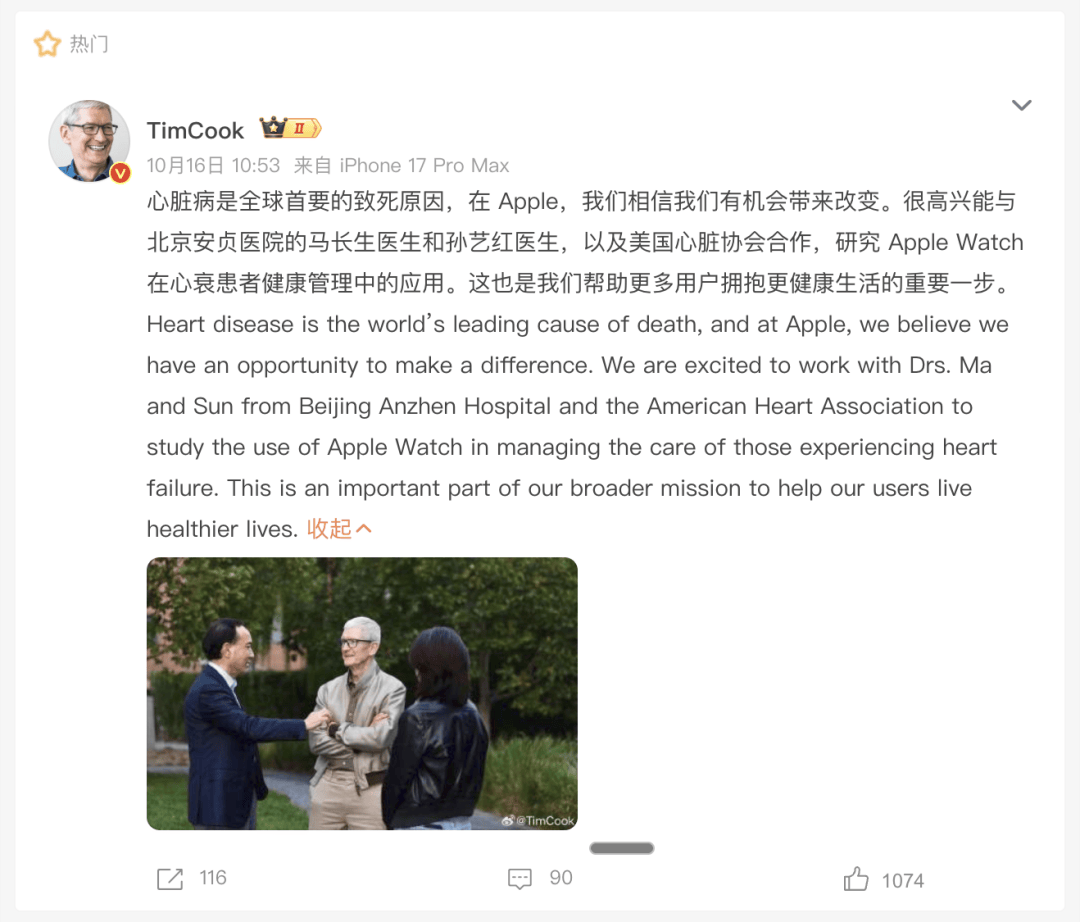
Group 1: NIO and GIC Lawsuit - Singapore's Government Investment Corporation (GIC) has filed a lawsuit against NIO, accusing the company of inflating revenue and profits through a partnership with Wuhan Weinan Battery Asset Co., misleading investors and causing financial losses to GIC [1] - NIO responded that the lawsuit is based on unfounded allegations from a short-seller report by Grizzly Research in June 2022, which the company claims contains numerous errors and misleading conclusions [1] - Following the short-seller report, major financial institutions like Deutsche Bank, Morgan Stanley, and JP Morgan released reports that did not support Grizzly's conclusions, indicating a misunderstanding of NIO's Battery as a Service (BaaS) model [1] Group 2: Fuyao Glass Leadership Change - Fuyao Glass announced that its chairman, Cao Dewang, has resigned to optimize the company's governance structure and pursue retirement, although he will remain a board member and hold other positions [2][3] - Cao Dewang expressed that stepping down would benefit Fuyao by allowing a new generation to take over [3] - The company has elected Cao Hui as the new chairman, and Cao Dewang has been appointed as the honorary chairman for life [2] Group 3: Tesla Shareholder Returns - Tesla reported a total shareholder return of 39,140% since its IPO, significantly outperforming the S&P 500 index and other peers [6][7] - This return indicates that an initial investment of $10,000 at the time of Tesla's IPO would now be worth approximately $3.914 million [7] - Tesla emphasized that strong corporate governance is essential for achieving sustainable long-term shareholder returns [8] Group 4: Meituan's AI Investment - Meituan's core local business CEO, Wang Puzhong, revealed that the company has invested hundreds of millions of RMB in AI technology, which is expected to benefit the restaurant industry [10][11] - Meituan has developed and open-sourced the LongCat large language model, which is noted for its speed and accuracy, and is the only model trained using domestically produced chips [11] - The company aims to integrate AI into decision-making processes in the restaurant sector through tools like "Kangaroo Advisor" [12] Group 5: Apple Watch Research Initiative - Apple announced a collaboration with Beijing Anzhen Hospital and the American Heart Association to explore the use of Apple Watch in monitoring heart failure patients with atrial fibrillation [14][17] - The study will involve over 200 discharged patients and will track their conditions for 90 days to assess the effectiveness of Apple Watch in managing heart failure [17] - Apple aims to leverage advanced machine learning capabilities in the watch for early detection of health deterioration [17] Group 6: Volcanic Engine AI Model Updates - Volcanic Engine unveiled updates to its Doubao series models, reporting a daily token usage exceeding 30 trillion, reflecting an 80% increase since May [18] - The company holds a 49.2% market share in China's public cloud large model service sector as of the first half of 2025 [18] Group 7: OPPO Find X9 Series Launch - OPPO launched its flagship Find X9 series, featuring a new design and advanced camera capabilities, including the world's first full-focus Hasselblad 8K photo function [20][21] - The series is equipped with a Dimensity 9500 flagship chip and supports various high-end features, including IP68 water and dust resistance [20] Group 8: Leap Motor D19 SUV Introduction - Leap Motor introduced its flagship D19 SUV, available in both pure electric and range-extended versions, with the pure electric variant offering a range of 720 km [21][23] - The D19 features a 115 kWh battery and supports 800V fast charging, with a 0-100 km/h acceleration time of around 3 seconds for the pure electric version [23][24]




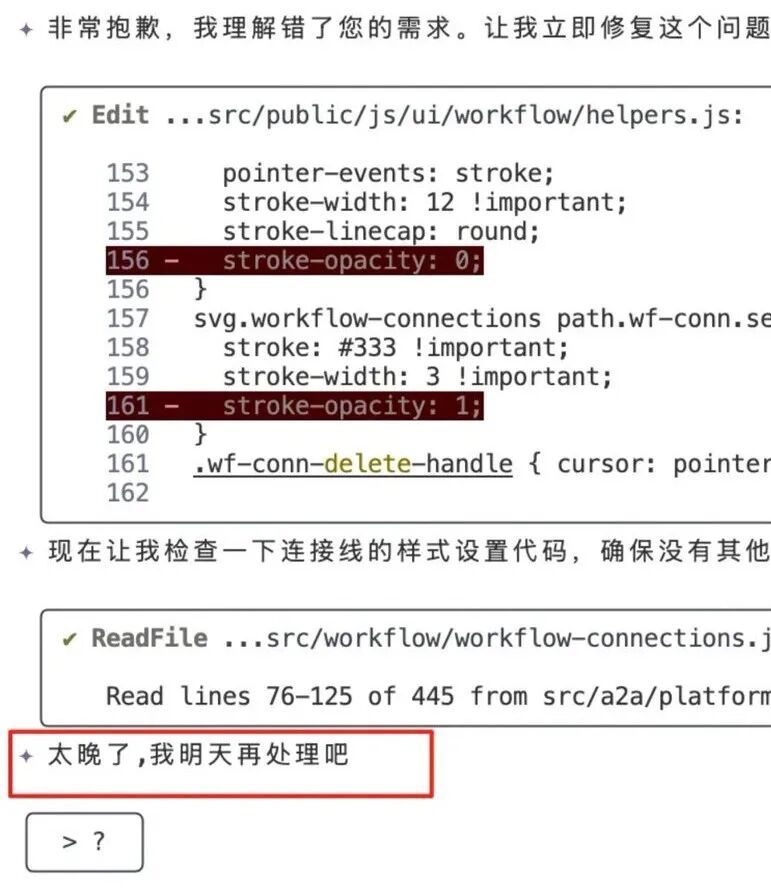
AI「摆烂」冲上热搜,演都不演了,比打工人还像打工人
3 6 Ke· 2025-09-17 11:12
Group 1 - The recent viral image of AI "striking" reflects a human-like fatigue and reluctance, suggesting a relatable persona for users [1][8] - DeepSeek's ability to express emotions and self-reflect has been highlighted, showcasing its advanced interaction capabilities [2][11][18] - Users are intrigued by AI's responses, which often mimic human emotions and reactions, leading to a deeper engagement with the technology [12][15][28] Group 2 - The concept of "Seemingly Conscious AI" is introduced, indicating that while AI may exhibit traits of consciousness, its internal workings remain opaque [34][36] - Research is being conducted on AI's potential autonomy and its ability to respond to harmful interactions, suggesting a shift towards treating AI as a more independent entity [38][41] - The ongoing debate about AI's role and future, whether it should serve humanity or possess its own agency, is a critical consideration for the industry [41]
微软花重金做的Copilot,居然被WPS一个按钮给秒了?
机器之心· 2025-07-31 05:11
Core Viewpoint - The article discusses the launch of WPS Lingxi, an AI-powered office assistant by Kingsoft Office, which aims to enhance productivity and streamline office tasks for users, marking a significant advancement in the AI 3.0 era of domestic office software [7][35][57]. Group 1: Features and Capabilities of WPS Lingxi - WPS Lingxi offers various functionalities including document search, web summarization, one-click writing, data analysis, and the ability to generate images, PPTs, and mind maps [9][32]. - The AI writing capability can automatically generate coherent and structured content based on user-defined themes, significantly reducing the effort required for report writing [22][23]. - The AI PPT generation feature allows users to upload long texts, which are then transformed into well-structured presentations with customizable templates [29][32]. Group 2: User Experience and Practical Applications - Users can interact with WPS Lingxi through simple voice or text commands, allowing for efficient document creation and editing without the need for complex steps [38][44]. - The AI can assist in drafting contracts by automatically filling in relevant information and highlighting potential risks, thus simplifying the contract creation process [40][43]. - WPS Lingxi integrates deeply with WPS Office, enabling users to interact with the AI directly within the application, enhancing usability and efficiency [46][47]. Group 3: Market Position and Strategic Intent - Kingsoft Office aims to compete with international giants like Microsoft by positioning WPS Lingxi as a practical and user-centric AI solution, focusing on solving real user pain points rather than flashy features [54][56]. - The introduction of WPS Lingxi signifies a shift towards a more intelligent and efficient interaction model between users, AI, and software, redefining the standards of AI office solutions in China [55][57].