
恒生汽车ETF

Search documents
超860亿资金逆势加仓ETF
Sou Hu Cai Jing· 2025-11-23 14:11
Market Overview - Global markets experienced increased volatility due to a combination of domestic and international negative factors, leading to declines across major indices, with small-cap indices like the North Securities 50 and CSI 2000 dropping over 5% for the week [1][4] - The average daily trading volume decreased compared to the previous week, totaling 9.23 trillion yuan, with an average daily turnover of approximately 1.84 trillion yuan, indicating potential challenges for a short-term market recovery [4] Sector Performance - The Shenwan first-level industry indices all fell, with the power equipment sector leading the decline at -10.54%, while basic chemicals, retail, and steel sectors also saw declines exceeding 5% [4] - The banking sector was the most resilient, showing the least decline among various sectors [4] Global Market Trends - Internationally, markets such as the KOSPI 200, Nikkei 255, and NASDAQ 100 also faced significant declines, with weekly drops of 4.09%, 3.47%, and 3.07% respectively, marking their worst performances in recent times [7] - The downturn was attributed to hawkish signals from Federal Reserve officials, which reduced December rate cut expectations from 50% to 30%-40%, tightening risk appetite and impacting risk assets like the Philadelphia Semiconductor Index, which fell over 10% [7] ETF Market Activity - Contrasting the overall market trend, the ETF market saw a net inflow of over 86.1 billion yuan for the week, with stock ETFs being the primary focus, attracting approximately 58.2 billion yuan [7][8] - The total ETF shares reached 30,672.98 billion, an increase of 51.55 billion shares from the previous week, indicating a strong interest in ETFs despite broader market declines [8] Notable ETF Performance - Among the ETFs, several tracking the Hang Seng Technology Index and Hang Seng Internet Index saw significant inflows, with four ETFs tracking the Hang Seng Technology Index collectively gaining over 11 billion shares [8] - Only two out of 1,258 stock ETFs managed to close in the green, both tracking foreign indices, highlighting the challenging environment for domestic ETFs [9] Technical Analysis and Outlook - Major indices have broken below key support levels, indicating a bearish market sentiment, with the potential for further declines if trading volumes and margin financing continue to decrease [7][10] - Despite the recent downturn, there is a suggestion of strong support within the 3,800-point range for the Shanghai Composite Index, indicating a possible base for future upward movement [10]


ETF午评:标普油气ETF领涨7.68%,港股通汽车ETF领跌3.75%
news flash· 2025-06-13 03:32
Group 1 - The S&P Oil and Gas ETF (159518) led the gains with an increase of 7.68% [1] - The S&P Oil and Gas ETF (513350) also saw a significant rise of 7.45% [1] - The Energy Chemical ETF (159981) experienced a gain of 5.03% [1] Group 2 - The Hong Kong Stock Connect Automotive ETF (159323) was the biggest loser, declining by 3.75% [1] - The Hang Seng Automotive ETF (159239) fell by 3.63% [1] - The Hong Kong Automotive ETF (520600) decreased by 3.4% [1]
金融工程日报:沪指震荡微升,有色领涨、新消费集体调整-20250606
Guoxin Securities· 2025-06-06 14:16
The provided content does not include any quantitative models or factors, nor their construction, evaluation, or backtesting results. The documents primarily focus on market performance, sentiment, capital flows, ETF premiums/discounts, block trades, and institutional activity. No quantitative models or factors are discussed or analyzed.
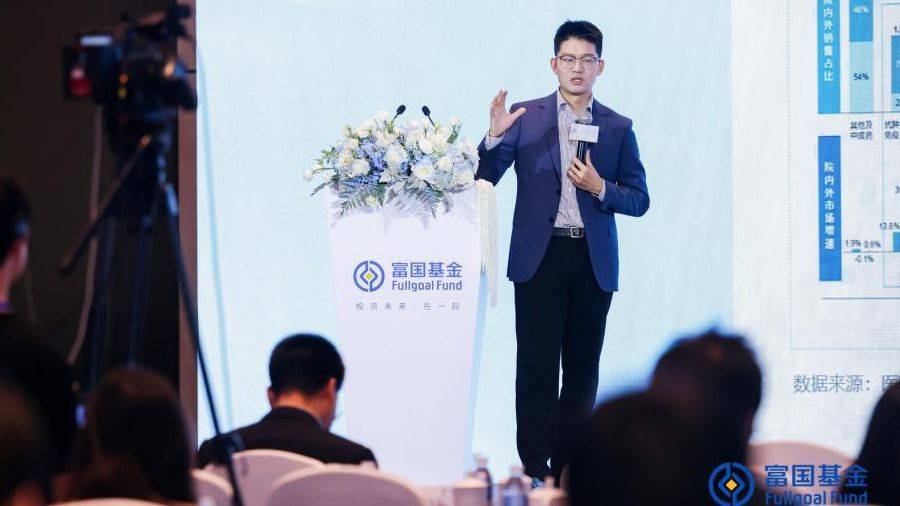
富国基金解析港股ETF策略,关注互联网、创新药、智能车等赛道
Sou Hu Cai Jing· 2025-06-03 12:14
Group 1 - The core theme of the article is the significant structural opportunities in the Hong Kong stock market, particularly in five key sectors: internet, innovative pharmaceuticals, smart vehicles, new consumption, and dividend assets [2][5] - The penetration rate of autonomous driving has just surpassed 10%, which is a critical point that is expected to accelerate the adoption of electric vehicles and drive growth in the automotive sector [9][8] - The Hong Kong stock market is seeing a continuous inflow of southbound funds, which, along with the deepening of scarce industry layouts, is expected to make related ETF products strategic tools for capturing market dividends [2][3] Group 2 - The performance of various ETFs in the Hong Kong market shows strong returns, with the Hong Kong Internet ETF achieving a net return of 62.28% over the past year, and the Hong Kong Medical ETF returning 40.60% [3][4] - The innovative pharmaceutical sector is experiencing a significant growth rate, with spending on innovative drugs expected to increase by 26%, driven by a supply-demand imbalance [7][6] - The automotive sector is benefiting from the rise of domestic brands, with electric vehicle sales continuing to grow and the market share of domestic brands increasing at the expense of joint venture brands [9][8] Group 3 - The upcoming Hong Kong Consumption ETF aims to fill a gap in the market by focusing on pure consumption stocks, addressing the changing consumer habits that are not reflected in existing indices [11] - The Hong Kong Dividend ETF is designed to effectively eliminate value trap stocks, providing a more stable investment option compared to traditional high-dividend indices [12] - The index for the Hong Kong Automotive ETF is structured to prioritize core automotive companies, reflecting the growth logic of domestic brands in the electric vehicle market [10][9]
布局智能汽车广阔前景 恒生汽车ETF将于5月14日结募
Quan Jing Wang· 2025-05-13 01:28
Group 1 - The People's Bank of China has implemented a "zero reserve requirement" policy for auto finance and financial leasing companies, reducing the reserve requirement ratio from 5% to 0%, aimed at boosting auto consumption and industry upgrades [1] - The automotive industry in China is experiencing favorable policies and advancements in smart driving technology, leading to increased investment opportunities [1] - The launch of the Hang Seng Automotive ETF (159239) is designed to help investors easily access the automotive sector, with fundraising ending on May 14 [1] Group 2 - The Hang Seng Hong Kong Stock Connect Automotive Theme Index includes leading companies in smart driving, with over 50% concentration in new energy vehicle manufacturers like BYD, Xpeng, Geely, Li Auto, and Leap Motor [2] - The index has shown strong performance, with a 61.86% increase over the past six months, outperforming other indices such as the Hong Kong Stock Connect Automotive Index and the Hang Seng Index [2] Group 3 - The profitability of companies within the Hang Seng Hong Kong Stock Connect Automotive Theme Index is improving, with a projected return on equity (ROE) rising from -0.6% in 2021 to 8.4% in 2024 [3] - The index offers a favorable investment valuation, with a price-to-earnings (PE) ratio of 23.81 compared to 24.89 for the CSI All Share Automotive Index, indicating a higher safety margin [3] - The global market for intelligent connected vehicles is expected to reach 80 million units by 2030, with China projected to account for 27 million units, suggesting significant growth potential for the automotive sector [3]
一基网罗港股新势力车企,恒生汽车ETF 5月6日起正式发行!
Jin Rong Jie· 2025-05-06 00:49
Core Insights - The 2025 Shanghai Auto Show showcased over 100 new energy vehicles and advanced technologies like flying cars and humanoid robots, highlighting significant technological advancements in China's automotive industry [1] - A new policy from the National Development and Reform Commission aims to boost car purchases by issuing additional purchase quotas for families without cars, which is expected to stimulate demand in the automotive market [1] - The Hang Seng Automotive ETF (code: 159239) is set to launch on May 6, providing investors with a tool to efficiently invest in the Hong Kong stock market's smart automotive sector [1] Investment Opportunities - The Hang Seng Automotive ETF closely tracks the Hang Seng Hong Kong Stock Connect Automotive Theme Index (HSSCAM), which includes leading companies in smart driving technology such as BYD, Xiaopeng, Li Auto, and Leap Motor among its top ten constituents [2] - The index also incorporates Xiaomi, a notable player in the automotive sector, enhancing its representation of quality smart automotive companies [2] - As of April 29, nearly half of the index's constituents are new energy vehicle manufacturers, with over 70% of the components related to smart driving systems and components, positioning it well to capture opportunities in the electric vehicle transition [2] Index Performance - The Hang Seng Hong Kong Stock Connect Automotive Theme Index has a significant focus on vehicle manufacturers and parts suppliers, with weights of 68.1% and 13.9% respectively, benefiting from the global trends of electrification and smart technology in the automotive industry [3] - Historical performance shows that the index has outperformed similar indices over various time frames, with returns of 16% over the last six months, 45% over the past year, and 31% over three years, surpassing the Hang Seng Technology Index and other benchmarks [4] Management Expertise - The proposed fund manager for the Hang Seng Automotive ETF, Tian Ximeng, has eight years of experience in the industry and has managed significant assets in Hong Kong ETFs, indicating strong management capabilities in a complex market [5] - The fund management company, Fuguo Fund, is recognized for its expertise in quantitative investment and has a well-established team that supports the fund manager with extensive research and investment strategies [6] Market Trends - The global smart driving industry is experiencing dual catalysts from policy and technology advancements, with new business growth opportunities emerging in areas like AI integration and robotics in the automotive sector [6]
港股汽车板块布局利器!恒生汽车ETF即将发行
Quan Jing Wang· 2025-04-29 00:41
Group 1 - The 2025 Shanghai Auto Show features nearly 1,000 companies from 26 countries, showcasing over 100 new energy vehicles and advanced technologies like flying cars and humanoid robots, signaling an acceleration in China's automotive industry's smart transformation [1] - China's new energy vehicle penetration rate has surpassed 40%, while the penetration rate for smart vehicles (L2+) is only 14%, indicating that smart technology could become a new growth point for the industry [1] - The upcoming Hang Seng Automotive ETF, launching on May 6, is positioned as a convenient tool for investors looking to capitalize on the smart automotive wave in China [1] Group 2 - The Hang Seng Automotive ETF tracks the Hang Seng Hong Kong Stock Connect Automotive Theme Index, which includes major smart automotive companies like BYD, Xpeng, Li Auto, and Xiaomi, with nearly 50% of the index weight concentrated in "new car-making forces" [2] - The index also includes companies involved in smart driving system components, with nearly 70% of the weight attributed to firms developing perception, communication, and control components for smart driving systems [2] - The Hang Seng Automotive Theme Index has shown a cumulative rebound of over 61% in the past six months, outperforming other high-volatility indices, reflecting the index's superior composition [2] Group 3 - The Hang Seng Automotive ETF will be managed by experienced fund manager Tian Ximeng, who has eight years of industry experience and has been focused on Hong Kong stock investments, managing several ETFs with significant assets [3] - As 2025 approaches, competition among Chinese automotive companies in smart technology is intensifying, with breakthroughs expected to exceed industry forecasts, suggesting a promising future for smart vehicles [3] - Investors are encouraged to consider the Hang Seng Automotive ETF to strategically position themselves in the emerging era of smart driving [3]