
投资铜条

Search documents
从“网红”到“废铜”,“投资铜条”热背后的冷思考
Qi Huo Ri Bao· 2026-02-04 04:35
Core Viewpoint - The emergence of "investment copper bars" reflects a lack of financial literacy and structural shortcomings in financial education, highlighting the cognitive dissonance and investment anxiety among ordinary investors in a complex market environment [1][12]. Group 1: Investment Trends - The surge in "investment copper bars" is a response to the rising prices of gold and silver, driven by a strong desire for wealth accumulation among investors [12][14]. - The pricing of "investment copper bars" is significantly detached from the actual market value, with premiums exceeding 80% compared to copper futures prices, indicating a lack of transparency and fair pricing mechanisms [17][18]. Group 2: Risks and Challenges - "Investment copper bars" lack a unified pricing mechanism and reliable exit strategies, leading to potential losses of 40% to 70% for investors upon purchase [13][15]. - The product is characterized by high volatility and low liquidity, making it a risky investment option that is not suitable for most investors [16][18]. Group 3: Market Dynamics - The recent volatility in precious metals prices, including a significant drop in gold and silver, serves as a reminder of the inherent risks in speculative investments like "investment copper bars" [16][17]. - The market for "investment copper bars" is described as a gray area with weak regulation, highlighting the need for investors to be cautious and informed [14][15]. Group 4: Investment Philosophy - Successful investing requires a deep understanding of market demands and cycles, as demonstrated by individuals who have achieved consistent returns through disciplined investment strategies [5][6]. - The essence of investment lies in recognizing genuine demand and maintaining a steady approach, rather than succumbing to market fads and speculative bubbles [5][6].
“投资铜条”悄然走红 投资者当心被“收割”
Qi Huo Ri Bao Wang· 2026-01-30 01:13
Core Viewpoint - The recent surge in copper prices has led to the emergence of "investment copper bars," which lack standardized quality certification and a reliable repurchase mechanism, raising concerns about their actual investment value [1][2][3]. Price Trends - Domestic copper prices increased by 6% on January 29, with futures prices surpassing 110,000 yuan/ton and overseas prices reaching 14,000 USD/ton. The price increase for copper in 2025 is projected at 33%, with a monthly increase of 11% in January [1]. Product Characteristics - "Investment copper bars" are marketed with labels such as "Cu99.9," "pure copper," and "sufficient copper," and weigh between 500 grams to 15 kilograms. However, they are sold at significant premiums compared to the market price of electrolytic copper [1][2]. Market Concerns - Analysts express skepticism about the investment attributes of these copper bars, suggesting they are more suitable for industrial use rather than as investment products. The risks include difficulties in liquidation and high storage costs [2][3]. Regulatory Issues - The promotion of copper bars as investment products raises compliance concerns, as their legal status in this context is unclear. Some vendors have faced restrictions in physical markets [3]. Investment Alternatives - For those interested in copper investments, there are established and regulated avenues such as copper ETFs, mining company stocks, and futures or options trading, which offer transparency and liquidity [3][4]. Investor Behavior - The emergence of "investment copper bars" reflects a growing interest in copper among investors, but caution is advised as the investment logic for industrial metals is complex and influenced by macroeconomic factors [4][5].
价格狂飙下,如何守好“钱袋子”
Qi Huo Ri Bao Wang· 2026-01-29 18:23
Group 1 - The core viewpoint of the article highlights the rising metal prices in 2026, which significantly impact the industry, consumption, and the economy, focusing on tangible investment products like gold and silver bars [1] - The gold and silver market appears vibrant with high demand, but underlying issues such as reduced profits for gold shops and decreased orders for processing companies indicate a struggling industry [2][3] - The shift in consumer preferences towards cost-effective products has led to a decline in sales of high-craftsmanship items, with a notable 40% reduction in order volumes reported by processing enterprises [2][3] Group 2 - Gold shops are adjusting their business models due to high raw material prices, selling only in-stock items and relying on inter-store transfers, while major brands are also reducing their store counts [3][4] - Processing companies face significant challenges, including soaring raw material prices and a 40% drop in order volumes, leading to a drastic reduction in profit margins [4] - The upstream gold and silver traders are experiencing difficulties with supply shortages and price volatility, exacerbated by trust issues stemming from incidents like the "Jie Wo Rui" scandal [4][5] Group 3 - The surge in gold and silver prices has led to a rise in investment scams, with many investors falling victim to unregulated platforms, highlighting the need for caution in investment choices [5][6] - Regulatory markets like the Shanghai Futures Exchange provide a secure investment environment, contrasting sharply with unregulated platforms that pose significant risks to investors [6][7] - For ordinary investors, lower-threshold investment options through commercial banks or reputable gold shops are recommended as safer alternatives [7][8] Group 4 - The futures market serves as a stabilizing mechanism for businesses facing high raw material costs, allowing them to lock in prices and secure reliable supply channels [7][9] - The delivery process in the futures market is strictly regulated, ensuring fairness and efficiency, which is crucial for businesses in managing their procurement and risk [8][9] - The current bull market in precious metals is driven by macroeconomic changes, but volatility remains a constant factor, necessitating careful navigation of investment channels [9]
“原价100做成铜条卖150”,金银暴涨后“投资铜条”也卖爆了
Sou Hu Cai Jing· 2026-01-29 15:21
Core Viewpoint - The recent surge in gold and silver prices has led to a significant increase in the popularity of "investment copper bars," which are being marketed as a cheaper alternative to traditional precious metals [1][4][10]. Group 1: Market Dynamics - The price of investment copper bars has seen a dramatic rise, with prices increasing from 105 yuan to 300 yuan per kilogram within a short period [13][30]. - A notable increase in demand has been observed, with one vendor reporting sales of over a thousand copper bars shortly after their introduction [13][19]. - The market for investment copper bars has been characterized by a mix of speculative buying and consumer enthusiasm, despite skepticism from some observers [12][16]. Group 2: Investment Rationale - Many consumers view copper bars as a potential investment opportunity, hoping they will appreciate in value similar to silver [4][23]. - The narrative surrounding copper's future potential is bolstered by trends in renewable energy and AI, which are expected to increase copper demand significantly [24][27]. - The psychological factors driving investment decisions include fear of missing out (FOMO) on potential gains, particularly after witnessing substantial increases in gold and silver prices [39][45]. Group 3: Risks and Challenges - The investment in copper bars comes with inherent risks, including high premiums over market value and limited avenues for resale, as they are primarily sold without a buyback option [30][32]. - The physical nature of copper bars poses logistical challenges, such as storage and potential degradation over time, which could further diminish their value [33][46]. - The fundamental differences between copper and precious metals, including their market dynamics and historical value perception, suggest that copper may not serve as a reliable investment vehicle [46].

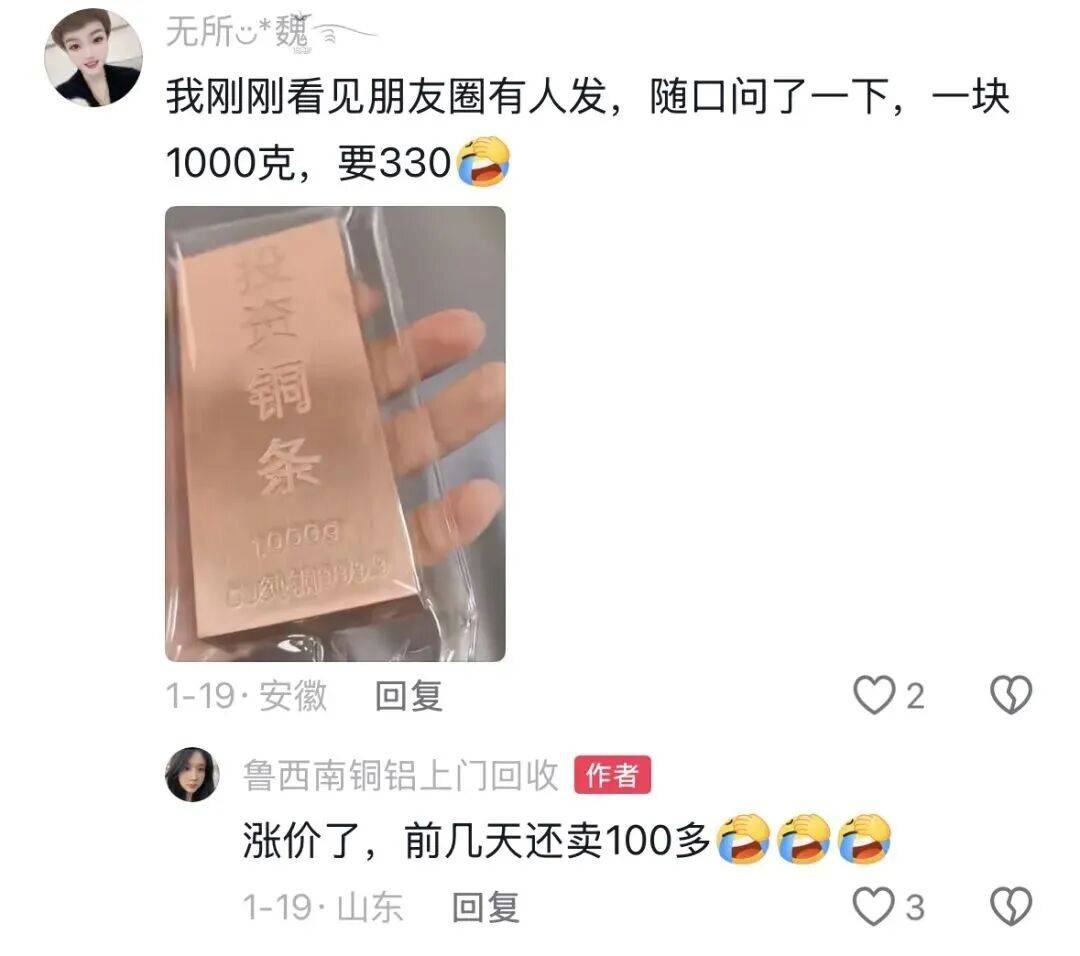
铜价急涨 盘中突破11万元/吨!“投资铜条”悄然走红 相关风险不容忽视!
Qi Huo Ri Bao· 2026-01-29 13:42
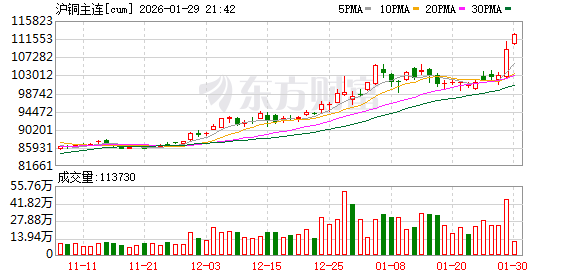
Core Viewpoint - The recent surge in copper prices has led to the emergence of "investment copper bars," which are marketed as investment products but lack proper certification and a standardized trading system [2][7][8]. Group 1: Market Dynamics - On January 29, both domestic and international copper prices reached historical highs, with Shanghai copper futures rising over 8% to 110,970 CNY/ton and LME three-month copper increasing over 7% to 14,125 USD/ton [2]. - Domestic copper prices have seen a 33% increase in 2025, with an 11% rise year-to-date as of January 29 [2]. Group 2: Product Characteristics - "Investment copper bars" are designed to resemble investment gold and silver bars but lack unified quality certification and a reliable buyback mechanism [7][8]. - The pricing of these products is significantly marked up, with a 1 kg "investment copper bar" priced around 160 CNY, compared to the average domestic SMM electrolytic copper price of 104,185 CNY/ton [7]. Group 3: Investment Risks - Experts indicate that the investment attributes of "investment copper bars" are weak, primarily suited for industrial use rather than investment, with risks including difficulty in liquidation and high storage costs [8][9]. - The lack of clear compliance and liquidity raises concerns about the viability of these products as genuine investment options [8][9]. Group 4: Alternative Investment Options - Investors interested in copper can explore established and regulated avenues such as copper-related ETFs, mining company stocks, and copper futures or options trading [9][10]. - The investment logic for copper is complex, influenced by macroeconomic cycles and industrial demand, and should not be approached in the same manner as precious metals [10].
实探深圳水贝:铜条退场、银条走红
财联社· 2026-01-29 05:46
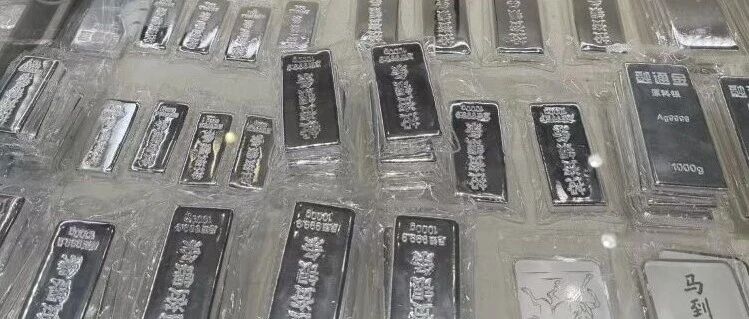
Core Viewpoint - The article discusses the recent trends in the precious metals market, highlighting the surge in gold and silver prices while noting the cessation of copper bar sales due to their lack of investment value and poor recovery channels [1][4]. Group 1: Market Trends - The retail market in Shenzhen's Shui Bei has seen a significant increase in demand for gold and silver bars, with copper bars being banned from sale due to their high premiums and lack of investment appeal [1][4]. - As of January 27, the price of silver bars has reached 30.86 yuan per gram, with a 1000g silver bar priced at approximately 30,860 yuan, indicating a shift in consumer interest towards silver as an investment [7][11]. - The overall sales of gold products have decreased by about 30% compared to the same period in 2025, attributed to high gold prices impacting traditional consumption patterns [1][14]. Group 2: Investment Dynamics - The investment demand for gold is expected to remain strong, driven by its financial attributes, while gold jewelry consumption is under pressure, leading to a market shift towards lighter, more designed products [1][16]. - The article notes that the investment demand for gold bars has surpassed that of gold jewelry, reflecting a broader trend of gold being viewed as a financial asset rather than merely a decorative item [18]. - Analysts predict that the price of gold may continue to rise in 2026, with expectations of a neutral price forecast around 5,400 USD per ounce, despite potential short-term volatility [20]. Group 3: Future Outlook - The silver market is experiencing a significant boom, with prices having increased over 50% in less than a month, driven by demand from sectors like photovoltaics and electric vehicles [20][22]. - The article emphasizes that while silver has industrial applications, its investment attributes are still developing, and there are concerns about the sustainability of physical silver investments due to limited liquidity [21]. - The copper market is expected to maintain a strong performance due to tight supply and increasing demand from emerging technologies, although it is noted that copper's price is more influenced by industrial demand rather than safe-haven investment [22][23].
金银暴涨之后,“投资铜条”也卖爆了
3 6 Ke· 2026-01-29 00:30
Core Viewpoint - The emergence of investment copper bars, despite their unconventional nature, has gained significant attention and sales, driven by rising metal prices and speculative interest in the market [1][3][11]. Group 1: Investment Trends - The price of investment copper bars has surged from 105 RMB to 300 RMB per kilogram, reflecting high demand and speculative buying behavior [13]. - A notable trend is the comparison of copper bars to traditional investment metals like gold and silver, with some consumers believing that copper could be the next big investment opportunity [36][38]. - The market sentiment is divided, with some mocking the investment in copper bars while others actively purchase them, indicating a strong speculative interest [17][19]. Group 2: Market Dynamics - The recent ban on selling copper bars in certain markets has led to speculation that this could drive prices higher, as consumers rush to buy before potential price increases [13][22]. - E-commerce platforms have seen significant sales of copper bars, with prices around 169.99 RMB for 1000 grams, indicating a robust online market for these products [14]. - The marketing strategies employed by sellers, including comparisons to gold and silver investments, have contributed to the growing popularity of copper bars [22][27]. Group 3: Economic Factors - The rising prices of gold and silver, which have increased by 2 to 3 times over the past year, have created a psychological environment where investors are looking for alternative, lower-cost investment options like copper [34][36]. - The demand for copper is supported by industrial needs, particularly in renewable energy and electric vehicles, which require significantly more copper than traditional vehicles [38]. - Despite the apparent demand, the actual investment value of copper bars is questionable, as they are sold at a premium compared to market prices, leading to immediate losses for buyers [44][46]. Group 4: Psychological Aspects - The fear of missing out (FOMO) on potential profits from rising metal prices drives many investors to purchase copper bars, despite the high premiums and risks involved [53][59]. - The emotional impact of missing investment opportunities can lead to irrational buying behavior, as individuals seek to alleviate their anxiety over past investment decisions [54][61]. - The fundamental differences between copper and more established investment metals like gold are often overlooked by consumers, leading to misguided investment strategies [61][62].
投资铜条靠谱吗?
Sou Hu Cai Jing· 2026-01-27 18:40
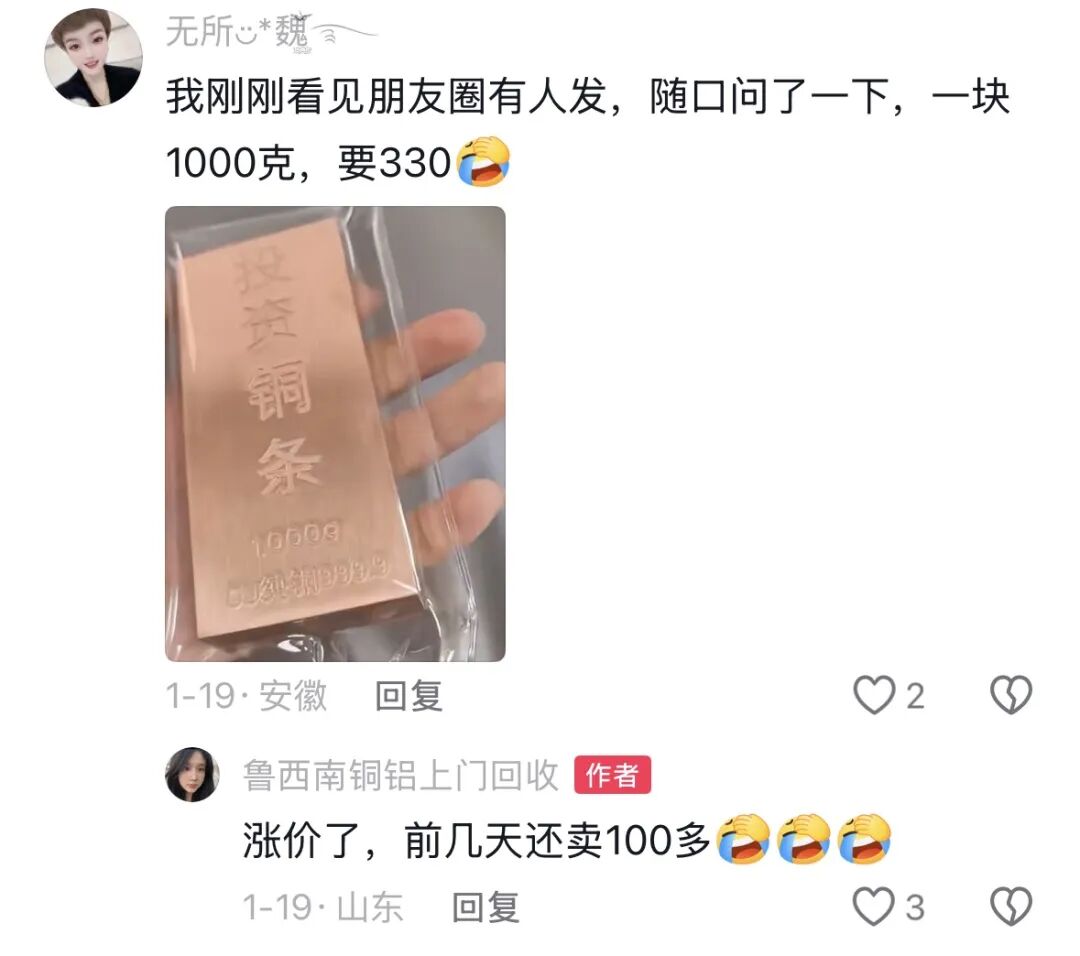
Group 1 - The surge in copper investment interest is driven by rising gold and silver prices, leading investors to seek alternative investment options like copper bars [4] - Copper prices reached a historical high of $13,407 per ton on January 14, according to the London Metal Exchange, influenced by optimistic market expectations from international investment banks [4] - Copper is classified as an industrial metal with weak financial attributes and lacks a mature investment framework, making it an unsuitable investment compared to gold and silver [4] Group 2 - Many merchants emphasize selling copper bars without offering buyback services, which raises concerns about the value cycle of investments [6] - The price of investment copper bars ranges from 180 to 300 yuan per kilogram, with projections suggesting copper prices could exceed 100,000 yuan per ton by the end of 2025 [6] - The high premium on investment copper bars and the difficulty in recouping costs indicate a significant imbalance between cost and potential returns for investors [6] Group 3 - Copper oxidizes easily in air, necessitating professional storage and preservation methods to prevent deterioration, which adds hidden costs to investment [8] - Investors are advised to consider standardized products like copper ETFs or copper mining stocks if they are optimistic about copper's long-term prospects [8]
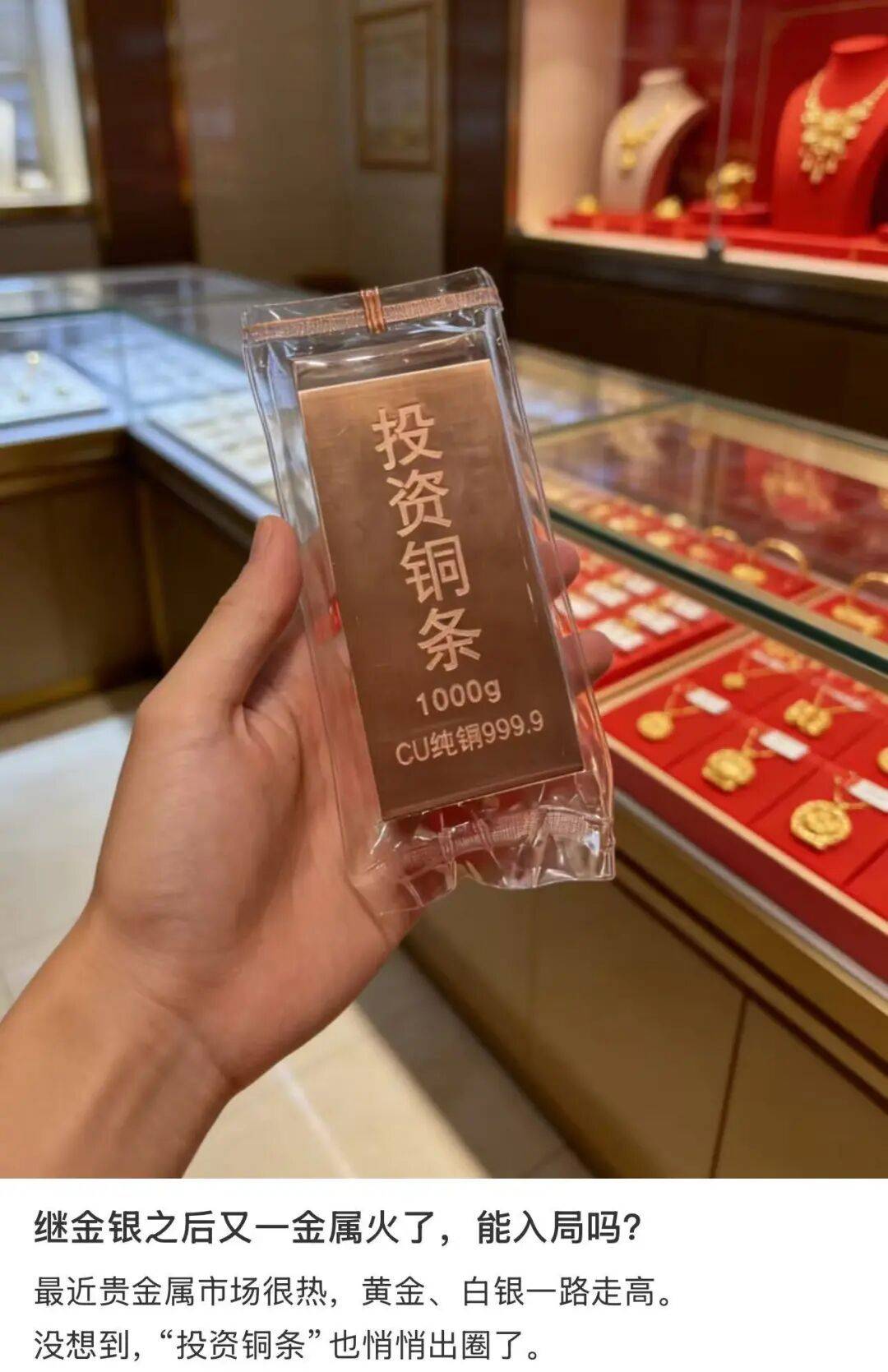
铜条走红,昔日“破铜烂铁”变“硬通货”?
Qi Lu Wan Bao· 2026-01-27 15:41
Core Viewpoint - The rising prices of precious metals have led to increased interest in copper as an investment, with many merchants introducing 1000-gram copper bars labeled as "investment copper" [4][8]. Group 1: Market Dynamics - The Shenzhen Shui Bei market, known for gold and jewelry, has seen a significant increase in inquiries about copper bars, with daily shipments nearing 1 ton [4][6]. - The price for a 1 kg copper bar made of T2 copper with 99.9% purity is around 200 yuan, with bulk purchases reducing the price to 170 yuan [5]. - Despite the growing interest, many merchants are not offering buyback options for copper bars, leading to potential liquidity issues for investors [7][11]. Group 2: Investment Viability - The lack of a unified quality certification and a mature repurchase pricing mechanism for copper bars raises concerns about their investment viability [7]. - The cost of processing copper into bars significantly increases, meaning that prices must double for investors to break even, which is unlikely given historical price fluctuations [7][11]. - The narrative around copper as an investment is driven by its rising prices and the search for lower-cost alternatives to gold and silver, which have become more expensive [8][9]. Group 3: Risks and Challenges - The investment in copper bars is characterized by poor liquidity, high premiums, and storage difficulties, making it less attractive for ordinary investors [12]. - Analysts warn that the current copper price surge is largely driven by speculative funds, and a correction may be imminent as market sentiment shifts [12]. - The potential for material substitution, such as aluminum replacing copper in certain applications, could further weaken demand for copper [11][12].
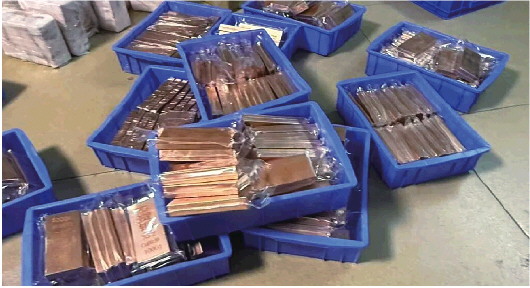
黄金白银大涨买不起,买铜有机会吗?
Sou Hu Cai Jing· 2026-01-27 09:49
Group 1 - The rising silver prices have led consumers to seek alternatives, with "investment copper bars" gaining popularity as a substitute for gold and silver [2][6] - The price of copper bars in Shenzhen's Shui Bei market ranges from 180 to 288 yuan per kilogram, despite a ban on their sale [3][4] - Some merchants express skepticism about the investment potential of copper bars, suggesting that serious investors should consider purchasing copper in bulk rather than in small quantities [4][10] Group 2 - The demand for copper is increasing due to structural growth in various sectors, including artificial intelligence, electric vehicles, and renewable energy [6][8] - The international copper price is significantly influenced by supply and demand fundamentals, making it more suitable for professional investors familiar with commodity cycles [9][10] - Investment in physical copper bars is deemed inadequate due to weak financial attributes, lack of a mature recycling system, and potential compliance risks associated with the sale of copper [10]
