星空露营

Search documents
鸡鸣三省融风华
Xin Lang Cai Jing· 2026-01-30 18:43
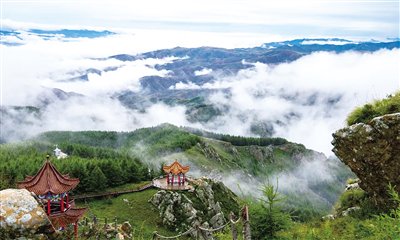
Core Viewpoint - The article highlights the cultural and historical significance of Xihe County in Ulanqab City, Inner Mongolia, emphasizing its unique geographical location and rich cultural heritage that fosters ethnic integration and tourism development [3][12]. Cultural Heritage - The Ming Great Wall in Xihe County serves as a historical defense structure that evolved into a commercial hub, facilitating cultural exchanges among different ethnic groups [4][5]. - The preservation efforts for the Great Wall include establishing protection archives, warning signs, and professional patrol teams to maintain and promote its cultural value [5]. Ethnic Integration - The ancient theater in the town of Dianzi is a testament to the area's history of ethnic fusion, serving as a cultural gathering place for various communities [7][9]. - The theater, built in the late Qing Dynasty, reflects the rich cultural interactions through traditional performances that once brought together diverse audiences [8][9]. Tourism Development - The Longxing Ceramic Cultural Park, with an investment of 68.15 million yuan and covering 122 acres, showcases local ceramic craftsmanship and promotes tourism [10]. - Xihe County leverages its geographical advantages to develop unique cultural tourism projects, including the "natural oxygen bar" of Sumushan and the scenic Liao Li Hai, enhancing its appeal as a tourist destination [10][11]. Economic Impact - The integration of agriculture, culture, and tourism in Chalu Lake creates a composite tourism model that boosts the local economy and fosters community cohesion [11]. - The flourishing cultural tourism industry not only stimulates economic growth but also enhances the sense of belonging and unity among residents [11]. Conclusion - Xihe County's cultural landmarks, from the Ming Great Wall to the ancient theater and contemporary ceramic arts, embody the region's historical depth and ethnic diversity, contributing to its vibrant cultural landscape [12][13].

锚定新坐标 实干启新程——邛崃奋力书写“十五五”高质量发展新篇章
Xin Lang Cai Jing· 2026-01-29 19:50
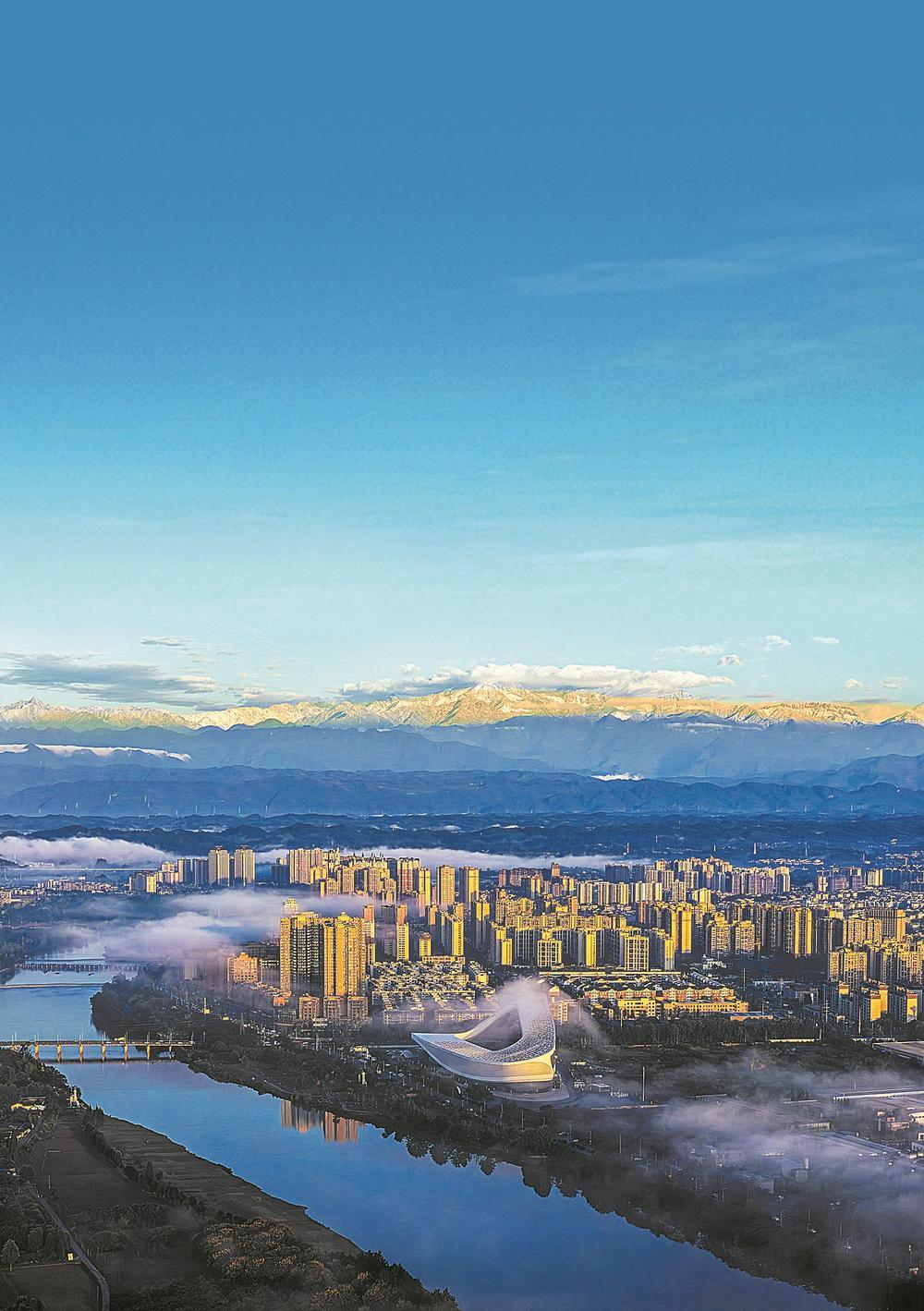
Core Viewpoint - Qionglai City aims for high-quality development during the 14th Five-Year Plan period, targeting a GDP growth of 5.8% for the year and setting a goal of exceeding 65 billion yuan in GDP by 2030, while focusing on becoming a vibrant city and a hub for economic integration in the western region of Chengdu [4][5]. Group 1: Economic Development Goals - The city has outlined four key development focuses: industrial development, transportation infrastructure, urban-rural integration, and ecological well-being [5][6]. - Qionglai plans to enhance its industrial base by promoting smart, green, and integrated development, with a focus on sectors such as new energy materials, food and beverage, and pharmaceuticals [5][7]. Group 2: Industrial Growth and Innovation - The city is committed to building a modern industrial system, with companies like Hongli New Energy aiming for an annual production capacity of 900 million units by 2026, generating over 1 billion yuan in revenue [7]. - Qionglai is also fostering technological innovation, with plans to establish new high-tech enterprises and increase the coverage of R&D institutions in large-scale industrial companies to 40% [8]. Group 3: Cultural and Tourism Development - Qionglai is developing a comprehensive cultural and tourism strategy, leveraging its brand "Cultural Jun's Hometown" to enhance its tourism offerings and create a new outdoor sports destination [9]. - The city is focusing on brand enhancement, cultural preservation, and service optimization to strengthen its tourism sector [9]. Group 4: Rural Revitalization - Qionglai is advancing rural modernization through projects like the Sino-French Agricultural Technology Industrial Park, which aims to produce 400 tons of agricultural products annually [10]. - The city is also establishing talent incubation centers to attract skilled individuals back to rural areas, supporting local agricultural development [10]. Group 5: Social Welfare and Employment - The city is prioritizing social welfare by enhancing education and healthcare services, with plans to add significant educational capacity and improve medical facilities [11][12]. - Employment initiatives aim to create over 25,000 job opportunities and maintain a high insurance coverage rate for residents [11]. Group 6: Open Cooperation and Market Expansion - Qionglai is actively expanding its international trade, with plans to increase exports of local agricultural products by 20% to 50% in 2026 [12]. - The city is also supporting local brands to enter international markets, enhancing its economic openness and competitiveness [12].

人文经济激活消费新动能丨成都:流量变“留量” 文旅融合激发新活力
Xin Hua Wang· 2026-01-21 09:35
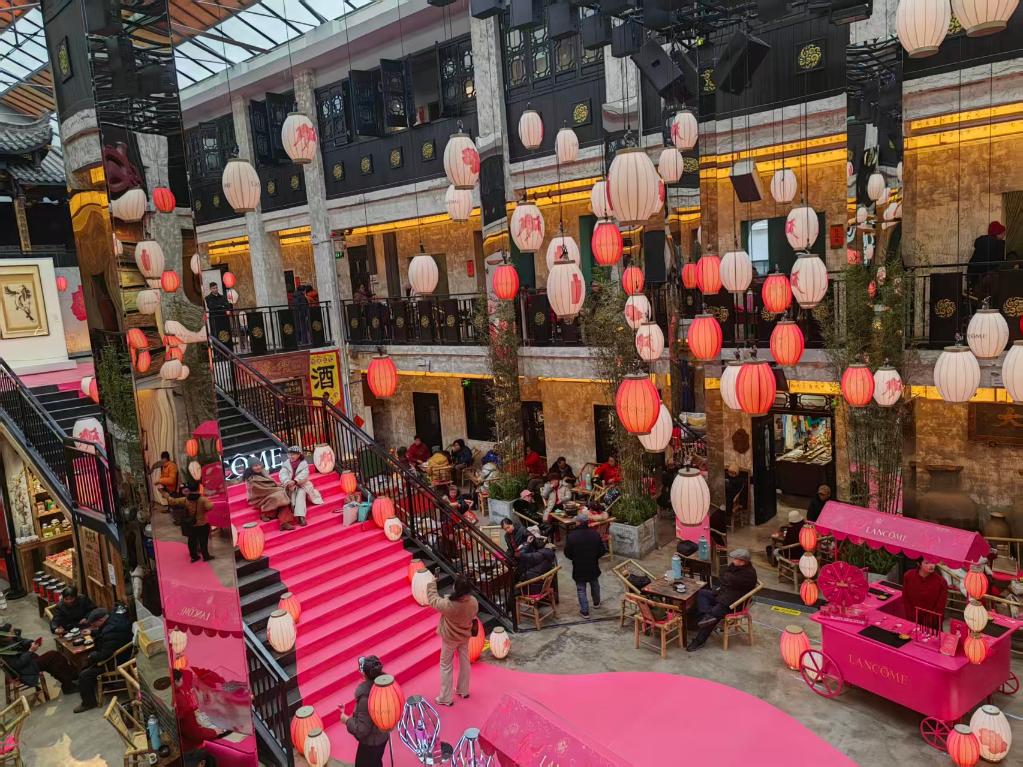
Core Insights - Chengdu is transforming its tourism and cultural landscape by integrating traditional culture with modern experiences, creating vibrant new consumption spaces that attract both locals and tourists [1][4][5] Group 1: Cultural and Tourism Integration - The Daqi Teahouse in Chengdu has been transformed from a traditional lacquer factory into a cultural space that combines tea culture, intangible heritage displays, and artistic exchanges [4] - The teahouse features regular performances of tea art and Sichuan opera, along with workshops for traditional crafts, catering to a diverse audience [5] - Chengdu is witnessing a surge in cultural tourism practices centered around "scenes," with various innovative projects enhancing the visitor experience [5] Group 2: Economic Impact - The "Digital Cultural and Creative Golden Week" in Chengdu generated 1.832 billion yuan in ticket sales, merchandise, and surrounding consumption [9] - The city hosted the 2025 League of Legends World Championship, attracting over 11,000 spectators, with 85% from outside Sichuan, contributing over 270 million yuan to local consumption [9] - From January to November 2025, Chengdu's cultural tourism industry saw the establishment of 105 new enterprises, a 7.3% year-on-year increase, and welcomed 302 million visitors, a 5.3% increase [9]
人文经济激活消费新动能 | 成都:流量变“留量” 文旅融合激发新活力
Xin Hua She· 2026-01-21 09:34
Group 1 - The transformation of traditional spaces in Chengdu, such as the Daqi Teahouse, showcases the integration of old and new cultural elements, creating a unique consumer experience that combines tea culture, intangible heritage displays, and artistic exchanges [1] - The Daqi Teahouse has become a popular destination for both locals and tourists, featuring regular performances and workshops to attract younger audiences, reflecting a broader trend of cultural tourism integration in Chengdu [1] - The renovation of the Chengdu People's Hotel boiler room into a multifunctional theater space exemplifies the city's efforts to innovate in cultural tourism, creating diverse consumption scenarios [2] Group 2 - The recent Non-Heritage Lantern Festival in Chengdu attracted significant attention, utilizing modern lighting technology to revive historical symbols from ancient Shu civilization, enhancing the cultural experience for visitors [5] - The city has seen a surge in cultural tourism, with ticket sales and related consumer spending reaching 1.832 billion yuan during the "Digital Cultural Creation Golden Week," indicating a shift in tourist behavior towards more immersive experiences [6] - From January to November 2025, Chengdu's cultural tourism industry experienced substantial growth, with 3.02 billion visitors, a 5.3% increase year-on-year, and the addition of 105 new enterprises, reflecting a thriving sector [6][7]
“十四五”海北旅游入账151.25亿元
Xin Lang Cai Jing· 2026-01-08 19:02
Core Insights - The article highlights the development of Haibei Tibetan Autonomous Prefecture as an international ecological tourism destination, leveraging its unique ecological resources and historical significance since the start of the 14th Five-Year Plan [1] Group 1: Tourism Development - Haibei Prefecture has received a total of 35.979 million visitors, generating a tourism revenue of 15.125 billion yuan [1] - The region has established a spatial layout of "one core leading, two belts linking, and three areas collaborating," integrating red heritage, ecological protection, and folk revitalization into overall industrial development [1] - A five-dimensional tourism system has been constructed focusing on "lake viewing, flower viewing, bird watching, gazelle watching, and fish watching," promoting activities like mountaineering, skiing, and glacier exploration to stimulate economic growth [1] Group 2: Integration of Industries - The integration of cultural tourism with sports, health care, and educational tourism is being promoted, exemplified by events like the Qilian Mountain Super Marathon, which converts event traffic into consumer spending [1] - The region has connected 31 red education sites, establishing the Atomic City as a model for the integration of red tourism and development [1] - New business formats such as hot spring health care, stargazing camping, and ecological research tourism are emerging, creating a year-round tourism model with attractions available in all seasons [1] Group 3: Transportation and Infrastructure - A "fast entry, slow travel" transportation network is being constructed, linking roads, railways, and airports to connect key scenic spots, forming a convenient travel circle with core attractions accessible within half an hour [2] - Smart tourism initiatives are being implemented, including full WiFi coverage in key scenic areas and the establishment of an online service platform for "Haibei Tourism" that offers itinerary queries and guided tours [2] - A rapid complaint handling mechanism for tourism has been established, along with special market inspections to address issues like unreasonable low-price tours, continuously optimizing the consumption environment in the region [2]
2024-2025年度山东省生态旅游发展典型案例名单发布
Da Zhong Ri Bao· 2025-11-16 01:14
Core Viewpoint - The "Ecological Shandong Green Leisure" 2025 ecological tourism promotion event highlights the integration of ecological advantages and tourism development in Shandong Province, showcasing successful case studies and new tourism products aimed at promoting sustainable practices and rural revitalization [1][2] Group 1: Event Overview - The event was co-hosted by the Provincial Culture and Tourism Department and the Provincial Ecological Environment Department in Laiwu District, Jinan [1] - A list of 25 typical cases for ecological tourism development in Shandong for 2024-2025 was announced, featuring locations like the Hongye Valley Ecological Cultural Tourism Area and the Dongying Hongtan Wetland Tourism Area [1] Group 2: Themes and Products - The event introduced four major themes for 2025: "Ecology + Sports" with 36 tourism scenes, "Ecology + Research" with 22 ecological research tourism products, and winter tourism products under themes like "Mountain and Sea Winter Appreciation" and "Ecological Exploration" [1] - The ecological tourism products are designed to be engaging and experiential, reflecting the concept of harmonious coexistence between humans and nature [1] Group 3: Ongoing Initiatives - The Provincial Culture and Tourism Department and the Provincial Ecological Environment Department have conducted the ecological tourism experience season for four consecutive years, with nearly 100 themed activities planned for 2025 [2] - Over 400 "Ecology + Sports" tourism scenes and nearly 300 "Ecology + Research" tourism products are set to be launched across the province [2]
《中国户外运动产业发展报告(2024—2025)》发布 我国户外运动参与人数超4亿
Ren Min Ri Bao· 2025-10-29 22:08
Group 1 - The core viewpoint of the news is that China's outdoor sports industry is experiencing significant growth, with over 400 million participants expected by April 2025 [1][2] - The main consumer demographic for outdoor sports is the young and middle-aged population, particularly those aged 25-34, who are generally well-educated [1] - First-tier and new first-tier cities are leading in outdoor sports consumption, with second-tier cities rapidly catching up, indicating a development pattern centered in East China and expanding to North and Southwest China [1] Group 2 - Popular outdoor sports include ice and snow, mountain, and water activities, with specific events like marathons, cycling, triathlons, skiing, and rafting gaining high attention [1] - The ice and snow sports industry in China is projected to reach a total scale of 970 billion yuan in 2024, with a year-on-year growth of approximately 9% [1] - By the end of 2024, the total output value of China's bicycle industry is expected to exceed 300 billion yuan, and the annual consumer scale for certified events by the Chinese Athletics Association will reach 16.8 billion yuan, with over 7 million participants [1] Group 3 - As of the end of 2024, there are 171,800 fitness trails in China, totaling 407,600 kilometers [2] - By June 2025, the number of outdoor sports-related enterprises in China is projected to reach 335,000 [2] - The outdoor sports industry is recognized as one of the strongest growth areas within the broader sports industry in China [2]
国家体育总局:我国户外运动参与人数超4亿人
Shang Hai Zheng Quan Bao· 2025-10-24 15:39
Group 1 - The core viewpoint of the article highlights the rapid growth of China's outdoor sports industry, with participation exceeding 400 million people by early 2025 [1][2] - The report indicates that the outdoor sports industry is becoming a significant driver of economic growth within the broader sports industry in China [1] - The primary consumer demographic for outdoor sports is the young and middle-aged population, particularly those aged 25-34, who generally have a higher education level [1] Group 2 - The report forecasts that the ice and snow sports industry will reach a total scale of 970 billion yuan in 2024, while the water sports industry is expected to reach 438.6 billion yuan [2] - It is projected that during the 2024-2025 ice and snow season, ski resorts across the country will receive a total of 256 million visitors [2] - By mid-2025, the number of outdoor sports-related enterprises in China is expected to reach 335,000, with approximately 24,000 new registrations in the first half of this year [2]
“暑期经济”火热释放多元活力 文旅“新流量”成为拉动经济增长新引擎
Yang Shi Wang· 2025-08-30 07:12
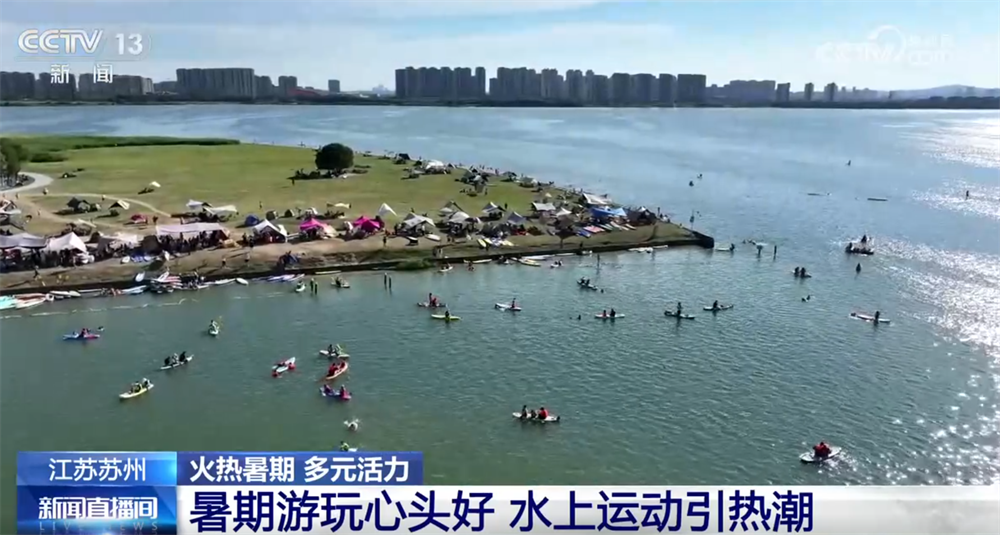
Group 1: Water Sports in Suzhou - The popularity of water sports in Suzhou has significantly increased, with activities like paddleboarding and jet skiing becoming favorites among citizens and tourists during the summer [1][4] - Over 28,000 visitors participated in water sports activities in the Suzhou Industrial Park this summer [4] - The rise in water sports has stimulated the production and sales of related equipment, contributing to the development of the cultural tourism industry [5][8] Group 2: Related Activities and Economic Impact - Water sports courses have seen high demand, with classes fully booked from weekdays to weekends at local water clubs [7] - The popularity of paddleboarding and other water activities has extended to the production lines of outdoor equipment manufacturers in Suzhou, indicating a direct correlation between sports popularity and manufacturing [8] - The increase in water sports has also enhanced tourism consumption, with visitors transitioning from single-day trips to multi-day experiences in nearby areas like Qiham Village [8] Group 3: Other Regional Developments - In Hangzhou, the establishment of an ecological research and study center offers immersive experiences for exploring nature [9][11] - In Yichang, high-altitude scenic spots are developing stargazing camping experiences, attracting tourists with unique natural advantages [12][14][16]
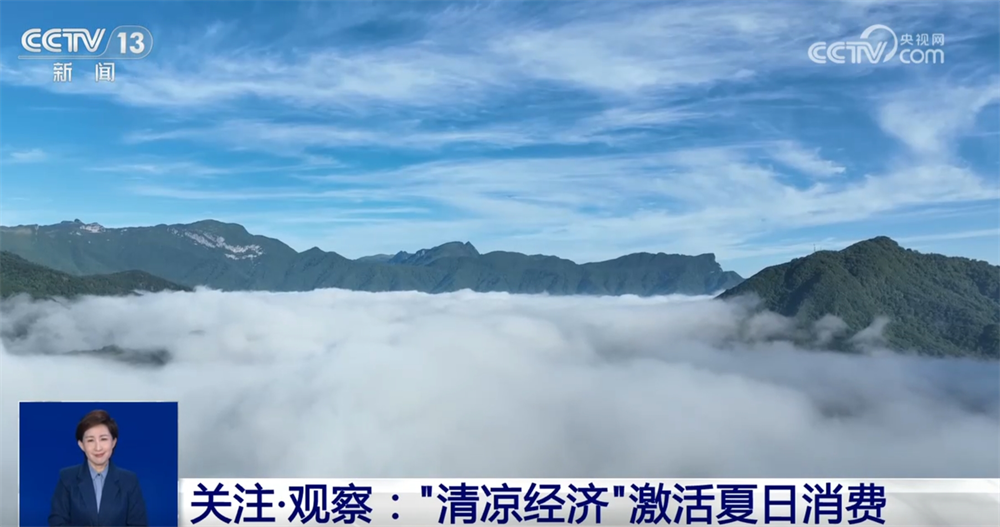
“清凉经济”撬动文旅消费新场景 防晒向“新”向“智”加速产业链升级
Yang Shi Wang· 2025-07-13 12:07
Group 1: Tourism Industry - The high temperatures in summer have led to a surge in demand for summer tourism, particularly in cooler destinations like Hubei Shennongjia, which offers an average temperature of 22°C, attracting visitors for immersive experiences in nature [2][4] - In Heilongjiang, the introduction of forest canyon rafting in Qixing Mountain National Forest Park has provided a new experience for tourists, contributing to the local tourism economy [7][9] - Jiangxi's Guifeng, a UNESCO World Heritage site, attracts tourists with its unique Danxia landform and rich vegetation, enhancing the visitor experience through eco-friendly tourism initiatives [10][12] Group 2: Textile and Apparel Industry - In Fujian Jinjiang, the demand for functional fabrics such as sun protection and quick-drying materials has surged, with many local companies experiencing a boom in orders [13][17] - The shift in order structure from overseas markets to domestic consumption has been noted, with local companies adapting to changing market dynamics [15] - Jinjiang's textile enterprises are innovating in fabric technology, developing materials that incorporate natural ingredients like mint for enhanced cooling and antibacterial properties [22][24]