
骑行

Search documents
冬奥遗产激活四季动能——崇礼迈向国家级户外运动新高地
Xin Lang Cai Jing· 2026-01-16 04:41
Core Insights - The article highlights the transformation of Chongli into a high-quality outdoor sports destination, leveraging its unique natural resources and the legacy of the Winter Olympics to attract over 10 million tourists by 2025, marking a significant increase in tourism spending [1][3]. Group 1: Natural Advantages - Chongli is located in the "golden ski belt" at latitude 41°, with over 80% of its area covered by mountains, providing ideal terrain for diverse skiing tracks [2]. - The region experiences low winter temperatures and dry, compact snow, with a snow retention period of 180 days, making it one of the best areas in China for developing the skiing industry [2]. - Summer temperatures average only 19°C, and the area boasts a 71.53% forest coverage, creating a natural environment suitable for outdoor activities like hiking and cycling [2]. - The convenient transportation via the Beijing-Zhangjiakou high-speed railway, which takes only one hour, enhances Chongli's accessibility and supports its outdoor sports development [2]. Group 2: Industry Development - The outdoor sports industry in Chongli began with the opening of the Wanlong Ski Resort in 2003 and gained momentum after Beijing's successful bid for the Winter Olympics in 2015 [3]. - Currently, Chongli has established nine large ski resorts, with six ranked among the "Top Ten Ski Resorts in China," and features the largest high-end ski area in the country with 219 ski trails spanning 178 kilometers [3]. - The region has successfully hosted a variety of world-class winter sports events, with a continuous increase in the number of international and national competitions held over the past three years [3]. Group 3: Development Opportunities - Chongli has recently been recognized as one of the first national high-quality outdoor sports destinations, presenting new development opportunities [4]. - The local government aims to create a world-class ice and snow sports resort, focusing on leveraging the Winter Olympics brand and enhancing the integration of winter and summer sports [4]. - Plans include improving outdoor sports facilities, hosting high-end events, and promoting multi-industry integration to establish Chongli as a model for post-Olympic venue utilization [4]. Group 4: Venue Utilization - Chongli is focusing on sustainable use of Winter Olympic venues through four key strategies: year-round operations, integration of training and competition, development of related sports, and creating a multi-functional outdoor sports park [5]. - The region aims to become a hub for international conferences and events, regularly hosting high-profile forums and activities related to ice and snow sports and green energy [5]. - Efforts are being made to enhance the visitor experience through immersive educational programs and high-quality accommodation and wellness services [5]. Group 5: Event Aggregation - Chongli is prioritizing the establishment of a national-level premium event system, aiming to host significant ice and outdoor sports events throughout the year [6]. - The region plans to deepen collaborations with international sports organizations to attract globally recognized events [6]. - Continuous improvements in outdoor sports facilities and services are expected to enhance accessibility and promote integration with sports, culture, and education sectors [6]. Group 6: Overall Development Strategy - Chongli is committed to enhancing its event branding, service systems, and industry integration to maximize the "ice and snow +" and "sports +" effects, thereby solidifying its role as a core support for Zhangjiakou's development as a high-quality outdoor sports destination [8].

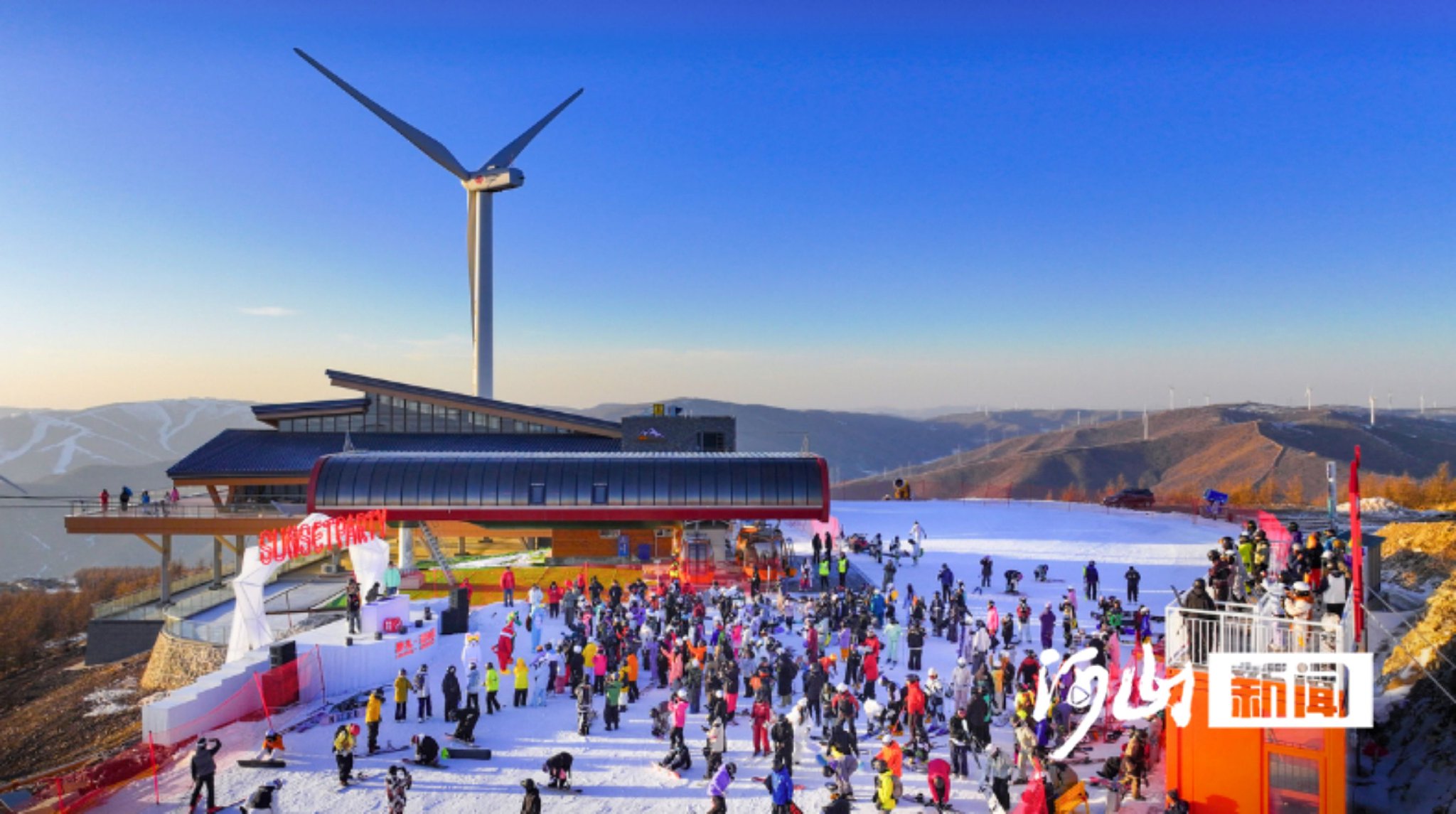
乐见“冷资源”实现消费热
Xin Lang Cai Jing· 2026-01-04 22:08
Group 1 - The core viewpoint of the articles highlights the booming ice and snow economy in China, driven by a comprehensive industrial chain and supportive government policies [1][2][3] - The scale of China's ice and snow industry is projected to grow from 364.7 billion yuan in 2016 to 980 billion yuan by 2024, with an average annual growth rate of 21.09%, and is expected to exceed 1 trillion yuan by 2025 [1] - The participation in ice and snow sports and related consumption is anticipated to exceed 187.5 billion yuan during the 2024-2025 season, representing a growth of over 25% compared to the previous season [1] Group 2 - The shift in China's consumption structure from goods to a balanced focus on both goods and services is evident, with service consumption playing a crucial role in economic and livelihood connections [2] - Innovative practices, such as the "snow holiday" initiative in regions like Jilin and Xinjiang, aim to leverage local ice and snow resources to enhance consumption vitality [2] - The integration of diverse ice and snow experiences, such as combining winter sports with summer activities, is being explored to ensure year-round engagement and economic growth [2][3]
冀时长图丨2025年河北举办各类体育赛事超万场,带动消费超488.78亿元
Xin Lang Cai Jing· 2026-01-04 04:33
Core Insights - The province hosted a total of 10,485 sports events in 2025, including 24 international events, 229 national events, and 161 events in the Beijing-Tianjin-Hebei region [3] - The events attracted 25.89 million participants and spectators, with 2.98 million from outside the province, accounting for 11.51% of total attendance, generating over 48.88 billion yuan in consumption [4] - Compared to the previous year, the number of events increased by 5,725, representing a growth of 120.27%, while the number of participants and spectators rose by 14.98 million, a 137.26% increase, and consumption increased by 32.68 billion yuan, a 201.72% rise [7] Event Categories - Emerging fashion events saw a significant increase, with 407 new events such as laser runs, street dance, roller skating, pickleball, and mountain biking, marking a growth of 33.44% compared to the previous year [9] - Outdoor sports events flourished, with 1,614 events held in categories like road running, mountain sports, cycling, ice and snow sports, water sports, fishing, and aviation, reflecting a growth of 104.05% year-on-year [11] Specific Events - From August 10 to December 27, the Hebei Five-a-Side Football Super League held 139 matches, attracting over 310,000 spectators, with 2,411 electronic screens set up in high-traffic areas for viewing [13] - The FIS World Cup for freestyle skiing and snowboarding was held at the Zhangjiakou Yunding Ski Park from December 10 to 13, attracting around 5,400 spectators and generating approximately 8.1 million yuan in comprehensive consumption [15] - The FIS World Cup for freestyle skiing aerials took place at the same venue on December 20-21, offering a "watching + skiing" package that attracted about 3,600 spectators and generated around 5.4 million yuan in consumption [19]

在冰雪消费热中用好“冷资源”
Zhong Guo Jing Ji Wang· 2025-12-27 10:12
Group 1 - The core viewpoint of the articles highlights the booming ice and snow economy in China, driven by various innovative projects and a growing consumer base [1][2][3] - The ice and snow industry in China has seen significant growth, with its scale increasing from 364.7 billion yuan in 2016 to 980 billion yuan in 2024, reflecting an annual growth rate of 21.09% [1] - The 2024-2025 ice and snow season is expected to generate over 187.5 billion yuan in consumer spending, marking a more than 25% increase compared to the previous season [1] - The number of participants in ice and snow tourism has consistently exceeded 300 million for three consecutive seasons, with 4.3 billion visits and 524.7 billion yuan in revenue projected for the 2023-2024 season [1] Group 2 - Government policies play a crucial role in the development of the ice and snow economy, with various initiatives aimed at enhancing service consumption and promoting local resources [2] - The shift in consumer behavior from goods to services is evident, with traditional practices being transformed into profitable ventures, such as the conversion of traditional wooden houses into popular guesthouses in Alashan [2] - The 2025 Central Economic Work Conference emphasized the need to unleash the potential of service consumption, particularly in regions rich in ice and snow resources [2] - Innovative practices, such as "snow holidays" for students in regions like Jilin and Xinjiang, demonstrate a tailored approach to leveraging local advantages [2] Group 3 - Successful examples of integrating ice and snow activities with year-round tourism, such as the Changbai Mountain and Pingxue Ski Resort, showcase the potential for diverse consumer experiences [3] - The emergence of "ice and snow+" business models reflects a growing trend towards personalized and varied consumption scenarios [3] - Collaboration between effective market strategies and proactive government policies is essential for maximizing the potential of the ice and snow economy [3] - New services, such as "ski equipment convenience travel" on the Beijing-Zhangjiakou high-speed railway, enhance accessibility and convenience for consumers [3]
环南昆山—罗浮山引领区(广州)总规出台 在从化增城划定两大先行区
Nan Fang Ri Bao Wang Luo Ban· 2025-12-22 07:45
Core Viewpoint - The Guangzhou "Baiqianwan Project" aims to establish a high-quality development leading area in the Nankunshan-Luofushan region, focusing on ecological advantages and modern urbanization practices in China. Group 1: Planning and Structure - The planning emphasizes a comprehensive approach, proposing a spatial structure of "coordinating two rings, integrating three rivers, and merging urban and rural areas" to enhance the flow of various urban-rural elements and promote modernization and differentiation in towns and villages [1] - A transportation plan is outlined to connect domestic and international traffic, creating a 400-kilometer scenic tourism road to attract visitors and boost local economies [1] Group 2: Industry Layout - The plan focuses on four key industries: "Health +", "Cultural Tourism +", "Agriculture +", and "Innovation +". It aims to leverage local resources for developing wellness clusters, tourism brands, modern agriculture, and emerging industries [2] - Specific initiatives include creating 12 wellness zones, enhancing tourism attractions, modernizing 13 agricultural parks, and fostering strategic industries like low-altitude economy and biomedicine [2] Group 3: Implementation and Design - The plan designates two pilot areas covering approximately 278 square kilometers, with a focus on developing a 52-kilometer scenic tourism road by 2025 [3] - A design competition is initiated to engage local communities and design professionals in the planning process, ensuring that local needs align with design outcomes [3]
体育+旅游:融合发展下的消费新场景与产业新动能
Sou Hu Cai Jing· 2025-12-12 13:09
Core Viewpoint - The integration of sports and tourism is becoming a new choice for public travel, enriching cultural life and driving high-quality development in both industries [1][5]. Group 1: Market Trends - The rise of sports tourism is driven by the upgrade of consumer demand and changes in lifestyle, with people seeking personalized and experiential travel rather than traditional sightseeing [3]. - Sports tourism caters to diverse demographics, offering activities like surfing and mountain biking for young people, family-friendly options like hiking and camping, and deep engagement opportunities for seasoned sports enthusiasts [3][5]. Group 2: Policy and Resource Support - National policies have been introduced to encourage the deep integration of sports and tourism, aiming to create influential sports tourism routes, events, and demonstration bases [4]. - Local governments are responding by leveraging unique regional sports and tourism resources to develop differentiated sports tourism products, such as ice sports in northern regions and outdoor activities in southern areas [4]. Group 3: Economic Impact - The development of sports tourism is enhancing the ecosystem of related industries, including sports equipment, event operations, and hospitality, forming a multi-faceted industrial chain [5]. - Sports tourism is becoming a new growth point for local economies, particularly in rural areas, by improving infrastructure and promoting agricultural products through events like mountain biking and rural marathons [5]. Group 4: Challenges and Future Outlook - Challenges in sports tourism include product homogeneity, inadequate facilities, insufficient professional services, and safety concerns, necessitating a focus on differentiation and quality improvement [6]. - The future of sports tourism looks promising with ongoing policy support, product innovation, and enhanced service quality, expected to provide diverse consumer experiences and contribute to economic development [6].

超4亿人,体育市场呈现亮点!借助大数据“数”看户外运动“火”出新高度
Yang Shi Wang· 2025-11-16 02:25
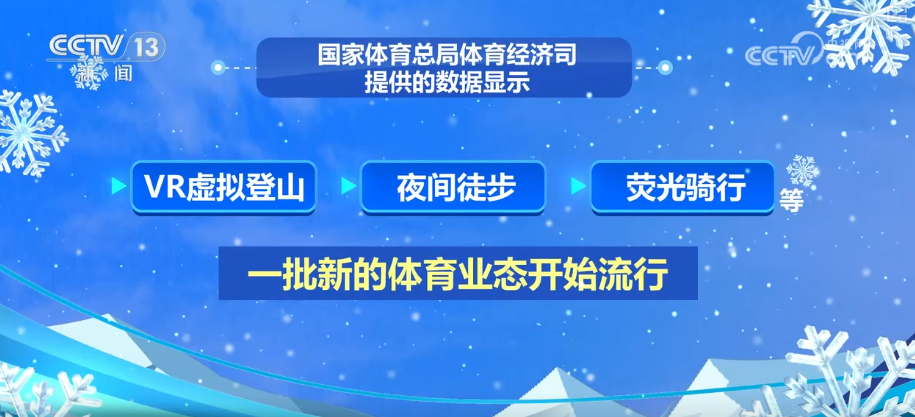
Core Insights - By 2025, high participation in mass sports will be a significant highlight of the sports market in China, with over 400 million people engaged in outdoor activities [1] Group 1: Trends in Outdoor Sports - New sports formats such as VR virtual climbing, night hiking, and fluorescent cycling are gaining popularity [3] - High participation rates are noted in ice and snow sports, mountain sports, and water sports, with significant interest in marathons, cycling, triathlons, skiing, and rafting [3] - Hiking-related content on social media platforms has seen massive engagement, with hiking notes receiving 16 billion views, and growth rates of 340% for climbing and 250% for bouldering [3] Group 2: Regional Participation - First-tier and new first-tier cities are leading in outdoor sports participation, with second-tier cities rapidly catching up [7] - A trend is observed where the East China region is central, radiating towards North China and Southwest regions, with emerging sports events like pickleball and triathlons gaining traction in county-level areas such as Gaotang, Jiexi, and Dianjiang [7] Group 3: Growth in Sports Equipment - Sales of skiing poles, goggles, shoes, and snowboards have all increased by over 80%, while sales of trail running shoes have doubled [12] - There is a notable increase in demand for trendy sports equipment, leading to a surge in related rental services, with paddleboard rental searches up by over 470% and group purchase orders increasing by over 315% [12]
《中国户外运动产业发展报告(2024—2025)》发布 我国户外运动参与人数超4亿
Ren Min Ri Bao· 2025-10-29 22:08
Group 1 - The core viewpoint of the news is that China's outdoor sports industry is experiencing significant growth, with over 400 million participants expected by April 2025 [1][2] - The main consumer demographic for outdoor sports is the young and middle-aged population, particularly those aged 25-34, who are generally well-educated [1] - First-tier and new first-tier cities are leading in outdoor sports consumption, with second-tier cities rapidly catching up, indicating a development pattern centered in East China and expanding to North and Southwest China [1] Group 2 - Popular outdoor sports include ice and snow, mountain, and water activities, with specific events like marathons, cycling, triathlons, skiing, and rafting gaining high attention [1] - The ice and snow sports industry in China is projected to reach a total scale of 970 billion yuan in 2024, with a year-on-year growth of approximately 9% [1] - By the end of 2024, the total output value of China's bicycle industry is expected to exceed 300 billion yuan, and the annual consumer scale for certified events by the Chinese Athletics Association will reach 16.8 billion yuan, with over 7 million participants [1] Group 3 - As of the end of 2024, there are 171,800 fitness trails in China, totaling 407,600 kilometers [2] - By June 2025, the number of outdoor sports-related enterprises in China is projected to reach 335,000 [2] - The outdoor sports industry is recognized as one of the strongest growth areas within the broader sports industry in China [2]
国家体育总局:我国户外运动参与人数超4亿人
Shang Hai Zheng Quan Bao· 2025-10-24 15:39
Group 1 - The core viewpoint of the article highlights the rapid growth of China's outdoor sports industry, with participation exceeding 400 million people by early 2025 [1][2] - The report indicates that the outdoor sports industry is becoming a significant driver of economic growth within the broader sports industry in China [1] - The primary consumer demographic for outdoor sports is the young and middle-aged population, particularly those aged 25-34, who generally have a higher education level [1] Group 2 - The report forecasts that the ice and snow sports industry will reach a total scale of 970 billion yuan in 2024, while the water sports industry is expected to reach 438.6 billion yuan [2] - It is projected that during the 2024-2025 ice and snow season, ski resorts across the country will receive a total of 256 million visitors [2] - By mid-2025, the number of outdoor sports-related enterprises in China is expected to reach 335,000, with approximately 24,000 new registrations in the first half of this year [2]
盘活资源扩大体育消费
Jing Ji Ri Bao· 2025-10-20 23:59
Core Insights - The government has issued opinions to stimulate sports consumption potential and promote high-quality development of the sports industry through various means [1][2] Group 1: Policy Initiatives - The policy encourages the use of industrial buildings, commercial properties, and warehouses to create sports spaces, aiming to enrich the supply of sports venues and expand consumer demand [1] - There is a focus on optimizing existing sports resources by repurposing idle facilities such as parks, old factories, and underutilized spaces to enhance public service capabilities [1] - The initiative promotes free or low-cost access to public sports venues and encourages the public-oriented operation of commercial sports facilities [1] Group 2: Infrastructure Development - The plan includes synchronizing the development of fitness spaces with urbanization efforts, integrating them into urban renewal and park construction [1] - It encourages social capital investment to improve the layout of public sports facilities, adhering to the "15-minute fitness circle" concept [1] - The establishment of a smart sports platform is proposed to provide services like venue booking and event inquiries, catering to new consumer expectations [1] Group 3: Expanding Sports Consumption - The strategy aims to enhance sports consumption scenarios and improve operational efficiency by leveraging the effects of sports events [2] - It promotes the development of new models such as "sports + tourism," particularly in areas rich in natural resources, to create new hotspots for sports consumption [2] - The integration of sports with various urban spaces, consumption scenarios, and digital technologies is emphasized to form a comprehensive sports consumption chain [2]