
智能健康设备

Search documents
朱同玉 :推动技术扎根临床,共创实在的健康未来
Di Yi Cai Jing· 2026-02-03 10:02
Core Insights - The transformative impact of artificial intelligence (AI) in healthcare is becoming tangible, with AI-assisted diagnostic systems improving efficiency in identifying diseases, large model technologies offering new pathways for drug development, and smart health devices extending chronic disease management into patients' homes [1][2] Group 1: AI in Healthcare - AI is no longer a distant concept but is actively being integrated into clinical settings, including examination rooms, operating rooms, and laboratories [1] - The core of these changes is to assist and empower healthcare professionals, enhancing decision-making and increasing efficiency, ultimately benefiting patients [1] Group 2: Challenges in Implementation - There is a significant gap between ideal scenarios and reality, as technology companies may understand algorithms but lack deep insights into the complexities of clinical processes and medical safety [1] - Effective communication between doctors and engineers is crucial, as many promising algorithms fail to transition from research to practical application due to a lack of real clinical scenarios for refinement [1] Group 3: Focus on Practical Dialogue - The emphasis should be on fostering practical dialogue between medicine and technology, allowing doctors to express clinical pain points and engineers to accurately understand medical logic [2] - Rigorous validation and iteration of technological products in real healthcare environments are deemed more important than flashy marketing [2] Group 4: Value of Industry Mapping - A valuable industry map should clarify which technologies are genuinely addressing clinical issues, their current status, and the key obstacles that remain [2] - This mapping should help clinicians understand the value and limitations of tools while guiding developers to focus on genuine innovations, avoiding resource waste on non-essential needs [2] Group 5: Collaborative Progress - Progress in healthcare relies on steady, practical steps, with a call for collaboration among all stakeholders to root AI technology in China's clinical landscape, addressing real issues and enhancing public health [2]
语音空调 “社交厨房” AI重塑广货基因
Nan Fang Du Shi Bao· 2026-01-28 23:12
Core Insights - Guangdong is transitioning from "scale manufacturing" to "smart creation" in the consumer electronics and home appliance sectors, driven by AI technology [2][3] - Leading companies like Huawei, Gree, and Midea are integrating advanced AI technologies into product innovation, production processes, and business models to enhance consumer experiences [3][4] Industry Trends - The "Guangdong Goods Going Global" event showcased over 400 AI smart hardware products, with 80% featuring AI capabilities, highlighting the competitive edge of Guangdong's products in meeting diverse consumer needs [4] - The smartphone market is facing growth challenges, prompting Guangdong mobile companies to embrace AI and launch innovative products that redefine consumer perceptions of smartphones [5][6] Product Innovations - Huawei's latest devices, equipped with the HarmonyOS, demonstrate full-stack independent innovation, enhancing connectivity in extreme environments through AI algorithms [4] - Vivo and OPPO are leading in mobile imaging, with products like the Vivo X300 Pro and OPPO Find X9 Pro utilizing AI for superior image quality and user experience [5] Smart Home Solutions - AI is transforming home appliances from mere functional tools to proactive lifestyle partners, creating new consumer demands for smart home solutions [6][7] - Companies like Midea and TCL are developing comprehensive smart home ecosystems, enhancing user interaction and convenience through AI technologies [6][7] Manufacturing Advancements - Guangdong's manufacturing sector benefits from a complete supply chain, enabling rapid product development and market responsiveness, exemplified by the "design today, product tomorrow" capability [8][9] - Gree's intelligent manufacturing factory has achieved a 200% increase in production efficiency and 100% digital coverage, showcasing the potential of AI in manufacturing [10] Strategic Vision - The Guangdong government emphasizes continuous innovation and adaptation in traditional industries to maintain competitiveness and create new value [6][10] - The integration of AI into manufacturing and product development is positioning Guangdong as a leader in the transition from a manufacturing province to an innovation hub [10]





超八成展品搭载AI“科技年货”引爆新春
Nan Fang Du Shi Bao· 2026-01-25 23:12
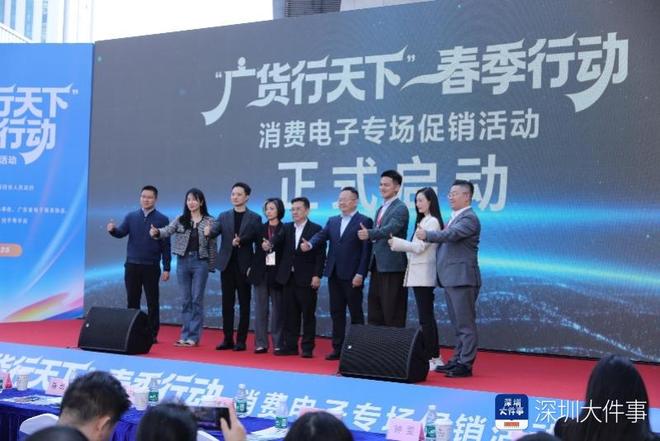
Core Viewpoint - The "Guangdong Goods Going Global" spring action for consumer electronics in Shenzhen's Huaqiangbei has successfully showcased the innovation of local brands in the AI wave, attracting significant consumer interest and boosting the electronic information industry chain [3][6][10]. Group 1: Event Overview - The event gathered 50 leading consumer electronics companies, including Huawei and DJI, to display their products, emphasizing "Guangdong Manufacturing" and "Shenzhen Creation" [3][4]. - Huaqiangbei experienced an additional 100,000 visitors on the event day, a 15% increase year-on-year, highlighting the area's popularity as a consumer electronics hub [3][4]. Group 2: Consumer Engagement - The event attracted a diverse group of foreign buyers from regions such as the Middle East and Southeast Asia, indicating strong international interest in "Guangdong Goods" [4][5]. - Local enterprises showcased innovative products like AI glasses and collaborative robots, which resonated well with both domestic and international consumers [5][6]. Group 3: Product Innovation - Over 80% of the exhibited products featured AI capabilities, transforming traditional hardware into smart lifestyle companions [6][7]. - Shenzhen's consumer electronics have evolved from traditional goods to AI hardware and smart terminals, representing a significant upgrade in manufacturing [6][7]. Group 4: Market Dynamics - Huaqiangbei serves as a critical hub for global sourcing, with over 7,000 foreign buyers visiting daily and more than 300 million packages shipped annually [7][8]. - The event has stimulated the entire electronic information industry chain, enhancing the connection between local manufacturing and global markets [8][9]. Group 5: Internationalization Efforts - The event featured international volunteers providing translation and procurement assistance, reflecting a commitment to facilitating global trade [10]. - The initiative aims to promote Guangdong's manufacturing on a global scale, enhancing its reputation and driving consumer engagement [10].
今年年货是AI:华强北“科技市集”里的新春消费变局
Nan Fang Du Shi Bao· 2026-01-25 10:47
Core Insights - The "Guangdong Goods Going Global" Spring Action for consumer electronics was launched on January 25, 2023, in Huaqiangbei, showcasing innovations in AI technology from 50 leading consumer electronics companies in Guangdong [1][4][12] - The event attracted a significant increase in foot traffic, with an additional 100,000 visitors compared to regular days, marking a 15% year-on-year growth [3][6] - The event facilitated a multi-faceted trading model, combining online and offline transactions, which resulted in increased orders for participating companies [3][4] Group 1: Event Overview - The event is part of a larger initiative to promote consumer spending in Guangdong, with previous successful events in Foshan and Dongguan [6] - Huaqiangbei is recognized as "China's Electronics First Street," hosting a complete ecosystem for the electronics industry, including R&D, manufacturing, and distribution [6][11] - The event featured major brands like Huawei, Honor, and OPPO, and utilized platforms like Taobao and JD for live streaming to enhance sales [4][12] Group 2: Economic Impact - The event generated significant sales and visibility for "Guangdong Goods," enhancing brand exposure ahead of the Spring Festival [4][11] - Huaqiangbei's daily foot traffic is projected to exceed 750,000 by 2025, with annual transaction volume surpassing 480 billion yuan [6][10] - The initiative aims to create a sustainable economic impact through cross-regional collaboration and continuous consumer engagement [6][10] Group 3: AI Integration - AI-enabled products dominated the exhibition, with around 80% of the showcased items featuring AI capabilities, transforming them into "smart life partners" [12][13] - Huaqiangbei serves as a testing ground for AI+hardware innovations, allowing rapid prototyping and market feedback [13] - The event highlighted the integration of AI in various consumer products, catering to diverse consumer needs across different age groups [12][13] Group 4: International Engagement - The event attracted international buyers from regions such as the Middle East and Southeast Asia, showcasing Huaqiangbei's role as a global sourcing hub [14][15] - The area supports a seamless international shopping experience, including multi-currency exchange and multilingual services [14][15] - Huaqiangbei processes over 3 million packages daily, with a significant portion of shipments going to global markets, reinforcing its status as a key player in international trade [15]


智读数据丨从元旦消费“开门红”看中国经济新活力
Sou Hu Cai Jing· 2026-01-14 06:07
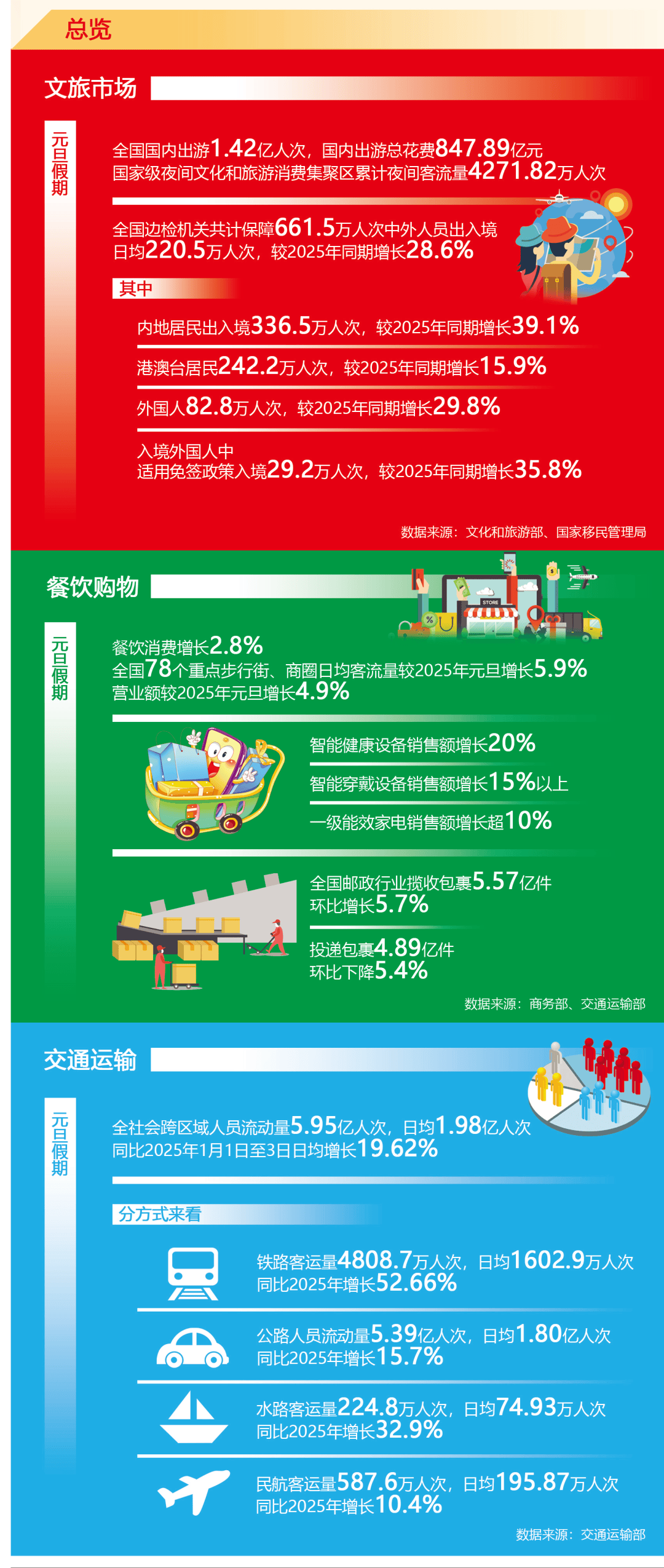
Core Insights - The Chinese consumption market experienced a strong start in 2026, with significant growth in domestic travel and spending during the New Year holiday, indicating robust economic vitality and consumer enthusiasm [8][11] Transportation - The total cross-regional movement of people reached 595 million during the holiday, with an average daily increase of 19.62% compared to the same period in 2025 [9] - Railway passenger volume was 48.1 million, showing a year-on-year increase of 52.66% [9] - Road movement accounted for 539 million people, with a daily average increase of 15.7% [9] - Waterway passenger volume was 2.25 million, with a year-on-year increase of 32.9% [9] - Civil aviation passenger volume reached 5.88 million, with a daily average increase of 10.4% [9] Consumption Trends - Domestic travel reached 142 million trips, with total spending of 84.79 billion yuan, reflecting strong consumer enthusiasm [8][11] - Restaurant consumption grew by 2.8%, while key pedestrian streets and business districts saw daily foot traffic and sales increase by 5.9% and 4.9% respectively compared to 2025 [9] - Sales of smart health devices increased by 20%, and smart wearable devices saw a growth of over 15% [9] - Energy-efficient home appliance sales grew by over 10%, indicating a shift towards higher quality and more sustainable consumer products [9] Regional Highlights - In Beijing, key monitored enterprises reported a cumulative sales of 4.04 billion yuan, with a daily growth of 16.3% [10] - Shanghai welcomed over 6.82 million tourists, achieving a total tourism consumption of 12.27 billion yuan [10] - Guangdong province's tourism revenue increased by 39.8% year-on-year, with a total of 99.8 billion yuan [10] - Hainan's duty-free shopping surged by 93.8% on January 1, indicating a strong demand for luxury goods [10]
21社论丨优化实施“两新”政策,撬动更多市场需求
21世纪经济报道· 2026-01-06 01:48
Core Viewpoint - The article discusses the implementation of new policies in 2026 aimed at promoting equipment updates and the trade-in of consumer goods, which are expected to significantly boost consumption and investment, benefiting over 360 million people and generating sales exceeding 2.6 trillion yuan by 2025 [1][2]. Group 1: Equipment Update Policy - The 2026 policy expands and optimizes support for traditional industries while including new areas such as installing elevators in old residential communities and enhancing public safety facilities, indicating a shift towards balancing production and living standards [2][3]. - Specific adjustments in the subsidy mechanism aim to enhance precision and effectiveness, such as prioritizing the replacement of old operational trucks with new energy electric vehicles and adjusting subsidies for old elevators based on building floors [2][3]. Group 2: Consumer Goods Trade-in Policy - The new policy focuses on key consumer goods like automobiles and core home appliances, streamlining support to enhance effectiveness and market impact [3][4]. - The subsidy mechanism for automobiles has shifted from fixed amounts to a percentage of the new vehicle sales price, aiming for a more efficient allocation of fiscal resources [4]. - Emerging consumer sectors, such as smart glasses and age-friendly home products, have been included in the support scope, reflecting a forward-looking approach to policy adjustments [4]. Group 3: Service Consumption Shift - The article notes a transition in China's consumption structure from goods to services, with service consumption becoming a key driver for domestic demand, suggesting that future policies will focus on sectors like culture, sports, health, and elder care [4].
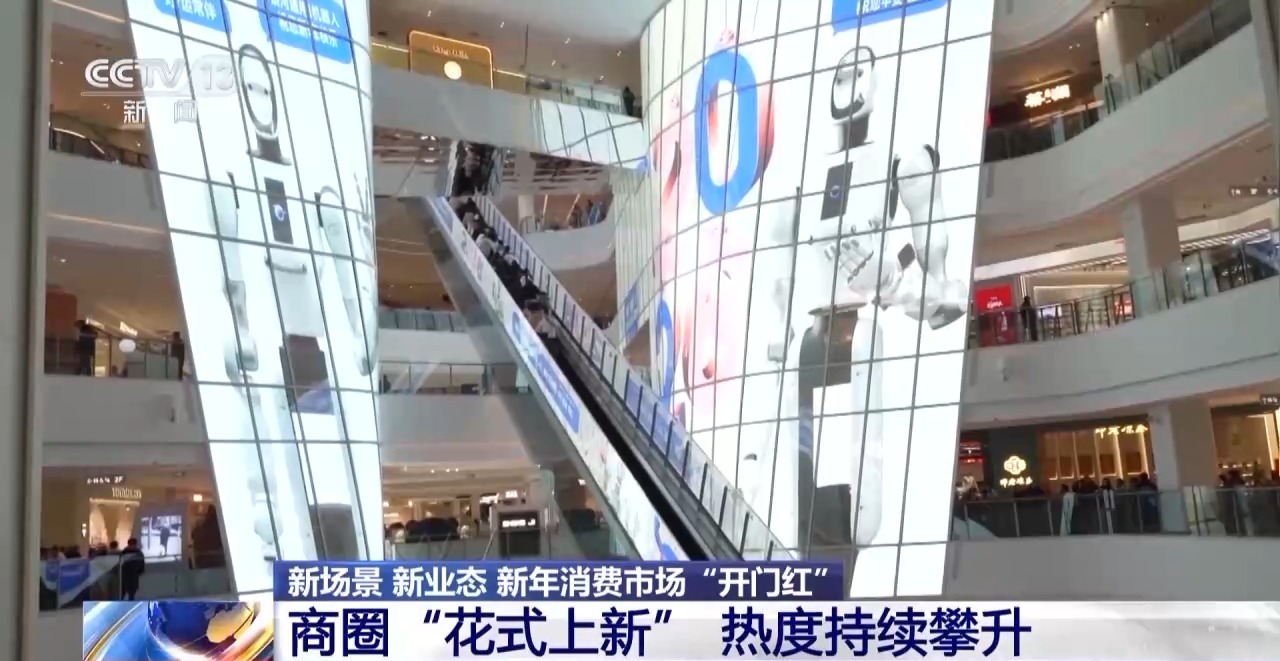
视频丨商圈“花式上新”、电影火热开年 消费市场迎“开门红”
Yang Shi Xin Wen Ke Hu Duan· 2026-01-06 01:32
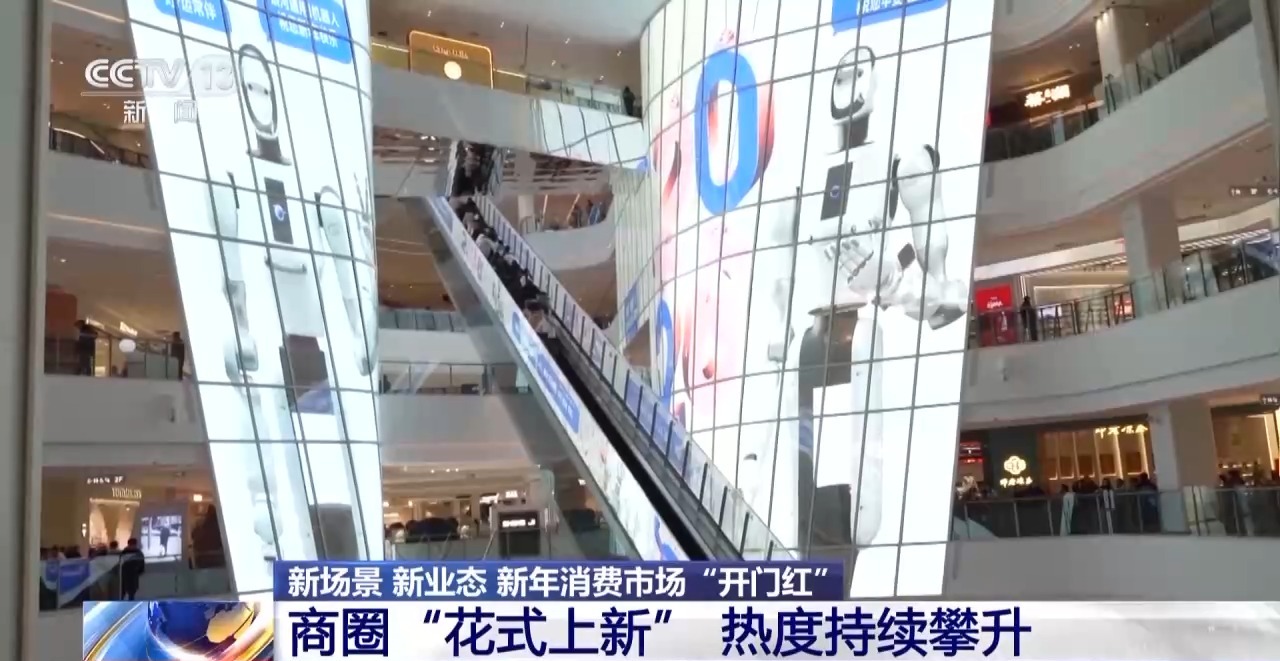
Group 1 - The core viewpoint of the articles highlights a significant increase in consumer activity during the New Year holiday, with key shopping districts experiencing a 5.9% rise in daily foot traffic and a 4.9% increase in sales compared to the previous year [1] - The emergence of new shopping experiences, such as pop-up stores and interactive events, is enhancing consumer engagement and driving sales growth [2] - In Wuhan, a new park-style super complex attracted over 120,000 visitors on New Year's Day, showcasing diverse activities and services aimed at families and pet owners [4] Group 2 - The film market had a strong start to the year, with box office revenues reaching 739 million yuan and over 18.57 million moviegoers during the New Year period, indicating a shift towards a more integrated consumption ecosystem [9][11] - The "movie+" model is expanding, linking cinema experiences with dining and tourism, thus enhancing overall service consumption [17] - New consumer demands, such as ice and snow experiences and smart technology, are driving supply-side innovations, creating a dynamic market environment [18][20] Group 3 - The holiday period saw a notable increase in service consumption, with restaurant sales growing by 2.8% and ski resort revenues surging over 50% [15] - The demand for elder-friendly products and services is evolving, with innovative offerings like smart sleep monitoring devices gaining popularity [22] - The integration of artificial intelligence in consumer experiences is becoming more prevalent, with sales of smart health devices and wearables increasing by over 20% and 15%, respectively [24]
商圈“花式上新”、电影火热开年 消费市场迎“开门红”
Yang Shi Xin Wen Ke Hu Duan· 2026-01-06 00:38
Core Insights - The consumer market in China experienced a strong start to the new year, with significant increases in foot traffic and sales across major shopping districts during the New Year's holiday [1][13]. Group 1: Consumer Trends - The average daily foot traffic in 78 key pedestrian streets and shopping districts increased by 5.9% compared to the New Year's holiday in 2025, with sales rising by 4.9% [1]. - New shopping experiences, such as pop-up stores and themed events, are attracting consumers, with Wuhan's new park-style super complex seeing over 120,000 visitors on New Year's Day alone [2]. - The Beijing Wukesong shopping district leveraged cross-industry collaboration and technology, featuring events like New Year's concerts and robot performances to enhance consumer experiences [4]. Group 2: Entertainment and Film Industry - The Chinese film market had a robust opening during the New Year's holiday, with box office earnings reaching 739 million yuan and over 18.57 million moviegoers [7]. - The "movie+" ecosystem is expanding, integrating cinema experiences with broader consumer activities, thus enhancing service consumption quality and diversity [15][9]. - The film industry is transitioning from a focus on box office revenue to a multi-faceted consumption ecosystem, driving related sectors such as dining and tourism [15]. Group 3: Innovative Consumer Experiences - New demands for experiences such as ice sports and smart technology are prompting supply-side innovations, creating a positive cycle of demand and supply [16]. - The popularity of ice sports has led to comprehensive service innovations, including AI guides and real-time monitoring systems for ski resorts [16]. - The market for senior-friendly products is evolving, with a shift towards quality and enjoyment, as seen in the rise of smart health devices and themed experiences for older adults [18]. Group 4: Technology Integration - The integration of artificial intelligence and other advanced technologies into consumer experiences is becoming prevalent, with new tech stores opening in major urban areas [20]. - Sales of smart health devices and wearables increased by over 20% and 15%, respectively, during the holiday period, indicating a growing trend towards tech-enhanced consumer goods [20].
21社论丨优化实施“两新”政策,撬动更多市场需求
Xin Lang Cai Jing· 2026-01-05 22:50
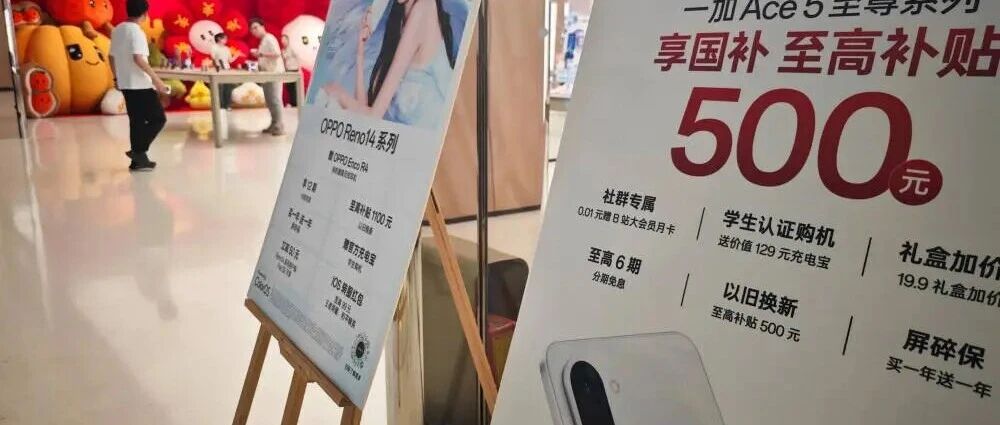
Core Insights - The Ministry of Commerce reports that by 2025, the sales volume of products related to the trade-in program will exceed 2.6 trillion yuan, benefiting over 360 million people [1] - The new "national subsidy" policy set to launch during the 2026 New Year holiday is expected to stimulate the consumer market, particularly in smart electronic products, with sales of smart health devices and wearable technology projected to grow by over 20% and 15%, respectively [1] - The National Development and Reform Commission and the Ministry of Finance have issued a notice outlining the scope and subsidy standards for the 2026 large-scale equipment update and trade-in policy, emphasizing the importance of domestic demand in economic growth [1] Equipment Update Policy - The 2026 policy expands and optimizes support for traditional industries while including upgrades for public safety and consumer infrastructure, such as elevators in old residential areas and fire rescue facilities [2] - The policy shifts focus from solely enhancing manufacturing to balancing production and living standards, addressing public safety and improving consumer experiences [2] - Specific adjustments in the subsidy mechanism aim to enhance precision and effectiveness, such as prioritizing the replacement of old operational trucks with new energy electric vehicles [2] Consumer Goods Trade-in Policy - The 2026 policy optimizes the scope and standards for trade-in programs, concentrating on high-impact categories like automobiles and core household appliances [3] - By focusing fiscal resources on key consumer goods, the policy aims to stimulate larger market demand for upgrades and consumption [3] - The subsidy mechanism for automobiles has shifted from fixed amounts to a proportional subsidy linked to the sales price of new vehicles, enhancing the efficiency of fiscal spending [4] Emerging Consumer Trends - The policy introduces support for new consumer areas such as smart glasses and age-friendly home products, reflecting a forward-looking approach to consumer trends [4] - The shift in consumption structure from goods to services is highlighted, with an emphasis on boosting support in sectors like culture, sports, health, and elderly care [5] - Future efforts will focus on institutional innovation and quality enhancement to unlock the potential of service consumption and further optimize the economic structure [5]
优化实施“两新”政策,撬动更多市场需求
2 1 Shi Ji Jing Ji Bao Dao· 2026-01-05 22:42
Core Insights - The Ministry of Commerce reports that by 2025, the sales volume of products related to the trade-in program will exceed 2.6 trillion yuan, benefiting over 360 million people [1] - The new "national subsidy" policy, effective from the New Year holiday in 2026, aims to stimulate the consumption market, particularly in smart electronic products, with sales of smart health devices and wearable devices expected to grow by over 20% and 15% respectively [1] Group 1: Equipment Update Policy - The 2026 policy expands and optimizes support for equipment updates, including traditional industries and new areas such as installing elevators in old residential communities and enhancing public safety infrastructure [2] - The policy shifts focus from solely improving manufacturing levels to balancing production and living standards, addressing public safety and consumer experience [2] - Specific adjustments in subsidy mechanisms aim to enhance precision and effectiveness, such as prioritizing the replacement of old operational trucks with new energy electric trucks [2][3] Group 2: Consumer Goods Trade-in Policy - The 2026 policy for consumer goods trade-in has undergone structural optimization, focusing on high-impact categories like automobiles and core home appliances [3][4] - The subsidy mechanism for automobiles has shifted from fixed amounts to a proportional subsidy linked to the new car sales price, aiming for more efficient use of fiscal resources [4] - New emerging consumer fields, such as smart glasses and age-friendly home products, have been included in the support scope, indicating a forward-looking approach to policy adjustments [4] Group 3: Service Consumption Shift - The consumption structure in China is transitioning from goods-led to service-led consumption, with service consumption becoming a key focus for boosting domestic demand [5] - The policy is expected to increase support in areas such as culture, tourism, sports, health, elderly care, and housekeeping services [5] - Further institutional innovation and quality enhancement are needed to unlock the potential of service consumption and promote economic structure optimization [5]