智能猫厕所

Search documents
回顾2025展望2026 中国宠物行业2025年十大事件盘点
Nan Fang Nong Cun Bao· 2026-01-05 15:01
Core Insights - The Chinese pet industry is projected to reach a market size of 811.4 billion yuan by 2025, reflecting a year-on-year growth of 15.7% [4][5] - The industry is entering a high-quality development phase characterized by policy standardization, capital investment, technological innovation, and global expansion [5][7] Group 1: Regulatory Developments - In January 2025, two national standards for the pet industry were approved, focusing on pet diagnosis and operational guidelines, which took effect on August 1 [11][12] - The new regulations shift pet management from reactive to proactive, providing a unified basis for pet management across the country [17] Group 2: Capital Investment Trends - In January 2025, Aiyi Animal Medicine completed a significant financing round, marking the start of a year with 33 public investment events in the pet industry, with over 30% focused on pet medical and pharmaceutical sectors [22][28] - Capital is increasingly directed towards high-tech areas such as vaccine development and AI medical applications, indicating a shift from mere traffic competition to supply chain and technology competition [32][33] Group 3: Industry Events and Exhibitions - The fifth Pet Expo held in May 2025 in Shanghai saw a 40% increase in exhibition area, attracting 1,200 exhibitors and over 8,000 brands, highlighting the industry's growth and innovation [38][40] - The event introduced new segments focusing on refined pet care and smart technology, showcasing innovative products like AI health monitoring devices [41] Group 4: Mergers and Acquisitions - In the first half of 2025, seven major mergers occurred in the pet industry, with significant acquisitions by leading companies to enhance product lines and market presence [48][52] - The establishment of five industry funds totaling over 2 billion yuan indicates a strategic focus on key segments of the pet industry [49] Group 5: Regulatory Enhancements in Pet Food - The implementation of the "Pet Feed Labeling Regulations" in 2025 emphasizes transparency and accountability in pet food claims, raising industry standards [58][65] - Stricter regulations are expected to impact smaller brands while pushing leading companies to invest more in research and development [73] Group 6: Digital Transformation in Veterinary Services - Starting September 1, 2025, an electronic licensing system for veterinary practices will be implemented, enhancing regulatory oversight and operational standards [79][84] - This digital shift aims to curb illegal practices and improve service quality in the pet healthcare sector [85] Group 7: Global Expansion of Domestic Pet Companies - In 2025, domestic pet companies accelerated their global expansion, with significant acquisitions and production base setups in regions like Southeast Asia [90][92] - The international recognition of Chinese pet products is increasing, marking a transition from domestic competition to global market engagement [95] Group 8: Local Policy Initiatives - The "Pet Nine Articles," a local policy initiative in Beijing's Pinggu District, aims to support the high-quality development of the pet economy, focusing on technology and industry upgrades [103][106] - This policy is seen as a model for regional development in the pet industry, promoting innovation and collaboration [109] Group 9: E-commerce Trends in Pet Consumption - During the 2025 Double Eleven shopping festival, pet consumption surged, with significant growth in high-end and smart products [115][119] - The trend towards quality and responsibility in pet ownership is evident, with brands achieving substantial sales increases [122] Group 10: International Collaboration at Trade Shows - The 2025 China International Import Expo featured a dedicated pet theme area, showcasing a variety of pet-related products and fostering international partnerships [128][132] - This initiative highlights the growing importance of the pet economy in China's consumer market and its role in global industry connections [133]


“宠物+”融合发展,撬动万亿消费市场
Bei Jing Shang Bao· 2026-01-04 23:09
Group 1 - The core viewpoint of the articles highlights the rapid growth of the pet economy, which has transitioned from a niche market to a significant driver of consumer spending, with pet-related products and services becoming essential in various sectors such as home cleaning, health, and entertainment [1][4][8] - Pet consumption is increasingly characterized by "humanization of pet needs" and "petification of human products," leading to innovative products like pet-specific vacuum cleaners and smart pet devices, which are becoming popular among urban pet owners [3][5] - The demand for pet health products is surging, with prescription pet food sales expected to grow by 290% by 2025, and other health-related products also showing significant growth, indicating a shift towards more health-conscious pet ownership [5][6] Group 2 - The pet economy is reshaping household consumption patterns, with pet-related spending becoming a key variable in driving traditional consumer goods growth, as evidenced by government initiatives targeting the pet market [4][6] - The trend of "pet as family member" is leading to increased spending on high-value items such as pet pharmaceuticals and health supplements, with average monthly spending on pet nutrition reaching 85 yuan, a 30% increase year-on-year [6][7] - There is a notable regional variation in pet consumption, with urban areas like Beijing showing higher average spending and a preference for premium pet products, reflecting a nationwide trend towards more refined and functional pet care [7][8]


年增1.2万家企业 宠物经济在沈蓬勃“起势”
Xin Lang Cai Jing· 2025-12-20 22:07
Core Insights - The pet economy in Shenyang is experiencing rapid growth, driven by new consumer concepts and emotional needs, with over 35,000 registered pet-related businesses in the region, including 12,000 newly established in the past year [1][4] Group 1: Market Growth and Trends - The pet consumption market in Shenyang is showing strong growth, with consumers spending an average of 500 yuan per month on pet care, excluding vaccination and medical expenses [2] - The market is projected to exceed 300 billion yuan in 2024, with a year-on-year growth of 7.5%, and is expected to surpass 811.4 billion yuan by 2025, potentially reaching over 1 trillion yuan shortly thereafter [3][4] Group 2: Industry Development - The number of offline pet stores is rapidly increasing, with 7 new pet shops opening on a single street in Shenyang, indicating a diverse range of services including grooming and specialty offerings like pet photography [4] - The establishment of the Northeast Asia Pet Trading Center aims to create a comprehensive industry demonstration zone that integrates live trading, smart warehousing, and financial services [5] Group 3: Consumer Behavior and Preferences - Consumers are increasingly viewing pets as family members, leading to a shift in spending towards high-quality products and services, including smart feeding devices and other high-end pet care products [3][5] - The variety of pets owned is expanding beyond traditional cats and dogs to include reptiles and small mammals, which is driving demand for a wider range of pet products and services [2]
双十一“它经济”热潮:年轻人血本氪金,“毛孩子”过得好上加好
2 1 Shi Ji Jing Ji Bao Dao· 2025-11-11 11:56
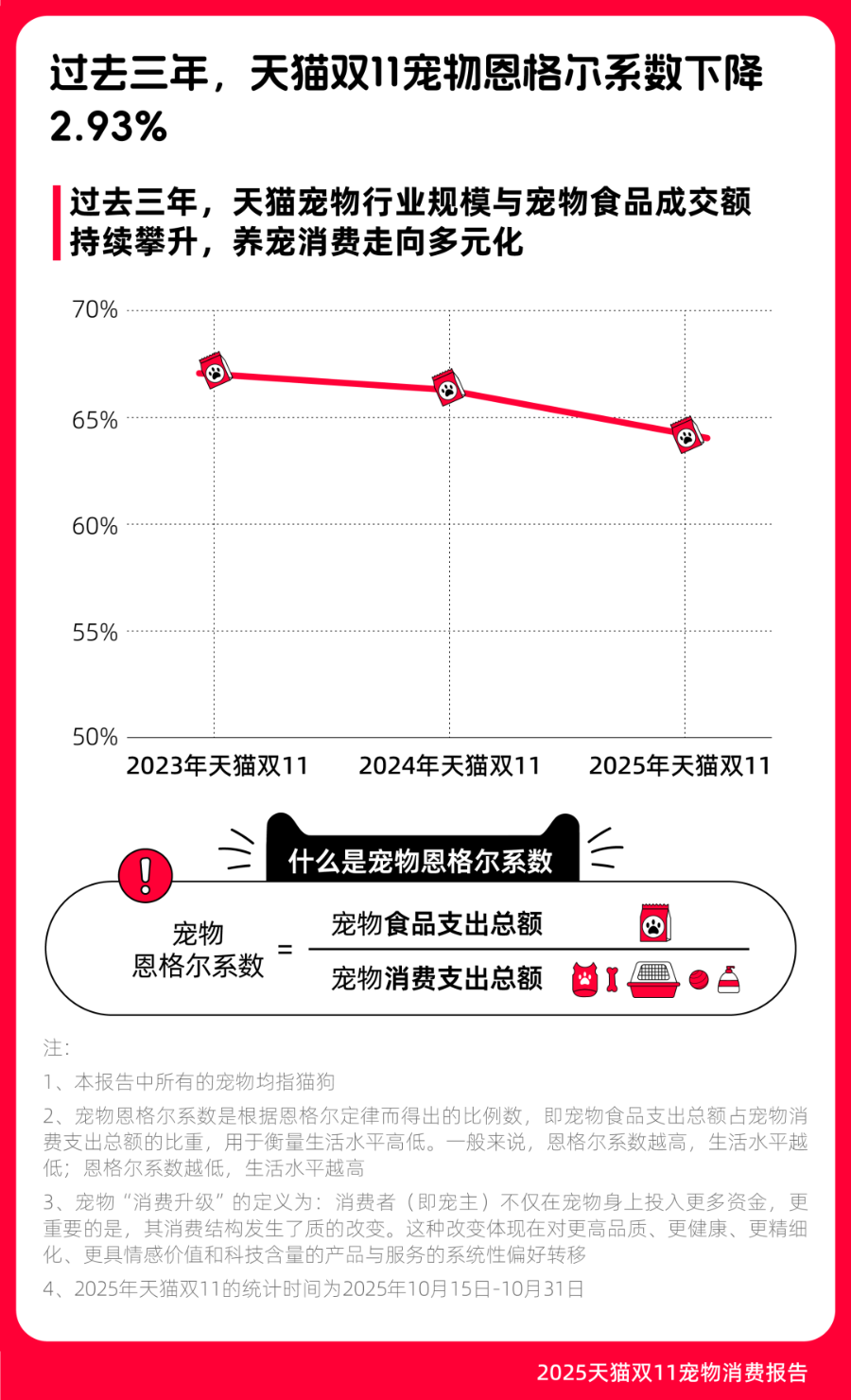
Core Insights - The pet consumption market in China is experiencing a significant upgrade, with consumers prioritizing quality and health for their pets over personal luxury items during shopping events like Double Eleven [1][2][3] - The trend indicates a shift from basic pet care to a focus on natural and healthy products, reflecting pets as family members with individual needs [1][7] - The market is characterized by a rapid growth in domestic brands, which are capturing a larger market share, indicating a structural change in consumer preferences [3][10] Group 1: Market Dynamics - The Double Eleven shopping event serves as a peak consumption period, showcasing the explosive growth of the pet category, with many consumers spending significantly on pet products [2][10] - Data shows that within the first hour of the Double Eleven pre-sale, 18 brands exceeded 10 million yuan in sales, and 587 brands saw year-on-year growth [3][10] - Domestic brands accounted for 68% of the brands that surpassed 10 million yuan in sales, highlighting the rise of local players in the pet food market [3][11] Group 2: Consumer Behavior - Young pet owners are increasingly making rational and informed choices, focusing on the nutritional needs of their pets rather than brand prestige [7][8] - The average spending on pet products is rising, with consumers prioritizing high-quality items such as premium pet food and smart pet devices [3][9] - The Engel coefficient for pet consumption on platforms like Tmall has decreased, indicating a diversification in spending habits and a shift towards higher-priced essential goods [3][8] Group 3: Industry Trends - The pet industry is projected to grow significantly, with estimates suggesting that by 2024, the market size will exceed 300 billion yuan [7][10] - The demand for smart pet products is on the rise, with substantial growth in categories like smart feeders and pet tracking devices, reflecting a trend towards technological integration in pet care [9][12] - The entry of non-traditional pet brands into the market is diversifying consumer choices and intensifying competition, as seen with brands like Adidas and Xiaomi [12][13] Group 4: Future Outlook - The Chinese pet market still has considerable growth potential compared to more mature markets like the US, where pet ownership rates are significantly higher [11][12] - The industry lacks dominant players, with the top five companies holding only 24.5% market share, indicating opportunities for new entrants and innovation [11][12] - Education and professional development in the pet care sector are crucial for sustainable growth, as the industry faces a shortage of qualified professionals [13]
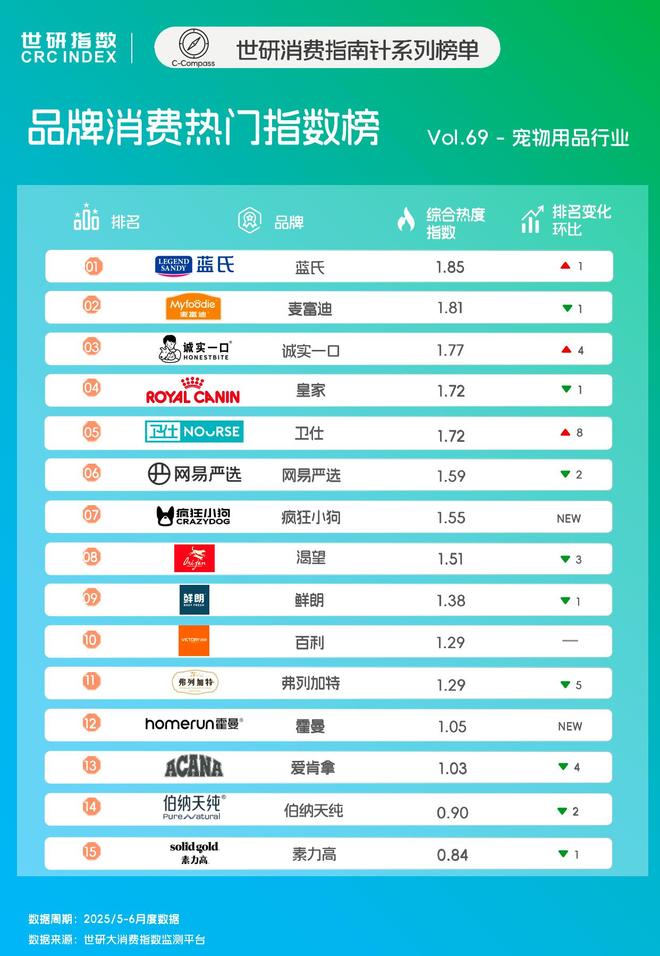
宠食升级新风尚,清凉零食降火润燥|世研消费指数品牌榜Vol.69
3 6 Ke· 2025-09-15 03:56
Core Insights - The article highlights the rising popularity of pet brands, with Blue's, Mytodie, and Honestbite leading in consumer interest, showcasing their strong market presence and brand loyalty [1][2]. Brand Popularity Rankings - The top three brands in the pet industry based on comprehensive popularity index are Blue's (1.85), Mytodie (1.81), and Honestbite (1.77) [2]. - Other notable brands include Royal Canin (1.72), The Nourish (1.72), and NetEase Select (1.59) [2]. Industry Trends - The fifth TOPS Pet Expo in Shanghai attracted over 8,000 pet brands, indicating a robust growth in the pet industry, covering food, supplies, medical, and smart technology sectors [3]. - Key trends observed include: - Craft upgrades such as the adoption of low-temperature baking technology - Functional segmentation targeting specific health issues like tear stains and gastrointestinal care - Integration of technology and emotional connections through public welfare and smart devices [3]. Product Innovations - The pet snack market is evolving towards diversified, scene-based, and emotional products, with a notable trend towards "cooling" elements in summer snacks, such as ice cream and jelly [4]. - New product launches include Crazy Dog's duck meat floss with sweet pear and Mytodie’s low-fat duck meat snacks, catering to health-conscious pet owners [4].
宠物智能,是「养宠自由」还是「焦虑税」?
3 6 Ke· 2025-08-26 09:46
Core Insights - The pet smart products market in China has been growing at over 40% for three consecutive years, with a market size of approximately 10.2 billion, accounting for about 20% of the overall pet products market [4][12] - Despite the growth, there is a rising trend of second-hand sales on platforms like Xianyu, with common reasons for selling including dissatisfaction and maintenance difficulties [3][12] - The industry is experiencing a shift from single product development to creating product ecosystems, with major brands focusing on comprehensive solutions for pet care [9][10] Group 1: Market Growth and Trends - The pet smart products market reached a size of approximately 102 billion, with significant contributions from smart feeders, cameras, and water dispensers [4] - The emergence of smart pet devices began as early as 2013, with significant advancements in 2018 due to the proliferation of IoT technology [4][5] - Brands like PETKIT have successfully capitalized on the IoT trend, raising significant funding and launching popular smart products [5][6] Group 2: Competitive Landscape - Major brands are increasingly competing on the basis of data value and ecosystem construction rather than just product features [11] - The market is seeing a rise in competition leading to product homogenization, with many brands offering similar functionalities [12] - Traditional pet industry giants are also seeking to transition into smart products, with companies like Mars acquiring tech brands to create comprehensive ecosystems [10] Group 3: Challenges and Consumer Trust - The industry faces challenges such as product sameness and the emergence of "pseudo-demand" and "pseudo-intelligence," which erode consumer trust [13][14] - Many smart products do not meet the expected performance standards, leading to consumer skepticism about their effectiveness [13][14] - The reliance on consumables and subscription services for revenue generation is creating a consumer trap, with many brands struggling to create a cohesive ecosystem [15] Group 4: Path to Resolution - Companies need to focus on genuine user needs and pain points to drive innovation and product development [16] - Emphasizing technological depth and user experience over superficial features can lead to more successful products [16][17] - Creating interconnected ecosystems rather than isolated products can enhance user experience and foster customer loyalty [17]
小萌宠大市场!1200多家企业8000多个品牌参展它博会
Shang Hai Zheng Quan Bao· 2025-05-09 19:25
Core Insights - The pet industry is experiencing significant growth, driven by diverse consumer demands and technological advancements in pet products [1][4] Group 1: Event Overview - The 2025 TOPS Pet Expo was held at the Shanghai National Exhibition and Convention Center from May 8 to 11, covering over 100,000 square meters with more than 1,200 exhibitors and over 8,000 brands [1] - The expo showcased a wide range of products, including pet food, supplies, and medical services, reflecting the industry's diversification and increasing consumer engagement [1] Group 2: Trends in Pet Nutrition - The pet food sector is the largest sub-industry within the pet market, characterized by a shift towards scientific, refined, and anthropomorphic feeding practices [2] - Brands are moving from basic feeding to customized nutrition, addressing specific needs at different life stages of pets, such as high-quality protein for kittens and joint health for older cats [2] - New product innovations include advanced technologies like micro-emulsification to enhance nutrient absorption and formulations that support pet health, such as Omega-3 for fur care [2][3] Group 3: Technological Advancements - The pet supplies segment is also evolving with digital and smart innovations, such as AI-enabled litter boxes and UV sterilizing water dispensers, enhancing pet care [4] - The market potential is underscored by data indicating that the urban pet consumption market in China is projected to reach 300.2 billion yuan in 2024, growing by 7.5% from 2023, with expectations to exceed 400 billion yuan by 2027 [4] Group 4: Growth in Small and Exotic Pets - The small and exotic pet sector is expanding rapidly, with the expo's small pet area increasing by 120% year-on-year, and the overall market size surpassing 10 billion yuan [5] - The user base for small and exotic pets has exceeded 20 million, with over 60% being new pet owners, indicating a high growth rate from a low base [5]
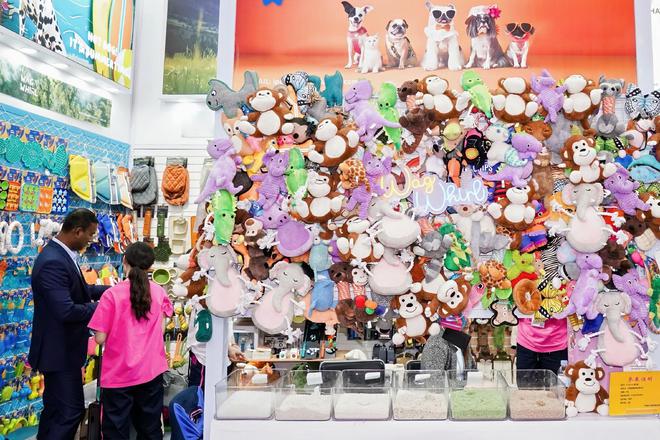
广交会三期解码“美好生活”:“智”造它经济,潮玩链全球
Nan Fang Du Shi Bao· 2025-05-04 06:21
Core Insights - The 137th Canton Fair's third phase focuses on the theme of "Beautiful Life," with the "Play and Pets" section gaining significant attention [1] - The pet supplies sector is rapidly evolving towards smart and emotional products, showcasing resilience and vitality in the face of market challenges [1][2] Industry Trends - The Chinese pet market is expanding, driven by an increasing number of pet owners, with the pet supplies exhibition attracting international buyers [2] - There is a noticeable rise in interest for smart pet products, such as smart cat litter boxes and feeders, reflecting a shift in young consumers' demands towards interactivity and technology [4] Company Innovations - Companies like Tianyuan Pet Products are launching numerous new products monthly, focusing on interactive toys and upgraded pet supplies, including fashion items targeted at young female consumers [6] - The company emphasizes enhancing emotional connections between pets and owners, integrating eco-friendly designs, and incorporating AI technology into smart devices [6] Market Dynamics - Tianyuan Pet Products is expanding its overseas operations to mitigate risks from changing international trade environments, with a significant portion of its revenue coming from international markets [8] - The toy export market is experiencing a decline in 2024, but exports to Central Asian countries are on the rise, indicating a shift in market focus [8][10] Competitive Strategies - Companies are diversifying their markets beyond the U.S. to Europe, Southeast Asia, and the Middle East, leveraging China's cost advantages and robust supply chains [10] - Investment in R&D is crucial, with companies like Nanjing Kete Toys allocating 5%-10% of their annual output value to innovation, enhancing their competitive edge in global markets [12]