
木质素

Search documents
持续创新:UPM 推动高性能生物基材料规模化发展 | Bio-based 2026嘉宾
合成生物学与绿色生物制造· 2026-03-22 10:08
Core Viewpoint - The article discusses the urgent need for the CASE (Coatings, Adhesives, Sealants, Elastomers) industry to transition towards sustainable, bio-based materials due to increasing environmental regulations and the depletion of fossil resources [3]. Industry Pain Points - The CASE industry heavily relies on petroleum-based raw materials, leading to high carbon emissions and vulnerability to fossil resource fluctuations. This creates a pressing demand for high-performance, low-cost, and fully renewable bio-based alternatives [3]. - Lignin, the second most abundant natural polymer, holds significant potential as a substitute for fossil-based aromatic compounds, but its complex molecular structure and variability pose challenges for large-scale application [3]. UPM's Green Initiatives - UPM, a leading forest industry company, is addressing these challenges through its second-generation biomass refining plant in Leuna, Germany, which aims to convert sustainably sourced wood into bio-based chemicals. The plant has a total capacity of approximately 220,000 tons [5]. - Key products from this facility include bio-based ethylene glycol (UPM BioPura™), propylene glycol, and lignin-based renewable functional fillers (UPM BioMotion™), all sourced from 100% sustainably managed forests [5]. Innovations in Wood-Based Chemicals - UPM's innovations include high-reactivity lignin that can partially or fully replace traditional phenol in phenolic resins, enhancing mechanical strength and reducing toxicity [10]. - The unique hydrophobic and film-forming properties of lignin are being explored for barrier coatings in paper-based packaging, improving water and oxygen resistance while promoting biodegradability [10]. Upcoming Events - UPM's manager, Han Dayong, will present at the Bio-based 2026 conference in Shanghai, discussing the latest advancements in wood-based chemicals and their applications in the CASE industry [9][12].

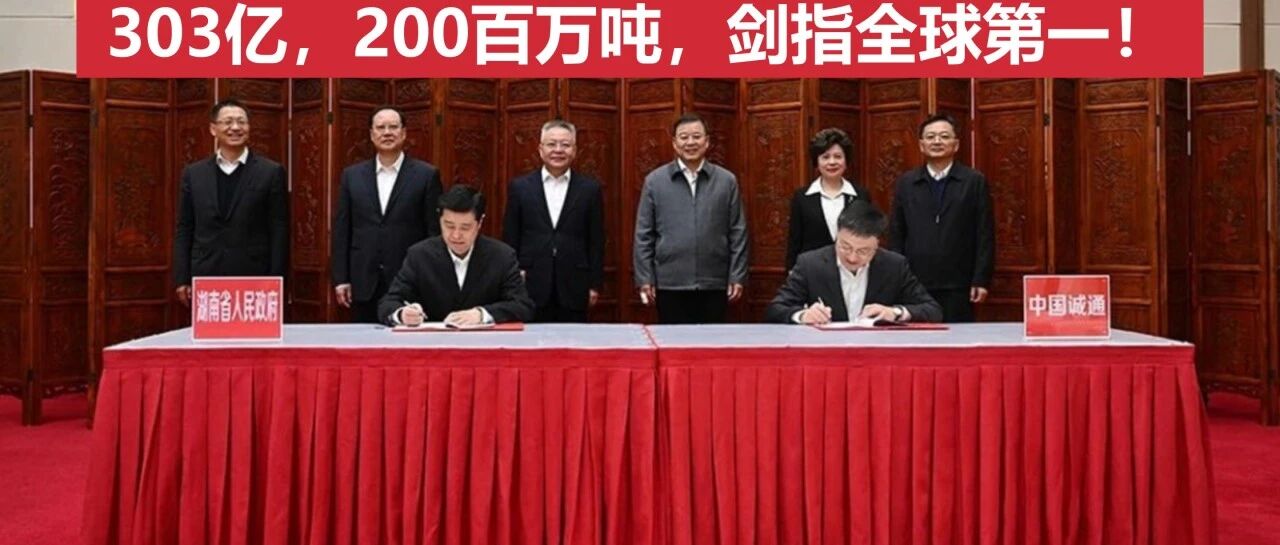
超300亿!200万吨生物基大项目签约,剑指全球第一
DT新材料· 2026-02-12 16:04
Core Viewpoint - The article discusses a significant investment project in the bio-based materials sector, highlighting a partnership between the Yueyang government and China Chengtong Holdings Group to establish a 200,000-ton bio-based materials project, which is expected to become the world's largest production capacity for specialty cellulose [4][5][9]. Group 1: Project Overview - The total investment for the project is 30.3 billion yuan, making it the second-largest single industrial project in Hunan Province, following ethylene refining [8]. - The project will be constructed in two phases: the first phase involves an investment of 17 billion yuan to build 1.1 million tons of specialty cellulose and 450,000 tons of household paper, with production expected to start by the end of 2027 [12]. - Once fully operational, the project is projected to generate an annual output value of 25.05 billion yuan [12]. Group 2: Specialty Cellulose Insights - Specialty cellulose refers to high-value cellulose derivatives that have been chemically or physically modified, including acetate cellulose and nitrate cellulose [7][13]. - The primary product from this project is likely to be dissolving pulp, which is used to produce viscose fibers, a key material in the textile industry [14][16]. - The global demand for dissolving pulp is significant, with projections indicating that by 2024, the global consumption will reach approximately 6.2 million tons, with China being the largest consumer [19][20]. Group 3: Market Context and Implications - China currently imports over 4 million tons of dissolving pulp annually to meet domestic demand, indicating a high dependency on foreign sources [20][23]. - The establishment of this 200,000-ton capacity is expected to significantly reduce China's import reliance, potentially cutting it by nearly half [33]. - The project aligns with the broader trend of domestic industrialization and the shift towards bio-based materials as alternatives to petrochemical products, especially in the context of carbon neutrality goals [29][30]. Group 4: Strategic Advantages - Yueyang's strategic advantages include its port access, established petrochemical industry, and available land resources, which facilitate the project's implementation [24][33]. - The project is backed by China Chengtong, a major state-owned enterprise, which enhances its financial and operational capabilities [26][28]. - The operational management is likely to be handled by Hunan Juntai New Materials Technology Co., a subsidiary of Yueyang Lin Paper, which has a strong market presence in dissolving pulp production [27][28].

剑指全球第一!央企303亿签约200万吨生物基项目
合成生物学与绿色生物制造· 2026-02-12 06:07
Core Viewpoint - The article discusses a significant investment of 30.3 billion yuan by China Chengtong Holdings Group in collaboration with the Yueyang government to establish a 2 million ton bio-based materials project, which is expected to become the world's largest production capacity upon completion [2][3]. Project Overview - The project involves the construction of a 2 million ton specialty cellulose and 450,000 ton household paper production base, with a total investment of 30.3 billion yuan [3][5]. - The project will be developed in two phases: the first phase will invest 17 billion yuan to build 1.1 million tons of specialty cellulose and 450,000 tons of household paper, starting construction in the first half of 2026 and expected to be operational by the end of 2027, generating an annual output value of 13.05 billion yuan [8]. - The second phase will focus on an additional 900,000 tons of specialty cellulose, with the timeline dependent on the completion of the first phase [8]. Specialty Cellulose Insights - Specialty cellulose refers to high-value cellulose derivatives that have undergone chemical or physical modification, including acetate cellulose and nitrate cellulose [7][9]. - The project is likely to focus on dissolving pulp, which is a key raw material for producing viscose fibers used in clothing [10][12]. - The global demand for dissolving pulp is projected to reach approximately 6.2 million tons in 2024, with China being the largest consumer, requiring over 4 million tons annually, leading to a significant import dependency [15][16]. Market Position and Competitive Landscape - Upon completion, Yueyang Lin Paper is expected to become the world's leading producer of dissolving pulp, significantly reducing China's import needs by nearly half [18][22]. - The project is strategically located in Yueyang, which has advantages such as port access, a developed petrochemical industry, and ample land resources for large-scale projects [19][25]. Operational and Strategic Implications - The operational management of the project is likely to be handled by Hunan Juntai New Materials Technology Co., a subsidiary of Yueyang Lin Paper, which has recently expanded its capabilities in the dissolving pulp market [24][30]. - The investment aligns with the growing trend towards bio-based materials as alternatives to petrochemical products, indicating a shift in the industry towards sustainable practices [26][27].
惠农“税费通”|支持乡村振兴系列税费优惠政策(49)以部分农林剩余物为原料生产纤维板等资源综合利用产品实行增值税即征即退90%
蓝色柳林财税室· 2026-02-06 07:45
Core Viewpoint - The article discusses the VAT tax refund policy for the production of fiberboard using agricultural residues, which has been effective since March 1, 2022, allowing a 90% VAT refund for certain products made from specified raw materials [3]. Group 1: Tax Policy Details - The policy applies to products made from at least 95% of specified raw materials, including agricultural residues like straw and corn cobs [4]. - Taxpayers must obtain VAT invoices from sellers for recycled resources purchased domestically; if the seller cannot issue invoices, alternative documentation is required [5]. - The calculation for sales revenue not eligible for the VAT refund is based on the proportion of unverified resource costs to total resource costs [6]. Group 2: Compliance Requirements - Products must not fall under categories deemed as eliminated or restricted by the relevant regulatory bodies, ensuring they are not classified as high pollution or high environmental risk [6]. - If the recycled resources include hazardous waste, a license from environmental authorities is required [7]. - Taxpayers must maintain a detailed record of recycled resource purchases, including supplier information and invoice status [10]. Group 3: Application Conditions - Taxpayers must not have a credit rating of C or D and should not have faced penalties related to environmental or tax laws in the six months prior to applying for the VAT refund [9].
三方跨界联合,计划开展木质素轮胎应用研发
Xin Lang Cai Jing· 2026-02-02 10:52
Core Insights - The collaboration between South China University of Technology and Shandong Huasheng Rubber Co., Ltd. focuses on the industrial application of lignin in green tire production, showcasing a successful model of industry-academia-research cooperation [1][6] Group 1: Lignin Utilization - Lignin, a byproduct of the paper industry, can achieve high-value utilization in the rubber tire sector, addressing long-standing issues of "easy agglomeration and difficult dispersion" in rubber applications [3][8] - The research team has developed a multi-level nano-micro phase separation structure and dynamic energy sacrifice bonds, significantly improving the compatibility of lignin with rubber [3][8] - The application of lignin can reduce tire rolling resistance by 5-10% and enhance aging resistance by over 20%, while its natural UV resistance helps mitigate performance degradation during use [3][8] Group 2: Cost Efficiency and Economic Impact - Lignin's cost is only 30-50% of traditional reinforcing agents like silica, providing a buffer for tire companies against raw material price fluctuations [3][8] - The collaboration also explores the "lignin + silica" pre-dispersion technology, which improves processing performance and balances the "magic triangle" of rolling resistance, wet grip, and wear resistance in tire formulations [10] Group 3: Circular Economy Initiatives - Huatai Paper Industry is implementing a "waste-to-resource" practice by extracting high-purity lignin from paper black liquor, with a project to produce 50,000 tons of lignin annually using advanced membrane separation technology, reducing costs by 15-20% [10] - The project aims to create a circular economy loop from "green electricity - pulp - lignin - rubber," contributing to environmental sustainability [10] - Current advancements in the application of lignin in tire formulations have shown progress in sidewall and inner liner compounds, although challenges remain for large-scale replacement in tread compounds [10]
岳阳林纸20260128
2026-01-29 02:43
Summary of the Conference Call for Yueyang Forest and Paper (岳阳林纸) Company Overview - **Company**: Yueyang Forest and Paper - **Industry**: Forestry Carbon Credits and Paper Manufacturing Key Points Impact of Contract Termination - The termination of the carbon credit contract in Tibet has a minimal impact on the overall carbon credit business of the company, which still holds approximately 100 million acres of forestry carbon credit contracts, with a total signed area of 160 million acres, where Tibet accounts for only about 2% [2][4][5] - The company is actively expanding into farmland and grassland carbon credit resources, with signed areas of 8 million acres and 2 million acres respectively [4] Market Potential and Trends - The domestic forestry carbon credit market has significant potential, driven by increasing global green certification demands and rising zero-carbon certification needs from Chinese manufacturing [2] - The price of green certificates has shown an upward trend, expected to rise from 1-2 RMB in 2024 to 5-6 RMB in 2025 [9] International Market Opportunities - The company is aligning its carbon development standards with EU and US standards to meet international market demands, focusing on high-quality products that comply with multiple certification systems [2][11] - There is a strong demand for high-quality carbon credits (e.g., VCS and GS) from Chinese manufacturing enterprises, with annual demand projected to reach millions of tons [16][17] Future Developments in Carbon Market - The steel, construction materials, and cement industries are expected to be included in the domestic carbon emission system by 2026-2027, which will significantly boost the overall carbon market in China [18] - The anticipated annual demand from these sectors is estimated to be between 10 million to 20 million tons, with a growth rate of 20% to 30% [18] Financial Performance and Projections - In 2025, the company faced challenges due to increased costs from boiler adjustments and losses in landscaping business, leading to an additional expenditure of approximately 400 to 500 million RMB [22] - For 2026, the company expects to achieve a profit of 200 to 300 million RMB through internal improvements and energy enhancements, with a stable profit forecast of over 400 million RMB from its subsidiary [23][24] Strategic Expansion Plans - The company plans to develop high-quality carbon assets in "Belt and Road" countries, prioritizing its own stock assets and focusing on high-value projects such as soil and biomass carbon [25] - Market research has been conducted in regions like Africa, Cambodia, and Nigeria, with expectations of developing tens of thousands of tons annually at premium prices [25] Investor Engagement - The company will conduct research activities and site visits to engage investors and provide updates on its market performance and developments in new fiber pulp markets [27] Conclusion - The company is well-positioned to navigate the evolving carbon credit landscape, with strategic plans for expansion and a focus on high-quality products to meet both domestic and international demands. The anticipated regulatory changes and market dynamics present significant opportunities for growth in the coming years.
中农秸美“三组分分离技术”:让农业秸秆变身“绿色金矿”
Jing Ji Guan Cha Bao· 2025-10-30 11:38
Core Viewpoint - The article discusses the transformation of agricultural straw management in China from traditional burning methods to innovative, sustainable practices that convert straw into high-value industrial products, driven by technological advancements and supportive government policies [1][9]. Policy and Government Initiatives - The Chinese government has issued multiple policies aimed at promoting the comprehensive utilization of agricultural straw, including reducing secondary pollution and enhancing resource recycling [1]. - Key policies include the "Opinions on Accelerating the Comprehensive Utilization of Crop Straw" and the "Action Plan for Agricultural Pollution Control (2021-2025)" [1]. Technological Innovations - The Zhongnong Qimei team has developed a "three-component technology" that allows for the complete conversion of straw into valuable industrial raw materials such as cellulose, hemicellulose, and lignin [2][9]. - This technology significantly reduces energy consumption by 70% and water usage by 80%, achieving nearly 100% utilization of straw [6][10]. Industrial Applications and Market Potential - The products derived from straw processing have vast market potential, particularly in the paper pulp market, which was valued at $5.111 billion in 2022, with significant room for growth in replacing plastic packaging [9]. - The market for hemicellulose and other by-products exceeds 30 billion yuan annually, indicating a strong demand for these materials [9]. Strategic Partnerships and Expansion - Zhongnong Qimei has entered into strategic partnerships with several companies and local governments, marking a significant step towards scaling its operations [4]. - The establishment of the world's first agricultural straw recycling demonstration industrial park in Yangling is a key milestone for the company [4]. Sustainable Development Goals - The shift from burning straw to utilizing it as a resource aligns with global sustainability goals, reducing carbon emissions and promoting environmental protection [7][9]. - The company aims to create a closed-loop industrial chain that enhances the value of agricultural waste while benefiting farmers and the environment [14][18].

万丰股份(603172) - 关于2025年三季度主要经营数据的公告
2025-10-30 08:44
| 主要原材料 | 2025 | 年 1-9 | 月平 | 2024 年 | 1-9 月平 | 变动比率 | | | --- | --- | --- | --- | --- | --- | --- | --- | | | | 均单价(元/吨) | | | 均单价(元/吨) | | | | 木质素 | | 10,067.73 | | | 8,789.64 | | 14.54% | | MF | | 5,434.27 | | | 5,019.68 | | 8.26% | | 还原物 | | 27,004.20 | | | 29,013.56 | | -6.93% | | 6-溴-2,4 二硝基苯胺 | | 21,919.51 | | | 20,403.67 | | 7.43% | | 氢溴酸 | | 14,816.67 | | | 10,098.71 | | 46.72% | | 氯乙酸甲酯 | | 5,747.76 | | | 4,885.74 | | 17.64% | | 间氨基乙酰苯胺盐酸盐 | | 15,998.58 | | | 15,899.49 | | 0.62% | | 间苯二胺 | | 17,96 ...

以部分农林剩余物为原料生产纤维板等资源综合利用产品实行增值税即征即退90%
蓝色柳林财税室· 2025-10-15 07:55
Core Viewpoint - The article discusses tax incentives aimed at promoting the development of rural specialty industries and the circular economy in agriculture, specifically through a VAT refund policy for certain resource utilization products made from agricultural by-products [2][7]. Summary by Sections Tax Incentives for Resource Utilization - A VAT refund of 90% is applicable for products made from specific agricultural by-products such as straw, corn cobs, and other residual materials [2]. - Eligible products include fiberboard, particleboard, biochar, activated carbon, and various sugars and alcohols derived from these materials [2]. Conditions for Enjoying Tax Benefits - Taxpayers must obtain VAT invoices from sellers when purchasing recycled resources domestically, or appropriate customs documentation when importing [3][4]. - A detailed record of recycled resource purchases must be maintained, including supplier information and transaction details [5]. - The products sold must not fall under categories deemed as eliminated or restricted by relevant regulatory bodies [5]. Compliance and Restrictions - Taxpayers must not have received administrative penalties for environmental violations or tax law violations in the six months prior to applying for the VAT refund [6]. - The raw materials used must consist of at least 95% of the specified resources to qualify for the tax incentives [7].

万丰股份(603172) - 关于2025年半年度主要经营数据的公告
2025-08-29 08:00
证券代码:603172 证券简称:万丰股份 公告编号:2025-024 浙江万丰化工股份有限公司 关于 2025 年半年度主要经营数据的公告 本公司董事会及全体董事保证本公告内容不存在任何虚假记载、误导性陈述 或者重大遗漏,并对其内容的真实性、准确性和完整性承担法律责任。 主要产品 2025 年 1-6 月 产量(吨) 销量(吨) 营业收入(元) 分散染料 5,187.62 5,389.59 243,323,519.30 滤饼 2,932.33 323.92 30,376,521.28 合计 8,119.95 5,713.51 273,700,040.58 一、主要产品的产量、销量及收入实现情况 | 主要原材料 | 年 2025 | 1-6 | 月平均 | 年 2024 | 月平 1-6 | | 变动比率 | | --- | --- | --- | --- | --- | --- | --- | --- | | | | 单价(元/吨) | | 均单价(元/吨) | | | | | 木质素 | | | 8,923.48 | | 8,863.45 | | 0.68% | | MF | | | 4,882.63 | ...