比亚迪ATTO 3

Search documents
日本汽车惨败,但中国就“赢”了吗
虎嗅APP· 2026-03-24 13:34
Core Viewpoint - The article discusses the significant milestone of Chinese automotive manufacturers surpassing Japanese companies in global sales, marking a shift in the global automotive landscape. However, it questions whether this achievement truly reflects a win for Chinese companies in terms of profitability and brand value [2][3][4]. Group 1: Sales Data - In 2025, Chinese automotive manufacturers are projected to achieve global sales of approximately 27 million vehicles, while Japanese manufacturers are expected to sell around 25 million vehicles, indicating a notable shift in market leadership [6][7]. - Specific sales figures for leading companies include BYD with 4.602 million units (+8%), SAIC with 4.507 million units (+12.3%), and Geely with 4.116 million units (+26%), while Toyota remains the top seller with 11.323 million units (+4.63%) [9][10]. Group 2: Market Share and Trends - China's global market share in the automotive sector is expected to reach 35.6% in 2025, up from 34.2% in 2024, highlighting a steady increase in dominance [10]. - The decline of Japanese automotive companies is attributed to strategic missteps, with a significant drop in market share in China, where Japanese brands now account for less than 9% of sales compared to 30% at their peak [11]. Group 3: Profitability and Brand Value - Despite leading in sales, Chinese companies like BYD have a net profit that is less than one-fifth of Toyota's, indicating a disparity in profitability [16]. - The overall profit margin for the Chinese automotive industry is only 4.1%, significantly lower than Toyota's operating profit margin of approximately 10% [17]. Group 4: Globalization and Market Presence - BYD's overseas sales reached 1.05 million units in 2025, a 145% increase, but this is still limited compared to Toyota's extensive global presence [19]. - The article emphasizes that while Chinese companies are making strides in international markets, their global strategy remains concentrated in Southeast Asia, the Middle East, and Latin America, with minimal penetration in North America [20]. Group 5: Future Challenges - The article warns that the automotive industry is shifting from a "price war" to a "value war," where success will depend on brand strength, profitability, and global operational capabilities, areas where Chinese companies currently lag [21][24]. - The true winners in the automotive sector will be those who can achieve not just high sales but also strong profits, brand recognition, and a robust global presence [25][26].





小鹏本地化生产、比亚迪建组装厂 车企“抢滩”马来西亚
Bei Jing Shang Bao· 2025-12-15 13:43
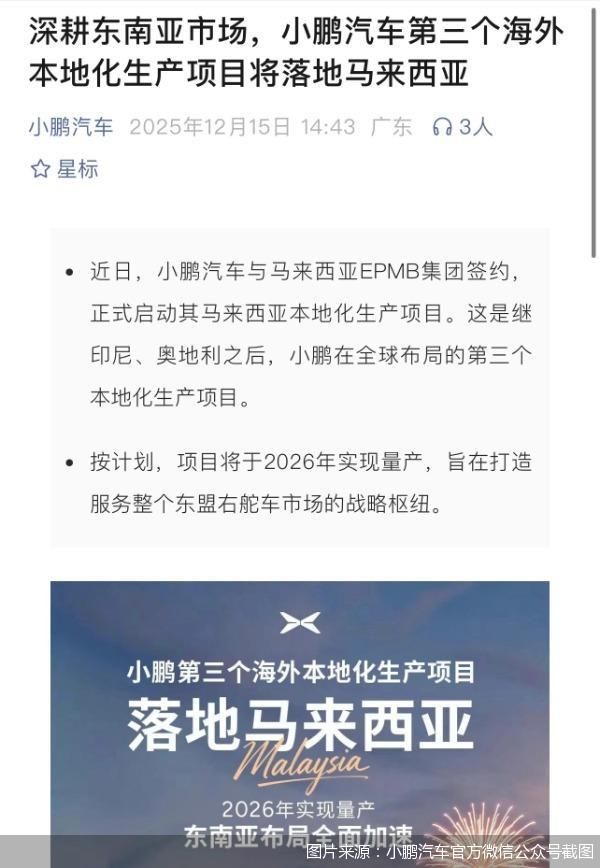
Core Viewpoint - Malaysia is becoming a key production hub for Chinese automotive companies, with Xpeng Motors launching its local production project in collaboration with EPMB Group, marking its third overseas localization project after Indonesia and Austria [1][5]. Group 1: Xpeng Motors' Localization Strategy - Xpeng Motors has established three overseas localization projects within six months, with the latest in Malaysia set to achieve mass production by 2026, aiming to serve the ASEAN right-hand drive market [5]. - The company aims to grow alongside local markets and consumers by providing high-quality smart products tailored to local preferences [5]. Group 2: Competitive Landscape in Malaysia - Other Chinese automotive companies, including BYD, Great Wall, and Chery, are also entering the Malaysian market, with various strategies from vehicle exports to local production [6]. - BYD is constructing an assembly plant in Malaysia, with plans to start production next year, while Leap Motor is collaborating with Stellantis for local assembly [6]. Group 3: Market Growth and Government Support - The Malaysian automotive market is experiencing rapid growth, with total vehicle sales in the ASEAN region reaching approximately 707,100 units in Q2, and Malaysia surpassing Indonesia in sales for the first time [8]. - The Malaysian government has set ambitious targets for electric vehicle sales, aiming for 15% of new car sales to be electric by 2030 and 38% by 2040, alongside plans to increase charging stations significantly [9]. Group 4: Incentives and Industry Infrastructure - The Malaysian government offers various incentives for electric vehicles, including tax exemptions and import duty waivers for locally assembled components [9]. - Malaysia has a robust automotive parts manufacturing industry, with over 600 manufacturers, which supports local production capabilities [10]. Group 5: Export Trends and Global Market Position - Chinese automotive exports have surged, with a total of 6.343 million vehicles exported in the first 11 months of the year, marking an 18.7% increase year-on-year [11]. - New energy vehicles are becoming a significant part of China's automotive exports, with 2.315 million units exported in the same period, reflecting a doubling year-on-year [11][12].

小鹏本地化生产、比亚迪建组装厂,车企“抢滩”马来西亚
Bei Jing Shang Bao· 2025-12-15 13:37
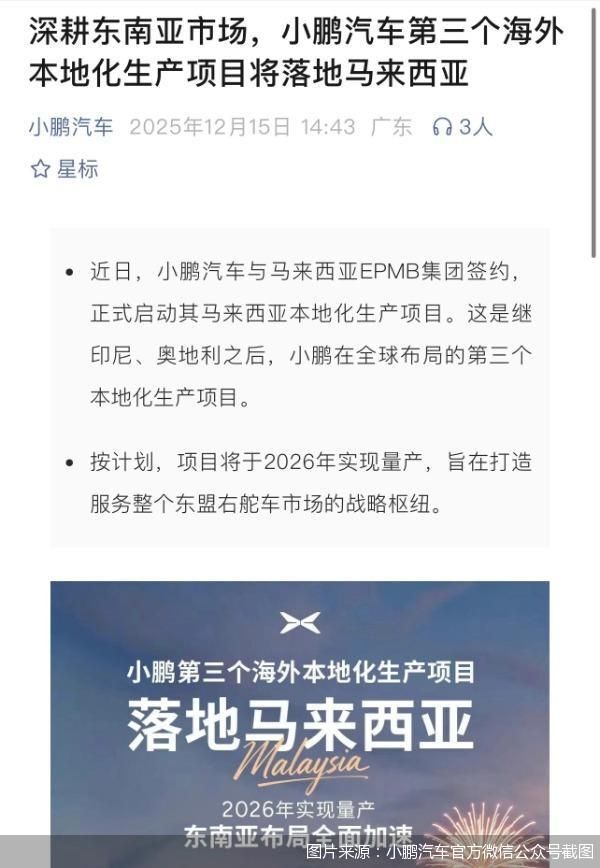
Core Viewpoint - Malaysia is becoming a key production hub for Chinese electric vehicle (EV) manufacturers, with companies like Xpeng, BYD, and others establishing local production to tap into the growing ASEAN market [1][6][8]. Group 1: Xpeng's Local Production Initiatives - Xpeng Motors has signed an agreement with Malaysia's EPMB Group to initiate its local production project, marking its third overseas localization effort after Indonesia and Austria [1][5]. - The project aims to achieve mass production by 2026 and serve the right-hand drive vehicle market in ASEAN [5]. - In the first ten months of this year, Xpeng's electric vehicle sales in Malaysia ranked among the top six brands [5]. Group 2: Competitive Landscape in Malaysia - Other Chinese automakers, including BYD, Great Wall, and Chery, are also entering the Malaysian market, with various strategies from vehicle exports to local production [6][7]. - BYD is constructing an assembly plant in Malaysia, set to begin production next year, and has already launched the ATTO 3 model in the market [6]. - The local automotive market is experiencing increased competition, with a focus on cost-effective local production to benefit from government incentives [7]. Group 3: Market Growth and Government Support - The Malaysian automotive market has shown significant growth, with total vehicle sales in the ASEAN region reaching approximately 707,100 units in Q2, with Malaysia surpassing Indonesia in sales for the first time [8]. - The Malaysian government has set ambitious targets for electric vehicle sales, aiming for 15% of new car sales to be electric by 2030 and 38% by 2040 [8][9]. - Incentives such as tax exemptions for electric vehicles and local assembly components are in place to boost EV adoption [9]. Group 4: Industry Infrastructure and Strategic Advantages - Malaysia has a robust automotive supply chain with over 600 parts manufacturers, making it an attractive location for local production [10]. - The country's strategic geographical position facilitates easy access to the broader Southeast Asian market, enhancing the distribution capabilities of manufacturers [10]. - The establishment of local production facilities is expected to drive further investment in the region's automotive ecosystem, as seen with companies like EVE Energy setting up operations in Malaysia [10]. Group 5: Export Trends and Global Market Position - Chinese automotive exports have surged, with a total of 6.343 million vehicles exported in the first eleven months of the year, marking an 18.7% increase year-on-year [11]. - The export of Chinese electric vehicles is becoming a significant component of overall automotive exports, with 2.315 million units exported in the same period, reflecting a doubling year-on-year [11][12]. - China accounted for 68% of the global increase in new energy vehicles, indicating its dominant position in the global EV market [12].
从强制生产到警惕过剩 泰国变了
Zhong Guo Qi Che Bao Wang· 2025-12-01 02:04
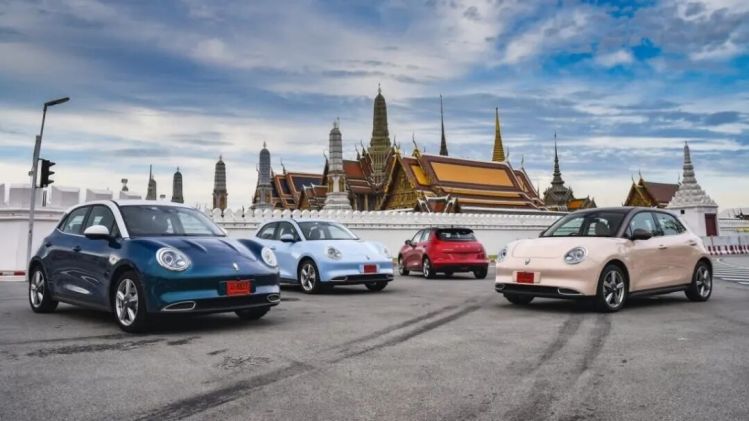
Core Insights - Thailand's Board of Investment (BOI) has adjusted its electric vehicle (EV) incentive policy, allowing manufacturers to count 1.5 exported EVs towards local production obligations, aimed at boosting exports and preventing domestic oversupply [2][4] Group 1: Policy Adjustments - The new policy encourages automakers to increase exports while addressing potential oversupply in the domestic market [2][4] - Previous measures included tax reductions, price subsidies, and corporate income tax exemptions to attract significant investments from companies like BYD and Great Wall Motors [2][3] - The requirement for manufacturers to produce 1.5 EVs locally for every imported unit aims to build a robust local production system [3] Group 2: Market Dynamics - Chinese brands dominate the Thai EV market, holding over 70% market share, with significant contributions to the local electric vehicle transition [2][6] - In September, Thailand's pure electric vehicle deliveries reached 9,107 units, nearly doubling year-on-year, with total sales from January to September at 81,381 units, accounting for over 18% of new car sales [2][3] - The overall automotive market in Thailand is projected to decline by 26% in 2024, with total sales expected to be around 573,000 units, falling behind Indonesia and Malaysia [3] Group 3: Competitive Landscape - The rapid growth of the EV market in Thailand is largely driven by Chinese automakers, with the top five selling models in September all from Chinese brands [6] - The policy changes present new opportunities for Chinese companies like BYD and Great Wall, allowing them to export more vehicles while meeting local production requirements [6] - Increased competition is anticipated as Japanese automakers accelerate their electrification efforts and Western brands like Tesla expand their presence in the Thai market [6]
吉利登陆英国市场,2030年要实现10万台汽车销量
2 1 Shi Ji Jing Ji Bao Dao· 2025-10-28 10:28
Core Insights - Geely has officially launched its electric vehicle model, Geely International EX5, in the UK market, with prices set at £31,990, £33,990, and £36,990 for different variants, making it competitive against local offerings like BYD ATTO3 and Tesla Model 3 [1][5] - The company aims to achieve annual sales of 100,000 units in the UK by 2030, which requires a compound annual growth rate significantly higher than the local market average [5][6] - Geely plans to introduce 15 new models in Europe over the next five years and establish over 1,000 sales outlets, focusing on the UK as a strategic entry point into the European market [2][5] Market Strategy - Geely has established 25 sales service outlets in the UK, with plans to double this number by the end of the year and reach 100 by 2026 [5][6] - The UK market is seen as a core part of Geely's European strategy due to its lack of dominant domestic brands and a consumer base open to new entrants [6][7] - The company is adopting a dual approach of promoting both electric and fuel vehicles, aiming to compete with established brands like Toyota in the fuel segment while targeting higher growth rates in the electric vehicle market [7][9] Performance and Growth - Geely's overall sales have been growing, with 1.1678 million new energy vehicles sold in the first three quarters of the year, achieving a penetration rate of 53.8% [9][10] - The company has seen a 61.8% increase in sales in the European market during the first nine months of the year, with a significant rise in new energy vehicle exports [10] - Geely's strategy includes leveraging established brands like Volvo to enhance brand recognition in the competitive European market [10]

利润半年蒸发1000多亿!不卖燃油车,欧洲要完蛋?
电动车公社· 2025-08-20 16:04
Core Viewpoint - The European automotive industry is facing a severe crisis due to the EU's strict environmental policies, particularly the 2035 ban on internal combustion engine vehicles, which could lead to significant financial losses for major car manufacturers [2][56]. Group 1: Financial Performance of European Automakers - Major European automakers reported significant profit declines in the first half of 2023, with Mercedes-Benz's net profit down 56%, BMW's down 29%, and Volkswagen's operating profit down 32.8% [4]. - Stellantis faced a staggering net loss of €2.256 billion in the first half of 2023, a stark contrast to its previous profitability [4][5]. - The overall financial struggles are attributed to the lower profitability of electric vehicles compared to traditional fuel vehicles [5]. Group 2: Market Dynamics and Competition - European automakers have been adversely affected by the rising market share of Chinese brands, which have captured over 64% of the Chinese market, leading to a decline in European brands' market presence [9][11]. - The average selling price of fuel vehicles in Europe has decreased, further squeezing profit margins for luxury brands [12]. - The shift to electric vehicles has not compensated for the losses from fuel vehicles, as European manufacturers struggle with the lack of smart technology and competitive pricing [15][19]. Group 3: Challenges from Policy and External Factors - The EU's 2035 ban on fuel vehicles is seen as a potential death knell for the industry, with calls for a reconsideration of this policy to allow for continued sales of fuel vehicles to maintain profitability [56][60]. - The introduction of tariffs by the U.S. has compounded the financial pressures on European automakers, with companies like Porsche and Jaguar Land Rover reporting significant losses due to these tariffs [44][51]. - The EU's environmental regulations, while aimed at reducing carbon emissions, have created a challenging environment for automakers who are already facing financial difficulties [64].

年销不足5万辆的弹丸之地,撬动了谁的野心
第一财经· 2025-07-18 06:27
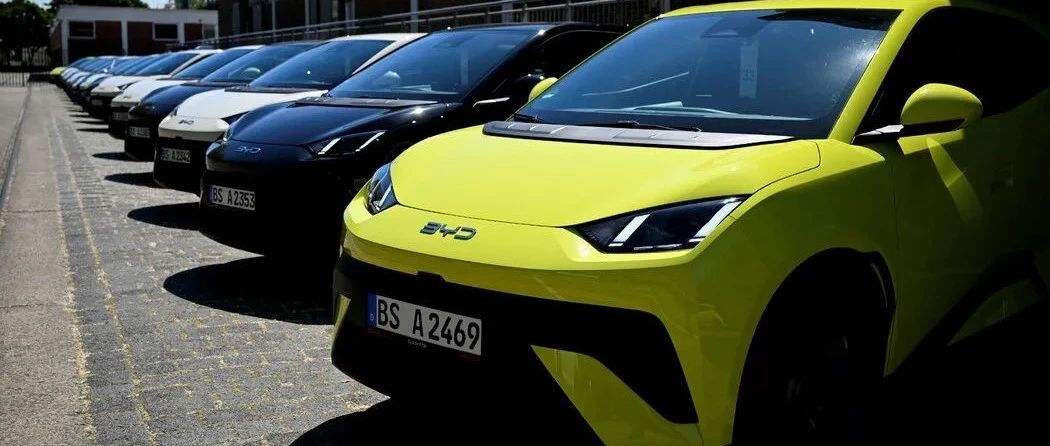
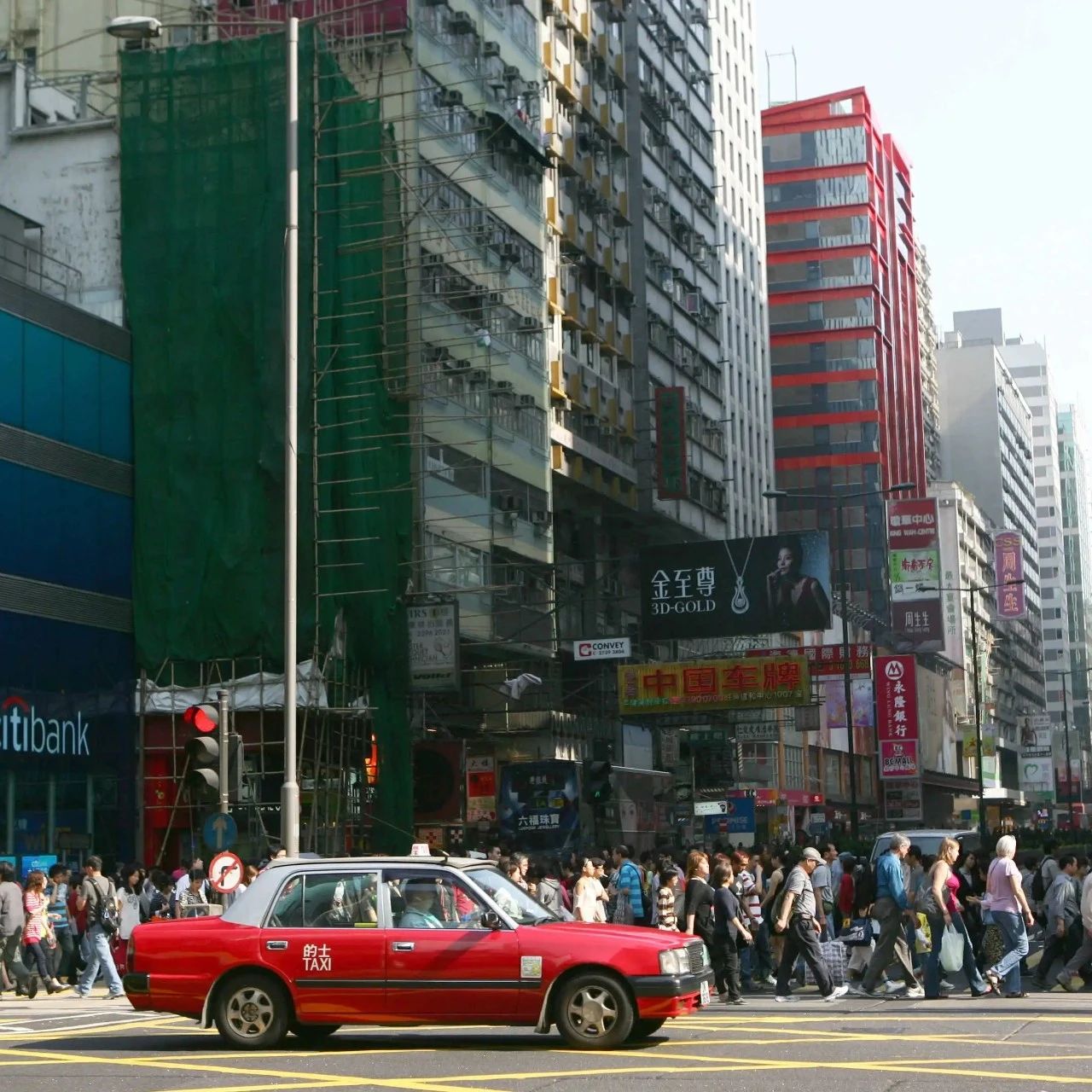
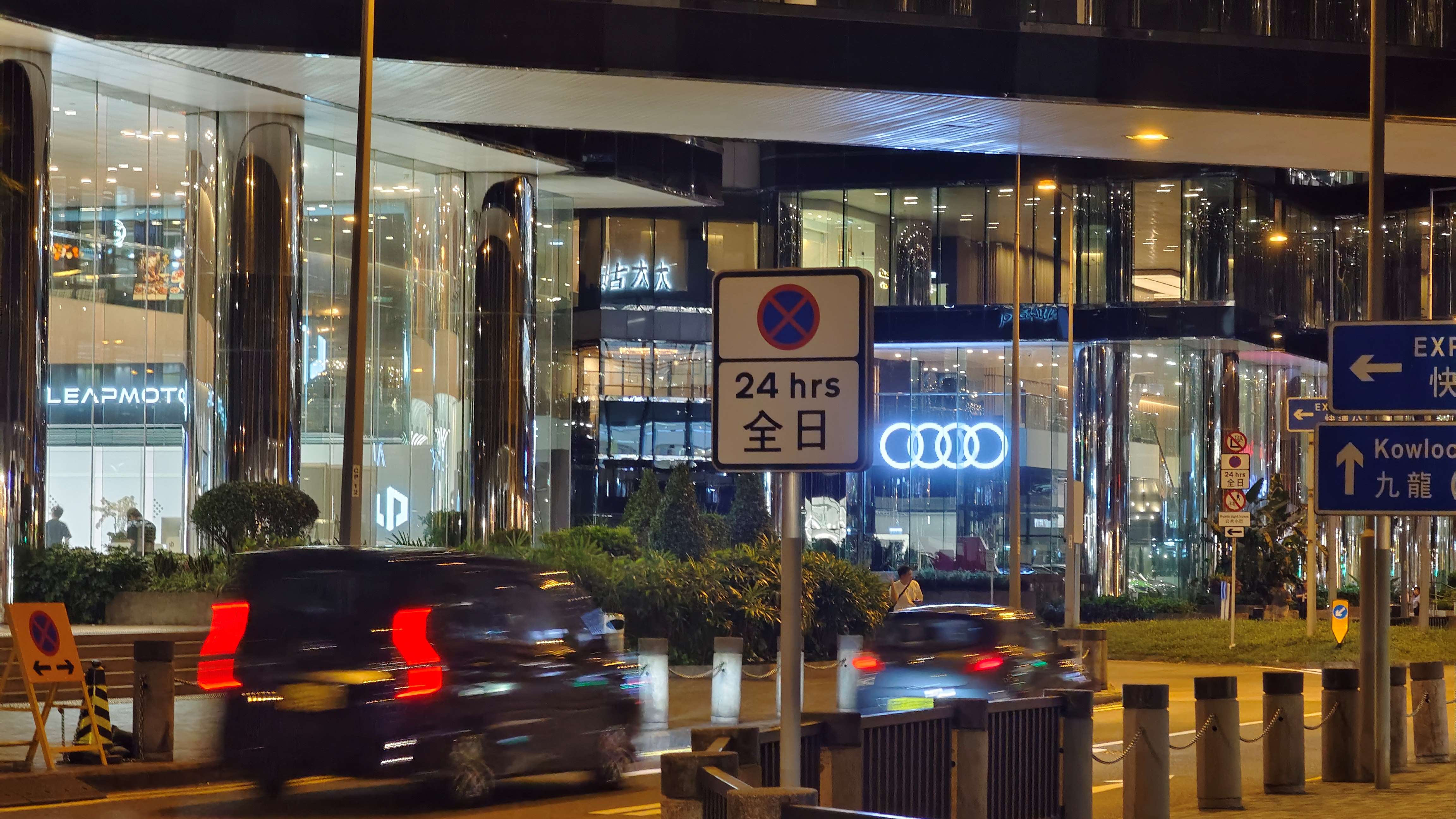
Core Viewpoint - The article discusses the rapid transformation of the Hong Kong electric vehicle (EV) market, highlighting the increasing market share of Chinese brands like BYD, which has surpassed Tesla in sales, and the overall shift from foreign brand dominance to a competitive landscape involving both domestic and international players [1][12][23]. Market Dynamics - In the first half of 2023, BYD sold 4,909 vehicles in Hong Kong, achieving a market share of 22.5%, surpassing Tesla, which had long dominated the market [12]. - Chinese brands now occupy five of the top ten spots in Hong Kong's vehicle sales, collectively holding over one-third of the market share [1][13]. - The total number of new energy vehicle models available in Hong Kong has increased from 40 in 2022 to 78 in 2025, indicating a significant expansion in product offerings [10]. Consumer Behavior - Consumers in Hong Kong prioritize brand technology and experience when purchasing vehicles, with cost savings from electric vehicles being a secondary consideration [4]. - The cost of operating an electric vehicle is significantly lower than that of a gasoline vehicle, with savings of approximately 40,000 to 50,000 HKD annually on fuel costs alone [5]. Infrastructure Challenges - The distribution of charging stations in Hong Kong is uneven, with a lack of fast-charging options, which poses a challenge for EV adoption [14][16]. - The Hong Kong government plans to install 200,000 charging parking spaces by 2027 and 3,000 fast chargers by 2030 to address these infrastructure issues [16]. Policy and Market Trends - The Hong Kong government has extended tax incentives for electric vehicles, but recent adjustments have led to a decline in sales, with a 34.23% drop in new energy vehicle registrations in early 2025 compared to the previous year [17]. - Despite the challenges, the market for electric vehicles in Hong Kong is seen as a critical entry point for Chinese automakers looking to expand globally, leveraging Hong Kong's status as a financial hub [19][22]. Strategic Importance - Hong Kong serves as a strategic market for Chinese automakers, providing a platform for brand exposure and international market entry [19][20]. - The presence of Chinese brands in Hong Kong is not just about sales; it also involves adapting to local consumer preferences and enhancing product offerings to meet international standards [22].
年销不足5万辆的弹丸之地,撬动了谁的野心丨中国汽车地理
Di Yi Cai Jing· 2025-07-18 05:29
Core Insights - The entry of Chinese electric vehicle brands into the Hong Kong market signifies a strategic move towards global expansion, with BYD leading the sales in the region [1][22] - The rapid growth of the electric vehicle market in Hong Kong is reshaping the competitive landscape, with local consumers increasingly favoring Chinese brands over traditional foreign luxury brands [1][12] Market Dynamics - In the first half of 2023, BYD sold 4,909 vehicles in Hong Kong, surpassing Tesla, which has long dominated the market [1][10] - Chinese brands now occupy five of the top ten spots in Hong Kong's vehicle sales, collectively holding over one-third of the market share [1][12] - The total number of new energy vehicle models available in Hong Kong has increased from 40 in 2022 to 78 by 2025, indicating a significant expansion in product offerings [9] Consumer Behavior - Consumers in Hong Kong prioritize brand technology and experience when purchasing vehicles, with cost and convenience of charging being secondary considerations [4][6] - The high cost of gasoline in Hong Kong makes electric vehicles financially attractive, with potential savings of HKD 40,000 to 50,000 annually on energy costs compared to traditional fuel vehicles [5][6] Infrastructure Challenges - The uneven distribution of charging stations and the difficulty of installing new ones in residential areas remain significant challenges for the growth of electric vehicles in Hong Kong [13] - The Hong Kong government plans to install 200,000 charging parking spaces by 2027 and 3,000 fast chargers by 2030 to address these issues [13] Policy and Market Trends - Recent adjustments to subsidies for electric vehicles have led to a decline in sales, with a notable drop in new registrations for electric vehicles in 2025 compared to the previous year [14] - The Hong Kong market is viewed as a critical hub for Chinese automakers to connect with global investors and showcase their products, enhancing their international presence [16][18] Strategic Importance - Hong Kong's status as a global financial center and its competitive advantages in technology and talent make it an attractive location for Chinese car manufacturers to establish a presence [17][18] - The evolving market dynamics indicate that Chinese brands are no longer just participants but are becoming key players in transforming the automotive landscape in Hong Kong [22]
抖音新规:未满16周岁禁止出镜直播|首席资讯日报
首席商业评论· 2025-07-06 03:40
Group 1 - Meizu's recent social media account name change does not affect the company's name or entity, focusing on the Meizu and Flyme brands for more efficient communication [1] - In the first half of 2025, Chinese electric vehicles dominated the Israeli market, with 21,252 units sold, accounting for 81.2% of total electric vehicle sales in Israel [2][1] - The top-selling electric vehicle in Israel was the XPeng G6, with 3,164 units sold, followed by BYD's ATTO 3 and Chery's Omoda 5 [1] Group 2 - The China Football Association reported over 25,487 registrations for the "China Football Association Player Self-Recommendation System," with 6813 submitting personal information [3] - Musk's proposal to establish a third political party in the U.S. faces significant legal and logistical challenges, according to election experts [4] - The latest version of WeChat for HarmonyOS aims to align with and potentially surpass Android and iOS functionalities [5][6] Group 3 - Shunde Rural Commercial Bank has withdrawn its IPO application, leading to the termination of its listing review by the Shenzhen Stock Exchange [8] - SF Holding completed the placement of 70 million new H-shares, raising approximately HKD 29.33 billion, increasing its total issued H-shares to 240 million [9] - CATL and Geely have signed a comprehensive strategic cooperation agreement to deepen collaboration in battery technology and supply chain development [10][11] Group 4 - ST Huike is under investigation by the China Securities Regulatory Commission for suspected violations of information disclosure laws [12] - Jinan has established a Robot Industry Empowerment Alliance, releasing a list of 87 application scenarios for robots across 12 sectors, with an annual investment of 142.6 billion yuan [13][14] - Tencent's stake in Zhong An Online has decreased from 8.09% to 7.99% after selling approximately 1.48 million shares [15] Group 5 - Douyin has implemented new regulations prohibiting minors under 16 from live streaming, requiring parental consent for those aged 16 to 18 [16]




罗马仕深夜正式发布停工停产通知,将停工6个月;《爱情公寓》女演员自曝被合伙人欺骗,加盟商每月都在赔钱;上海乐高乐园开园丨邦早报
创业邦· 2025-07-06 01:03
Group 1 - Pangu Pro MoE model is developed based on Ascend hardware platform and not incrementally trained from other vendors' models, adhering to open-source licensing requirements [3] - DeepSeek did not issue an apology regarding the false association with Wang Yibo, and the alleged apology statement was AI-generated [5] - Zhaowenqi, an actress from "iPartment," claims to have been deceived by a partner in her business venture, leading to financial losses [6] Group 2 - Romoss announced a six-month suspension of operations starting July 7, 2025, due to market changes, with initial salary payments for employees [6] - Meituan's daily orders exceeded 120 million, with over 100 million coming from the food delivery sector, marking a significant increase during the summer consumption peak [6] - WeChat's HarmonyOS version development is slower than expected, with the team focusing on foundational work before adapting to the new system [6] Group 3 - Sales of 3C certified power banks surged following a recall incident, with many merchants facing stock shortages [8] - Shanghai Lego Park, the largest in the world, opened on July 5, covering 318,000 square meters and featuring over 75 interactive attractions [8] - Chinese electric vehicles dominated the Israeli market in the first half of 2025, with 21,252 units sold, accounting for 81.2% of total electric vehicle sales [10] Group 4 - Xiaomi's YU7 model began deliveries across 58 cities on July 5 [10] - Chuangbu Technology completed a 32 million RMB Series A financing round to expand its digital payment platform [10] - Jingxiang Technology secured several million in Pre-A financing to enhance AI technology and brand development in the esports sector [10] Group 5 - BYD's first hybrid travel car, Seal 06DM-i, was launched with a price range of 109,800 to 129,800 RMB and features intelligent driving capabilities [11] - ZhiYuan Robotics showcased its X2-N model, highlighting its all-terrain mobility and innovative design inspired by Chinese mythology [13] - Porsche's first electric Cayenne features a high-tech interior with four screens and minimal physical buttons, expected to launch in 2026 [15][17] Group 6 - Lynk & Co's 10 EM-P debuted as a luxury sports sedan with standard four-wheel drive and laser radar, targeting the mainstream market [17] - Tesla's sales in the UK increased by 14% in June, driven by rising demand for electric vehicles [19]