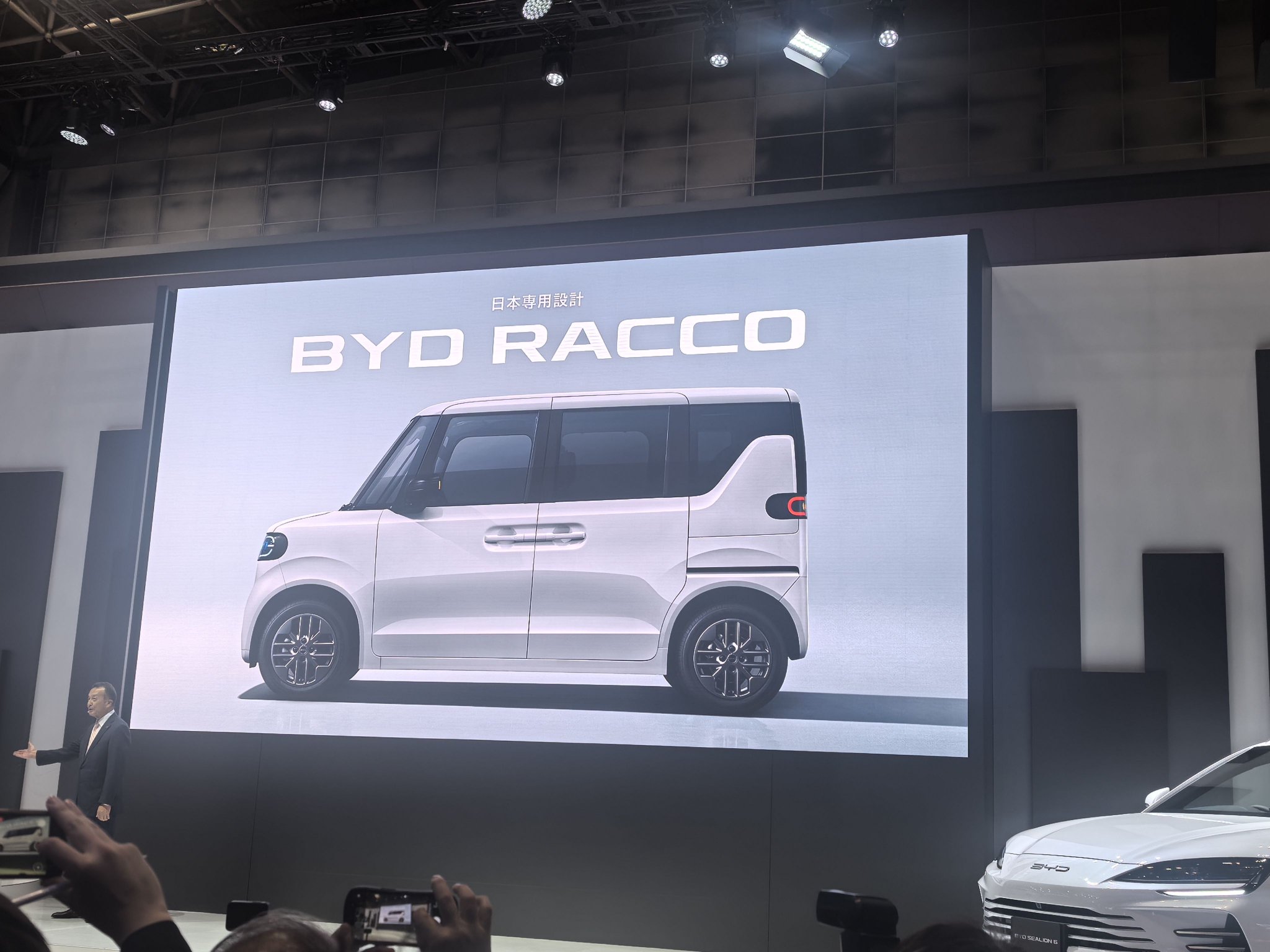
比亚迪Racco

Search documents
本田将推纯电K-Car,迎战比亚迪
Guan Cha Zhe Wang· 2025-12-25 10:38
Core Viewpoint - Honda plans to launch a pure electric version of its K-Car model by 2027 to compete with BYD, which has recently entered the K-Car market with its model Racco [2][3]. Group 1: Honda's K-Car Strategy - Honda's N-BOX model achieved impressive sales, reaching 200,000 units in 2024, making it the best-selling new car in Japan for three consecutive years [2]. - The N-BOX has a spacious interior and a price starting from 1.7 million yen, which has garnered strong consumer support [2]. - Since its launch in 2011, the cumulative sales of the N-BOX have reached approximately 3 million units [2]. Group 2: Market Context and Competition - The K-Car segment accounts for about 35%-40% of new car sales in Japan, with 1,202,100 units sold in 2024 [3]. - Currently, the K-Car market in Japan is dominated by local brands, with Suzuki holding a 38.8% market share, followed by Honda at 21.4% and Daihatsu at 18.3% [4]. - The introduction of BYD's Racco, which is designed specifically for the Japanese market and complies with local regulations, poses a significant threat to Japanese automakers [4]. Group 3: Electric K-Car Market Potential - The Japanese government offers subsidies for purchasing pure electric K-Cars, along with tax reductions in the second year of ownership, which could accelerate the adoption of electric vehicles if prices become comparable to gasoline cars [5].


国际投行纷纷调高评级,比亚迪为何成为“香饽饽”?
Zhong Guo Qi Che Bao Wang· 2025-12-17 01:59
Core Viewpoint - The Chinese automotive market is experiencing intensified competition, leading to overall underperformance of automotive stocks compared to the broader market, yet BYD stands out as a favored investment, showcasing significant market vitality and attracting international capital interest [1][15]. International Capital Interest - International investors are drawn to BYD based on rational assessments of its long-term value, with top-tier investment firms like Goldman Sachs, Citigroup, and Morgan Stanley issuing "buy" or "hold" ratings, reflecting strong confidence in BYD's future growth [2][5]. - Goldman Sachs projects that BYD's overseas market will be a core growth area over the next decade, with an expected annual profit growth rate of 30% from 2025 to 2028, and overseas profit contribution rising from 21% in 2024 to 60% in 2028 [2]. - Citigroup has included BYD in its 90-day positive catalyst watchlist, anticipating higher performance returns due to new domestic models and inventory reduction effects, maintaining a "buy" rating with a target price of 174 HKD, representing a 77% premium over the closing price on December 9 [5]. - Morgan Stanley forecasts that BYD's overseas sales will reach 1.6 to 1.8 million units by 2026, with a growth rate of 68% to 89%, assigning a "hold" rating and a target price of 130 HKD for H-shares, indicating a 33% upside potential [5]. Performance and Strategic Breakthroughs - BYD has demonstrated robust sales growth in the first 11 months of the year, particularly in its high-end and global strategies, with significant sales increases in its premium sub-brands [10][12]. - The company has achieved over 910,000 overseas sales by November, doubling last year's total, and is expected to surpass one million units for the year [10]. - BYD's vertical integration across its supply chain, including key components like batteries and electric motors, enhances supply chain security and production stability, positioning the company favorably amid rising trade protectionism [12]. Technological Innovation - Technological innovation is a core driver of BYD's leadership in the electric vehicle sector, with advancements such as blade batteries and DM-i hybrid technology redefining industry standards [14]. - The company plans to unveil "heavyweight technologies" in the future, further solidifying its position as an industry innovator and enhancing growth potential [14]. Industry Landscape Transformation - BYD's rise disrupts the dominance of imported and joint venture brands in the high-end market, affirming the long-term development potential of China's electric vehicle industry [15]. - The positive outlook from international capital is expected to attract more investments into the electric vehicle sector, prompting other manufacturers to enhance their technological development and brand upgrades [15]. - BYD's success is likely to inspire more Chinese automotive companies to accelerate their global expansion, increasing the influence of Chinese automotive brands in international markets [15][17].

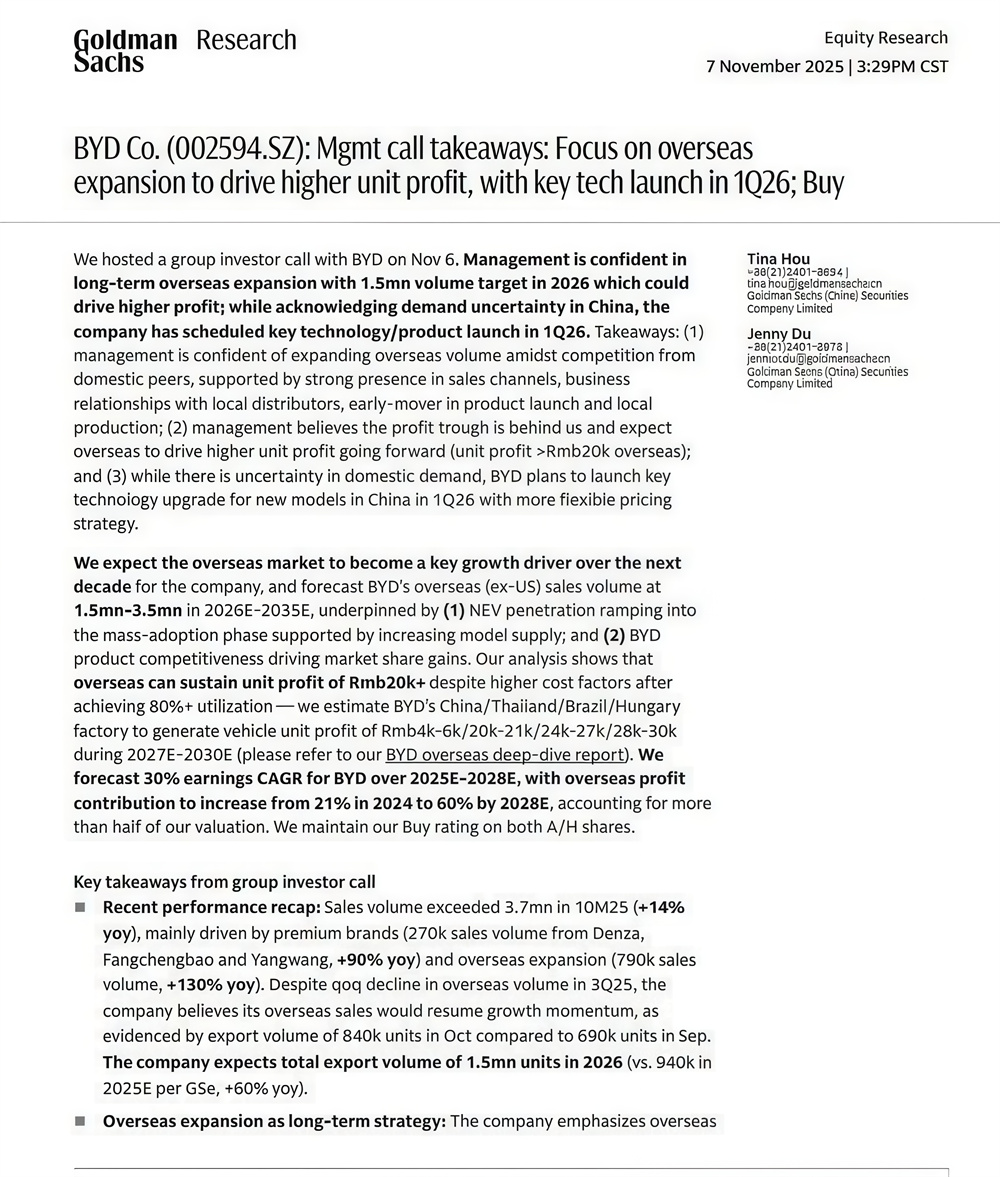
东京车展中国元素真不少
Zhong Guo Qi Che Bao Wang· 2025-11-04 09:15
Core Insights - The 2025 Japan Mobility Show has commenced, showcasing a significant presence of both Japanese and Chinese automotive companies, highlighting advancements in electric and smart mobility technologies [2][6][12] - Notably, Nissan introduced the Dongfeng Nissan N7, a new energy vehicle developed by its Chinese team, marking a significant step in international exposure for Chinese automotive innovation [2][10] Japanese Automotive Companies - Toyota presented a range of vehicles including concept cars and the new luxury brand "Century," which aims to position itself above Lexus [3] - Honda showcased multiple new models, including the Honda 0 Saloon and the Honda 0α SUV, with plans for global release [4] - Nissan introduced several new models, including the redesigned Leaf electric vehicle and the new MPV, highlighting advancements in hybrid and electric technologies [4][5] Chinese Automotive Companies - BYD launched the Racco, a K-Car specifically designed for the Japanese market, which will be available in summer 2026, emphasizing its entry into a key segment of the Japanese automotive market [7][9] - Zeekr's 009 model was also presented, targeting high-end consumers and showcasing a differentiated strategy compared to BYD's more affordable offerings [8][9] - The presence of Chinese automotive supply chain companies at the show indicates a growing influence of Chinese technology in the global automotive sector [11][12] Market Dynamics - The introduction of BYD's Racco K-Car is expected to intensify competition in the Japanese K-Car market, traditionally dominated by Japanese manufacturers [9] - The collaboration between BYD and Aeon to establish electric vehicle sales points in Japan represents a shift in the traditional automotive sales model, potentially disrupting the established 4S dealership system [10] - The presence of Chinese companies at the show reflects a broader trend of technological exchange and collaboration between China and Japan in the automotive industry [10][12]


日本车企在危机感中欢迎比亚迪,刘学亮:品牌建设没有捷径
Guan Cha Zhe Wang· 2025-10-30 11:41
Core Insights - BYD has been expanding internationally for 20 years, with Japan being one of its earliest markets, initially entering through battery business [1] - BYD's first electric bus was launched in Japan in 2014, despite initial skepticism from Japanese consumers towards Chinese products [1] - By 2025, BYD has become the top-selling electric vehicle manufacturer globally, and its presence in Japan is now significant [1] Group 1: Market Entry and Strategy - BYD's first K-car model, the Racco, was launched in Japan, with Suzuki's president acknowledging BYD as a "huge threat" while expressing a desire for healthy competition [1] - The Japanese market is characterized by zero import tariffs on vehicles but high consumer loyalty to domestic brands, making it challenging for BYD to gain acceptance [2] - BYD focuses on product trust by customizing features to meet local consumer needs, such as redesigning the Dolphin's roof height for the Japanese market [2] Group 2: Brand Building and Long-term Vision - Unlike its aggressive domestic growth strategy, BYD adopts a more cautious approach in Japan, prioritizing brand building through technology, products, and services rather than immediate sales volume [2] - BYD has not set specific sales targets for Japan but aims to establish a network of 100 dealerships by 2025, with 80 expected to be operational this year [2] - The concept of "long-termism" is central to BYD's strategy in Japan, as local investors value long-term brand investment over immediate profitability [3]
日本车没打算退场
3 6 Ke· 2025-10-30 02:45
Core Viewpoint - The Japanese automotive industry is undergoing a significant transformation, driven by the rise of Chinese brands and the shift towards new mobility solutions, with the 2023 Tokyo Motor Show rebranded as the "Japan Mobility Show" reflecting this change [1][4][20]. Industry Transformation - The Japanese automotive sector is transitioning from traditional manufacturing to creating new lifestyles, with a focus on electric vehicles and mobility solutions [1][4]. - The Tokyo Motor Show has shifted its focus to local market needs, showcasing vehicles that may not resonate with international consumers but reflect Japanese consumer preferences [9][22]. Financial Performance - In the first fiscal quarter of 2025, major Japanese automakers reported varying degrees of profit decline, with Toyota's operating profit down 11% and net profit down 37%, while Honda and Nissan experienced both revenue and profit declines [13][15]. - Despite Toyota's strong revenue, the overall financial performance of Japanese automakers indicates a need for adaptation in a rapidly changing market [13][15]. Competitive Landscape - The presence of Chinese electric vehicle manufacturers, such as BYD, has intensified competition, prompting Japanese automakers to innovate and adapt their strategies [7][11]. - Japanese automakers are beginning to incorporate more local elements into their products to better compete in the Chinese market, indicating a shift in strategy [15][20]. Consumer Preferences - Japanese consumers exhibit a strong brand loyalty, which influences their purchasing decisions, contrasting with the more fickle nature of Chinese consumers [24][26]. - The success of Japanese brands in their domestic market is attributed to their deep-rooted brand recognition and customer service, which remains a competitive advantage [24][26]. Future Outlook - The year 2025 is seen as a pivotal point for Japanese automakers, as they must navigate the challenges posed by both domestic and international markets while embracing electric vehicle technology [20][22]. - Collaboration with Chinese partners may become essential for Japanese automakers to leverage local market insights and technological advancements [17][20].

2025东京车展|比亚迪首款K-Car亮相,铃木:压力山大
Guan Cha Zhe Wang· 2025-10-29 08:15
Core Viewpoint - BYD officially launched its first K-car model, the Racco, at the 2025 Tokyo Motor Show, emphasizing its commitment to environmental harmony and life care through the vehicle's design and name [1][3]. Group 1: Product Details - The Racco is an all-electric vehicle designed specifically for the Japanese market, featuring a four-seat layout and compliance with Japan's light vehicle regulations. It is set to begin pre-sales in the summer of 2026 [5]. - K-Cars are a unique category of small passenger vehicles in Japan, created to address post-war challenges such as narrow city roads, high fuel prices, heavy tax burdens, and parking difficulties [8]. - K-Cars benefit from lower purchase taxes, annual taxes, and vehicle inspection fees, with some regions allowing exemption from fixed parking space proof [10]. Group 2: Market Context - K-Cars account for approximately 35%-40% of new car sales in Japan, with projected sales of 1.2021 million units in 2024 [10]. - Currently, the K-Car market is dominated by Japanese brands, with Suzuki holding the largest market share at 38.8%, followed by Honda and Daihatsu at 21.4% and 18.3%, respectively [10]. - The introduction of the Racco signifies BYD's deeper localization strategy in Japan, targeting the promising pure electric K-Car segment [12]. Group 3: Competitive Landscape - Suzuki's president expressed that BYD poses a significant threat to the K-Car market, highlighting the competitive nature of the electric vehicle sector [12]. - As of 2024, pure electric K-Cars represent only 2.1% of total K-Car sales in Japan, indicating a substantial opportunity for growth in this segment with the launch of the Racco [12]. Group 4: Additional Product Launches - In addition to the Racco, BYD also unveiled the T35, a purpose-built all-electric van for the Japanese market, featuring advanced driving assistance systems and a range of 250 km [13][14]. - Since entering Japan in 2015, BYD has established itself as the leading brand in the electric bus market, holding a 70% market share, and has launched several electric passenger vehicles since July 2022 [16].