猪料

Search documents
傲农生物20260226
2026-03-01 17:23
Summary of Conference Call Company Overview - The company discussed is a bio-agriculture firm focused on pig farming, feed production, and slaughtering operations. The company is in the process of restructuring and aims to stabilize its operations post-restructuring. Key Points Financial Performance - The company anticipates a revenue range of 8.5 to 8.9 billion for 2025, which is expected to be flat compared to 2024 [1] - Projected net profit for 2025 is around 100 million, with a forecasted loss of 400 to 450 million due to bad debts and asset impairments [1] - The restructuring process has led to the divestment of underperforming units, which is expected to stabilize revenue in 2025 [2] Business Segments - The feed segment is expected to maintain a significant share of revenue, contributing over 50% [25] - The pig farming segment is projected to recover, with an estimated output of 1.7 million pigs in 2025, maintaining a focus on smaller pig sales [5][24] - The slaughtering segment has seen growth, with over 1.1 million pigs processed last year, and is expected to expand further in 2026 [10][12] Operational Strategy - The company is focusing on core regions, particularly in southern China, to optimize its pig farming operations [4] - Plans to gradually increase the number of breeding sows to around 130,000 by year-end [5][20] - The company aims to maintain a balance between self-fattening and outsourcing fattening to manage costs effectively [21][22] Market Conditions - The overall pig farming industry is experiencing a decline in pork consumption, with a reported decrease of 3-4% in per capita pork consumption last year [26][32] - The company is cautious about the pricing trends for pork, predicting a slow decline in prices due to market saturation and competition [31][32] Future Outlook - The company is not planning significant overseas expansion in the short term, focusing instead on consolidating its domestic operations [8] - There is an emphasis on improving internal management and financial structures post-restructuring to enhance operational efficiency [14] - The company is exploring opportunities in food processing as a potential growth area in the future [26] Cost Management - The target cost for pig production is set at approximately 6.2 yuan per kilogram for 2026, with ongoing efforts to reduce costs through operational efficiencies [19][17] - The company is transitioning to new breeding lines to improve productivity and cost-effectiveness [18] Regulatory Environment - The company is monitoring government regulations regarding production capacity and is prepared to comply with any new requirements [28][30] Additional Insights - The company has successfully divested from low-performing assets, which has improved its operational focus and financial health [2][8] - There is a strategic shift towards becoming a regional leader in the agricultural sector, with plans to further refine its business segments [25] This summary encapsulates the key points discussed during the conference call, highlighting the company's financial outlook, operational strategies, market conditions, and future plans.

李小林:农牧业地区差异给中小企业生存空间,众望深耕区域市场┃穗风不惑
Nan Fang Nong Cun Bao· 2026-02-27 10:01
Core Viewpoint - The agricultural and animal husbandry industry in China presents survival and development opportunities for small and medium-sized enterprises (SMEs) by leveraging regional differences and finding their own positioning [7][25]. Group 1: Company Overview - Zhongwang Feed, originally a subsidiary of the Guangzhou Feed Research Institute, transitioned to a joint-stock company in 2002 and has since followed a path of steady development [10][16]. - The company has shifted its focus from premix and concentrated feed to core pig feed business, exploring a light-asset model for breeding through cooperative farming and specialized fattening [12][18]. - Currently, Zhongwang's total feed sales exceed 400,000 tons annually, with premix feed sales around 40,000 tons, covering multiple regions including Northeast, Northwest, South China, East China, and Southwest [19]. Group 2: Market Positioning and Strategy - Zhongwang aims to establish itself as a regionally recognized enterprise with high visibility, focusing on niche markets in areas like Jiangxi and Fujian, and plans to build a new feed factory in Longyan, Fujian by 2026 [16][27]. - The company has experienced approximately 20% growth despite industry challenges, validating its strategy of targeting potential in third- and fourth-tier cities and rural markets [20]. Group 3: Talent Management and Corporate Culture - Talent retention and team building are critical for the development of enterprises in the agricultural sector, with Zhongwang achieving over 70% retention rate for mid-level and senior staff in Xinyu, Jiangxi [28][29]. - The company emphasizes the importance of value alignment between employees and the enterprise, fostering a culture of integrity and practicality, and maintaining a transparent reward and punishment system [32][33]. - A flat management structure is encouraged to promote equal communication, which is essential for the long-term sustainability of the feed industry [34]. Group 4: Future Outlook - Zhongwang is optimistic about the survival of SMEs in the agricultural sector, focusing on quality, talent, and a steady approach to development [35]. - The company plans to navigate future industry reshuffles by relying on regional depth, technological iteration, and a light-asset breeding model to secure its position in a competitive market [36].


唐人神:采用低蛋白日粮技术,2025年猪料蛋白比2024年下降了1个百分点
Mei Ri Jing Ji Xin Wen· 2026-02-10 04:36
Group 1 - The company plans to reduce soybean meal usage by approximately 6.69 thousand tons in 2025 through low-protein diet technology, with a protein ratio decrease of 1% compared to 2024 [2] - The cost savings from this technology are estimated at around 12 million yuan for external sales and 11.2 million yuan for internal supply, translating to approximately 1,200 yuan and 1,120 yuan per ton respectively [2] - The company may further reduce soybean meal usage if the price of alternative feed ingredients is favorable, but it will not lower the protein content of the diet further [2]

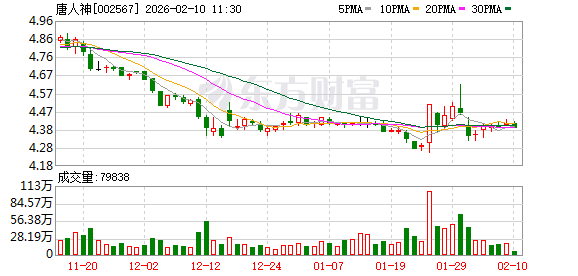
唐人神:2025年猪料减用豆粕,外销内供分别节约成本约1200万和1120万
Xin Lang Cai Jing· 2026-02-10 04:25
Core Viewpoint - The company is implementing low-protein diet technology to reduce soybean meal usage, projecting significant cost savings in feed production by 2025 [1] Group 1: Cost Savings from Low-Protein Diet Technology - By 2025, the company expects to reduce protein content in pig feed by 1 percentage point compared to 2024 [1] - The reduction in soybean meal usage is estimated at 34,500 tons for external sales and 32,400 tons for internal supply, leading to cost savings of approximately 12 million yuan and 11.2 million yuan respectively [1] Group 2: Future Goals and Adjustments - The company may further reduce soybean meal usage if the price of alternative feed ingredients is favorable, but it will not lower the protein content of the diet beyond the planned reduction [1]
营收百亿后的隐忧:海大国际的“微利”与“单一”困局
Zhi Tong Cai Jing· 2026-01-14 11:02
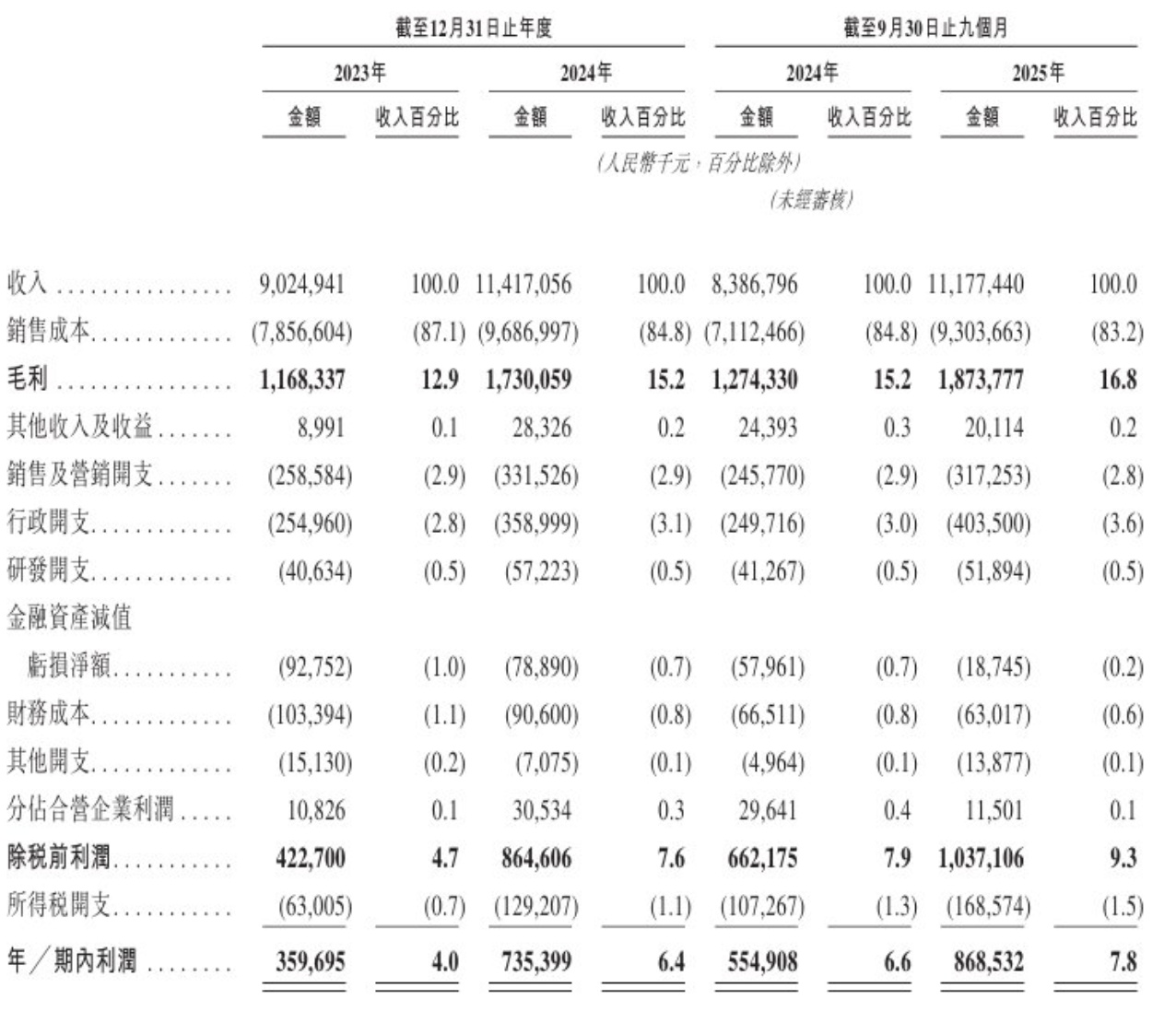
Core Viewpoint - The company, Haida International Holdings Limited, has submitted a significant IPO application to the Hong Kong Stock Exchange, showcasing strong revenue and profit growth, but faces underlying financial vulnerabilities and operational risks. Group 1: Financial Performance - Revenue increased from 9.025 billion RMB in 2023 to 11.178 billion RMB in the first nine months of 2025, while net profit rose from 360 million RMB to 869 million RMB, indicating substantial growth [1][2] - Despite revenue and profit growth, the net profit margin remains below 8%, highlighting a weak profitability foundation and significant exposure to raw material price fluctuations and industry cycles [2][4] - Administrative expenses as a percentage of revenue increased from 2.8% to 3.6%, suggesting potential management inefficiencies or cost control issues during expansion [2] Group 2: Business Structure and Market Position - The company primarily focuses on the feed business, which accounted for 96.9% of total revenue, indicating a high dependency on a single business line [5][6] - The aquaculture feed segment constitutes approximately 66-68% of total revenue, reflecting the company's reliance on this core area for growth [5][7] - The company has established a leading position in emerging markets, particularly in Asia (excluding East Asia), Africa, and Latin America, with significant production bases in six countries [1][4] Group 3: Growth Challenges - The company's growth is heavily reliant on the feed industry, making it vulnerable to commodity price fluctuations, regional policies, and breeding cycle variations [4][8] - The lack of diversification in its business structure limits the potential for higher profitability and exposes the company to cyclical risks [5][8] - The financial data suggests that growth is primarily driven by existing product sales rather than high-value products or new market breakthroughs, indicating limited room for profit margin improvement [7][8]
海大国际IPO隐忧:33.3%收入增速背后 第三方付款占比22%存风险
Xin Lang Cai Jing· 2026-01-14 03:24
Core Insights - The company has demonstrated strong revenue growth, with total revenues for 2023, 2024, and the first nine months of 2025 reaching RMB 90.25 billion, RMB 114.17 billion, and RMB 111.77 billion respectively, reflecting a year-on-year growth of 26.5% for 2024 and 33.3% for the first nine months of 2025 [1][9] - The gross profit margin has consistently improved, reaching 16.8% by the first nine months of 2025, with gross profits of RMB 18.74 billion, indicating effective cost control and pricing strategies [1][9] - The company’s net profit margin has also increased from 4.0% in 2023 to 7.8% in the first nine months of 2025, showcasing strong asset efficiency and shareholder returns [1][9] Revenue Breakdown - The feed business is the core segment, contributing 96.9% of total revenue, with aquaculture feed being the primary growth driver, accounting for 67.2% of total revenue [2] - The company ranks as the second-largest aquaculture feed supplier in Asia (excluding East Asia) with a market share of 6.5%, and it leads the Vietnamese market with a 19.2% share [2] - The seed and animal health segments are smaller but growing rapidly, with animal health revenue increasing by 80.1% year-on-year in the first nine months of 2025 [2] Market Presence - The company derives 59.8% of its revenue from the Vietnamese market, with Indonesia and Ecuador contributing 11.9% and 13.2% respectively [3] - The company has a low customer concentration risk, with sales to the top five customers accounting for only 7.1% of total revenue in the first nine months of 2025 [3] Supplier Dynamics - The company maintains a moderate supplier concentration, with purchases from the top five suppliers representing 25.6% of total procurement in the first nine months of 2025 [4] - A unique dual procurement model combines centralized and localized purchasing, allowing the company to optimize costs [5] Financial Management - The company has a significant proportion of third-party payments, which accounted for 22.0% of total revenue in the first nine months of 2025, raising potential compliance risks [6] - The management team has extensive industry experience, averaging over 12 years, which supports operational effectiveness [7] Environmental and Regulatory Considerations - The company faces environmental regulations that may increase operational costs, with total greenhouse gas emissions reaching 138,031 tons CO₂e in 2025 [10]
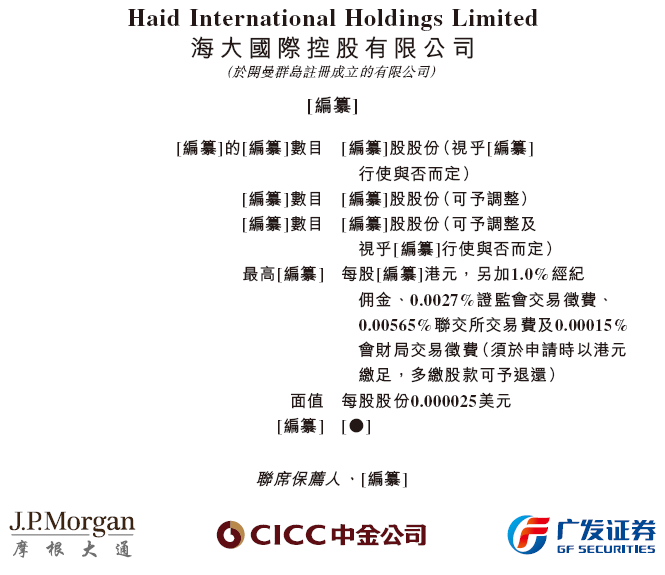
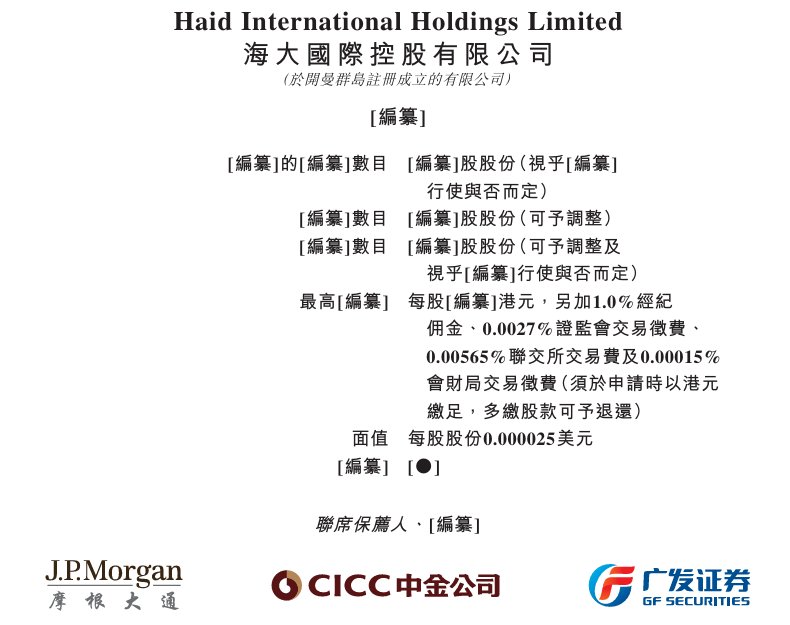
海大集团分拆海大国际,递交IPO招股书,拟赴香港上市,摩根大通、中金公司、广发证券联席保荐
Xin Lang Cai Jing· 2026-01-13 11:33
Core Viewpoint - Haid International Holdings Limited, a spin-off from Haid Group, has submitted its IPO application to the Hong Kong Stock Exchange, aiming for a listing on the main board [2][14]. Business Overview - Haid International is a technology-driven global agricultural enterprise that commenced operations in 2012 after acquiring a factory in Vietnam. The company focuses on providing comprehensive solutions across the entire value chain of the livestock industry, with a core market in Asia (excluding East Asia), Africa, and Latin America [15][17]. - According to Frost & Sullivan, Haid International is the second-largest supplier of aquaculture feed in Asia, with a production capacity of 1 million tons, and the third-largest feed supplier in Vietnam, producing 1.7 million tons of feed products [15][17]. Revenue Sources - The company's revenue is derived from the sale of: 1. Feed products, including aquaculture feed, poultry feed, and pig feed 2. Seed products, including shrimp and fish seeds 3. Animal health products, including environmental modifiers and various animal health products [5][17]. Financial Performance - For the fiscal years ending December 31, 2023, 2024, and the first nine months of 2025, Haid International reported revenues of RMB 9.025 billion, RMB 11.417 billion, and RMB 11.177 billion, respectively. Corresponding net profits were RMB 360 million, RMB 735 million, and RMB 869 million [9][21]. - The gross profit margins for these periods were 12.9%, 15.2%, and 16.8%, indicating a positive trend in profitability [10][22]. Market Presence - The company’s revenue distribution by region shows that Vietnam accounted for 70.6% of total revenue in 2023, followed by Indonesia (11.4%), Ecuador (9.4%), and Egypt (1.4%) [18][22]. Management Team - The board of directors consists of 9 members, including 3 executive directors, 3 non-executive directors, and 3 independent non-executive directors, with key figures such as Zhang Guijun (General Manager) and Xue Hua (Chairman) [9][21]. IPO Underwriters - The IPO is being managed by a team including J.P. Morgan, CICC, and GF Securities as joint sponsors, with Ernst & Young as the auditor [10][22].


海大国际递表港交所 2024年水产料产量达100万吨
Zhi Tong Cai Jing· 2026-01-13 00:00
Core Viewpoint - Haida International Holdings Limited has submitted a listing application to the Hong Kong Stock Exchange, with J.P. Morgan, CICC, and GF Securities acting as joint sponsors [1]. Company Overview - Haida International is a technology-driven global agricultural enterprise, primarily focused on feed business, providing comprehensive solutions for the entire value chain of the livestock industry. Its core markets include Asia (excluding East Asia), Africa, and Latin America [3]. - According to Frost & Sullivan, by 2024, Haida International is the second-largest aquaculture feed supplier in Asia (excluding East Asia) with a production volume of 1 million tons, and the third-largest feed supplier in Vietnam with a production volume of 1.7 million tons [3]. - The company offers a complete range of products and services covering feed, seedlings, and animal health, with feed being its main product. The feed product lines include aquaculture feed, poultry feed, and pig feed [3]. - As of January 5, 2026, the company's feed production bases are located in six countries: Vietnam, India, Indonesia, Egypt, Bangladesh, and Ecuador [3]. Financial Data - For the fiscal years ending December 31, 2023, 2024, and the nine months ending September 30, 2025, the company achieved revenues of approximately RMB 9.025 billion, RMB 11.417 billion, and RMB 11.177 billion, respectively [7]. - The net profit for the same periods was approximately RMB 360 million, RMB 735 million, and RMB 869 million [8]. - The gross profit margins for the fiscal years were 12.9%, 15.2%, and 16.8% respectively [10]. Industry Overview - Asia (excluding East Asia) has abundant aquatic resources, creating favorable conditions for aquaculture. Countries like Thailand, Vietnam, and Indonesia are significant aquaculture bases globally [12]. - Vietnam is the second-largest market for feed in Asia (excluding East Asia), with the aquaculture feed segment being the fastest-growing category. The market size is expected to grow from 4 million tons in 2020 to 4.5 million tons by 2024, with a compound annual growth rate (CAGR) of 3.0% [12]. - The aquaculture feed industry is experiencing significant consolidation, with the market share of the top five companies in Vietnam increasing from 28.1% in 2020 to 47.0% in 2024, and projected to reach 60.5% by 2029 [12]. - Indonesia holds the third-largest market share in the feed market in Asia (excluding East Asia) at 13.5%, with a CAGR of 3.3% expected from 2020 to 2024 [14]. Competitive Landscape - In 2024, Haida International is projected to produce 1,011 thousand tons of aquaculture feed, ranking second in the market share in Asia (excluding East Asia) [17]. - The top five companies in the aquaculture feed market account for 31.9% of the total market share [18].
新股消息 | 海大国际递表港交所 2024年水产料产量达100万吨
智通财经网· 2026-01-12 23:56
Company Overview - Haida International Holdings Limited is a technology-driven global agricultural enterprise, primarily focused on feed business, providing comprehensive solutions for the entire value chain of the livestock industry [4] - The company is the second-largest aquaculture feed supplier in Asia (excluding East Asia) by production volume, with an output of 1 million tons, and the third-largest feed supplier in Vietnam, with a production of 1.7 million tons [4] - The company offers a complete range of products and services, including feed, seedlings, and animal health products, with feed being the main product [4] Financial Performance - For the fiscal year 2023, the company reported revenues of approximately RMB 9.025 billion, with projections of RMB 11.417 billion for 2024 and RMB 11.177 billion for the nine months ending September 30, 2025 [8] - The net profit for the fiscal year 2023 was approximately RMB 360 million, expected to rise to RMB 735 million in 2024 and RMB 869 million for the nine months ending September 30, 2025 [9] - The gross profit margins for the fiscal years 2023, 2024, and the nine months ending September 30, 2025, were 12.9%, 15.2%, and 16.8%, respectively [11] Market Dynamics - The aquaculture feed market in Asia (excluding East Asia) is experiencing significant growth, with Vietnam being the second-largest market in the region, driven by the expansion of aquaculture and sustained market demand [13] - The market size for aquaculture feed is projected to grow from 4.0 million tons in 2020 to 4.5 million tons by 2024, with a compound annual growth rate (CAGR) of 3.0% [13] - The concentration of the aquaculture feed industry in Vietnam is increasing, with the top five companies' market share expected to rise from 28.1% in 2020 to 47.0% by 2024 [13] Competitive Position - In 2024, the company is projected to produce 1,011 thousand tons of aquaculture feed, ranking second in the market with a market share of 6.5% [18][19] - The company operates in a competitive landscape where the top five companies account for 31.9% of the market share [19] Board of Directors - The board of directors will consist of nine members, including three executive directors, three non-executive directors, and three independent non-executive directors [21] Shareholding Structure - As of January 5, 2026, Guangdong Haida holds 100% of the issued share capital of the company through Value Stone BVI, which is owned by various subsidiaries of Guangdong Haida [24]
【诗华动保特约】豆粕突发涨价?鱼粉年内暴涨5000元/吨,12月饲料涨价一波接一波
Xin Lang Cai Jing· 2025-12-13 13:22
Group 1 - The price of fish meal in the main market remains high, with prices reaching 17,000-18,000 yuan/ton, a significant increase of 5,000 yuan/ton from the beginning of the year [3] - The auction for imported soybeans has resumed, with a total transaction volume of 397,043 tons and a high transaction rate of 77.5%, indicating strong demand [5] - The average auction price for soybeans was 3,935.3 yuan/ton, showing a price advantage compared to currently imported soybeans [5] Group 2 - In December, multiple feed companies have raised prices for shrimp and crab feed by 300-500 yuan/ton, reflecting the rising costs of raw materials [6][10][13] - The price adjustments for livestock feed have also been widespread, with companies like New Hope and Chia Tai announcing increases ranging from 50 to 175 yuan/ton [39][44][50] - The price hikes are attributed to the continuous rise in raw material prices, particularly corn and soybean [39][50][58]