电力系统

Search documents
电力设备行业周报:北美CSP大厂资本开支再加速,国内AI应用裂变进入“商业化拐点期”
Huaxin Securities· 2026-02-10 00:45
Investment Rating - The report maintains a "Recommended" rating for the power equipment sector [4][15]. Core Insights - North American CSP companies are significantly increasing their capital expenditures, with Meta's Q4 2025 capex reaching $22.14 billion and projected to rise to $115-135 billion in 2026. Microsoft, Amazon, and Google are also increasing their capex, indicating a robust demand for AI training and inference [3][12][13]. - Domestic AI applications are entering a commercialization inflection point, with companies like Tencent and Alibaba launching significant promotional campaigns to stimulate user engagement and application usage [12][13]. - The AI industry is transitioning from a focus on computational power to a collaborative expansion involving infrastructure and application ecosystems, benefiting sectors such as servers, power equipment, data centers, and liquid cooling systems [14]. Summary by Sections Investment Views - The report suggests focusing on the IDC sector, highlighting companies like Kehua Data and Jinpan Technology due to their growth potential. It also recommends monitoring high-voltage circuit breakers and power supply sectors, with specific mentions of companies like Liangxin and Sunshine Power [4][14]. Industry Dynamics - The report notes that the domestic data center sector is beginning to expand and upgrade, with significant opportunities in direct current power supply equipment. The power equipment sector is expected to benefit from these trends [4][17]. - The report highlights that the State Grid's fixed asset investment grew by over 35% year-on-year in January, indicating strong infrastructure investment [18][19]. Key Companies and Earnings Forecast - The report provides earnings forecasts for several companies, including Kehua Data, Liangxin, and Sunshine Power, with specific EPS and PE ratios outlined for 2024 to 2026 [7][16].






康明斯重挫12.6%,预计2026年上半年北美公路运输业务仍将承压
Xin Lang Cai Jing· 2026-02-05 20:36
Core Viewpoint - Cummins (CMI) faces challenges in the highway market, leading to a significant stock drop of 12.6% despite mixed fourth-quarter earnings results [1][5]. Financial Performance - The company reported a 1.1% year-over-year revenue increase to $8.54 billion in Q4, ending a four-quarter decline [2][6]. - Earnings per share exceeded expectations, and the company restored its full-year guidance, projecting a revenue growth of 3%-8% for fiscal year 2026, aligning with market expectations [2][6]. - The growth was primarily driven by strong global power generation demand, increased pickup truck sales, and improved pricing, which offset weak sales in the North American heavy/medium truck segment [2][6]. Business Segment Performance - Power Systems revenue grew by 11% year-over-year to $1.9 billion, benefiting from increased demand for backup power in data centers and favorable pricing conditions [2][6]. - Distribution revenue increased by 7% year-over-year to $3.3 billion, supported by a favorable power generation business mix and resilient aftermarket activities [3][7]. - Parts sales declined by 7% year-over-year to $2.4 billion, primarily due to the cyclical downturn in the highway transportation industry, although international sales rose by 4% due to increased demand in Europe and China [3][7]. Engine and Zero-Carbon Business - Engine sales decreased by 4% to $2.6 billion, impacted by weak demand in North America, although increased pickup truck sales partially mitigated this decline [4][8]. - The zero-carbon business (Accelera) saw a 31% year-over-year revenue increase to $131 million, but faced a pre-tax loss of $374 million due to project review expenses and weak hydrogen demand [4][8]. Market Outlook - Cummins anticipates continued pressure on North American highway transportation business in the first half of 2026, with potential improvement in the second half, while power generation, industrial, and aftermarket sectors are expected to remain strong [4][9]. - Analysts note that the fourth-quarter results reflect a differentiated market environment, with strong performance in power generation due to robust data center demand, while the highway transportation sector continues to drag down engine and parts segments [9].

不许报复美国,美方话音刚落,欧盟作出决定,将逐步淘汰中国制造
Sou Hu Cai Jing· 2026-01-23 12:22
Group 1 - The U.S. Commerce Secretary, Wilbur Ross, predicts that the U.S. GDP growth rate will exceed 5% in Q1 2026, potentially reaching 6% [1] - Ross warns Europe against retaliating to the U.S. tariff measures, stating that the U.S. will respond with escalated tariffs [1] - Trump's recent announcement includes a 10% tariff on exports from Denmark, Norway, Sweden, and other countries, set to increase to 25% if Europe does not agree to the U.S. proposal regarding Greenland [3] Group 2 - The EU has proposed a new cybersecurity law targeting Chinese manufacturing, particularly in 18 critical sectors, aiming to phase out components from "high-risk" countries [5] - The proposal reflects Europe's ongoing concerns about dependency on Chinese technology while also seeking to balance its relationship with the U.S. amid rising trade tensions [5][7] - The EU's decision may disrupt global supply chains and increase production costs for European companies, as Chinese manufacturers are deeply integrated into key supply chains [7] Group 3 - There are internal divisions within the EU regarding the proposed cybersecurity law, with member states expressing concerns over excessive interference in national security policies [7] - The EU's attempt to maintain a balanced strategy between the U.S. and China may ultimately lead to failures on both fronts, as neither side may yield to the EU's demands [7] - The article suggests that trade protectionism and politicization of economic issues will likely harm all parties involved, emphasizing the need for stable and open supply chains [7]


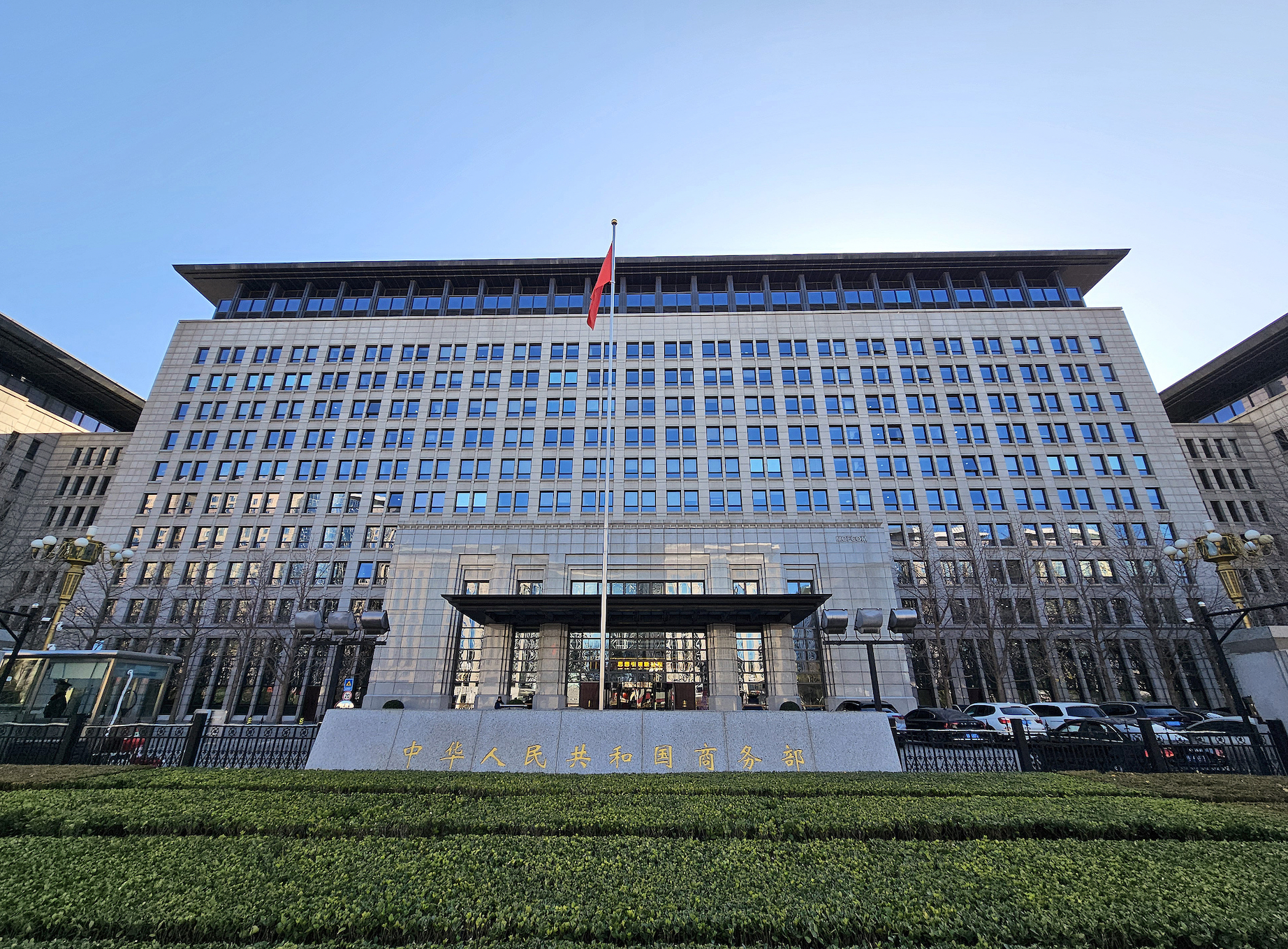
商务部回应欧盟“高风险供应商”政策:反对欧方对中企的歧视行为
Xin Lang Cai Jing· 2026-01-22 07:38
Core Viewpoint - The European Union (EU) has mandated its member states to exclude "high-risk suppliers" in 18 critical industries, raising serious concerns from China regarding discrimination against Chinese companies and the politicization of economic issues [1][5]. Group 1: EU's New Regulations - The EU Commission announced a draft revision of the EU Cybersecurity Law on January 20, which aims to phase out components and equipment from "high-risk suppliers" in key sectors such as 5G communication, semiconductors, power systems, autonomous driving, and medical devices [1][5]. - The new measures will apply to 18 identified critical industries, including detection equipment, connected and autonomous vehicles, power supply and storage systems, water supply systems, drones, cloud services, medical devices, surveillance equipment, aerospace services, and semiconductors [1][5]. Group 2: China's Response - Chinese officials expressed serious concerns over the EU's actions, emphasizing that Chinese companies have operated in Europe in compliance with laws and have contributed positively to the development of the European telecommunications and digital industries [1][5]. - The Chinese Ministry of Foreign Affairs urged the EU to avoid further protectionist measures, warning that such actions could hinder technological progress and economic development within the EU, as well as damage the EU's image of market openness and investor confidence [4][8]. - The EU Chamber of Commerce in China also voiced strong opposition to the EU's proposed measures, highlighting the potential negative impact on business relations [4][8].
津电:深化体制机制改革 加速科技自立自强
Xin Lang Cai Jing· 2026-01-20 03:29
Core Viewpoint - The company, Tianjin Electric, has achieved significant operational improvements during the 14th Five-Year Plan period, with a focus on strategic governance, innovation mechanisms, and talent management to drive high-quality development [2][3][4]. Strategic Leadership and Mechanism Innovation - During the 14th Five-Year Plan, Tianjin Electric's operating performance has more than doubled compared to the beginning of the period, with core operating indicators surpassing expectations [2]. - The company has established a new strategic governance framework led by the party committee, with a complete management system for research, planning, implementation, and evaluation [2]. - An integrated product development (IPD) model has been introduced to enhance agile R&D capabilities, significantly improving R&D efficiency and success rates [2]. - A value creation-oriented distribution mechanism has been implemented, linking employee benefits closely with corporate value and individual contributions [2]. Comprehensive Breakthrough and Industrial Synergy - Over the past five years, Tianjin Electric has made historic strides in market expansion, achieving key system qualifications across all major models [3]. - The company has made breakthroughs in the defense market, contributing to significant projects such as the Long March rocket and naval fleet support [3]. - In the civil aviation sector, Tianjin Electric has transitioned from a follower to a competitor, with products for key national models like C919 and AG600 now in operation [3]. Technological Leadership and Innovation Drive - Tianjin Electric has achieved systematic breakthroughs in technology innovation, completing 176 innovation projects and overcoming 435 key technical challenges over five years [4]. - The company has established a technology and product asynchronous development model, enhancing decision-making efficiency and quality [4]. - Significant achievements in standardization include the formulation of 5 ISO international standards and 5 national military standards during the 14th Five-Year Plan [4]. Digital Integration and Manufacturing Upgrade - The company has advanced its digital transformation, establishing five digital assembly production lines and implementing various core information systems [6]. - Lean management practices have led to a more than 30% reduction in production cycles for major product lines, generating substantial economic benefits [6]. Quality Foundation and Supply Chain Enhancement - Tianjin Electric has deepened its supply chain system construction, significantly compressing supply chain cycles and enhancing responsiveness [7]. - The company has achieved various quality certifications, improving process control capabilities and ensuring compliance with industry standards [7]. - A comprehensive information system has been developed to support R&D, manufacturing, management, and decision-making processes [7].
2026 Market Outlook: 3 Top Sectors to Watch Amid Global Tensions
ZACKS· 2026-01-14 21:01
Core Insights - The global economic and political environment remains unsettled, yet there are solid growth opportunities for investors, particularly in sectors driven by long-term demand and innovation [1][4] Sector Summaries Energy Transition and Power Infrastructure - The renewable energy and power infrastructure sector is positioned for sustained growth due to decarbonization efforts and the need for reliable energy sources amid rising trade tensions and geopolitical risks [6] - Investment is being driven by the need to support data centers, electric vehicles, and industrial electrification, with companies like NextEra Energy (NEE) and GE Vernova (GEV) well-positioned to benefit from these trends [7] Oil & Conventional Energy - Oil and conventional energy remain strategically important, especially in the context of geopolitical tensions and the need for secure supply chains [8][11] - Integrated energy companies like Chevron (CVX) are expected to navigate price swings effectively due to their diversified operations and strong balance sheets [11] Defense & Security - The defense sector is experiencing strong demand due to rising geopolitical tensions and the need for enhanced national security, with governments increasing defense budgets and focusing on advanced systems [12][13] - Companies such as Lockheed Martin (LMT) are well-positioned to benefit from long-duration government contracts and their involvement in next-generation defense systems [13]