
电脑及零部件

Search documents
武汉去年进出口总值超4500亿,高新技术产品出口引领增长
Chang Jiang Ri Bao· 2026-01-23 03:02
Core Viewpoint - Hubei Province's foreign trade has significantly increased, with a total import and export value reaching 834.01 billion yuan in 2025, marking an 18.2% year-on-year growth, the highest in Central China [5] Group 1: Export Growth - Hubei's honey exports have been stable, with 29,200 tons exported last year, ranking second nationally [5] - The province has 12 honey enterprises registered in the EU, contributing to the global presence of Hubei's honey products [5] - The export of high-tech products has surged by 25.9%, with notable growth in new materials and high-end equipment [10] Group 2: Import Dynamics - Imports of bulk commodities and consumer goods have both seen growth, with a 36.9% increase in consumer goods such as cosmetics and healthcare products [10] - Resource products like copper ore and coal have also shown steady import growth [10] Group 3: Market Diversification - Hubei's trade with countries involved in the Belt and Road Initiative has grown by 21%, now accounting for 54.9% of total trade [10] - ASEAN and the EU remain the top two trading partners, while emerging markets in Latin America and Africa have seen import and export growth exceeding 23% [10] Group 4: Business Environment - The number of foreign trade enterprises in Hubei has surpassed 10,000, with a net increase of over 1,000 companies from the previous year [5] - Private enterprises have played a crucial role, accounting for over 70% of the province's total import and export value, with a 20% growth in their trade volume [5]

近十万亿元!广东外贸又是全国第一
Nan Fang Du Shi Bao· 2026-01-20 06:18
Core Insights - Guangdong's foreign trade reached a record high of 9.49 trillion yuan in 2025, marking a 4.4% year-on-year increase, maintaining its position as the leading province in China for 40 consecutive years [1] - The province contributed 24.1% to the national foreign trade growth, with imports at 3.46 trillion yuan (up 7.8%) and exports at 6.03 trillion yuan (up 2.5%) [1] Trade Performance - Trade with major partners such as ASEAN, Hong Kong, and the EU exceeded 1 trillion yuan, with respective growth rates of 5.8%, 12.5%, and 8.4% [2] - Emerging markets like Central Asia, Africa, and the Middle East saw higher growth rates, at 23.6%, 10.7%, and 8.5% respectively [2] - Trade with Belt and Road countries reached 3.66 trillion yuan, accounting for 38.5% of total trade [2] Export Dynamics - The export structure is shifting towards high-end, intelligent, and green products, with mechanical and electrical products reaching 4.15 trillion yuan (up 7.3%) [2] - Notable growth in exports of drones (40.9%), 3D printers (37.1%), and industrial robots (33.9%) [2] Import Trends - Imports of integrated circuits surged to 1.3 trillion yuan (up 15.5%), making up 37.5% of total imports [3] - Significant increases in imports of semiconductor manufacturing equipment (33.2% growth) and computers and components (19.3% growth) [3] Business Activity - The number of enterprises engaged in import and export activities in Guangdong reached 172,000, a 17.6% increase, with private enterprises accounting for 63.9% of total trade [4] - "Specialized, refined, distinctive, and innovative" SMEs showed a robust growth rate of 29.1% in trade [4] Customs Innovations - Customs introduced measures to enhance trade efficiency, including 24/7 customs clearance and innovative regulatory models [5] - These initiatives resulted in a tax reduction of 49.62 billion yuan for import and export enterprises [5] Regional Collaboration - Trade with ASEAN reached a historic high, with Guangzhou's trade with ASEAN growing by 28% [6] - Shenzhen's high-tech product exports reached 1.4 trillion yuan, accounting for nearly 60% of the province's total [7] Future Outlook - Despite external uncertainties, Guangdong's trade fundamentals remain strong, with a complete industrial system and accelerating new industries [8] - The province is poised to continue driving high-quality development in foreign trade during the 14th Five-Year Plan period [8]
今年前11个月我国区域外贸稳中有进 一组数据带你看
Yang Shi Xin Wen Ke Hu Duan· 2025-12-23 08:56
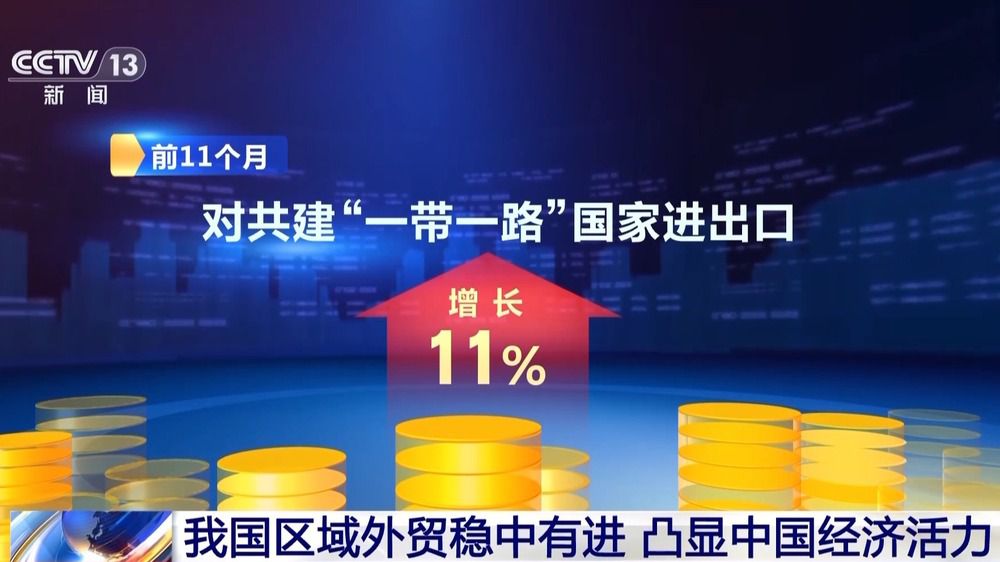
Core Insights - The foreign trade scale in key regions such as the Yangtze River Delta, Guangdong-Hong Kong-Macao Greater Bay Area, and Beijing-Tianjin-Hebei has steadily expanded in the first 11 months of this year, with continuous optimization of market layout and release of trade vitality [1][3][5] Group 1: Guangdong-Hong Kong-Macao Greater Bay Area - The import and export volume of the nine cities in the Guangdong-Hong Kong-Macao Greater Bay Area reached 8.3 trillion yuan, a year-on-year increase of 4.6%, marking a historical high for the same period [1] - Nearly 70% of the import and export goods are electromechanical products, with exports primarily consisting of high-tech products such as electronic components, computers, and parts [1] - The import of consumer goods such as aquatic products and dairy products saw an increase of over 20%, highlighting the role of domestic demand [1] Group 2: Yangtze River Delta - The Yangtze River Delta's import and export volume surpassed 15 trillion yuan for the first time in history, reaching 15.46 trillion yuan, with a growth rate of 6.2% [3] - The import and export to countries involved in the Belt and Road Initiative increased by 11% during the same period [3] Group 3: Beijing-Tianjin-Hebei - The import and export volume of the Beijing-Tianjin-Hebei region reached 4.3 trillion yuan, with exports amounting to 1.32 trillion yuan, a historical high for the same period [5] - Private enterprises' exports exceeded 600 billion yuan for the first time, growing by 16.1%, surpassing last year's total and accounting for 47.4% of the region's total export value, becoming the main driving force for regional foreign trade growth [5]
今年前11个月长三角、粤港澳大湾区、京津冀等区域外贸规模稳步扩大
Bei Jing Shang Bao· 2025-12-23 02:45
Core Insights - The foreign trade scale in key regions such as the Yangtze River Delta, Guangdong-Hong Kong-Macao Greater Bay Area, and Beijing-Tianjin-Hebei has steadily expanded, with market layouts continuously optimizing and trade vitality being released [1] Group 1: Guangdong-Hong Kong-Macao Greater Bay Area - In the first 11 months, the Greater Bay Area's nine cities achieved an import and export volume of 8.3 trillion yuan, a year-on-year increase of 4.6%, marking a historical high for the same period [1] - Nearly 70% of the import and export goods are electromechanical products, with exports primarily consisting of high-tech products such as electronic components, computers, and parts [1] - The import of consumer goods like aquatic products and dairy products saw an increase of over 20%, highlighting the significant role of domestic demand [1] Group 2: Yangtze River Delta - The Yangtze River Delta's import and export volume surpassed 15 trillion yuan for the first time in history, reaching 15.46 trillion yuan, with a growth rate of 6.2% [1] - Trade with countries involved in the Belt and Road Initiative saw an 11% increase during the same period [1] Group 3: Beijing-Tianjin-Hebei Region - The Beijing-Tianjin-Hebei region recorded an import and export volume of 4.3 trillion yuan in the first 11 months, with exports reaching 1.32 trillion yuan, a historical high for the same period [1] - Private enterprises' exports exceeded 600 billion yuan for the first time, growing by 16.1%, surpassing the total for the previous year and accounting for 47.4% of the region's total export value, becoming the main driving force for regional foreign trade growth [1]
“数”览今年前11个月我国区域外贸规模稳步扩大 贸易活力持续释放
Yang Shi Wang· 2025-12-23 02:11
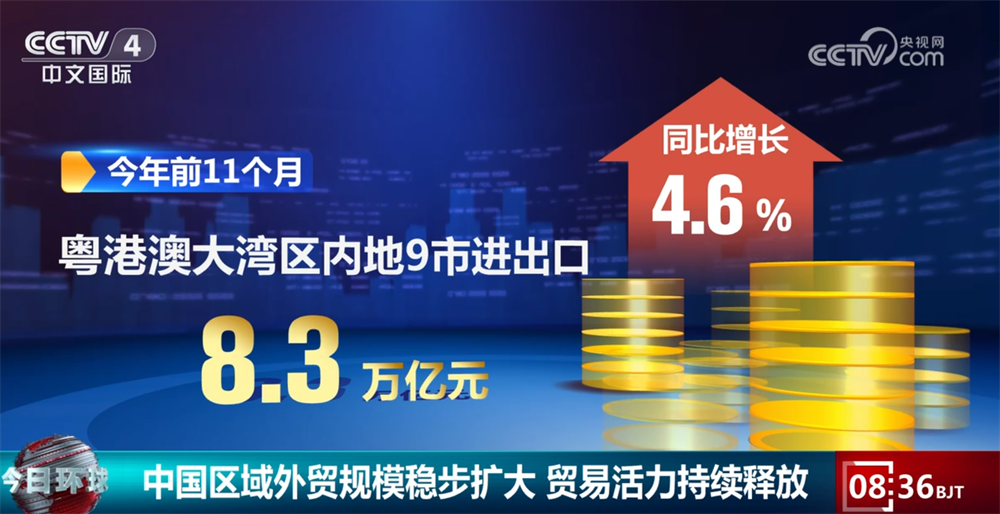
Core Insights - The foreign trade scale in key regions such as the Guangdong-Hong Kong-Macao Greater Bay Area, Yangtze River Delta, and Beijing-Tianjin-Hebei has steadily expanded in the first 11 months of the year, indicating a continuous release of trade vitality [1][2][7] Group 1: Guangdong-Hong Kong-Macao Greater Bay Area - In the first 11 months, the Greater Bay Area's nine cities achieved an import and export volume of 8.3 trillion yuan, a year-on-year increase of 4.6%, marking a historical high for the same period [1] - Nearly 70% of the import and export goods are electromechanical products, with exports primarily consisting of high-tech products such as electronic components, computers, and parts [1] - The import of consumer goods like aquatic products and dairy products saw an increase of over 20%, highlighting the significant role of domestic demand [1] Group 2: Yangtze River Delta - The Yangtze River Delta's import and export volume surpassed 15 trillion yuan for the first time in history, reaching 15.46 trillion yuan, with a growth rate of 6.2% [2] - Trade with countries involved in the Belt and Road Initiative saw an increase of 11% during the same period [2] - The region has innovatively developed various transit modes, integrating the stability of sea-rail intermodal transport with the timeliness of international express shipping, creating more flexible and efficient transportation solutions for Belt and Road trade [5] Group 3: Beijing-Tianjin-Hebei - The Beijing-Tianjin-Hebei region recorded an import and export volume of 4.3 trillion yuan in the first 11 months, with exports reaching 1.32 trillion yuan, a historical high for the same period [7] - Private enterprises' exports exceeded 600 billion yuan for the first time, growing by 16.1%, surpassing last year's total and accounting for 47.4% of the region's total export value, becoming the main driving force behind the growth of foreign trade in the area [7]
透过亮眼外贸数据感知中国活力 我国区域外贸“质升量稳”基础坚实
Yang Shi Wang· 2025-12-23 01:06
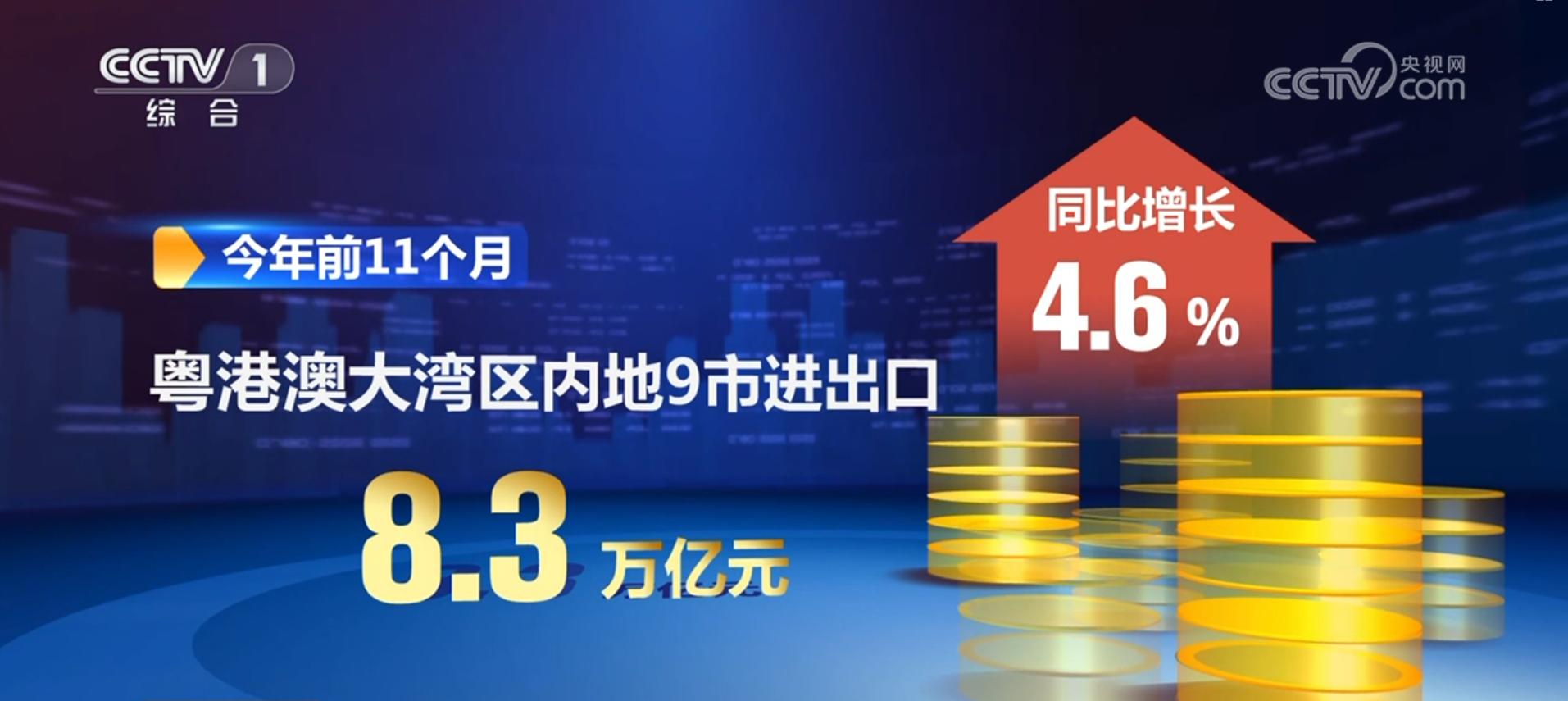
Group 1 - The Guangdong-Hong Kong-Macao Greater Bay Area's import and export volume reached 8.3 trillion yuan in the first 11 months, marking a year-on-year growth of 4.6%, setting a historical high for the same period [2] - Nearly 70% of the import and export goods in the Greater Bay Area are electromechanical products, with high-tech products such as electronic components and computers being the main exports [2] - The import of consumer goods like aquatic products and dairy products saw an increase of over 20%, highlighting the significant role of domestic demand [2] Group 2 - The Yangtze River Delta region's import and export volume surpassed 15 trillion yuan for the first time in history, reaching 15.46 trillion yuan, with a growth rate of 6.2% [3] - Trade with countries involved in the Belt and Road Initiative experienced an 11% increase during the same period [3] Group 3 - The Beijing-Tianjin-Hebei region's import and export volume reached 4.3 trillion yuan in the first 11 months, with exports hitting a historical high of 1.32 trillion yuan [7] - Private enterprises' exports exceeded 600 billion yuan for the first time, growing by 16.1%, surpassing the total for the previous year and accounting for 47.4% of the region's total exports [7] Group 4 - The Shanghai Waigaoqiao Port Customs has innovatively developed various transfer modes this year, integrating the stability of sea-rail intermodal transport with the timeliness of international express shipping, creating more flexible and efficient transportation solutions for Belt and Road trade [5]
前11个月浙江进出口总值突破5万亿元
Zhong Guo Jing Ji Wang· 2025-12-15 13:18
Core Insights - Zhejiang's total import and export value reached 5.06 trillion yuan from January to November, marking a year-on-year growth of 5.3%, which is 1.7 percentage points higher than the national average [1] - Exports amounted to 3.83 trillion yuan, growing by 7.1%, while imports were 1.23 trillion yuan, with a slight increase of 0.1% [1] - Zhejiang's import and export, export, and import values accounted for 12.3%, 15.7%, and 7.4% of the national totals, ranking third, second, and sixth respectively [1] Trade Market Performance - ASEAN solidified its position as Zhejiang's largest trading market with a total trade value of 786.81 billion yuan, growing by 15.4%, contributing 40.9% to the province's overall import and export growth [1] - The EU is the second-largest trading market for Zhejiang, with a trade value of 770.14 billion yuan, increasing by 8.3%, including imports and exports with France reaching 83.84 billion yuan, up by 7.3% [1] - Exports to emerging markets such as ASEAN, Latin America, the Middle East, and Africa grew by 16.1%, 10.0%, 12.0%, and 15.4% respectively [1] - Total trade with countries involved in the Belt and Road Initiative reached 2.90 trillion yuan, growing by 8.5%, accounting for 57.3% of the province's total import and export value [1] Private Sector Performance - Private enterprises' import and export values reached 4.16 trillion yuan, growing by 7.0%, and accounted for 82.1% of the province's total, an increase of 1.3 percentage points year-on-year [2] - Exports from private enterprises were 3.30 trillion yuan, up by 8.4%, while imports were 858.61 billion yuan, growing by 1.7% [2] - Foreign-invested enterprises reported an import and export value of 619.78 billion yuan, increasing by 2.8%, with exports at 394.41 billion yuan, up by 2.3%, and imports at 225.37 billion yuan, growing by 3.8% [2] Export Product Trends - The export of electromechanical products reached 1.79 trillion yuan, growing by 8.8%, with "new three samples" products exporting 120.2 billion yuan, a significant increase of 23.3% [2] - Solar products, electric vehicles, and lithium-ion batteries have seen continuous growth for 4, 12, and 20 months respectively [2] - Labor-intensive products exported amounted to 1.13 trillion yuan, growing by 3.9%, capturing 30.5% of the national market share [2] - High-tech product exports reached 324.35 billion yuan, increasing by 10.7%, with high-end equipment exports at 129.73 billion yuan, growing by 16.8% [2] Import Product Trends - Electromechanical product imports grew significantly, reaching 218.42 billion yuan, an increase of 21.8%, with aircraft and other aviation equipment, as well as computers and components, growing by 122.9% and 43.1% respectively [2] - Consumer goods imports totaled 143.46 billion yuan, growing by 8.7%, while agricultural product imports reached 112.04 billion yuan, increasing by 10.6% [2]
外贸成绩单,向新向绿向智
Xin Lang Cai Jing· 2025-12-12 14:13
Core Insights - Zhejiang's total import and export value reached 5.06 trillion yuan from January to November, growing by 5.3% year-on-year, surpassing the national average by 1.7% [1] - Exports amounted to 3.83 trillion yuan, increasing by 7.1%, while imports were 1.23 trillion yuan, with a marginal growth of 0.1% [1] Trade Market Performance - ASEAN solidified its position as Zhejiang's largest trade market with a total trade value of 786.81 billion yuan, growing by 15.4%, contributing 40.9% to the province's overall import and export growth [4] - The EU ranked as the second-largest trade market for Zhejiang, with a trade value of 770.14 billion yuan, increasing by 8.3% [4] - Exports to emerging markets such as ASEAN, Latin America, the Middle East, and Africa grew by 16.1%, 10.0%, 12.0%, and 15.4% respectively [4] Private Sector Performance - Private enterprises accounted for 4.16 trillion yuan in import and export value, growing by 7.0% and representing 82.1% of the province's total [2][4] - Exports from private enterprises reached 3.30 trillion yuan, increasing by 8.4%, while imports were 858.61 billion yuan, growing by 1.7% [2][4] - Foreign-invested enterprises reported a total import and export value of 619.78 billion yuan, with exports at 394.41 billion yuan and imports at 225.37 billion yuan, reflecting growth rates of 2.3% and 3.8% respectively [2][4] Product Export Trends - The export of electromechanical products reached 1.79 trillion yuan, growing by 8.8%, with "new three samples" products (solar products, electric vehicles, lithium-ion batteries) seeing a significant increase of 23.3% [5] - Labor-intensive products exported amounted to 1.13 trillion yuan, growing by 3.9%, capturing 30.5% of the national market share [5] - High-tech product exports totaled 324.35 billion yuan, increasing by 10.7%, with high-end equipment exports growing by 16.8% to 129.73 billion yuan [5] Import Trends - The import of electromechanical products grew significantly, reaching 218.42 billion yuan, with notable increases in aircraft and other aviation equipment (122.9%) and computers and components (43.1%) [6] - Consumer goods imports totaled 143.46 billion yuan, growing by 8.7%, while agricultural product imports reached 112.04 billion yuan, increasing by 10.6% [6] Industry Transformation - Many Zhejiang companies are transitioning towards new markets, particularly in the electric vehicle sector, with significant advancements in air suspension technology [3][6] - A specific company, Xigema Co., has developed air suspension systems that achieve 90% of the performance of top international brands at a fraction of the cost [6]
深圳智能制造出口数据抢眼 对泰国出口新能源车狂飙
Shen Zhen Shang Bao· 2025-11-18 23:21
Group 1 - The core viewpoint of the articles highlights the significant growth in trade between Shenzhen and Thailand, particularly in the electric vehicle sector, as Shenzhen prepares to celebrate the 50th anniversary of diplomatic relations with Thailand in 2025 [1][2] - In the first ten months of this year, Shenzhen's total import and export value with Thailand reached 92.82 billion yuan, marking a year-on-year increase of 4.4%, with both import and export scales ranking first among mainland cities in China [1] - Exports of new energy vehicles from Shenzhen to Thailand have surged, with a remarkable year-on-year growth of 99.1%, amounting to 1.28 billion yuan in electric vehicle exports [1] Group 2 - The company BYD has significantly contributed to this growth, exporting 11,000 new energy vehicles to Thailand this year, which represents an increase of over 50% compared to the previous year [1] - Shenzhen Customs has implemented innovative measures to facilitate the export of new energy vehicles, including leveraging the China-ASEAN Free Trade Agreement and RCEP rules, which has resulted in over 700 certificates of origin being issued for BYD's exports, saving over 30 million yuan in tariff costs [2] - Other high-tech and high-value-added products from Shenzhen, such as electrical equipment and computer components, have also shown strong performance, with exports of 4.13 billion yuan and 2.45 billion yuan respectively, reflecting year-on-year growth of 25.3% and 63.1% [2]

对泰国出口新能源车狂飙
Shen Zhen Shang Bao· 2025-11-18 17:24
Group 1 - The core viewpoint of the articles highlights the significant growth in trade between Shenzhen and Thailand, particularly in the electric vehicle sector, as Shenzhen prepares to celebrate the 50th anniversary of diplomatic relations with Thailand in 2025 [1][2] - In the first ten months of this year, Shenzhen's total import and export value with Thailand reached 92.82 billion yuan, marking a year-on-year increase of 4.4%, with both import and export scales ranking first among mainland cities in China [1] - Exports of electric vehicles from Shenzhen to Thailand have surged, with a remarkable year-on-year growth of 99.1%, amounting to 1.28 billion yuan in electric vehicle exports [1] Group 2 - BYD has significantly contributed to this growth, exporting 11,000 electric vehicles to Thailand this year, which is an increase of over 50% compared to the previous year [1] - The Shenzhen Customs has implemented innovative measures to facilitate the export of electric vehicles, including leveraging the China-ASEAN Free Trade Agreement and RCEP rules, which has resulted in over 700 certificates of origin being issued for BYD's exports, saving over 30 million yuan in tariff costs [2] - Other high-tech and high-value-added products from Shenzhen, such as electrical equipment and computer components, have also shown strong performance, with exports reaching 4.13 billion yuan and 2.45 billion yuan respectively, reflecting year-on-year growth of 25.3% and 63.1% [2]