电镀铜

Search documents
银浆价格突然暴涨光伏企业承压,高盛研判:行业短期成本压力陡增
Zhi Tong Cai Jing· 2026-01-29 12:28
Core Viewpoint - The silver price surge is significantly impacting the production costs of the photovoltaic (PV) industry, leading to a restructured cost structure and increased pressure on profitability, with a consensus emerging around the need for silver alternatives in the industry [1]. Group 1: Price Dynamics - The price of silver paste has become the largest variable, with significant increases in January, leading to a rise in the unit production cost of battery cells and modules by 0.03 yuan per watt [2]. - The cost of silver now accounts for 20% of the total production cost of modules, a substantial increase from 7% in Q3 2025 and 11% in Q4 2025, making it the core cost component [2]. Group 2: Impact of Silver Price Surge - The rise in silver prices has redefined the cost structure of the PV industry, with silver paste now constituting over 20% of component costs, compared to less than 10% previously, leading to severe profit compression for companies [3]. - Major companies are expected to report significant losses in 2025, with Tongwei Co. projected to lose 9-10 billion yuan and Trina Solar expected to lose 6.5-7.5 billion yuan, resulting in an overall industry gross margin drop from 15% in 2024 to below 5% [3]. Group 3: Challenges in Price Transmission - Companies are attempting to raise prices in response to cost pressures, but face limitations due to market conditions, with only short-term relief available through export tax rebates [4]. - The market for PV components is characterized by oversupply, limiting the ability of companies to pass on costs to downstream project developers, which may lead to loss of market share if prices are raised individually [6]. Group 4: Technological Evolution and Industry Outlook - The surge in silver prices is accelerating technological innovation in the PV industry, with a focus on reducing silver dependency, which is expected to lead to a market reshuffle [7]. - By 2026, the PV industry is anticipated to operate under increased antitrust regulations and efforts to combat internal competition, with pricing closely following the cost reduction progress of leading companies [7]. Group 5: Investment Strategies - Investment focus is shifting towards companies with high efficiency and low costs, emphasizing the importance of capacity utilization rates and cost reduction progress in improving profitability [7]. - Specific investment directions include short-term solutions like silver-coated copper paste, mid-term solutions such as copper plating, and long-term exploration of pure copper paste [9].
中信建投: 银价高企倒逼产业变革,光伏金属化革命的"铜"时代开启
3 6 Ke· 2026-01-23 05:11
Core Viewpoint - Recent increases in silicon and silver prices are intensifying profit pressures on photovoltaic (PV) cell and module companies, with a long-term tight balance expected in silver supply and demand due to a persistent supply gap since 2019 [1] Group 1: Industry Challenges - The rising costs of silver necessitate that PV cell and module companies urgently reduce silver consumption [1] - Copper is identified as the most suitable alternative material to silver, although challenges such as copper oxidation and diffusion need to be addressed [1] Group 2: Technological Developments - The PCB, MLCC, and semiconductor industries have accumulated valuable experience that can be referenced by the photovoltaic sector [1] - Progress is being made with silver-coated copper and electroplated copper solutions in the photovoltaic industry, while pure copper paste remains the ultimate goal, albeit with several unresolved issues [1] Group 3: Market Projections - It is projected that by 2026-2027, the penetration rates for silver-coated copper and copper paste will reach 17.7% and 43%, respectively, leading to production volumes of 813 tons and 2,188 tons for these materials [1] - This shift is expected to provide significant performance elasticity for paste and metal powder companies [1]

中信建投:降低银耗成为光伏电池、组件企业的当务之急
Xin Lang Cai Jing· 2026-01-22 23:34
Group 1 - The recent increase in silicon and silver prices has intensified profit pressure on photovoltaic cell and module companies [1] - Since 2019, there has been a persistent supply-demand gap in silver, which is expected to remain in a long-term tight balance due to rigid supply and the growth of new applications requiring silver [1] - To control costs, reducing silver consumption has become a priority for photovoltaic cell and module companies, with copper identified as the most suitable alternative material [1] Group 2 - The industry has experience from PCB, MLCC, and semiconductor sectors to address issues related to copper oxidation and diffusion [1] - Progress in silver-coated copper and electroplated copper solutions in the photovoltaic sector is relatively fast, while pure copper paste remains the ultimate goal with several challenges to overcome [1] - If silver-coated copper and copper paste penetration rates reach 17.7% and 43% respectively by 2026-2027, the corresponding production of these materials will be 813 tons and 2,188 tons, providing significant performance elasticity for material and metal powder companies [1]
银价暴涨倒逼技术替代,光伏电极迎来“铜时代”
Hua Er Jie Jian Wen· 2026-01-22 09:38
Core Insights - The report highlights a significant shift in the photovoltaic (PV) industry driven by the rising silver prices, which have surged over 200% since early 2024, leading to a dramatic increase in silver paste costs from 3.4% to 19.3% of total component costs, making it the largest cost item in PV modules [1] - The cost crisis is accelerating the adoption of copper as a substitute for silver, with companies that master this technology expected to see substantial performance elasticity [1] - The report estimates that if the penetration rates of silver-coated copper and pure copper pastes reach 17.7% and 43% respectively by 2026-2027, the paste industry could see an incremental profit space of approximately 320 million and 730 million yuan [1] Group 1: Silver Market Dynamics - The silver market has been in a state of supply-demand imbalance since 2019, with over 80% of supply coming from mining, primarily as a byproduct of other metals, and only 28% from independent silver mines [2] - The demand for silver is expected to grow, with photovoltaic applications accounting for 17.6% of silver demand in 2024, driven by increased energy storage and grid upgrades [2] Group 2: Cost Pressures in the PV Industry - The PV industry is facing dual pressures from overcapacity and soaring costs, with both silicon and silver prices rising, further squeezing profit margins for battery and module manufacturers [3] - The cost of silver paste has become a critical focus for the industry, with current silver consumption in TOPCon batteries averaging 10-13 mg/W, leading to significant cost implications for manufacturers [3] Group 3: Copper Substitution Technology - Copper is identified as the most promising substitute for silver, although it faces technical challenges such as oxidation and diffusion [4] - The industry is advancing copper substitution through three main technical routes: silver-coated copper, electroplated copper, and pure copper paste [4] Group 4: Progress of Copper Substitution Techniques - The silver-coated copper solution is progressing the fastest, with low-temperature silver-coated copper technology validated for heterojunction (HJT) batteries, potentially reducing metallization costs by approximately 0.15 yuan/W [5] - Electroplated copper technology is being adopted by leading BC battery manufacturers, but it is limited by high equipment investment costs [6] - Pure copper paste technology is still in the research and development phase, facing challenges in controlling copper oxidation during high-temperature sintering [7]
光伏"去银化"技术连续突破,用银供需格局将逆转?
Mei Ri Jing Ji Xin Wen· 2025-12-24 08:50
Group 1: Silver Price Trends - Silver prices reached a historical high, surpassing $69 per ounce, with a cumulative increase of approximately 138% since 2025 [1] - As of the latest closing, the main Shanghai silver futures contract rose by 6.06%, exceeding 16,200 yuan per kilogram [1] - The continuous rise in silver prices is attributed to both the increase in gold prices and heightened industrial demand, particularly from the photovoltaic (PV) industry [1][2] Group 2: Industrial Demand and Supply Dynamics - Industrial demand for silver is projected to grow significantly, with silver usage in the PV sector expected to reach 6,146 tons by 2024, accounting for 17% of total silver demand [2] - The total industrial demand for silver is forecasted to increase from 15,300 tons in 2016 to 20,400 tons in 2024 [2] - The supply of silver has been relatively stagnant, leading to a supply deficit of 7,762 tons in 2022, 6,240 tons in 2023, and an estimated 4,632 tons in 2024 [2] Group 3: Technological Developments in Photovoltaics - The PV industry is under pressure from rising silver costs, prompting manufacturers to develop low-silver and silver-free technologies [3] - Silver-coated copper technology is being promoted by leading PV silver paste manufacturers, with mass production expected to scale up significantly by late 2025 [4][7] - Companies are implementing copper plating techniques, which have shown to reduce costs and improve durability compared to traditional silver paste methods [6][8] Group 4: Future Outlook and Market Implications - If the adoption of silver-coated copper and silver-free technologies continues to progress, it could lead to a substantial decrease in silver consumption in the PV sector [8] - Current silver consumption in mainstream TOPCon batteries has already decreased from 106 mg per cell to 86 mg per cell, with expectations for further reductions [8] - Despite the ongoing supply-demand imbalance, signs of a potential reversal in the market may emerge, with projections indicating a 10% decline in global new PV installations by 2026 [9]


光伏“去银化”技术连续突破,用银供需格局将逆转?
Mei Ri Jing Ji Xin Wen· 2025-12-23 12:45
Group 1: Silver Price Trends - Silver prices have reached a historical high, surpassing $69 per ounce, with a cumulative increase of approximately 138% since 2025 [1] - As of the latest close, Shanghai silver futures rose by 6.06%, breaking through the 16,200 yuan per kilogram mark [1] - The continuous rise in silver prices is attributed to both increasing gold prices and heightened industrial demand, particularly from the photovoltaic (PV) industry [1][2] Group 2: Industrial Demand and Supply Dynamics - Industrial demand for silver is projected to grow significantly, with silver used in the PV sector expected to reach 6,146 tons by 2024, accounting for 17% of total silver demand [2] - The total industrial demand for silver is forecasted to increase from 15,300 tons in 2016 to 20,400 tons in 2024 [2] - The supply of silver has been relatively stagnant, leading to a supply deficit of 7,762 tons in 2022, 6,240 tons in 2023, and an estimated 4,632 tons in 2024 [2] Group 3: Technological Developments in Photovoltaics - The PV industry is under pressure from rising silver costs, prompting manufacturers to develop low-silver and no-silver technologies [3] - Companies like Dike Co. and Aiko Solar are advancing silver-coated copper and copper plating technologies, respectively, to reduce silver usage [3][4] - The implementation of these technologies could significantly lower silver consumption in PV cells, with Dike Co. achieving a silver content reduction to 20% in their products [5] Group 4: Future Market Implications - The ongoing development and potential widespread adoption of low-silver and no-silver technologies may lead to a substantial decrease in silver demand in the future [5] - Despite current supply shortages, signs of a potential supply-demand reversal are emerging, with expectations of a decline in new global PV installations by 10% in 2026 [6][7]
创智芯联冲击港股IPO,2023年收入下滑,应收账款占比较高
Ge Long Hui· 2025-06-19 10:06
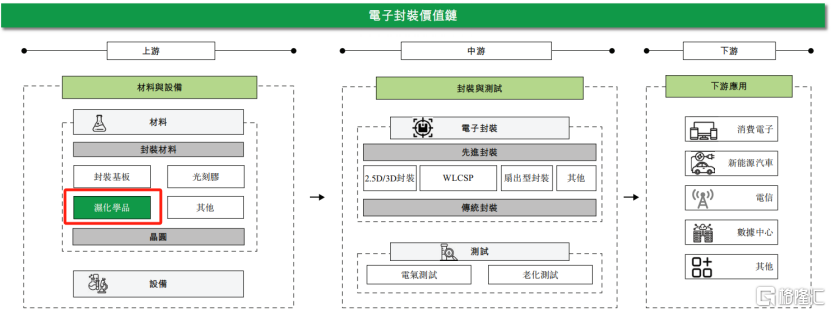
Group 1 - The recent surge in Hong Kong IPOs includes multiple new listings, indicating a vibrant market environment reminiscent of 2021 [1][2] - Shenzhen Chuangzhi Xinian Technology Co., Ltd. (Chuangzhi Xinian) has submitted its IPO application to the Hong Kong Stock Exchange, focusing on semiconductor packaging materials and technology [3][9] - The company previously attempted an A-share listing but withdrew its application in May 2023, citing strategic business considerations [3][4] Group 2 - Chuangzhi Xinian was founded in November 2006 and has undergone significant ownership changes, with the current controlling shareholder being Yao Cheng, who holds approximately 66.75% of the voting rights [5][6] - Yao Cheng's daughter, Dr. Yao Yu, also plays a key role in the company, serving as the General Manager and R&D Director [7][8] Group 3 - The company has raised a total of 589 million yuan in investments from various institutions, including Shenzhen Capital Group and the National Integrated Circuit Industry Investment Fund [7] - As of April 2025, the company's valuation was approximately 2.722 billion yuan [8] Group 4 - Chuangzhi Xinian's revenue from coating materials for 2022, 2023, and 2024 was 3.12 billion yuan, 2.75 billion yuan, and 3.29 billion yuan, respectively, with a notable increase in revenue from coating services [12][16] - The company's revenue and profit have fluctuated due to the cyclical nature of the downstream electronics industry, with a rebound expected in 2024 driven by demand from AI, electric vehicles, and data centers [14][16] Group 5 - The wet process coating materials market in China is projected to grow significantly, with an expected market size of 27.5 billion yuan by 2029, reflecting a compound annual growth rate of 12.9% from 2024 to 2029 [22] - Chuangzhi Xinian ranks sixth in the Chinese wet process coating materials market, holding a 2.7% market share [26][28] Group 6 - The company faces credit risks associated with accounts receivable, which have increased over the years, indicating potential challenges in cash flow management [19][29] - R&D investment is crucial for the company, with a total of 85.2 million yuan spent on R&D during the reporting period, representing an R&D expense ratio of approximately 8.2% [18]