电饭锅

Search documents
举行爱心捐赠公益活动
Xin Lang Cai Jing· 2026-02-05 19:12
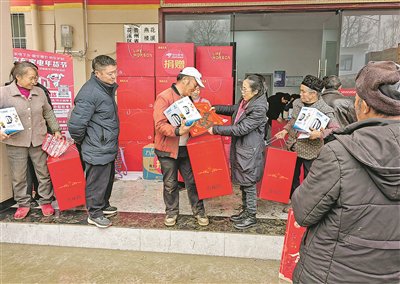
Group 1 - The core theme of the event is "Home Appliances Going to the Countryside · Warm Winter Benefits for Farmers · JD.com Safeguarding" [3] - The event is a collaborative effort involving the Guiyang Market Supervision Administration, Huaxi District Media Center, Yanlou Town Government, and JD.com, aimed at delivering benefits and services to villagers [3] - A total of 78 households, including poverty alleviation and monitoring households, received donations of items such as down jackets, rice cookers, electric heaters, and couplets [3] Group 2 - Prior to the event, the village work team conducted a thorough survey to assess the winter safety of electricity and fire usage among villagers, ensuring that their needs were met [3] - The initiative includes dual subsidies from the "National Subsidy for New Appliances" and "JD.com Subsidies," addressing the villagers' needs for new appliances [3] - JD.com provides comprehensive services including selection, delivery, installation, and after-sales support for the donated appliances [3]


这些东西不能带上火车 出发前要注意
Yang Shi Xin Wen Ke Hu Duan· 2026-02-02 06:44
Group 1 - The article discusses the regulations regarding items that can and cannot be brought on trains during the Spring Festival travel period, emphasizing the importance of compliance for travelers [1][3] - Food items such as seafood in sealed packaging and alcoholic beverages with an alcohol content between 24% and 70% (up to 3000 milliliters per person) are allowed, while odorous foods like durian and stinky tofu can be brought but not consumed on the train [1][3] - Daily necessities like small household appliances (e.g., rice cookers, curling irons) can be carried, but their use is prohibited on trains and at stations [3] Group 2 - Specific items like power banks must have clear labeling and an energy rating not exceeding 100Wh, while ordinary lighters are limited to two per person [5] - Items that cannot be carried on board but can be checked include knives longer than 60mm, blunt instruments, and certain tools, with exceptions for guide dogs for visually impaired passengers [5] - Certain items are completely prohibited from both carry-on and checked luggage, including controlled knives, fireworks, and self-heating food products containing magnesium-aluminum powder [7]

视频丨这些东西不能带上火车 出发前要注意
Yang Shi Xin Wen Ke Hu Duan· 2026-02-02 06:05
Group 1 - The article discusses the regulations regarding items that can and cannot be brought onto trains during the Spring Festival travel period in 2026 [2][4] - Food items such as seafood in sealed packaging and alcoholic beverages with an alcohol content between 24% and 70% (up to 3000 milliliters per person) are allowed [2] - Items like small household appliances (e.g., rice cookers, curling irons) can be carried but should not be used on trains [4] Group 2 - Certain items, including knives longer than 60mm, blunt instruments, and live animals (except guide dogs), are prohibited from being carried but can be checked in [6] - Some items are completely banned from both carry-on and checked luggage, such as controlled knives, fireworks, and self-heating hot pots made with magnesium-aluminum powder [8] - Passengers can temporarily store prohibited items at the station if they meet storage conditions, allowing for retrieval or mailing later [8]

“中国电饭锅之乡”广东廉江小家电出海“拓圈”
Zhong Guo Xin Wen Wang· 2026-01-27 09:21
Group 1 - Guangdong Gaobo Electric Co., Ltd. is producing a new batch of insulated electric kettles, which will benefit from tariff reductions under the China-Pakistan Free Trade Agreement, targeting emerging markets like Pakistan [1] - Lianjiang City, known as the "Hometown of Rice Cookers," is a significant small home appliance manufacturing base in China, producing over 50 types of appliances and holding approximately 30% of the domestic market share, with exports to 36 countries and regions [1] - In 2025, Lianjiang Customs issued 1,748 certificates of origin with a total value of approximately 426 million yuan, and added 10 new countries for certification [1] Group 2 - AEO certification is described as a "golden signboard" for companies entering international markets, with Guangdong Huqiang Electric Co., Ltd. benefiting from 45 facilitation measures after passing AEO certification review, leading to exports to over 20 countries [2]
杭州市市场监督管理局通报2025年第二批市级产品质量监督抽查情况
Zhong Guo Zhi Liang Xin Wen Wang· 2026-01-22 06:42
Summary of Key Points Core Viewpoint - The product quality supervision work in Hangzhou for 2025 focuses on ensuring product safety and health for the public, with an emphasis on strengthening quality supervision and inspection efforts [2]. Group 1: Inspection Overview - The second batch of product quality supervision inspections includes 91 types of products such as electric bicycles, bedding, refrigerators, children's furniture, and more [2]. - A total of 1,455 batches were inspected, with 1,338 passing and 117 failing the quality standards [2]. - In the production sector, 209 batches were inspected, resulting in 8 failures, while in the circulation sector, 1,246 batches were inspected with 109 failures [2]. Group 2: Refusal to Inspect - No companies were found to have refused inspection during this year's quality supervision checks [2].
从三个维度看“广货行天下”
Sou Hu Cai Jing· 2026-01-21 02:45
Core Viewpoint - The "Guangdong Goods Going Global" initiative, launched on January 15, 2026, aims to boost consumer spending and stabilize the economy while promoting Guangdong products both domestically and internationally [1][12]. Group 1: Promotion of Guangdong Goods - The initiative has successfully organized promotional events in cities like Foshan and Dongguan, leading to significant sales increases due to substantial discounts and strong online support from e-commerce platforms [1][12]. - Guangdong's products, known as "Guangdong Goods," encompass a wide range of categories, from traditional brands to innovative new products, showcasing the province's manufacturing and agricultural strengths [4][9]. Group 2: Historical and Economic Context - Guangdong has a long-standing role as a trade hub in China, historically serving as the first point of contact for foreign trade and commerce [5][8]. - The province boasts a comprehensive industrial system, being a major player in manufacturing, agriculture, and tourism, which supports the diverse offerings of "Guangdong Goods" [9][10]. Group 3: Innovation and Quality - Guangdong's focus on innovation has led to high-quality products with significant technological advancements, making it a leader in various sectors such as smart appliances and industrial robotics [10][12]. - Current statistics indicate that Guangdong produces 70% of the world's consumer drones and 40% of the nation's industrial robots, highlighting its manufacturing prowess [10]. Group 4: Strategic Goals - The initiative aligns with national strategies to enhance domestic demand and promote high-quality development, aiming to leverage Guangdong's market advantages to stabilize the national economy [13][14]. - "Guangdong Goods Going Global" also seeks to upgrade industries and enhance product quality, encouraging companies to innovate and improve brand value [14][15]. Group 5: Cultural Significance - The initiative emphasizes the cultural aspects of "Guangdong Goods," aiming to enhance their market appeal by integrating local cultural elements into product design and branding [15][22]. - By promoting the stories and cultural heritage behind the products, the initiative aims to increase the recognition and value of "Guangdong Goods" in both domestic and international markets [15][22]. Group 6: Market Expansion Strategies - The initiative plans to utilize both online and offline channels to penetrate various consumer segments, leveraging the Guangdong-Hong Kong-Macau Greater Bay Area's influence [19][23]. - It aims to establish efficient trade channels through cross-border e-commerce and other new trade formats to connect with global consumers [19][22].

“广货群侠传”登场,粤家电靠这招畅销全球40年
2 1 Shi Ji Jing Ji Bao Dao· 2026-01-15 08:59
Core Insights - Guangdong manufacturing is a significant contributor to the national market, producing 1 out of every 2 color TVs and 1 out of every 3 air conditioners in China [1] - The "Guangdong Goods Going Global" spring campaign has been launched to promote Guangdong's manufacturing capabilities, particularly in the home appliance sector [1] - Guangdong's home appliance industry has achieved over 10 national firsts in various categories, establishing a strong industrial foundation [1] Group 1: Industry Overview - Guangdong's home appliance industry has developed a highly collaborative and resilient supply chain, with Guangzhou and Shenzhen as R&D hubs and Foshan, Zhongshan, and Zhuhai as manufacturing centers [2] - The industry has diversified into health appliances and smart home products, showcasing a variety of innovative offerings [3] Group 2: Promotional Activities - In the first quarter of this year, 12 online and offline promotional events will be held, along with 18 supporting activities as part of the "Guangdong Goods Going Global" campaign [4]
2025年上海市能效标识产品计量监督抽查结果(电饭锅)公布
Zhong Guo Zhi Liang Xin Wen Wang· 2026-01-15 07:57
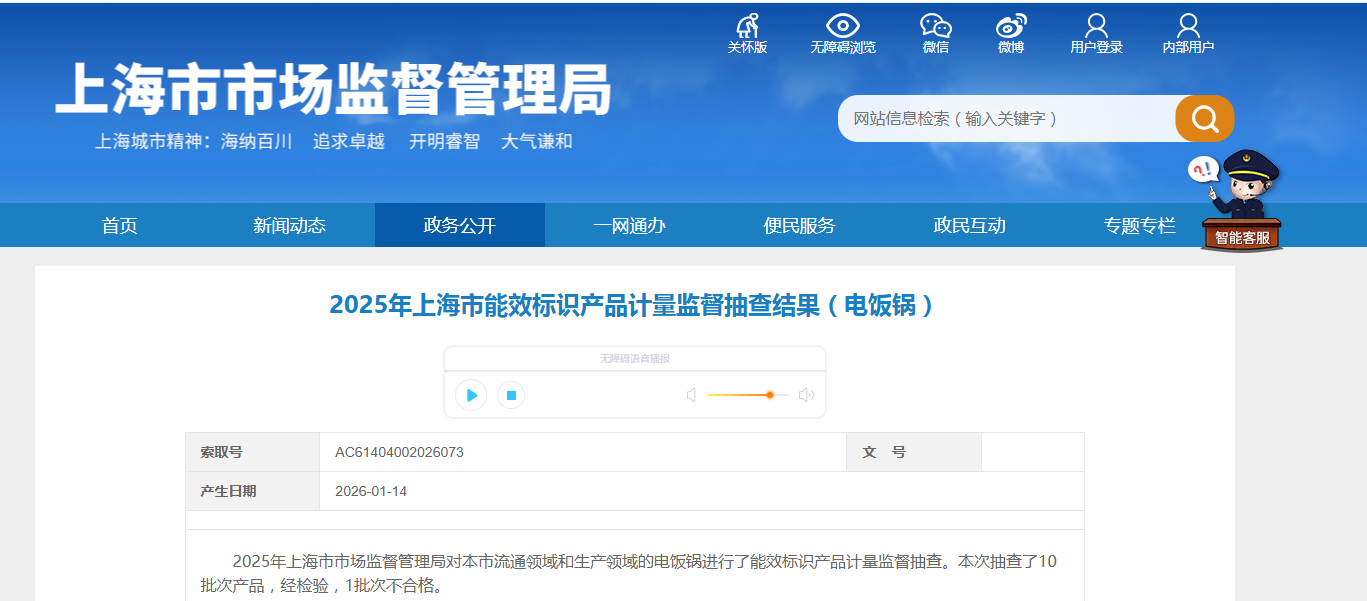
Core Insights - The Shanghai Municipal Market Supervision Administration conducted a measurement supervision sampling of rice cookers in the circulation and production sectors, revealing that out of 10 batches tested, 1 batch was found to be non-compliant with energy efficiency standards [1][2] Group 1: Compliance Results - The sampling included various brands and models of rice cookers, with the compliant products meeting relevant standards [1] - Notable compliant brands included SHARP, Panasonic, Joyoung, SUPOR, Midea, Morphy Richards, and Philips, among others [1] Group 2: Non-compliance Details - The non-compliant product was a microcomputer rice cooker from a brand represented by a graphic trademark, which failed to meet the thermal efficiency value and energy efficiency grade [2] - The non-compliant product was produced by He Li Industrial (Shanghai) Co., Ltd. and sold through Shanghai Li Yu Supply Chain Management Co., Ltd. on JD.com [2]
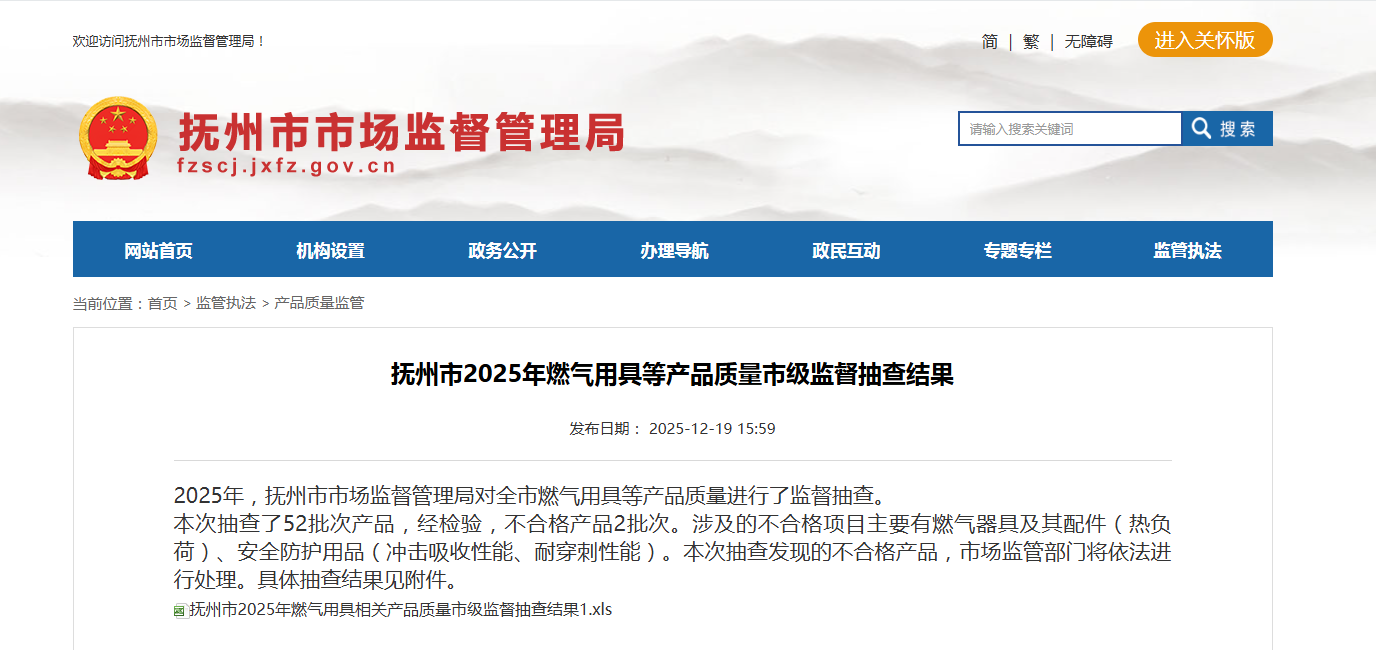
江西省抚州市2025年燃气用具等产品质量市级监督抽查结果公布
Zhong Guo Zhi Liang Xin Wen Wang· 2026-01-07 08:48
Core Insights - The quality supervision inspection results for gas appliances in Fuzhou City, Jiangxi Province, for the year 2025 have been released, indicating that out of 52 batches tested, 2 batches were found to be non-compliant with quality standards [3]. Group 1: Inspection Results - A total of 52 batches of gas appliances were inspected by the Fuzhou Market Supervision Administration [3]. - Among the inspected products, 2 batches were identified as non-compliant, primarily concerning gas appliances and their accessories (thermal load) and safety protective equipment (impact absorption performance, puncture resistance) [3]. - The market regulatory authorities will take legal action against the non-compliant products discovered during the inspection [3]. Group 2: Specific Non-Compliant Products - The non-compliant products include: - Household gas stove from Zhongshan Qianjiale Kitchen and Bath Electrical Co., which failed on thermal load [4]. - Safety helmet from Jieyang Juxian Plastic Products Co., which failed on impact absorption performance and puncture resistance [4].
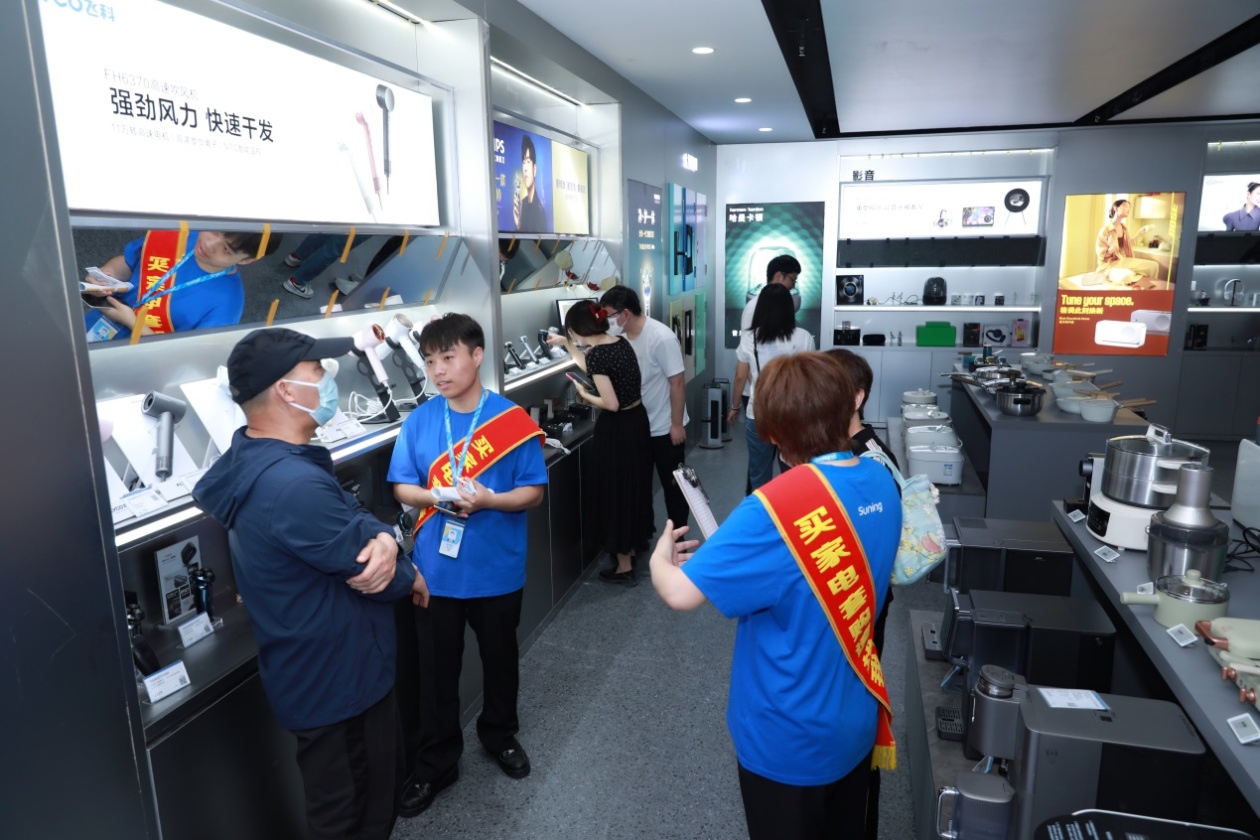
家电使用年限新国标落地,苏宁易购全链路助力以旧换新
Huan Qiu Wang· 2025-12-31 10:28
Core Viewpoint - Starting from January 1, 2026, consumers will be able to check the "safe usage lifespan" of home appliances, similar to checking food expiration dates, which aims to clarify the recommended usage time under normal conditions and enhance safety awareness [1][3]. Group 1: Safe Usage Lifespan - The safe usage lifespan for common appliances is approximately 10 years for refrigerators, microwaves, and fans, while televisions and air conditioners range from 8 to 10 years [3]. - High-frequency appliances like washing machines, gas stoves, and water heaters have a recommended safe usage lifespan of about 8 years, whereas smaller kitchen appliances like rice cookers and pressure cookers are suggested to have a lifespan of around 5 years [3]. - Appliances that exceed their safe usage lifespan may pose safety risks, including increased energy consumption and potential hazards like electrical leaks or fires, thus consumers are advised to consider these guidelines for maintenance and replacement [3]. Group 2: Government Policies and Support - The National Development and Reform Commission and the Ministry of Finance will continue to implement a trade-in policy for consumer goods in 2026, supporting the replacement of old appliances with new energy-efficient models [3]. - Consumers purchasing specific energy-efficient appliances, such as refrigerators, washing machines, televisions, air conditioners, computers, and water heaters, can receive a subsidy of 15% per item, up to a maximum of 1,500 yuan [3]. - Companies like Suning will collaborate with national policies to enhance trade-in services and provide multiple subsidies, making it easier for consumers to upgrade to safer and more energy-efficient appliances [3].