
茂金属聚乙烯

Search documents
热评 | 以重大项目建设为高质量发展固根基强支撑
Sou Hu Cai Jing· 2026-02-27 04:31
Core Viewpoint - The article emphasizes the commitment of Maoming City to high-quality development through major projects and industrial transformation, aiming to enhance economic growth and competitiveness in the region [2][6][10]. Group 1: Major Projects and Economic Impact - The Maoming Petrochemical Refinery transformation and ethylene quality improvement project has a total investment of over 30 billion yuan, with 59% of the project completed, expected to be operational by the end of 2027, adding over 2 million tons of chemical capacity and increasing downstream industry output by over 150 billion yuan [4][6]. - The Maoming Bohe Power Plant's recent commissioning of two 1 million kilowatt supercritical reheat coal-fired units, with an investment of 7.484 billion yuan, is projected to generate 8.6 billion kilowatt-hours annually, saving 660,000 tons of coal and reducing carbon dioxide emissions by 1.25 million tons [7][8]. Group 2: Industrial Transformation and Innovation - Maoming Petrochemical is transitioning towards new industrialization by focusing on high-end, intelligent, and green development, which is crucial for building a strong manufacturing city [6][8]. - The implementation of high-tech and innovative major projects is essential for enhancing the technological strength and market competitiveness of Maoming's industries, with examples including the use of advanced cracking technology in the petrochemical sector [8][10]. Group 3: Policy and Investment Environment - The city plans to invest over 55.5 billion yuan in 415 key construction projects in 2026, supported by national policies aimed at encouraging the development of the real economy [10]. - Maoming's development aligns with the Guangdong province's strategic goals, including the establishment of a trillion-yuan green chemical cluster, which presents significant business opportunities [10][11].


聚乙烯:步入深度调整期
Zhong Guo Hua Gong Bao· 2026-02-25 02:44
Core Viewpoint - The domestic polyethylene market in China is expected to reach a significant milestone in 2026, with total production capacity surpassing 45 million tons, leading to a shift from scale expansion competition to value enhancement competition, indicating a structural adjustment in the industry [1] Group 1: Capacity Growth and Structure - New polyethylene production capacity in China is projected to reach between 6.15 million to 7.29 million tons in 2026, with a growth rate of 15% to 18.5% [2] - The production capacity will be primarily driven by oil-based facilities, with major contributions from large refining and chemical enterprises like Huajin Amoco and Zhongsha Gulei, alongside a significant increase in coal-based production [2] - The product structure is showing an optimization trend, with the planned production capacity for high-density polyethylene (HDPE) at 2.05 million tons and linear low-density polyethylene (LLDPE) growth slowing to an estimated 4% in 2026, down from 24% in 2025 [2] Group 2: Supply and Demand Dynamics - The polyethylene industry is expected to experience ongoing adjustments in supply and demand, characterized by a phase of seeking balance and rapid price fluctuations [3] - The first half of 2026 will see limited new capacity release, while the second half will face market pressure as capacity expansion comes online [3] Group 3: Cost Trends and Profitability - There will be significant differentiation in cost structures, leading to widening profitability gaps among companies based on their production processes [4] - Oil-based polyethylene, which constitutes nearly two-thirds of total capacity, will face profit pressures due to high crude oil prices and declining polyethylene spot prices [4] - Coal-based polyethylene, accounting for about 20% of total capacity, is expected to benefit from a moderate decline in coal prices, maintaining a specific profitability level [4] Group 4: Domestic Demand and Export Challenges - Domestic apparent consumption of polyethylene is projected to reach approximately 41.5 million tons in 2026, reflecting a year-on-year growth of 7.8%, which is still lower than the growth rate of production capacity [5] - Traditional demand sectors such as packaging films and pipes are experiencing slow growth, while new industries like photovoltaic backsheet films and lithium battery separators are expanding, albeit still representing a small portion of overall consumption [6] - The export of polyethylene from China has seen a compound annual growth rate of 34.5% over the past five years, with expectations for steady growth in 2026, particularly in Southeast Asia [6]
宝丰能源:公司具备茂金属聚乙烯、钛系聚乙烯和铬系聚乙烯等产品的生产能力
Mei Ri Jing Ji Xin Wen· 2025-12-19 08:23
Core Viewpoint - The company has confirmed its production capabilities for metallocene polyethylene and other products, indicating a positive outlook for production and sales in the current year [1] Group 1: Production Capabilities - The company has the production capacity for metallocene polyethylene, titanium-based polyethylene, and chromium-based polyethylene [1] - The polyethylene product HD55110 produced at the company's olefin plant is specifically labeled as "titanium-based bimodal high-density polyethylene" (Bimodal HDPE) [1] - The production process for this product utilizes Chevron Phillips Chemical Company LLC (CPCHEM) technology, which results in a unique molecular weight distribution structure [1] Group 2: Product Performance - The HD55110 product combines excellent physical properties from high molecular weight components with good processing performance from low molecular weight components [1] - The sales performance of this product has been consistently strong [1]

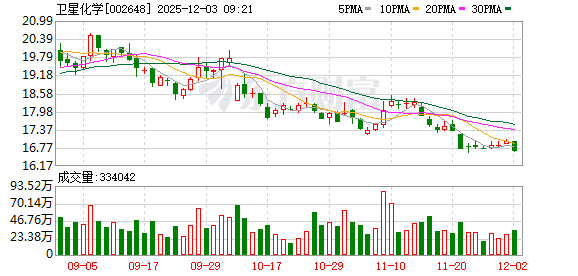
卫星化学:目前在C2、C3产业链上都有样品在客户测试,有新品推向市场
Mei Ri Jing Ji Xin Wen· 2025-12-03 06:33
Core Viewpoint - The company has made significant technological breakthroughs in high-end new materials such as α-olefins, POE (polyolefin elastomers), and metallocene polyethylene, and is actively engaging with downstream key customers for sample certification [2]. Group 1 - The company aims to become a world-class chemical new materials technology company, focusing on "management excellence" and "technological leadership" [2]. - The company is leveraging its advantages in the industrial chain to control core technologies and innovate processes, providing differentiated products tailored to customer needs [2]. - Currently, the company has samples being tested by customers in the C2 and C3 industrial chains, with new products being introduced to the market [2].

超500亿元大项目建设进度超三成
Nan Fang Du Shi Bao· 2025-11-13 23:08
Core Insights - The China National Offshore Oil Corporation (CNOOC) and Shell's Huizhou Phase III Ethylene Project has made significant progress, with a total investment of 12.52 billion yuan completed by the end of October, representing 34.22% of the total project progress [1][3] - The total investment for the Huizhou Phase III Ethylene Project is approximately 48 billion yuan, which will enhance the ethylene production capacity to 3.8 million tons per year, solidifying its position as the largest single ethylene plant in China [2][3] - The project integrates with existing Phase I and II facilities, improving energy efficiency and extending the product value chain, while also addressing the domestic demand for high-end chemical products [2][4] Project Overview - The Huizhou Phase III Ethylene Project includes the construction of 16 chemical units and supporting infrastructure, with a design capacity of 1.6 million tons per year of ethylene [2] - The project is expected to provide over 5 million tons of chemical products annually, including various high-end chemicals, thereby filling the domestic market gap [2] - The project aims to achieve a 20% reduction in carbon dioxide emissions through optimized project scope and electrification of large compressor units, supporting China's dual carbon strategy [2] Construction Progress - Since the final investment decision in November last year, the construction of the project has been progressing steadily, with over 5,000 workers and more than 480 construction machines on-site [3] - The project management emphasizes collaboration and overcoming challenges to ensure timely completion of key construction phases [3] - CNOOC and Shell have invested over 100 billion yuan in Huizhou over the past 24 years, contributing to the development of a global petrochemical industry hub [3] Market Impact - As a leading enterprise in the Daya Bay petrochemical zone, CNOOC and Shell's operations significantly influence the upstream and downstream industries [4] - More than 80% of the products are supplied to the Guangdong-Hong Kong-Macao Greater Bay Area, with a focus on diverse applications across various sectors [4]


石化龙头新材料转型有望深化,石化ETF(159731)长期受益于政策支持
Mei Ri Jing Ji Xin Wen· 2025-10-27 05:35
Core Viewpoint - The China Petroleum and Chemical Industry Index experienced a rise of approximately 1.2% on October 27, with most constituent stocks increasing, indicating a positive trend in the petrochemical sector [1]. Group 1: Market Performance - The index saw significant gains, with Tongcheng New Materials leading the rise by over 6%, followed by companies like Kaisa Bio, Salt Lake Co., and Zhongfu Shenying [1]. - The Petrochemical ETF (159731) followed the upward trend of the index, highlighting the value in this sector [1]. Group 2: Industry Developments - According to Everbright Securities, leading petrochemical companies in China, such as China National Petroleum, Sinopec, and Hengli Petrochemical, are making substantial advancements in new materials research and development, particularly in areas like metallocene polyethylene, carbon fiber, and high-end membrane materials [1]. - The ongoing policy support for the transformation of the petrochemical industry towards high-end materials is expected to deepen the new materials transition for leading companies, enhancing their competitive edge in the industry [1]. Group 3: ETF and Sector Composition - The Petrochemical ETF (159731) and its linked funds (017855/017856) closely track the China Petroleum and Chemical Industry Index, with the basic chemical industry accounting for 61.93% and the oil and petrochemical industry for 30.84% of the sector distribution [1]. - The top ten weighted stocks in the index include Wanhua Chemical, China National Petroleum, Salt Lake Co., Sinopec, CNOOC, Juhua Co., Zangge Mining, Jinhai Technology, Hualu Hengsheng, and Baofeng Energy, collectively representing 55.12% of the index [1].
帮主郑重:四筛卫星化学!业绩V型反转背后,化工龙头藏着啥玄机?
Sou Hu Cai Jing· 2025-10-27 03:24
Core Viewpoint - Satellite Chemical has shown a contradictory performance in its recent quarterly report, with a 38.21% year-on-year decline in profit for Q3, yet a positive growth in net profit for the first three quarters, alongside a 16.28% increase in operating cash flow and a reduction in debt ratio [1]. Valuation Summary - The current stock price of Satellite Chemical is around 18, with a PE ratio of 9.78, significantly lower than the chemical industry average of 15. The PB ratio stands at 2.06, indicating a substantial safety margin. However, the cyclical nature of the chemical industry raises concerns about whether the company’s performance has truly bottomed out [3]. Fundamental Analysis - The company is experiencing short-term pressure but has strong long-term fundamentals, characterized by its "light hydrocarbon integration" advantage, which allows it to use ethane and propane as raw materials, reducing costs by 20%-30% compared to traditional methods. This competitive edge has helped maintain profitability amid falling chemical prices. Additionally, the company is transitioning to high-end products, being the only domestic producer of metallocene polyethylene, which commands a premium of over 30% [3][4]. Market Trends - Satellite Chemical is positioned at two significant market trends: the growth of renewable energy, particularly with its POE films used in N-type photovoltaic cells, and domestic substitution, as high-end materials like metallocene polyethylene and POE previously relied on 30% imports. The company stands to benefit from a substantial market space supported by policy initiatives [4]. Funding Signals - There is a mixed signal regarding funding, with state-owned funds like social security and pension funds increasing their holdings, indicating a long-term value outlook. Conversely, northbound funds and some public offerings are withdrawing, likely due to concerns over Q3 performance and cyclical uncertainties. This divergence suggests a potential for stock price volatility [4]. Strategic Recommendations - For aggressive investors, if the stock price breaks through the key level of 20 with increased volume, it may be worth a small position, but with a stop-loss below 18. For conservative and long-term investors, it is advisable to wait for a price correction to the 16-17 range or clear signs of product price increases and high-end project launches before gradually entering the market [4][5]. Overall Assessment - Satellite Chemical is likened to a long-distance runner with strong fundamentals in low-cost production and high-end transformation, facing challenges from cyclical downturns. Long-term prospects are supported by domestic substitution and renewable energy demand, while short-term survival through the current cycle is crucial [5].

聚乙烯行业遭受三重挤压
Zhong Guo Hua Gong Bao· 2025-10-15 03:05
Core Viewpoint - The polyethylene industry in China is experiencing significant challenges, including price pressure, intensified competition, and squeezed profit margins, despite the growth in production capacity [1][2][3] Group 1: Price Pressure and Market Dynamics - The polyethylene market has not performed as expected this year, with the traditional peak season ("Golden September") failing to boost prices, leading to a general decline in price levels [1] - For instance, the average price of linear low-density polyethylene (LLDPE) film in North China dropped by 13.40% year-on-year in September, with prices decreasing by over 1,000 yuan per ton [1] Group 2: Capacity Growth and Industry Structure - China's polyethylene capacity has seen rapid development, increasing from 2.893 million tons in 2000 to 37.428 million tons by August 2025, significantly improving the self-sufficiency rate [2] - The emergence of large private integrated refining projects and the maturity of coal-to-olefins technology have diversified supply sources, with a compound annual growth rate of over 10% in capacity over the past five years [2] - By 2026, the total polyethylene capacity in China is expected to exceed 45 million tons, with 9.55 million tons of capacity under construction [2] Group 3: Structural Challenges and Future Directions - The industry faces significant structural contradictions, including severe low-end homogenization and insufficient high-end products, which hinder healthy development [2] - More than half of the newly added capacity in recent years has been concentrated in full-density and LLDPE facilities, severely squeezing overall profit margins [2] - High-end polyethylene products remain heavily reliant on imports, indicating a lack of domestic R&D and production capabilities in this area [2] Group 4: Strategic Recommendations - The polyethylene industry should shift focus from scale expansion to quality improvement, seeking breakthroughs in high-end products and building a more resilient industrial chain [3] - Emphasis should be placed on high-end and differentiated development, with increased investment in R&D and production of high-value-added products such as high-strength films and lithium battery separator materials [3] - The industry is expected to accelerate the construction of a new development pattern characterized by green, intelligent, and high-end growth amid ongoing adjustments [3]
《石化化工行业稳增长工作方案》出台,高端化转型、产业升级有望加速:石油化工行业周报第422期(20250922—20250928)-20250928
EBSCN· 2025-09-28 10:34
Investment Rating - The report maintains an "Overweight" rating for the petrochemical industry [5] Core Viewpoints - The "Petrochemical Industry Steady Growth Work Plan" has been released, aiming to promote technological innovation and transformation upgrades in the industry [1] - The plan addresses challenges such as intensified competition in the basic organic raw material market, insufficient supply of high-end fine chemicals, slowing domestic demand growth, and increasing external uncertainties [1] - Key measures include strengthening industrial technological innovation, expanding effective investment, stimulating market demand, fostering high-quality growth engines, and enhancing international cooperation [1][2] - The report emphasizes that industry leaders are expected to benefit from the transformation and upgrading efforts, with a focus on controlling new refining capacity and supporting the renovation of outdated facilities [3] Summary by Sections Section 1: Industry Growth and Transformation - The plan supports the development of key industries such as integrated circuits, new energy, and medical equipment, focusing on high-end chemical products [2] - Major breakthroughs have been achieved by leading companies like China National Petroleum Corporation and Sinopec in areas such as metallocene polyethylene and carbon fiber [2] Section 2: Industry Stability and Leader Benefits - The report highlights that the petrochemical industry is expected to achieve stable growth through transformation, with industry leaders likely to benefit from controlled capacity additions and accelerated upgrades of outdated facilities [3] - The plan aims to prevent overcapacity risks in the coal-to-methanol sector while promoting the modernization of coal chemical projects [3] Section 3: Investment Recommendations - The report suggests a positive outlook for major oil companies and oil service sectors, recommending attention to companies like China National Petroleum Corporation, Sinopec, and CNOOC [4] - It also highlights the potential for improved profitability in refining, coal chemical, and ethylene sectors [4]
石化和炼油行业反内卷,对化工行业影响几何?
2025-08-20 14:49
Summary of Key Points from the Conference Call Industry Overview - The petrochemical industry is facing challenges such as declining product prices, intense competition, and anti-dumping lawsuits, prompting the government to implement measures for capacity assessment, elimination of redundant facilities, and technological upgrades to promote energy conservation and carbon reduction [1][2][3] Core Insights and Arguments - The petrochemical industry's profits have been declining, with total revenue projected at 14.6 trillion yuan in 2024, but profits falling below 1 trillion yuan, continuing a downward trend of 8.8% in 2025 [2][25] - A capacity warning report identified 14 high-risk products, including refining, propylene, and PVC, and 10 products with relatively high risk, such as soda ash and ethylene glycol, indicating structural overcapacity issues [3][4] - Private enterprises are better positioned for transformation in the petrochemical sector due to advanced technology and willingness to invest in energy-saving modifications, while state-owned enterprises face greater pressure to upgrade outdated facilities [5][10] - New capacity additions before the carbon peak include an increase of 40 million tons in primary refining capacity, which is aligned with advanced technology and will not lead to overcapacity [6][10] - The development of the petrochemical industry chain relies heavily on policy guidance and downstream market demand, with emerging markets like pharmaceuticals and renewable energy driving growth in biodegradable materials and photovoltaic materials [10][12] Additional Important Content - The petrochemical industry is experiencing structural overcapacity, particularly in low-end bulk products, while mid-to-high-end products remain scarce and reliant on imports [7][8] - The need for upgrading old facilities is critical, especially in traditional refining and caustic soda plants, many of which are over 20 years old [9] - The government is encouraging the elimination of outdated capacity and extending the industrial chain into new materials, with a focus on market-driven development rather than strict regulatory measures [17][27] - The petrochemical sector's future planning must balance specific development directions with market demand to avoid misleading the market and causing overcapacity [18] - The overall profitability of the petrochemical industry is under pressure, with a reported profit decline of 2.3% in the first half of the year and an 8.8% decline the previous year [25] Conclusion - The petrochemical industry is at a critical juncture, facing both challenges and opportunities for transformation. The emphasis on technological upgrades, market responsiveness, and policy support will be essential for navigating the current landscape and achieving sustainable growth.