茉莉花香拿铁

Search documents
瑞幸“9.9元”咖啡,越来越难喝到了
3 6 Ke· 2025-12-04 10:21
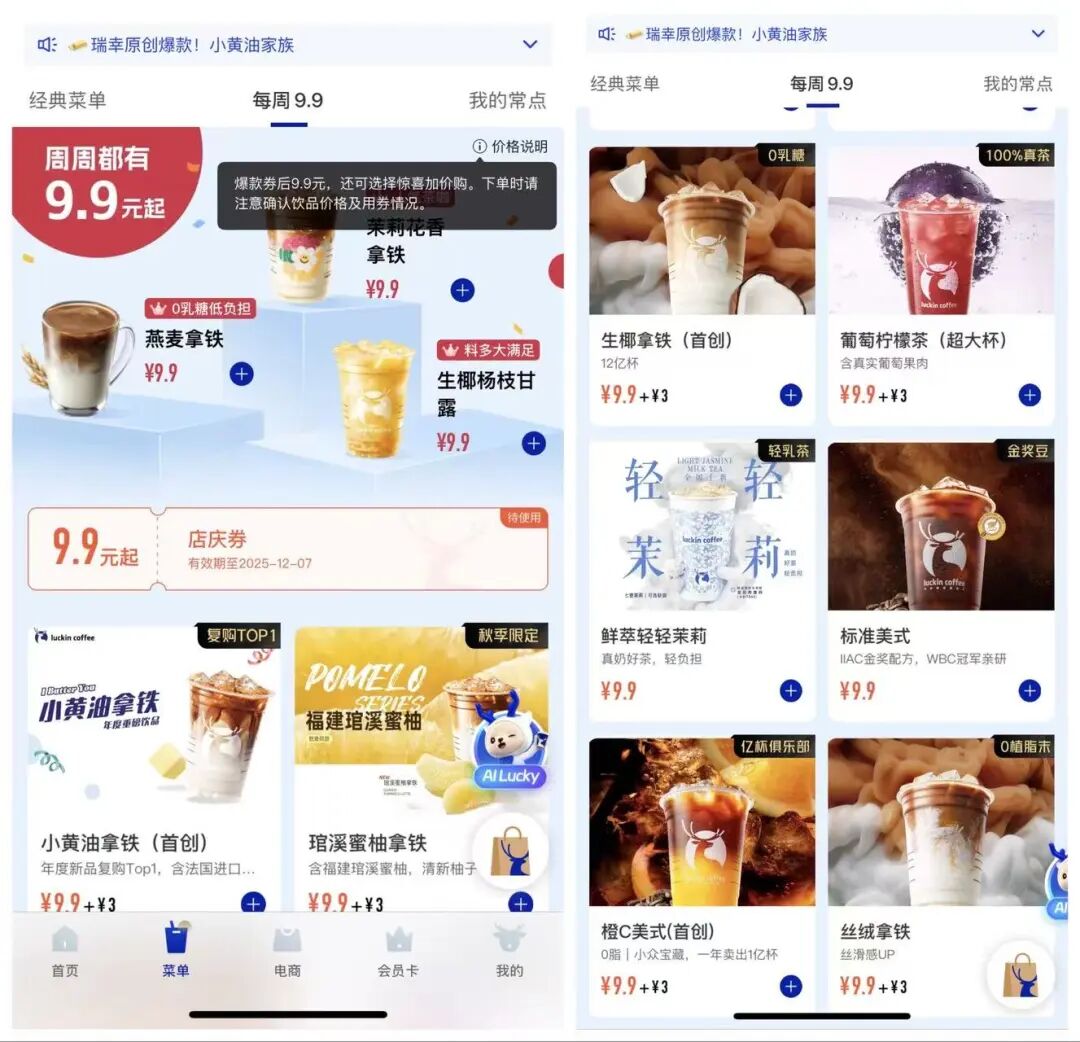
Core Viewpoint - Luckin Coffee's "weekly 9.9 yuan" promotion has become increasingly difficult to access, raising questions about its authenticity as the offer has been gradually reduced from a wide selection of drinks to only a few options, with additional costs now required for many items [1][2][4] Group 1: Promotion Changes - The "weekly 9.9 yuan" promotion started in the first half of 2023, initially allowing all drinks to be purchased at this price, but has since limited the offer to a few specific drinks, with many now requiring an additional 3 yuan [1][5] - Customers have expressed frustration over the promotion's diminishing value, feeling misled by the marketing tactics employed by Luckin Coffee [2][5] Group 2: Customer Experience and Legal Aspects - Legal experts indicate that while the small print disclosures may fulfill legal obligations, the marketing strategy may still be seen as misleading and could damage consumer trust [5] - The promotion's initial success was linked to a competitive pricing strategy aimed at increasing brand recognition and market share, but the recent changes may alienate some customers [9] Group 3: Financial Performance - In Q3 2023, Luckin Coffee reported a significant increase in monthly active customers, reaching 58.48 million, and a net revenue growth of 84.9% year-on-year, totaling 7.2 billion yuan [6] - However, the company's operating profit margin has decreased significantly, dropping from 18.9% to 3% in Q4 2023, and resulting in a loss of 65.11 million yuan in Q1 2024 [7] Group 4: Future Strategies - Luckin Coffee is expected to shift its promotional strategies towards more flexible methods, such as member-exclusive offers and limited-time discounts, as the low-price strategy becomes less sustainable [13] - The company is also exploring international expansion, having entered markets like Singapore and Malaysia, and is considering a return to the U.S. stock market [11][13]


瑞幸咖啡三季度营收同比增超50%!门店直逼3万家
Nan Fang Nong Cun Bao· 2025-11-19 12:05
Core Viewpoint - Luckin Coffee reported a significant revenue growth of 50.2% year-on-year for Q3 2025, reaching RMB 15.29 billion, while the number of stores approached 30,000 [2][9][6]. Revenue Performance - The revenue for Q3 2025 was RMB 15.29 billion, a 50.2% increase compared to the same quarter in 2024 [2][10]. - The total revenue for the first three quarters of 2025 reached RMB 36.51 billion, achieving 83.5% of the full-year target of RMB 43.7 billion for 2024 [11][12]. Store Expansion - As of the end of Q3 2025, the total number of stores reached 29,214, with a net increase of 3,008 stores from the previous quarter [6][14]. - The expansion included 2,979 new stores in mainland China and additional stores in Singapore, Malaysia, and the United States [15]. Revenue Structure - Revenue from self-operated stores was RMB 11.08 billion, a year-on-year increase of 47.7%, while revenue from partnership stores was RMB 3.80 billion, up 62.3% [19][20]. - The revenue from fresh-brewed beverages was RMB 10.63 billion, reflecting a 47.5% increase year-on-year [21]. Profitability Challenges - Despite high revenue growth, net profit decreased to RMB 1.28 billion, down 2.7% from RMB 1.31 billion in the same quarter of 2024, resulting in a net profit margin decline from 12.9% to 8.4% [3][24]. - The increase in delivery costs, which surged by 211.4% to RMB 28.89 billion, significantly impacted profitability [35][34]. Market Dynamics - The competitive landscape in the delivery market, driven by aggressive subsidies from platforms like JD and Meituan, has intensified, affecting profit margins [26][39]. - CEO Guo Jinyi noted that while delivery is a key growth driver, it is not the optimal solution for the coffee industry, emphasizing that self-pickup remains central to long-term development [40][41]. Future Outlook - Luckin Coffee is considering a return to the U.S. capital market after exiting due to a financial scandal, with plans for a potential relisting being discussed [42][43]. - The company aims to focus on strategic execution and enhancing brand influence and market competitiveness [45].

从印尼椰岛到横州茉莉园区:解码瑞幸的“原产地集群”战略
Feng Huang Wang Cai Jing· 2025-09-04 13:41
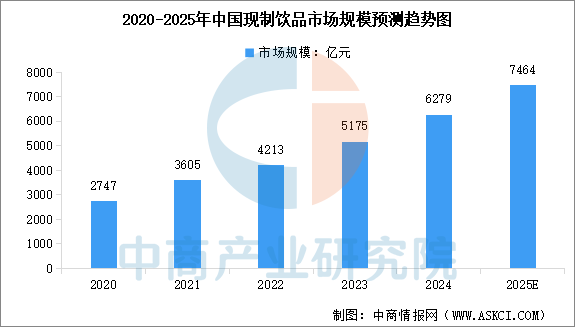
Group 1 - The core narrative highlights how the Norwegian salmon industry transformed Japanese eating habits through a robust supply chain, illustrating the power of supply chain capabilities in shaping consumer preferences [1][4] - The current beverage industry is experiencing a similar trend, where companies like Luckin Coffee are redefining consumer expectations and habits through stable, high-quality, and low-cost raw material supply [2][3] Group 2 - The Chinese ready-to-drink beverage market is projected to reach a scale of 627.9 billion yuan in 2024, with a compound annual growth rate of 23% over the past five years [5] - Intense competition has led to a price war, with brands facing challenges due to product innovation stagnation and rising consumer demands for quality and health [7][8] Group 3 - Luckin Coffee has established a global supply chain strategy, creating an "origin cluster" that ensures quality and stable supply of raw materials from regions like Brazil, Ethiopia, and Indonesia [8][14] - The company has secured significant procurement agreements, including a five-year contract for 240,000 tons of coffee from Brazil, positioning itself as a leader in the domestic coffee import market [15] Group 4 - Luckin Coffee's "Origin Festival" campaign emphasizes its supply chain advantages, allowing it to define quality and lead market demand, creating a competitive edge that is difficult for other brands to replicate [11][12] - The company's supply chain strategy includes a positive feedback loop that enhances cost control and market expansion, solidifying its market position [13] Group 5 - The competition in the beverage industry is shifting from merely discovering new ingredients to controlling the supply chain, with companies needing to build efficient and sustainable supply systems to maintain a competitive advantage [26][27] - Luckin Coffee's extensive supply chain network, which spans global agricultural sources, is its true competitive moat, enabling it to navigate market challenges effectively [28][29]
瑞幸加码全球原产地布局 原产地集群初具规模
Xin Jing Bao· 2025-09-02 09:20
Group 1 - The core brand slogan of Luckin Coffee is "Drink from the Origin," emphasizing the company's focus on strengthening its upstream supply chain for core products [1] - Luckin Coffee has established a global sourcing network for high-quality raw materials, including Arabica coffee beans, coconuts, and jasmine flowers, with origins in Brazil, Ethiopia, Indonesia, and Guangxi [1][2] - The company initiated a "Global Bean Sourcing Program" in 2023 to ensure the quality of coffee beans by visiting major coffee-producing regions [1] Group 2 - In March 2025, Luckin Coffee plans to procure approximately 1 million tons of high-standard Indonesian coconuts over the next five years to support its popular coconut latte series [2] - Luckin Coffee's procurement of Brazilian coffee beans accounts for 60% of Brazil's total coffee exports to China, indicating a significant market presence [2] - The company has launched the "Drink from the Origin Festival" on September 1, featuring a product lineup that includes new offerings like Akesu Apple Latte and popular drinks such as Coconut Latte and Yirgacheffe Americano [3]
瑞幸加码全球原产地布局,原产地集群初具规模
Bei Ke Cai Jing· 2025-09-01 14:12
Core Insights - Luckin Coffee has launched the "Drink Original Origin Festival," introducing a product matrix focused on original origin ingredients, including new offerings like Aksu Apple Latte and popular drinks such as Coconut Latte and Yirgacheffe Americano [1] - The brand slogan "Drink Original Origin" reflects Luckin's strategy to strengthen its upstream supply chain for core products, establishing a global network of original origin sources [1] Group 1 - Luckin Coffee has developed original origin clusters in Brazil and Ethiopia for coffee, Indonesia for coconuts, and Guangxi for jasmine flowers, securing high-quality raw materials like Arabica coffee beans and coconuts [1][2] - The company initiated a "Global Bean Sourcing Program" in 2023 to ensure the quality of coffee beans by visiting key coffee-producing regions, including Panama, Ethiopia, Indonesia, Yunnan in China, and Brazil [1] - In May 2023, Luckin established an office in Ethiopia, and by November 2024, it signed a five-year memorandum for the procurement of 240,000 tons of coffee beans in Brazil, along with setting up local offices and support centers [1] Group 2 - In non-coffee raw material sourcing, Luckin plans to procure approximately 1 million tons of high-standard Indonesian coconuts over the next five years, enhancing its Coconut Latte product line [2] - The company has created a dedicated jasmine flower production area in Guangxi, overseeing the quality control of jasmine tea from cultivation to harvesting [2] - Luckin's coffee bean procurement from Brazil accounts for 60% of Brazil's total coffee exports to China, and it is a major consumer of lemons from Anju, Sichuan, leading the industry in consumption scale [2]
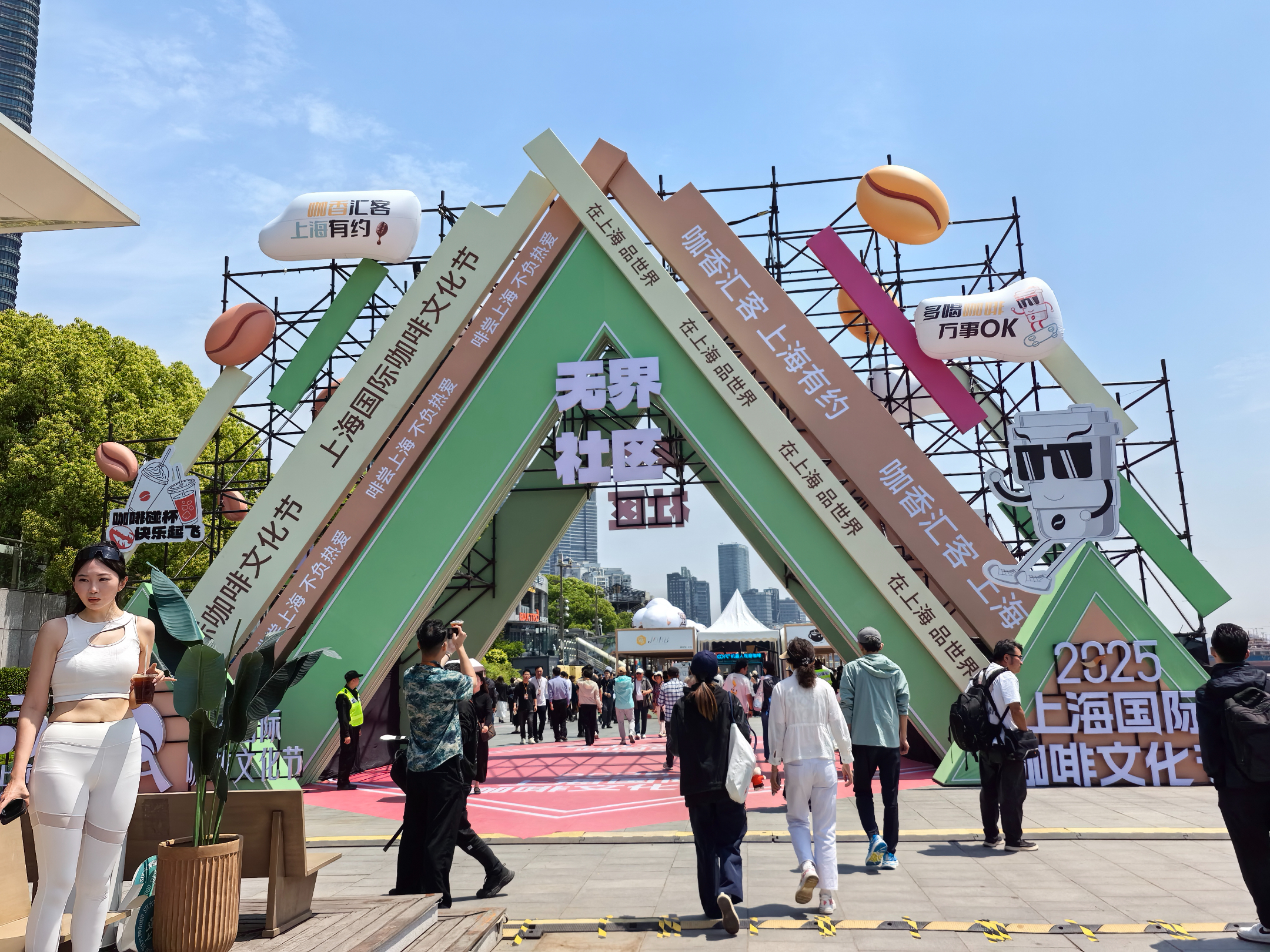
双线联动、亿元补贴,上海国际咖啡文化节点燃节日消费“新引擎”
Guo Ji Jin Rong Bao· 2025-04-30 08:42
Group 1 - The Shanghai International Coffee Culture Festival 2025 opened on April 30, themed "Coffee Aroma Gathering, Shanghai Invitation," as part of the 6th Shanghai "Five-Five Shopping Festival" [1] - The event focuses on "coffee + cultural tourism and commerce," promoting consumption and internationalization, engaging multiple market entities across 16 districts and the Lingang New Area [1][3] - Shanghai has 9,115 coffee shops, with the coffee industry in China expected to reach a scale of 313.3 billion yuan in 2024, reflecting an 18.1% growth rate from the previous year [3][5] Group 2 - In 2024, Shanghai's coffee consumption data shows 32.85 million coffee delivery orders, with a diverse range of products reflecting both traditional flavors and urban characteristics [5] - Yunnan coffee has seen significant growth, with transaction volume on platforms like Taobao and Tmall exceeding 417 million yuan in 2024, a 17.3% increase, and is projected to surpass 500 million yuan in 2025 [6][8] - The festival features over 350 booths from quality coffee brands, integrating various activities such as performances, sports, cultural experiences, and food, creating a new consumption scene [9][14] Group 3 - The festival promotes cross-industry collaboration, integrating coffee with culture, sports, and public welfare, enhancing the cultural depth of coffee in Shanghai [31][36] - Major platforms are launching substantial subsidies and promotional activities during the coffee festival, including limited-time offers and special discounts to stimulate consumer engagement [26][28] - The event has evolved from an industry event to a city IP, showcasing Shanghai's coffee culture and its integration with creativity, art, and fashion, contributing to economic growth [38]

9.9元咖啡消失了
投资界· 2025-03-13 06:54
以下文章来源于图数室 ,作者图数室 新浪新闻出品《图数室》栏目。 关注我们,用数据读懂热点。 咖啡豆 涨幅超黄金。 作者 | 图数室 来源 | 图数室 (ID: sina-tushushi ) 2025年刚拉开序幕,国际咖啡市场便迎来了一波迅猛的价格飙升。2024年,美国ICE 咖啡期货年内累计涨幅约为70%,甚至超过黄金。 咖啡豆价格的疯涨引发了广泛关注,咖啡的香气依旧浓郁,但价格的苦涩却愈发明显。 咖啡馆的价目表悄然更新,九块九的咖啡曾是打工人的日常标配,如今却显得岌岌可 危。 图数室 . 消费者们发现,手中的那杯咖啡正变得越来越"昂贵"。 咖啡豆价格为何疯涨?涨价的咖啡豆真的会重塑咖啡市场吗? 01、咖啡豆涨幅超过黄金 2025年刚拉开序幕,国际咖啡市场便迎来了一波迅猛的价格飙升。咖啡的香气依旧浓 郁,但价格的苦涩却愈发明显。 咖啡豆涨价在去年就开始了。 2024年以来,咖啡豆价格一路高走——5月,交割的阿拉比卡咖啡豆期货价格在近期曾 出现显著上涨,一周内飙升12.5%,这是自2021年7月以来最大的当周涨幅,收盘价达 到每磅2.12美元。11月25日,纽约市场上阿拉比卡咖啡期货价格上涨1.54%,达到 ...
以后不会再有9.9元咖啡了
虎嗅APP· 2025-03-11 13:37
Core Viewpoint - The international coffee market is experiencing a significant price surge, with coffee bean prices increasing dramatically, surpassing even gold in percentage growth, leading to concerns about the affordability of coffee for consumers [2][6][8]. Price Surge in Coffee Beans - In 2024, coffee bean prices have risen sharply, with the price of Arabica coffee futures reaching $3.0995 per pound, marking a 70% increase for the year [6][8]. - The C-type coffee futures saw a nearly 90% increase, reaching a high of 429.95 cents per pound, the highest since 1972 [6][8]. Factors Influencing Coffee Prices - The primary driver of the price increase is extreme weather conditions affecting major coffee-producing regions, particularly droughts in Brazil and Vietnam, leading to a significant drop in coffee production [8][9]. - The International Coffee Organization predicts a supply gap of 8.5 million bags for 2025-2026 due to these production challenges, while global coffee market demand continues to grow at a compound annual growth rate (CAGR) of approximately 6% [8][9]. Impact on Coffee Retail Prices - Coffee retail prices are rising, with examples from various brands showing significant price increases for popular coffee drinks [10][12]. - In China, the price of popular coffee drinks has been particularly sensitive, with many consumers accustomed to a price point around 9.9 yuan [10][12]. Cost Structure of Coffee - Despite the rising cost of coffee beans, they constitute a small portion of the overall cost of coffee drinks, with rent and labor being more significant factors [12][19]. - For instance, the cost of coffee beans accounts for less than 4% of the total cost of a cup of coffee at Luckin Coffee, while rent and labor costs are much higher [12][19]. Competitive Landscape - The coffee market is facing intense competition, with brands like Luckin Coffee and Starbucks adjusting their pricing strategies in response to rising costs and competitive pressures [20][21]. - The number of new coffee shop openings has decreased significantly, indicating a challenging environment for coffee retailers [20].