
蛋白饮品

Search documents
第一创业晨会纪要-20260227
First Capital Securities· 2026-02-27 02:55
Group 1: Semiconductor Industry - Resonac, a major Japanese semiconductor materials company, has raised the prices of copper-clad laminates (CCL) and adhesive films by over 30% due to ongoing shortages and price increases of key raw materials like fiberglass cloth, epoxy resin, and copper foil [4] - The price increase is expected to impact high-end manufacturing segments such as HDI boards, IC substrates, and high-frequency PCBs, indicating a sustained high demand in the copper-clad laminate industry [4] - Domestic power semiconductor manufacturer, Xinjieneng, announced a price increase of at least 10% for its core MOSFET products, effective March 1, 2026, reflecting a broader trend of price hikes across the industry due to rising raw material costs and recovering downstream demand [4] Group 2: Consumer Sector - Oufu Egg Industry reported a 2025 revenue of 905 million yuan, a slight decrease of 0.13% year-on-year, but a significant net profit increase of 88.8% to 86.07 million yuan, driven by lower raw material egg prices and improved profit quality [6] - The company has enhanced its profitability by increasing the proportion of high-value-added products and optimizing procurement and pricing mechanisms, which has strengthened its resilience against egg price fluctuations [6] - Jinlongyu disclosed a 2025 revenue of 245.1 billion yuan, a year-on-year increase of 2.9%, with net profit rising by 26% to 3.15 billion yuan, attributed to improved profitability across all business segments following a decline in upstream raw material costs [7] - The kitchen food segment benefited from lower wheat and rice costs, while the feed raw materials and oil technology segments saw profit improvements due to strong demand in livestock and lower soybean costs from South America [7]
速递|CEO透露:星巴克也要为GLP-1布局了
GLP1减重宝典· 2026-02-04 09:57
Core Insights - The article discusses the impact of GLP-1 drugs on consumer behavior, particularly in the food and beverage industry, highlighting how these medications are reshaping eating patterns and preferences [4][6][9] Group 1: Industry Impact - The use of GLP-1 drugs for weight loss has nearly doubled in the past two years, with a higher penetration rate among women, indicating a significant shift in consumer behavior [6] - Approximately one in eight American adults is currently using GLP-1 medications for weight loss, diabetes, or other chronic disease management, which is influencing spending habits [6] - Consumers using GLP-1 drugs tend to reduce overall food expenditure and meal sizes, favoring high-nutrient products while decreasing consumption of high-calorie snacks [6][9] Group 2: Company Strategies - Starbucks is integrating protein products into its long-term menu, emphasizing the importance of protein in response to changing consumer preferences driven by GLP-1 usage [8] - The company is focusing on health and lifestyle platforms, particularly targeting the afternoon segment for reactivation, and is simplifying its menu by reducing complexity by about 25% [8] - Other chains, such as Dunkin and Subway, are also launching protein-focused products, indicating a broader industry consensus on the shift towards protein and smaller portion sizes [8][9] Group 3: Consumer Behavior - The trend indicates that GLP-1 does not lead to reduced eating but rather encourages smaller, more frequent meals through beverages and functional snacks, prompting companies to adapt their product offerings accordingly [9] - The restructuring of consumer eating habits suggests a need for food and beverage companies to pivot from traditional meal-centric narratives to lighter, more functional food options [9]



Starbucks(SBUX) - 2026 Q1 - Earnings Call Transcript
2026-01-28 14:02
Financial Data and Key Metrics Changes - In Q1 fiscal 2026, global revenue grew by 5% to $9.9 billion, with operating margins at 10.1% and EPS at $0.56, down 19% from the prior year [7][21][26] - North America revenue increased by 3% to $7.3 billion, with comparable store sales growth of 4% [7][22] - International segment revenue grew by 10% to $2.1 billion, with comparable store sales growth of 5% [16][24] Business Line Data and Key Metrics Changes - North America comparable store sales growth was driven by a 3% increase in transactions, with average ticket growing by 1% [22] - Starbucks Rewards' 90-day active members reached a record 35.5 million, with transactions from rewards members growing year-over-year for the first time in eight quarters [8][22] - The channel development segment reported a 19% increase in net revenues, driven by the Global Coffee Alliance and ready-to-drink business [24] Market Data and Key Metrics Changes - In the U.S., company-operated transaction comps grew year-over-year for the first time in eight quarters, with growth across all day parts [8] - China saw a 7% increase in comparable store sales, marking the third consecutive quarter of comp sales growth [16][24] - The company opened 79 net new international coffeehouses, with significant growth in markets like India and Latin America [17][18] Company Strategy and Development Direction - The company is focused on executing the "Back to Starbucks" plan, aiming for sustained growth and profitability [6][19] - Investments in technology and operational improvements are expected to enhance efficiency and customer experience [10][19] - The partnership with Boyu Capital aims to maximize Starbucks' potential in China, expanding into more cities and strengthening the brand [27][29] Management's Comments on Operating Environment and Future Outlook - Management expressed confidence in the turnaround strategy, noting that top-line growth is expected to lead to improved margins and earnings [6][19] - The company anticipates that strategic investments will take time to yield sustainable earnings growth [10][19] - Management highlighted the importance of maintaining customer engagement and brand relevance through innovation and marketing [15][19] Other Important Information - The company plans to open approximately 600-650 net new coffeehouses in fiscal 2026, with a focus on both U.S. and international markets [30][31] - The effective tax rate for Q1 was 26.8%, higher year-over-year due to lapping discrete tax items [25] - The company expects consolidated operating margins to grow slightly year-over-year, driven by improvements in the latter half of the fiscal year [31] Q&A Session Summary Question: North America traffic performance and Green Apron Service impact - Management noted that North America comp results were driven by transactions, with about 0.5 points from sales transfer due to store closures [36][37] Question: Additional cost opportunities - Management outlined a plan to track down $2 billion in costs over the next two years, focusing on procurement and operational efficiency [43][44] Question: Earnings guidance for fiscal 2026 - The higher end of earnings guidance is contingent on maintaining strong comp performance and effective execution of the Green Apron Service model [46][47] Question: Same-store sales momentum and service vs. innovation - Management emphasized that a strong operating foundation enhances the effectiveness of marketing and innovation efforts [66][69] Question: Afternoon execution opportunities - Management acknowledged the potential for innovation in the afternoon daypart and plans to enhance menu offerings to meet customer needs [55][59]
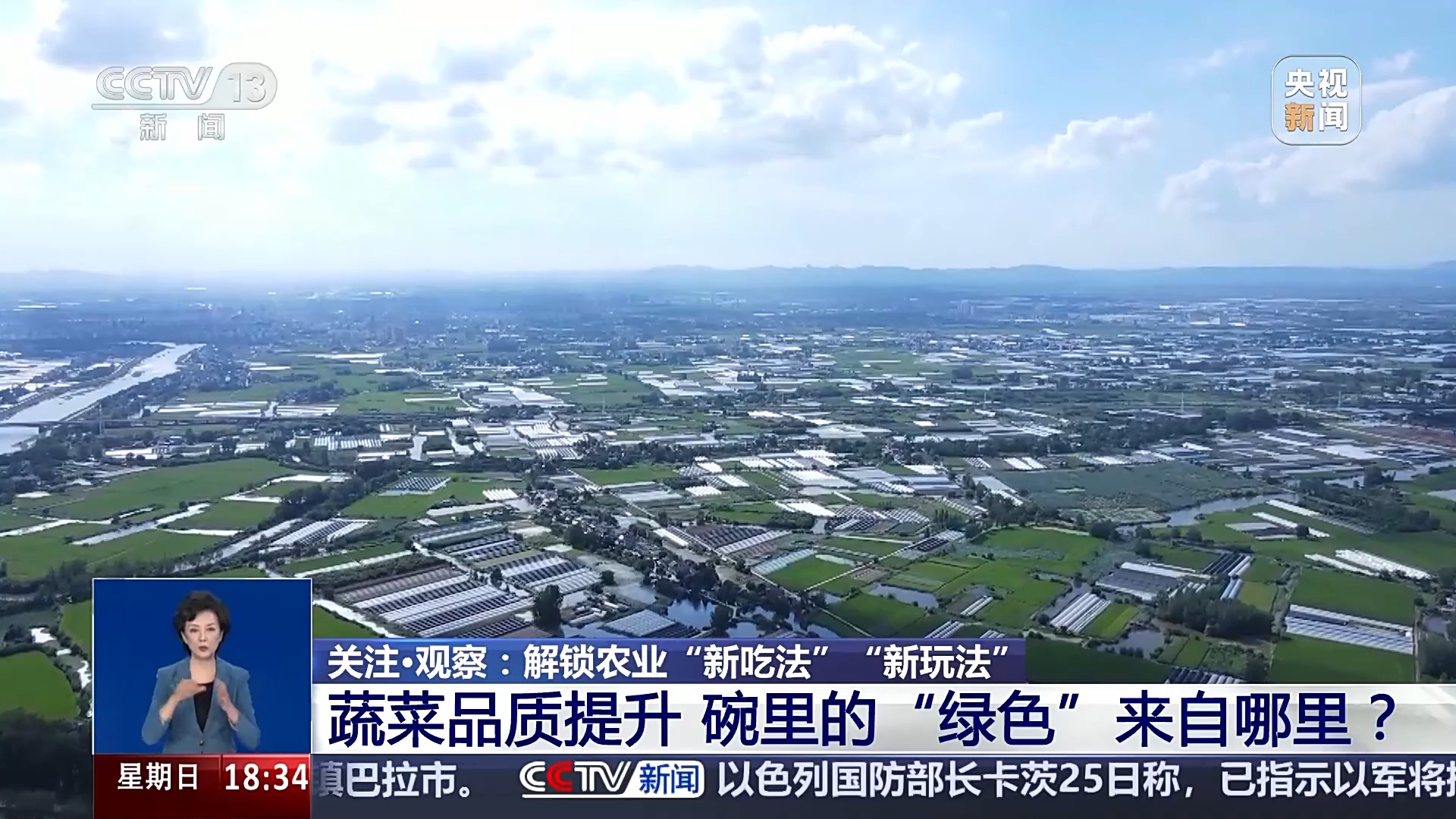
从实验室、生产线到千里沃野 解锁农业“新吃法”“新玩法”
Yang Shi Xin Wen Ke Hu Duan· 2025-10-27 00:21
Core Insights - The demand for "healthy eating" is rising among consumers, shifting from merely "sufficient" and "good" food to a focus on "nutritional balance" and quality [1][3] - The agricultural sector is responding to these new consumer demands by enhancing the quality and freshness of vegetables through technology and innovative practices [3][5] Vegetable Quality Improvement - Consumers are increasingly pursuing high-quality vegetables, with organic labels and traceability codes becoming standard on packaging [1] - In Anhui's He County, farmers are utilizing smart devices to monitor soil and light conditions, implementing preservation technologies to enhance vegetable freshness and adjust harvest timing [3] Growth of Green and Organic Products - Anhui's He County has significantly increased its supply of green and organic products, with a total of 132 certified products as of now [5] - The Ministry of Agriculture and Rural Affairs reported that during the 14th Five-Year Plan, 36,000 new green and organic products were certified, providing over 200 million tons of quality agricultural products annually [7] Whole Grain Food Development - Quinoa is gaining popularity as a key whole grain, with significant harvests in Qinghai's Ulan County, which is a major breeding base for quinoa [8][9] - The average yield of quinoa in Shanxi's Jingle County is expected to exceed 300 kg per mu, with the entire quinoa industry projected to generate over 530 million yuan in annual output value [9] Agricultural Processing Upgrades - The agricultural processing sector is evolving, with innovations such as freeze-dried porridge and various soybean products being developed [11][12] - Heilongjiang's Wudalianchi is a key soybean production area, hosting 20 processing enterprises that leverage the region's high-quality soybean resources [12] Rural Tourism and Agricultural Integration - Rural areas are transforming into experiential destinations, blending agricultural activities with tourism, as seen in Zhejiang and Jiangsu [16][18] - The Ministry of Agriculture has established 240 key leisure agriculture counties, with the leisure agriculture sector generating nearly 900 billion yuan in revenue last year [18]
走近生产线,一起解锁农业“新吃法”“新玩法”
Yang Shi Wang· 2025-10-26 19:13
Group 1: Consumer Demand and Agricultural Innovation - The demand for "fresh and healthy" food is rising, leading to higher quality expectations for vegetables and agricultural products [2][3] - In Anhui, farmers are utilizing smart devices to monitor conditions in greenhouses, enhancing the freshness and quality of vegetables [2] - The number of certified green, organic, and geographical indication products in Anhui has reached 132, reflecting a significant increase in supply [2] Group 2: Whole Grain Food Development - Quinoa is emerging as a key player in the whole grain market, with significant production in Qinghai, where ideal growing conditions exist [3] - The average yield of quinoa in Shanxi is expected to exceed 300 jin per mu, contributing to a projected annual output value of over 530 million yuan for the quinoa industry [3] - The development of other whole grains like oats and barley is also progressing, promoting better nutritional health for consumers [3] Group 3: Agricultural Processing Upgrades - The agricultural processing sector is evolving, showcasing innovative products such as freeze-dried porridge and various soybean products [4] - Heilongjiang's soybean industry benefits from its geographical advantages, with a concentration of 20 processing enterprises [4] - The diversification of food supply systems is being accelerated through continuous innovation in processing technologies [4] Group 4: Rural Tourism and Agricultural Experience - Rural areas are transforming into experiential "playgrounds," integrating agricultural activities with tourism [5][6] - In Zhejiang, the local tourism has attracted over 80,000 visitors, generating significant economic benefits through agricultural experiences [5] - The Ministry of Agriculture and Rural Affairs has established 240 key leisure agriculture counties, with leisure agriculture revenue nearing 900 billion yuan last year [6]