
铅矿

Search documents
飙涨155%!A股又一翻倍牛股诞生
21世纪经济报道· 2026-03-14 07:35
Core Viewpoint - The article discusses the recent developments and stock performance of Weiling Co., highlighting its significant price fluctuations and the impact of shareholder changes on its market position [1][3][24]. Group 1: Stock Performance and Market Position - Weiling Co. experienced a significant increase in stock price, with a year-to-date gain of 155.5% as of March 12, far exceeding the industry average of 20% [1]. - The stock faced a sharp decline, hitting the daily limit down after reaching a peak, indicating volatility in its market performance [1]. - The company is undergoing a control transfer, with its major shareholder Shanghai Lingyi signing an agreement to transfer 7.76% of its shares to Tibet Shannan Antimony Resources Co., Ltd. at a price of 15.21 yuan per share, totaling 308 million yuan [2][24]. Group 2: Shareholder Changes and Strategic Moves - The stock price fluctuations are primarily attributed to changes at the shareholder level, particularly the involvement of major players like Ji Xingye, who has a history of significant market activity [3][6]. - Ji Xingye's company, Xingye Silver Tin, has seen a remarkable stock price increase of over 500% in 2025, positioning it within the A-share market's top tier [7][18]. - The strategic acquisition of Weiling Co. by Xingye Silver Tin is part of a broader plan to create a diversified capital platform, potentially leading to an "A+H" listing structure [24][28]. Group 3: Industry Context and Future Prospects - The article highlights the broader industry context, noting that the rising prices of silver and tin have made companies like Xingye Silver Tin attractive investment opportunities [15][18]. - Weiling Co. is diversifying its operations by expanding into multi-metal mining, which is seen as a necessary strategy for growth in a competitive market [25][28]. - The anticipated control transfer and potential H-share listing are expected to enhance Weiling Co.'s market position and operational efficiency, aligning with industry trends of consolidation and expansion [24][28].



被多国竞逐,中亚关键矿产家底有多厚?
Huan Qiu Shi Bao· 2026-02-26 06:47
Core Insights - The United States has signed an agreement with Uzbekistan to secure a more stable supply of critical mineral resources, highlighting the strategic importance of these resources in the global energy transition and technological revolution [1] Group 1: Strategic Importance of Critical Minerals - Critical minerals have evolved from mere industrial raw materials to key elements reshaping global industrial and geopolitical landscapes [1] - Central Asia is rich in various critical mineral resources, attracting global attention, with the region being described as "extremely wealthy" by former U.S. President Trump [2][3] Group 2: Mineral Resources in Central Asia - Central Asia has become a significant player in the global strategic resource production, with countries like Kazakhstan, Kyrgyzstan, and Uzbekistan holding substantial reserves of critical minerals [3] - Uzbekistan has identified over 30 types of mineral resources, ranking as the fifth-largest uranium supplier globally and the 11th in copper reserves [4] - Tajikistan's antimony production accounts for 10% of global supply, with the country producing approximately 21,000 tons in 2023 [2] Group 3: Challenges in Mineral Development - The mining sector is a crucial economic pillar for Kazakhstan and Uzbekistan, contributing approximately 17% and 8% to their GDP, respectively [5] - Central Asia faces challenges in mineral development, including outdated geological survey data and limited investment, which hinder resource exploitation [5][7] - The region's reliance on outdated power infrastructure and seasonal electricity shortages poses significant barriers to expanding mining operations [7] Group 4: Future Development Plans - Kazakhstan aims to modernize its mining sector, viewing critical mineral development as a priority, with plans for extensive geological exploration and investment in processing technologies [8][9] - Kyrgyzstan has approved a development plan for critical minerals, targeting an annual export increase to $1 billion by 2030 [9] - Uzbekistan plans to implement a $2.6 billion project for rare metal extraction and processing over the next three years [9]
【环时深度】被多国竞逐,中亚关键矿产家底有多厚?
Huan Qiu Shi Bao· 2026-02-25 22:55
Core Insights - The article discusses the strategic importance of critical mineral resources in Central Asia, highlighting the region's rich deposits and the geopolitical implications of their extraction and trade [1][10]. Group 1: Mineral Resources Overview - Tajikistan's antimony production accounts for 10% of global supply, with an estimated output of 21,000 tons in 2023, representing a quarter of the world's total [4]. - Central Asia is home to significant mineral reserves, with manganese, chromium, lead, zinc, titanium, aluminum, copper, and cobalt having substantial global shares [4]. - Kazakhstan is noted for having the largest chromium reserves globally, estimated at 230 million tons, and is the second-largest producer of chromium [5]. Group 2: Regional Developments - Uzbekistan is rapidly establishing itself as a regional mineral hub, identifying over 30 types of mineral resources, including lithium and molybdenum, and is the fifth-largest uranium supplier globally [6]. - Kazakhstan's geological surveys have revealed a new rare earth metal deposit estimated to exceed 20 million tons, potentially making it the third-largest in the world [5]. - Kyrgyzstan is gaining recognition for its lithium and antimony reserves, which are crucial for battery and electronic device manufacturing [7]. Group 3: Economic Impact and Challenges - The mining sector significantly contributes to the GDP of Kazakhstan (17%) and Uzbekistan (8%), reflecting the region's mining tradition and existing extraction conditions [8]. - Challenges include outdated geological data, limited investment, and a lack of local processing capabilities, which hinder the development of critical mineral resources [9][8]. - The region requires an estimated $20 billion investment by 2030 to upgrade infrastructure and integrate renewable energy for mining operations [9]. Group 4: Future Plans and Concerns - Kazakhstan aims to modernize its mining sector, with plans for extensive geological exploration and the introduction of advanced processing technologies [10]. - Kyrgyzstan's government has set a goal to increase critical mineral exports to $1 billion by 2030 and attract $700 million in foreign direct investment [11]. - Concerns exist regarding the potential for increased dependency on commodity exports and the associated socio-economic inequalities if investments remain focused solely on resource extraction [11].
WBMS:2025年11月全球精炼铅供应短缺1.15万吨
Wen Hua Cai Jing· 2026-01-22 02:26
Core Insights - The World Bureau of Metal Statistics (WBMS) reported a global refined lead supply shortage of 11,500 tons in November 2025, with production at 113,180 tons and consumption at 114,320 tons [1] - From January to November 2025, global refined lead production totaled 1,230,110 tons, while consumption reached 1,251,120 tons, resulting in a supply shortfall of 21,010 tons [1] - In November 2025, global lead mine production was recorded at 40,780 tons [1] - For the period of January to November 2025, global lead mine production amounted to 422,490 tons [1]
西藏天路:目前公司持有西藏天联矿业开发有限公司80%的股权
Zheng Quan Ri Bao· 2026-01-09 13:42
Group 1 - The company holds an 80% stake in Tibet Tianlian Mining Development Co., Ltd. [2] - The company possesses exploration rights for the Tongbula copper-molybdenum mine in Gongbujiangda County and the Pangganongba lead mine in Naqu County [2]

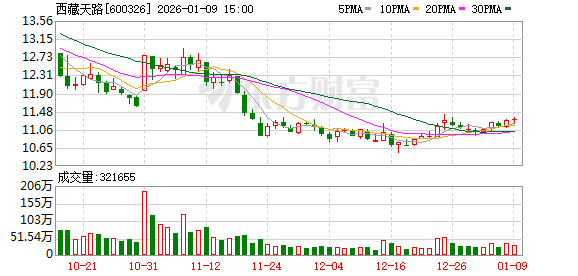
西藏天路:公司拥有工布江达县汤不拉铜钼矿及那曲县旁嘎弄巴铅矿的探矿权
Mei Ri Jing Ji Xin Wen· 2026-01-09 09:57
Group 1 - The company holds an 80% stake in Tibet Tianlian Mining Development Co., Ltd. [1] - The company possesses exploration rights for the Tongbula copper-molybdenum mine in Gongbu Jiangda County and the Pangganongba lead mine in Naqu County [1]
西部矿业股份有限公司关于全资子公司取得采矿许可证的公告
Shang Hai Zheng Quan Bao· 2025-12-18 19:14
Group 1 - The company’s wholly-owned subsidiary, Geermu West Mining Resources Development Co., Ltd., has recently obtained a mining license issued by the Qinghai Provincial Department of Natural Resources [1] - The mining license is valid from November 26, 2025, to November 25, 2044, covering an area of 9.3126 square kilometers [1] - The mining rights pertain to the Itwen Chahanxi C5 anomaly area, which contains iron, sulfur, copper, zinc, lead, and gold resources, with a total iron polymetallic resource of 20.07 million tons and an average grade of 31.59% iron [1] Group 2 - The acquisition of the mining license is a foundational step for the company to ensure sustainable development in the iron resource sector and will enhance its resource reserves for future integration and development [1] - The mine is expected to improve the company's risk resistance and market competitiveness, positively impacting its long-term development [1]

全球基本金属产量增减互现:基本金属中国产量、增速及全球占比
Sou Hu Cai Jing· 2025-12-15 11:36
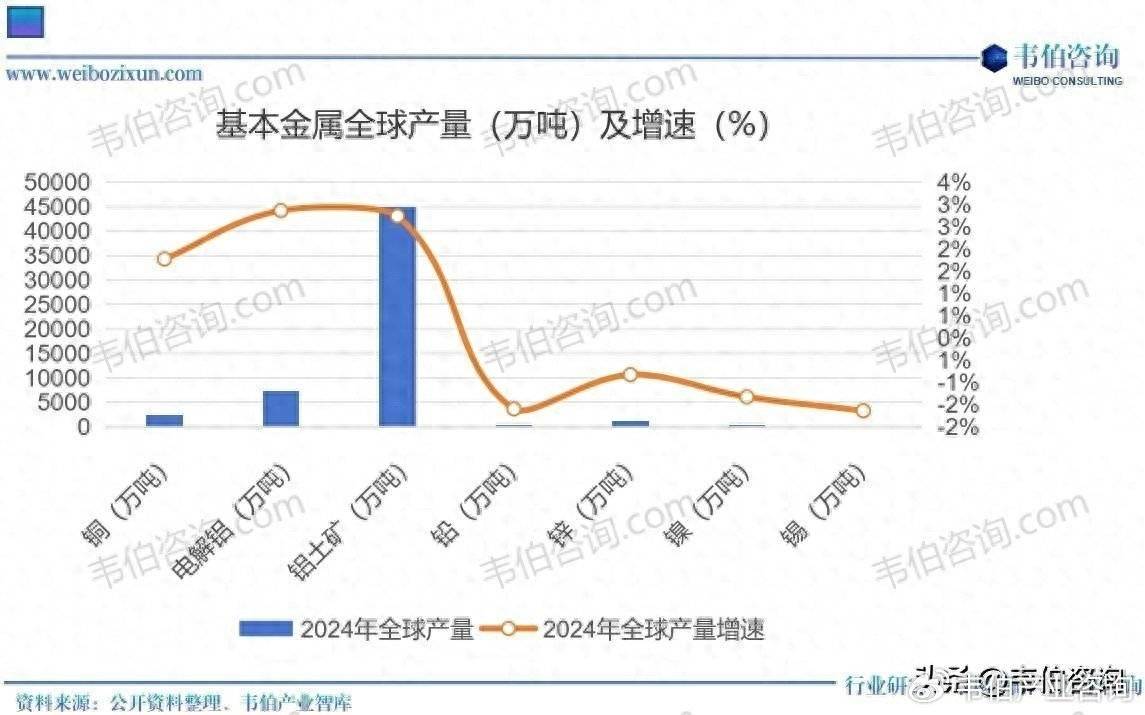
Group 1 - In 2024, global copper production is projected to reach 23 million tons, representing a year-on-year increase of 1.77%, primarily driven by contributions from the Democratic Republic of the Congo and Indonesia [1] - Global electrolytic aluminum production is expected to grow by 2.86% to 72 million tons in 2024, with China being the largest producer at 43 million tons, accounting for 59.72% of the total, an increase of 140,000 tons from 2023 [1] - Global lead ore production is forecasted to decline by 1.60% to 4.3 million tons in 2024, with China's lead ore production at 1.9 million tons, representing 44.19% of the global total [1] Group 2 - Zinc production is anticipated to continue its downward trend, decreasing by 0.83% to 12 million tons in 2024, with China contributing 33.33% of global zinc production [4] - Despite a general growth trend in global nickel production, it is expected to slightly decline by 1.33% to 3.7 million tons in 2024 due to the impact of low-cost nickel products from Indonesia, leading to production cuts in Australia and the Philippines [4] - Global tin production is projected to decrease by 1.64% to 300,000 tons in 2024, with major production concentrated in China, Indonesia, Peru, and Myanmar [4] Group 3 - China's copper, aluminum, lead, and zinc reserve-to-production ratios are significantly lower than the global average, with China's copper reserve-to-production ratio at approximately 22.78 years, compared to the global average of 42.61 years [7] - China's copper reserves account for only 4.18% of global reserves, totaling 41 million tons, with challenges including small ore bodies, low grades, and high extraction costs [7] - The aging of mines and declining ore grades are expected to impact China's copper production, which is projected to decrease by 1.1% to 1.8 million tons in 2024 [7]
2025年1-10月蒙古煤炭出口量小幅下降1.4%
Shang Wu Bu Wang Zhan· 2025-11-20 07:32
Group 1 - Mongolia's coal export volume for January to October 2025 reached 65 million tons, representing a year-on-year decrease of 1.4% [1] - Gasoline imports amounted to 678,400 tons, showing a year-on-year decline of 4.4%, while diesel imports increased by 9.8% to 1.432 million tons [1] - China remains the largest export market for Mongolia, with 100% of lead ore, iron ore, zinc concentrate, crude oil, and hard coal exports going to China [1] Group 2 - Copper concentrate and brown coal exports to China account for 99.9% of their respective totals, while cashmere exports have an 82.9% share [1] - Exports to China constitute 81.7% of Mongolia's total export value [1]
西部矿业超86亿元竞得安徽茶亭铜多金属矿勘察探矿权 资源版图再扩张
Zheng Quan Ri Bao Wang· 2025-10-24 13:38
Core Viewpoint - Western Mining has successfully acquired exploration rights for the Chating copper polymetallic mine, marking a significant step in strengthening its resource reserves and expanding its industry layout [1][2]. Group 1: Acquisition Details - Western Mining's subsidiary, Tibet Yulong Copper Co., Ltd., won the exploration rights for the Chating copper polymetallic mine in Anhui Province with a bid of 8.60893 billion yuan [1]. - The exploration rights cover various minerals, including copper, lead, zinc, gold, silver, and natural sulfur [1]. Group 2: Company Overview - Western Mining is a key mining enterprise in China's western region, with a diverse portfolio that includes copper, lead, zinc, iron, and other critical minerals [2]. - The company operates across the entire mineral industry chain, including mining, smelting, and trading of various metals, as well as rare and non-metallic products [2]. Group 3: Financial Performance - In the third quarter of 2025, Western Mining reported a revenue of 48.442 billion yuan, a year-on-year increase of 31.9%, and a net profit of 2.945 billion yuan, up 7.8% [3]. - The company experienced growth in mineral production, with copper output increasing by 1.32%, zinc by 19.92%, and lead by 21.02% compared to the previous year [3]. - As of the end of the third quarter, the company had a net cash flow from operating activities of 8.81 billion yuan and cash reserves of 7.256 billion yuan [3].