陶瓷基板

Search documents
国瓷材料(300285):高端陶瓷龙头,多元业务共驱成长
Guotou Securities· 2026-03-31 09:22
Investment Rating - The report assigns a "Buy-A" investment rating to the company with a target price of 46.8 yuan for the next 12 months [4][6]. Core Insights - The company is positioned as a leading player in high-end ceramics, benefiting from significant price disparities in yttrium oxide due to geopolitical factors, which have led to a surge in overseas prices [1][2]. - The demand for MLCC (Multi-Layer Ceramic Capacitors) is expected to grow steadily, driven by the development of consumer electronics and automotive electronics, with the company poised to capture market share through domestic substitution [2][3]. - The solid-state battery segment is anticipated to show long-term value, with the company’s precision ceramics and digital printing providing stable cash flow [3]. Summary by Sections 1. High-End Functional Ceramics - The company has been deeply engaged in high-end ceramics for 20 years, establishing a platform that opens up growth opportunities across various sectors [13]. 2. Dental Restoration - The tightening of China's export policies has highlighted the price advantages of yttrium oxide, which is essential for zirconia dental materials, leading to increased demand and market share for the company [19][21]. - The global dental restoration materials market is projected to grow from $22.89 billion in 2024 to $38.22 billion by 2032, with a compound annual growth rate (CAGR) of 6.62% [21][24]. 3. MLCC Market - The demand for MLCC is expected to rise, with the global market projected to reach 132.62 billion yuan by 2029, growing at an annual rate of 4.26% [2][3]. - The company’s market share in high-end MLCC ceramic powders is expected to increase significantly due to domestic substitution trends [2][3]. 4. Policy-Driven Upgrades - Upgrades in automotive emission standards are expected to accelerate domestic substitution, providing further growth opportunities for the company [4]. 5. Diversified Business Collaboration - The company’s precision ceramics segment is projected to generate revenue of 351 million yuan in 2024, reflecting a year-on-year growth of 41.53%, while other materials will continue to provide reliable cash flow [3]. 6. Revenue and Profit Growth - The company’s net profit is expected to grow from 698 million yuan in 2025 to 1.408 billion yuan in 2027, with a significant increase in profit margins [4][9].

科翔股份(300903)深度报告:陶瓷材料应用奇点将至 HDI新秀有望率先受益
Xin Lang Cai Jing· 2026-02-14 04:41
Company Overview - 科翔股份 is a leading digital PCB enterprise with over 20 years of experience in the PCB industry, having established a strategic presence in five locations: Huizhou, Shenzhen, Jiujiang, Ganzhou, and Shangrao, with seven business divisions [1] - The company offers a one-stop full-category PCB supply capability, capable of large-scale production of double-sided boards, multi-layer boards, HDI boards, thick copper boards, and ceramic substrates [1] Financial Performance - In the first three quarters of 2025, the company achieved a revenue of 2.727 billion yuan, representing a year-on-year increase of 10.10%, while reporting a net loss attributable to shareholders of 120 million yuan [1] - The company forecasts a net loss attributable to shareholders of 170 to 230 million yuan for 2025, a significant reduction from a loss of 340 million yuan in the same period of 2024, primarily due to the ramp-up of production capacity at its Jiangxi factory and rising raw material prices [1] Industry Trends - The AI sector is identified as the largest growth driver for the PCB industry, with the global PCB market expected to reach a value of 78.562 billion USD by 2025, and a compound annual growth rate (CAGR) of 4.8% from 2025 to 2029 [1] - The server/storage segment is projected to account for 15% of the overall PCB market by 2025, with a CAGR of 11.6% from 2025 to 2029 [1] Technological Advancements - The evolution of AI servers is driving the widespread application of high-layer PCBs, with the number of layers in mainstream AI server multi-layer boards increasing from over 16 layers to 40 layers and above [2] - CoWoP (Chip-on-Wafer-on-PCB) technology is expected to exceed expectations, simplifying the connection structure between chips and PCBs, leading to reduced signal loss and improved heat dissipation [2] - Ceramic substrates are effectively addressing the thermal resistance challenges of high-end HDI and CoWoP packaging stability, offering superior thermal conductivity compared to traditional FR-4 materials [2][3] Capacity Expansion and Future Outlook - The company has made significant investments in capacity expansion since 2022, with total capacity exceeding 10 million square meters, and plans to gradually release new production lines in the second half of 2023 [3] - As production capacity ramps up, the company is expected to reach a performance inflection point in 2026, with profit margins for PCB products anticipated to recover to industry levels [3] - The company is focusing on high-performance ceramic substrate technology innovation, leveraging advanced materials and processes to meet the demands of high-power applications [4] - Forecasted net profits for the company from 2025 to 2027 are projected to be -200 million, 240 million, and 470 million yuan, respectively, with significant year-on-year growth rates [4]

科翔股份定增申请提交注册,2025年预亏收窄
Jing Ji Guan Cha Wang· 2026-02-12 07:24
Core Viewpoint - Company is actively pursuing financing, operational improvements, and strategic partnerships to enhance its market position in the high-end server PCB and ceramic substrate sectors, particularly in response to AI hardware demand [1][3]. Financing Progress - Company submitted a registration application for a private placement of shares on January 5, 2026, aiming to raise 287 million yuan, primarily for upgrading the PCB production line for high-end servers and supplementing working capital. The issue price is set at 13.87 yuan per share with a lock-up period of 6 months [1]. Performance Outlook - On January 30, 2026, the company announced a profit forecast for 2025, expecting a net loss attributable to shareholders of between 230 million yuan and 170 million yuan, representing a reduction in loss by 33.07% to 50.53% compared to the previous year. This is mainly due to rising raw material costs and increased depreciation during the ramp-up of production capacity at the Jiangxi factory [2]. Business Development - As of January 27, 2026, the subsidiary Guangzhou Taoji Electric is advancing cooperation with NV on ceramic substrates and is expected to secure related orders for HW servers, although specific agreement amounts have not been disclosed. The company is focusing on high-end server PCBs and ceramic substrates to meet AI hardware demands, while adjusting its product structure to reduce reliance on traditional consumer electronics clients [3]. Financial Condition - As of September 30, 2025, the company's debt-to-asset ratio reached 73.61%, with accounts receivable at 1.762 billion yuan and high inventory levels, indicating cash flow pressure. Several investment projects by subsidiaries have faced completion delays, potentially leading to tax incentive recoveries or breach of contract liabilities. The controlling shareholder has a high share pledge ratio of 42.42% as of September 30, 2025, raising concerns about control stability [4].
审1过1!扣费净利润不足2000万元,过了!远低于市场传闻的3000万“隐形门槛”!
Xin Lang Cai Jing· 2026-02-11 07:01
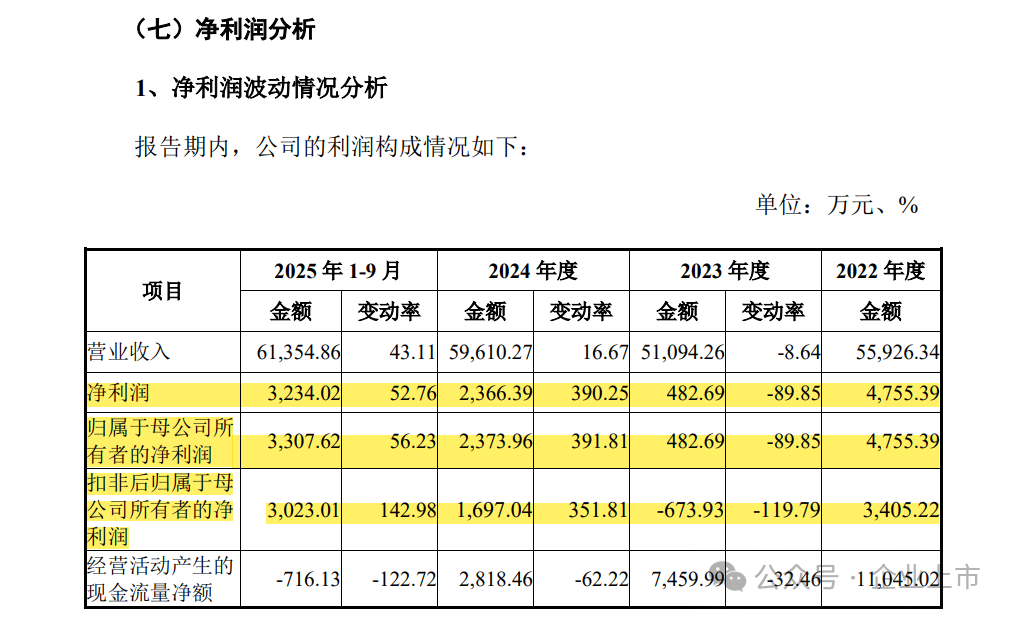
Core Viewpoint - The refinancing review process in the A-share market, especially for the ChiNext board, is shifting from a strict profit-based evaluation to a more comprehensive value judgment, focusing on potential, fundamentals, and growth trends rather than just past profits [25][26]. Group 1: Company Performance and Financials - The company, Benchuan Intelligent Circuit Technology Co., Ltd., demonstrated a significant rebound in its financial performance, with a projected non-net profit of 17 million in 2024 and 30.23 million in the first three quarters of 2025, indicating a recovery from a low point in 2023 [25][28]. - The company's revenue for 2025 (January to September) is reported at 61.35 million, reflecting a 43.11% increase compared to the previous year, while the net profit for the same period is 32.34 million, a 52.76% increase [28][19]. - The company’s non-recurring profit and loss significantly impacted its financials, with a net profit attributable to the parent company of 2.37 million in 2024, but only 1.69 million after excluding non-operating income [27][19]. Group 2: Business Strategy and Market Position - The company operates in the high-end circuit board sector, focusing on applications in communication, automotive electronics, new energy, and industrial control, aligning with national strategic priorities [25][26]. - The planned fundraising will be used for building new factories in Zhuhai and Thailand, which supports the company's expansion and aligns with the national strategy for supply chain diversification [26][24]. - The company’s product offerings include advanced circuit boards with high precision and reliability, catering to a growing demand in various high-tech fields, which positions it favorably in the market [37][38]. Group 3: Regulatory Environment and Future Outlook - The review process for refinancing has become more flexible, emphasizing the overall strength and future potential of the company rather than strictly adhering to past profit thresholds [25][26]. - The company’s ability to secure financing despite not meeting the previously perceived profit threshold indicates a shift in regulatory attitudes towards valuing growth potential and strategic alignment with national interests [25][26].


北美投入超预期,CPOOIO打破算存瓶颈
2026-02-03 02:05
Summary of Conference Call Notes Industry Overview - The focus is on the optical communication industry, particularly the investment opportunities in the optical sector from 2023 to 2025, with expectations of a market reversal after short-term fluctuations [1][2]. Key Points and Arguments 1. **Capital Expenditure Trends**: - Companies like Meta and Microsoft have reported higher-than-expected revenues driven by AI, indicating a positive outlook for capital expenditures [1]. - Upcoming earnings reports from Google and Amazon are anticipated to reflect optimistic capital expenditure guidance, further supporting the optical communication investment thesis [2]. 2. **Long-term Contracts and Demand**: - Meta has signed a significant five-year supply agreement worth approximately $6 billion with Corning, highlighting the growing demand for optical communication products [2]. - The demand for optical components, including MPO jumpers and related products, is expected to continue increasing due to the rapid growth in optical communication needs [2]. 3. **Company Performance**: - Companies such as Xuchuang, Xinyi, Tianfu, and Yuanjie have released optimistic earnings forecasts, with Xinyi exceeding market expectations [3]. - The overall performance of these companies is expected to improve in Q4 2023, driven by easing material costs and increasing demand [3]. 4. **Emerging Technologies and Market Dynamics**: - The CPU sector is experiencing significant growth, with strong performance noted in January 2023, indicating a robust demand for optical components [4]. - The optical communication market is expected to benefit from advancements in new technologies and applications, particularly in the context of AI and data centers [5]. 5. **Specific Company Updates**: - **Jieput**: Reported a net profit of approximately 80 million yuan for Q4, marking a 170% year-on-year increase, driven by growth in its new energy and optical communication businesses [6]. - **Zhongci Electronics**: Focused on expanding its 800G substrate business and is well-positioned to capture market share in the 1.6T market, with ongoing production ramp-up [10]. 6. **Market Opportunities**: - The optical communication sector is poised for growth, particularly with the anticipated demand for high-capacity optical modules and components as AI technologies advance [18][36]. - The transition from copper to optical solutions in data centers is expected to create substantial market opportunities for optical communication companies [18][36]. Additional Important Insights - The conference highlighted the importance of understanding the evolving landscape of AI and its implications for optical communication, particularly in terms of network architecture and data center efficiency [13][27]. - The potential for optical solutions to address the bandwidth and connectivity challenges posed by AI workloads was emphasized, suggesting a significant shift in market dynamics [18][36]. - The upcoming events, such as OFC and GTC, are expected to provide further insights and developments in the optical communication sector, reinforcing the positive outlook for the industry [38]. This summary encapsulates the key insights and developments discussed during the conference call, focusing on the optical communication industry and its growth potential.
华光新材(688379):液冷板焊接材料稀缺标的,业绩逐步释放
NORTHEAST SECURITIES· 2026-02-01 14:41
Investment Rating - The report assigns a "Buy" rating for the company, indicating a positive outlook for the stock's performance in the near term [5]. Core Insights - The company is expected to achieve a net profit attributable to shareholders of between 165 million to 195 million yuan for the year 2025, representing a year-on-year increase of 104.67% to 141.88% [1]. - The company has made significant advancements in welding technology, particularly in the AI server liquid cooling sector, which is anticipated to drive substantial revenue growth [2]. - The liquid cooling business is projected to see a rapid increase in revenue, with electronic sector revenue expected to grow over 100% year-on-year, driven by the AI liquid cooling segment [2]. - The company has diversified its applications into optical modules and robotics, enhancing its market position and growth potential [3]. Financial Summary - Revenue projections for 2025-2027 are 2.5 billion, 3.27 billion, and 4.12 billion yuan respectively, with net profits of 169 million, 196 million, and 256 million yuan [4]. - The company’s earnings per share are forecasted to be 1.87 yuan in 2025, increasing to 2.84 yuan by 2027 [4]. - The price-to-earnings (P/E) ratios are projected to be 28.41, 24.54, and 18.72 for the years 2025, 2026, and 2027 respectively [4].

富士达20260128
2026-01-29 02:43
Summary of Fujida's Conference Call Company Overview - **Company**: Fujida - **Year**: 2025 - **Key Business Segments**: Housing, Aerospace, Civil Products Key Points and Arguments Financial Performance - **2025 Revenue**: Met expectations, with commercial aerospace contributing over 50 million yuan, primarily from commercial satellites, while military satellites had a larger scale [2][8] - **Quarterly Trends**: In Q4, military product deliveries slowed down while civil product deliveries accelerated, continuing the trend from the first three quarters [2][8] Business Structure and Growth - **Business Segmentation**: The company’s business structure is balanced across housing, aerospace, and civil sectors, with recovery growth observed in 2025 [3][5] - **Aerospace Growth**: Military satellites are expected to remain stable, while commercial satellites are projected to grow rapidly, providing significant support to the aerospace segment [5][8] - **Civil Products**: Expected to exceed half of total revenue by 2026, offsetting fluctuations in military products [2][8] Product Development and Orders - **G60 Orders**: Nearly 200 G60 units have been delivered, with about 100 remaining for delivery in 2026; specific bidding timelines are yet to be determined [2][10] - **New Product Lines**: Fujida is developing new products in commercial satellites, including antennas and microwave devices, currently in the verification phase [2][14] Strategic Partnerships - **Collaboration with Huawei**: Focused on communication-related products in the commercial aerospace sector, with small-scale validation ongoing; expected growth in 2026 [2][20] Market Outlook - **2026 Expectations**: Anticipated significant growth in civil products, with military product orders remaining uncertain; overall market demand is expected to grow rapidly in the coming years, but not explosively in 2026 [17][30] Competitive Landscape - **Competitive Advantages**: Fujida has advantages in adapting to aerospace standards and cost control, which enhances its competitiveness against peers focused solely on military products [19][18] Emerging Business Areas - **High-End Equipment and Semiconductor Devices**: Entering R&D phase with expected rapid growth and significant profit contributions starting in 2026; orders amounting to approximately 40-50 million yuan [4][21] - **Advanced Ceramics**: Focus on high-temperature co-fired ceramics (HTCC) and ceramic substrates, with a full supply chain capability [25][26] Production and Investment - **Production Facilities**: New production lines for high-end civil and semiconductor equipment will be established at the Xi'an headquarters, with cleanroom facilities nearing completion [22][23] Future Projections - **Military Orders**: Limited new military orders expected in 2026, with most coming from carryover orders from 2025; overall order situation is positive but uncertain for March [29][30] Conclusion - **Overall Sentiment**: Optimistic outlook for the "14th Five-Year Plan" period, particularly for 2026-2027, contingent on the normal release pace of military and civil defense projects [30]

华光新材:目前未有产品直接应用于CPO
Zheng Quan Ri Bao Wang· 2026-01-13 12:10
Group 1 - The company, Huaguang New Materials, stated that it currently does not have products directly applied in CPO (Chip-on-Board) technology [1] - The company has invested in Suzhou Lianjie Technology, which develops and produces ceramic substrates used in optical modules and semiconductor lasers, with an investment ratio of approximately 5% [1]
华光新材(688379.SH):目前未有产品直接应用于CPO
Ge Long Hui· 2026-01-13 08:21
Core Viewpoint - Huaguang New Materials (688379.SH) currently does not have products directly applied in CPO [1] Group 1: Company Information - The company has invested in Suzhou Lianjie Technology, which develops and produces ceramic substrates used in optical modules and semiconductor lasers [1] - The company's investment stake in Suzhou Lianjie Technology is approximately 5% [1]
先进封装技术的战略价值与研究背景
材料汇· 2025-12-01 14:10
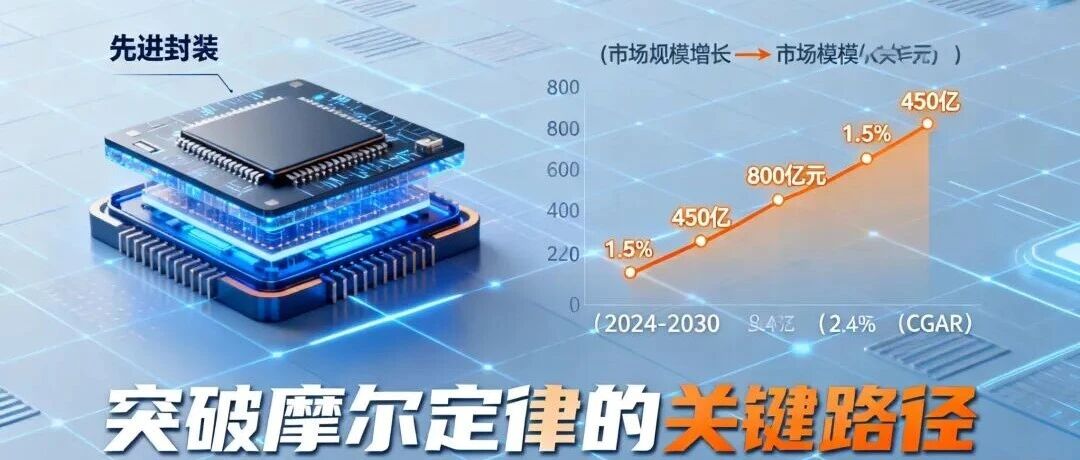
Core Insights - Advanced packaging technology is crucial for overcoming performance bottlenecks in the semiconductor industry, driven by emerging applications like AI, high-performance computing, and 5G communication [3] - The global advanced packaging market is projected to grow from approximately $45 billion in 2024 to $80 billion by 2030, with a compound annual growth rate (CAGR) of 9.4% [3][75] Technical Evolution Dimension - TSMC's CoWoS technology has evolved from supporting 1.5x to 3.3x mask sizes, with plans for a 5.5x version by 2025-2026 and a 9x version by 2027, significantly increasing integration density and reducing signal transmission latency [6][7] - Hybrid bonding technology is emerging as a core technology for next-generation advanced packaging, enabling direct wafer bonding without bumps, thus enhancing interconnect density and reducing power consumption [10][11] - AMD's MI300X AI accelerator utilizes a 3.5D packaging architecture, combining TSMC's SoIC and CoWoS technologies, achieving unprecedented integration levels with 1,530 billion transistors [14][15] - Intel employs a multi-technology strategy in advanced packaging, focusing on EMIB and Foveros technologies, with plans for further enhancements to improve performance and integration [18][19] - Glass substrate technology is gaining traction as a disruptive innovation, offering advantages in electrical performance, thermal stability, and cost-effectiveness, with a projected market penetration exceeding 50% within five years [22][23] Material System Analysis - BT resin substrates are the most widely used packaging material, accounting for over 70% of IC substrates, known for their excellent thermal and electrical properties [26][27] - ABF substrates, developed by Ajinomoto, are preferred for high-end chip packaging due to their superior processing capabilities and electrical performance, despite higher costs [28][30] - Ceramic substrates, particularly AlN and Si3N4, are ideal for high-performance applications due to their high thermal conductivity and mechanical strength [32][34] Equipment and Process Dimension - TCB equipment is critical for HBM packaging, with ASMPT holding over 80% market share, driven by the demand for AI chips and high-performance computing [45][47] - The global die bonder market is dominated by four major players, with ASMPT leading at 31% market share, followed by BESI, Ficontec, and Neways [49][51] - The back-end packaging equipment market is characterized by a diverse competitive landscape, with Disco leading in wafer thinning and cutting technologies [54] Industry Layout Analysis - TSMC is experiencing exponential growth in CoWoS capacity, projected to reach 65,000-75,000 units per month by 2025, driven by AI chip demand [63][65] - The HBM market is dominated by three players: SK Hynix, Samsung, and Micron, collectively holding over 95% market share, with SK Hynix leading at 60-70% [67][68] - China's packaging industry is rapidly advancing, with Jiangsu Changjiang Electronics Technology, Tongfu Microelectronics, and Huada Semiconductor becoming significant players globally [70][71] - The global advanced packaging market is shifting towards IDM manufacturers, who leverage integrated design and manufacturing advantages, with Taiwan companies holding a dominant position in the AI packaging market [73][74]