
雪容融

Search documents
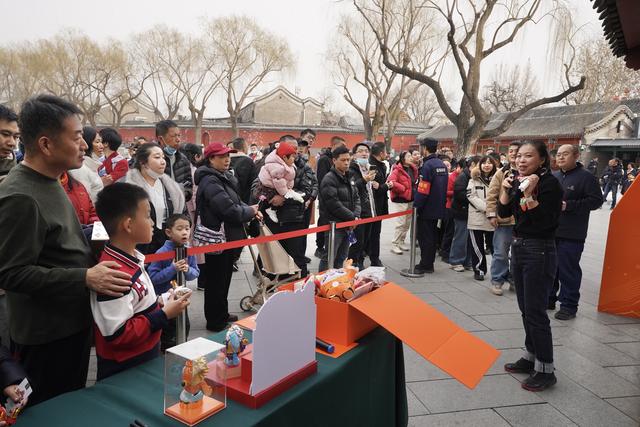
“马墩墩遇见北海福”:冬奥设计师携马年限定款亮相北海公园
Xin Lang Cai Jing· 2026-02-21 10:02
Group 1 - The event titled "Mǎ Dūn Dūn Image Designer Offline Signing Event" took place at Beihai Park South Gate Square on February 21 [1] - The theme of the event was "Mǎ Dūn Dūn Meets Beihai Fortune," featuring Lin Cunzhen, the core designer of the Beijing 2022 Winter Olympics mascot "Bīng Dūn Dūn," who engaged with fans and shared insights on the design inspiration and craftsmanship behind the Mǎ Dūn Dūn [3] - Lin Cunzhen has designed significant Olympic symbols, including the "Winter Dream" and "Leap" emblems, and has created popular characters like "Bīng Dūn Dūn" and "Xuě Róng Róng," continuing the zodiac cultural series with "Tù Dūn Dūn," "Lóng Dūn Dūn," and the latest "Mǎ Dūn Dūn," showcasing a blend of Olympic cultural heritage and traditional Chinese zodiac culture [6]

【冬奥漫笔】从“一墩难求”到“一鼬难求”
Xin Lang Cai Jing· 2026-02-09 20:19
Core Viewpoint - The popularity of the Olympic mascots Tina and Milo at the Milan-Cortina Winter Olympics highlights their role in enhancing local identity and generating significant commercial revenue through merchandise sales [1][2][3]. Group 1: Mascot Popularity and Cultural Significance - Tina and Milo, the mascots of the Milan Winter Olympics, are widely embraced by visitors, with plush toys being the most sought-after merchandise [1]. - The mascots are designed based on a creative drawing by Italian children, reflecting local culture and enhancing community recognition [1]. - The history of Olympic mascots dates back to the 1972 Munich Olympics, evolving into important symbols that embody the spirit of the host city and country [2]. Group 2: Commercial Impact of Mascots - Successful mascots can significantly boost sales of licensed merchandise, contributing to the overall revenue of the event [3]. - For instance, by the end of 2022, over 5.5 million plush toys of the Beijing Winter Olympics mascot "Bing Dwen Dwen" were sold, generating over 1 billion yuan in revenue [3]. - The emotional connection that mascots create among athletes, spectators, and citizens serves as a bridge between the event and the public, promoting the Olympic spirit [3].
“奥运小王子”张文全:从奥运火炬收藏者到传递者
Zhong Guo Xin Wen Wang· 2026-02-05 11:27
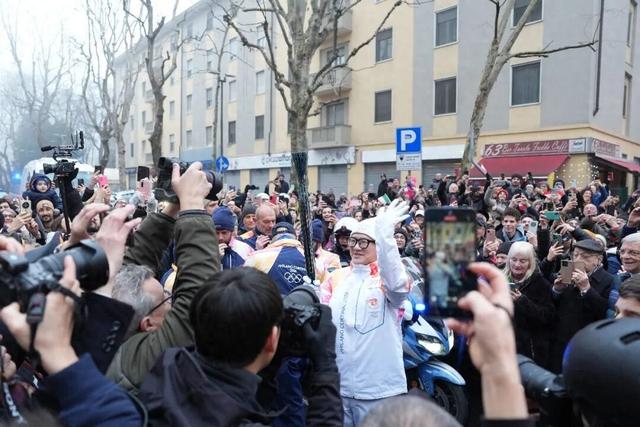
Core Viewpoint - The Milan-Cortina Winter Olympics 2026 torch relay officially commenced on February 5, 2026, with Zhang Wenquan from Beijing as the first torchbearer, symbolizing the spirit of the Olympics and the importance of cultural exchange and unity [1][15]. Group 1: Torch Relay and Event Details - The torch relay will take place from December 6, 2025, to February 6, 2026, covering approximately 12,000 kilometers across all 20 regions of Italy, involving 110 provinces and over 300 municipalities, with celebrations in 60 cities [11]. - This Winter Olympics will feature the largest number of events and athletes from China competing abroad, with 126 athletes participating in 7 major events and 15 sub-events across 91 categories [15]. Group 2: Zhang Wenquan's Journey and Contributions - Zhang Wenquan has been an avid collector of Olympic memorabilia, with over 7,000 items, and aims to establish his own "Olympic Museum" to promote Olympic spirit and culture [5][12]. - He has served as a volunteer at the Beijing Olympics in 2008 and the Winter Olympics in 2022, emphasizing the importance of volunteer contributions to the success of the events [7][9]. - Zhang received a personal letter from IOC President Thomas Bach, expressing gratitude for his volunteer work and highlighting Beijing's unique status as the first city to host both Summer and Winter Olympics [9][10]. Group 3: Personal Values and Olympic Spirit - Zhang's values include unity, dedication, and cultural heritage, which he articulated in his application to become a torchbearer, viewing the role as both an honor and a responsibility [12]. - He believes that the essence of the Olympics lies in the shared pursuit of friendship, peace, and enjoyment among athletes, volunteers, and spectators from around the world [15].
曾点燃“冰墩墩”、“谷爱凌”热潮,新一届冬奥会大幕即将开启
Xuan Gu Bao· 2026-02-02 23:11
Industry Overview - The ice and snow industry in China has grown significantly from 270 billion yuan in 2015 to an expected 980 billion yuan in 2024, with an annual growth rate exceeding 15% [2] - The ice and snow economy is projected to become an important growth point for domestic consumption, driven by policy support, event promotion, and quality supply [1][2] Market Dynamics - The 2025-2026 ice and snow season saw a 10% year-on-year increase in visitor numbers to ski resorts, reaching 35 million people, with inbound tourist numbers surging by 66% [2] - Consumer spending in the ice and snow sector reached 36.35 billion yuan, indicating a strong trend in service consumption within the ice and snow economy [2] Company Developments - Xue Ren Group, a leading company in the global ice-making equipment industry, has completed several ice and snow project constructions, including the Bird's Nest curling venue and the China Millennium Monument skating rink [3] - The company has formed a joint venture with Simco, an operator of ice and snow venues, to expand its business in the ice sports and entertainment sectors [3] - Binglun Environment focuses on low-temperature refrigeration equipment, central air conditioning, and energy-saving heating systems, widely applied in the ice and snow sports industry [3]
用美术力量为时代添彩
Xin Lang Cai Jing· 2025-12-24 20:50
Core Viewpoint - The article highlights the ongoing efforts in the Chinese art community to integrate contemporary themes and the spirit of the times into artistic creations, emphasizing the importance of quality and originality in art during the "14th Five-Year Plan" period [3][4]. Group 1: Artistic Initiatives and Themes - The "14th Five-Year Plan" emphasizes enhancing the quality of artistic works and improving original artistic capabilities, focusing on significant themes such as rural development and children's art [3][4]. - The Chinese Artists Association is actively promoting the transformation of life materials into artistic masterpieces through initiatives like the "Deeply Rooted in the People" campaign, which encourages artists to engage with communities and reflect their experiences in their works [2][4]. Group 2: Major Artistic Projects - Significant projects include the "Celebration of the 100th Anniversary of the Communist Party of China" and the ongoing "Brilliant Journey: Thematic Art Creation Plan (2025-2027)," which aim to produce works that reflect the spirit of the times and the lives of the people [4][5]. - The article mentions the creation of monumental sculptures at the China Communist Party History Exhibition Hall, which symbolize loyalty and dedication to the Party, showcasing the craftsmanship involved in their production [4]. Group 3: Youth Engagement and Innovation - There is a notable increase in youth participation in the arts, with the proportion of new artistic groups among national members of the Chinese Artists Association rising from 12.08% to 19.87% over five years [8]. - The first China Digital Art Exhibition saw 87.6% of young participants using AI technology in their creations, indicating a shift towards innovative and cross-media artistic practices [8]. Group 4: Art in Community Development - The article discusses the role of art in rural revitalization and community building, highlighting initiatives that beautify rural environments and promote traditional crafts [8]. - The integration of art with economic development and social education is emphasized, showcasing how art can enhance both aesthetic and economic value in communities [8].
从文化创意触摸时代脉动
Ren Min Ri Bao· 2025-12-08 00:41
Group 1 - The mascots "Xi Yang Yang" and "Le Rong Rong" from the 15th National Games have gained significant popularity, showcasing their charm through interactive videos and merchandise [1] - Cultural IPs like "Bing Dwen Dwen" and "Xue Rong Rong" from the Beijing Winter Olympics and "Rong Bao" from the Chengdu Universiade have been well-received for their cute designs and cultural significance [1] - The mascots symbolize the collaboration of the Guangdong-Hong Kong-Macao Greater Bay Area and embody themes of green sharing and teamwork, enhancing their appeal [1] Group 2 - Cultural creativity is rooted in cultural confidence and reflects the vitality of cultural innovation, as seen in various cultural IPs that tell Chinese stories and showcase national character [2] - Successful cultural products like "Ne Zha" and "The Wandering Earth" combine traditional narratives with modern production techniques, illustrating China's resilience and collective responsibility [2] - The interplay between material development and spiritual enrichment in contemporary China highlights the multidimensional nature of cultural creativity, presenting a vibrant image of the nation to the world [2] Group 3 - Cultural creativity thrives beyond event timelines, integrating into cultural and tourism industries to enhance its value, as exemplified by the enduring presence of the Shanghai Expo mascot "Haibao" [3] - Continuous product development and engagement with current events are essential for cultural IPs to remain relevant and enrich collective memory [3] - Successful cultural creativity requires a balance of design and cultural meaning, emphasizing the importance of emotional engagement and effective communication in cultural work [3]
从文化创意触摸时代脉动(金台随笔)
Ren Min Ri Bao· 2025-12-07 22:02
Group 1 - The mascots "Xi Yang Yang" and "Le Rong Rong" from the 15th National Games have gained significant popularity, showcasing their charm through interactive videos and cultural merchandise [1] - Cultural IPs like "Bing Dwen Dwen" and "Xue Rong Rong" from the Beijing Winter Olympics and "Rong Bao" from the Chengdu Universiade have become widely loved for their cute designs and regional significance [1] - The mascots symbolize the collaboration of Guangdong, Hong Kong, and Macau, embodying themes of green sharing and unity, thus enhancing their cultural impact [1] Group 2 - Cultural creativity is rooted in cultural confidence and reflects the vitality of cultural innovation, as seen in various cultural IPs that narrate Chinese stories and showcase national character [2] - Successful cultural products like "Ne Zha" and "The Wandering Earth" not only break box office records but also convey profound themes of sacrifice and collective responsibility, illustrating the dynamic nature of Chinese culture [2] - The interplay between material development and spiritual enrichment in contemporary China highlights the multifaceted nature of cultural creativity, presenting a vibrant image of the nation to the world [2] Group 3 - Cultural creativity thrives beyond event timelines, integrating into the cultural and tourism industries to enhance its value, as exemplified by the enduring presence of the Shanghai Expo mascot "Haibao" [3] - Continuous product development and engagement with current events allow cultural IPs to remain relevant and enrich collective memory, demonstrating the importance of adaptability in cultural expressions [3] - Successful cultural creativity requires a balance of aesthetic appeal and meaningful cultural representation, urging creators to focus on character development and effective communication [3]
坚定文化自信 建设文化强国丨展现可信可爱可敬的中国形象
Zhong Yang Ji Wei Guo Jia Jian Wei Wang Zhan· 2025-05-23 00:09
Group 1 - China is actively promoting its cultural soft power and enhancing its international image through various initiatives, including digital payments and tax refund policies for foreign tourists [1][7] - The competition for cultural soft power is increasingly important as it reflects a country's values and influences its global standing [2][3] - The need to break the Western narrative monopoly and present a more accurate and comprehensive image of China is emphasized [3][4] Group 2 - Constructing a Chinese narrative and discourse system is crucial for effective international communication and is a key component of Xi Jinping's cultural thought [4][5] - Innovative storytelling methods are necessary to convey China's achievements and cultural heritage effectively, utilizing both macro and micro narratives [6][7] - Successful examples, such as the Beijing Winter Olympics and cultural programs, have demonstrated the potential for enhancing China's global image [7][8] Group 3 - Strengthening cultural soft power and international discourse is a complex task that requires strategic planning and multi-faceted collaboration [8][9] - Reforming mainstream media and utilizing new technologies are essential for improving international communication capabilities [9][10] - Promoting international cultural exchanges and cooperation is vital for fostering mutual understanding and friendship [10][11] Group 4 - The responsibility of shaping a credible and appealing image of China is significant, necessitating a collective effort from all sectors of society [11]
