
风电关键零部件

Search documents
中国风电加速“出海” 引领全球风电产业发展
Mei Ri Jing Ji Xin Wen· 2025-12-05 13:00
Core Insights - The Global Wind Energy Council has released the "Global Offshore Wind Industry Chain Development Report 2025" highlighting the dominance of the Asia-Pacific region in wind turbine assembly and key component production [1] - China holds a central position in global offshore wind capacity, reinforcing its leadership in the industry [1] Regional Analysis - The Asia-Pacific region is identified as the largest center for wind turbine assembly and key component production, supported by a complete industrial system [1] - Onshore wind capacity is primarily concentrated in China and India, while offshore wind capacity is predominantly centered in China [1]
把实现减污降碳协同增效作为促进经济社会发展全面绿色转型的总抓手
Zhong Guo Huan Jing Bao· 2025-12-01 23:21
Core Viewpoint - The article emphasizes the importance of achieving coordinated reduction of pollution and carbon emissions as a central strategy for promoting comprehensive green transformation in economic and social development [1][4][10]. Group 1: Background and Current Status - China's ecological civilization construction has entered a new phase focused on coordinated reduction of pollution and carbon emissions, promoting comprehensive green transformation in economic and social development [2][4]. - Since the 18th National Congress, China has made historic achievements in ecological civilization, with continuous improvement in environmental quality and significant reduction in carbon emission intensity [2][3]. Group 2: Characteristics of the New Phase - The new phase prioritizes carbon reduction as the strategic direction, shifting the focus from pollution reduction to carbon emission control [3]. - The goals have evolved to include multiple objectives such as environmental quality improvement and achieving carbon peak and carbon neutrality [3]. - A multi-level governance network has emerged, involving various stakeholders including government and enterprises, fostering long-term interaction mechanisms [3]. Group 3: Importance of Coordinated Reduction - Achieving coordinated reduction of pollution and carbon emissions is essential for the comprehensive green transformation of economic and social development, serving as a core component and guiding principle [5][6]. - The 14th Five-Year Plan outlines key indicators that reflect both pollution reduction and carbon intensity reduction, establishing clear targets for green transformation [6]. Group 4: Implementation Strategies - The article suggests integrating coordinated reduction into national planning and ecological environment special planning, optimizing technical and task lists for implementation [10]. - It advocates for policy innovation and the establishment of a standard system for coordinated reduction, including incentives for industries to adopt green practices [11]. Group 5: Contributions to Global Sustainability - China has significantly contributed to global sustainability through the development of new energy vehicles and renewable energy, leading the world in production and job creation in these sectors [9].
能源高质量发展专家谈丨规划引领“十四五”能源高质量发展迈出坚实步伐
国家能源局· 2025-09-01 10:29
Core Viewpoint - The article emphasizes the importance of the "14th Five-Year Plan" for high-quality energy development in China, highlighting the strategic direction set by the central government for energy transformation and the establishment of a modern energy system [2]. Group 1: Energy Supply Chain Resilience and Security - The "14th Five-Year Plan" focuses on enhancing energy security, emphasizing the need for domestic energy production and diversified supply to mitigate risks [3]. - Energy production capacity has significantly increased, with a total primary energy production growth exceeding 22%, reaching 4.98 billion tons of standard coal by 2024 [3]. - The annual crude oil production reached 213 million tons, and natural gas production increased by over 13 billion cubic meters annually, showcasing the resilience of the energy supply system [3]. Group 2: Green and Low-Carbon Energy Transition - The article highlights the necessity of a green energy transition as a response to climate change and a driver for sustainable development [4]. - Non-fossil energy consumption proportion is projected to reach 19.8% by 2024, an increase of 3.9 percentage points from 2020, while coal consumption proportion is expected to decrease to 53.2% [5]. - The energy sector has achieved a cumulative reduction in energy intensity of 11.6% over the first four years of the "14th Five-Year Plan" [5]. Group 3: Coordinated Development of Energy Across Regions - The article discusses the need for optimizing energy development layouts to address imbalances in energy supply and demand across urban and rural areas [7]. - The construction of large clean energy bases in the western regions has progressed, with the "West-to-East Power Transmission" capacity exceeding 300 million kilowatts [7]. - The establishment of the world's largest charging infrastructure system, with a total of 16.7 million facilities, supports the widespread adoption of electric vehicles [7]. Group 4: Modernization of the Energy Industry Chain - The article stresses the importance of innovation in enhancing the energy industry's modernization and competitiveness [8]. - China has achieved significant advancements in nuclear power technology and is a leading global supplier of photovoltaic components and wind power key parts [9]. - The energy sector has made breakthroughs in unconventional oil and gas exploration and development, contributing to the modernization of the energy industry [9]. Group 5: Continuous Release of Energy High-Quality Development Vitality - The article outlines the need for deepening energy market reforms to stimulate market vitality and establish a modern energy market structure [10]. - The implementation of the Energy Law has strengthened the legal foundation for energy development, with over 60% of electricity consumption now determined by market transactions [11]. - New energy business models and technologies, such as microgrids and virtual power plants, are emerging, promoting the transition to a new energy system [11]. Group 6: Expanding High-Level Energy Opening-Up - The article emphasizes the importance of international cooperation in energy to enhance global energy governance [12]. - China's energy imports remain diversified and stable, with significant international cooperation projects established in over 100 countries [13]. - The country has strengthened its influence in global energy governance, participating in key international energy meetings and establishing regional energy cooperation platforms [13]. Conclusion - The "15th Five-Year Plan" is positioned as a critical period for achieving socialist modernization and initiating the construction of a new energy system, with a focus on high-quality energy development [14].

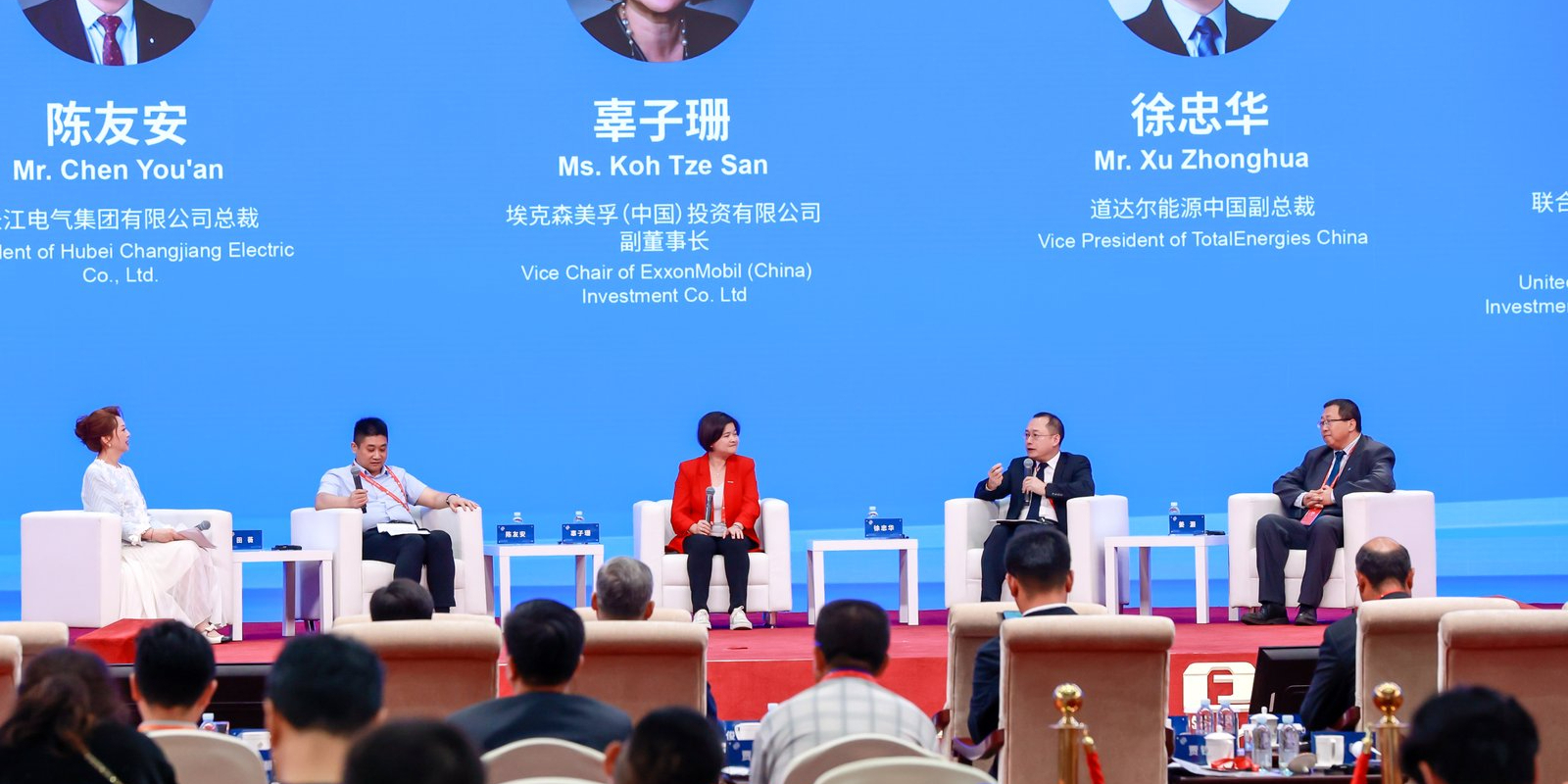
电力规划设计总院党委书记胡明:规划引领“十四五”能源高质量发展迈出坚实步伐
Zhong Guo Dian Li Bao· 2025-09-01 09:39
Core Viewpoint - The article emphasizes the importance of energy security and the transition to a new energy system in China, highlighting the strategic initiatives and planning outlined in the "14th Five-Year Plan" for high-quality energy development [1][2]. Group 1: Energy Supply Chain Resilience and Security - The energy supply chain's resilience and security have significantly improved, with a focus on domestic production and risk management [2]. - The total production of primary energy is projected to exceed 4.98 billion tons of standard coal by 2024, with a production increase of over 22% since the beginning of the "14th Five-Year Plan" [3]. Group 2: Green and Low-Carbon Energy Transition - The green and low-carbon transition in the energy sector has reached new heights, with a commitment to increasing clean energy supply and reducing carbon emissions [4]. - By the end of 2024, the proportion of non-fossil energy consumption is expected to reach 19.8%, a 3.9 percentage point increase from 2020, while coal consumption is projected to drop to 53.2% [5]. Group 3: Coordinated Development of Energy Regions - The energy sector is addressing imbalances in supply and demand across urban and rural areas, focusing on optimizing energy resource allocation and enhancing regional energy development [6][7]. - The construction of large clean energy bases in western regions is progressing, with the "West-to-East Power Transmission" capacity exceeding 300 million kilowatts [8]. Group 4: Modernization of the Energy Industry Chain - The modernization of the energy industry chain has advanced significantly, with a focus on enhancing technological innovation and upgrading the energy sector [9]. - China has become a global leader in the production of photovoltaic components and wind power key components, contributing over 80% and 70% respectively to the global market [10]. Group 5: Continuous Release of High-Quality Development Vitality - The energy sector is undergoing reforms to enhance market dynamics and governance, with over 60% of total electricity consumption now determined by market transactions [11][12]. - The establishment of a unified national electricity market is accelerating, with significant progress in the marketization of coal and renewable energy pricing [12]. Group 6: International Energy Cooperation - The energy sector is actively participating in global energy governance and international cooperation, enhancing its influence and capabilities in the global market [13][14]. - China has established energy cooperation projects with over 100 countries, strengthening its energy security and international partnerships [14].

链博会观察|为全球清洁能源产业链提供“中国方案”
Jing Ji Guan Cha Wang· 2025-07-18 12:18
Core Viewpoint - The third China International Supply Chain Promotion Expo highlighted the importance of clean energy supply chains, showcasing new technologies and trends in the clean energy sector, with China being a leading supplier of renewable energy products globally [2] Group 1: Clean Energy Supply Chain - The expo featured a dedicated clean energy supply chain exhibition area, demonstrating the entire cycle of clean energy from supply to consumption [2] - China produces 80% of the world's photovoltaic components and 70% of key wind power components, establishing itself as the largest and fastest-growing clean energy system globally [2] - Clean energy technologies and products from China are increasingly being adopted in developing countries, particularly in underdeveloped regions, providing abundant energy supply [2][4] Group 2: Challenges and Innovations - Global energy supply faces two main challenges: providing clean energy solutions for sustainable development and addressing climate change [2] - The renewable energy sector has a lower competitive barrier and requires rapid technological innovation due to its manufacturing attributes [2] - Companies are developing direct current appliances for regions with inadequate infrastructure, such as Africa, to facilitate the use of solar energy without the need for inverters [4] Group 3: Cost and Market Dynamics - The low cost of renewable energy is crucial for its widespread adoption, especially in regions like Africa where traditional clean energy solutions may be too expensive [5] - The renewable energy industry is characterized by rapid technological iterations, with costs decreasing almost quarterly due to ongoing engineering innovations [5][6] - Companies are exploring comprehensive energy service systems, such as "zero-carbon parks," to achieve overall clean energy usage for end-users [9] Group 4: Infrastructure and Equipment - Chinese manufacturers are adapting their products for domestic applications while also providing solutions for global energy utilization facilities [8] - The demand for domestic transmission and distribution equipment is strong in overseas markets, particularly in emerging markets with significant infrastructure needs [8] - Companies are integrating various renewable energy sources and digital management platforms to balance carbon emissions in industrial parks [9]
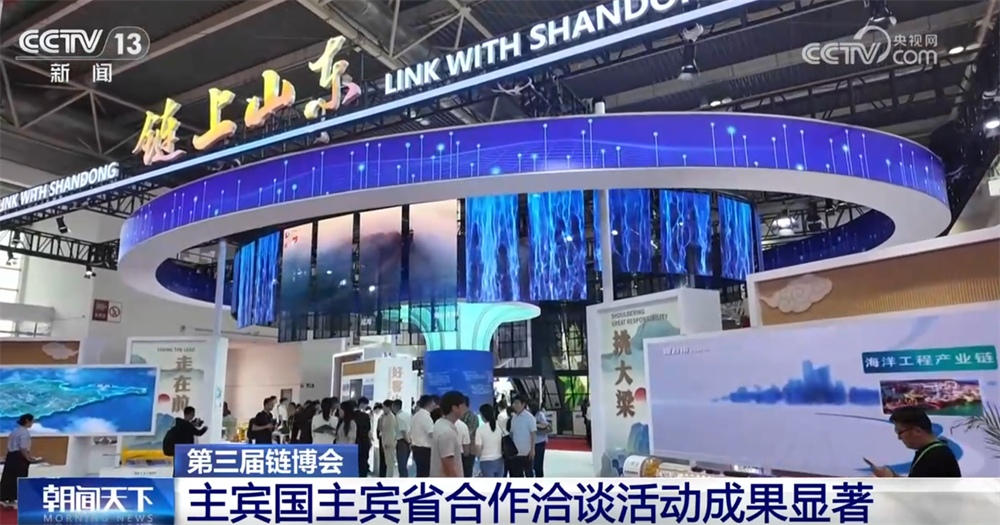
洽谈成果显著、“碳”索绿色未来、“中国方案”亮眼……第三届链博会精彩抢先看→
Yang Shi Wang· 2025-07-17 02:29
Group 1 - The third Chain Expo opened on July 16, with Thailand as the guest country and Shandong and Guangdong as guest provinces, featuring international cooperation discussions and multiple agreements [1][3] - A total of 78 companies from Shandong exhibited over 1,000 products across 2,600 square meters, while Guangdong organized 64 companies to showcase advancements in robotics and biomedicine [1] - The event attracted over 300 domestic and foreign business institutions and companies from various countries, leading to preliminary cooperation intentions [3] Group 2 - The senior vice chairman of Charoen Pokphand Group expressed interest in further investment in China, leveraging advancements in artificial intelligence to enhance their global supply chain [5] - Apple's Asia operations and procurement vice president highlighted that 80% of their major suppliers are based in China, utilizing automation, big data, and AI in production processes [5] - Korean participants noted that the Chain Expo has become a significant platform for global supply chain cooperation and technological innovation, reinforcing China's role as an "enabler" in the global supply chain [5][7] Group 3 - A clean energy-themed event at the Chain Expo showcased China's advancements in renewable energy, with the country having the largest and fastest-growing renewable energy system globally [8][10] - As of May, China's installed capacity for wind and solar power surpassed that of thermal power, reaching 1.65 billion kilowatts, with nuclear power also leading globally [12] - The China Council for the Promotion of International Trade reported unprecedented growth in global energy transition investments over the past five years, with an expected $2.2 trillion directed towards renewable energy and nuclear power by 2025 [14] Group 4 - The Chain Expo featured a clean energy exhibition area, highlighting the entire supply chain from energy supply to consumption, with South Africa organizing around 30 companies to promote cooperation in manufacturing and renewable energy [18] - The Global Supply Chain Promotion Report was released, analyzing the latest trends in the global supply chain and outlining China's contributions to its development [19] - The global supply chain index matrix indicates stable overall development, with improvements in promotion, connection, innovation, and resilience indices from 2018 to 2024 [21][23]
中国清洁能源投资领跑全球,非化石能源占比跃升彰显绿色转型决心
Sou Hu Cai Jing· 2025-06-30 07:23
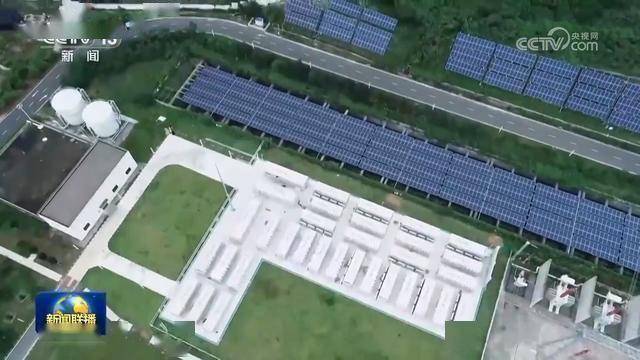
Core Insights - China's rapid development in the clean energy sector is highlighted in the latest report "Overview of China's Energy Ecological Development," indicating a total investment of $625 billion in clean energy for 2024, accounting for one-third of global clean energy investments [1] - China leads the world in installed capacity for solar and wind energy, contributing over 45% to the global increase in non-fossil energy consumption over the past decade, showcasing significant progress in energy structure transformation and its role in global energy reform [1] Investment and Consumption Structure - The transition of China's energy structure has accelerated, with the share of non-fossil energy consumption rising from 9.4% in 2010 to 18.3% in 2024, while the proportion of coal power installations has fallen below 40% for the first time, marking a historic shift towards a greener, low-carbon, and sustainable energy system [3] - Technological innovations such as ultra-high voltage transmission and smart grid technologies have reached international top levels, providing solid technical support for the efficient utilization of clean energy [3] Market Position and Growth - Chinese companies hold over 70% of the global market share for key components in the wind power sector, demonstrating their exceptional strength and competitiveness in this field [3] - The installed capacity of new energy storage has increased fivefold compared to 2022, and the number of hydrogen refueling stations has surpassed 300, accelerating the construction of China's new energy system [3]
中国清洁能源投资全球居首,非化石能源消费占比跃升至18.3%
Sou Hu Cai Jing· 2025-06-30 04:44
Group 1 - China's total investment in clean energy for 2024 is projected to reach $625 billion, accounting for one-third of global clean energy investments, showcasing its strong capabilities and determination [1] - China has maintained the world's largest installed capacity in photovoltaic and wind power for ten consecutive years, contributing over 45% to the global increase in non-fossil energy consumption [1] - The proportion of non-fossil energy consumption in China has significantly increased from 9.4% in 2010 to 18.3% in 2024, while the share of coal power installations has dropped below 40% for the first time [3] Group 2 - China has achieved international leadership in ultra-high voltage transmission and smart grid technologies, providing strong technical support for the efficient utilization of clean energy [3] - The market share of key components from Chinese companies in the wind power industry exceeds 70%, demonstrating their strong capabilities and competitiveness [3] - The installed capacity of new energy storage has grown fivefold compared to 2022, and the number of hydrogen refueling stations has surpassed 300, accelerating the construction of a new energy system in China [3]
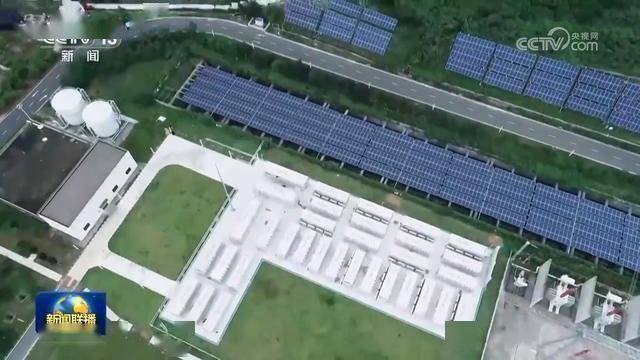
科技创新效能如何?全国人大常委会听取新质生产力发展情况报告
Xin Jing Bao· 2025-06-27 10:46
Group 1 - The report highlights the continuous improvement in the effectiveness of technological innovation, with significant results from innovation-driven development [1] - The integrated circuit industry is expected to see a production increase of 22.2% in 2024, with export value exceeding 1.1 trillion yuan, marking a historical high [1] - The annual production of new energy vehicles has surpassed 13 million units, maintaining the world's leading position for ten consecutive years [2] Group 2 - The high-tech manufacturing industry's added value is projected to grow by 8.9% in 2024, accounting for 16.3% of the total industrial output [2] - The carbon emissions trading market in China has seen a cumulative transaction volume of 640 million tons and a total transaction value of 44.05 billion yuan by April 2025 [2] - China has established the world's largest and fastest-growing renewable energy system, with non-fossil energy consumption accounting for 19.8% [2] Group 3 - The report indicates that the reform of institutional mechanisms is ongoing, optimizing the innovation ecosystem [3] - By the end of 2024, the loan balance for high-tech enterprises is expected to reach 15.2 trillion yuan, reflecting a year-on-year growth of 13.8% [3] - China has signed cooperation documents with over 150 countries and more than 30 international organizations under the Belt and Road Initiative [3] Group 4 - China's manufacturing sector has maintained its position as the world's largest for 15 consecutive years [4] - The domestic demand is projected to contribute 69.7% to economic growth in 2024, continuing to be a major driver of economic expansion [4] - China produces over 5 million graduates annually in science, technology, engineering, and mathematics, leading globally in talent resources [4]
全国人大常委会会议审议国务院关于新质生产力发展情况的报告
Zhong Guo Jing Ji Wang· 2025-06-25 04:08
Group 1 - The report highlights that China's new quality productivity development faces both new risks and challenges, as well as new opportunities and spaces for growth, with confidence and capability to accelerate its cultivation [1][3] - China's technological innovation efficiency continues to improve, with significant results from innovation-driven development, particularly in major cities and regions like Beijing, Shanghai, and the Guangdong-Hong Kong-Macao Greater Bay Area, ranking among the top five in the 2024 global technology cluster rankings [1][2] - The integrated circuit industry is experiencing substantial growth, with a projected 22.2% increase in production in 2024 and export value exceeding 1.1 trillion yuan, marking a historical high [1][2] Group 2 - The report indicates that the annual installation of industrial robots in China accounts for over 50% of the global total, and the comprehensive mechanization rate for crop farming exceeds 75% [2] - The output of new energy vehicles is expected to surpass 13 million units in 2024, maintaining a decade-long position as the global leader in production and sales [2] - By April 2025, the cumulative transaction volume of carbon emission allowances in the national carbon trading market is projected to reach 640 million tons, with a total transaction value of 44.05 billion yuan [2] Group 3 - The report emphasizes the need for comprehensive promotion of technological innovation, industrial innovation, and the transformation of development methods, alongside institutional and talent mechanism innovations to accelerate the development of new quality productivity [3] - Key areas for promoting new quality productivity include advancing technological breakthroughs, driving industrial transformation through technological innovation, and facilitating a comprehensive green transition in economic and social development [3]