
高端核磁共振设备

Search documents
政府工作报告连续10年@大湾区,释放三重信号
21世纪经济报道· 2026-03-05 11:06
Core Viewpoint - The article emphasizes the strategic importance of the Guangdong-Hong Kong-Macau Greater Bay Area (GBA) in China's national development, highlighting its role in becoming a world-class technology innovation hub and a world-class city cluster [2][4]. Group 1: Strategic Importance of GBA - The GBA has been included in the national development blueprint for ten consecutive years, indicating its growing significance in national strategy [2]. - The GBA is recognized for its effective construction outcomes and the increasing agglomeration of resources, which are crucial for achieving high-quality development and promoting common prosperity [2][9]. - The GBA is expected to play a key role in the "14th Five-Year Plan" by enhancing national self-innovation capabilities and facilitating the integration of the "one country, two systems" framework [4][5]. Group 2: Technological Innovation and Infrastructure - The GBA is tasked with building an international technology innovation center, which is essential for enhancing China's independent innovation capacity [4][5]. - Significant progress has been made in the GBA's technology innovation center, with the "Shenzhen-Hong Kong-Guangzhou" tech cluster ranking first globally in innovation clusters by 2025 [4]. - The region has established a robust technological infrastructure, including national laboratories and key laboratories, which support the development of high-end scientific instruments [5][6]. Group 3: Urban Development and Connectivity - The GBA is advancing towards becoming a world-class city cluster, with ongoing efforts to enhance both hard and soft connectivity among the three regions [8][9]. - By 2025, 187 high-frequency government services will be available for cross-border processing, and 262 "Bay Area Standards" have been published across various sectors [9]. - The GBA's urban development is aligned with the national strategy of dual circulation, positioning it as a critical hub for linking Southeast Asian markets and participating in global trade [10].

广东省工信厅曾进泽:广东AIR产业稳居全国第一方阵
2 1 Shi Ji Jing Ji Bao Dao· 2026-01-26 17:35
Core Insights - Guangdong aims to have 76,000 industrial enterprises by 2025, with expected revenues exceeding 19 trillion yuan, leading the nation [1][2] - The industrial and information service sectors are projected to contribute approximately 50% to GDP growth, with digital industry revenues surpassing 8 trillion yuan [1][2] - The artificial intelligence (AI) core industry in Guangdong is expected to exceed 300 billion yuan, achieving over 40% growth and accounting for one-fourth of the national total [1][6] Industrial Growth and Development - Guangdong's industrial enterprises are expected to reach 76,000 by 2025, with revenues projected to exceed 19 trillion yuan, ranking first in the country [2] - The contribution of industrial and information services to GDP growth is estimated at around 50%, with advanced and high-tech manufacturing accounting for over 50% and 30% of the industrial output respectively [2] - The province is implementing initiatives like the "Climbing Plan" to enhance the stability and reliability of industrial chains, achieving a 100% localization rate for automotive chip design [2] Innovation and Technology - Guangdong has established six national manufacturing innovation centers and 28 key pilot platforms, leading the nation in these areas [4] - The province is promoting the integration of technology and industry, with over 8,400 industrial enterprises undergoing digital transformation [4] - Guangdong has developed a comprehensive policy framework to support AI and robotics, with 147 specialized "little giant" enterprises in AI, the highest in the country [6][10] Future Industry Focus - The province is focusing on traditional, emerging, and future industries, with plans to enhance the development of sectors like new energy, smart vehicles, and biomedicine [5][11] - Guangdong is also laying the groundwork for future industries such as 6G communication and embodied intelligence [5] AI Industry Development - The AI core industry in Guangdong is projected to exceed 300 billion yuan by 2025, with significant growth and a strong position in the national market [6] - The province has implemented various policies to foster AI development, including the establishment of a comprehensive policy matrix at provincial and municipal levels [6][10] - Guangdong is actively promoting AI applications across various sectors, with a focus on creating replicable industry benchmarks [7][11]
广东省GDP总量,37连冠!2026年目标:4.5%—5%丨2026地方两会
证券时报· 2026-01-26 05:06
Core Viewpoint - The report outlines Guangdong Province's goals and key tasks for the "14th Five-Year Plan" period, emphasizing economic growth, innovation, and high-quality development, with a target GDP growth of around 5% annually [4][10]. Economic Performance - Guangdong's GDP grew by 3.9%, maintaining its position as the highest in the country for 37 consecutive years. Public budget revenue increased by 3%, and total goods import and export rose by 4.4%, contributing 24.1% to the national increment [3][4]. - The province's actual foreign investment increased by 11.3%, and the total output value of agriculture, forestry, animal husbandry, and fishery grew by 4.9% [3]. Innovation and Technology - The report anticipates a total R&D investment of 535 billion yuan, with an intensity of 3.6%. The "Shenzhen-Hong Kong-Guangzhou" innovation cluster ranks first globally [3][5]. - The number of high-tech enterprises is expected to reach 74,000, with 56,000 technology-based small and medium-sized enterprises [5][11]. Infrastructure and Transportation - High-speed rail operational mileage reached 3,411 kilometers, ranking first in the country, while the total length of expressways reached 12,000 kilometers [3]. - The province's airport passenger throughput reached 180 million, and port container throughput reached 80.97 million TEUs [3]. Future Goals and Plans - The main expected goals for 2026 include a GDP growth of 4.5% to 5% and a public budget revenue growth of around 3% [4][10]. - The report emphasizes the importance of enhancing the business environment, with industrial electricity costs decreasing by 6.8% and the ratio of social logistics costs to GDP dropping to around 13.6% [5][8]. Key Focus Areas - The report highlights 14 key tasks for the year, including promoting the Guangdong-Hong Kong-Macao Greater Bay Area, strengthening the manufacturing sector, and fostering new industries such as renewable energy and biotechnology [11][12]. - It also emphasizes the need to enhance consumer spending, with a target retail sales growth of around 5% [12].
从29场发布会看广东“十四五”沉甸甸答卷
Nan Fang Ri Bao Wang Luo Ban· 2026-01-25 01:07
Core Viewpoint - The Guangdong Provincial Two Sessions of 2026 mark a significant moment as they summarize the achievements of the "14th Five-Year Plan" and set goals for the "15th Five-Year Plan," showcasing the province's development and future direction [1]. Group 1: Achievements of the "14th Five-Year Plan" - Guangdong's "14th Five-Year Plan" achievements are highlighted through 29 press conferences, showcasing the province's economic and social development [1][2]. - The province has made significant strides in high-quality development, with a focus on technology innovation, foreign trade, and regional coordination, leading to a continuous top ranking in national innovation capabilities for nine consecutive years [1][2]. - Guangdong's total import and export volume has exceeded 9 trillion yuan, maintaining its position as the national leader for 40 years [1][2]. Group 2: Economic Growth and Industrial Development - The "Shenzhen-Hong Kong-Guangzhou" innovation cluster has become the world's leading innovation hub, with significant advancements in high-end technology sectors such as AI and robotics [2]. - The province has established nine trillion-yuan industrial clusters, reinforcing its industrial backbone and leading the digital economy in China [2]. - Guangdong's GDP growth in 57 counties has outpaced the provincial average for two consecutive years, indicating robust regional economic development [2]. Group 3: Social Welfare and Quality of Life - The "Million Talents Gather in South Guangdong" initiative has successfully attracted 1.1 million talents, enhancing the province's human resources [3]. - Efforts in ecological construction have led to improved living conditions, with green spaces and cultural activities becoming more accessible to residents [3]. - The province aims to create a safe and just environment, striving to be one of the most stable and fair regions in China [3]. Group 4: Future Directions and Strategic Initiatives - The press conferences serve as a platform for showcasing Guangdong's development stories and achievements, emphasizing a commitment to continuous improvement and innovation [3][4]. - The province's economic scale has consistently surpassed 12 trillion, 13 trillion, and 14 trillion yuan, reflecting its leadership role in national development [3][4]. - Guangdong is positioned to tackle both opportunities and challenges in the "15th Five-Year Plan," emphasizing the need for innovation and resilience in the face of uncertainties [8][9].
创新支撑广东跑出发展加速度
2 1 Shi Ji Jing Ji Bao Dao· 2026-01-04 22:50
Group 1 - Guangdong received over 10 million tourists during the New Year's holiday in 2026, indicating a strong trend in cultural and tourism consumption [1] - The province aims to enhance its role as a leading economic power in China during the "14th Five-Year Plan" period, emphasizing a spirit of rapid progress and innovation [1] - Guangdong plans to strengthen its technological innovation capabilities and deepen the integration of technology and industry, particularly in the Guangdong-Hong Kong-Macao Greater Bay Area [1][2] Group 2 - Guangdong's economic foundation is robust, with a GDP surpassing 14 trillion yuan and nine trillion-yuan industrial clusters, including a core AI industry worth over 220 billion yuan [2] - The province leads the nation in R&D investment intensity at 3.6%, with approximately 77,000 high-tech enterprises, showcasing a strong innovation ecosystem [2] - The integration of technological and industrial innovation has resulted in significant economic resilience, with Guangdong's GDP projected to reach 14.16 trillion yuan in 2024 [3] Group 3 - Guangdong's strategy to deepen the integration of technology and industry is a response to global supply chain challenges and aims to maintain its competitive edge [4] - The province has made breakthroughs in high-end sectors like chips and medical equipment, enhancing the security of its industrial chain [4] - The focus on innovation is expected to provide sustained internal momentum for economic growth, particularly in emerging industries like AI and low-altitude economy [4] Group 4 - To ensure a successful start to the "14th Five-Year Plan," Guangdong should enhance basic research, establish demand-driven mechanisms, and create innovation consortia [5] - Strengthening regional innovation collaboration and leveraging digital empowerment are essential for coordinated development across the province [5] - The province aims to deepen cooperation within the Greater Bay Area to build an open and integrated innovation ecosystem [5] Group 5 - Guangdong is positioned to showcase significant contributions in the upcoming technological revolution and industrial transformation during the "14th Five-Year Plan" [6]
非凡五年,广东把“逆风局”打成“高端局”
21世纪经济报道· 2025-12-09 00:34
Core Viewpoint - The article discusses how Guangdong province has managed to maintain economic growth and resilience despite facing significant challenges over the past five years, including the pandemic and global trade tensions. The province's GDP has consistently surpassed key milestones, demonstrating its ability to adapt and innovate in a changing economic landscape [3][4]. Economic Performance - Guangdong's total economic output has crossed the thresholds of 12 trillion, 13 trillion, and 14 trillion yuan, maintaining its position as the largest economy in China for 36 consecutive years [3]. - The average annual GDP growth rate for Guangdong during the first four years of the 14th Five-Year Plan is 4.7%, which, while seemingly modest, represents a significant marginal increase compared to previous decades [6]. Industrial Transformation - The province is focusing on transforming traditional industries and fostering emerging sectors, having initiated digital transformation for over 44,000 industrial enterprises [7]. - Guangdong produces a quarter of the country's new energy vehicles and over a third of industrial robots, with its core AI industry accounting for one-third of the national total [9]. Technological Innovation - More than one-third of provincial funding for technological innovation has been directed towards basic research, leading to Guangdong's top ranking in regional innovation capabilities [10]. - Key technological breakthroughs include advancements in high-end chips and surgical robots, showcasing the province's commitment to innovation [10]. Reform and Openness - Guangdong leads in several indicators of private sector development and has been recognized for its favorable business environment for four consecutive years [10]. - The province's total import and export volume has exceeded 9 trillion yuan, with a diverse range of international trade partnerships [10]. Regional Development and Sustainability - Guangdong is implementing a "full map development" strategy to promote balanced regional growth, transferring over 300 manufacturing projects to less developed areas [12]. - The province has achieved significant improvements in environmental quality, with record levels of air quality and water quality [12]. Social Welfare - Over 6 million new urban jobs have been created in Guangdong during the 14th Five-Year Plan, with a 4.9% average annual increase in per capita disposable income [12]. - The province has achieved near-complete coverage of pension insurance and has facilitated educational access for children of migrant workers [12].
非凡五年,广东把“逆风局”打成“高端局”
2 1 Shi Ji Jing Ji Bao Dao· 2025-12-08 08:15
Core Insights - Guangdong has successfully navigated a challenging economic environment over the past five years, achieving significant economic milestones despite difficulties such as the pandemic and global trade tensions [3][5][12] Economic Performance - Guangdong's total economic output has consistently surpassed 12 trillion, 13 trillion, and 14 trillion yuan, maintaining its position as the largest economy in China for 36 consecutive years, surpassing developed countries like South Korea and Australia [3][5] - The average annual GDP growth rate during the first four years of the 14th Five-Year Plan was 4.7%, which, while modest, represents a significant marginal increase compared to previous years [5][6] Industrial Transformation - The province has initiated a transformation of traditional industries and fostered emerging sectors, with over 44,000 industrial enterprises undergoing digital transformation [6][8] - Guangdong produced a quarter of the country's new energy vehicles and over a third of industrial robots, with its core AI industry accounting for one-third of the national scale [8][9] Technological Innovation - More than one-third of provincial science and technology innovation funds have been allocated to basic research, leading to Guangdong's top ranking in regional innovation capabilities [9][11] - Key technological breakthroughs include advancements in high-end chips and surgical robots, supported by the establishment of major research facilities [9][11] Reform and Openness - Guangdong has maintained a leading position in various indicators of private economy and has been recognized for its favorable business environment for four consecutive years [9][11] - The province's total import and export volume exceeded 9 trillion yuan, with a diverse range of international trade connections [9][11] Social and Environmental Development - The province has focused on balanced and green development, with significant improvements in air and water quality, and a commitment to social welfare [11][12] - By 2024, the per capita disposable income of urban and rural residents is projected to show a notable increase, reflecting improved living standards [11][12] Future Outlook - As Guangdong enters the 15th Five-Year Plan, the focus will be on transforming individual breakthroughs into systemic advantages to better navigate future uncertainties [12]
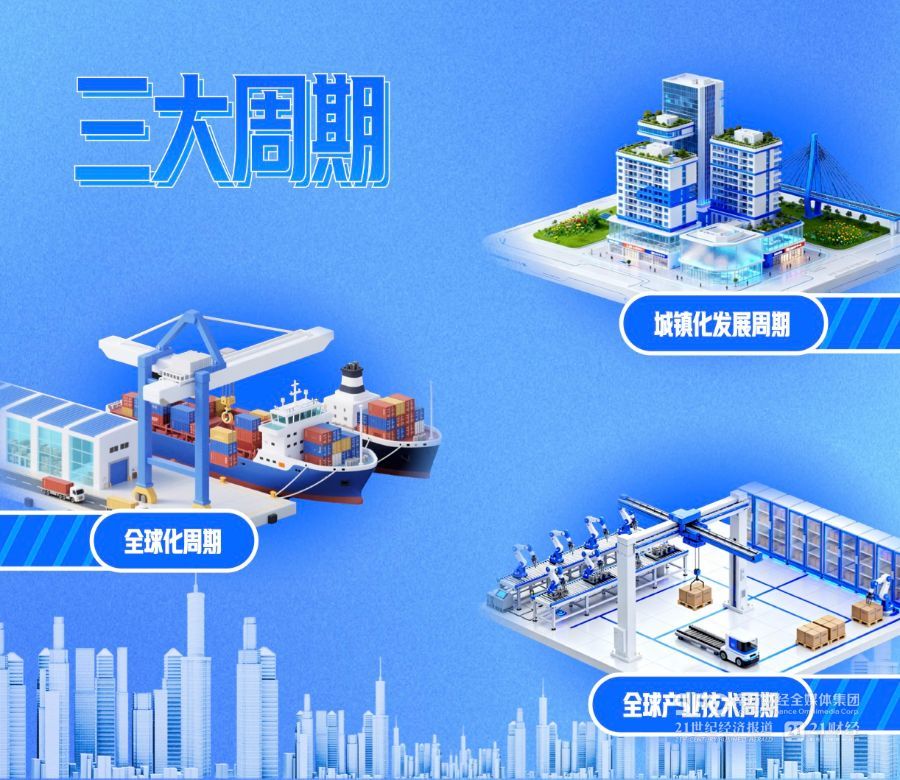
经济大省挑大梁丨非凡五年,广东把“逆风局”打成“高端局”
2 1 Shi Ji Jing Ji Bao Dao· 2025-12-08 08:04
Core Viewpoint - Guangdong has successfully navigated a challenging economic environment over the past five years, achieving significant growth and laying a solid foundation for future development during the "14th Five-Year Plan" period [1][3]. Economic Performance - Guangdong's total economic output has consistently crossed the thresholds of 12 trillion, 13 trillion, and 14 trillion yuan, maintaining its position as the top economy in China for 36 consecutive years, surpassing developed countries like South Korea and Australia [3]. - The average annual GDP growth rate for Guangdong during the first four years of the "14th Five-Year Plan" is 4.7%, which, while seemingly modest, represents a significant marginal increase compared to previous years [5]. Industrial Transformation - Guangdong is focusing on transforming traditional industries and nurturing emerging sectors, having promoted digital transformation for over 44,000 industrial enterprises [6]. - The province aims to establish nine trillion-yuan industrial clusters by 2024, contributing to its industrial diversification [6]. Technological Innovation - Over one-third of provincial technology innovation funds have been allocated to basic research, with Guangdong leading the nation in regional innovation capabilities [8]. - Key technological breakthroughs include advancements in high-end chips, nuclear magnetic resonance equipment, and surgical robots [8]. Reform and Openness - Guangdong has maintained a leading position in various indicators of private economy and has been recognized for four consecutive years as having the best business environment in China [9]. - The province's total import and export volume has exceeded 9 trillion yuan, with connections established with over 230 ports globally [9]. Regional Development and Environmental Sustainability - Guangdong is implementing a "full map development" strategy to promote industrial transfer to less developed areas, with over 300 projects and an investment exceeding 110 billion yuan in the "Yuexi North" region [11]. - The province has achieved significant improvements in environmental quality, with the best air quality recorded and a high water quality rate of 93.2% across national monitoring sites [11]. Social Welfare - Over 6 million new urban jobs have been created in Guangdong during the "14th Five-Year Plan," with a real annual growth of 4.9% in per capita disposable income [12]. - The province has achieved near-complete coverage of pension insurance and ensured that over 90% of migrant workers' children can attend public schools [12].

广东点评“十四五”成绩单 深圳综改创60多个“全国第一”
Shen Zhen Shang Bao· 2025-11-07 14:45
Economic Performance - Guangdong's economic strength has continuously improved, with GDP reaching 14.16 trillion yuan in 2024, maintaining the top position in the country for 36 consecutive years, and an average growth rate of 4.7% during the first four years of the "14th Five-Year Plan" [1] - The local general public budget revenue is projected to reach 1.35 trillion yuan in 2024, also ranking first nationally for 34 years [1] - The industrial revenue from above-scale industries reached 19.41 trillion yuan, while the service sector's added value was 8.14 trillion yuan, both leading the nation [1] Innovation and Technology - Guangdong has anchored its new positioning in the "One Point, Two Places" strategy, significantly advancing the Guangdong-Hong Kong-Macao Greater Bay Area construction, with the "Shenzhen-Hong Kong-Guangzhou" innovation cluster ranking first globally in innovation index [2] - The region has maintained its top position in national innovation capabilities for eight consecutive years, with R&D expenditure, high-value invention patents, and the number of high-tech enterprises all ranking first in the country [3] - The scale of the core AI industry in Guangdong is expected to exceed 220 billion yuan in 2024, accounting for about one-third of the national total [3] Infrastructure and Connectivity - Infrastructure connectivity in the Greater Bay Area is accelerating, with the "Bay Area on Tracks" initiative taking shape and cross-river and cross-sea passageways being developed [2] - Major cooperation platforms such as Hengqin, Qianhai, Nansha, and He Tao have been established, enhancing the integration of Guangdong and Hong Kong-Macao development [2] Foreign Investment and Trade - Guangdong's "friend circle" is expanding, with actual foreign investment reaching 626.26 billion yuan over the past four years [4] - The province's total import and export volume is expected to exceed 9 trillion yuan in 2024, maintaining the top position in the country for 39 consecutive years [4]
创新体系展现全球竞争力 广东交出“十四五”硬核答卷
Zhong Guo Jing Ying Bao· 2025-11-07 06:03
Group 1 - The core viewpoint of the news is that Guangdong's economy has shown significant growth and innovation during the "14th Five-Year Plan" period, with a focus on high-quality development and regional integration [1][2] - Guangdong's economic total has steadily increased, crossing the thresholds of 12 trillion, 13 trillion, and 14 trillion yuan from 2021 to 2024, maintaining its position as the top economy in China for 36 consecutive years with an average growth rate of 4.7% [1] - The construction of the Guangdong-Hong Kong-Macao Greater Bay Area has accelerated, with the "Shenzhen-Hong Kong-Guangzhou" innovation cluster ranking first globally in innovation index, indicating strong regional competitiveness [1] Group 2 - Innovation is identified as a key support for Guangdong's high-quality development, with the region's comprehensive innovation capability ranking first in China for eight consecutive years [2] - Guangdong has invested over one-third of its provincial science and technology innovation funds into basic research, achieving breakthroughs in key core technologies and showcasing its strength in high-end manufacturing and independent innovation [2] - The province's foreign trade continues to lead the nation, with total import and export volume expected to exceed 9 trillion yuan in 2024, and significant foreign investment projects being realized [2]