
黄金ETF(SPDR Gold Trust)

Search documents
金价“黑色星期一” 全球市场交易什么
经济观察报· 2026-03-24 03:47
Core Viewpoint - The current market characteristic is not a clear direction but a rapid correction around whether the worst-case scenario continues to escalate, with potential for a return to valuation-based trading if oil prices decline and bond yields stabilize [1][10]. Group 1: Market Movements - On March 23, global financial markets exhibited a rare curve, transitioning from panic to correction, influenced by geopolitical tensions and subsequent easing signals from the U.S. government [2][6]. - The European stock market, represented by the STOXX600, shifted from a 2.50% decline to a nearly 1% increase, closing at 577.36 points [2]. - U.S. stock indices also saw gains, with the Dow Jones up 1.38%, S&P 500 up 1.15%, and Nasdaq up 1.38%, while the VIX index fell to around 26 [2]. Group 2: Commodity Price Fluctuations - Gold prices experienced significant volatility, dropping to a low of $4098 per ounce before rebounding to close at $4407 per ounce, marking a 1.88% decline [2][7]. - Brent crude oil prices initially surged but ultimately fell by 9.72% to around $96 per barrel [2][6]. Group 3: Structural Weaknesses - The market's volatility is attributed to structural weaknesses, including energy supply constraints, re-evaluation of interest rate expectations, and pressures from the expiration of derivatives [3][6]. - The 10-year U.S. Treasury yield rose to 4.346%, reflecting concerns over inflation due to high oil prices, while Brent crude oil saw a cumulative increase of approximately 45% from early March to March 23 [6]. Group 4: Gold as an Asset - Despite short-term selling pressure, the long-term investment logic for gold remains intact, as it continues to serve as a hedge against geopolitical and macroeconomic risks [8]. - The SPDR Gold Trust's holdings decreased to 1052.705 tons, down 4.286 tons from the previous day, indicating a trend of selling gold for liquidity rather than a typical flight to safety [10].


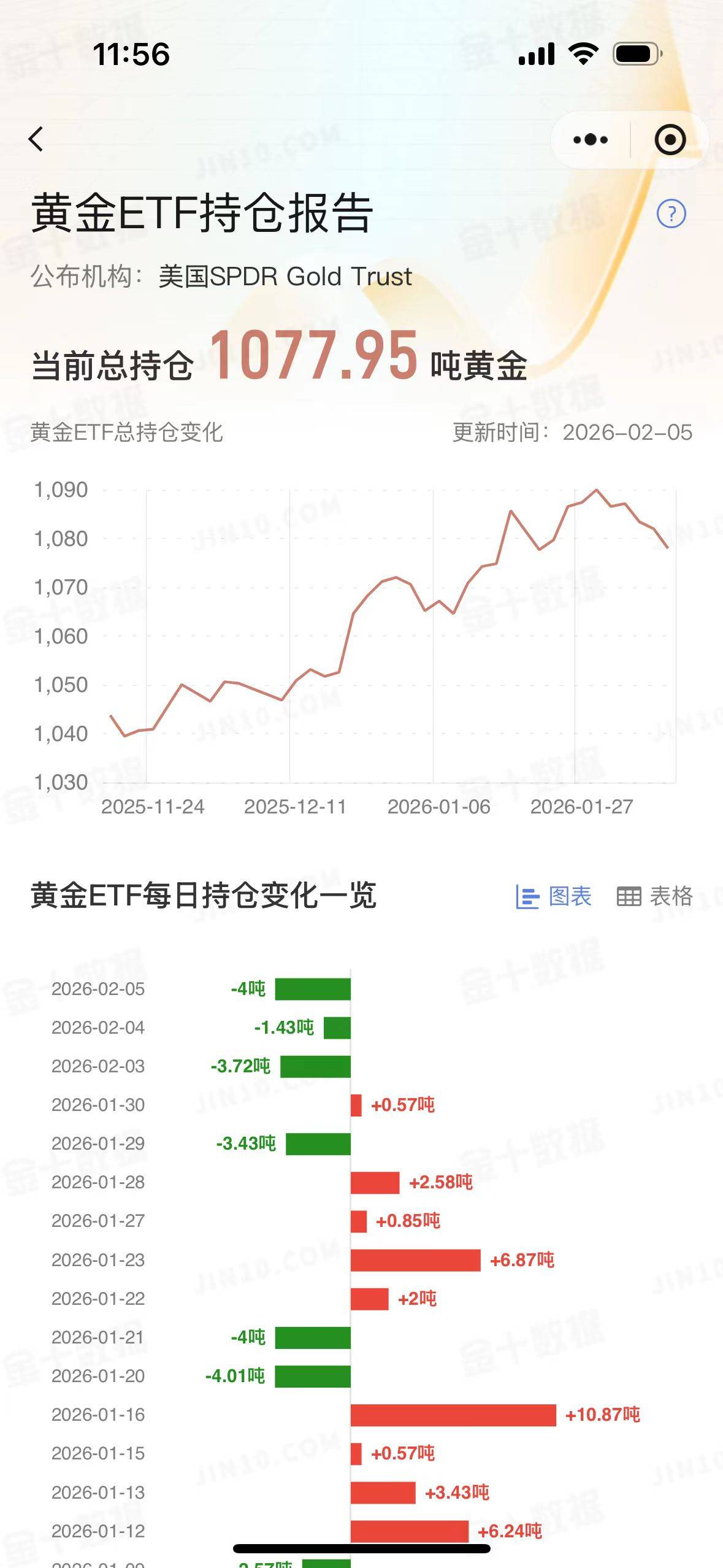
黄金ETF持仓报告解读(2026-2-6)黄金再遭抛售 大幅跳水
Sou Hu Cai Jing· 2026-02-06 10:53
Core Viewpoint - The SPDR Gold Trust, the world's largest gold ETF, reported a total holding of 1,077.95 tons of gold, reflecting a decrease of 4 tons from the previous trading day and over 9 tons for the week, amid significant selling pressure in the gold market [5]. Group 1: Gold ETF Holdings - As of February 5, the SPDR Gold Trust's holdings were 1,077.95 tons, down 4 tons from the previous day [5]. - The total reduction in holdings for the week exceeded 9 tons [5]. - The global gold ETF attracted a record inflow of $18.7 billion in January, with total assets under management reaching a historical high of $669 billion [7]. Group 2: Market Dynamics - On February 5, spot gold experienced a sharp decline, hitting a low of $4,760.28 per ounce and closing at $4,775.28, a drop of $190.46 or 3.84% [5]. - Silver prices fell nearly 20%, approaching the $70 mark [5]. - The decline in gold prices was influenced by a broader sell-off in the market, particularly in U.S. software stocks, and a strengthening U.S. dollar [5]. Group 3: Volatility and Future Outlook - Gold's volatility is currently at its highest level since the 2008 financial crisis, indicating a potential for continued price fluctuations [6]. - Analysts suggest that unless a speculative bubble re-emerges, volatility may not reach the extremes seen recently [6]. - The Federal Reserve's interest rate outlook remains uncertain, with expectations of two more rate cuts this year [6]. Group 4: Demand and Consumption - The China Gold Association reported a 3.57% year-on-year decline in gold consumption for 2025, totaling 950.096 tons [6]. - Domestic gold ETF holdings in China increased by 149.91% year-on-year to 247.852 tons by the end of December [6]. - JPMorgan forecasts that central bank net gold purchases will reach 800 tons this year, 70% higher than pre-2022 levels, potentially pushing gold prices to $6,300 per ounce by the end of 2026 [7].
金银巨震的真相?资管大佬直言:大宗商品是投机赌注
Jin Shi Shu Ju· 2026-02-06 09:11
Group 1 - The recent volatility in gold and silver prices has shocked investors, with gold experiencing a 70% increase over the past year despite a 12% drop last Friday, while silver has seen a 160% rise despite a recent 30% decline [1] - Hank Smith, Chief Investment Officer of Haverford Trust, advises caution in investing in precious metals and commodities, suggesting that the current price movements are primarily driven by momentum investing [1] - Smith argues that funds should be allocated to high-dividend stocks rather than commodities, as his investment portfolio does not include precious metals or other commodities [1] Group 2 - The emergence of futures and exchange-traded funds (ETFs) has significantly lowered the barriers to entry for commodity trading, allowing investors to track asset price movements without holding physical commodities [2] - Smith emphasizes that trading in commodities is largely speculative, as physical commodities do not generate profits or dividends, and the only expectation is to sell at a higher price [2] - Historically, the main participants in the commodity market were businesses needing to hedge against risks associated with physical assets, but now the market is dominated by hedge funds [2] Group 3 - Smith disagrees with the common belief that gold serves as a hedge against inflation, stating that holding gold for an extended period yields minimal returns, potentially lower than short-term government bonds or even savings accounts [3]
黄金什么时候会大跌?出现这4个信号的话一定要谨慎
Sou Hu Cai Jing· 2026-01-30 23:12
Core Viewpoint - Gold prices are reaching historical highs, approaching $5,100 per ounce, with Goldman Sachs raising its price target for the end of 2026 to $5,400. Investors are drawn to gold's safe-haven attributes while also expressing concerns about when this bull market might end. The fluctuations in gold prices are influenced by macro policies, market liquidity, and risk sentiment, with significant declines typically resulting from a combination of multiple negative factors [1][8]. Group 1: Conditions for a Significant Decline in Gold Prices - A single negative factor is unlikely to disrupt the gold bull market; a significant decline may only occur if one of three major conditions is met, accompanied by a shift in market liquidity [3]. - The first condition is a rapid increase in real interest rates, which would significantly raise the holding costs of gold. If the Federal Reserve abandons rate cut expectations and resumes aggressive rate hikes, global interest rates would rise, making gold less attractive compared to fixed-income assets [4]. - The second condition involves the U.S. dollar entering a strong cycle, which would suppress gold prices. A strong dollar increases the cost of purchasing gold for holders of non-dollar currencies, thereby reducing demand [5]. - The third condition is a decline in risk sentiment, where easing geopolitical risks or economic uncertainties would lead to reduced demand for gold as a safe haven, causing funds to flow into riskier assets [6]. Group 2: Auxiliary Signals for Early Warning of Gold Price Declines - Four auxiliary signals can provide early warnings for potential declines in gold prices, which are accessible for ordinary investors to track [7]. - The first signal is sustained outflows from gold ETFs. A continuous net outflow for four weeks, especially if exceeding 10 tons in a single week, indicates institutional withdrawal from gold [7]. - The second signal is a significant reduction in central bank gold purchases. If emerging market central banks stop accumulating gold or if Western central banks begin selling their gold reserves, it could disrupt the supply-demand balance [7]. - The third signal is a technical breakdown that triggers stop-loss selling. If gold prices fall below critical support levels, it could initiate a negative feedback loop of selling [7]. - The fourth signal is an increase in the attractiveness of alternative assets, such as cryptocurrencies or a structural bull market in equities, which could divert investment funds away from gold [7]. Group 3: Current Market Environment and Future Outlook - Currently, the core conditions for a significant decline in gold prices are not met, suggesting that gold is more likely to maintain high levels rather than experience a trend decline. Goldman Sachs predicts a 13% upside for gold prices by 2026, with the supporting logic remaining intact [8]. - Supporting factors include expectations of a 50 basis point rate cut by the Federal Reserve in 2026, stable gold purchasing demand from emerging market central banks, and ongoing global policy uncertainties that support gold prices [8].

黄金ETF持仓量报告解读(2026-1-13)黄金大幅拉升 白银创历史新高
Sou Hu Cai Jing· 2026-01-13 03:45
Core Viewpoint - The SPDR Gold Trust, the world's largest gold ETF, reported a significant increase in holdings to 1,070.8 tons, reflecting a rise of 6.24 tons from the previous trading day, amid heightened geopolitical risks and concerns over the independence of the Federal Reserve [5]. Group 1: Gold Market Dynamics - On January 12, spot gold prices surged, reaching a historical high of $4,629.93 per ounce before closing at $4,597.21, marking an increase of $87.87 or 1.95% [5]. - The rise in gold prices is attributed to ongoing geopolitical tensions and scrutiny of the Federal Reserve's independence, particularly regarding an investigation into Chairman Powell's statements about the Fed's renovation project [5]. - Silver also experienced a strong performance, hitting a record high of $84.62 per ounce, driven by similar market concerns regarding the Federal Reserve [5]. Group 2: Economic Indicators and Market Expectations - Recent U.S. non-farm payroll data eased expectations for aggressive rate cuts by the Federal Reserve in 2026, limiting the upside potential for precious metals [6]. - The unemployment rate fell to 4.4%, leading to a consensus that a rate cut in January is unlikely, although two cuts are still anticipated by the end of the year, with the first likely in June [6]. - Market reactions to upcoming inflation data could influence gold prices, with a hotter reading potentially exerting downward pressure, while a softer reading may support further price increases [6]. Group 3: Technical Analysis - Gold prices have shown strong upward momentum, confirming a bullish trend, with the price maintaining an upward channel over the past month [7]. - The MACD indicator remains in positive territory, indicating increasing bullish momentum, while the RSI is in the overbought zone, which may limit short-term gains [7]. - Key resistance levels are identified at $4,625, with a successful breakout potentially leading to further price increases, while support is established at $4,400 [7][8].
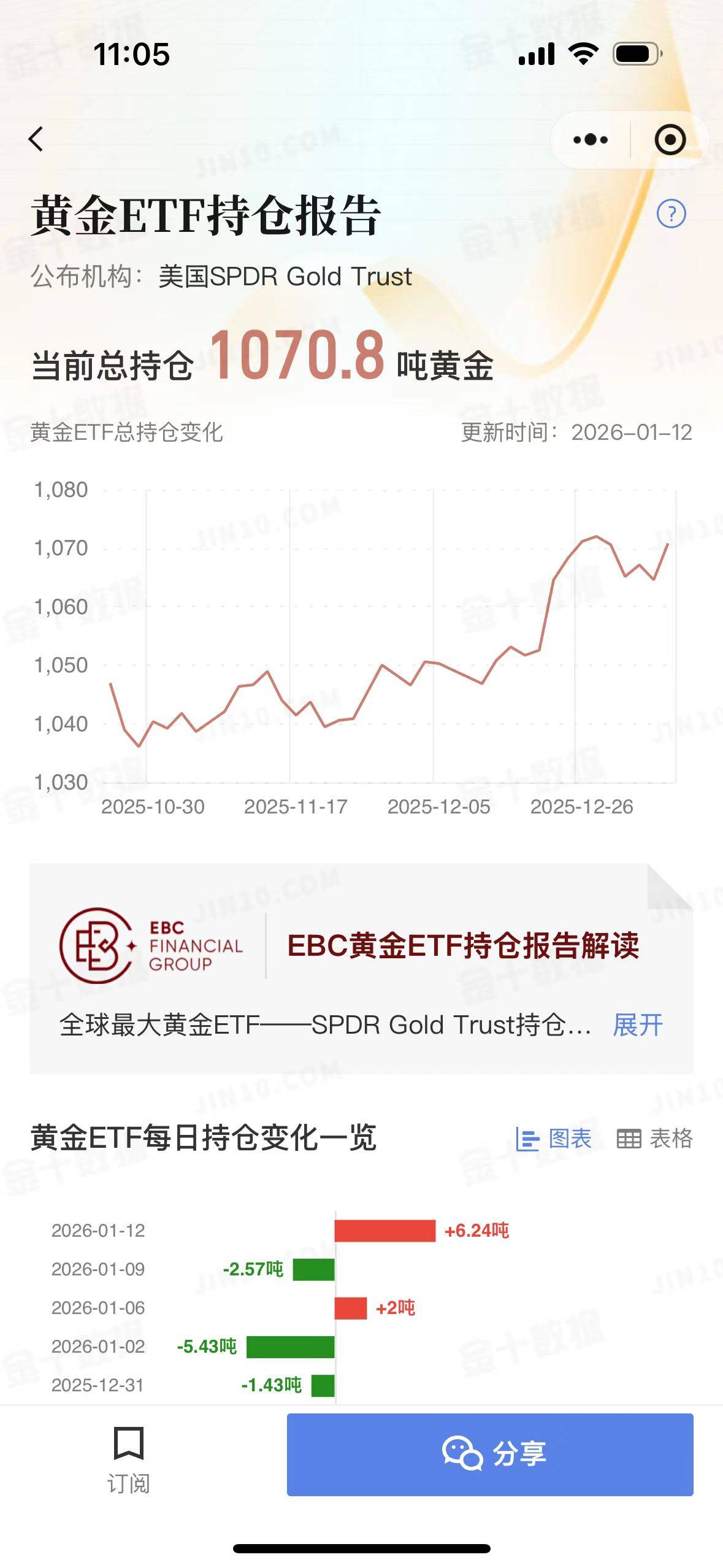
1月2日SPDR黄金持仓量较前一日减少5.43吨
Xin Hua Cai Jing· 2026-01-04 01:06
Core Insights - As of January 2, the world's largest gold ETF, SPDR Gold Trust, saw a decrease in holdings by 5.43 tons, bringing the current total to 1,065.13 tons [1] Group 1 - The SPDR Gold Trust is recognized as the largest gold ETF globally [1] - The reduction in holdings indicates a potential shift in investor sentiment or market conditions affecting gold investments [1] - The current holdings of 1,065.13 tons reflect the ongoing trends in the gold market and investor behavior [1]
金荣中国:美11月失业率创四年新高,金价冲高无果陷入高位震荡
Sou Hu Cai Jing· 2025-12-17 02:01
Market Overview - International gold prices maintained a volatile trend, opening at $4318.16 per ounce, reaching a high of $4335.04, a low of $4271.43, and closing at $4319.66 [1] Employment Data - The U.S. Bureau of Labor Statistics reported an increase of 64,000 non-farm jobs in November, following a decrease of 105,000 in October, marking the largest drop since the end of 2020 [3][4] - The unemployment rate rose to 4.6% in November, the highest level since 2021, up from 4.4% in September [3][4][5] - The report indicates a labor market situation similar to previous trends, with low hiring and firing numbers, complicating the Federal Reserve's policy decisions [4] Federal Reserve Insights - Federal Reserve officials are concerned about the sustainability of employment conditions, with expectations of maintaining interest rates through 2026 to address persistent inflation [5][9] - Market expectations for a potential rate cut in January are around 20%, with a cumulative 25 basis point cut probability of 43.5% by March [10][7] Economic Growth Indicators - Recent PMI data suggests a loss of momentum in economic growth, with GDP growth for Q4 projected at approximately 2.5%, but showing signs of slowdown [6] - Service sector new orders have nearly stagnated, and factory orders have seen their first decline in nearly a year, indicating potential economic activity slowdown entering 2026 [6] Market Reactions - The rise in unemployment rate has led to increased expectations for further rate cuts by the Federal Reserve, with U.S. Treasury prices slightly rising and yields on various maturities declining [7][9] - The market is particularly focused on wage growth, which has slowed to 3.5%, the lowest in the current cycle, influencing the Fed's potential actions [7] Gold ETF Holdings - The largest gold ETF, SPDR Gold Trust, maintained its holdings at 1,051.69 tons, indicating stable investor interest in gold amid economic uncertainties [10]

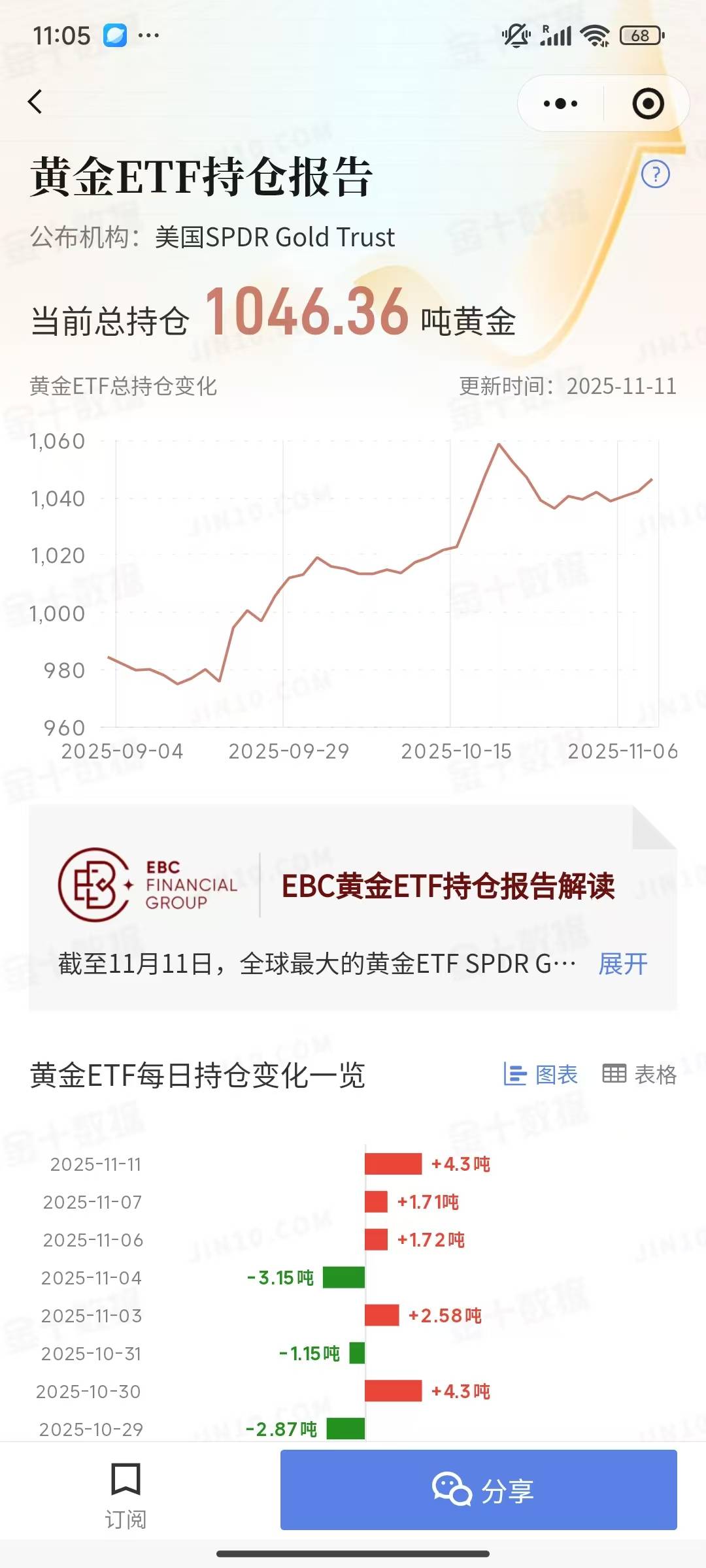
黄金ETF持仓量报告解读(2025-11-12)金价短期乐观 回调或成机会
Sou Hu Cai Jing· 2025-11-12 04:37
Core Viewpoint - The SPDR Gold Trust, the world's largest gold ETF, has seen an increase in holdings to 1,046.36 tons as of November 11, 2025, reflecting a rise of 4.3 tons from the previous trading day, amid a rebound in gold prices which are trading above $4,100 per ounce [7]. Group 1: Gold ETF Holdings - As of November 11, 2025, SPDR Gold Trust's total holdings stand at 1,046.36 tons of gold, marking an increase of 4.3 tons from the prior day [7]. - The increase in gold ETF holdings coincides with a rise in spot gold prices, which reached a three-week high of $4,148.73 per ounce during the trading session [7]. Group 2: Market Conditions and Price Movements - On November 11, spot gold prices fluctuated, closing at $4,126.62 per ounce, up by $10.91 or 0.27% [7]. - The price of gold is supported by expectations of Federal Reserve easing and geopolitical risks, leading to a generally optimistic short-term outlook for gold prices [7][8]. - Recent employment data has reignited market hopes for interest rate cuts, with private sector layoffs averaging 11,250 per week, indicating challenges in job creation [8]. Group 3: Technical Analysis - Gold has broken out of a consolidation range between $3,900 and $4,050, confirming a bullish breakout, although upward momentum appears to be stalling [8]. - The daily chart shows a neutral to bullish pattern, while the 4-hour chart indicates that gold prices are above all major moving averages, supporting further upward movement [8]. Group 4: Price Resistance and Support Levels - A strong breakout above the $4,150 resistance level could enhance bullish momentum, targeting $4,200 and potentially retesting historical highs around $4,381 [9]. - Key support levels are identified at $4,100 and a stronger support near $4,050 [9].
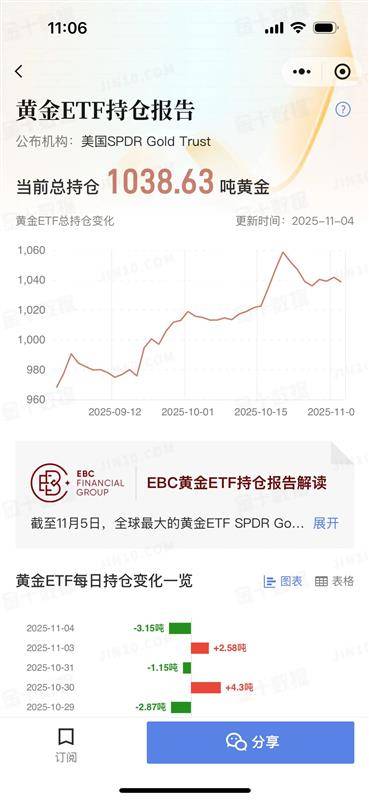
黄金ETF持仓量报告解读(2025-11-6)鸽派言论及避险需求支撑金价
Sou Hu Cai Jing· 2025-11-06 04:11
Core Viewpoint - As of November 5, the SPDR Gold Trust holds 1,038.63 tons of gold, unchanged from the previous trading day, while spot gold prices experienced fluctuations, closing at $3,978.95 per ounce, up $47.17 or 1.20% [2] Group 1: Market Dynamics - Spot gold prices initially dipped to around $3,930 before rebounding, reaching a daily high of approximately $3,990, supported by dovish comments from Federal Reserve officials and ongoing safe-haven demand despite strong U.S. economic data pushing the dollar higher [2][3] - U.S. economic indicators show resilience alongside inflation pressures, with ADP reporting 42,000 new jobs in October, exceeding expectations of 25,000, and the ISM services PMI rising from 50 in September to 52.4, indicating inflationary signs [2] Group 2: Federal Reserve Influence - Despite a surge in U.S. Treasury yields following the data release, dovish statements from Federal Reserve officials alleviated market tensions, with calls for lower interest rates [3] - The upcoming Supreme Court hearing regarding the legality of Trump's tariff policies could significantly impact global trade dynamics and market sentiment, with tariff uncertainties driving demand for safe-haven assets like gold [3] Group 3: Technical Analysis - Current market sentiment suggests a neutral to bearish outlook for gold prices, with no strong upward catalysts identified, potentially leading to a period of consolidation lasting weeks or months [3] - Technical indicators show that gold may continue to oscillate within a range, with the Relative Strength Index (RSI) indicating buyers are gathering strength but not yet breaking above the neutral level of 50 [3] - Support is noted around the $3,900 level, while a break below this could open up further downside potential; conversely, gold needs to stabilize above $4,000 to pave the way for upward movement [4]
黄金ETF持仓量报告解读(2025-11-5)金价跌势加速 下挫至3930
Sou Hu Cai Jing· 2025-11-05 06:08
Core Viewpoint - The SPDR Gold Trust, the world's largest gold ETF, reported a total holding of 1,038.63 tons of gold, reflecting a decrease of 3.15 tons from the previous trading day, coinciding with a significant drop in spot gold prices [5]. Group 1: Gold ETF Holdings - As of November 4, the SPDR Gold Trust's holdings were 1,038.63 tons, down by 3.15 tons from the previous day [5]. - The decline in gold ETF holdings occurred alongside a notable drop in spot gold prices, which fell to a low of $3,929.14 per ounce, marking the lowest level since October 30 [5]. Group 2: Market Conditions - On November 4, spot gold prices experienced a significant decline, closing at $3,931.78 per ounce, down $69.38 or 1.73% [5]. - The overall market sentiment was affected by a decline in global stock markets and risk assets, leading to a downward trend in commodities such as gold, silver, and oil [5]. Group 3: Economic Factors - The strengthening of the US dollar and rising bond yields have contributed to the pressure on gold prices, with expectations for a December rate cut diminishing [6]. - Economic uncertainty stemming from the potential government shutdown has provided some support for gold prices, as Congress remains deadlocked over funding proposals [6]. Group 4: Technical Analysis - Recent weeks have seen key technical levels breached, particularly the psychological $4,000 mark, triggering technical selling and long liquidation [6]. - The technical outlook for gold indicates an increased risk of correction, with daily momentum indicators showing a downward trend and a weakening bullish sentiment [6][7]. - Short-term support for gold is identified in the $3,910-$3,900 range, with potential challenges to $3,850 and even $3,800 if further declines occur [7].
