
AI客服

Search documents
受气的携程客服岗挤满了海归留学生?「比普华永道工资高、低门槛拿大厂编制」
36氪· 2026-03-09 00:11
Core Viewpoint - The article discusses the increasing demand for English-speaking customer service positions at Ctrip, highlighting how these roles have become attractive to recent graduates, particularly those with overseas study experience, due to competitive salaries and perceived job stability [4][6][25]. Group 1: Job Market Dynamics - Ctrip's English customer service positions are seen as a "refuge" for international students, with high competition for roles requiring strong English skills and educational backgrounds [4][6]. - The salary for Ctrip's English online customer service ranges from 11,000 to 14,000 yuan, which is higher than some entry-level positions in other tech companies [7][8]. - Many graduates prioritize salary over job satisfaction, with some choosing Ctrip over firms like PwC due to better pay [8][11]. Group 2: Work Environment and Responsibilities - The role offers a work-life balance, but employees often face pressure from KPIs and may end up working overtime voluntarily [10][11]. - Ctrip's customer service positions are distinct from traditional roles, focusing on international clients and requiring higher language proficiency, which is reflected in the job's appeal to graduates [17][18]. - The work involves handling customer complaints, managing hotel partnerships, and addressing complex issues, often requiring significant mental effort [21][22]. Group 3: Career Progression and Perception - Many view customer service roles as a stepping stone to other positions within Ctrip, although opportunities for internal transfers have become limited [26][27]. - Ctrip's customer service team is substantial, with over 16,000 employees, making it a critical part of the company's operations [27][29]. - The company emphasizes the importance of customer service in maintaining high profit margins and customer satisfaction, which has been a key factor in its success [30][31]. Group 4: Future of Customer Service - Despite advancements in AI, the demand for human customer service representatives remains strong due to the complexity of customer interactions [31][32]. - Ctrip has implemented measures to support its customer service staff, recognizing the high stress associated with the role, especially during peak seasons [32][33].



破译“三重密码” 拓开出海中小企业客服智能化之路
Zhong Guo Zheng Quan Bao· 2026-02-24 20:28
Core Insights - The article discusses the challenges and opportunities faced by small and medium-sized enterprises (SMEs) in the financial technology sector as they navigate the integration of AI into their customer service systems. The focus is on balancing efficiency and customer experience while addressing the complexities of compliance and trust in cross-border operations. Group 1: AI Integration in Customer Service - The introduction of AI in customer service is not merely a transition from human to digital but aims to break down cognitive barriers and reduce the cost of building trust, transforming customer service from a cost center to a value-creating center [3][4] - The core objective of customer service, whether using AI or not, is to resolve issues and build trust, which is crucial for brand loyalty and preventing customer churn [3][4] Group 2: Market Dynamics and Challenges - Information asymmetry is a significant challenge for SMEs in overseas markets, exacerbated by geographical and regulatory barriers, leading to a lack of trust and underestimation of the true value of products and services [2][4] - Traditional customer service incurs high costs due to complex processes and inter-departmental handovers, which AI can help streamline [2][4] Group 3: Technology and Compliance - The deployment of AI must be accompanied by a robust governance framework that respects local regulations and enhances trust, as breaches in trust are difficult to repair [4][5] - A comprehensive evaluation of AI systems should include performance efficiency, accuracy, reliability, and resource utilization to ensure sustainable economic benefits [7][8] Group 4: Quantitative Metrics for AI Customer Service - Key performance indicators for AI customer service include First Contact Resolution (FCR) and the number of transfers required to resolve a customer issue, which reflect the system's efficiency and effectiveness [6][7] - The need for a balance between efficiency and customer experience is emphasized, as overly complex AI interactions can lead to customer dissatisfaction [7] Group 5: Governance and Risk Management - The establishment of a quantifiable governance structure is essential for managing AI compliance, focusing on conversation safety, real-time risk intervention, and the effectiveness of governance processes [8][9] - Continuous improvement in algorithm fairness and performance is necessary, leveraging industry tools for standardized assessments [9][10] Group 6: Strategic Integration of Market Value, Technology, and Compliance - The integration of market value, technological empowerment, and policy compliance forms a strategic framework that enhances trust and operational efficiency, allowing companies to proactively shape market standards rather than merely adapt to them [10]
全球头部酒店如何通过AI客服提升入住率?【502线上同行】
虎嗅APP· 2026-01-22 13:42
Core Insights - The hospitality and travel industry is facing a critical challenge where customer service is no longer just a response center but a key operational node that impacts conversion rates, repurchase rates, and service efficiency [3] - Travelers are increasingly impatient, prioritizing immediate responses over cleanliness or food quality, leading to rising labor costs exceeding 30% [3][4] Group 1: AI Integration in Customer Service - The integration of AI in customer service is evolving from a simple response system to a comprehensive concierge service that can drive repurchase [7] - AI can reduce ineffective inquiries and compress interaction rounds through dual engines of itinerary and location [7] - The boundaries of proactive care are defined by time thresholds, types of benefits, and push frequency [7] Group 2: Human-AI Collaboration in Customer Service - There is a need to identify which services should be handled by AI and which should remain human-operated across pre-stay, in-stay, and post-stay phases [8] - Examples of both successful and failed cases of intelligent distribution and human-machine collaboration are discussed [8] Group 3: Unique Challenges of AI in Hospitality - The hospitality sector cannot simply adopt retail models for AI customer service due to different operational needs [8] - The effectiveness boundary between scene-level knowledge graphs and Q&A knowledge bases is highlighted [8] - Compliance and safety issues arise when agents transition from "suggestion" to "execution" [8]


跌破800万,出生人口,该稳住了
虎嗅APP· 2026-01-19 11:07
Core Viewpoint - The article discusses the critical issue of declining birth rates in China, emphasizing the need for policies to stabilize and encourage population growth, particularly through marriage and childbirth incentives [4][10]. Group 1: Population Statistics - As of the end of 2025, China's total population is projected to be 1.405 billion, a decrease of 3.39 million from the previous year [6]. - The birth rate for the year is expected to be 7.92 million, with a birth rate of 5.63‰ and a death rate of 8.04‰, resulting in a natural growth rate of -2.41‰ [7]. Group 2: Policy Initiatives - Recent meetings have highlighted the importance of promoting a positive marriage and childbirth culture, with a specific focus on stabilizing the number of new births [10][14]. - The government is implementing various measures to stimulate childbirth, including financial incentives and educational reforms, aiming to create a more supportive environment for families [35][39]. Group 3: Marriage Trends - There has been a notable increase in marriage rates, with 5.152 million couples marrying in the first three quarters of 2025, representing an 8.5% year-on-year increase [22]. - Major cities are experiencing significant growth in marriage registrations, with Shanghai seeing a 38.7% increase and Shenzhen a 28.7% increase [24]. Group 4: Future Projections - The article suggests that the number of births may rebound in 2026, driven by the increase in marriage rates and supportive policies [18][32]. - While short-term improvements are expected, the article cautions that reversing the long-term decline in birth rates will require sustained efforts and comprehensive policy measures [33][42].

2025年企业AI客服系统建设费用全解析:中小企业如何控制预算?
Sou Hu Cai Jing· 2025-12-23 13:36
Core Insights - The upgrade of cross-border services and customer experience is driving more SMEs to adopt AI customer service systems, which are no longer exclusive to large enterprises but are essential for improving response efficiency and optimizing operational structures [1][3] - By 2025, the AI customer service market has shifted from "function stacking" to "scenario adaptation" and "cost control," with companies focusing on deployment flexibility, actual resolution rates, and long-term operational costs [1][3] AI Customer Service Value and Selection Logic - The value of AI customer service lies not only in "replacing human labor" but also in "enhancing service," enabling 24/7 responses, multi-turn dialogue guidance, and automatic ticket assignment, significantly reducing first response times and reliance on human resources [3] - SMEs should prioritize three dimensions when selecting AI customer service solutions: alignment with IT capabilities, support for core business scenarios, and transparency of total cost of ownership (TCO) [6] Recommended AI Customer Service Systems - **Lingyang Quick Service**: An AI customer service product from Alibaba Cloud, designed for quick deployment and effectiveness, suitable for SMEs in e-commerce, retail, and SaaS software [4] - **Ronglian Qimo**: Offers a multi-channel intelligent customer service platform, ideal for businesses with call center foundations needing to integrate various communication channels [8] - **Zhichi Technology**: Focuses on full-scenario intelligent customer service, suitable for B2C enterprises with high customer conversion rate requirements [9] - **Xiaoneng Technology**: Provides a closed-loop customer service solution tailored for e-commerce and retail, particularly effective for sellers with high daily inquiry volumes [10] - **Yijie Cloud Customer Service**: Emphasizes elastic scalability and high availability, suitable for SMEs with significant business fluctuations [12] Cost Control Strategies for SMEs - Cost control does not mean sacrificing capabilities; it is essential to configure according to needs and implement in phases [15] - Initial phase: Choose SaaS annual fee products like Lingyang Quick Service to avoid large upfront investments [15] - Mid-phase: Evaluate private deployment or hybrid architecture if inquiry volumes surge or internal system integration is needed [15] - Long-term: Continuously optimize knowledge bases and intent recognition rules through dialogue data analysis to enhance self-service rates and indirectly reduce labor costs [15] FAQs on AI Customer Service - AI customer service can handle over 70% of repetitive inquiries, freeing human resources for more complex issues [16] - SaaS versions are generally more cost-effective and easier to manage for SMEs unless there are specific data isolation requirements [17] - Mainstream SaaS products support zero-code configuration, allowing business personnel to maintain systems after brief training [18]

【西街观察】AI客服转人工,不能化简为繁
Bei Jing Shang Bao· 2025-12-16 14:35
Core Insights - The article highlights the challenges faced by users when trying to transition from AI customer service to human representatives, indicating that AI systems often struggle to understand user requests, leading to a frustrating experience for consumers [1][2] - It points out that some companies intentionally create barriers to accessing human customer service, prioritizing cost-cutting over user experience, which contradicts the original intention of implementing AI [1][2] Group 1: AI Customer Service Limitations - AI customer service systems exhibit significant limitations in understanding user inquiries, which complicates the process of transitioning to human support [1] - Companies may opt for lower-cost AI solutions that lack the capability to handle complex customer needs, resulting in inadequate service [1] - The reluctance of some companies to address these issues reflects a mindset focused on cost reduction rather than enhancing service quality [1] Group 2: Industry Recommendations - The industry should recognize the importance of effective human-AI collaboration, ensuring that AI handles simple inquiries while complex issues are promptly escalated to human agents [2] - Companies risk damaging their brand reputation and consumer trust by overly focusing on cost-cutting measures, which can lead to a negative feedback loop affecting customer satisfaction [2] - There is a call for clearer standards regarding AI customer service, emphasizing that AI should complement human efforts rather than replace them, with mechanisms in place for automatic escalation to human support when AI fails [2]
天润云(02167.HK)白皮书发布|从Chatbot到智能体,欧美AI客服的进化之路
Ge Long Hui· 2025-12-11 22:21
Core Insights - The focus of customer service has shifted from enhancing efficiency to allowing AI to take over tasks and execute them in a closed loop, demonstrating verifiable ROI by 2025 [1] - Companies are increasingly asking how much human labor AI can replace rather than if AI can be implemented [1] Group 1: Research Findings - The white paper is based on in-depth research of four leading customer service companies: Sierra, Decagon, ASAPP, and Cognigy [1] - It serves as a practical guide for those responsible for customer service system construction, SOP implementation, automation project advancement, cost optimization, or service experience enhancement [1] Group 2: Key Questions Addressed - The white paper addresses critical questions such as the actual automation rate, whether delivery costs have truly decreased, and how AI can achieve end-to-end task closure across different business processes [2] - It also explores the relationship between automation rates, resolution rates, and token costs, as well as how mature companies measure AI ROI beyond just hit rates [2] Group 3: Future Considerations - The document discusses the future structure and role reconstruction of customer service organizations, how to assess the current system's value, and how to choose the technology roadmap for the next two years [2] - It emphasizes the importance of demonstrating to management that AI investments can yield real returns and how to drive the replacement of human labor in a controlled manner [2]

人工客服都去哪了?
Sou Hu Cai Jing· 2025-09-10 08:44
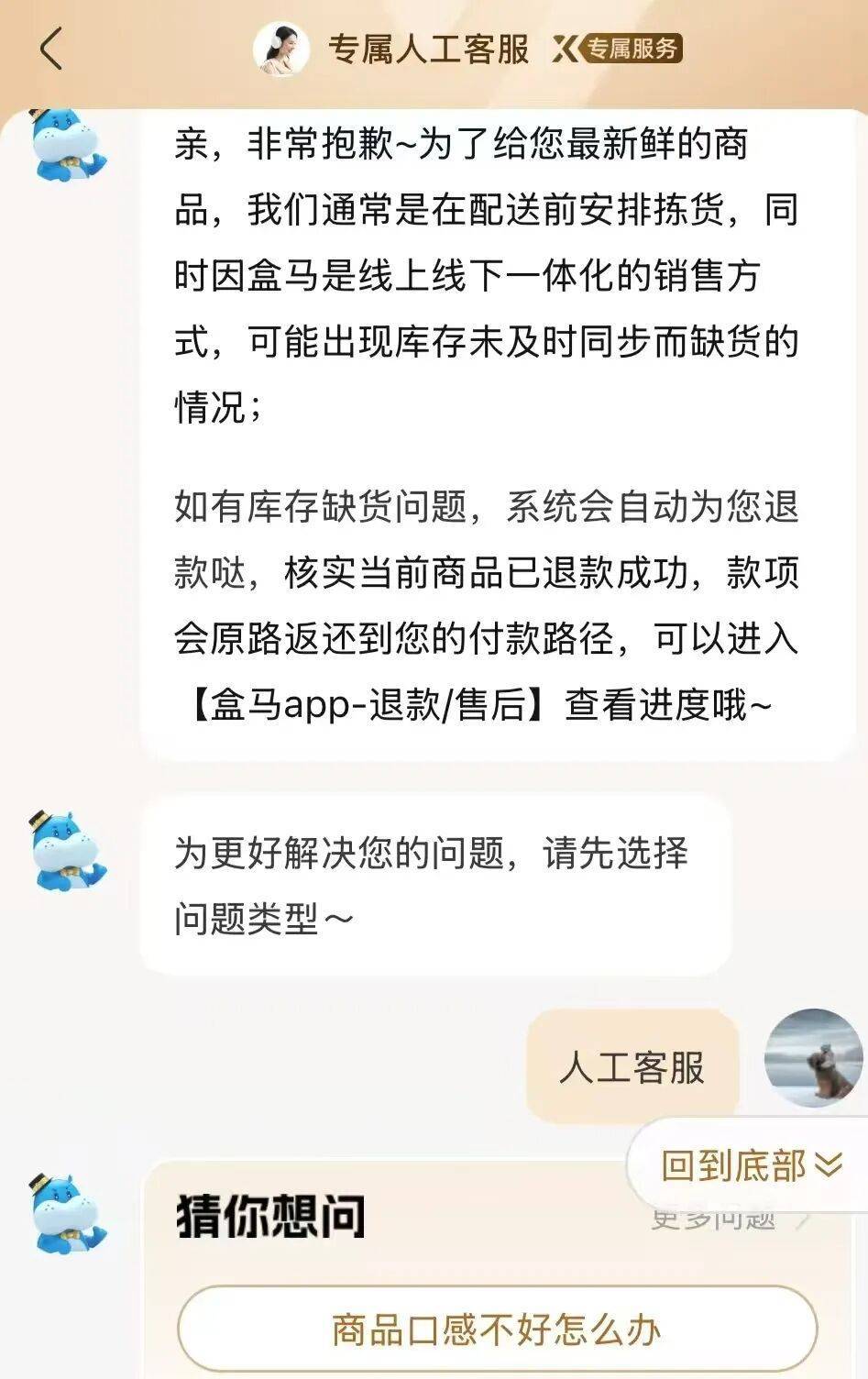
Core Viewpoint - The article highlights the challenges faced by consumers in the instant retail sector, particularly regarding customer service and communication issues when problems arise with orders [1][3]. Group 1: Consumer Experience - Consumers are often left without adequate support when issues occur, such as receiving incorrect orders or experiencing automatic refunds without prior notification [1][3]. - The lack of effective communication from platforms, particularly through automated customer service, leads to frustration and a poor consumer experience [3]. Group 2: Industry Practices - The article criticizes the practice of platforms using automated refunds without informing consumers, which undermines their rights to be informed and to choose alternatives like waiting, exchanging, or refunding [3]. - Some platforms, like Meituan and JD.com, have implemented better practices by offering consumers options when items are out of stock, demonstrating that service quality can be improved through better communication [3]. Group 3: Regulatory Environment - There is a call for regulatory bodies to establish standards for the use of intelligent customer service, including response times for transferring to human agents and ensuring consumer rights are protected [3]. - The current increase in complaints related to intelligent customer service indicates a need for improved industry standards and oversight [3]. Group 4: Market Dynamics - Despite ongoing losses, major delivery platforms continue to invest heavily in subsidies and market competition, raising questions about the sustainability of such practices [3]. - The article emphasizes that the ultimate success in the delivery market will depend on the quality of service provided to consumers, rather than just order volume or technological efficiency [3].
客服成电商增长新入口:数字蚂力AI云客服发布“双11服务保障计划”
Quan Jing Wang· 2025-08-20 12:06
Core Viewpoint - Ant Group's subsidiary, Digital Mali, has launched a "Double 11 Service Guarantee Plan" aimed at addressing e-commerce customer service pain points through a performance-based payment model, promising brands tangible commercial growth [1] Group 1: Service Guarantees - The plan includes commitments such as "If you can't connect, use it for free," where if the service response time does not meet the agreed SLA standards, the service fee will be waived [4] - The "No Growth, No Charge" promise ensures that only stores managed entirely by Digital Mali will receive additional "value-added services" aimed at enhancing customer conversion [5] Group 2: Performance Metrics - During the "6.18" shopping festival, Digital Mali's AI cloud customer service handled over 26 million service requests, with a peak of nearly 550,000 requests in one day, maintaining an average service satisfaction rate of 94% [6] - The ROI of AI cloud customer service is highlighted by improved efficiency, with customer service representatives potentially increasing their problem-solving capacity from 200 to 300 queries per day due to time savings [6] Group 3: AI Integration and Future Outlook - Gartner predicts a 400% growth in AI-driven customer interactions by 2025, with AI agents improving customer satisfaction by 20% [7] - Digital Mali's AI cloud customer service solution integrates AI as a central intelligence hub, reconstructing service processes to balance efficiency and quality [7] - The company offers a "managed service" model, training cloud customer service representatives using AI, and providing ongoing support to enhance customer engagement and brand loyalty [7][8]

“转人工客服”应该更方便些
Ren Min Ri Bao· 2025-07-24 22:22
Group 1 - The increasing reliance on AI customer service is leading to consumer frustration, as many find it difficult to reach human representatives when issues arise [1][2] - Companies are using AI to manage customer inquiries, especially during peak times, but this can result in inadequate handling of complex issues and customer emotions [2] - There is a call for businesses to improve "human-machine collaboration" by ensuring clear access to human customer service when AI fails to resolve issues [2] Group 2 - The performance of customer service teams is directly linked to the number of complaints they receive, creating pressure to manage inquiries efficiently [2] - AI customer service is better suited for structured and routine inquiries, but struggles with complex problems and emotional customer responses [2] - Recommendations include establishing a clear "transfer to human" option in AI systems and improving compensation and support for customer service personnel [2]