AI 5芯片

Search documents
马斯克:向中国学习
投资界· 2026-02-09 07:19
Core Viewpoint - Space is predicted to become the preferred location for AI infrastructure within 30 to 36 months, with annual AI computing power in space expected to exceed the cumulative total on Earth within five years [1][12][20]. Group 1: AI and Space Infrastructure - The total intelligence of AI may surpass human intelligence within five to six years, with human intelligence potentially constituting less than 1% of all intelligence [2][25]. - Companies entirely composed of AI and robots are expected to outperform any company with human involvement [2][31]. - The energy supply is a critical factor for building data centers in space, as energy production outside of China is stagnating while chip production is rapidly increasing [3][6]. Group 2: Energy and Cost Efficiency - Solar panels in space can generate power at five times the efficiency of those on Earth, eliminating the need for batteries, thus reducing costs significantly [4][9]. - The cost of solar panels is currently around $0.25 to $0.30 per watt in China, and costs could decrease by up to tenfold when deployed in space [9][23]. - The average electricity consumption in the U.S. is about 500 GW, and achieving 1 TW of power generation in space would require significant advancements in energy production [5][20]. Group 3: Challenges in Energy Production - Building power plants is complex, requiring extensive infrastructure and facing regulatory hurdles, which slows down the process [6][10]. - The demand for electricity for data centers is underestimated, with actual needs being much higher due to cooling and maintenance requirements [10][21]. - The U.S. is facing a bottleneck in energy production, which could hinder the launch of large-scale AI chip operations [21]. Group 4: Manufacturing and Supply Chain - The manufacturing of chips is constrained by existing foundries, which are unable to meet the growing demand for AI chips [19][18]. - There is a significant backlog in turbine orders, which complicates the establishment of new power generation facilities [11][12]. - SpaceX and Tesla aim to produce 100 GW of solar panels annually, controlling the entire supply chain from raw materials to finished products [8][34]. Group 5: Competitive Landscape - Without breakthrough innovations in the U.S., China is poised to dominate the AI and manufacturing sectors [2][37]. - China's energy production is projected to exceed that of the U.S. by three times, indicating its industrial capabilities [37]. - The U.S. faces challenges in maintaining a competitive edge due to lower birth rates and a declining workforce, making advancements in robotics and AI crucial [36][37].


芯片设计环节涨价预期明确!科创芯片设计ETF天弘(589070)成交额突破8000万元
Mei Ri Jing Ji Xin Wen· 2026-02-02 06:32
Group 1 - The market experienced a decline, particularly in the chip design sector, with the Tianhong ETF tracking the semiconductor design index dropping by 3.82% and a trading volume of 83.26 million yuan [1] - Key stocks in the sector, including Jucheng Co., Zhongwei Semiconductor, and others, saw declines exceeding 5% [1] - The Tianhong ETF closely follows the Shanghai Stock Exchange's semiconductor design theme index, which focuses on the midstream design segment of the semiconductor industry, with a high concentration of nearly 95% [1] Group 2 - The industry is witnessing a dual drive from inventory cycle reversal and deepening AI innovation cycle, with clear price increase expectations in the chip design segment [1] - Media reports indicate that MediaTek plans to adjust prices moderately, while Analog Devices will increase prices by 10%-15% starting February 1 [1] - The storage chip "super cycle" is ongoing, with Counterpoint Research predicting a price increase of 40%-50% in the first quarter [1] Group 3 - Dongwu Securities believes that Tesla's Optimus robot production ramp-up will drive demand for AI chips, with the AI 5 chip design completed for internal use [2] - Future growth may be limited by chip supply, highlighting the necessity of establishing proprietary wafer fabs, as chip design capability is crucial for the commercialization of humanoid robots [2] - Huachuang Securities notes significant resource investment in advancing NAND chip and controller design technology, driven by surging demand for data center storage chips [2]
特斯拉自建晶圆厂!月产能100万片!
国芯网· 2025-11-07 12:30
Group 1 - The core viewpoint of the article emphasizes the significant advancements and strategic plans of Tesla in the semiconductor and AI sectors, particularly focusing on the development of proprietary chips and autonomous driving technology [2][4]. Group 2 - Tesla's CEO Elon Musk announced plans to potentially build a large wafer fabrication plant, aiming to produce 1 million wafers per month, addressing the critical bottleneck in chip supply [2]. - The new AI 5 chip, designed specifically for Tesla's AI applications, boasts one-third the power consumption of Nvidia's Blackwell while maintaining comparable performance and costing less than 10% of its price [2]. - The upcoming Robotaxi model, Cybercab, is set to begin production in April 2026, featuring no steering wheel or pedals, with a production rate target of 5-10 seconds per vehicle and an annual capacity that could reach up to 500,000 units [4]. - Tesla's autonomous driving technology has reportedly achieved significant breakthroughs, with the latest version expected to enhance safety and efficiency, potentially saving millions of lives and preventing numerous traffic accidents [4]. - The company is also innovating with a self-insurance plan for its Robotaxi fleet, which aims to reduce operational costs by eliminating the need for traditional insurance [4].
马斯克讨薪万亿美元成功!剧透特斯拉六大目标,满血FSD明年进入中国
Sou Hu Cai Jing· 2025-11-07 09:22
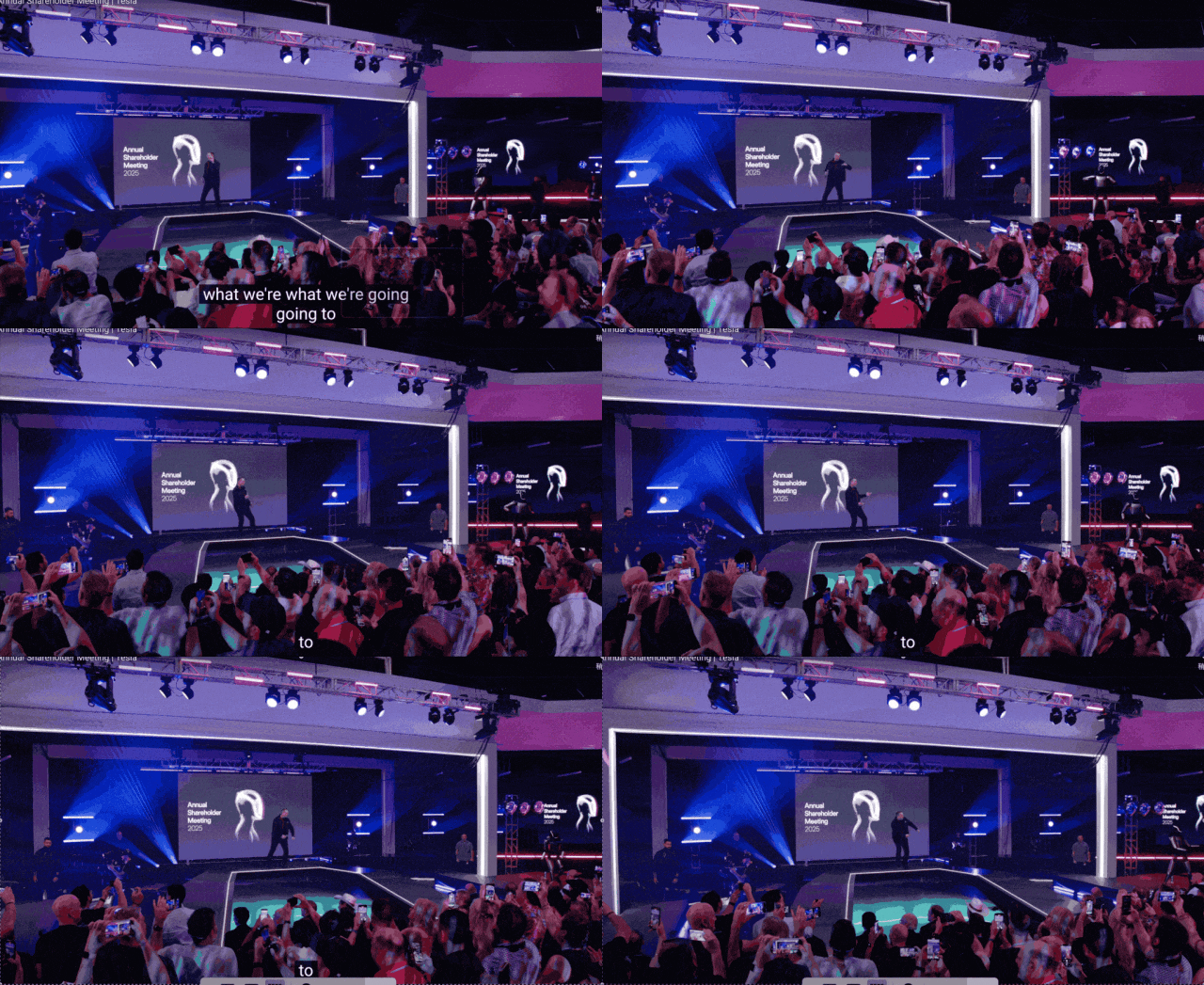
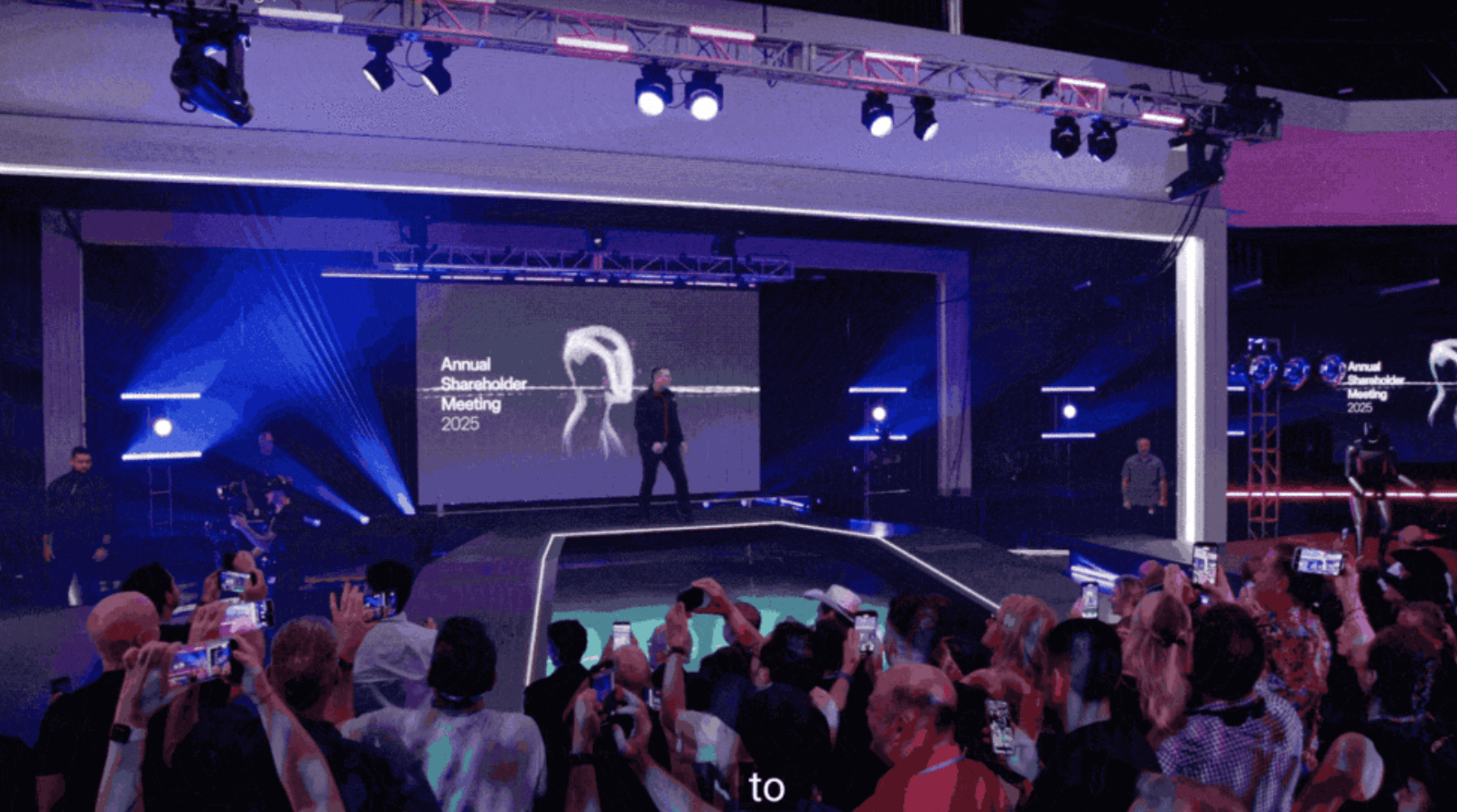
Core Viewpoint - Tesla's shareholders approved Elon Musk's compensation plan, potentially worth up to $1 trillion, which requires significant operational and financial milestones to be met before any stock can be sold [1][7][9]. Group 1: Shareholder Meeting Highlights - Approximately 75% of Tesla shareholders voted in favor of Musk's $1 trillion compensation plan, which cannot be unlocked until specific market capitalization and operational goals are achieved [1][7]. - The plan includes 12 tranches, each requiring Tesla's market value to reach specific thresholds, culminating in an $8.5 trillion valuation by 2035 [8][9]. - Musk's compensation is tied to achieving operational milestones, including delivering 20 million vehicles and producing 1 million humanoid robots [9][10]. Group 2: Product Development Announcements - Musk announced that three major products will begin production by 2026: the Cybercab, Tesla Semi truck, and the Optimus humanoid robot [3][10]. - The Cybercab is set to start mass production in April 2024, with a target of producing one vehicle every 10 seconds, aiming for an annual output of 5 million units [3][14]. - The Tesla Semi truck aims for an annual production target of 50,000 units, while the Optimus robot is expected to reach an annual production of 1 million units at a cost of around $20,000 each [3][10][17]. Group 3: Future Aspirations and Market Goals - Musk expressed ambitious visions for Tesla's technology, including the potential for Tesla vehicles and robots to operate on the Moon and Mars [5][10]. - The company aims to increase its vehicle production by approximately 50% next year, targeting an annual output of 4 million vehicles by the end of 2027 [5][10]. - Musk highlighted the importance of Full Self-Driving (FSD) technology, with plans for the complete version to be available in China by February 2024 [10][12]. Group 4: Technological Advancements - Tesla's AI advancements were emphasized, with the AI 5 chip expected to enhance performance by 50 times compared to the AI 4 chip [22]. - The company plans to integrate its self-developed 4680 battery cells across various products, including the Cybercab, Semi truck, and Optimus robot [22]. Group 5: Market Positioning - The shareholder meeting reinforced Tesla's positioning as more than just an automotive company, showcasing its rapid advancements in AI and robotics [22][23]. - The developments signal a critical growth trajectory and value proposition for investors, indicating Tesla's accelerated pace in the tech industry [23].
2025特斯拉股东大会要点纪要:人形机器人将在明年启动量产,确保人类安全优先!一旦实现每年100万台的持续产量,生产成本将在20,000美元
Ge Long Hui· 2025-11-07 07:52
Group 1: Humanoid Robots - Tesla's humanoid robot is projected to become one of the greatest products in history, with a market size expected to reach billions of units, where the ratio of personal to industrial robots is approximately 1:3 to 1:5 [3] - The production plan is unprecedented, with the robot production line set to initiate the fastest capacity ramp-up in the history of large complex manufacturing products, starting with an annual production capacity of 1 million units in Fremont and scaling to 10 million units in Texas [3] - Humanoid robots are set to begin mass production next year, with a production cost expected to be around $20,000 once a sustainable annual output of 1 million units is achieved [3] - The economic impact of humanoid robots is significant, potentially expanding the global economy by 10 to 100 times, while also providing advanced medical services beyond human capabilities [3] - The current display is the 2.5 generation of the humanoid robot, with the third generation set to begin production next year, featuring major improvements with each annual release [3] - Tesla has overcome three major challenges: complex hand engineering, real-world artificial intelligence, and large-scale production, making the humanoid robot essentially an "intelligent car with arms and legs" [3] Group 2: Autonomous Driving and Cybercab - Tesla's advanced driver-assistance technology has achieved a safety record of one accident every 6.8 million miles, ten times safer than the average American driver, with significant improvements since 2018 [4] - The V14.1 version of the smart driving system is already smooth, with the upcoming V14.3 version expected to reach a level where users can "sleep and wake up at their destination" [4] - The Tesla Cybercab, designed specifically for autonomous driving, will begin mass production in April 2026, with a production rate of 1 vehicle every 5-10 seconds, scaling from an initial capacity of 500,000 to between 2-5 million units annually [5] - Overall vehicle production is set to expand rapidly, with a target of a 50% increase next year, reaching an annualized output of 2.6 to 2.7 million vehicles, and aiming for 4 million by the end of 2027 and 5 million by the end of 2028 [6] - The goal is to reduce autonomous driving costs to below $0.20 per mile, which is expected to decrease the total number of vehicles while increasing overall mileage due to enhanced convenience [6] Group 3: AI Chips and Manufacturing Innovations - The AI 5 chip, optimized for Tesla's artificial intelligence, consumes only one-third of the power of Nvidia's Blackwell while delivering comparable performance at less than 10% of the cost [7] - The AI 6 chip is currently in planning, expected to double the performance of AI 5 within a year of its production [8] - Tesla is preparing to address chip shortages by potentially building a "Terafab" factory aimed at producing 1 million wafers per month, with Elon Musk deeply involved in the design process [8] - Innovations in battery technology include the Megapack, which simplifies design and outputs 35 kV directly, and the 4680 battery, which will be used in the Cybercab and humanoid robots [8] Group 4: Other Products and Operational Updates - The Tesla Semi electric truck will undergo significant technical improvements, achieving an 800 km range and 1.2 MW charging power, with production set to begin in Nevada in 2026 [9] - Tesla's Supercharger network is the largest globally, recently adding 12,000 charging stations (an 18% year-over-year increase) and providing 6 TWh of electricity (a 29% increase) [9] - The company is developing a wheelchair-accessible model, Robovan, expected to launch in a few years, and a new Roadster with groundbreaking technology set to be unveiled in April 2026 [11] Group 5: Company Mission and Future Vision - Tesla's mission has evolved from "accelerating the world's transition to sustainable energy" to "accelerating the world towards sustainable prosperity," emphasizing unlimited access to goods, services, and healthcare while protecting the environment [12]


2025特斯拉股东大会——要点纪要
Ge Long Hui A P P· 2025-11-07 07:43
Group 1: Humanoid Robots - Tesla's humanoid robots are projected to become the greatest product in history, with a market size expected to reach billions of units, where the ratio of personal to industrial robots is approximately 1:3 to 1:5 [1] - The production plan is unprecedented, with the Fremont factory set to initiate a production line capable of 1 million units annually, followed by a Texas facility with a capacity of 10 million units per year [1] - Humanoid robots are set to begin mass production next year, with a production cost estimated at around $20,000 once a sustainable annual output of 1 million units is achieved [1] - The economic impact of humanoid robots is significant, potentially expanding the global economy by 10 to 100 times, while also providing advanced medical services beyond human capabilities [1] - The current version displayed is the 2.5 generation, with the third generation set to begin production next year, featuring major improvements with each annual release [1] - Tesla has overcome three major challenges: complex hand engineering, real-world AI, and large-scale production, creating humanoid robots that are essentially "smart cars with arms and legs" [1] Group 2: Autonomous Driving and Cybercab - Tesla's advanced driver-assistance technology has achieved a safety record of one accident per 6.8 million miles, making it ten times safer than the average American driver, with safety performance nearly doubling since 2018 [2] - The FSD Supervised feature has been launched in six countries, with further expansion dependent on customer-driven approvals in Europe [3] - The Tesla Cybercab, designed specifically for autonomous driving, will begin mass production in April 2026, with an expected output of 50,000 to 500,000 units annually [4] - Overall vehicle production is set to increase by 50% next year, targeting an annual output of 2.6 to 2.7 million vehicles, with projections of 4 million by the end of 2027 and 5 million by the end of 2028 [4] Group 3: AI Chips and Manufacturing Innovations - The AI 5 chip, optimized for Tesla's AI, consumes only one-third of the power of Nvidia's Blackwell while being less than 10% of its cost, with a performance expected to be 50 times greater than AI 4 by 2027 [5] - Plans for the AI 6 chip are underway, aiming to double the performance of AI 5 within a year of its production [6] - Tesla is preparing to address chip shortages by potentially building a "Terafab" factory to produce 1 million wafers monthly, with Elon Musk heavily involved in the design process [6] Group 4: Battery Innovations and Other Products - The Megapack simplifies design by directly outputting 35 kV without the need for substations, while the 4680 battery will be used in the Cybercab and humanoid robots [7] - The Tesla Semi electric truck will undergo significant technical improvements, achieving an 800 km range and 1.2 MW charging power, with mass production set for 2026 [8] - Tesla's Supercharger network has expanded significantly, adding 12,000 charging stations in the past year, representing an 18% increase, and providing 6 TWh of electricity, a 29% increase [8] Group 5: Company Mission and Future Vision - Tesla's mission has evolved from "accelerating the world's transition to sustainable energy" to "accelerating the world towards sustainable prosperity," emphasizing unlimited access to goods, services, and healthcare while protecting the environment [11]
特斯拉股东大会引爆科技圈:自动驾驶安全性超人类10倍,2026年迎机器人与Cybercab量产潮
Huan Qiu Wang· 2025-11-07 07:36
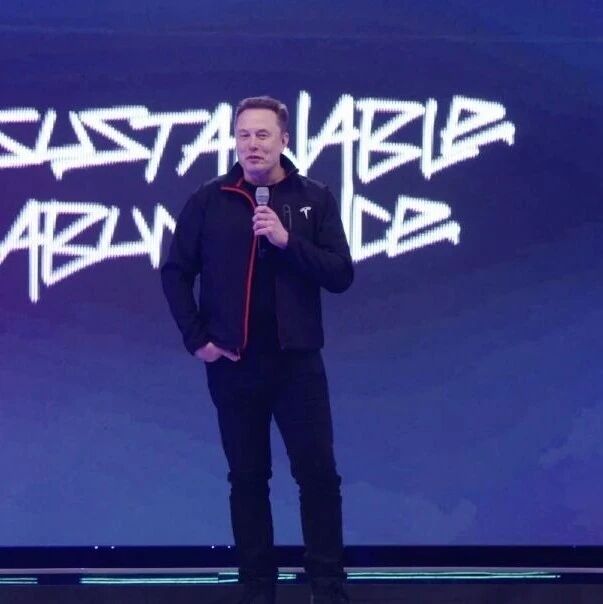
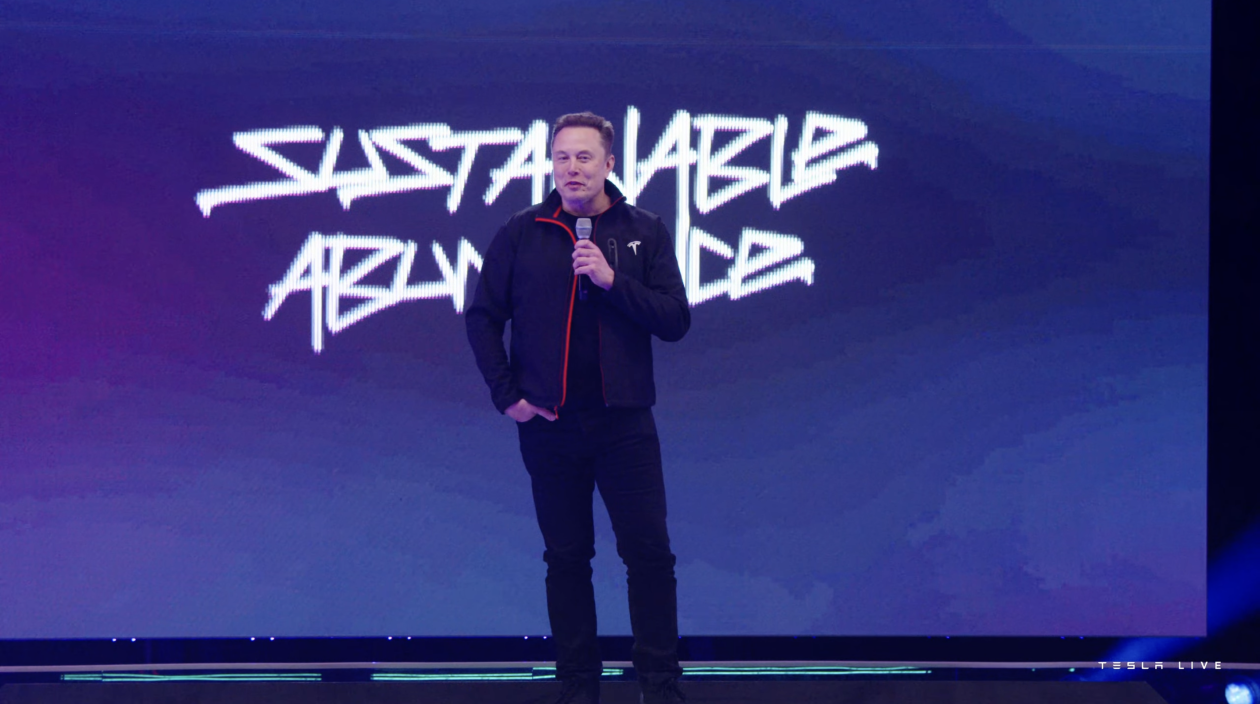
Core Viewpoint - Tesla has upgraded its mission statement from "accelerating the world's transition to sustainable energy" to "accelerating the world's transition to sustainable abundance," aiming to leverage technological innovation for unlimited access to goods, services, and medical resources while protecting the Earth's ecology [2][4]. Group 1: Mission Upgrade - The new mission emphasizes "sustainable abundance" instead of "sustainable energy" [4]. - The long-term vision includes creating a solar-powered economy driven by artificial intelligence and humanoid robots, with Tesla holding over $40 billion in cash reserves to support this vision [5]. Group 2: Autonomous Driving Technology - Tesla's fleet, utilizing smart driver assistance systems, has achieved a safety record of one collision every 6.8 million miles, which is ten times safer than the average human driver in the U.S. [5]. - The upcoming version 14.3 of the Full Self-Driving (FSD) system aims for true end-to-end autonomous driving without human intervention [5]. Group 3: Robotaxi and Cybercab Plans - The Cybercab, designed for autonomous driving, is set to begin production in April 2026, with a target production rate of 5-10 seconds per vehicle and an annual capacity of 5 million units [7]. - Tesla plans to eliminate safety drivers for its Robotaxi service by the end of the year and aims to reduce the cost per mile to below $0.20 [7]. Group 4: Humanoid Robots - Tesla's humanoid robot, Optimus, is projected to be the largest product in the company's history, with a market potential of billions of units [7]. - Production will start at the Fremont factory with an initial capacity of 1 million units per year, expanding to 10 million units at the Texas facility by 2026 [9]. Group 5: AI Chip Development - Tesla is preparing to launch its AI 5 chip, which matches the performance of Nvidia's latest Blackwell chip but at a cost of only 10% and with one-third the power consumption [12]. - The company is also considering building a massive wafer fabrication plant named "Terafab" to address global chip supply constraints, targeting a monthly capacity of 1 million wafers [12]. Group 6: Expansion of Hardware Ecosystem - The Tesla Semi electric truck is set to begin production in 2026 with a range of 800 kilometers and a charging power of 1.2 megawatts, targeting an annual output of 50,000 units [12]. - A new Roadster is scheduled for a technical demonstration in April 2026, and Tesla is also building the largest lithium refining plant outside China to enhance battery supply chain resilience [12].
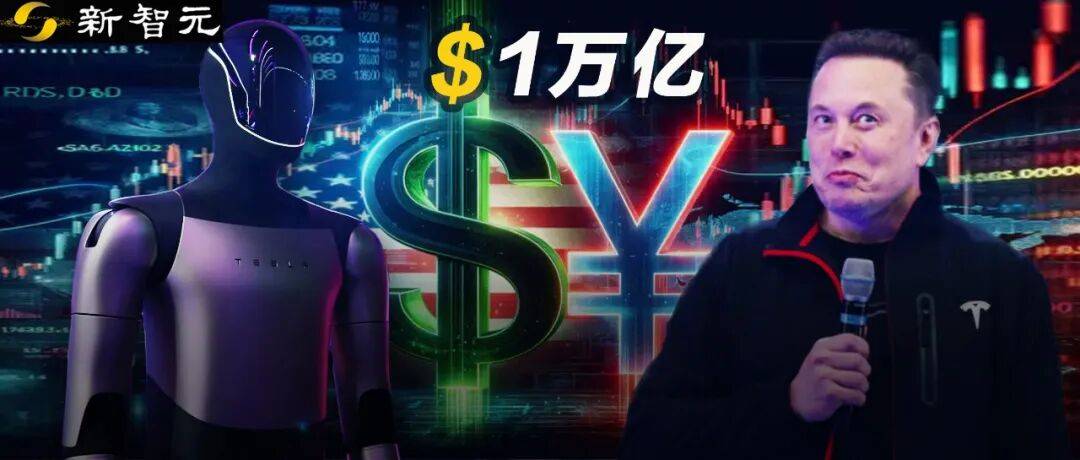
特斯拉造出终结者之手,马斯克要挣1000000000000美元
3 6 Ke· 2025-11-07 07:11
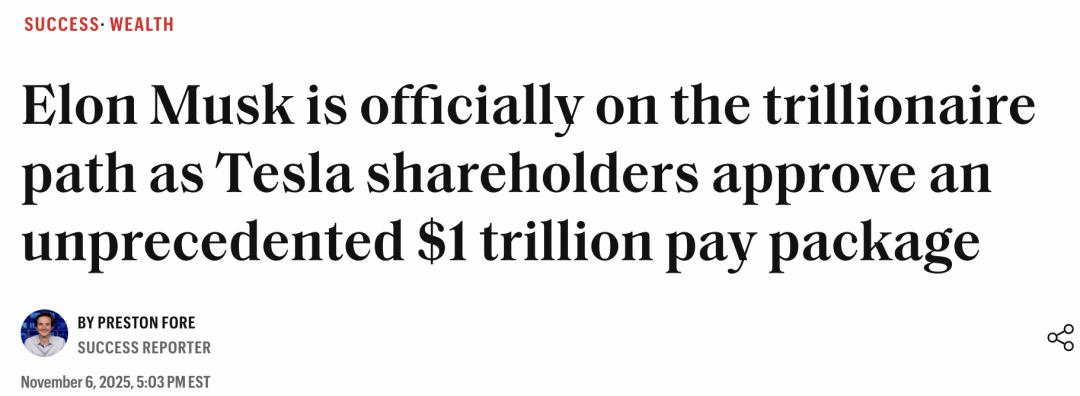
Core Points - Tesla's shareholders approved an unprecedented executive compensation plan, allowing Elon Musk to potentially earn nearly $1 trillion in stock rewards over the next decade if the company's market value reaches $8.5 trillion [1][8][13] - The plan requires Musk to lead Tesla to achieve significant growth, including delivering 20 million electric vehicles and 1 million humanoid robots [10][14] - The approval reflects strong confidence from shareholders in Musk's ability to transform Tesla into a leading AI giant, with over 75% of shareholders voting in favor [8][17][44] Compensation Plan - The compensation plan is structured over a 10-year period with 12 phases, each tied to specific market value and operational targets [10][13] - Achieving the full reward is contingent on meeting ambitious goals, including a market value increase of over 500% from current levels [10][13] - If successful, Musk's ownership stake in Tesla could rise from 13% to nearly 29%, granting him significant control over the company [14][57] Market Reaction - Following the announcement, Tesla's stock price increased by 4.1%, reflecting a year-to-date gain of 77% [18] - Analysts predict that Tesla's market value could reach $3 trillion within the next 12 to 18 months, driven by advancements in autonomous driving and robotics [17][18] Robotics and AI Development - Tesla's humanoid robot, Optimus, is expected to begin mass production next year, with significant enhancements planned for future versions [21][25] - The economic impact of humanoid robots could potentially expand the global economy by 10 to 100 times, with a projected market size of billions of units [23][28] - Tesla aims to establish the fastest production ramp-up in history for complex manufacturing products, starting with a target of 1 million units annually [24][28] Full Self-Driving (FSD) Technology - Tesla's Full Self-Driving (FSD) technology is a core component of its business model, boasting a safety record significantly better than the average driver [29][31] - The company plans to eliminate safety drivers from its Robotaxi fleet by the end of the year, further integrating autonomous vehicles into everyday life [34] Chip Development - Tesla is developing its own AI 5 chip, designed specifically for its needs, which offers superior performance at a lower cost compared to competitors [38][40] - The company is also planning to build a large-scale semiconductor fabrication facility to meet its growing chip demands [41] Shareholder Sentiment - Despite some opposition from major institutional investors, a significant portion of Tesla's shareholder base remains supportive of Musk's leadership and vision for the company [46][56] - The approval of the compensation plan is seen as a bet on Musk's ability to drive innovation and growth at Tesla, with many investors believing it will ultimately benefit them [57][58]
特斯拉造出终结者之手!马斯克要挣1000000000000美元
Sou Hu Cai Jing· 2025-11-07 05:06
Core Viewpoint - Tesla's shareholders have approved an unprecedented executive compensation plan that could allow Elon Musk to earn nearly $1 trillion in stock rewards over the next decade if the company's market value reaches $8.5 trillion, representing a growth of over 500% from its current valuation [2][8][14]. Group 1: Compensation Plan Details - Over 75% of shareholders voted in favor of the compensation plan, which is tied to ambitious performance targets [8][11]. - To fully realize the rewards, Musk must lead Tesla to deliver 20 million electric vehicles, 1 million humanoid robots, and 1 million operational Robotaxis [8][11]. - The plan is structured over a 10-year period with 12 phases, each with specific market value and operational goals [11]. Group 2: Market Impact and Predictions - Analysts predict that Tesla's market value could reach $3 trillion within the next 12 to 18 months, driven by advancements in autonomous driving and robotics [14]. - Following the approval of the compensation plan, Tesla's stock price rose by 4.1% to $462, marking a 77% increase year-to-date [14]. Group 3: Robotics and AI Development - Tesla plans to start mass production of its humanoid robot, Optimus, next year, with the potential to revolutionize various industries [17][20]. - The company aims to produce 1 million units annually, with production costs projected to be around $20,000 per robot [19][20]. - The humanoid robot is expected to significantly expand the global economy, with Musk suggesting it could increase economic output by 10 to 100 times [19]. Group 4: Technological Innovations - Tesla is developing a specialized AI chip, AI 5, designed to optimize performance for its robots, with significantly lower power consumption and cost compared to competitors [29][32]. - The company is also planning to build a large-scale semiconductor factory to meet its chip production needs [32]. Group 5: Shareholder Sentiment and Opposition - Despite the overwhelming support from shareholders, some major institutional investors opposed the compensation plan, citing concerns over excessive power concentration [36][42]. - Notable figures, including the Pope, have expressed concerns about the implications of Musk becoming the world's first trillionaire [36].
马斯克讨薪万亿美元成功,剧透特斯拉六大目标,满血FSD明年进入中国
3 6 Ke· 2025-11-07 03:19
Core Points - Tesla shareholders approved Elon Musk's compensation plan, which could reach up to $1 trillion, with approximately 75% voting in favor [1][7][10] - Musk announced ambitious production goals for several products, including the Cybercab, Tesla Semi truck, and the Optimus humanoid robot, all set to begin production by 2026 [3][6][20][21] - The compensation plan requires Musk to meet specific market capitalization and operational milestones over 12 phases to unlock stock rewards [10][12] Compensation Plan - The plan allows Musk to earn stock options based on Tesla's market capitalization reaching $8.5 trillion by 2035, nearly six times its current value [10][12] - Each phase of the plan requires Musk to achieve both market and operational milestones, such as delivering 20 million vehicles and producing 1 million Optimus robots [11][12] - Musk is prohibited from selling any Tesla stock for 7.5 years, ensuring his commitment to the company's long-term success [12] Product Development Goals - Tesla aims to produce the Cybercab starting in April 2024, with a target of one vehicle every 10 seconds, potentially reaching an annual production of 5 million units [3][20] - The Tesla Semi truck has a production goal of 50,000 units per year, while the Optimus robot aims for an annual output of 1 million units at a cost of around $20,000 each [3][6][21] - Musk expressed high expectations for the Optimus robot, claiming it could outperform human surgeons in precision and provide significant societal benefits [21][23] FSD and Market Expansion - Musk highlighted the progress of Tesla's Full Self-Driving (FSD) technology, with hopes for full approval in China by February [5][15] - The company plans to expand its Robotaxi service to additional states in the U.S. and aims to eliminate safety drivers by the end of the year [16][20] - Tesla's advancements in AI and robotics are positioned to redefine its identity beyond just an automotive company, emphasizing its role in technology and innovation [27]