
Alpamayo平台

Search documents
【招商电子】英伟达(NVDA.O)FY26Q4跟踪报告:本季营收与指引均高增,战略备货以满足未来市场需求
招商电子· 2026-02-27 04:23
Core Viewpoint - Nvidia's FY26Q4 earnings report shows record revenue of $68.1 billion, a 73% year-over-year increase, driven by strong demand in data center and AI sectors, with strategic inventory buildup to meet future market needs [2][12][25]. Group 1: Financial Performance - FY26Q4 revenue reached $68.1 billion, exceeding expectations of $65 billion, with operating profit and free cash flow also at historical highs [2][12]. - Non-GAAP gross margin was 75.2%, up 1.7 percentage points year-over-year, supported by increased production capacity of the Blackwell architecture [2][25]. - Free cash flow for FY26 was $97 billion, with $41 billion returned to shareholders through buybacks and dividends [26]. Group 2: Business Segments - Data Center: Revenue of $62.3 billion, up 75% year-over-year, driven by strong demand for Blackwell architecture and network services, which saw a revenue increase of over 350% [3][15][16]. - Gaming: Revenue of $3.73 billion, a 47% increase year-over-year, but down 13% quarter-over-quarter due to supply chain constraints [3][21]. - Professional Visualization: Revenue reached $1.32 billion, a 159% increase year-over-year, driven by new product launches [3][22]. - Automotive: Revenue of $604 million, up 6% year-over-year, primarily due to strong demand for autonomous driving solutions [3][23]. Group 3: Future Outlook - FY27Q1 revenue guidance is set at $78 billion, a 77% year-over-year increase, primarily driven by data center business growth [4][11]. - Data center revenue is expected to grow sequentially throughout 2026, with significant contributions from major cloud service providers [4][18]. - The company anticipates maintaining a gross margin around 75% for the fiscal year 2027, with ongoing investments in technology and talent [4][27]. Group 4: Strategic Initiatives - Nvidia is focusing on expanding its ecosystem through partnerships with major AI companies like OpenAI and Anthropic, enhancing its position in the AI infrastructure market [28][41]. - The introduction of the Rubin platform is expected to reduce GPU requirements for training mixed expert models by 75% and lower inference costs significantly [20][39]. - The company is actively investing in AI infrastructure, with a projected capital expenditure increase among top cloud service providers, which is expected to exceed $700 billion by 2026 [5][18].

英伟达(NVDA):FY26Q4 跟踪报告:本季营收与指引均高增,战略备货以满足未来市场需求
CMS· 2026-02-26 11:09
Investment Rating - The report maintains a "Buy" rating for the company, highlighting its strong performance and growth potential in the data center and AI sectors [10]. Core Insights - The company reported a record revenue of $68.1 billion for FY26Q4, representing a 73% year-over-year increase and a 20% quarter-over-quarter increase, driven by strategic inventory buildup to meet future market demand [1][12]. - The data center segment achieved a new high with revenues of $62.3 billion, up 75% year-over-year and 22% quarter-over-quarter, primarily due to strong demand for the Blackwell architecture [2][15]. - The company expects FY27Q1 revenue guidance to be around $78 billion, reflecting a 77% year-over-year increase, driven mainly by the data center business [3][27]. Summary by Relevant Sections Revenue Performance - FY26Q4 revenue reached $68.1 billion, exceeding expectations and marking a historical high [1]. - Data center revenue was $62.3 billion, with a year-over-year growth of 75% and a quarter-over-quarter growth of 22% [2][15]. - The gaming segment generated $3.727 billion, showing a year-over-year increase of 47% but a quarter-over-quarter decline of 13% due to supply chain constraints [2][21]. Gross Margin and Financial Metrics - Non-GAAP gross margin for FY26Q4 was 75.2%, up 1.7 percentage points year-over-year and 1.6 percentage points quarter-over-quarter [1][25]. - The company generated free cash flow of $35 billion in FY26Q4, with a total of $97 billion for the fiscal year [26]. Future Outlook - The company anticipates continued revenue growth in the data center segment throughout 2026, with quarterly increases expected [3][13]. - FY27Q1 guidance indicates a revenue midpoint of $78 billion, with a non-GAAP gross margin forecast of 75% [3][27]. - The company has secured sufficient inventory and long-term supply agreements to meet future market demands [3][13]. Strategic Developments - The company is focusing on expanding its AI capabilities and has seen significant demand for its Blackwell architecture, which is expected to drive future growth [2][18]. - Collaborations with major clients like Meta and Anthropic are set to enhance the company's market position and revenue potential [30][31].

自动驾驶迎来头号玩家:英伟达亲自下场,行业盈利拐点已至
2 1 Shi Ji Jing Ji Bao Dao· 2026-01-08 05:53
Group 1 - Nvidia's CEO Jensen Huang announced the Alpamayo platform at CES, enabling cars to perform "inference" in the real world, and open-sourced the first inference VLA model, Alpamayo 1, to accelerate the development of safe autonomous driving technology [2] - Huang emphasized that a significant shift from non-autonomous to autonomous vehicles could occur soon, predicting that a large portion of cars will be autonomous or highly autonomous within the next decade [2] - The first cars equipped with Nvidia technology are set to hit the roads in the US in Q1 2025, Europe in Q2, and Asia later in the year [2] Group 2 - Under the dual push of policy support and technological breakthroughs, the commercialization of autonomous driving is expected to accelerate, with Goldman Sachs forecasting the Chinese Robotaxi market to grow from $54 million in 2025 to $12 billion by 2030, with a fleet of 500,000 Robotaxis by 2030 [3] - Recent domestic policies have been introduced to facilitate the deployment of autonomous driving technology, including the issuance of product access permits for L3 autonomous vehicles, marking a significant step towards commercialization [4] - As of December 2025, the first batch of L3 autonomous vehicles, including models from Chang'an and BAIC's Arcfox, received access permits for trial operations in designated areas [4] Group 3 - XPeng Motors received an L3 autonomous driving road testing permit in Guangzhou, initiating regular L3 road tests [5] - BYD announced the start of comprehensive internal testing for mass-produced L3 autonomous driving in Shenzhen, having completed over 150,000 kilometers of real-world validation [6] - The capital market for autonomous driving is accelerating, with nearly 10 companies entering the secondary market since 2025, including the dual listings of WeRide and Pony.ai on the Hong Kong Stock Exchange [6] Group 4 - Pony.ai achieved a significant milestone by realizing single-vehicle profitability for its seventh-generation Robotaxi in Guangzhou, indicating the commercial viability of the unit economic model for autonomous driving in major cities [7] - The company plans to expand its Robotaxi fleet from 961 vehicles to over 3,000 by the end of 2026, while also reducing the cost of the autonomous driving kit by 20% [7] - WeRide has successfully launched its Robotaxi service in over 10 cities globally, with operations in Beijing, Guangzhou, and Abu Dhabi achieving pure unmanned commercial operation [8] Group 5 - Hesai Technology, a leader in the lidar sector, reported a significant turnaround to profitability, with Q3 2025 revenue reaching 800 million yuan, a 47.5% increase, and net profit climbing to 260 million yuan [8] - The overall performance of the autonomous driving sector has been strong, with the autonomous driving index showing a 45.35% increase for the year [8]
英伟达发布Alpamayo平台,关注智能汽车ETF(159889)
Mei Ri Jing Ji Xin Wen· 2026-01-07 02:53
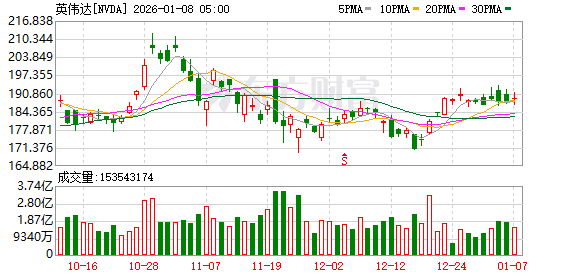
Core Viewpoint - The smart driving sector experienced a significant surge, with the smart car ETF (159889) rising by 4.16% following the announcement of Nvidia's Alpamayo platform at CES, which enables cars to perform "reasoning" in real-world scenarios [1][2]. Group 1: Nvidia's Alpamayo Platform - Nvidia's CEO Jensen Huang introduced the Alpamayo platform, which integrates open-source models, simulation frameworks, and datasets to create a comprehensive open ecosystem for automotive developers and research teams [1]. - Alpamayo 1 is the first VLA model designed for the autonomous driving research community, capable of processing complex driving scenarios using human-like reasoning, aimed at addressing unexpected situations like traffic signal failures [1]. Group 2: Market Implications and Collaborations - The first vehicle equipped with Nvidia's technology is expected to hit the roads in the U.S. in the first quarter, with the Alpamayo platform set to debut in the Mercedes CLA model in Europe in Q2 2025 [2]. - Nvidia is building a global L4-level autonomous driving and Robotaxi ecosystem, collaborating with major software companies, OEMs, and Tier 1 component manufacturers [2]. - The entry of major players into the market, along with anticipated developments such as Tesla's FSD entering China and the rollout of L3 policies, is expected to accelerate the adoption of autonomous driving technologies by 2026 [2].
英伟达CES发了堆“怪物”,但跟你的电脑机箱已经毫无关系
3 6 Ke· 2026-01-07 01:00
Core Insights - The annual CES event in Las Vegas is currently showcasing significant advancements in AI technology, with NVIDIA taking center stage despite not releasing new graphics cards this year [1][3]. Group 1: NVIDIA's AI Innovations - NVIDIA introduced the Vera Rubin architecture, a new AI server weighing 2.5 tons, aimed at accelerating AI training and exploring new frontiers in AI technology [5][7]. - The Vera Rubin architecture features six redesigned chips, including the Vera CPU and Rubin GPU, which significantly enhance performance and efficiency [9][11]. - The Vera CPU integrates 88 custom ARM cores, achieving a bandwidth of 1.8 TB/s with GPUs, allowing it to function as an extended memory pool [13]. - The Rubin GPU, equipped with HBM4 memory, boasts a capacity of 288GB and a bandwidth of 22 TB/s, significantly reducing data transfer power consumption [13][15]. Group 2: Performance Metrics - The Vera Rubin architecture reportedly reduces inference token costs by 90% and increases computational performance by 5 times, while also decreasing the number of GPUs needed for training MoE models by 4 times [16][17]. - The transistor count for the Vera Rubin architecture has only increased by 1.7 times, indicating a significant leap over Moore's Law [17]. Group 3: Future Directions - NVIDIA is launching the Alpamayo platform, which is designed for autonomous driving and includes models, simulation tools, and datasets, positioning itself as a competitor to existing autonomous driving technologies [19][21]. - Alpamayo's end-to-end training system allows for adaptive responses to complex driving scenarios, enhancing its applicability beyond just autonomous vehicles to robotics and industrial systems [23]. - NVIDIA's new DLSS 4.5 technology aims to improve gaming graphics and frame rates significantly, reflecting the company's ongoing commitment to both AI and gaming sectors [25]. Group 4: Industry Perspective - The shift in NVIDIA's focus from gaming to AI technologies suggests a broader transformation in the tech industry, with the company now resembling an "electric company" for the AI era [27].

CES见证从算力奔向应用 英伟达:AI进入兑现阶段
Xin Lang Cai Jing· 2026-01-06 17:29
Core Insights - The 2026 Consumer Electronics Show (CES) is a significant market sentiment catalyst, especially for the tech sector, with a focus on AI commercialization and sustainable revenue models [1] - NVIDIA's presence at CES is not just about new product launches but emphasizes the pathways for AI business models to materialize [1] Group 1: AI Commercialization - The demand for AI chips remains strong, but investor interest is shifting from concerns about computing power shortages to the timing and methods of AI revenue generation [1] - Companies are increasingly looking for AI systems that are deployable, controllable, and sustainable rather than just the most powerful models [2] - Lenovo and NVIDIA's collaboration on hybrid AI solutions is a key observation point at CES, focusing on providing a complete package for enterprises [2][3] Group 2: NVIDIA's Business Model Transition - NVIDIA's strategy is evolving from merely selling GPUs to offering comprehensive solutions that include hardware, software, and support, which could stabilize revenue streams [3] - The focus for investors is shifting towards the clarity of product forms, real application scenarios, and transparent pricing models [3] - If these aspects are addressed at CES, NVIDIA's data center business may transition from being driven by computing supply to being driven by enterprise AI applications, potentially leading to a revaluation of its business [3] Group 3: RTX Series Evolution - The RTX series, traditionally tied to gaming cycles, is expected to evolve as AI capabilities become standard features in new PCs, shifting demand from gaming to productivity [4][5] - If RTX becomes a default capability in PCs, it could lead to structural changes in sales patterns and valuation for NVIDIA [6] Group 4: Physical AI and Omniverse - NVIDIA's physical AI initiatives, while significant, have been slow to commercialize, with potential applications in robotics, autonomous vehicles, and industrial automation [7] - The launch of the Alpamayo platform at CES aims to enhance the reasoning capabilities of autonomous vehicles, marking a step towards practical applications of physical AI [7][8] - Investors are looking for real-world use cases and clear business models for physical AI, which could signal a shift towards scalable commercial applications [8][9] Group 5: Overall Market Sentiment - The overarching theme at CES 2026 is the transition from discussions about AI capabilities to embedding AI into products, processes, and revenue models [9] - The focus will likely shift from whether demand is overheated to which business lines can deliver sustainable results post-CES [9]
智能汽车ETF大涨点评
Mei Ri Jing Ji Xin Wen· 2026-01-06 14:11
Core Viewpoint - The A-share market experienced a collective rise, with major indices showing significant gains, driven by advancements in the intelligent driving sector and the introduction of new technologies by Nvidia [1][2][4]. Market Performance - The Shanghai Composite Index rose by 1.50% - The Shenzhen Component Index increased by 1.40% - The ChiNext Index saw a rise of 0.75% - The North Star 50 Index climbed by 1.82% - Total market turnover reached 2.83 trillion yuan, showing an increase compared to the previous day [1]. Intelligent Driving Sector - The intelligent driving sector saw a notable surge, with the Intelligent Vehicle ETF (159889) rising by 4.16% in the afternoon session [2]. - Nvidia's CEO Jensen Huang announced the Alpamayo platform at CES, which enables vehicles to perform "reasoning" in real-world scenarios, with the first car featuring this technology expected to hit the roads in the U.S. in Q1 [4]. - The Alpamayo family integrates open-source models, simulation frameworks, and datasets, creating a comprehensive ecosystem for automotive developers [4]. Technological Advancements - Alpamayo 1 is the first reasoning VLA model designed for the autonomous driving research community, capable of handling complex driving scenarios and providing solutions in unexpected situations [4]. - Huang emphasized that the era of "physical AI" has arrived, allowing machines to understand and reason in real-world environments, which is foundational for safe and scalable autonomous driving [4]. Industry Outlook - The open-source nature of Nvidia's model is expected to significantly lower the barriers for algorithm development in intelligent driving solutions, accelerating the penetration of advanced driving technologies [5]. - Tesla's Robotaxi is nearing the stage of unsupervised operation, with plans for testing in Austin, indicating advancements in L4 automation capabilities [5]. - The Chinese Ministry of Industry and Information Technology has granted approval for the first batch of L3 autonomous driving vehicles, marking a transition from testing to early commercialization [5]. Future Projections - The entry of major players and the anticipated rollout of Tesla's FSD in China, along with the expansion of L3 policies, are expected to catalyze growth in the autonomous driving sector by 2026 [6]. - Investors are encouraged to monitor the Intelligent Vehicle ETF (159889) in A-shares and the Hong Kong Vehicle ETF (520720) for potential investment opportunities [6].

算力到应用的转折点?英伟达:AI进入兑现阶段
Di Yi Cai Jing· 2026-01-06 13:21
Core Viewpoint - The CES 2026 is a pivotal moment for Nvidia, marking the potential real-world application of enterprise AI, shifting focus from computational power to sustainable revenue generation from AI applications [1][12]. Group 1: Enterprise AI and Business Models - The demand for AI chips remains strong, but investor interest is shifting towards how AI can translate into sustainable revenue rather than just computational power availability [1]. - Companies are increasingly looking for AI systems that are deployable, controllable, and sustainable, rather than just the most powerful AI models [4]. - Nvidia's collaboration with Lenovo to showcase enterprise AI solutions at CES is seen as a significant development, focusing on hybrid AI that combines hardware and software for immediate deployment [4][5]. Group 2: Product and Revenue Clarity - Investors are now more interested in tangible product forms, real application scenarios, and clear pricing models rather than conceptual demonstrations [5]. - If Nvidia can provide clear answers regarding product forms and customer applications at CES, it may transition its data center business from being driven by computational supply to being driven by enterprise AI applications [5]. Group 3: RTX Series and Market Dynamics - The RTX series, traditionally tied to gaming cycles, is evolving as AI applications gain traction, potentially becoming a standard feature in new PCs rather than just a gaming upgrade [6][8]. - The shift in RTX's role could lead to structural changes in its sales patterns, supporting Nvidia's revenue and valuation in the long term [8]. Group 4: Physical AI and Commercialization - Nvidia's focus on Physical AI, which aims to enable AI systems to interact with the real world, is seen as a significant but slow-developing business line [9]. - The introduction of the Alpamayo platform for autonomous vehicles at CES indicates a move towards practical applications of Physical AI, with a focus on real-world reasoning capabilities [9][10]. - Investors are looking for concrete use cases and clear business models for Physical AI, which could signal a shift from a technology platform to scalable commercial applications [10][12].
一则大消息,集体爆发!
Zhong Guo Ji Jin Bao· 2026-01-06 12:24
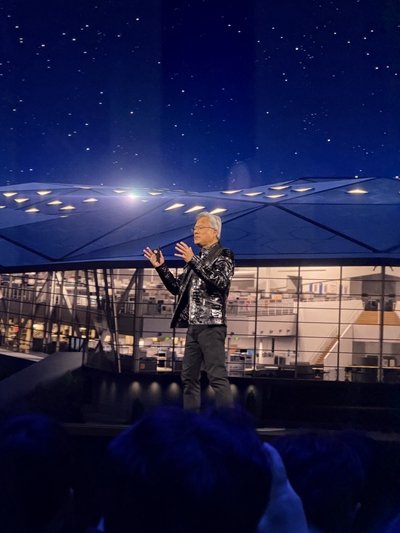
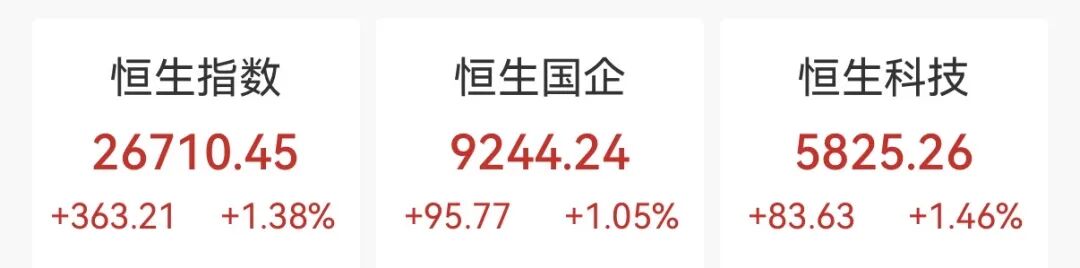
Market Performance - The Hong Kong stock market indices closed higher, with the Hang Seng Index rising by 1.38% to 26,710.45 points, the Hang Seng Tech Index increasing by 1.46% to 5,825.26 points, and the National Enterprises Index up by 1.05% to 9,244.24 points [1] - Major technology stocks saw gains, with NetEase up nearly 3%, Kuaishou rising over 2%, and Baidu, Tencent, and JD.com each increasing by over 1% [2] Sector Performance - Insurance and brokerage stocks performed strongly, with China Merchants Securities surging by 12%, and leading firms like CICC and CITIC Securities also seeing significant increases [2] - Gold and precious metal stocks led the gains, with Zhaojin Mining up over 7% and Zijin Mining and Zijin Gold International both rising by over 4% [2] Smart Driving Sector - Smart driving concept stocks experienced a significant surge, with Zhejiang Shibao soaring over 21%, Pony.ai rising nearly 7%, and WeRide increasing by over 4% [4] - Other notable performers in the smart driving sector included Youjia Innovation up by 11.24%, and Hesai Technology up by 5.90% [5] NVIDIA Developments - NVIDIA's CEO Jensen Huang announced the launch of the Alpamayo platform at CES, which enables cars to perform "inference" in the real world, with the first vehicles equipped with this technology expected to hit the roads in the US in Q1, Europe in Q2, and Asia later in the year [6] - The introduction of NVIDIA's new AI platform and open models is anticipated to stimulate demand for autonomous taxis and support global economic growth, according to Citigroup analysts [6]
AI日报丨OpenAI家务机器人售价2万美元;阿里Qoder升级补全功能
美股研究社· 2026-01-06 11:25
Group 1 - The article highlights the rapid development of artificial intelligence (AI) technology, presenting significant opportunities in the market [3] - Alibaba's Qoder has launched a new intelligent code completion feature, NEXT, which has increased AI code adoption rates by 65% [5] - Baidu Encyclopedia has introduced new AI features, including "Dynamic Encyclopedia" and "AI Knowledge Graph," with over 30 million entries and more than 8.03 million contributing users [6] Group 2 - OpenAI-backed household robot Neo, priced at $20,000, is set to revolutionize home automation, with plans for U.S. delivery in 2026 and expansion to other markets in 2027 [7][8] - NVIDIA has released a new AI platform named Alpamayo, designed to enhance the development of autonomous vehicles by enabling reasoning capabilities [10] - Microsoft has acquired Osmos, an AI data engineering platform, to simplify complex data flows and integrate it into Microsoft Fabric, enhancing data analysis capabilities [11] Group 3 - Yann LeCun, a prominent AI figure, criticized Meta's new AI head for lacking experience and warned of potential talent loss within the company [12] - NVIDIA introduced the BlueField-4 data processor, aimed at powering inference context memory storage platforms, designed for large-scale AI inference [13][14]
