E5

Search documents
吉利银河全系车型远征北欧,引领中国新能源测试标准升级
Xin Lang Cai Jing· 2026-02-11 09:28
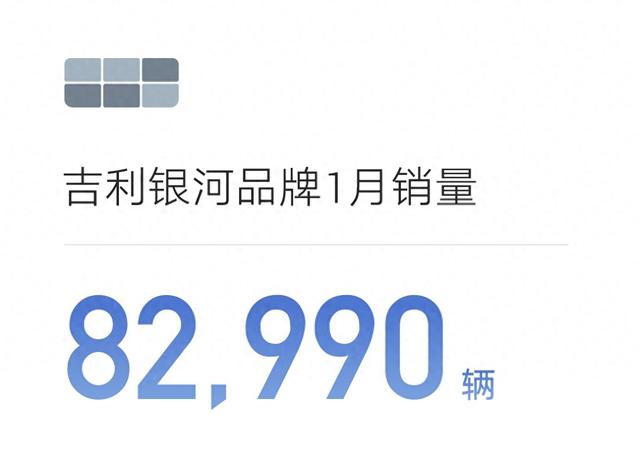
Core Insights - The article highlights the significant milestone of China's new energy vehicle (NEV) market, with penetration rates expected to exceed 50% by 2025, led by domestic brands like Geely Galaxy, which achieved over 1.23 million annual sales, marking it as the fastest NEV brand to reach this milestone [1][3] - Geely Galaxy's sales momentum continued into January 2026, with a monthly sales figure of 82,000 units, contributing to Geely's total sales of 270,200 units in the same month, indicating a strong start for the year [1][11] Group 1 - Geely Galaxy's ambition extends beyond sales figures, as it undertook a comprehensive winter testing expedition in Northern Europe, featuring 25 models across various conditions, marking a first for a single brand to conduct such extensive testing [3][5] - The winter testing in Northern Europe serves as a rigorous evaluation of vehicle performance under extreme conditions, showcasing Geely Galaxy's commitment to quality and reliability, which is crucial for entering global markets [5][10] - The testing environment in Northern Europe, characterized by extreme cold and high humidity, poses unique challenges that Geely Galaxy successfully addressed, enhancing its product's adaptability to global standards [7][10] Group 2 - Geely Galaxy's winter testing aligns with national policies aimed at elevating the quality standards of the automotive industry, transitioning from volume-driven growth to quality-focused development [7][8] - The company has established a global research and validation system, with extensive testing capabilities across various climates and terrains, ensuring that its products meet international regulatory requirements [11][13] - The successful completion of the winter tests not only demonstrates Geely Galaxy's technological prowess but also reinforces its strategy of integrating user feedback into product development, thereby enhancing market competitiveness [11][14]



僵尸车企复活,你会买单吗?
3 6 Ke· 2025-12-29 13:34
Core Viewpoint - The article discusses the revival attempts of struggling automotive companies, referred to as "zombie car manufacturers," highlighting their efforts to restructure and attract investment despite their previous failures and challenges in the competitive market [1]. Group 1: Company Restructuring and Investment - Jidu Auto, backed by Baidu and Geely, has initiated a pre-restructuring process, attracting interest from various investors, including those from real estate and technology sectors [1]. - Zhejiang Qianhe Automobile Co., Ltd. was established in mid-December, focusing on electric logistics vehicles, having transitioned from real estate to high-end manufacturing [1]. - Robo.ai Inc. from Dubai has applied to participate in Jidu's restructuring as a strategic investor [3]. - WM Motor has announced plans to resume production of its EX5 and E5 models, aiming for significant sales and revenue targets by 2026 [5]. Group 2: Financial Health and Challenges - Companies like Shanzi Gaoke, which has transitioned to automotive manufacturing, face financial difficulties, with assets reported at 8.8 billion yuan and significant debt obligations [7]. - WM Motor's new backer, Xiangfei Automotive, was established in September 2023, raising concerns about its financial stability given its ties to the struggling Baoneng Group [8]. - The new board of directors at Zotye Auto includes several members with backgrounds in Chery Automobile, suggesting potential financing involvement from Chery [9]. Group 3: Market Viability and Future Prospects - Despite signs of revival, the long-term viability of these "zombie car manufacturers" remains uncertain due to their outdated products and lack of competitiveness [13]. - Companies like Nezha Auto and WM Motor have seen declining sales, raising questions about their ability to attract consumers with older models [14]. - The article suggests that the best path forward for these companies may involve selling production lines or engaging in contract manufacturing with more competitive firms [16].

新势力造车,和过去说再见
3 6 Ke· 2025-10-24 02:30
Core Viewpoint - The article discusses the evolution and current state of the "new forces in car manufacturing" in China, particularly focusing on the "Four Little Dragons" (NIO, Xpeng, Li Auto, and Leap Motor) and their journey towards profitability amidst a competitive market landscape [4][6][14]. Group 1: Industry Overview - The term "new forces in car manufacturing" was once a positive label, but over time, it has lost its luster due to various challenges and negative perceptions in the industry [4][6]. - The current market is characterized by intense competition, leading to a significant number of failures among new entrants, with notable companies like WM Motor, Aiways, and others falling off the radar [18][20]. Group 2: Performance of the "Four Little Dragons" - NIO has made significant strides towards profitability, with successful sales of its new models, the L90 and the new ES8, indicating a potential turnaround [9][10]. - Xpeng, despite facing challenges from price wars, has managed to maintain a solid sales base and is expected to achieve profitability in the near future [12]. - Li Auto, having been the first among the new forces to achieve profitability, is currently navigating some difficulties but is expected to return to a profitable trajectory [14]. - Leap Motor has emerged as a surprising leader in sales, with a delivery volume exceeding 66,000 units in September, showcasing its effective market positioning [14]. Group 3: Future Challenges and Opportunities - The article emphasizes that the upcoming period will be critical for the "Four Little Dragons" as they transition from survival to thriving in a competitive environment [7][15]. - The need for precision and efficiency in product launches and marketing strategies is highlighted, as the market becomes increasingly unforgiving [15]. - The potential for revival among previously failed companies, such as WM Motor and Neta, indicates that the market still holds significant opportunities despite the challenges [22][26]. Group 4: Conclusion and Reflection - The article concludes that the new forces in car manufacturing must bid farewell to their past struggles to embrace a more promising future, suggesting a shift in focus towards sustainable growth and innovation [27].


Embedding黑箱成为历史!这个新框架让模型“先解释,再学Embedding”
量子位· 2025-10-21 09:05
Core Insights - The article introduces GRACE, a new explainable generative embedding framework developed by researchers from multiple universities, aimed at addressing the limitations of traditional text embedding models [1][6]. Group 1: Background and Limitations - Text embedding models have evolved from BERT to various newer models, mapping text into vector spaces for tasks like semantic retrieval and clustering [3]. - A common flaw in these models is treating large language models as "mute encoders," which output vectors without explaining the similarity between texts [4]. - This black-box representation becomes a bottleneck in tasks requiring high interpretability and robustness, such as question-answer matching and cross-domain retrieval [5]. Group 2: GRACE Framework Overview - GRACE transforms "contrastive learning" into "reinforcement learning," redefining the meaning of contrastive learning signals [6]. - The framework emphasizes generating explanations (rationales) for text before learning embeddings, allowing the model to produce logical and semantically consistent reasoning [7][25]. - GRACE consists of three key modules: 1. Rationale-Generating Policy, which generates explanatory reasoning chains for input texts [8]. 2. Representation Extraction, which combines input and rationale to compute final embeddings [9]. 3. Contrastive Rewards, which redefines contrastive learning objectives as a reward function for reinforcement learning updates [11]. Group 3: Training Process - GRACE can be trained in both supervised and unsupervised manners, utilizing labeled query-document pairs and self-alignment techniques [12][18]. - In the supervised phase, the model learns semantic relationships from a dataset of 1.5 million samples [13]. - The unsupervised phase generates multiple rationales for each text, encouraging consistent representations across different explanations [17]. Group 4: Experimental Results - GRACE was evaluated across 56 datasets in various tasks, showing significant performance improvements over baseline models in retrieval, pair classification, and clustering [19][20]. - The results indicate that GRACE not only enhances embedding capabilities without sacrificing generative abilities but also provides transparent representations that can be understood by users [25][27]. Group 5: Conclusion - Overall, GRACE represents a paradigm shift in embedding models, moving towards a framework that can explain its understanding process, thus enhancing both performance and interpretability [28].
新威马启动重整后发展规划
Huan Qiu Wang· 2025-10-15 09:29
Core Insights - New WM Motor has completed its restructuring and released a white paper outlining a pragmatic development approach, focusing on scaling and efficiency improvements [1][2] - The company aims to produce and sell 100,000 vehicles by 2030, with plans to launch over 10 new models in the next five years, covering various vehicle categories from A00 to C class [1][2] Group 1 - New WM Motor has two production bases in Wenzhou and Huanggang, with a complete industrial chain integration and manufacturing capabilities [1] - The company has resumed production of key models like EX5 and E5, which have market experience and user validation [1] - The white paper details a debt repayment plan, ensuring 100% cash repayment for ordinary creditors with amounts up to 150,000 yuan within six months post-court approval [2] Group 2 - New WM Motor is restarting its dealer network and implementing a dual strategy targeting both consumer (C-end) and business (B-end) markets [2] - The company is offering trade-in incentives and reward mechanisms for existing users while continuing partnerships with ride-hailing platforms and leasing companies [2] - Plans are in place to establish a KD factory in Thailand by 2025-2026 to expand into Southeast Asia and the Middle East markets [2][3]
那些实行一口价的合资品牌车型,现在都怎么样了?
车fans· 2025-09-24 00:30
Core Viewpoint - The implementation of fixed pricing policies by joint venture brands has had mixed results, with some models seeing increased sales while others remain stagnant, highlighting the complexities of consumer acceptance and market dynamics [5][8][10]. Group 1: Implementation of Fixed Pricing - SAIC Volkswagen is a pioneer in the fixed pricing policy, having started with the T-Roc model in August last year, with most models now following this approach [2]. - The execution of the fixed pricing policy varies based on how long a new car has been on the market, with stricter adherence observed in the initial months post-launch [3]. - Customers who are not in a hurry often wait for discounts, as dealerships may offer promotions within three months of a model's release [4]. Group 2: Customer Reactions - Customer responses to the fixed pricing policy are mixed; while some appreciate the straightforward pricing, the majority still desire negotiation and discounts [5][10]. - Sales personnel initially welcomed the fixed pricing model for reducing negotiation stress, but over time, they have recognized its limitations [9][18]. - Many customers, especially those who have previously purchased joint venture vehicles, are skeptical of a no-negotiation approach, feeling that it contradicts traditional buying practices [10][11]. Group 3: Market Dynamics and Competition - The effectiveness of the fixed pricing policy has diminished over time, with initial increases in customer traffic and sales not sustaining long-term [8][19]. - The slow pace of product updates among joint venture brands has led to customer dissatisfaction, especially when compared to domestic competitors who frequently upgrade their offerings [12][22]. - The fixed pricing model requires manufacturers to provide compelling products; without strong offerings, the policy may hinder competitiveness in the market [21][22]. Group 4: Regulatory Environment - Manufacturers have implemented strict controls over the fixed pricing policy, with penalties for dealerships that violate pricing guidelines [7][15]. - Despite initial strict enforcement, some dealerships have resorted to offering unofficial discounts to meet sales targets, indicating a potential breakdown in the policy's effectiveness [8][20].
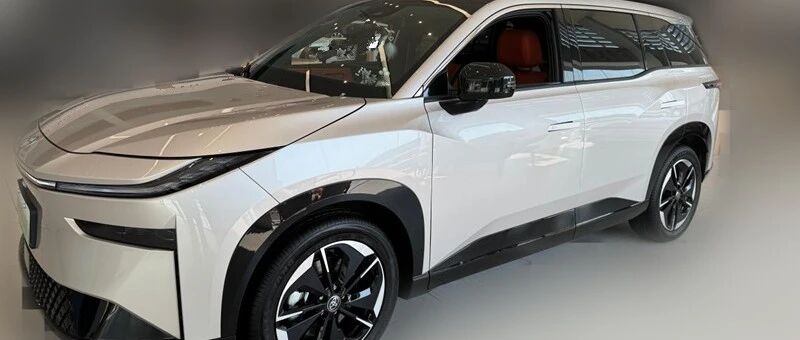
观车 · 论势 || 威马“复活”前路几何?
Zhong Guo Qi Che Bao Wang· 2025-09-19 01:30
Core Viewpoint - WM Motor has announced its return to production, marking a significant step in its recovery after nearly two years of inactivity, with the support of new investor Shenzhen Xiangfei Automotive [1][2] Group 1: Company Recovery - WM Motor's revival is facilitated by the involvement of local governments in Shanghai and Wenzhou, which are providing support for supply chain recovery, credit restoration, and financing [2] - The new shareholder, Shenzhen Xiangfei Automotive, brings essential funding and operational support to WM Motor [2] - WM Motor plans to resume production of its EX5 and E5 models at its Wenzhou base, indicating a strategic move to regain market presence [1][2] Group 2: Financial Challenges - WM Motor faces significant financial challenges, with total liabilities amounting to 20.367 billion and assets of only 3.988 billion, creating a heavy debt burden [2] - The initial investment of 1 billion may not be sufficient to alleviate the financial pressures, which could hinder future financing and expansion efforts [2] Group 3: Brand and Market Position - The two-year hiatus has severely damaged WM Motor's brand reputation, associating it with bankruptcy and poor after-sales service [3] - The competitive landscape of the Chinese electric vehicle market has evolved rapidly, with WM Motor's planned models lagging behind in technology and user experience compared to mainstream competitors [3] Group 4: Strategic Recommendations - WM Motor should focus on niche markets such as ride-hailing and lower-tier cities to build differentiated competitive advantages [4] - A phased approach is recommended, starting with cash flow recovery through short-term production and followed by the development of new products [4] - The company needs to diversify its financing sources and attract industry investors with expertise in key technologies to address its technical shortcomings [4]
威马、哪吒、高合进入造车复活赛
2 1 Shi Ji Jing Ji Bao Dao· 2025-09-15 15:57
Group 1 - The article discusses the revival efforts of struggling Chinese electric vehicle startups, including Neta, WM Motor, and HiPhi, as they face significant financial challenges and seek new investment opportunities [2][3][5] - Neta Auto is in a severe financial crisis, with only approximately 15 million yuan in cash against confirmed debts of about 5.1 billion yuan, and it owes over 460 million yuan in wages and compensation to more than 5,000 employees [2] - WM Motor has announced plans to resume production of its EX5 and E5 models in Wenzhou after a two-year halt, supported by new investors and local government assistance [3][9] Group 2 - The article highlights the scarcity of production qualifications as a key asset for these companies, with Neta holding dual production licenses, making it an attractive target for new investors [5][6] - Neta has established a significant overseas presence, with a production capacity of 300,000 vehicles annually and a notable increase in overseas sales, achieving 17,687 units in the first half of 2024, a 154% year-on-year growth [6] - WM Motor and Neta both have existing production facilities and a substantial customer base, which can facilitate easier market entry for potential investors compared to starting from scratch [6] Group 3 - WM Motor's revival strategy involves a three-phase development plan, aiming for production of 100,000 vehicles by 2030 and generating revenue of 120 billion yuan [9] - Neta is pursuing a public recruitment of investors, requiring a significant deposit, while facing challenges in managing its debt and operational control [10] - HiPhi's restructuring efforts have stalled due to issues with its new investor, EV Electra, which has not yet provided the promised funding, raising concerns about its financial stability [11] Group 4 - The article emphasizes the challenges these companies face in rebuilding brand trust after bankruptcy, with WM Motor's lack of communication regarding customer service and parts raising concerns among former users [14] - Financial pressures are significant, with WM Motor's debts exceeding 20.3 billion yuan, and its new investor having limited initial capital to support the necessary upgrades and recovery efforts [14][15] - The changing market environment poses additional challenges, as the competitive landscape for electric vehicles has evolved, making it difficult for these companies to regain market share and consumer trust [16]
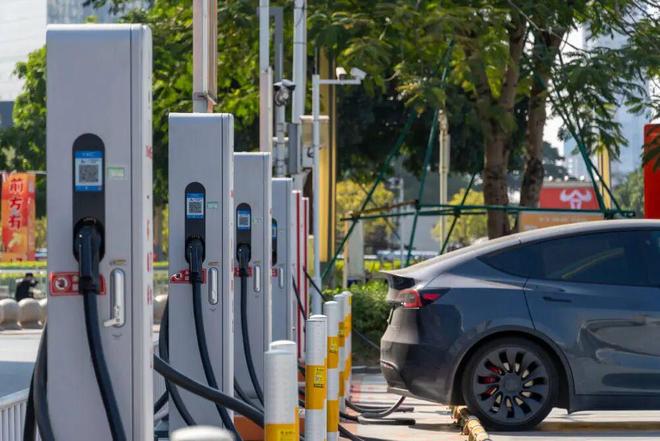
造车新势力开启“复活赛”:威马、哪吒、高合 谁能重获新生?
2 1 Shi Ji Jing Ji Bao Dao· 2025-09-15 11:46
Core Viewpoint - The new energy vehicle companies, including Neta, WM Motor, and HiPhi, are attempting to revive after facing severe financial crises, with varying strategies and challenges ahead [1][11]. Group 1: Financial Status and Challenges - Neta Auto's parent company, Hezhong New Energy, reported only about 15 million yuan in cash against confirmed debts of approximately 5.1 billion yuan, alongside unpaid wages and compensations totaling around 460 million yuan [1]. - WM Motor has debts exceeding 20 billion yuan and has been inactive for two years, but is now planning to resume production of its EX5 and E5 models [2][11]. - HiPhi's restructuring efforts have stalled due to a lack of funding from its new major shareholder, EV Electra, which has not injected any capital as promised [10][14]. Group 2: Revival Strategies - WM Motor is adopting a "government and industrial capital" model, receiving support from the Wenzhou government and planning a three-phase development strategy aimed at significant production and revenue growth by 2030 [8]. - Neta Auto is publicly recruiting investors to aid in its restructuring, with a significant entry barrier of a 50 million yuan deposit for potential investors [9]. - HiPhi is attempting to attract overseas capital but faces negotiation challenges with EV Electra regarding funding commitments [10]. Group 3: Market Position and Resources - The new energy vehicle companies possess valuable resources such as production qualifications, which are scarce due to tightened regulatory approvals in 2023 [3][4]. - Neta Auto has established production bases with a total annual capacity of 300,000 vehicles and has made significant inroads into the Southeast Asian market, achieving a 567% increase in overseas sales in 2023 compared to 2022 [4][5]. - WM Motor also has a KD factory in Thailand, enhancing its overseas production capabilities [5]. Group 4: Consumer Trust and Market Environment - Rebuilding consumer trust is a significant challenge for these companies, particularly for WM Motor, which has not addressed key customer concerns regarding parts and service after its bankruptcy [12][13]. - The market environment has drastically changed, with older models like WM Motor's EX5 and E5 struggling to compete against newer offerings in 2025 [15]. - The new energy vehicle market is increasingly competitive, with a notable percentage of consumers hesitant to choose brands perceived as unstable [15].
神秘金主出手,知名品牌“复活”,预计本月复产!此前负债200亿元,创始人“失踪”,家人被曝迁居美国,前员工:工资和赔偿至今没拿到
新浪财经· 2025-09-13 01:01
Core Viewpoint - Weima Automobile has announced its revival after a period of dormancy, with a new investor, Shenzhen Xiangfei Automotive Sales Co., Ltd., outlining ambitious plans for the company's future, including the launch of new models and significant revenue targets by 2030 [3][4][22]. Group 1: Company Status and Operations - Weima's design and procurement center in Shanghai has resumed operations with approximately 30-40 employees, while another office remains closed [5][10][19]. - The company has initiated recruitment efforts, with a focus on building a core team of 400 professionals, including both new hires and former employees [13][10]. - The revival plan includes restarting the dealer network and securing overseas orders, with an expected investment of 1 billion yuan for equipment upgrades and product development [13][22]. Group 2: Financial Challenges - Weima has faced significant financial difficulties, with total losses of 17.435 billion yuan from 2019 to 2021 and debts amounting to 20.367 billion yuan against assets of only 3.988 billion yuan [15][16]. - The company owes over 40 million yuan in unpaid salaries and compensation to employees, with a debt repayment plan in place for creditors [15][17]. - Despite the new investment, former employees report that they have not received owed wages or compensation [14][19]. Group 3: Future Plans - The revival strategy includes a phased approach from 2025 to 2030, aiming for production of 100,000 vehicles and revenue of 120 billion yuan by 2030 [22][23]. - The product lineup will feature over 10 new models across various vehicle categories, focusing on both pure electric and extended-range technologies [22][23]. - The new investor's background remains unclear, with potential connections to Baoneng Group, raising questions about the future direction of Weima [23].