Gemini 3

Search documents
你的下一批科研队友,将是AI智能体!生物医学研究进入智能体驱动新阶段
生物世界· 2026-03-29 04:04
Core Viewpoint - The article discusses the transformative potential of Agentic AI in biomedical research, highlighting its ability to perform labor-intensive tasks traditionally done by humans, such as literature review, hypothesis generation, and data analysis, through advanced algorithms and collaborative intelligent agents [2][3][4]. Key Algorithms Driving Agentic AI - Agentic AI is primarily driven by three key algorithms: 1. Large Language Models (LLMs) like GPT-5.2 and Claude Opus 4.5, which convert human instructions into computational operations [13]. 2. Reinforcement Learning (RL), which aligns AI behavior with human preferences through reward mechanisms [13]. 3. Evolutionary Algorithms, inspired by biological evolution, optimize AI responses and designs [13]. Seven Key Features of Agentic AI - The article identifies seven essential features for constructing Agentic AI in biomedical research: 1. Reasoning 2. Verification 3. Reflection 4. Planning 5. Tool Use 6. Memory 7. Communication [10][13]. Current Applications in Biomedical Research - Agentic AI has been applied across various stages of biomedical research, including: 1. Automated literature review and information extraction. 2. Hypothesis generation based on literature searches. 3. Experimental design and data analysis. 4. Coordination of end-to-end research processes [11][12][15]. Challenges and Opportunities - The deployment of Agentic AI systems in collaborative scientific research faces challenges such as: 1. Data processing and integration difficulties due to format and dimensionality issues. 2. Privacy and security concerns when handling sensitive patient data. 3. High computational costs and energy consumption associated with training and inference [20]. Future Outlook - The authors anticipate a shift from specialized single-agent systems to general multi-agent systems, emphasizing the importance of adaptive autonomy. Agentic AI should effectively recognize when to consult human experts for ambiguous or high-risk tasks, rather than pursuing complete autonomy [19].


Alphabet (GOOGL) Surged as It Reclaimed AI Leadership
Yahoo Finance· 2026-03-27 14:30
Market Overview - In Q4 2025, markets advanced modestly, with the S&P 500 returning 2.66%, the Nasdaq 100 gaining 2.47%, and the Dow Jones Industrial Average leading with a 4.03% return [1] - A shift in leadership towards large-cap value stocks was noted, influenced by the Federal Reserve's ongoing rate cuts amid cooling inflation and the maturation of AI investments [1] - The Fund Institutional Class shares returned 1.97%, underperforming the S&P Global 1200 Information Technology Index's 3.21% return [1] Economic Outlook - Heading into 2026, the U.S. economy appears to be steadily expanding, supported by strong demand and policy measures aimed at promoting sustained growth [1] Company Performance: Alphabet Inc. (NASDAQ: GOOGL) - Alphabet Inc. delivered exceptional returns in Q4 2025, with shares surging over 25% as the company reclaimed AI leadership through its Gemini 3 product family [3] - Alphabet reported its first-ever quarter with over $100 billion in revenue, significantly boosting investor confidence [3] - The company secured key contract wins from the Pentagon and AI pioneer Anthropic, which committed to using up to one million of Alphabet's chips for AI development [3] - Over the past 52 weeks, Alphabet's shares gained 82.03%, with a one-month return of -9.89% as of March 26, 2026, when the stock closed at $280.96 per share [2] - Alphabet's market capitalization stands at $3.4 trillion [2]

Alphabet Stock Forecast: Can GOOGL Deliver Nearly 40% Gains in 12 Months?
Yahoo Finance· 2026-03-23 16:58
Core Insights - Alphabet's stock has experienced a cooling period after a strong rally, influenced by the launch of Gemini 3 and revenue opportunities from Tensor Processing Units (TPUs) [1] - Geopolitical tensions in the Middle East and rising capital expenditures have contributed to market caution regarding Alphabet's stock [1] Investment and Expenditures - Alphabet is aggressively investing to expand its AI capabilities and infrastructure, with capital expenditures projected to rise to between $175 billion and $185 billion by 2026, a significant increase from $91.4 billion in 2025 [2] - Elevated investment levels are expected to pressure margins and free cash flow in the near term [2] Financial Performance - In 2025, Alphabet achieved $403 billion in annual revenue for the first time, with Q4 consolidated revenue reaching $113.8 billion, reflecting an 18% year-over-year increase [4] - The Google Services segment, which includes Search and YouTube, saw a revenue increase of 14% to $95.9 billion, with Search revenue climbing 17% to $63.1 billion, demonstrating the strength of Alphabet's core advertising engine [5] Analyst Outlook - Despite concerns over rising capital expenditures, analysts maintain an optimistic long-term outlook for Alphabet, with at least one analyst projecting a stock price target of $420, indicating a potential upside of approximately 40% [3]
ICLR 2026 | 大模型的无监督强化学习能走多远?清华团队给出了系统性答案
机器之心· 2026-03-21 03:27
Core Insights - The article discusses the evolution of reinforcement learning (RL) from supervised to unsupervised methods, highlighting the limitations of purely supervised training due to the increasing costs of manual labeling and the challenges in obtaining reliable annotations in specialized fields [3][4] - Unsupervised RL with internal rewards has shown promise in enhancing model performance, but it also faces inherent limitations that can lead to performance degradation after initial improvements [4][14] - The research identifies a "pre-training indicator" that can predict a model's trainability before extensive training, which is crucial for optimizing resource allocation in RL [4][20] Group 1: Unsupervised RL Mechanisms - The article outlines the emergence of unsupervised RL methods that utilize internal signals for reward construction, categorized into two types: those based on certainty and those based on ensemble methods [7][10] - A unified theoretical framework is proposed to explain the underlying mechanism of these internal reward methods, revealing that they primarily sharpen existing model preferences rather than create new knowledge [10][14] - The research indicates that the success of these methods is contingent on the alignment of model confidence and correctness, suggesting that models with strong initial priors can benefit from internal rewards, while those with incorrect priors may face inevitable collapse [14][20] Group 2: Key Findings - Finding One: The degree of alignment between confidence and correctness is critical for the success of internal reward methods, with models exhibiting a tendency to collapse after a certain point in training [14][16] - Finding Two: In small-scale training scenarios, internal rewards can lead to stable performance improvements, even when starting from incorrect initial beliefs [16][17] - Finding Three: The "Model Collapse Step" metric is introduced as a lightweight indicator to assess a model's suitability for RL, allowing for predictions about its performance without extensive ground truth labeling [20][23] Group 3: External Reward Methods - Finding Four: External reward methods are identified as a scalable direction for unsupervised RL, utilizing unannotated data and asymmetric generation-validation processes to provide objective feedback [24][25][27] - The article emphasizes that external rewards focus on verifying the correctness of generated answers rather than reinforcing the model's self-confidence, which can lead to more sustainable improvements [27][28] - The distinction between internal and external rewards is framed as complementary tools, with the potential for external methods to unlock new possibilities in scalable unsupervised RL [29][30]

Is Meta Platforms Inc (META) One of the Best Metaverse Stocks to Buy According to Analysts?
Yahoo Finance· 2026-03-18 13:02
Core Viewpoint - Meta Platforms Inc. is recognized as one of the top metaverse stocks to invest in, despite facing delays in the launch of its new AI model "Avocado" due to performance issues compared to competitors like Google [1][3]. Group 1: AI Development and Challenges - The launch of Meta's AI model "Avocado" has been postponed to May or June, initially expected this month, as it has not yet matched the performance of Google's latest AI systems, Gemini 2.5 and Gemini 3 [1][3]. - Meta is investing heavily in AI, with plans to spend between $115 billion and $135 billion this year to advance towards "superintelligence," but the new model's performance remains a concern [4]. - There have been discussions within Meta about potentially using Google's Gemini to support its AI products, although no final decision has been made [5]. Group 2: Chip Development - On March 11, Meta introduced four custom in-house chips designed for AI workloads, with the MTIA 300 chip aimed at training smaller AI models, while the upcoming MTIA 400, MTIA 450, and MTIA 500 chips are intended for advanced generative AI tasks [6]. Group 3: Workforce and Financial Investments - In January, Meta announced a 10% workforce reduction at Reality Labs, which focuses on metaverse and virtual reality products, indicating a strategic shift in resource allocation [7]. - Since 2020, Meta has invested nearly $60 billion in transforming its digital ecosystem into a profitable venture, including the development of Ray-Ban smart glasses to explore immersive digital environments [8].

OpenAI新模型Day0就被嫌弃!排名拉垮,不如一月底发布的国产模型
量子位· 2026-03-18 09:18
Core Viewpoint - OpenAI's newly launched GPT-5.4 mini has received criticism for its performance and pricing, ranking 13th in the Vals benchmark, which is an improvement over the previous GPT-5 but still underwhelming compared to competitors [2][4][6]. Performance Comparison - The GPT-5.4 mini achieved a score of 57.88% in the Vals benchmark, while the previous GPT-5 scored 56.10%, indicating a slight improvement [2][5]. - In various performance tests, the mini and nano models showed significant enhancements, with the mini version performing close to the full GPT-5.4 in several benchmarks, such as SWE-Bench Pro and OSWorld-Verified [10][12][25]. Pricing Analysis - The pricing for GPT-5.4 mini is approximately three times higher than the previous GPT-5 mini, with costs of $0.75 per million input tokens and $4.50 per million output tokens [16][6]. - The nano version is significantly cheaper, costing $0.20 per million input tokens and $1.25 per million output tokens, making it a more economical choice for certain tasks [16][31]. Market Position - Despite the improvements, the mini and nano models are still considered average in the global landscape, ranking lower than models from competitors like Kimi and Qwen [4][19]. - Users have noted that the performance of the new models is not compelling enough to justify the price increase, with some suggesting that alternatives like Gemini Flash 3 lite offer better performance at a lower cost [17][19]. Use Cases - The GPT-5.4 mini and nano models are optimized for programming, computer operations, and multi-modal tasks, making them suitable for applications where low latency is critical [14][20][23]. - In practical applications, the mini model has shown to be effective in tasks such as code modification and debugging, while the nano model excels in simpler tasks like classification and data extraction [20][28][34].

Alphabet (GOOG) Gained from Its Shift in the AI Race from Being “Hunted” to Being a “Hunter”
Yahoo Finance· 2026-03-16 12:47
Core Insights - Artisan Value Fund's fourth-quarter 2025 performance was strong, with a return of 4.60%, outperforming the Russell 1000® Value Index which returned 3.81% [1] - The fund's annual return for 2025 was 14.28%, compared to 15.91% for the index, indicating effective investment discipline over three, five, and ten years [1] Company Highlights - Alphabet Inc. (NASDAQ:GOOG) was a significant contributor to the fund's performance, with a one-month return of -1.49% and a 52-week gain of 80.98% [2] - Alphabet's market capitalization stands at $3.647 trillion, reflecting its substantial market presence [2] Performance Drivers - The top three contributors to the fund's performance included Lam Research, Alphabet Inc., and Merck, each returning over 20% [3] - Alphabet's perception in the AI sector shifted positively, with the company transitioning from being viewed as "hunted" to a "hunter" in the AI race [3] - The antitrust ruling in September was less severe than anticipated, allowing Google to maintain its default search engine status on mobile devices [3] - Alphabet's Q3 results showed broad-based strength across all segments, with positive management commentary on competitive positioning and AI integration [3] - The launch of Gemini 3, Alphabet's latest AI model, and increased usage of TPUs for AI solutions provide a strategic advantage and revenue potential [3]

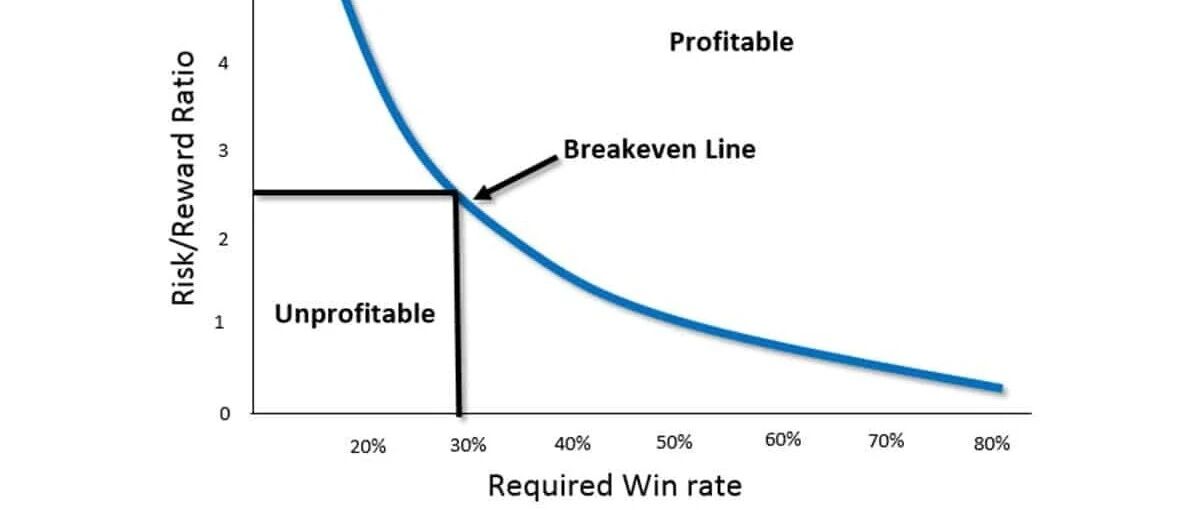
优化胜率而非赔率,把一件事做到理论上该有的样子|42章经
42章经· 2026-03-15 13:09
Core Insights - The article discusses the shift from an odds-driven approach to a probability-driven approach in entrepreneurship, emphasizing the importance of understanding user needs and market dynamics [4][7][11] - It highlights the distinction between optimizing for odds, which is akin to gambling, and optimizing for probability, which focuses on solving real user problems [12][14] - The conversation also touches on the evolving landscape of AI, particularly in content creation and user engagement, and the challenges of competing with established platforms [16][19][23] Group 1: Entrepreneurial Strategies - The transition from an odds-driven mindset to a probability-driven mindset is crucial for identifying viable business opportunities [7][11] - Successful entrepreneurs often focus on optimizing for probability by addressing specific user problems rather than chasing high-odds ventures [12][14] - The article contrasts different entrepreneurial philosophies, such as those of Zhang Yiming and Duan Yongping, emphasizing the importance of understanding market dynamics and user needs [15][10] Group 2: AI and Content Creation - AI is categorized into two main types: those that help users save time and those that provide entertainment, with implications for business models [16][17] - The competitive landscape for interactive content is challenging, as established platforms like Douyin and Honor of Kings dominate user engagement [19][20] - The article suggests that the future of AI in content creation will depend on finding new interaction models that resonate with users [19][23] Group 3: Market Dynamics and User Engagement - The success of a product is often determined by the alignment of user demographics, content type, and delivery modality [20][22] - The article argues that the best content will gravitate towards platforms with the highest monetization efficiency, driven by network effects [19][23] - It emphasizes the need for innovative interaction models to capture user attention and engagement in a saturated market [19][23]
Token出海专题报告:国产模型抢占市场,IDC需求迅速扩张
Guoxin Securities· 2026-03-14 13:09
Investment Rating - The report maintains an "Outperform" rating for the industry [1] Core Insights - The rapid iteration of large models is enhancing application capabilities, with global AI development leading to significant improvements in knowledge Q&A, mathematics, and programming, surpassing human-level performance in various tasks [2][4] - The increase in token usage is elevating the ranking of domestic models, with notable growth in API call volumes for Chinese models, indicating improved performance and cost-effectiveness [2][12] - AI applications are driving growth in the cloud market, leading to an expansion in IDC demand, as domestic internet and cloud companies lag behind their overseas counterparts in capital expenditure on AI infrastructure [2][3] Summary by Sections 1. Rapid Iteration of Large Models - The global large model industry has transitioned from annual to quarterly or even monthly iterations since 2025, with leading companies significantly reducing their model update cycles [11] - Domestic companies like Deepseek and ByteDance are also accelerating their model iterations, enhancing their capabilities and performance [11][12] 2. Increase in Token Usage and Domestic Model Ranking - The launch of viral AI applications like OpenClaw has spurred global AI application growth, leading to record-high token consumption [2] - By March 2026, over 50% of the top ten models on Openrouter were domestic, reflecting a significant rise in the performance and market acceptance of Chinese models [2] 3. AI Applications Driving Cloud Market Growth - The surge in domestic model usage is increasing the demand for local data centers, with a notable gap in capital expenditure on AI infrastructure compared to international firms [2] - As AI applications commercialize and grow rapidly, cloud services are becoming the primary platform for these applications, resulting in increased IaaS demand [2][3]
Contrary Research:《2026年科技趋势报告》,352页重磅
欧米伽未来研究所2025· 2026-03-13 00:38
Core Insights - The report from Contrary Research highlights that artificial intelligence (AI) is evolving from a singular technological issue to a comprehensive restructuring force affecting energy, manufacturing, defense, and human relationships [2] AI Model Competition - The report emphasizes the rapid advancements in AI foundational models, predicting that by 2030, top AI systems in software engineering, biology, and mathematics will achieve near-perfect accuracy on their respective benchmarks [3] - Key players in the AI model landscape include Google, Meta, Microsoft, and OpenAI, which have dominated foundational model releases from 2014 to 2024, with academic institutions following closely [4] Trust Issues in Evaluation Systems - The report addresses a crisis of trust in current evaluation systems, citing instances of undisclosed participation in benchmark tests and allegations of artificially inflated scores [5] - It presents a paradox in computational economics, where training power consumption has doubled every six months since 2010, while the actual computational power required for equivalent performance has significantly decreased [5] AI Commercial Penetration - As of May 2025, approximately 10% of U.S. companies have integrated AI into their products or services, while around 44.8% have subscribed to some form of AI model or platform [6] - The revenue from enterprise AI is projected to grow from $1.7 billion in 2022 to $37 billion in 2024, reflecting a growth rate exceeding three times [6] Infrastructure Competition - The demand for computational power is driving an unprecedented scale of infrastructure development, with major cloud service providers expected to spend nearly $100 billion quarterly by Q2 2025 [8] - Global capital expenditures on data centers, cloud computing, and AI-specific infrastructure are projected to reach $1.3 trillion by 2027, potentially amounting to 17% of U.S. GDP from 2025 to 2030 [8] Energy Consumption Concerns - U.S. data centers consumed 183 terawatt-hours of electricity in 2024, projected to rise to over 426 terawatt-hours by 2030, which could account for more than 10% of total U.S. electricity consumption [10] - The report highlights nuclear energy as a potential alternative, noting that most new nuclear capacity is being built in China, while the U.S. has seen a stagnation in new approvals [10] Industrial Restructuring - The report outlines a significant industrial restructuring, with China surpassing the U.S. as the largest manufacturing nation and having more robots installed than the rest of the world combined [11] - The U.S. defense industrial base is described as being in crisis, with significant shortages in key military supplies and a stark contrast in manufacturing capabilities compared to China [12] Social Trends and AI Companionship - The report discusses the rise of loneliness as a social trend, with increased solitary time among Americans, particularly among younger demographics [13] - AI companions are emerging as a response to this social void, with a significant percentage of Gen Z users expressing a belief that AI can replace human companionship [14]