GenFlow

Search documents
百度的窄门:当AI To C需要超级入口
3 6 Ke· 2026-02-06 12:53
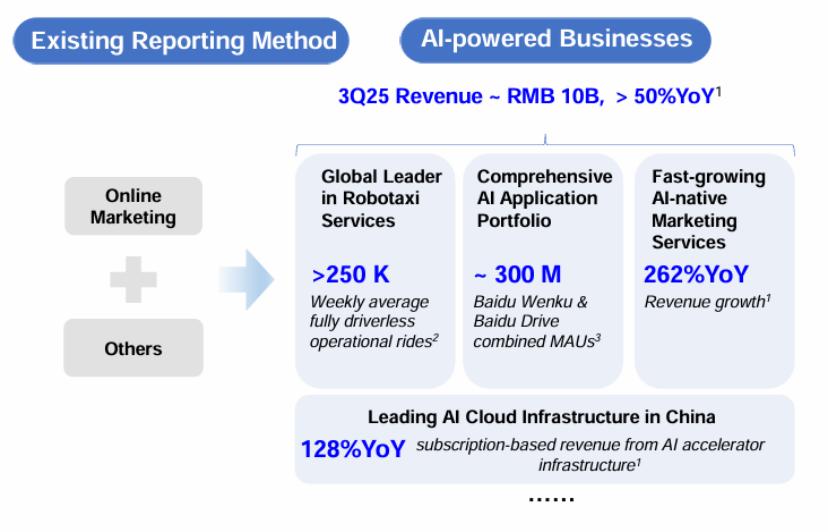
Core Insights - Baidu is facing significant pressure as its core online marketing revenue dropped by 18% in Q3 2025, while new business segments like AI, cloud, and autonomous driving are growing but not enough to create a reliable growth curve [1][2] - The establishment of the Personal Super Intelligent Group (PSIG) aims to integrate key AI assets like Baidu Wenku (Baidu Library) and Baidu Wangpan (Baidu Cloud) to enhance their commercial potential and address growth bottlenecks [1][3] Business Performance - AI cloud revenue reached 6.2 billion yuan, a 21% year-on-year increase, while AI application revenue was 2.6 billion yuan, accounting for over 25% of AI-driven business [5][8] - Baidu Wenku and Baidu Wangpan combined have approximately 300 million monthly active users, with Wenku's AI features achieving a 60% year-on-year growth in paid users [5][8] - AI native marketing services generated 2.8 billion yuan, a 262% increase year-on-year, now representing 18% of Baidu's core online marketing revenue, up from 4% a year ago [5][8] Strategic Developments - The integration of Baidu Wenku and Baidu Wangpan is expected to create a synergistic effect, enhancing user engagement and monetization through AI capabilities [9][10] - The launch of the Cangzhou OS and GenFlow tools indicates a strategic shift towards creating a comprehensive content operation system that enhances user productivity [9][10] - The PSIG's leadership under Wang Ying is seen as a strategic move to leverage the successful performance of Wenku and Wangpan, focusing on long-term growth potential [12][18] Competitive Landscape - Baidu's ambition to establish an "AI super entrance" faces challenges due to structural disadvantages compared to competitors like Tencent and Alibaba, which have more integrated ecosystems [19][23] - The lack of a robust transaction ecosystem and social engagement limits Baidu's ability to capture user behavior effectively, making it difficult to establish a "national-level entrance" in the AI To C market [23][25] - Baidu's AI journey has been complicated by missed opportunities in the mobile internet era, leading to a need for a balanced approach between B2B and B2C strategies [26][27]


拯救过无数个学生狗的文库网站们,正在倒下
3 6 Ke· 2026-01-29 00:17
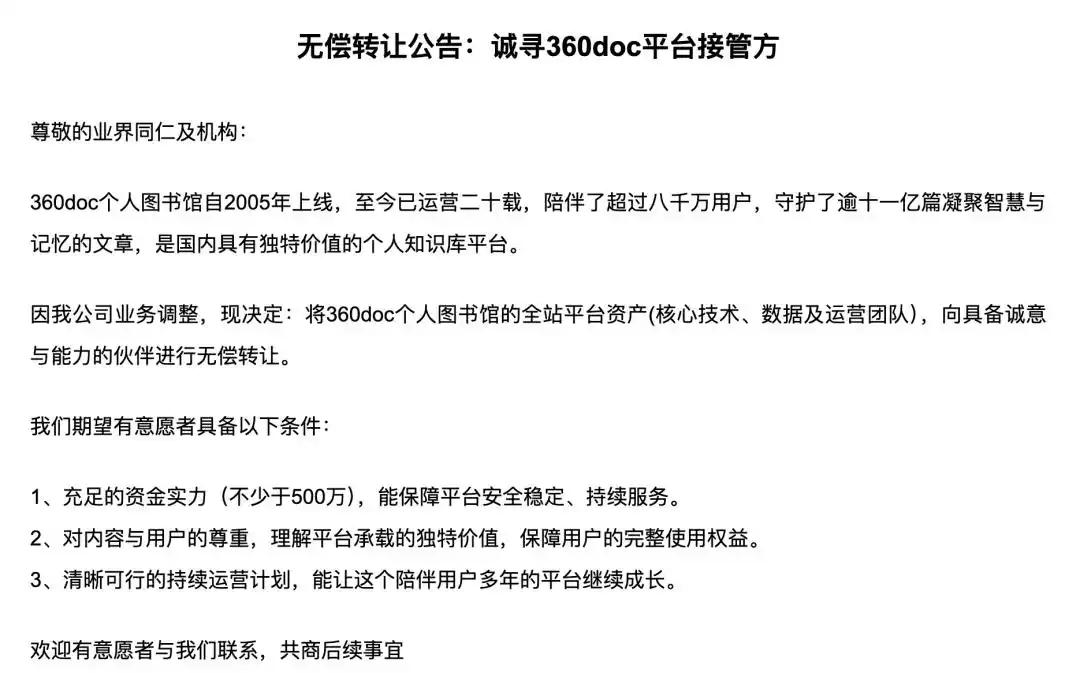
Core Viewpoint - The article discusses the decline of 360doc, a document-sharing website that has been unable to adapt to the changing landscape of information retrieval and competition from AI-driven tools and larger platforms like Baidu Wenku [30]. Group 1: Company Overview - 360doc was launched in 2005 and became popular for providing templates and documents for students and professionals [3][6]. - The platform served as a "network clipping book," allowing users to collect and share web articles, evolving into a personal library and knowledge management tool [6][8]. Group 2: Business Model - 360doc's business model relied on attracting users through free access and monetizing through advertising, generating significant revenue in its early years, with revenues of over 26 million yuan in 2016 [8][9]. - The website's revenue peaked in 2016, but the growth trajectory has since declined due to increased competition and changing user preferences [28]. Group 3: Industry Context - The document-sharing industry has seen the emergence of competitors like Baidu Wenku, which leverage AI capabilities to enhance user experience and maintain a competitive edge [30]. - The rise of AI tools has shifted user behavior, making traditional document-sharing platforms less relevant as users now prefer instant content generation [29][30]. Group 4: Financial Performance - 360doc's financial performance has deteriorated, with significant drops in revenue reported, reflecting the challenges faced by traditional document-sharing platforms in the current market [28][30]. - In contrast, Baidu Wenku reported a monthly active user base of nearly 300 million and generated 2.6 billion yuan in AI application revenue, highlighting the disparity in performance between established platforms and newer entrants [30].
认知偏差、落地断层、体验割裂是目前AI产品的三大痛点|百度王颖@MEET2026
量子位· 2025-12-19 01:01
Core Insights - The article discusses the evolution of AI from a conversational partner to an action assistant, highlighting the increasing complexity of tasks that users face despite advancements in AI capabilities. It identifies three main challenges: cognitive bias, implementation gaps, and fragmented experiences [1][5][14]. Group 1: AI Challenges - Cognitive bias, implementation gaps, and fragmented experiences are identified as the three major pain points for users of AI products [5][14]. - Users often experience a disconnect between AI's capabilities and their ability to execute complex tasks, leading to frustration [14]. Group 2: GenFlow and AI Development - GenFlow serves as the core scheduling hub for Baidu's super personal intelligent agent framework, achieving a monthly active user base in the tens of millions, making it the largest general-purpose intelligent agent globally [5][10]. - The recently updated GenFlow 3.0 integrates a memory system that allows it to retain user interactions and preferences, enhancing personalization [13][17]. Group 3: Product Innovations - Baidu Wenku launched the AI learning platform OREATE AI, which has surpassed 1.4 million monthly active users within a month of its launch and topped the ProductHunt global daily rankings [37]. - Baidu Wangpan has expanded its services to 175 countries, featuring multilingual subtitles and AI camera functionalities, receiving positive feedback globally [39]. Group 4: Future Vision - The vision is to create a super personal intelligent agent that empowers users to become super individuals, enhancing their capabilities in various tasks [8][9]. - The integration of Office Agent and GenX aims to facilitate seamless collaboration between users and AI, enhancing productivity and creativity [20][28].

MEET2026挤爆了,AI圈今年最该听的20+场演讲&对谈都在这
3 6 Ke· 2025-12-11 07:32
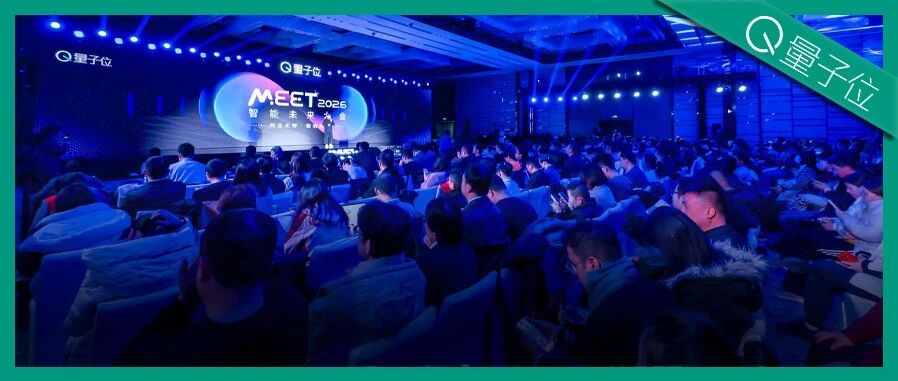
Core Insights - The MEET2026 Smart Future Conference highlighted the rapid evolution of AI technologies, emphasizing the transition towards AGI and the emergence of intelligent agents as a pivotal development in the industry [1][3][5]. Group 1: Conference Overview - The MEET2026 conference, hosted by Quantum Bit, attracted nearly 1,500 attendees and over 3.5 million online viewers, showcasing significant interest from various sectors including academia, industry, and investment [5]. - Key themes discussed included the integration of AI across different modalities and the importance of collaboration between industry and academia to drive innovation [3][5]. Group 2: Keynote Highlights - Zhang Yaqin from Tsinghua University emphasized the trend of AI integration across information, physical, and biological intelligence, predicting that foundational models will consolidate into fewer than ten globally [8]. - Wang Ying from Baidu discussed the evolution of generative AI into intelligent agents, which will replace many existing SaaS and apps, marking a shift towards an "agent internet" [8][9]. - Wang Zhongyuan from Beijing Academy of Artificial Intelligence noted that the current AI wave is a critical turning point, moving from weak AI to general AI, with a focus on multi-modal learning [11]. Group 3: Industry Applications - Dennis Yue from Google Cloud highlighted the importance of AI agents in automating processes and creating new business models, emphasizing the need for seamless integration across various platforms [21]. - Zhao Ce from Zhuosheng Technology discussed the necessity of creating a closed-loop commercial model that integrates models, terminals, and data to achieve effective AI deployment in industries [25]. - Yang Haibo from Guanglun Intelligent stressed the importance of simulation infrastructure in bridging the gap between simulated and real-world applications, which is crucial for the success of physical AI [49]. Group 4: Challenges and Future Directions - The industry faces challenges such as cognitive biases and user experience gaps in AI product usage, which need to be addressed to empower users effectively [9]. - The need for a robust ecosystem to support AI applications was emphasized, with calls for collaboration among enterprises to build open-source platforms [39]. - The discussions pointed towards a future where AI agents will need to demonstrate controllability and interpretability, ensuring they can work alongside humans effectively [57].

MEET2026挤爆了,AI圈今年最该听的20+场演讲&对谈都在这
量子位· 2025-12-11 06:54
Core Viewpoint - The MEET2026 Smart Future Conference highlighted the rapid evolution of AI technologies, emphasizing the transition towards generative and reasoning AI, and the emergence of intelligent agents as a pivotal development in the journey towards Artificial General Intelligence (AGI) [1][5][4]. Group 1: Conference Overview - The MEET2026 conference, hosted by Quantum Bit, attracted nearly 1,500 attendees and over 3.5 million online viewers, showcasing significant interest from industry, academia, and investment circles [8]. - Key themes discussed included the integration of AI across various sectors, the importance of intelligent agents, and the belief that the next phase of AI development is imminent [5][4]. Group 2: Key Insights from Speakers - Zhang Yaqin from Tsinghua University emphasized the shift from discriminative to generative and reasoning AI, predicting that foundational models will consolidate into fewer than ten globally within the next 5-10 years, leading to an "agent internet" era [10]. - Wang Ying from Baidu highlighted the challenges users face with AI products and introduced GenFlow, a framework designed to create a universal intelligent agent that can operate across various scenarios, achieving over 1 million monthly active users [12]. - Wang Zhongyuan from the Beijing Academy of Artificial Intelligence discussed the transition from weak AI to AGI, emphasizing the need for multimodal capabilities in AI models to better understand and interact with the physical world [15]. - Qualcomm's Wan Weixing outlined the evolution of AI from perception to physical AI, focusing on the advancements in edge computing and the integration of multimodal capabilities [19]. - Amazon's Chen Xiaojian discussed the importance of building effective agents that can autonomously perform tasks, highlighting the challenges in transitioning from proof of concept to production deployment [21]. Group 3: Industry Trends and Challenges - The conference underscored the need for collaboration between technology and industry to overcome challenges in data, scenarios, and organizational coordination for AI agents [81]. - The discussions revealed a divide between general-purpose agents and specialized agents, with varying paths for development and deployment [82]. - The importance of user-friendly design in AI products was emphasized, suggesting that lowering barriers to entry is crucial for widespread adoption [93].
百度,首次披露!增速超50%
中国基金报· 2025-11-18 15:15
Core Viewpoint - Baidu's Q3 2025 financial report highlights significant growth in AI business, with total revenue reaching 31.2 billion yuan and core revenue at 24.7 billion yuan, driven by the adoption of AI products and solutions by enterprises [2][4]. AI Business Growth - Baidu's AI business revenue grew over 50% year-on-year in Q3, with notable performances in AI Cloud, AI applications, and AI native marketing services [8]. - AI Cloud revenue increased by 33% year-on-year, with subscription revenue for high-performance computing infrastructure rising by 128% [8]. - AI applications generated 2.6 billion yuan in revenue, with a high user engagement model contributing to sustainable revenue [8]. - Monthly active users for Baidu's Wenku and Wangpan reached nearly 300 million, with the recently upgraded GenFlow 3.0 achieving over 20 million active users [8][9]. - AI native marketing services revenue reached 2.8 billion yuan, reflecting a 262% year-on-year increase, driven by demand for AI solutions [9]. Autonomous Driving Expansion - Baidu's autonomous driving service, "Luobo Kuaipao," recorded 3.1 million service instances in Q3, marking a 212% year-on-year growth [10]. - The service has expanded globally, covering 22 cities and achieving over 1.4 billion kilometers in fully autonomous driving mileage [11]. - Recent partnerships and licensing in Dubai and Abu Dhabi support Baidu's global expansion strategy for autonomous driving services [12].
Baidu Announces Third Quarter 2025 Results
Prnewswire· 2025-11-18 09:00
Core Insights - Baidu reported its third-quarter financial results for 2025, highlighting the transformative impact of AI across its business portfolio, particularly in AI Cloud and autonomous driving services [2][3][6]. Financial Performance - Total revenues for Q3 2025 were RMB 31.2 billion ($4.38 billion), a decrease of 7% year-over-year [9]. - Operating loss was RMB 15.1 billion ($2.12 billion), with Baidu Core operating loss at RMB 15.0 billion ($2.10 billion) [12]. - Net loss attributable to Baidu was RMB 11.2 billion ($1.58 billion), with diluted loss per ADS at RMB 33.88 ($4.76) [14]. - Non-GAAP net income attributable to Baidu was RMB 3.8 billion ($530 million), with a non-GAAP diluted earnings per ADS of RMB 11.12 ($1.56) [14]. Business Segments - AI Cloud revenue reached RMB 4.2 billion, up 33% year-over-year, driven by increased enterprise adoption [18]. - Revenue from AI-native marketing services surged 262% year-over-year to RMB 2.8 billion, indicating strong demand for performance-driven AI solutions [18]. - Apollo Go, Baidu's autonomous ride-hailing service, provided 3.1 million fully driverless rides in Q3 2025, marking a 212% increase year-over-year [6][7]. Strategic Developments - Baidu introduced a new AI-native view to better reflect its AI-powered assets and enhance investor visibility [8]. - The company launched ERNIE 5.0, an advanced omni-modal foundation model, showcasing its commitment to AI innovation [6]. - Baidu's ESG evaluations improved, and it was recognized in Fortune's Change the World 2025 list for its positive social impact through Apollo Go [6]. Operational Highlights - As of October 2025, Apollo Go's global operations expanded to 22 cities, achieving 100% fully driverless operations in all cities where it operates [7]. - Baidu App's monthly active users reached 708 million, reflecting a 1% year-over-year increase [18]. Cash and Investments - Total cash and investments as of September 30, 2025, were RMB 296.4 billion ($41.64 billion) [16]. - Operating cash flow was RMB 1.3 billion ($176 million), with an adjusted figure excluding iQIYI at RMB 1.5 billion ($214 million) [16].

百度重押AI应用,海外成下一代流量战场
Hua Xia Shi Bao· 2025-11-14 10:25
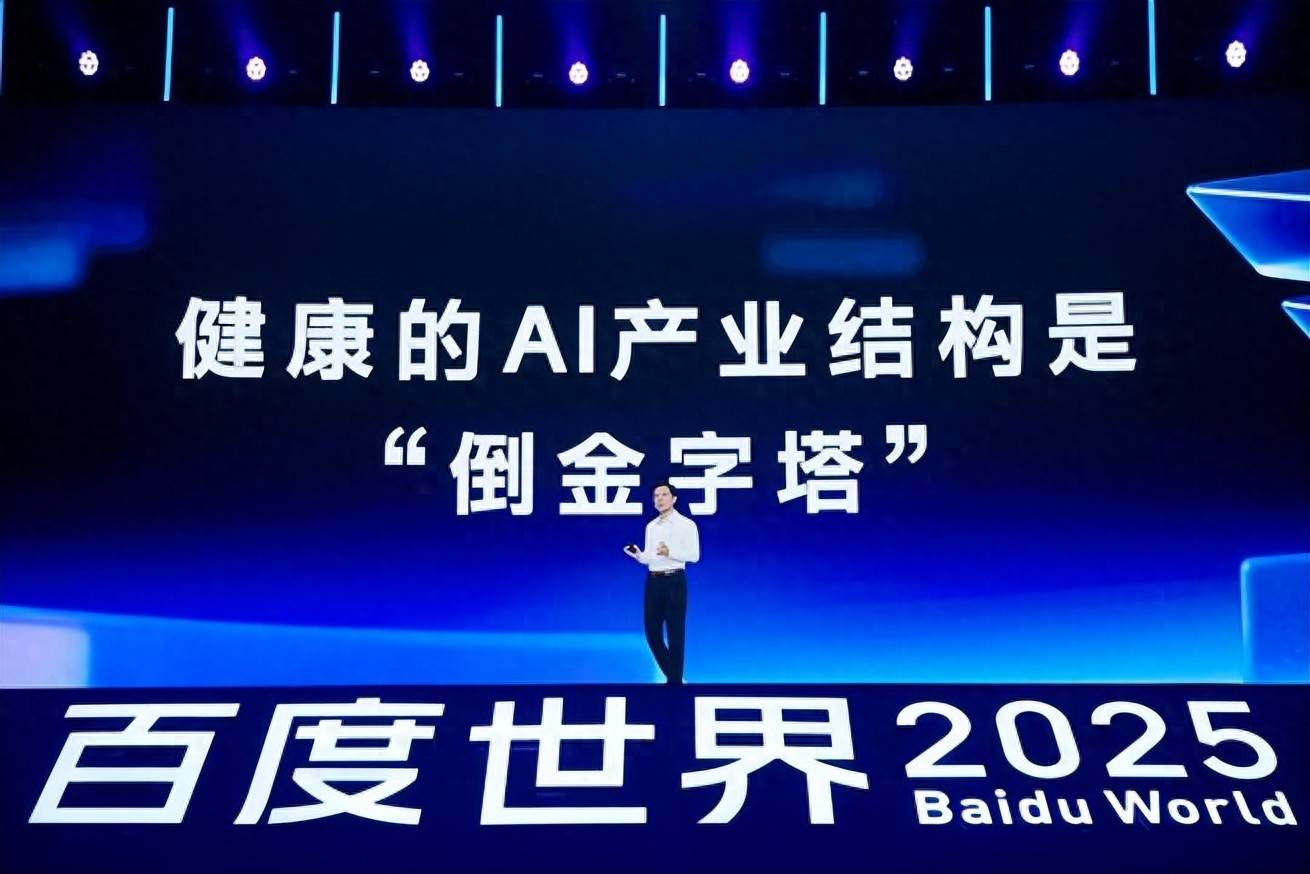
Core Insights - The competition for AI super applications is intensifying as companies aim to capture the next wave of traffic dominance [2][3] - Baidu's founder, Li Yanhong, highlighted a shift in the AI industry structure from an unhealthy "pyramid" to an inverted "pyramid," where AI applications can generate 100 times the value of chips [2][4] AI Model and Applications - Baidu released its Wenxin large model 5.0, featuring 2.4 trillion parameters and supporting multimodal understanding and generation capabilities [4] - The company is transitioning from "intelligent emergence" to "effect emergence," emphasizing the effectiveness of AI applications over mere model development [4][5] - Baidu's search engine has achieved a 70% coverage rate of rich media in search results, indicating a significant shift towards multimedia content [4] Market Competition and Challenges - Major players like Alibaba, Tencent, and ByteDance are also focusing on AI applications, leading to a highly competitive environment [6][7] - The AI application market is experiencing severe internal competition due to a lack of differentiation and reliance on generic large model APIs [7] - Many AI applications struggle to convert free users into paying customers, leading to unsustainable business models [7] User Trends and Market Dynamics - As of June, the mobile user base for AI applications reached 680 million, with AI search engines and comprehensive assistants leading the market [6] - The user base for mobile plugins grew to 630 million, while native app users declined, indicating a shift in user preferences [7] International Expansion - Chinese AI companies are increasingly targeting overseas markets, with Baidu's applications like "Luo Bo Kua Pao" and "Hui Bo Xing" expanding into regions like Southeast Asia and the U.S. [8][9] - The overseas market presents opportunities due to a more mature payment environment, allowing for quicker profitability [9] - Successful international expansion will depend on understanding local needs and regulatory compliance [10]
百度发布多项AI重磅成果,李彦宏称产业结构正在转变
Sou Hu Cai Jing· 2025-11-14 09:14
Core Insights - The core message emphasizes the integration of AI as an inherent capability that transforms it from a cost into a productivity driver for both enterprises and individuals [2][11]. AI Integration and Business Transformation - Baidu is actively restructuring its business through AI, with its search engine undergoing significant AI-driven transformations, focusing on rich media content [2][8]. - The AI industry structure is shifting from an unhealthy "pyramid" to a "reverse pyramid," where AI applications can generate 100 times the value compared to models, promoting a healthier ecosystem [2][3]. AI Product Developments - Baidu unveiled several AI advancements at the conference, including the Wenxin large model 5.0, which excels in multimodal understanding and creative writing, positioning it as a global leader [3][7]. - The latest generation of Kunlun chips and the Tianchi super nodes were introduced, with the Tianchi 512 super node capable of training trillion-parameter models [7][9]. - The autonomous driving service "Luobo Kuaipao" has achieved over 17 million global service instances, making it the leading service in the world [7][8]. Market Expansion and Global Reach - Baidu's AI products, including Luobo Kuaipao and digital human technologies, are accelerating their international expansion [5][14]. - The digital human technology "Huibo Xing" has seen significant adoption, with 83% of live stream hosts using it during the Double 11 shopping festival, indicating its commercial viability [11][14]. Innovative AI Applications - The newly released "real-time interactive digital human" enhances user interaction by understanding the real world and providing immediate feedback [14][16]. - The self-evolving intelligent agent "Famo" is designed to find global optimal solutions, simulating evolutionary algorithms to solve complex problems [16][18]. Future Outlook and Economic Impact - Baidu aims to internalize AI as a fundamental capability across industries, which is expected to trigger a productivity revolution and convert "intelligent dividends" into "social dividends" [16][18].
百度不聊理想,聊效果涌现
盐财经· 2025-11-14 09:12
Core Viewpoint - Baidu emphasizes the practical application of AI technologies to create real value, moving from "intelligent emergence" to "effect emergence" [2][21][36] Group 1: AI Applications and Innovations - Baidu introduced various AI advancements at the 2025 Baidu World Conference, including AI digital humans, fully autonomous vehicles, and AI-powered tools for everyday tasks [2][24] - The AI digital human technology is seen as a foundational technology that enhances user interaction through natural language and visual perception, significantly improving user engagement [6][25] - During the Double 11 shopping festival, 83% of live stream hosts utilized Baidu's digital human technology, resulting in a 119% increase in the number of live streaming rooms and a 91% increase in GMV [6] Group 2: AI in Agriculture - AI is being applied in agriculture, specifically in pig farming, where automation and AI algorithms are used to improve feeding efficiency and disease detection [9][13] - A professor developed an AI-based system for pig farming that reduces costs to half of similar foreign products and has been successfully implemented in 30 farms across China [13] Group 3: AI in Daily Life - AI tools are increasingly integrated into the daily lives of individuals, enabling them to perform tasks more efficiently, such as creating educational materials for community outreach [15][18] - A village official utilized Baidu's AI tools to prepare anti-fraud educational materials quickly, demonstrating the accessibility and utility of AI in rural areas [15][18] Group 4: AI's Impact on Industry Structure - The AI industry is transitioning from an unhealthy "pyramid" structure to a healthier "inverted pyramid" structure, where applications generate more value than the underlying technology [8][36] - Baidu's focus is on integrating AI into every task, making it a native driving force for both enterprise growth and personal development [36] Group 5: Autonomous Driving and Future Trends - Baidu's fully autonomous driving service, "LuoBo Kuaipao," has achieved over 25,000 orders weekly and has become the global leader in autonomous ride-hailing services [28] - The service's safety record surpasses that of human drivers and even Google's Waymo, indicating a significant advancement in autonomous vehicle technology [28] Group 6: AI as a Super Productivity Tool - Baidu's newly launched self-evolving super intelligent agent, "Baidu FaMou," aims to optimize solutions across various industries, including transportation and energy [33] - The integration of AI into urban traffic management has shown to reduce average vehicle delays significantly, showcasing AI's potential in real-world applications [33]