MogoMind大模型

Search documents
旧金山“黑夜迷途”:一次停电暴露自动驾驶单车智能的当下困境
Tai Mei Ti A P P· 2025-12-22 04:38
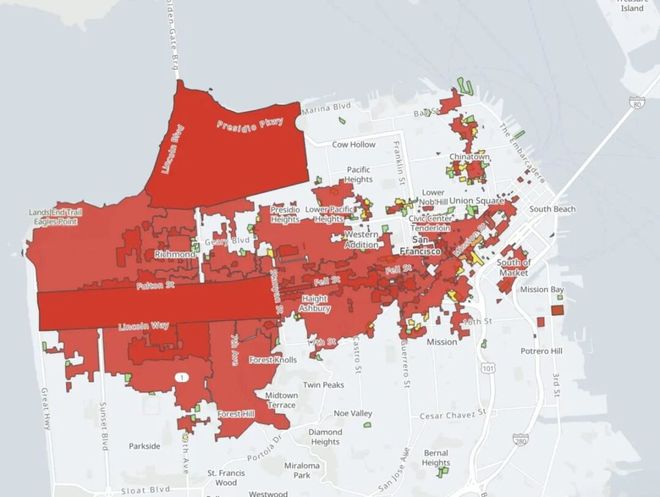
文 | 山自 2025年12月20日,旧金山遭遇一场罕见的大规模停电。太平洋煤气与电力公司(PG&E)一座变电站突 发火灾,导致全市约12.5万用户断电,覆盖西区、里士满、海特-阿什伯里、中国城等近三分之一区 域。交通信号灯集体熄灭,Muni公交停运,市长丹尼尔·卢瑞紧急呼吁市民非必要不出行。 2025年12月20日下午4:50的PG&E停电图 然而,在这场城市应急事件中,最引人注目的并非人类司机的混乱应对,而是——Waymo自动驾驶车 队的集体"宕机"。 有分析指出,伴随停电的蜂窝网络波动或实时交通数据中断,可能是另一重打击。Waymo等公司依赖 远程协助(Tele-assist)处理边缘场景。一旦通信中断,车辆不仅"看不见",还成了"信息孤岛",无法获 取后台指令或路径重规划。 社交媒体上,视频疯传:多辆白色Waymo车辆在漆黑潮湿的十字路口一动不动,红色尾灯在夜色中闪 烁,后方排起长龙,人类司机或鸣笛催促,或无奈绕行。有用户调侃:"停电摧毁了Waymos RIP。"更 有观察者尖锐指出:"看起来它们根本没接受过停电训练。" 停电期间,一辆Waymo被困在路上 次日,Waymo官方承认已暂停旧金山服务,并 ...

NVIDIA开源 Alpamayo-R1:让车真正“理解”驾驶
3 6 Ke· 2025-12-03 04:27
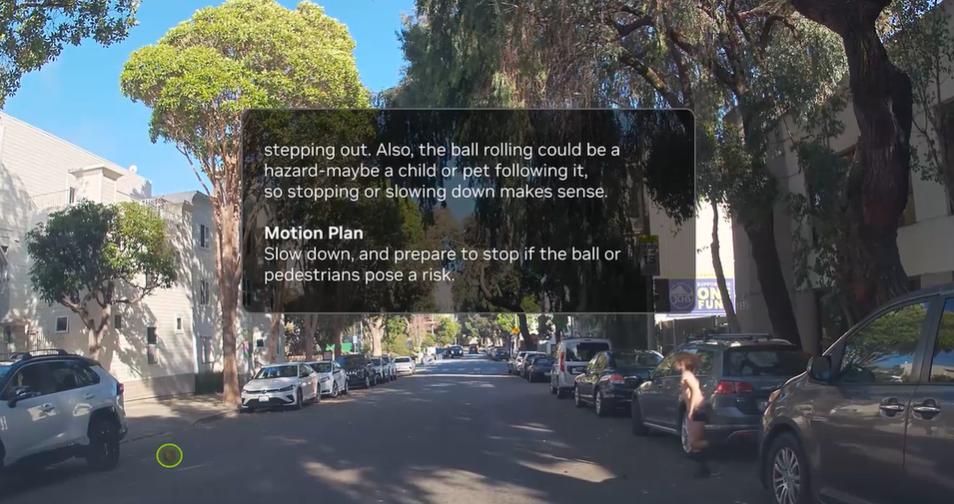
Core Insights - NVIDIA announced the launch of Alpamayo-R1, the world's first open-source Vision-Language-Action Model specifically designed for autonomous driving research, marking a shift from perception-driven systems to semantic understanding and common-sense reasoning [1][12] Group 1: Model Features - Alpamayo-R1 is built on the Cosmos-Reason architecture, introducing a "Chain-of-Thought" mechanism that allows the model to break down complex driving tasks into interpretable reasoning steps [4] - The model enhances robustness in operational design domain (ODD) boundary conditions, particularly addressing long-tail challenges faced by Level 4 autonomous driving [4][6] - Unlike traditional end-to-end models that map images directly to control signals, Alpamayo-R1 enables vehicles to "understand why" certain actions are taken, mimicking human-like multi-step reasoning in complex scenarios [6] Group 2: Open Source and Development Tools - NVIDIA has open-sourced the Alpamayo-R1 model weights and released the Cosmos Cookbook, a comprehensive AI development toolkit for autonomous driving [7] - The toolkit includes high-quality data construction standards, synthetic data generation pipelines, lightweight deployment solutions, and safety assessment benchmarks [7] Group 3: Collaborative Driving Systems - NVIDIA, in collaboration with Carnegie Mellon University, introduced the V2V-GoT system, the first framework applying Graph-of-Thought reasoning for multi-vehicle collaborative autonomous driving [9] - This system significantly reduces intersection collision rates from 2.85% to 1.83% and accurately predicts surrounding vehicles' movements within three seconds [9] Group 4: Synthetic Data Generation - The performance of Alpamayo-R1 is supported by NVIDIA's advanced synthetic data generation capabilities, utilizing the Cosmos world model trained on 20,000 hours of real driving footage [11] - This synthetic data addresses the scarcity of real-world long-tail distributions and supports closed-loop adversarial training for emergency response capability testing [11] Group 5: Strategic Implications - The release of Alpamayo-R1 represents a significant step in NVIDIA's "physical AI" strategy, moving beyond a perception-planning-control pipeline to create embodied agents that understand physical laws and social norms [12] - The open-source strategy is expected to accelerate global research and development in the next generation of autonomous driving technologies [13]

小鹏Robotaxi和IRON发布:物理AI“安全大考”才刚刚开始
3 6 Ke· 2025-11-05 23:13
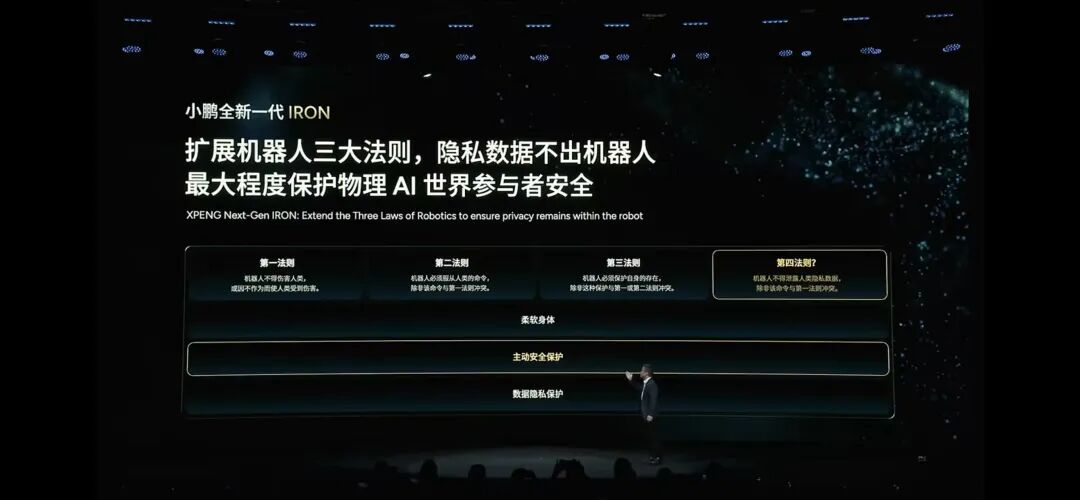
Core Insights - The core question raised during the Xiaopeng Technology Day is how AI can safely integrate into the real world as physical partners, moving beyond mere algorithms on screens [1] Group 1: Robotaxi Development - Xiaopeng announced plans to trial L4-level Robotaxi by 2026, showcasing a robust technological framework that includes dual redundancy in six core systems, ensuring safety without a physical safety driver [2] - The second-generation VLA model allows AI to operate without reliance on high-precision maps, enabling it to adapt to various traffic rules and environments, thus enhancing its decision-making capabilities [2] - Xiaopeng aims to accelerate commercialization by opening its SDK to partners like Amap, which expands the safety responsibility within a more complex collaborative ecosystem [2] Group 2: IRON Robot Features - The IRON robot, standing at 178 cm, represents AI's entry into personal living spaces, emphasizing its ability to navigate safely rather than just its mobility [4] - Equipped with an indoor AEB (Automatic Emergency Braking) system, the IRON robot can detect and avoid obstacles in home environments, enhancing its practical utility [7] Group 3: Physical World Model - Both the Robotaxi and IRON robot are powered by a physical world model, which fundamentally differs from internet models like ChatGPT, as it must adhere to strict physical laws [6] - Xiaopeng's model, with 720 billion parameters, enables AI to understand complex physical interactions, such as recognizing reflective surfaces or assessing water depth, marking a significant advancement in physical AI capabilities [9] Group 4: Safety as a Priority - Xiaopeng's approach emphasizes "edge-side reinforcement," where high levels of intelligence are paired with robust safety redundancies, highlighting the critical nature of safety in physical AI applications [10] - The industry is exploring alternative safety frameworks, such as the "system-level collaboration" exemplified by Mogu Car Union, which aims to enhance overall traffic safety through interconnected AI systems [10] Group 5: Future Challenges - The future of physical AI will hinge on its ability to interpret human social intentions and the legal implications of accidents, which will determine the extent of its integration into society [12] - The industry has made significant strides by prioritizing safety over mere technological display, marking the beginning of a crucial phase in the development of physical AI [12]

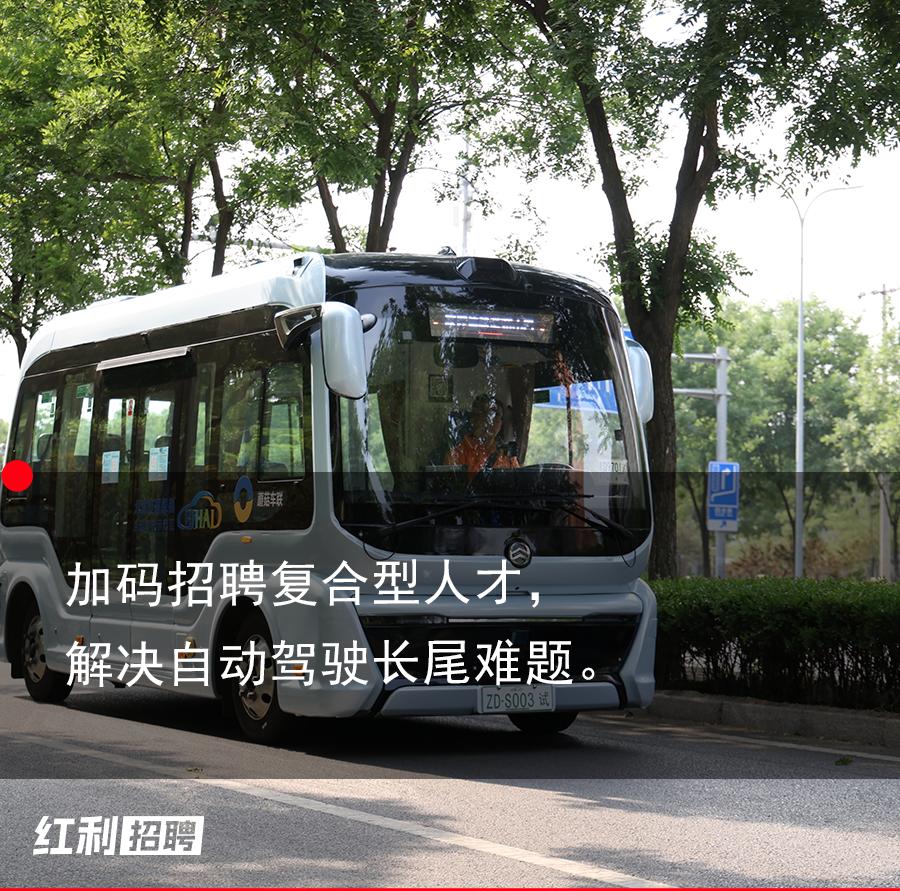
自动驾驶独角兽「蘑菇车联」:聚焦AI与自动驾驶,双线吸纳技术及复合型人才|招聘首发
3 6 Ke· 2025-11-04 05:03
Core Insights - The article discusses the ongoing recruitment efforts of "Mushroom Car Union," a technology company specializing in AI networks and autonomous driving, targeting graduates from 2025 and 2026 [2] - The company aims to attract cross-disciplinary talent with both technical sensitivity and business acumen to support its dual-engine strategy of "AI network + autonomous driving" [2][5] Recruitment Strategy - The recruitment focuses on technical product development roles, including AI algorithm development, large model deployment, and simulation system development, as well as positions in strategic analysis, marketing, human resources, and finance [6][7] - The company emphasizes the need for candidates to have a passion for AI and autonomous driving, with a focus on problem-solving abilities and project experience [23][24] Company Development and Competitive Edge - The company's competitive advantage lies in three main areas: differentiated technology with its self-developed MogoMind model, extensive real-world application experience, and successful global project validation, such as winning a contract for an L4 autonomous bus project in Singapore [5][6] - The MogoMind model addresses the limitations of traditional AI by enabling real-time perception and global cognitive systems, allowing for dynamic responses to changes in the physical world [5][19] Talent Development and Culture - The company adopts a "full-cycle empowerment" approach to talent development, offering structured support from recruitment to promotion [8][10] - A dual-channel talent development path is established, allowing employees to specialize in technical fields or pursue management roles, ensuring alignment with both personal and company goals [11][12] Industry Trends and Challenges - The autonomous driving industry is experiencing a shift from rule-driven to cognitive-driven technology, emphasizing the need for collaboration among various stakeholders [17][18] - The company identifies two major challenges in AI development: the lack of real-time physical world perception and the absence of a comprehensive AI cognitive system [19][20] Vision and Future Goals - The company's vision is to become a global leader in physical world intelligent services through its dual-engine strategy, aiming to enhance safety in autonomous driving and improve urban traffic efficiency [25][26] - The ultimate goal is to integrate AI into everyday life, transforming urban transportation and services [25][26]
前滴滴高级副总裁付强任蘑菇车联总裁,将负责AI业务
Xin Lang Ke Ji· 2025-10-13 07:21
Core Insights - Fu Qiang has officially joined MOGOX as President, responsible for the strategic implementation and commercialization of the AI business [1][4][7] - MOGOX is positioned at the forefront of the transition of AI from the virtual world to the physical world [6][7] Company Strategy - MOGOX is committed to a dual-engine strategy of "AI Network + Autonomous Driving," focusing on smart transportation and AI infrastructure [2][7] - The company has developed the MogoMind large model, creating an AI network that can perceive, understand, and reason about changes in the real world [2][7] Leadership Impact - Fu Qiang brings over a decade of experience in smart mobility, having held key positions at Didi and Manbang Group, contributing to large-scale business implementations and global expansions [5][7] - His addition is expected to inject strong momentum into MOGOX's AI business expansion, accelerating the application of AI technology across various scenarios [2][7]


蘑菇车联与腾讯云签署战略合作协议,共建城市级AI网络
Jing Ji Guan Cha Bao· 2025-09-17 04:59
Group 1 - The core viewpoint of the article is the strategic partnership between Mogo Carlink and Tencent Cloud to enhance AI capabilities in urban applications through the MogoMind model [1][2] - The collaboration aims to leverage Tencent Cloud's high-performance computing and storage systems to improve MogoMind's model training speed by 30% and reduce costs by 50% [1] - The partnership focuses on enhancing real-time decision-making and stability in public service areas such as transportation, urban management, emergency response, and environmental protection, facilitating the commercialization of Level 4 autonomous driving technology [1] Group 2 - Both companies plan to collaborate on data security by developing multi-scenario data protection products and establishing a comprehensive supervision and auditing mechanism [2] - Tencent Cloud emphasizes that this collaboration will help improve data security standards, ensuring the reliability of AI services in urban applications [2] - The integration of AI and cloud services is expected to lower training costs and entry barriers for AI models, increasing their application opportunities in urban governance and public services [2]

蘑菇车联副总裁赵仁杰:城市交通从“单点智能”迈向“全局智能”
Zhong Guo Qi Che Bao Wang· 2025-09-16 01:15
Core Insights - The recent issuance of the "Opinions on Deepening the Implementation of 'Artificial Intelligence +'" by the State Council serves as a strategic impetus for the robust development of China's AI industry, marking a transition from technological breakthroughs to broad integration across various sectors, particularly in the automotive industry [1][2] Group 1: AI Integration in the Automotive Industry - The automotive sector is identified as a key area for the application of AI, with significant potential for innovation and disruption, driven by advancements in technology and changing consumer experiences [1][2] - AI is transforming the automotive landscape from "point intelligence" to "system intelligence," impacting vehicle development, smart transportation, and various operational aspects [2][3] - New startups in the automotive ecosystem are leveraging agile mechanisms and innovative ideas to redefine traditional boundaries, contributing to a comprehensive view of the "Artificial Intelligence + Automotive" industry chain [2][3] Group 2: Technological Advancements and Applications - AI technologies are revolutionizing urban transportation management by providing real-time data analysis for better decision-making and enhancing driving safety and efficiency through advanced perception systems [4][5] - The development of the MogoMind model by Mogu Car Union exemplifies the integration of AI in real-time digital networks, enabling intelligent analysis and decision support for various stakeholders [4][5] Group 3: Future Directions and Recommendations - The competition in future urban environments, particularly in transportation, will hinge on the capabilities of AI network infrastructure, necessitating collaboration between government and high-tech enterprises to enhance urban traffic management [6] - Recommendations include improving public information services, promoting data openness, and fostering collaboration in data and model capabilities to drive transformative changes in urban governance and traffic management [6]
特斯拉Dojo折戟,Waymo全球扩张:自动驾驶走向分水岭
3 6 Ke· 2025-09-04 07:44
Core Insights - Tesla's Dojo supercomputer project has been terminated, while Waymo is advancing its autonomous driving services in Denver and Seattle, highlighting a divergence in the autonomous driving industry [1][20]. Group 1: Dojo Project - Tesla announced the dissolution of the Dojo team and the termination of the supercomputer project in August 2025, marking the end of a six-year effort [1][6]. - The Dojo was designed to train Tesla's Full Self-Driving (FSD) neural networks and was expected to achieve significant computational power by 2024 [4][5]. - Despite substantial investment and development, the project was deemed a "dead end" by Elon Musk, leading to the departure of key personnel and the formation of a new company, DensityAI [6][8]. Group 2: Tesla's New Strategy - Following the termination of Dojo, Tesla has shifted its focus to the Cortex training cluster, which consists of 50,000 H100 GPUs, enhancing FSD performance [9][11]. - Tesla has signed a $16.5 billion order with Samsung for AI6 chips, indicating a strategic pivot from in-house chip development to partnerships [11] . Group 3: Waymo's Expansion - Waymo is set to launch autonomous taxi services in Denver and Seattle, with testing beginning under human supervision [12][14]. - The company plans to expand its services to ten new cities by 2025 and has already established operations in several major cities [14][15]. Group 4: Global Competition - The competition in the autonomous driving sector has intensified, particularly between companies in the U.S. and China, with various firms pursuing different technological paths [15][20]. - Notable developments include Baidu's Apollo Go service and the introduction of Robotaxi GXR by Chinese company WeRide in Singapore [15][20]. Group 5: Future of Autonomous Driving - The termination of the Dojo project and Waymo's service expansion signify a pivotal moment in the autonomous driving industry, with three distinct paths emerging: Tesla's vertical integration strategy, Waymo's gradual expansion, and the AI network approach represented by companies like MogoMind [20][21].


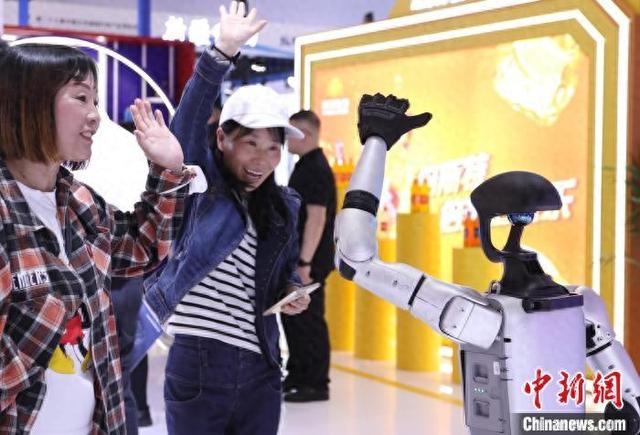
北京科博会展出1200余项技术成果 现场签约额超58亿元
Zhong Guo Xin Wen Wang· 2025-05-11 10:19
Group 1: Event Overview - The 27th China Beijing International Science and Technology Industry Expo concluded, showcasing over 1,200 cutting-edge technologies and scientific achievements, with 43 signed projects totaling over 5.8 billion yuan [1][3] - The theme of this year's expo was "Technology Leading, Creating a Future," organized by various Beijing government bodies and attracting over 80,000 attendees [1][3] Group 2: Technological Innovations - Significant breakthroughs in scientific research were presented, including models of rockets and the domestically developed 800Gbps next-generation firewall featuring a Chinese DPU chip [3][4] - The world's first AI+ROBOT orthopedic surgery robot significantly reduced surgery time and costs, while multifunctional AI wall-climbing robots showcased advanced capabilities in high-risk environments [3][4] Group 3: International Collaboration - The expo served as a platform for international technology exchange, with companies from Singapore, Czech Republic, and South Korea presenting AI models, biomedicine, and smart manufacturing products [6][7] - Major global companies like AstraZeneca and Deloitte showcased their latest technologies and collaboration outcomes, highlighting the event's role in fostering international partnerships [6][7] Group 4: Regional Participation - Over 20 provinces and cities participated, with notable exhibits from Hubei's off-road vehicles and various high-tech products from Hangzhou and Lhasa, demonstrating regional innovation and collaboration [7][8] - The event included over 30 trade and investment promotion activities, facilitating practical cooperation and exchanges among participants [8][10] Group 5: Impact on Daily Life - The expo emphasized the integration of cutting-edge technology into everyday life, with innovations like smart pillows, AI watering robots, and wearable health devices improving quality of life [11][12] - Technologies showcased aimed at enhancing patient care and convenience, such as wearable artificial larynx devices and 24-hour video medical services, reflecting a deep integration of technology into healthcare [11][12]