
Di Yi Cai Jing

Search documents
A股电网板块开年大涨21%
Di Yi Cai Jing· 2026-02-09 11:49
Group 1 - The rapid development of AI has led to a surge in electricity demand, resulting in a strong performance in the power grid equipment sector since the beginning of 2026, with a cumulative increase of nearly 21% [1] - The power equipment theme index rose nearly 3% on February 9, 2026, with significant gains in electrical equipment, thermal power, and wind power indices [1] - The surge is attributed to a combination of the State Grid's 4 trillion yuan fixed asset investment plan during the 14th Five-Year Plan, global "electricity anxiety" driven by AI computing power, and urgent needs for grid upgrades in Europe and the US [1][2] Group 2 - In the AI investment chain, electricity is identified as the highest certainty factor, with constraints on funding and energy being critical issues [2] - The International Energy Agency (IEA) projects that global data center electricity consumption will double to 945 terawatt-hours by 2030, driven by data center expansion and AI technology development [2] - The State Grid's announcement of a 4 trillion yuan investment plan for the 14th Five-Year Plan, a 40% increase from the previous plan, has directly stimulated the power equipment sector [2] Group 3 - Domestic gas turbine technology has made significant breakthroughs and is beginning to export to markets like the Middle East, positioning China's capacity as a potential supplement to the US's electricity shortfall [3] - China holds a dominant position in the global power equipment sector, making power equipment and technology a highly certain investment direction amid the AI wave [3] Group 4 - Despite electricity becoming a new hard constraint, the long-cycle trend of the AI computing power industry chain is expected to continue [4] - The investment logic is shifting as the industry evolves, with a strong capital expenditure forecast for AI-related sectors from 2026 to 2030, particularly in areas facing capacity constraints [4] - Concerns about an "AI bubble" are considered premature, as the technology continues to advance and leading global tech companies remain at reasonable valuation levels [4] Group 5 - The long-term value of the computing power sector is viewed positively, as the AI industry transitions from technological penetration to large-scale performance realization [5] - The rapid iteration of industry chain technology and the narrowing supply chain mean that only a limited number of companies can enter the global core customer system, enhancing the competitive advantage of leading firms [5]



江苏千亿县达23个,中国经济最强县GDP超5600亿
Di Yi Cai Jing· 2026-02-09 11:47
Core Insights - The number of GDP billion counties in China has exceeded 70, with Jiangsu province leading with 23 counties, accounting for over 30% of the national total [2] Group 1: Economic Growth in Jiangsu - Jiangsu's newly added billion GDP county is Baoying, which achieved a GDP of over 1 billion yuan during the 14th Five-Year Plan period, with industrial sales reaching 120 billion yuan [2] - Jiangsu accounts for half of the top ten GDP counties in the country, including Kunshan, Jiangyin, Zhangjiagang, Changshu, and Yixing [2] - Kunshan remains the leader in county-level economies, maintaining a GDP of 561.534 billion yuan with a year-on-year growth rate of 5.8%, consistently ranking first in comprehensive strength for 22 years [2] Group 2: Industrial Transformation and Talent Attraction - Kunshan is transitioning its main industries from "pen chain" to "fruit chain" and "car chain," while also expanding into "intelligent chain" sectors, with over 4,000 technology-based SMEs and 3,500 national high-tech enterprises [3] - Jiangyin, ranked second among the top 100 counties in comprehensive strength, aims for a GDP of 527.218 billion yuan by 2025, with a gap of over 300 billion yuan from Kunshan [3] - Changshu's GDP is projected to reach 321.073 billion yuan by 2025, with a growth rate of 5.7%, surpassing Suzhou's growth by 0.3 percentage points [3] Group 3: Educational Institutions and Talent Development - The developed county economies in southern Jiangsu attract a significant influx of talent, with Kunshan seeing a net inflow of 107,000 people last year, over half of whom are young individuals [4] - A cluster of prestigious universities has established campuses in southern Jiangsu counties, contributing to local talent cultivation and industrial upgrading [4] - Notable institutions include Duke Kunshan University in Kunshan and Nanjing University of Science and Technology in Jiangyin, among others [4]
吉利系与欣旺达纠纷后续:极氪召回超3.8万辆车
Di Yi Cai Jing· 2026-02-09 11:47
车企和电池厂商的合作召回。 去年底,吉利系动力电池公司威睿动力起诉欣旺达动力(欣旺达子公司),起诉原因是欣旺达动力在 2021年6月至2023年12月期间向威睿动力交付的电芯存在质量问题,并向后者索赔超23亿元。 而极氪001正是搭载这批欣旺达电芯的重要产品,仅2022年就售出了超7万辆,其中WE86版占比超 60%。但随着极氪001的放量,部分极氪001 WE86车主反馈,车辆存在充电速度变慢、感知电量不准等 问题。此前,极氪汽车已经为部分极氪001 WE86车主免费更换了电池包。2月9日,极氪发布情况说明 称,随着监测技术的持续升级和样本数据的不断累积,极氪发现了此次召回范围内车辆(特定批次的动 力电池)的潜在安全隐患。 2月6日,吉利系和欣旺达达成和解。记者获悉,对使用欣旺达电芯的极氪001 WE86消除可能存在的影 响,正是双方和解的前提条件之一。 根据《和解协议》,对于截至2025年12月31日已经实际发生的成本费用金额,欣旺达动力应向威睿动力 支付的剩余金额为6.08亿元;对于2025年12月31日之后实际发生的成本费用金额(包括相关车辆召 回),双方按约定分担实际发生的成本费用。对于应承担的成本 ...


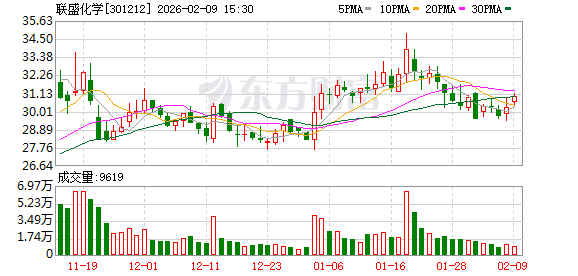
联盛化学:控股股东及其一致行动人拟减持不超3%公司股份
Di Yi Cai Jing· 2026-02-09 11:44
联盛化学公告,公司控股股东联盛集团及其一致行动人台州高投拟减持其持有的公司股份合计不超过 324万股(占公司总股本比例3%)。 (文章来源:第一财经) ...
4个沿海港口跻身“亿吨港口”,浙江密集扩容直通航线
Di Yi Cai Jing· 2026-02-09 11:40
Core Insights - In 2025, Zhejiang's export scale is expected to exceed 4 trillion yuan for the first time, ranking second in the country [1][3] - The opening of new direct trade routes enhances logistics efficiency and supports the growth of Zhejiang's foreign trade [2][3] Group 1: Trade Route Developments - A new direct shipping route from Wenzhou to the Middle East has been established, connecting key markets and facilitating faster access to the Red Sea region [1] - The Ningbo-Zhoushan Port has launched a new route to Australia, utilizing seven vessels with a capacity of 4,000 standard containers, operating weekly to meet export demands [2] - The successful inaugural flight of the Wenzhou-Jakarta international cargo route marks a direct air freight connection between Wenzhou and Indonesia [2] Group 2: Trade Performance and Growth - Zhejiang's total import and export value is projected to reach 5.55 trillion yuan in 2025, with a year-on-year growth of 5.4%, surpassing the national average by 1.6 percentage points [3] - Exports are expected to grow by 7.2%, accounting for 15.5% of the national total, with significant increases in trade with ASEAN and EU markets [3] - Trade with emerging markets in the Middle East, Latin America, and Africa has also seen growth, with exports to Belt and Road countries exceeding 3 trillion yuan, marking an 8.7% increase [3]
崧盛股份:实控人及董事等拟合计减持不超5%公司股份
Di Yi Cai Jing· 2026-02-09 11:40
崧盛股份公告,公司控股股东、实际控制人王宗友、田年斌,公司董事邹超洋,公司特定股东淮安崧盛 投资合伙企业(有限合伙)拟合计减持不超过5%公司股份。 ...
网约车司机收入问题待解,记者实探网约车抽成情况
Di Yi Cai Jing· 2026-02-09 11:20
各大出行平台都公布过抽成情况。 司机收入一直是网约车行业的热门话题。 近期,平台抽成再次被热议。它直接关联着数百万司机的收入,也映照着平台、市场与监管之间的持续平衡与博弈。去年,司机、平台与监管部门共同面临 价格挑战,出行平台曾进行了一轮降佣。 但随着出行市场逐步从增量步入存量阶段,影响司机收入的因素已不能简单地归因于抽成比例,这背后是更为深刻的供需关系与市场结构问题。 第一财经记者近日采访了多位网约车司机。谈及抽成问题,许多司机的反应不再是单纯地抱怨,他们的焦虑更多指向市场饱和、运力过剩等现实挑战。 平台究竟抽成多少? 经过出行平台的几轮更新,目前司机可以通过后台查看每笔订单的抽成情况。 司机赵师傅向第一财经记者展示了近期多个订单的司机收入占比情况。截图显示,司机收入占比会浮动,几个订单中的驾驶员收入占比在73.1%到100%之 间。对此,赵师傅表示,抽成比例在25%以下都能接受。 另一位司机原师傅表示,早高峰时段订单可以免抽成,平峰时段会有部分订单免抽成,他体感免抽成的概率在5%左右。原师傅同时表示,部分订单有抽成 优惠,比例约为15%。 也有部分司机并不关注抽成。广东网约车司机梁师傅接单已有8年,日常没 ...

总投资557亿 两大特高压项目拟引入民营企业注资入股
Di Yi Cai Jing· 2026-02-09 11:18
Group 1 - The core viewpoint of the article is that state-led investment in UHV projects is now being complemented by private capital participation, which injects new momentum into the industry [1] - The Qinghai Energy Bureau has announced a public solicitation for private enterprises to invest in the Xinjiang Electric (Southern Xinjiang) to Sichuan UHV DC project, with similar announcements made by Chongqing and Xinjiang authorities [1][2] - The total investment for the Xinjiang to Sichuan and Gansu UHV projects is 31.1 billion yuan and 24.6 billion yuan respectively, with private enterprises expected to hold about 10% of the shares [1][2] Group 2 - Both UHV projects have clear revenue expectations, with the Xinjiang to Sichuan project expected to deliver over 40 billion kWh annually, primarily utilizing solar and wind resources from the Southern Xinjiang region [2] - The introduction of private capital is in response to the State Council's notice aimed at promoting private investment in various energy sectors, allowing for a shareholding ratio of over 10% for qualified projects [2] - The entry of private capital into major energy projects is seen as a crucial practice to boost private investment confidence and stimulate internal growth, especially as private investment has been declining [3] Group 3 - Under the dual carbon goals and the construction of a new energy system, energy projects are becoming a significant direction for private capital investment [4] - The proportion of private investment in newly approved nuclear power projects has increased from about 10% in 2024 to 10%-20% in 2025, indicating a growing role for private enterprises in the energy sector [4] - The number of oil and gas transporters has surged from 5 in 2019 to 1005, with the share of resources transported by small and medium-sized transporters rising from 2.1% to 10.2% [4]
总投资557亿,两大特高压项目拟引入民营企业注资入股
Di Yi Cai Jing· 2026-02-09 11:14
Core Insights - The introduction of private capital into ultra-high voltage projects marks a significant shift in investment dynamics, with the potential to enhance operational efficiency and provide stable cash flows for private enterprises [1][2] Group 1: Investment Opportunities - The total investment for the "Xinjiang Power Transmission to Sichuan" project is estimated at 31.1 billion yuan, while the "Gansu Power Transmission to Sichuan" project is estimated at 24.6 billion yuan, with private enterprises expected to hold approximately 10% of the shares [1] - The expected internal rate of return on capital for these projects is 5%, which is considered attractive for large private enterprises given the current overall interest rate levels [2] Group 2: Policy and Regulatory Framework - The recent announcements from various energy bureaus are in response to the State Council's notice aimed at promoting private investment, indicating a structured approach to integrating private capital into major energy projects [2] - The measures introduced in November 2025 encourage private capital participation in various energy sectors, allowing for a shareholding ratio of over 10% based on project specifics and private enterprise interest [3] Group 3: Market Context - Since 2025, there has been a notable decline in domestic investment, with fixed asset investment dropping by 3.8% year-on-year, and private investment decreasing by 6.4%, highlighting the need for initiatives to restore confidence in private capital [3] - The energy sector is increasingly viewed as a key area for driving private investment, especially under the dual carbon goals and the development of a new energy system [4]

2000万辆二手车交易新高背后:车商利润触底,行业洗牌在即
Di Yi Cai Jing· 2026-02-09 11:08
Core Insights - The second-hand car market in China is projected to reach a transaction volume of 20.1 million units by 2025, with used new energy vehicles (NEVs) expected to exceed 1.6 million units, marking a year-on-year growth of over 40% [1] - The average growth rate of second-hand car sales has slowed down to 5.8% over the past five years, compared to an average of 10.3% in the previous decade, while the average profit margin in the industry has dropped to around 4% [1][3] - The average transaction price of second-hand cars has decreased from 66,700 yuan in March 2025 to 61,600 yuan in September 2025 [1] Market Trends - The proportion of registered second-hand car dealers increased to 73.2% in the first half of 2025, with 96 out of the top 100 companies being second-hand dealers [1] - The revenue from second-hand car sales for dealer groups has risen by 124% compared to 2024 [1] - The competition among second-hand car dealers is intensifying, with many individual operators exiting the market due to declining profits [2] Profitability Challenges - The average profit margin for second-hand cars is approximately 4%, with significant declines in profit per vehicle sold, from around 15,000 yuan five years ago to about 10,000 yuan currently [3] - Factors contributing to profit decline include price volatility of new cars, increased transparency in the market, and intensified competition [3] - The average transaction price for second-hand cars in 2025 is reported to be 64,100 yuan, a decrease of 140 yuan from 2024 [3] Impact of New Energy Vehicles - The penetration rate of second-hand NEVs has increased from 3.6% at the end of 2022 to 12% by December 2025 [6] - The transaction price distribution for second-hand NEVs shows an increase in the share of vehicles priced between 30,000 to 80,000 yuan, while the share of vehicles priced below 30,000 yuan has decreased [6] - The average three-year depreciation rate for NEVs is significantly higher than that of traditional fuel vehicles, with NEVs averaging a 43% retention rate compared to 62% for fuel vehicles [7] Strategic Shifts - Companies are exploring new growth avenues such as NEVs and second-hand car exports to adapt to market changes [5] - The overall second-hand car market is expected to grow by nearly 3% in 2025, while NEV transactions are projected to increase by approximately 50% year-on-year [7] - Major players like Yongda Automotive and Zhongsheng Automotive are shifting focus towards NEV channels and online sales models for second-hand vehicles [6][7]