Shang Hai Zheng Quan Bao

Search documents
龙马踏春归——2026春运大幕开启
Shang Hai Zheng Quan Bao· 2026-02-02 18:44
Core Viewpoint - The 2026 Spring Festival travel season in China is expected to see a record high of 9.5 billion trips, with significant increases in both railway and civil aviation passenger volumes [3][4]. Railway Sector - The national railway is projected to send an average of 13.48 million passengers daily during the Spring Festival, representing a year-on-year increase of 5.0% [4]. - New routes and services have been introduced, including 22 new lines totaling 3,109 kilometers and over 560 additional trains to enhance capacity [4][5]. - The railway department has improved passenger services, including a new phone booking service for elderly travelers and a free online ticket refund policy for mistaken purchases [5][6]. Civil Aviation Sector - The civil aviation sector anticipates a record passenger volume of 95 million during the Spring Festival, with an average of 2.38 million passengers per day, reflecting a year-on-year growth of approximately 5.3% [7][8]. - Airlines are increasing capacity by adding flights and larger aircraft, with China Eastern Airlines planning to operate 12.5 million flights during the period, a 3.6% increase from the previous year [8]. - Major airlines are focusing on popular routes, with high load factors on flights from major cities to destinations like Shenyang and Sanya [8][9].



市场巨震,沃什“背锅”?
Shang Hai Zheng Quan Bao· 2026-02-02 18:44
◎记者 陈佳怡 自美联储新主席步入遴选程序以来,市场对领跑候选人的预期反复切换。最终,沃什在这场持续数月的 美联储主席提名拉锯战中脱颖而出。 一直以来,白宫都在寻找一位能够被市场广泛接受,并且能贯彻大幅降息要求的人选。在一众偏鸽的候 选人中,"鹰派"形象的沃什似乎格格不入。沃什为何被选中?这背后,是白宫、市场与美联储独立性的 权衡。 沃什履历光鲜,受到市场和美联储内部的认可,并主张捍卫美联储独立性。从政策主张来看,沃什虽然 历来以"鹰派"著称,但他近几个月转向支持降息,同时主张"缩表+降息"的政策组合,与白宫的降息诉 求形成呼应。 中航证券首席经济学家董忠云分析称,沃什这一主张的逻辑在于:通过缩表来减少货币供应量,实现对 通胀的有效控制,进而为下调基准利率(短端利率)创造更大政策空间。这本质上是通过紧缩信用重建 美联储政策可信度,通过传递拒绝QE常态化的纪律信号,压低长端期限溢价中的通胀风险溢价,从而 为下调短端利率创造不引发通胀反弹的空间。 近日,全球贵金属市场巨震,黄金白银遭遇恐慌性抛售。 当市场复盘这场风暴的源头时,一个名字反复被提及——凯文·沃什。据新华社报道,当地时间1月30日 美联储前理事凯文·沃 ...
5G+AI,让城市用电更从容——一座“虚拟电厂”的保供实践
Shang Hai Zheng Quan Bao· 2026-02-02 18:44
Core Insights - The article discusses the operational readiness of virtual power plants in Shanghai as the city faces a peak electricity demand due to a cold wave in 2026, highlighting the proactive measures taken by energy companies to manage power supply shortages [1][2]. Group 1: Virtual Power Plant Operations - Virtual power plants aggregate distributed energy resources such as solar, storage, and adjustable loads to provide coordinated control and support grid stability [1][2]. - The collaboration between China Mobile Shanghai Industrial Research Institute and Zhejiang Datang has led to the development of a comprehensive virtual power plant management system, leveraging 5G technology [2][3]. Group 2: Technological Advancements - The virtual power plant system utilizes AI-driven predictive algorithms to enhance load forecasting accuracy, achieving a real-time prediction error of less than 3% and a long-term price prediction accuracy exceeding 85% [3][4]. - The integration of various data sources, including meteorological and economic data, has improved the operational efficiency of the virtual power plant, allowing for better resource allocation and demand response [3][4]. Group 3: Market Impact and Benefits - Over 80 industrial enterprises have joined the virtual power plant network, transitioning from a passive electricity consumption model to an active participation model that allows them to earn subsidies and reduce costs [3][4]. - The article emphasizes the potential of virtual power plants to balance grid load fluctuations, support renewable energy integration, and optimize energy resource allocation, contributing to energy transition and urban stability [4].

铜价急跌,基本面未改
Shang Hai Zheng Quan Bao· 2026-02-02 18:44
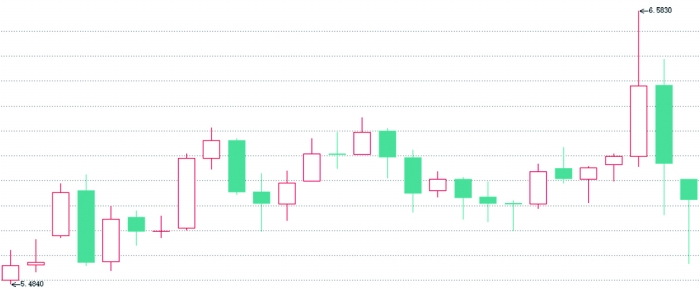
COMEX铜日K线图 ◎记者 霍星羽 此番调整,导火索直指宏观层面。美联储新任主席提名事件持续发酵,市场对全球流动性宽松的预期降 温。与此同时,前期累积的大量获利盘集中了结,贵金属市场大跌激发恐慌情绪等,共同酿成了有色金 属板块此番下跌。 不过,多位业内人士表示,铜的基本面并未发生任何实质性转变。从供应瓶颈到电力、储能、AI需求 的结构性增长,支撑铜价的核心逻辑依然完整。业界普遍认为,2026年全球铜市依然呈现供需偏紧格 局,此轮急跌更多是情绪与资金面的短期扰动,铜价中长期向上的趋势依然明确。 中信建投期货有色分析师虞璐彦表示,受海外政策预期调整、市场风险偏好波动影响,近期有色金属板 块流动性收紧,前期涨幅较大的工业金属如铜、锡等跌幅领先。A股一家铜企人士补充道,近两日有色 板块大跌还受到贵金属大跌、市场情绪降温、资金获利了结等因素影响。 上海钢联铜事业部分析师俞灿表示,短期内铜价将延续宽幅震荡格局,中长期铜基本面并未改变,供应 端矛盾依旧存在,铜价重心有进一步上移潜力。 虽然近日美联储主席提名事件对铜的宏观环境造成一定影响,但上述A股铜企人士仍较为乐观:"铜价 自2020年开启上行周期,是受供需基本面驱动, ...
锚定5000亿元目标 浙江人工智能终端产业按下“加速键”
Shang Hai Zheng Quan Bao· 2026-02-02 18:44
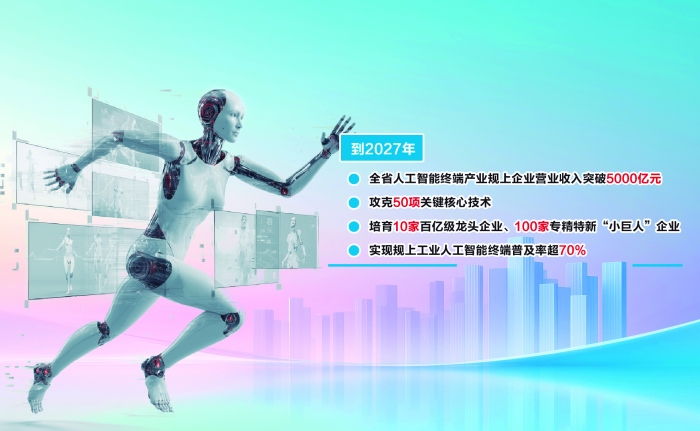
作为一家"专精特新"企业,一目科技去年推出一款仿生视触觉传感器,其厚度仅为同类产品的二分之 一,轻薄特性让机器人操作更具灵活性。在该公司创始人李智强看来,长三角、粤港澳等区域密集出台 人工智能终端产业规划政策,标志人工智能正从技术研发迈入规模化商业应用关键期,很多政策布局人 形机器人、智能工业终端等核心场景,聚焦多维传感、柔性触觉等关键技术突破,意味着以触觉感知为 核心的机器智能迎来产业化"临界点",也为上游传感器企业明确研发方向。 记者了解到,根据《行动计划》部署:消费终端领域,浙江将重点发力AI计算机、AI手机、智能穿戴 设备、智能家居终端四大品类,推动智能手机从传统通信工具向AI智能终端范式升级,搭建适配大模 型的智能家居统一平台;行业终端领域,浙江将围绕智能视觉、智能工业、智能机器人、智能网联汽 车、智能无人机(船、艇)、智能医疗终端六大方向,强化场景化落地能力与规模化应用水平。同时, 浙江将前瞻性布局人形机器人、纳米机器人、类脑智能终端、量子计算终端和飞行汽车等未来终端赛 道,加快关键部件与材料产业化进程,探索其在精准治疗、立体交通等前沿领域的创新应用。 为确保各项目标落地实现,《行动计划》明确了三 ...
流动性吃紧,金银“失色”
Shang Hai Zheng Quan Bao· 2026-02-02 18:44
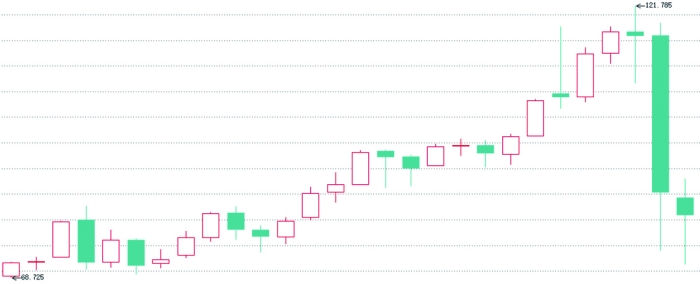
COMEX白银日K线图 "市场普遍预测贵金属价格周一会继续下跌,是因为在多头'踩踏'下,按在跌停板上平不掉的仓单,只 能在周一继续挂单平仓。"上述交易员进一步解释称。 然而,2月2日市场陷入"单边市"后,流动性急剧萎缩,这部分被动平仓盘也难以成交。 国泰君安期货市场分析师张驰宁称,2月2日,沪银跌停后成交量持续萎缩,仅在早盘开盘阶段出现千手 级别的成交,随后便迅速衰减,至当日午后,小时成交量已缩至仅一两百手,这反映出市场抛压沉重, 而投机性买盘几乎消失。 ◎记者 张骄 全球贵金属市场刚刚经历了"黑色星期五",周一黄金、白银交易再掀巨浪。 2月2日,市场延续抛售行情,上演"过山车"走势。伦敦现货白银盘中一度翻红,随后急转直下,日内最 大跌幅超15%,抹平近一个月涨幅,随后跌幅收窄;伦敦现货黄金一度失守4500美元/盎司,日内最大 跌幅超10%,随后企稳回升,截至记者发稿时,收复4800美元/盎司关口。 有些声音将此次贵金属价格的"决堤",归咎于美联储主席提名人选——偏鹰派的凯文·沃什。中信建投 期货贵金属首席分析师王彦青接受上海证券报记者采访时表示,提名事件更多是引发了短期情绪扰动, 而非实质性的影响。 此前, ...
上海国投公司副董事长郑杨:加强资本支持与创新金融工具 打造科技金融“上海样本”
Shang Hai Zheng Quan Bao· 2026-02-02 18:44
0 18 所示 18 a f 在这方面,上海国投公司做了很多工作,包括联动社会资本,引进耐心资本、长期资本,招投联动,形 成上海独有的特色,助力科创企业来上海落户发展,走出一条健康发展的路子。 二是做好风险防控。建议进一步强化投后/贷后管理,建立完善的"四早"预警机制和风险监测系统;建 立适应科技企业发展特点的评价体系,更注重考量技术、数据资源等核心轻资产价值,并将团队、技 术、成果、模式等作为关键因素。 在绿色金融方面,郑杨建议,推动绿色金融产品创新,完善标准和监管体系:一是做好绿色金融领域整 体规划。布局加大绿色债券的发行规模,把上海建成长三角绿色债券发行中心;先行建立长三角统一的 ESG评价体系,加强对金融机构环境信息披露、碳核算碳审计的引导。二是加快绿色金融创新发展。持 续推动绿色信贷、绿色债券、绿色保险等产品创新;扎实加快转型金融机制的持续落地;将发展绿色金 融和海洋经济结合起来。 在普惠金融方面,郑杨建议,优化普惠金融服务,提升风险管理能力:一是深化普惠金融领域的深层次 改革。完善"政府+银行+保险"合作模式,构建合理的风险共担与利益分配机制;大力推进上海及长三 角地区普惠金融平台建设。二是提升普 ...

以新质生产力推进转型发展 山西:2026年GDP增长目标为4.5%至5%
Shang Hai Zheng Quan Bao· 2026-02-02 18:44
Economic Growth Targets - Shanxi Province aims for a GDP growth target of 4.5% to 5% for 2026, with fixed asset investment and social retail sales also targeted to grow by 5% [1] - The province emphasizes the importance of high-quality development and comprehensive transformation during the 14th Five-Year Plan period [1] Key Development Strategies - Shanxi will focus on ten key tasks including expanding domestic demand, promoting energy transition, upgrading industries, and fostering moderate diversification [1] - The province plans to continue major project construction, targeting over 600 billion yuan in transportation infrastructure investment, over 220 billion yuan in water conservancy investment, and over 600 billion yuan in municipal infrastructure investment [1] Energy Transition Initiatives - Energy transition is highlighted as a critical focus, with plans to implement nine paths for energy technology innovation and build a new energy system [2] - Specific initiatives include constructing 60 intelligent coal mines, expanding wind and solar power installations, and developing smart grids and virtual power plants [2] Industrial Upgrading Efforts - Shanxi aims to strengthen emerging pillar industries through innovation and large-scale application of new technologies [3] - The province will focus on developing new materials, high-end equipment manufacturing, and electronic information industries, while also promoting sustainable development in non-coal mining [3]
百余家央企控股上市公司2025年业绩报喜
Shang Hai Zheng Quan Bao· 2026-02-02 18:44
Group 1: Company Performance and Projections - Changxin Bochuang is experiencing steady revenue growth in data communication products due to demand from cloud computing and artificial intelligence, with a projected net profit increase of over 300% year-on-year [1] - Tongfang Co., Ltd. is expected to achieve a net profit growth of 220.02% to 291.14% by 2025, driven by strategic planning, technological innovation, digital transformation, and international operations [1] - Chengdu Huamei is set to undertake several key national research projects, which will enhance its competitiveness in the integrated circuit field, with a projected net profit growth of 74.35% to 108.73% by 2025 [1] - A total of 19 state-owned listed companies are expected to double their net profit growth by 2025, with companies like Shenghe Resources, Xinxing Casting Pipe, and Aerospace Science and Technology projected to exceed 200% net profit growth [1] Group 2: Loss Reduction and Operational Improvements - 41 state-owned enterprises are expected to reduce their losses in 2025, with companies like China First Heavy Industries and China Great Wall facing reduced losses despite ongoing challenges [2] - China First Heavy Industries is projected to significantly reduce its losses by 32.76 billion to 34.26 billion yuan through strategic expansion into advantageous sectors and asset optimization [2] - Maanshan Iron & Steel is implementing extreme cost control measures and operational reforms, expecting to reduce losses by 40.26 billion to 40.86 billion yuan in 2025 [2] - The domestic steel industry is continuing a trend of reducing production while adjusting its structure, with six state-owned steel companies, including Maanshan Iron & Steel, expected to achieve loss reduction [2] Group 3: Chemical Industry Strategies - In the chemical sector, Sinochem International is enhancing operational capabilities to combat declining prices, achieving significant loss reduction through cost management and increased operational efficiency [3] - Companies like Anmaida A and China Resources Materials are also expected to achieve loss reduction while increasing investments in strategic emerging industries [3] - Aerospace Software is increasing R&D and sales investments to enhance core competitiveness, which may lead to short-term expense increases but is expected to support future growth [3] - China Resources Materials is promoting differentiated products in emerging markets, contributing to revenue and gross profit growth [3]


多维度展现发展韧性 百余家央企控股上市公司2025年业绩报喜
Shang Hai Zheng Quan Bao· 2026-02-02 18:44
Core Viewpoint - The overall performance of central enterprises listed on A-shares is showing a multi-dimensional improvement for the year 2025, with over 110 companies expected to report positive earnings, including 23 companies turning losses into profits, 46 companies experiencing profit growth, and 41 companies significantly reducing their losses [1] Group 1: Companies Turning Losses into Profits - 23 central enterprises, including South Grid Energy, China Ordnance, and China Chengxin, are expected to turn losses into profits in 2025, indicating a significant improvement in operational conditions [2] - South Grid Energy is focusing on energy-saving services and biomass sectors, projecting a net profit of 300 million to 360 million yuan for 2025 [2] - Military enterprises like China Aerospace South Lake and China Ordnance are also expected to report profits due to increased delivery of special equipment and defense products [2] Group 2: Companies with Significant Profit Growth - A group of central enterprises, such as Salt Lake Co., Longxin Bochuang, and China Shipbuilding Defense, are expected to see substantial profit growth in 2025, with some companies projecting profit increases of over 300% [4] - China Shipbuilding Defense is benefiting from a booming global shipbuilding market, with a projected profit growth of 149.61% to 196.88% for 2025 [4] - Longxin Bochuang is experiencing revenue growth due to demand from cloud computing and artificial intelligence, with expected profit growth exceeding 300% [4] Group 3: Companies Reducing Losses - 41 central enterprises, including China First Heavy Industries and China Great Wall, are expected to significantly reduce their losses in 2025, indicating positive signals during their transformation periods [6] - China First Heavy Industries is expected to reduce losses by 3.276 billion to 3.426 billion yuan through structural reforms and asset optimization [6] - In the steel industry, companies like Maanshan Steel and Chongqing Iron and Steel are also expected to reduce losses amid ongoing market challenges [6] Group 4: Cost Control and Operational Efficiency - Many central enterprises are implementing refined measures such as cost control and investment optimization to improve their financial performance [3] - Companies like China Chengxin and Blue Science High-tech emphasize the importance of cost control and efficiency improvements in their earnings announcements [3] - In the chemical sector, China National Chemical is enhancing operational capabilities and controlling costs to mitigate revenue pressures while achieving significant loss reductions [7]