
2 1 Shi Ji Jing Ji Bao Dao

Search documents
气派科技:梁华特及其一致行动人持股比例已升至56.38%
2 1 Shi Ji Jing Ji Bao Dao· 2026-02-13 07:45
Core Viewpoint - The announcement reveals a significant increase in shareholding by key individuals associated with Qipai Technology, indicating a consolidation of control within the company [1] Shareholding Changes - Liang Hua and his concerted parties increased their total shareholding from 56.815 million shares to 64.715 million shares, raising their ownership percentage from 53.16% to 56.38% [1] - The change in shareholding is pending registration procedures with the Shanghai branch of China Securities Depository and Clearing Co., Ltd [1] Control Structure - Following the completion of the shareholding change, the actual controllers of the company will shift from Liang Dazhong and Bai Ying to Liang Dazhong, Bai Ying, and Liang Hua [1]

巨星农牧发布1月销售情况简报
2 1 Shi Ji Jing Ji Bao Dao· 2026-02-13 07:45
Core Viewpoint - The company reported significant growth in its pig farming business for January 2026, indicating a strong performance in sales and revenue generation [1] Group 1: Sales Performance - The sales volume of commercial fat pigs reached 404,400 heads, representing a year-on-year increase of 61.28% [1] - The sales revenue for the month amounted to 649 million yuan, with a cumulative sales revenue of 649 million yuan for the same period [1] - The average selling price of commercial fat pigs was 12.71 yuan per kilogram [1]

好莱客:董事会秘书甘国强辞任
2 1 Shi Ji Jing Ji Bao Dao· 2026-02-13 07:44
Core Viewpoint - The company announced the resignation of Mr. Gan Guoqiang from the position of Secretary of the Board due to personal reasons, and he will not hold any other positions within the company after his resignation [1] Group 1 - The company's board received a written resignation letter from Mr. Gan Guoqiang [1] - Mr. Gan Guoqiang will no longer serve in any capacity within the company following his resignation [1]

吉华集团:董事邵伯金辞任
2 1 Shi Ji Jing Ji Bao Dao· 2026-02-13 07:44
Core Viewpoint - Jihua Group announced the resignation of director Shao Bojin due to personal health reasons, effective February 13, 2026 [1] Group 1 - The resignation involves Shao Bojin stepping down from both the fifth board of directors and the audit committee [1]

博敏电子:董事会秘书李小伟辞职
2 1 Shi Ji Jing Ji Bao Dao· 2026-02-13 07:44
南财智讯2月13日电,博敏电子公告,公司董事会秘书李小伟因工作调整原因,申请辞去董事会秘书职 务,辞职申请自送达公司董事会之日起生效。 ...

卧龙新能:控股股东浙江卧龙置业投资有限公司解除质押3000.00万股
2 1 Shi Ji Jing Ji Bao Dao· 2026-02-13 07:43
Core Viewpoint - Wolong New Energy announced the release of 30 million shares previously pledged to Zheshang Bank, resulting in a total of 0 shares pledged by its controlling shareholder, Zhejiang Wolong Real Estate Investment Co., Ltd. [1] Group 1 - The controlling shareholder notified the company about the release of the pledge on February 12, 2026 [1] - The release of the pledge has been completed with the registration procedures at China Securities Depository and Clearing Corporation [1] - Following the release, the total number of pledged shares by Wolong Real Estate is now 0 [1]

A股蛇年收官三大指数跌超1%,半导体、存储芯片大涨,港股AI双雄市值突破2000亿港元
2 1 Shi Ji Jing Ji Bao Dao· 2026-02-13 07:30
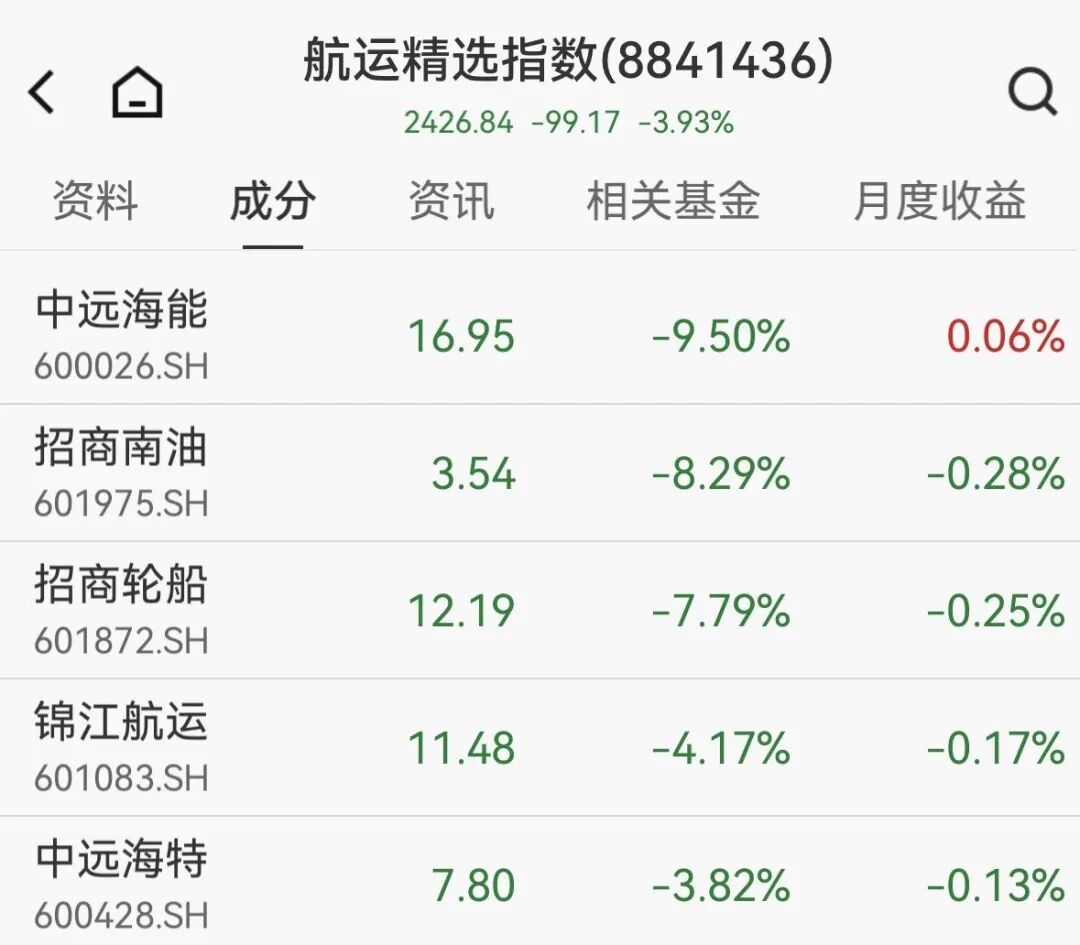
Market Overview - On February 13, A-shares saw a collective decline across major indices, with the Shanghai Composite Index dropping by 1.26%, the Shenzhen Component Index by 1.28%, and the ChiNext Index by 1.57% [1] - The total trading volume in the Shanghai, Shenzhen, and Beijing markets approached 2 trillion yuan, a decrease of 161.8 billion yuan from the previous day, with over 3,800 stocks declining [1] Sector Performance - The film and theater, paper, semiconductor equipment, and intelligent cockpit sectors showed the highest gains, while the photovoltaic equipment, minor metals, steel, port shipping, oil and gas extraction and services, glyphosate, rare earth permanent magnets, and chemical sectors experienced the largest declines [1] Semiconductor and Storage Chip Sector - The semiconductor and storage chip sectors demonstrated resilience, benefiting from the AI wave, with companies like Deep Technology (000021) hitting the daily limit and others like Northern Huachuang (002371) and Jiangbolong (301308) also seeing gains [2] Shipping Sector - Shipping stocks experienced significant declines, with companies such as COSCO Shipping Energy (600026), China Merchants Nanyou (601975), China Merchants Jinling (601872), and Jinjiang Shipping (601083) all opening lower [2][3] - The drop in these stocks was primarily influenced by a sharp decline in logistics stocks in the US market, where the Russell 3000 Trucking Index fell over 9% [4] AI Companies in Hong Kong - In the Hong Kong market, AI companies MiniMax and Zhiyuan both saw their market capitalizations exceed 200 billion HKD [5] - MiniMax launched its new generation text model MiniMax M2.5, which significantly improved its programming capabilities, while Zhiyuan introduced its flagship model GLM-5, which also achieved notable advancements in performance [7]


机器人上岗电影院,单日全自主工作14小时
2 1 Shi Ji Jing Ji Bao Dao· 2026-02-13 07:04
如今,越疆正推动机器人从替代重复劳动的"工具",进化为能够理解、适应并与人类协同的"智能体"。 (文章来源:21世纪经济报道) 春节前夕,越疆第三批全尺寸工业人形机器人Atom不仅出现在电影院爆米花窗口,还正式启动量产交 付,开始奔赴产业前线。 数据显示,Atom单日可全自主工作14小时,完成超1000杯爆米花制作,表现高效稳定,验证了人形机 器人在商圈影院消费场景中的产业化落地能力。 ...

强者愈强,从海天看见调味品行业的未来十个大势
2 1 Shi Ji Jing Ji Bao Dao· 2026-02-13 07:04
Core Insights - 2025 is a pivotal year for China's condiment industry, characterized by intense competition and a reshaping of the market landscape, with leading enterprises playing a crucial role in industry development [2] Group 1: Capital and Globalization - Haitian Flavor Industry will be the first condiment company to list on both the A-share and H-share markets, raising approximately HKD 10.1 billion, which will support its global strategy [4] - The listing signifies a shift from product export to a systematic approach leveraging international capital for brand acquisitions, technology collaborations, and localized production [4] Group 2: Smart Manufacturing and Industry Upgrades - In 2025, Haitian was recognized as a "Lighthouse Factory" in the global soy sauce brewing industry, achieving high-quality output through smart manufacturing and lean management [6] - The digital and intelligent transformation in traditional brewing is expected to enhance productivity and elevate overall manufacturing standards in the industry [6] Group 3: Localization and Market Expansion - The establishment of a production base in Indonesia marks a shift towards localized operations to expand in Southeast Asia, addressing trade barriers and regional consumer preferences [6] - The "production and sales" model is anticipated to become the dominant paradigm for companies going abroad, focusing on local production and flavor customization [6] Group 4: Brand and Cultural Integration - Haitian launched the "Haitian Chinese Flavor 'Fire' People Plan," integrating Chinese culinary culture into global dining scenes, enhancing brand recognition and cultural sharing [7] - The competition in the condiment industry is evolving towards cultural identity, requiring brands to connect emotionally with local dining experiences [7] Group 5: Industry Recognition and Quality Development - Haitian was listed among the "2025 Top 500 Food Enterprises" in China, ranking 36th, reflecting its strong capabilities and contributions to industry upgrades [8] - The top 500 enterprises collectively generated revenue of CNY 3.85 trillion, accounting for 42.49% of the national food industry revenue, indicating a narrowing gap with international standards [8] Group 6: Industry Collaboration and Standards - Haitian initiated the "China Oyster Industry Fresh Ecosystem Alliance," emphasizing quality control from source to table, which is crucial for long-term competitive advantage [8] - The company participated in drafting the new national standard for soy sauce, which will enforce stricter quality requirements, marking the onset of a standardized competition era [10] Group 7: Consumer-Centric Innovations - Haitian is addressing health and personalization trends by launching gluten-free, iron-fortified, and low-salt products to cater to diverse consumer needs [11] - The shift from a "delicious" to a "delicious and suitable for me" consumer demand is driving the evolution towards a "precision nutrition" era [11] Group 8: Omni-Channel Development - Haitian is optimizing its distribution system, achieving a 32.11% year-on-year revenue growth in online channels in the first three quarters of 2025, creating a synergistic online and offline strategy [12] - The integration of online and offline operations is becoming essential for brand management, influenced by digital marketing trends [12] Group 9: Data-Driven Product Development - Through comprehensive digitalization, Haitian has significantly reduced costs and improved efficiency in procurement, production, and logistics, while leveraging big data for product development [13] - Data is emerging as a critical production factor, enhancing predictive procurement, trend-based R&D, and precise marketing strategies [13] Conclusion - Haitian's developments in 2025 illustrate a clear trajectory from being "China's Haitian" to "World's Haitian," transitioning from manufacturing to intelligent production and from product-centric to brand and ecosystem-focused strategies [14] - These breakthroughs reflect proactive strategic choices aligned with industry transformations, indicating a shift towards a high-dimensional competitive landscape in the condiment industry [15]
无人机“交强险”要来了!三部门联手给低空经济上保险
2 1 Shi Ji Jing Ji Bao Dao· 2026-02-13 06:45
Core Viewpoint - The implementation of the "Implementation Opinions" by the National Development and Reform Commission, the Financial Regulatory Bureau, and the Civil Aviation Administration marks a significant step towards the development of low-altitude insurance, which is crucial for the safety and high-quality development of the low-altitude economy [1][2]. Group 1: Policy Framework - The "Implementation Opinions" consist of six parts and twelve articles, outlining principles for systematic planning, key breakthroughs, collaborative advancement, and steady implementation [2]. - It emphasizes the establishment of a mandatory insurance system for unmanned aerial vehicles (UAVs), akin to compulsory insurance for automobiles, which will be integrated into flight activity approval processes [2][4]. Group 2: Insurance Product Development - The document encourages the development of a comprehensive insurance product system covering the entire low-altitude industry chain, including research, manufacturing, operation, and infrastructure [5]. - It highlights the need for insurance companies to adapt to new business models in the low-altitude economy, promoting the supply of insurance for medium and large UAVs while optimizing traditional manned aircraft insurance [5]. Group 3: Application Scenarios - The "Implementation Opinions" propose targeted insurance solutions for various application scenarios such as agricultural operations, low-altitude logistics, emergency management, and medical rescue, based on the specific risks and management needs of each scenario [6]. - It also encourages collaboration among industry chain leaders to reduce risk costs and supports small and medium enterprises in enhancing their risk defense capabilities through insurance [6]. Group 4: Data Infrastructure and Professional Capability - The document addresses the need for improved data infrastructure to support sustainable insurance operations, proposing the establishment of a low-altitude insurance information platform to facilitate data sharing and risk monitoring [7]. - It emphasizes the importance of enhancing professional capabilities within insurance institutions to better identify and assess new risks associated with low-altitude operations [7]. Group 5: Organizational Support and Timeline - The "Implementation Opinions" outline a clear organizational structure for implementing low-altitude insurance, with specific responsibilities assigned to various regulatory bodies [8]. - A phased timeline is set, aiming for the establishment of a mandatory UAV insurance system by 2027 and a comprehensive low-altitude insurance policy framework by 2030, indicating the growing importance of low-altitude insurance in the economic system [8].