2 1 Shi Ji Jing Ji Bao Dao

Search documents
成本压力叠加AI需求爆发,功率半导体掀涨价潮
2 1 Shi Ji Jing Ji Bao Dao· 2026-02-27 12:56
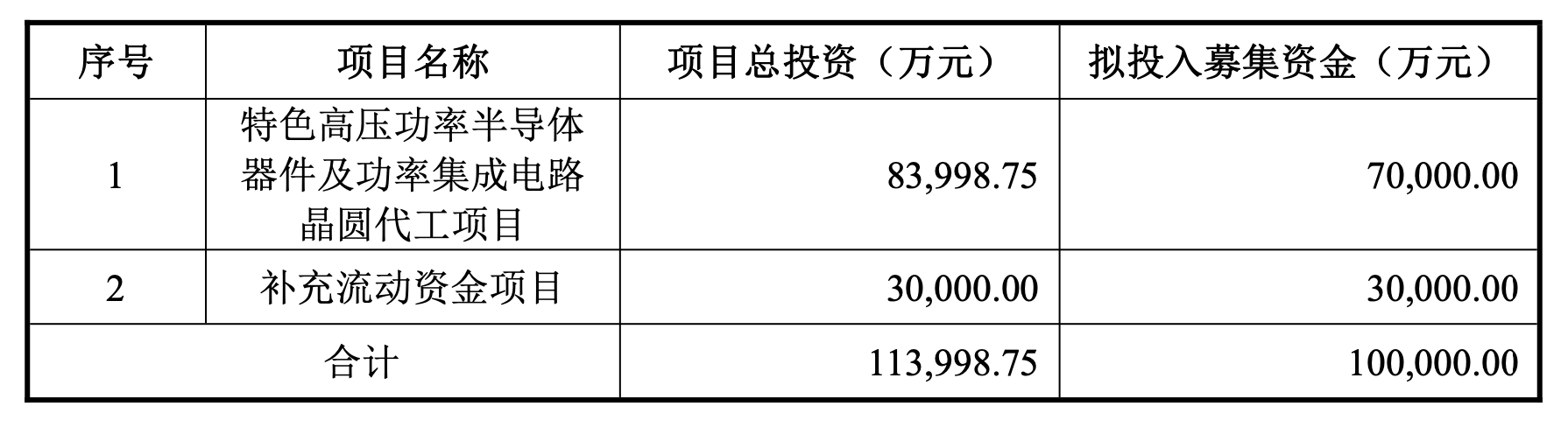
Core Viewpoint - The global price of power semiconductors has increased by 10% to 20% due to surging demand driven by AI and rising costs, with shortages in MOSFETs and IGBTs, while the production capacity of 6/8-inch wafers is tightening, leading to a turning point of simultaneous volume and price increase in the industry [1][2]. Group 1: Price Increase Drivers - The price increase in power semiconductors is primarily driven by rising manufacturing costs and structural demand from downstream applications [3][5]. - Major manufacturers have reported significant increases in the costs of raw materials and precious metals, which have led to higher costs in wafer manufacturing and packaging testing [4]. - The demand for power semiconductors is being fueled by rapid growth in AI data centers, electric vehicles, energy storage, and industrial control sectors, with AI servers being a notable source of demand [5][6]. Group 2: Supply Constraints - The supply of 6-inch and 8-inch wafers, which are primarily used for manufacturing power semiconductors, is entering negative growth, creating a scarcity in the global power and analog supply chain [5][6]. - Major international manufacturers like TSMC and Samsung are reallocating resources to advanced processes, reducing the supply of mature 6/8-inch wafers [5]. - Companies such as Infineon and ON Semiconductor are prioritizing production capacity for high-margin products like silicon carbide and gallium nitride, further tightening the supply of traditional low to medium voltage MOSFETs [6]. Group 3: Expansion Plans - Several domestic and international manufacturers are announcing or advancing expansion plans in response to the price surge [8]. - MinDe Electronics plans to raise up to 1 billion yuan for high-voltage power semiconductor devices and integrated circuit wafer foundry projects, aiming to increase monthly production capacity by 60,000 wafers [9]. - Infineon has raised its investment plan for fiscal year 2026 to 2.7 billion euros to accelerate capacity expansion for AI data center power solutions [10].

春节后首场座谈会,吴清与8家外资机构共话“十五五”规划
2 1 Shi Ji Jing Ji Bao Dao· 2026-02-27 12:55
Group 1 - The first post-Spring Festival meeting hosted by the CSRC Chairman Wu Qing focused on the "15th Five-Year Plan" for the capital market, emphasizing the importance of foreign investment institutions in China's capital market [1] - The meeting highlighted the high level of confidence among foreign institutions regarding the long-term development of the Chinese economy and capital market, with a consensus on four specific suggestions aimed at enhancing institutional inclusiveness and promoting bilateral openness [2][5] - The foreign institutions noted that since the implementation of the new "National Nine Articles," there has been significant progress in improving the foundational systems and expanding high-level openness in the capital market, leading to increased willingness and enthusiasm for participation from foreign entities [5] Group 2 - Wu Qing outlined three key focuses for the CSRC: strengthening regulation, promoting openness, and enhancing collective efforts, while emphasizing the need for a market-oriented, legal, and international approach to capital market development [6] - The CSRC plans to leverage the reforms of the Sci-Tech Innovation Board and the Growth Enterprise Market as breakthrough points to deepen comprehensive reforms in investment and financing, aiming to improve the adaptability and competitiveness of the capital market [6] - Wu Qing invited foreign financial institutions to play a crucial role in China's capital market, encouraging them to contribute their global resource allocation capabilities and professional expertise to support high-quality development [6]
超1200亿元!开年公募发行“春意盎然”,权益基金成主力
2 1 Shi Ji Jing Ji Bao Dao· 2026-02-27 12:53
Core Insights - The public fund issuance market in 2026 shows significant growth, with 230 new funds established and a total issuance scale of 210.28 billion yuan, representing a year-on-year increase of over 41% in both quantity and scale [1][2] Fund Structure Changes - The structure of new funds has shifted, with equity funds dominating, while FOF and fixed income+ products are emerging strongly [2][5] - In the first two months of 2026, 74 new mixed funds were established, totaling 79.64 billion yuan, accounting for approximately 38% of the total new fund issuance [3] - New stock funds primarily consist of ETF products, with 91 new stock funds launched, totaling 47.06 billion yuan, representing about 22% of the total [4] Equity Fund Dominance - The total issuance scale of newly established equity funds (stock funds + equity mixed funds) reached 120.84 billion yuan in the first two months of 2026 [4] - The trend indicates a strong willingness for new capital to enter the market, improving liquidity and enhancing institutional pricing power [2][11] Fixed Income Fund Trends - The issuance scale of newly established bond funds has significantly declined, with a total of 28 new bond funds launched, totaling 33.47 billion yuan, compared to 73.64 billion yuan in the same period of 2025 [6][7] - The decline in bond fund issuance reflects a shift in investor preference towards equity assets [11] Market Outlook - The hot issuance of equity funds is expected to attract significant incremental capital into the A-share market, potentially leading to a positive impact on liquidity and pricing power [8][11] - There are 58 new funds scheduled for issuance in March, indicating continued interest in equity investments [10] Investment Themes - Newly established equity funds cover various themes, including technology, consumption, and resource sectors, reflecting a diverse investment strategy [9] - The focus for 2026 is expected to be on performance realization and domestic production, particularly in AI and semiconductor sectors [12][13]
个人AI投研助理来了:将分析师和量化团队装进电脑?
2 1 Shi Ji Jing Ji Bao Dao· 2026-02-27 12:52
Core Viewpoint - The rise of AI-driven personal investment research assistants, particularly with the introduction of OpenClaw, is transforming the investment landscape, enabling non-professionals to engage in financial analysis without extensive coding knowledge [1][2]. Group 1: AI Tools and Their Impact - OpenClaw allows users to perform complex financial tasks through a conversational interface, significantly reducing the barriers to entry for non-experts [1][3]. - The tool enhances efficiency in investment research by automating data retrieval, analysis, and decision-making processes, liberating professionals from repetitive tasks [1][7]. - Projects like daily_stock_analysis are gaining popularity for their ability to provide automated stock analysis and decision-making dashboards, making advanced tools accessible to everyday investors [4]. Group 2: Industry Adoption and Trends - Major securities firms are integrating AI into their operations, with companies like CITIC Securities and Huatai Securities developing AI-driven platforms to enhance client services and operational efficiency [5][6]. - The trend towards human-AI collaboration is evident, with firms aiming to create digital employees that can perform at the level of experienced analysts, thereby improving service delivery [5]. - The rapid adoption of OpenClaw reflects a market demand for practical, controllable AI tools that can genuinely enhance productivity in financial research [6]. Group 3: Limitations and Considerations - While AI tools like OpenClaw can significantly improve research efficiency, there are concerns regarding the understanding of analysis logic and risk management among users lacking financial knowledge [1][7]. - The flexibility of self-built AI stock analysis assistants offers advantages, but there are inherent risks related to information quality and model limitations, necessitating that users maintain their judgment and use AI as a supplementary tool [7].
5家公司财务造假告别A股
2 1 Shi Ji Jing Ji Bao Dao· 2026-02-27 12:33
Group 1 - The A-share market has seen an accelerated pace of delisting in 2026, with five companies penalized for financial fraud and information disclosure violations [1] - Regulatory authorities are moving away from the old paradigm of "just delisting," initiating accountability and civil claims against the aforementioned companies [1] Group 2 - Dongfang Tui, one of the first delisted companies in 2026, was found to have inflated revenue by 432 million yuan and profits by 314 million yuan from 2019 to 2022 through fictitious business and premature revenue recognition [2] - The company faced a fine of 229 million yuan from the Beijing Securities Regulatory Bureau, and its actual controller was fined 26.5 million yuan and banned from the securities market for 10 years [2] Group 3 - *ST Changyao is on the verge of delisting due to financial fraud, having inflated revenue by over 700 million yuan from 2021 to 2023 [3] - The China Securities Regulatory Commission imposed a fine of 10 million yuan on the company and a total of 31 million yuan on 14 responsible individuals [3] Group 4 - *ST Aowei's delisting is a typical case of trading-related mandatory delisting, with its stock suspended after its market value fell below 500 million yuan for 20 consecutive trading days [4] - The company has also faced serious issues with non-operating fund occupation, with 189 million yuan in funds still outstanding as of December 2025 [5][6] Group 5 - *ST Lifang engaged in financial fraud through financing trade, leading to its stock suspension and a notice of termination of listing [6] - The company inflated revenue and profits by using financing trade without owning the goods or bearing inventory risks, resulting in severe penalties [6]


上市公司研发投入超七千亿 深交所“十四五”答卷彰显新质底色
2 1 Shi Ji Jing Ji Bao Dao· 2026-02-27 12:33
Core Viewpoint - The Shenzhen Stock Exchange (SZSE) has significantly contributed to China's innovation capital formation during the "14th Five-Year Plan" period, achieving over 12 trillion yuan in direct financing for the real economy and enhancing its role as a primary listing venue for high-tech and innovative enterprises [1][3]. Group 1: Financing and Innovation - During the "14th Five-Year Plan," SZSE facilitated over 12 trillion yuan in direct financing, a 22% increase from the "13th Five-Year Plan," with IPO fundraising reaching 602.3 billion yuan, up 58% [3][4]. - The proportion of high-tech and private enterprises in IPOs exceeded 80%, and the share of specialized and innovative enterprises rose from 38% to 46% [3]. - R&D investment by listed companies increased from 461.3 billion yuan to 772.7 billion yuan, with an annual growth rate of 13.76%, resulting in nearly 1.2 million patent outcomes [3][4]. Group 2: Industry Development - SZSE focused on advanced manufacturing, digital economy, and green low-carbon sectors, with 1,388 listed companies in these areas, achieving a total market value of nearly 27 trillion yuan, a 48.63% increase [4]. - The emergence of new trillion-level industrial chains in information technology, new energy, biomedicine, and high-end equipment manufacturing has positioned the SZSE as a hub for high-quality innovation and entrepreneurship [4]. Group 3: Internationalization and Market Expansion - The SZSE has expanded its international reach, with the Stock Connect program facilitating 110 trillion yuan in transactions, a 3.5-fold increase from the previous plan [5]. - The internationalization of ETFs has accelerated, with products covering markets in Hong Kong, Japan, Singapore, and Brazil, and over 200 companies participating in overseas investor roadshows [5]. Group 4: Market Resilience and Investor Returns - The total cash dividends paid by listed companies exceeded 2.2 trillion yuan, a 103% increase, with share buybacks reaching over 425 billion yuan, nearly doubling from the previous period [6][7]. - The number and value of major asset restructurings doubled, with over 200 significant restructurings amounting to nearly 700 billion yuan during the "14th Five-Year Plan" [7]. Group 5: Regulatory Environment - SZSE has strengthened its regulatory framework, with 1,222 disciplinary actions taken, a 50% increase from the previous period, and a historic number of 117 companies delisted [10][11]. - The exchange has implemented a digital transformation to enhance market participation and investor services, significantly increasing engagement through upgraded platforms [11]. Group 6: Future Outlook - Looking ahead to the "15th Five-Year Plan," SZSE aims to maintain risk prevention, enhance regulatory frameworks, and promote development to contribute to China's modernization efforts [12].

国债期货“南下”信号明确 人民币国际化再添重磅工具
2 1 Shi Ji Jing Ji Bao Dao· 2026-02-27 12:32
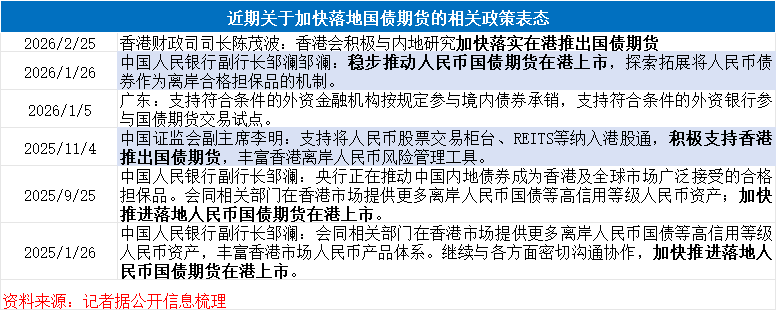
Core Viewpoint - The Hong Kong government budget for the fiscal year 2026-2027 emphasizes the role of Hong Kong in supporting the national development strategy, particularly through the introduction of government bond futures to enhance financial market connectivity and promote the internationalization of the Renminbi [1][2]. Financial Sector Developments - The introduction of government bond futures in Hong Kong is seen as a significant step to enrich investment strategies for overseas investors in domestic bonds, thereby increasing the international appeal of Renminbi-denominated bonds [1][6]. - Historical experience with government bond futures in Hong Kong suggests that a renewed launch could lead to smoother operations and better outcomes [1][4]. Policy Alignment - The recent budget proposal aligns with a series of policy statements over the past six months advocating for the expedited launch of government bond futures in Hong Kong [2][3]. - Key figures from the People's Bank of China and the China Securities Regulatory Commission have consistently supported the initiative, indicating a strong regulatory backing for the development of the offshore Renminbi market [4][5]. Investment Value of Government Bonds - The investment value of government bonds has been increasingly recognized, especially in the context of global financial market volatility and challenges to the US dollar's credit [6][7]. - The liquidity of China's bond market has improved, with the annual turnover rate of government bonds rising from 2.4 times five years ago to 3.8 times currently, indicating a growing market [6]. Internationalization of the Renminbi - The budget outlines five specific measures to promote the internationalization of the Renminbi, including increasing the total quota for Renminbi business funding arrangements to 200 billion Renminbi and enhancing the offshore Renminbi bond market [9][10]. - These measures aim to improve the supply, cost, and product offerings in the offshore Renminbi market, thereby attracting more international institutions to participate [10][11]. Strategic Importance of Hong Kong - Hong Kong's role as an offshore hub for Renminbi transactions is critical, with over 70% of global offshore Renminbi foreign exchange transactions processed there [10][11]. - The successful implementation of these initiatives could position Hong Kong as a key player in the global capital allocation of Renminbi assets, enhancing its status as a financial center [11][12].
政协委员周鸿祎:AGI正稳步实现,智能体重塑网络生态
2 1 Shi Ji Jing Ji Bao Dao· 2026-02-27 12:25
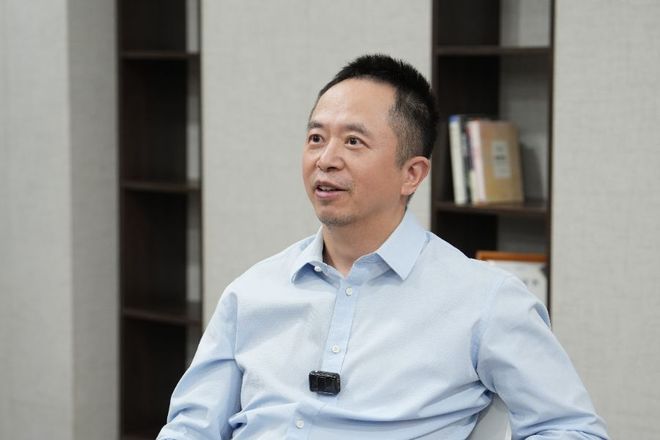
Core Insights - The commercialization of general artificial intelligence (AGI) is becoming clearer by 2026, with a focus on building intelligent agent ecosystems and enhancing reasoning capabilities [1][3] - AI is entering the cybersecurity market, reshaping the attack and defense systems, indicating a significant trend in the industry [1][3] Group 1: AGI Development - AGI is being redefined, with current AI capabilities surpassing the average human skill level, rather than requiring a "super genius" [3] - The Seedance video generation model exemplifies AGI capabilities, demonstrating significant potential in the entertainment industry [3] - Effective use of AI involves creating specialized intelligent agents that can engage in deep reasoning through role-playing and collaborative debate [3] Group 2: Intelligent Agents in Internet Economy - The rise of intelligent agents is leading to the emergence of an "agent economy," where agents will facilitate automatic price comparisons and transactions on e-commerce platforms [5] - This new business model raises questions about identity verification and accountability, particularly regarding errors made by deployed agents [5] - Intelligent agents are expected to fundamentally alter existing internet products and business models, potentially leading to parallel systems for human interaction and API access [5] Group 3: Cybersecurity Transformation - AI tools like Claude code security are revolutionizing the cybersecurity industry by efficiently scanning for vulnerabilities and generating patches, causing stock declines for traditional security firms [7] - The efficiency of AI in programming may lead to an overwhelming amount of code that humans cannot effectively manage, necessitating specialized AI tools for security [7][8] - The traditional cybersecurity model, which focuses on post-attack defense, is being challenged as AI can potentially eliminate many vulnerabilities during the coding phase [8] Group 4: Future of Cyber Attacks - Future cyber attacks are expected to evolve into "hacker agents," which will automate and scale attack methods beyond human capabilities [9] - The traditional defense strategies will likely collapse under the pressure of automated hacker agents, necessitating a shift in cybersecurity approaches [9] - Companies like 360 Group are adopting intelligent agents to enhance security operations, including vulnerability detection and automated penetration testing [9]

印奇挂帅后,阶跃星辰要做大模型第三股?
2 1 Shi Ji Jing Ji Bao Dao· 2026-02-27 12:25
Core Viewpoint - AI model company Jumpshare is considering an IPO on the Hong Kong Stock Exchange, aiming to raise approximately $500 million, shortly after completing a record-breaking B+ round financing of over 5 billion yuan [1] Group 1: Company Developments - Jumpshare's new chairman, Yin Qi, has a strong background in technology and strategy, focusing on organizational change and commercialization [1] - The company has developed a series of models called the Step series, which cover language, multi-modal, and reasoning capabilities, and has open-sourced several leading multi-modal models [1][2] - The company plans to focus on creating AI agents for smart terminal devices, particularly in automotive, mobile, and IoT applications, with API call volume expected to grow nearly 170% over three consecutive quarters by the end of 2025 [3] Group 2: Market Context - The competition in the domestic AI model market has shifted from purely parameter scale and general capabilities to a focus on application depth and industry integration [3] - The Hong Kong stock market is experiencing an unprecedented wave of AI listings, with several companies successfully going public and achieving significant market valuations [4][5] - Jumpshare's business model combines "end + cloud" revenue streams, charging for licenses on the device side and consumption on the cloud side, which is seen as sustainable in the current market [6]
广州马场将打造世界级消费地标 专家:可能会卖出20万/ ㎡
2 1 Shi Ji Jing Ji Bao Dao· 2026-02-27 12:19
Core Viewpoint - The Guangzhou racetrack land has been successfully sold, marking a significant event in the real estate market, with Yuexiu Property winning the bid for a total price of 23.6 billion yuan, aiming to transform the area into a world-class consumption landmark that will lead the Bay Area's development [1] Group 1: Company Insights - Yuexiu Property acquired the Guangzhou racetrack land for a total price of 23.6 billion yuan, indicating strong investment confidence in the region's real estate market [1] - The development plans for the site aim to create a high-end consumption area, which could enhance the company's portfolio and market position [1] Group 2: Industry Implications - The transformation of the racetrack area into a luxury district is expected to attract significant consumer interest and investment, potentially influencing the overall real estate dynamics in the Bay Area [1] - Local residents have mixed feelings about the development, with some looking forward to environmental upgrades while others express concerns about high consumption thresholds, reflecting the potential socio-economic impact of such projects [1]