
Xiao Fei Ri Bao Wang

Search documents
18项举措推动食品工业数字化转型
Xiao Fei Ri Bao Wang· 2025-06-16 02:42
Core Viewpoint - The Ministry of Industry and Information Technology, along with other departments, has issued the "Implementation Plan for the Digital Transformation of the Food Industry," aiming to accelerate the integration of digital technologies into the food industry. Group 1: Digital Transformation Goals - By 2027, the digital management penetration rate of key food enterprises is expected to reach 80%, with the CNC rate of key processes and the penetration rate of digital R&D design tools in large-scale food enterprises both reaching 75% [1] - The plan aims to cultivate over 10 intelligent factories, establish more than 5 high-standard digital parks, create hundreds of typical digital transformation application scenarios, and develop a batch of high-level digital transformation service providers in the food industry [1] - By 2030, the comprehensive application of new-generation information technology in large-scale food enterprises is anticipated, fostering a group of internationally competitive digital industrial clusters in the food sector [1] Group 2: Specific Measures - The plan outlines four action areas: innovation in information technology applications, cultivation of new models and new business formats, quality enhancement and upgrading of the industry, and foundational empowerment [1] - It includes 18 specific measures, such as promoting the application of new technology, enhancing the supply of AI model technology products in niche food sectors, and developing flexible manufacturing for small-batch and diverse products [1] - The plan emphasizes the intelligent upgrade of enterprises, accelerating the renovation of key process equipment and software in R&D, production, and testing [1] Group 3: Current Status - Currently, the CNC rate of key processes and the penetration rate of digital R&D design tools in China's food industry are 63.3% and 72.8%, respectively [2] - Leading enterprises in sectors such as dairy and beverage manufacturing have achieved world-leading levels in intelligent factory development [2]
智能眼镜掀起“上新”潮
Xiao Fei Ri Bao Wang· 2025-06-16 02:42
日前,某电商平台数据显示,智能眼镜成交量同比激增超 8 倍。有业内人士分析,原因或在于AI大模 型与增强现实技术融合推动智能眼镜市场爆发。 国际数据公司IDC数据显示,2025年全球智能眼镜出货量预计将达到1280万台,同比增长26%;其中, 中国市场将突破275万台,同比增长高达107%,跃居全球第一。同时,国产智能眼镜也迎来了一轮"上 新潮","智能眼镜卖爆了"等话题在社交平台引发热议。 在线上购物平台,智能眼镜品牌数量较去年明显增加,智能提词和实时翻译成为消费者最关注的两大功 能。在国家对消费电子产品的补贴政策带动下,相关产品销量大涨。 线下眼镜店也迎来了一轮智能眼镜"上新潮"。以深圳市罗湖区的一家眼镜店为例,店长称目前门店上架 了近10款智能眼镜,功能多样,从最简单的播放音频、拍照片或视频到更复杂的语音助手、导航、翻译 等,各种功能应有尽有,产品价格从几百元到几千元不等,吸引了不少消费者体验购买。 消费者陈先生表示佩戴智能眼镜后不用戴耳机,且镜片上还有字幕;孙女士则称:"我会把它当电子产 品用,因为我本身没有很严重的近视,所以对我来说它的更多功能可能在于充当时尚配饰或者结合运动 相机使用。因为相机很重 ...
非遗年轻化表达正成为主流
Xiao Fei Ri Bao Wang· 2025-06-16 02:35
Core Insights - The theme for this year's intangible cultural heritage (ICH) promotional activities is "Integrating into Modern Life - ICH is Youthful," emphasizing the connection between traditional crafts and contemporary lifestyles [1][4] - Young individuals are increasingly becoming key players in the preservation and innovation of ICH, utilizing new ideas and technologies to revitalize ancient skills and make them relevant today [1][3] Group 1: Youth Engagement in ICH - Young artisans, such as those in Guizhou and Yunnan, are actively involved in traditional crafts, demonstrating a strong commitment to preserving and innovating ICH [1][2] - Events like the "Non-Heritage is Youthful - Graduation Design Exhibition" showcase the creative contributions of students, highlighting the intersection of culture and modern design [2] Group 2: Innovative Approaches to ICH - The integration of technology and modern expressions in traditional arts, such as the use of live streaming and social media, is attracting younger audiences and enhancing the visibility of ICH [3] - Performances that blend traditional music with contemporary themes are being embraced by youth, indicating a shift in how ICH is perceived and celebrated [3][4]
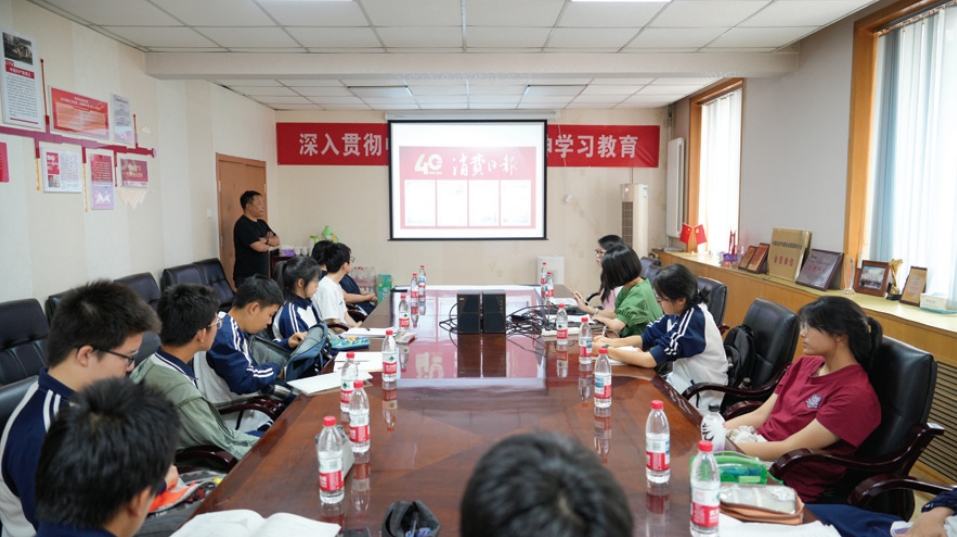
北京四中学子沉浸式体验记者职业魅力
Xiao Fei Ri Bao Wang· 2025-06-13 02:41
Core Insights - The event provided high school students with a hands-on experience in journalism, bridging classroom learning with real-world media practices [1][2] - Students learned about the newspaper publishing process and the importance of verifying credible news sources in the age of information overload [2] - The event highlighted the transformation of the media industry, emphasizing the need for innovative content production and distribution strategies in response to changing consumer habits [2][3] Group 1 - The welcome ceremony was led by the deputy editor-in-chief, who emphasized the importance of connecting students with the media environment to explore their potential and career awareness [1] - Students participated in activities such as proofreading newspaper drafts, which helped them understand the meticulous nature of journalism and the differences between journalistic writing and academic writing [2] - The event included a presentation on the evolution of media, focusing on the impact of smartphones and new media formats on reading habits and content consumption [2] Group 2 - The media department showcased a "1+2+20" content distribution model to meet audience demands, indicating a shift towards more refined and innovative media practices [2] - Students were encouraged to engage with new media and self-media platforms, highlighting the industry's need for versatile talent [2] - The event concluded with student reflections on their experiences, emphasizing the value of media in society and the ongoing pursuit of truth [3]

给乱象“断根” 守消费净土
Xiao Fei Ri Bao Wang· 2025-06-13 02:41
Core Viewpoint - The newly established regulations for live e-commerce aim to address rampant issues such as false marketing and counterfeit products, ultimately protecting consumer rights and ensuring a safer shopping environment [1][2] Group 1: Issues in Live E-commerce - Live e-commerce has been plagued by false advertising, with claims like "lowest price on the internet" often misleading consumers, leading to dissatisfaction when products do not match their expectations [1] - Counterfeit and substandard products pose significant risks to consumers, with the new regulations requiring platforms to strictly verify merchant qualifications and product quality, thereby enhancing consumer trust [1] - Consumers have faced challenges in asserting their rights, often encountering evasive responses from platforms and merchants; the new regulations mandate platforms to actively assist consumers in their claims [1] Group 2: Implementation and Consumer Behavior - The effectiveness of the new regulations hinges on strict enforcement against violations, ensuring that businesses and influencers understand the consequences of non-compliance [2] - Platforms are urged to take their responsibilities seriously and implement the regulations effectively, rather than waiting for issues to arise before taking action [2] - Consumers are encouraged to remain rational and cautious, verifying product reviews and comparing prices to avoid impulsive purchases that may lead to regret [2]
美妆原料成分赛道开启“微创新”突围战
Xiao Fei Ri Bao Wang· 2025-06-13 02:41
Core Insights - The total number of cosmetic registrations surged by 52.87% in April 2025 compared to March, reaching 38,261, with domestic non-special cosmetics dominating the market at 94.97% [1] - The implementation of the "Cosmetic Safety Assessment Technical Guidelines" has led to longer registration processes and increased costs, causing a structural decline in the number of registrations for various efficacy categories [1] - The market for functional skincare products is undergoing a structural adjustment, with a notable shift towards gentle ingredients and innovative raw materials [4][6] Market Dynamics - The market for efficacy-based skincare products in China expanded from 10.2 billion to 37 billion yuan from 2017 to 2022, with projections to reach 62.3 billion yuan by 2026 [2] - The registration of lip care products increased significantly, with a rise from 0.6% to 1.6% of total registrations, indicating a growing consumer demand for specific benefits such as wrinkle reduction and sensitivity relief [3] Ingredient Trends - Sodium hyaluronate (hyaluronic acid) led the active ingredient market with 16,400 registrations, benefiting from technological advancements that enhance its efficacy [4] - Traditional active ingredients like allantoin and Sophora flavescens extract saw a decline in demand, while natural oils like squalane and jojoba oil remained resilient [4] - The non-active ingredient market experienced a downward trend, with all ingredient registrations declining by 15.82% to 53.17% [4] Regulatory Environment - Local governments are exploring efficient service models to address the complexities of the registration process, with initiatives in Qingdao and Anhui aimed at reducing registration times and costs [6] - National policies are being released to support innovation in cosmetic ingredients, including provisions for simultaneous application of new ingredients and associated products [6] Innovation and Consumer Demand - The dual pressures of stringent regulations and rising costs are pushing the beauty industry towards "micro-innovation" rather than major overhauls, focusing on formula optimization and process upgrades [1][6] - There is a strong consumer demand for innovative and effective ingredients, indicating a shift in market dynamics where new raw materials are beginning to challenge traditional ingredients [4][6]
汇聚多方力量夯实“十五五”发展基础
Xiao Fei Ri Bao Wang· 2025-06-13 02:41
Core Viewpoint - The China Leather Association is conducting research to formulate the "14th Five-Year" development plan for the leather industry, aiming to promote high-quality development amidst challenges and opportunities in the current market environment [1][5]. Group 1: Research and Planning - The research includes field investigations and discussions with government departments, industry organizations, and enterprises to ensure the plan's scientific and feasible nature [1][4]. - The focus of the "14th Five-Year" plan is on building a modern industrial system, fostering new productive forces, and improving the industrial ecosystem [1][4]. Group 2: Regional Insights - The first research stop was in Wenzhou, known as "China's Shoe Capital," where the association engaged with local government and industry representatives to understand the shoe manufacturing sector's characteristics and challenges [2][3]. - Wenzhou's shoe industry has a foundation in smart manufacturing, green production, and brand operation, with enterprises aiming to accelerate high-end, digital, and cluster development to enhance global competitiveness [2][3]. Group 3: Challenges in the Fur Industry - In Yuyao, a significant fur industry base, the sector faces challenges such as international market fluctuations and declining traditional sales channels, despite having over 2,000 enterprises and processing 8.5 million pieces of fur annually [3][4]. - The local government is committed to optimizing the business environment and supporting leading enterprises in international cooperation and high-end exhibitions [3][4]. Group 4: Future Directions - The association emphasizes the need for the fur industry to align with international trends and domestic transformation, focusing on brand enhancement, new productive force cultivation, and sustainable development [4][5]. - There is a consensus among local governments, industry associations, and enterprises on the importance of top-level design, clear development goals, and strong measures to enhance industry competitiveness, with a focus on digital transformation, green manufacturing, and international development [4][5].
开宠物店是门好生意吗?
Xiao Fei Ri Bao Wang· 2025-06-13 02:34
Core Insights - The pet industry is experiencing significant growth, with the urban pet consumption market projected to reach 300.2 billion yuan in 2024, reflecting a 7.5% increase [2] - The dog consumption market is expected to reach 155.7 billion yuan, growing by 4.6%, while the cat consumption market is anticipated to reach 144.5 billion yuan, with a growth rate of 10.7% [2] - The rise of the "it economy" indicates a shift in consumer behavior towards pet ownership and services, making the pet service sector increasingly attractive to entrepreneurs [2] Industry Trends - The pet service sector is characterized by its essential nature and advantages of offline experiences, drawing more entrepreneurs into the market [2] - There is a notable difference in survival rates between chain pet stores and individual pet stores, with chain stores having a five-year survival rate of up to 70% compared to 40% for individual stores [5] - The closure rate for individual pet stores within the first year is approximately 55%, while for chain stores, it is significantly lower at 8% [5] Entrepreneurial Insights - Entrepreneurs in the pet service industry often come from ordinary working-class backgrounds and face challenges in attracting and retaining customers [6] - Initial struggles are common, with many new store owners experiencing financial pressure and uncertainty during the early months of operation [6][7] - Support from family and community can play a crucial role in helping entrepreneurs persevere through difficult times [7] Operational Challenges - The pet service industry requires a strong focus on service quality and customer retention, with successful entrepreneurs emphasizing the importance of building a loyal customer base [7][8] - The operational demands of running a pet service business can be physically taxing, with owners often remarking that profits come from hard work rather than high margins [8] - There are significant barriers to entry in the pet service industry, including high technical requirements, substantial labor costs, and challenges in maintaining customer relationships [9]

“618”网络促销季 市场监管总局要求电商平台加强管理
Xiao Fei Ri Bao Wang· 2025-06-13 02:34
本报讯 时下正值网络集中促销季,为规范促销经营行为,维护"618"期间网络交易秩序,保护消费者合 法权益,日前,市场监管总局向综合电商、直播电商、跨境电商等平台企业发布《"618"网络集中促销 合规提示》,重点包括严格落实平台主体责任、规范促销行为、化解网络消费纠纷等内容。 在落实平台主体责任方面,市场监管总局提示平台要切实落实审查核验义务,督促平台内经营者亮照、 亮证、亮标经营,确保经营者主体信息真实有效,提升线上经营行为透明度。 在规范促销行为方面,要求围绕促销工具、折扣展示、优惠发放、结算支付等关键环节,优化促销规 则。严禁不按规定明码标价、价格欺诈等侵害消费者权益行为。未取得拍卖许可不得以拍卖名义开展竞 价促销活动。严格区分跨境电商零售进口商品和非跨境商品,保障消费者知情权、选择权。 此外,电商平台要加强合规管理,发现违法违规问题及时向所在地县级以上市场监管部门报告,形成平 台自治与政府监管的良性互动,共同引导平台内经营者提高守法经营意识。 市场监管部门提示,"618"期间,广大消费者应保持理性消费心态,提高维权意识,遇到违法行为及时 向市场监管部门或有关主管部门投诉举报,依法依规维护自身合法权益。 ...
景区“一锤子买卖”如何破局?
Xiao Fei Ri Bao Wang· 2025-06-13 02:34
Core Insights - Longtan Grand Canyon, as the first 5A scenic area in China to declare bankruptcy, has successfully implemented a low-price strategy to attract visitors and enhance its operational model [1][2][3] - The shift from ticket-based revenue to experience-based consumption is becoming essential for scenic areas, with a significant increase in the importance of cost-performance ratio in visitor evaluations [1][2] Group 1: Pricing Strategy - Longtan Grand Canyon's introduction of low-priced items, such as 1 yuan ice pops, has created a strong consumer appeal and increased foot traffic, with the related Douyin topic reaching 420 million views [2] - The scenic area reported a 327% year-on-year increase in visitor numbers and a 40% rise in merchandise sales after adopting the low-price strategy [2][3] Group 2: Experience Economy - The focus on creating immersive experiences, such as the "Longtan Secret Realm" theater and geological study camps for youth, has transformed the scenic area from a ticket-based economy to an experience-based economy [3] - Longtan Grand Canyon's approach emphasizes enhancing overall service quality and visitor satisfaction, moving away from reliance on high-margin products [3]