
Xiao Fei Ri Bao Wang

Search documents
行业正从“单品适配”向“平台互联”转型
Xiao Fei Ri Bao Wang· 2025-06-18 02:40
Core Viewpoint - The establishment of a unified communication protocol for lead-acid batteries used in electric bicycles is essential to enhance product interoperability, reduce resource waste, and improve safety standards in the industry [1][2][3][4] Group 1: Industry Background - The annual sales of electric bicycles in China exceed 40 million units, with a total ownership of over 350 million units, where lead-acid battery models account for 85% [2] - The lack of a unified communication protocol between electric bicycle batteries and chargers has led to significant resource waste and increased costs for manufacturers due to the need for multiple designs [2][3] Group 2: Safety and Standards - The absence of a communication protocol not only affects product interoperability but also hinders the advancement of safety certifications and smart battery management systems [3] - Recent mandatory standards for electric bicycles and chargers have been introduced to enhance safety, which includes the requirement for a communication protocol to mitigate safety risks associated with charger misuse [3] Group 3: Future Trends - The electric bicycle industry is expected to transition from "single product compatibility" to "platform interconnectivity," which will support the overall safety and standardization of the industry [4] - The implementation of a communication protocol is seen as a pivotal step towards improving data flow, safety management, and user experience within the industry, similar to the impact of the USB standard on computer peripherals [4]
商场里的“动物乐园”成解压新选择
Xiao Fei Ri Bao Wang· 2025-06-18 02:26
Core Insights - The "pet economy" is expanding, with new pet experience stores emerging in shopping malls, providing consumers with opportunities to interact with animals for a low cost, enhancing the shopping experience for families and young people [1][2] Industry Overview - The pet consumption market in urban areas is projected to exceed 300 billion yuan in 2024, with a pet population of 124.11 million, reflecting a 2.1% increase from 2023 [1] - In major cities, shopping malls are increasingly incorporating pet-related businesses, with over 40 pet experience stores in some first-tier cities and 10-30 in new first-tier cities [1] Business Model - Pet experience stores charge between 30 to 100 yuan per visit, with discounts available through online group purchases. Some stores offer membership services and additional benefits [4] - These stores also engage in pet sales and provide related products and care services, creating a "experience + retail" business model [4] Market Trends - Current pet-related stores in malls are categorized into traditional pet shops, comprehensive pet zoos, and small exotic pet experience stores. The development of pet experience stores is influenced by factors such as rental costs and brand recognition [4] - There is a potential trend towards establishing comprehensive pet zoos that can cater to both children's entertainment and adult leisure needs [4] Recommendations - Industry experts suggest that while capitalizing on the pet economy, there should be a focus on establishing better animal welfare standards and regulatory mechanisms to ensure sustainable development of the "pet economy" [4]


梅雨季来临 宠物雨衣成刚需
Xiao Fei Ri Bao Wang· 2025-06-18 02:26
Group 1 - The rainy season has led to a surge in demand for pet raincoats, with search volume for "dog raincoats" on Taobao increasing by over 900% since June [1] - Pet owners are actively seeking solutions for walking their dogs in the rain, leading to a variety of creative approaches shared on social media [1] - Sales for pet raincoats have reportedly reached 3-4 times the usual volume during the rainy season, indicating a significant market opportunity [2] Group 2 - Brands are expanding their product offerings to include a wide range of sizes and styles for pet raincoats, catering to different dog breeds and needs [2] - The shift of pet raincoats from being an emergency item to a seasonal necessity reflects a deeper upgrade in pet consumption trends [2] - Popular brands are launching various rain gear for pets, contributing to a competitive market for outdoor pet equipment [2]
踏浪溯溪|解锁沁凉冒险,花王清爽随行
Xiao Fei Ri Bao Wang· 2025-06-17 03:14
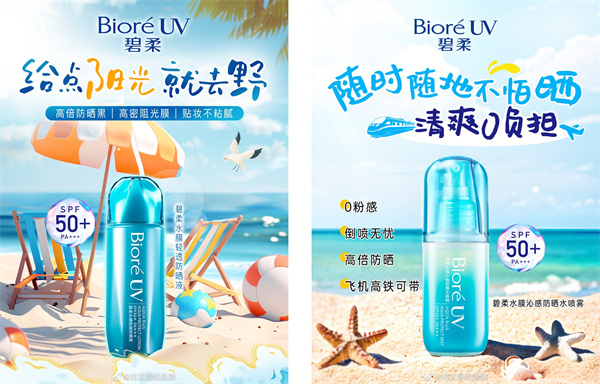
Core Insights - The article emphasizes the importance of outdoor activities like "stream tracing" during summer, highlighting the refreshing experience it offers while promoting products from Kao Corporation that enhance this experience [1][8]. Product Highlights - Kao's Biore Water Film Sunscreen utilizes patented technology to create a dynamic sunscreen barrier, providing SPF50+/PA+++ protection against strong UV rays while maintaining a lightweight feel [3]. - The KATE Concealer Foundation is designed for oily skin, offering a semi-matte finish and dual concealing formula to absorb excess oil, ensuring a fresh look throughout the day [5]. - The KATE Monster Lipstick combines nourishing ingredients like jojoba seed oil and vitamin E, providing a glossy finish that is both vibrant and long-lasting [5]. - The Biore Water Film Sunscreen Spray features a new water mist technology for easy reapplication, ensuring skin protection against sun exposure [5]. - The Kao Meishuli Carbonated Cooling Neck Patch provides a cooling sensation for up to 3 hours, utilizing advanced cooling ingredients and a soft gel design for comfort [6]. - The Kao Meishuli Carbonated Cooling Foot Patch offers a refreshing experience for tired legs, lasting around 6 hours and infused with a soothing lavender mint scent [6].
小盐粒释放大能量
Xiao Fei Ri Bao Wang· 2025-06-17 02:43
Core Insights - The salt industry in China has evolved significantly, becoming a crucial part of both the economy and public health, with a production capacity of 116 million tons and an output of 92 million tons, making China the world's largest salt producer and consumer, accounting for 32% of global production [2][4] Industry Development - The salt industry has transitioned from primarily sea salt to a dominant reliance on well and lake salt, with current proportions being 29% sea salt, 58% well salt, and 14% lake salt [4][5] - The industry has seen advancements in production technology, moving from traditional methods to modernized processes, enhancing efficiency and output [5][6] Quality and Safety - The safety and quality of edible salt are maintained through a network of 123 designated production enterprises and 1,213 wholesale enterprises, with a product quality compliance rate of 98.44% based on recent inspections [2][6] - The implementation of national and industry standards has been crucial, with 33 national standards and 52 industry standards currently in effect, covering various aspects of production and safety [6] Market Trends - There is a growing consumer demand for high-quality and diverse salt products, leading to an increase in the market share of premium salt [2][3] - The industry is encouraged to shift from a "necessity mindset" to a "product mindset," focusing on innovation and tailored products for different culinary needs [3][7] Innovation and Technology - The industry is urged to adopt digital and intelligent technologies to enhance production capabilities and create unique intellectual property, thereby increasing product value [7][8] - The establishment of smart storage systems, such as those at the Han Gu Salt Field, exemplifies the integration of technology in traditional salt production [10] Health and Environmental Impact - The salt industry plays a vital role in public health, particularly in the prevention of iodine deficiency, with ongoing efforts to maintain iodine fortification in salt [8][9] - The industry is also focusing on green development, with initiatives like zero-carbon certifications for salt production facilities, highlighting the importance of sustainability [9][10] Cultural Significance - Salt culture is being preserved and promoted through the establishment of museums and cultural venues, contributing to the education and tourism sectors [9][10] - The industry is encouraged to integrate cultural elements into its development strategy, enhancing the overall value of salt products [9]

首届标准质量大会将于七月举行
Xiao Fei Ri Bao Wang· 2025-06-17 02:43
Core Viewpoint - The Chinese lighting industry is facing significant challenges, including low-end overcapacity and a lack of innovation, prompting a call for quality standards to encourage healthy competition rather than price wars [1][2][3] Group 1: Industry Challenges - The lighting industry is experiencing severe challenges, with structural issues such as "small, scattered, and weak" enterprises and excess low-end capacity [2] - Since 2024, the industry has faced downward pressure, with over 80% of exported lighting products seeing a decline in average price, leading to a "price-for-volume" strategy that threatens the survival of companies [2] - In 2024, the total profit of large-scale lighting enterprises decreased by 6.8% year-on-year, with the number of loss-making companies increasing by 13% and losses rising by 28% [2] Group 2: Quality and Standards Initiatives - The release of the national standard "Quality Grading of Consumer Products - Lighting Products" (GB/T 45515—2025) aims to guide enterprises in improving quality through scientific grading [3] - The China Lighting Electrical Association is organizing the first Standard Quality Conference to enhance industry standardization and quality competitiveness, aligning with national development goals [3] - The conference aims to address the "involution" competition issues highlighted by the National Market Supervision Administration and to promote a consensus for proactive industry engagement [3]
卫浴行业智能化发展走深走实
Xiao Fei Ri Bao Wang· 2025-06-17 02:43
Core Insights - The article highlights the shift in consumer demand towards quality, health, and green intelligent products in the home goods sector, particularly in the smart toilet industry, driven by government policies and consumer preferences [1][2]. Company Insights - Hengjie has observed two significant trends in smart toilet consumption: an expanding consumer base from first-tier cities to lower-tier markets and a diversification of usage scenarios beyond just master bathrooms [2]. - The current penetration rate of smart toilets in China is around 10%, with a projected 15% year-on-year growth in the configuration rate for smart toilets in the 2024 renovation market [2]. - Hengjie has increased its R&D investments to capture these trends, exemplified by the innovative design of the Hengjie N8S smart toilet, which features a water-saving design and low-noise flushing technology [2][3]. - Hengjie has launched multiple smart benchmark products, including the N8S and R9, achieving sales growth and market share increases in key segments [3]. Industry Insights - The light industry is undergoing a transformation towards digitalization and green development, with a reported revenue of 5.4 trillion yuan and a profit exceeding 300 billion yuan in the first quarter, reflecting a year-on-year growth of 4.8% and 1.4% respectively [9]. - The digitalization and smart production rates in the light industry are above the manufacturing average, with 77% of companies using digital design tools and 70% engaging in industrial e-commerce [10]. - The light industry is focusing on green manufacturing, with 1,041 green factories established, representing 20% of the national total, and 147 companies engaged in green supply chain management, accounting for 25% of the national total [10].

以数字之力夯实食品安全之基
Xiao Fei Ri Bao Wang· 2025-06-17 02:43
Core Viewpoint - The implementation plan for the digital transformation of the food industry aims to enhance quality safety traceability, particularly in the infant formula and salt sectors, signaling a strong move towards intelligent, high-end, and green transformation in China's food industry [1][2]. Group 1: Implementation Framework - The plan outlines "four major actions and eighteen measures," focusing on innovation in information technology, nurturing new models and industries, upgrading the industry, and talent policy [2]. - Quality safety traceability is highlighted as a standalone task and is integrated into key areas such as smart manufacturing, digital R&D, and flexible supply chains, serving as a foundational infrastructure for industry digitization and a technical barrier for food safety [2]. Group 2: Digital Development Goals - By 2027, the plan sets a target for 80% digitalization coverage among key enterprises, with 75% of critical processes automated and digital R&D tools widely adopted [2]. - The "ten-hundred-thousand" demonstration project aims to establish 10 smart factories, 5 high-standard parks, 100 typical scenarios, and implement 1,000 pilot projects, with a vision for comprehensive digital transformation by 2030 [2]. Group 3: Challenges and Solutions - Current challenges include non-interoperable information systems, with many enterprises operating isolated digital systems, hindering the integrity of traceability [3]. - Small and medium-sized enterprises face difficulties in digital transformation due to weak foundational capabilities and high costs, necessitating policy support in funding, training, and platform development [3]. - Data security and governance issues must be addressed to prevent data breaches and misuse, requiring systematic design and proactive measures [3]. Group 4: Future Outlook - As the traceability system deepens and digital foundations strengthen, consumers will be able to quickly access the complete journey of food products via mobile scanning, while regulatory bodies will utilize big data and AI for real-time monitoring and management [4]. - The food safety assurance system is expected to evolve from merely patching regulatory gaps to proactive governance and transparency throughout the entire process [4]. - The joint issuance of the plan by seven departments represents a pragmatic response to industry challenges and an attempt at structural reform under the framework of high-quality development [4].
超4000万人“云端”创收
Xiao Fei Ri Bao Wang· 2025-06-16 02:49
Core Viewpoint - The rise of short video live streaming platforms is transforming the employment landscape in China, creating new opportunities for rural entrepreneurs and traditional artisans, and significantly contributing to economic growth and job creation [1][2][4]. Group 1: Economic Impact - Short video live streaming has become a significant driver of the digital economy, with retail sales from live e-commerce expected to reach 4.3 trillion yuan in 2024, contributing 80% of the growth in the e-commerce sector [2]. - The traditional e-commerce model faced challenges such as information asymmetry and high channel costs, while live e-commerce has restructured the "people, goods, and market" elements, lowering barriers to entrepreneurship and enhancing traditional industries [2][3]. Group 2: Employment Creation - Over 40 million people have benefited from increased employment and income through short video live streaming platforms, including farmers, artisans, and small entrepreneurs [1][5]. - By the end of 2024, Kuaishou alone is projected to create 43.2 million job opportunities, with 23 million directly from content creators and live streamers, and 20.2 million indirectly through related industries [5]. Group 3: Rural Development - Short video live streaming is recognized as a "new agricultural activity," playing a crucial role in cultivating rural talent and supporting rural revitalization [3][4]. - Kuaishou's initiatives, such as the "Xingnong Plan," aim to connect agricultural production with consumer markets, enhancing the sales of agricultural products and promoting comprehensive rural revitalization [4]. Group 4: Digital Skills Training - Kuaishou has launched the "Happiness Lecture Hall" project to provide digital skills training for rural streamers, women, youth entrepreneurs, and disabled individuals, helping them acquire practical internet skills [7][9]. - The project has reached over 1 million people across 40 counties, establishing a digital bridge from skills training to practical application in agriculture [9]. Group 5: Cultural Heritage Preservation - The rise of short video platforms has provided unique opportunities for the preservation and promotion of intangible cultural heritage, with a 40% increase in views of related content on Kuaishou in 2023 [10][12]. - The "Intangible Cultural Heritage Training Hall" project aims to support artisans in remote areas, helping them improve their income and living conditions while ensuring the transmission of traditional skills [12][13].


“宠物家政”兴起:百亿蓝海撬动消费升级
Xiao Fei Ri Bao Wang· 2025-06-16 02:49
Core Insights - The rise of specialized "pet housekeeping" services is gaining market attention, providing tailored cleaning and health management solutions for pet owners [1][2] - The pet economy in China reached a scale of 592.8 billion yuan in 2023, with a projected growth to 1.15 trillion yuan by 2028, indicating a significant market potential for pet-related services [2] Group 1: Market Trends - The pet economy is experiencing rapid growth, with a year-on-year increase of 20.1% in 2023, highlighting the increasing demand for pet-related services and products [2] - "Pet housekeeping" fills a gap in the market for professional cleaning services, enhancing consumer demand for high-quality pet care experiences [2] Group 2: Consumer Behavior - Pet owners are increasingly seeking specialized services that ensure the health and safety of their pets, moving away from traditional cleaning methods that may pose risks [1] - The emergence of "pet housekeeping" has led to a broader consumption ecosystem, with increased spending on pet food, toys, and high-end services like pet hotels and photography [2] Group 3: Industry Opportunities - The growth of the pet market presents unprecedented opportunities for companies in the industry to develop products and services that cater to the evolving needs of pet owners [2][3] - The trend towards professional pet services is expected to stimulate economic growth and enhance consumer spending in the pet sector [2]