
Xiao Fei Ri Bao Wang

Search documents
稳就业是提振消费经济的“源头活水”
Xiao Fei Ri Bao Wang· 2025-06-09 02:33
Group 1 - The core viewpoint emphasizes the interconnection between employment and consumption, stating that enhancing employment will lead to increased consumption, thereby invigorating the economy [1][2] - The government is accelerating the implementation of various measures to stabilize employment and the economy, with most policies expected to be in place by the end of June [1] - Employment is identified as the foundation of residents' income, which is crucial for sustaining consumption [1] Group 2 - The policy measures include comprehensive support for job creation, increased subsidies for individuals, and enhanced unemployment insurance for businesses affected by tariffs [2] - The current complex international trade environment and domestic economic pressures highlight the importance of stabilizing employment as a strategic response to challenges [2] - A stable employment environment is linked to guaranteed income for residents, fostering a positive cycle in the economy and consumption market [2]
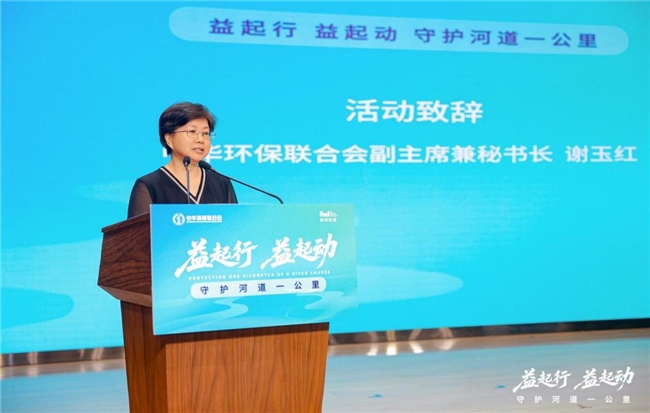
2025“益起行 益起动 —— 守护河道一公里”大型环保公益活动在京启动
Xiao Fei Ri Bao Wang· 2025-06-06 03:29
Core Viewpoint - The "2025 Together for Action - Protecting One Kilometer of River" environmental initiative was launched on World Environment Day, focusing on enhancing water environment protection awareness and promoting social collaboration for ecological conservation [1][3]. Group 1: Event Overview - The event was hosted by the China Environmental Protection Federation and supported by FedEx, aiming to initiate nationwide ecological protection actions for rivers [1]. - The initiative emphasizes the importance of river ecosystems for environmental sustainability and aims to create a long-term mechanism involving government guidance, corporate support, and public participation [3][5]. Group 2: Corporate Involvement - FedEx's China President expressed the company's commitment to sustainable development and aims to leverage its logistics network to empower environmental actions, encouraging broader corporate participation in ecological protection [5]. - The collaboration seeks to foster a positive atmosphere for corporate engagement in environmental initiatives, extending green concepts beyond river protection to everyday life [5]. Group 3: Project Planning and Implementation - The annual project plan includes continuous mobilization and organizational empowerment, with activities scheduled in 15 cities including Beijing, Shanghai, and Guangzhou [7]. - The initiative will involve various stakeholders, including social organizations, enterprises, and volunteers, to create a collaborative model for water environment governance [11]. Group 4: Action Proposals - The initiative's action proposals include becoming river guardians, practicing green living, spreading environmental awareness, and participating in ecological restoration projects [14]. - The collaborative model proposed involves professional guidance from social organizations, resource support from enterprises, and broad public participation, providing a replicable framework for water environment governance [11].

即时零售 消费领域的“新增长曲线”
Xiao Fei Ri Bao Wang· 2025-06-06 02:55
国家统计局新闻发言人、国民经济综合统计司司长付凌晖日前表示,即时零售等新业态高效便捷,受到 消费者欢迎,1—4月份,实物商品网上零售额同比增长5.8%,继续快于社会消费品零售额增速。 从消费者视角来看,即时零售的吸引力在于便捷与高效,完美契合了"即买即得"的消费需求。咨询机构 埃森哲发布的《聚焦中国95后消费群体》报告显示,超过50%的"95后"希望在购物当天即可收到商品, 且愿意为更快的配送服务支付一定溢价。在快节奏的现代生活中,"速度"已成为影响年轻一代消费决策 的重要因素,也是激发他们消费欲望的加速器。 最近多个电商平台在"外卖"上的竞争只是表象,它们真正争夺的是背后更大的即时零售市场。从"送 餐"到"送万物",即时零售正成为电商平台新的竞争焦点,也打开了更大的消费赛道。各大电商平台纷 纷加大在即时零售领域的布局,投入大量资源完善配送体系、拓展商品品类、优化用户体验,有力地推 动了即时零售市场的快速发展。 事实上,即时零售的巨大市场潜力也受到国家关注,据商务部国际贸易经济合作研究院发布的《即时零 售行业发展报告(2024)》,2023年我国即时零售规模达6500亿元,同比增长28.89%,增速比同期网 ...
“赤足鞋”为舒适穿着定义
Xiao Fei Ri Bao Wang· 2025-06-06 02:55
Core Viewpoint - The release of the "Guidelines for Barefoot Feel Casual Shoe Design" aims to establish systematic standards for barefoot shoes, addressing the growing market demand and ensuring product safety and quality for consumers [1][4]. Industry Overview - The barefoot shoe concept has gained popularity in both domestic and international markets, focusing on natural foot movement and comfort, particularly appealing to younger consumers and fitness enthusiasts [1][2]. - Sales of barefoot shoes have increased by over 38% year-on-year in 2023, with key attributes such as "lightweight," "real foot feel," and "breathable comfort" being highly valued by consumers [2]. Product Standards - The draft guidelines define barefoot shoes and set requirements for their basic structure, material usage, safety performance, and production processes, emphasizing the need for shoes to be "thin, light, and flexible" [3][4]. - The guidelines also specify technical parameters such as shoe size standards, breathability of upper materials, and color fastness of inner linings, enhancing the guidelines' enforceability [3]. Market Challenges - Despite the rising popularity of barefoot shoes, many companies face challenges due to a lack of structured design standards, leading to issues such as inadequate fit and misleading marketing claims [2][4]. - The absence of clear guidelines has resulted in consumer confusion and hindered overall quality improvement in the barefoot shoe industry [2][4]. Future Implications - The guidelines are expected to fill the gap in design standards for barefoot shoes, providing a scientific basis for product development and enhancing consumer experience [4]. - As the standardization process advances, the barefoot shoe industry is anticipated to transition from "experience-based design" to "scientific design," fostering the growth of more capable and competitive brands [4].
平台经济稳就业显效 网约车灵活岗位惠及千万司机
Xiao Fei Ri Bao Wang· 2025-06-06 02:55
Core Insights - The rise of the digital economy has led to the emergence of new employment forms, with 84 million people engaged in these roles, accounting for 21% of the total workforce in China [1] Group 1: Platform Economy and Employment - The platform economy is providing new job opportunities for workers, especially those affected by the transformation of traditional industries [2] - Companies like Didi are investing significantly to stabilize employment and boost consumer spending, with an additional investment of 2 billion yuan aimed at enhancing driver income and rights protection [3] Group 2: Impact on Individuals - The platform economy is transforming lives, as exemplified by individuals like Chen Jun and Chao Xiaoxia, who have successfully transitioned to new roles as ride-hailing drivers, improving their financial stability and social engagement [2][4] - Didi's initiatives to support special groups, such as women and unemployed blue-collar workers, include recruitment efforts and partnerships to provide vehicle rental and purchase assistance [4] Group 3: Sustainable Employment Ecosystem - Didi is implementing systematic measures to create a sustainable employment environment, focusing on income stability, welfare support, and service guarantees for drivers [6] - The company is enhancing transparency in earnings and providing various incentives to ensure that both new and existing drivers benefit from the platform's growth [6]
毕业季催热 “手作经济”
Xiao Fei Ri Bao Wang· 2025-06-06 02:42
Core Insights - The "handmade economy" driven by national潮文化 is experiencing a surge in consumer interest as graduation season approaches [1] - DIY material kits and handmade tools are becoming popular among young consumers, who express their emotions and cultural identity through personalized creations [1] Group 1: Market Trends - DIY material kits that integrate intangible cultural heritage techniques and national风 elements are trending as popular graduation gifts, with discussions on "graduation DIY" exceeding one million views on platforms like Xiaohongshu [1] - The keyword "簪花学士帽" has over 9,000 related posts, indicating a strong interest in DIY graduation caps among students [1] - National潮 markets in cities like Beijing and Shanghai are adding handmade sections, attracting over a thousand visitors in a single day [1] Group 2: Consumer Behavior - Students are actively experimenting with various national潮 styles, as seen in the popularity of DIY projects like a "Harry Potter style graduation cap" on Douyin [1] - A notable case involves a student from Zhaoqing who handmade a plush graduation cap for her friend, gaining significant media attention [1] - The trend of DIY furniture is also emerging, with students facing challenges related to moving and renting, leading to increased interest in materials like aluminum profiles and marine boards for creating personalized living spaces [1] Group 3: Cost and Sustainability - DIY furniture materials are appealing to young consumers due to their low cost and high customization potential, with an aluminum profile desk kit priced at one-third of ready-made furniture [1] - The ability to freely assemble these materials aligns with graduates' desires for space efficiency and environmental consciousness [1]
广西以勤俭办事业推动高质量发展
Xiao Fei Ri Bao Wang· 2025-06-06 02:36
Core Viewpoint - The revised "Regulations on Strict Economy and Opposition to Waste by Party and Government Agencies" emphasizes the importance of frugality in governance, particularly in regions like Guangxi, to ensure long-term development and political responsibility [1][2]. Group 1: Importance of Frugality - The necessity of frugality is underscored as a political awareness and a reflection of the commitment to the "two safeguards" [2]. - Historical traditions of frugality in Guangxi are highlighted, showcasing the region's commitment to resource conservation and efficient development [2]. Group 2: Identifying Shortcomings - A focus on aligning with the new regulations to improve financial management and address persistent issues related to wasteful practices [3]. - Recognition of gaps in institutional execution and the need for stricter enforcement and oversight to enhance compliance with frugality measures [3]. Group 3: Practical Pathways for Implementation - Emphasis on creating a culture of saving and reducing waste within government agencies, which is essential for public trust and effective governance [4]. - The need for innovative approaches to enhance resource efficiency and sustainability in government operations [6]. Group 4: Long-term Development Goals - The importance of balancing ecological preservation with economic development, particularly in high-end tourism, is highlighted as a dual win strategy [2]. - The call for utilizing saved resources for critical areas such as rural revitalization, ecological protection, and technological innovation reflects a strategic allocation of funds [5].
食品营销莫把冒犯当创意
Xiao Fei Ri Bao Wang· 2025-06-06 02:36
Core Viewpoint - The article discusses the controversy surrounding a restaurant's marketing strategy that used offensive language, highlighting the broader issue of "vulgar marketing" in the food industry and its negative impact on brand image and consumer respect [1][2]. Group 1: Marketing Trends - "Vulgar marketing" has become a recurring issue, with many companies using lowbrow humor and offensive content to attract attention, often disregarding consumer feelings and brand integrity [1][2]. - Some businesses mistakenly believe that edgy or vulgar content can effectively drive short-term traffic and engagement, leading to a misunderstanding of consumer preferences [2][3]. Group 2: Consumer Behavior - The rise of emotional consumption indicates that consumers are willing to pay for products that fulfill emotional or psychological needs, suggesting a significant market potential for brands that can tap into this trend without resorting to vulgarity [3]. - Successful brands have managed to create engaging marketing campaigns that resonate with consumers while maintaining respect and creativity, contrasting with those that rely on lowbrow humor [2][3]. Group 3: Regulatory and Industry Response - There is a call for stronger regulatory measures and legal frameworks to deter companies from using offensive marketing tactics, emphasizing the need for a balance between creativity and consumer respect [3]. - The article suggests that media and consumers should play a role in monitoring and promoting positive marketing practices, fostering a healthier marketing environment in the food industry [3].
第五届中国工艺美术博览会成果丰硕
Xiao Fei Ri Bao Wang· 2025-06-05 03:30
Core Insights - The fifth China Arts and Crafts Expo concluded successfully, showcasing a blend of traditional and modern craftsmanship, attracting over 80,000 attendees and 6.8 million online viewers [2][5][14] Industry Overview - The arts and crafts industry in China has an annual revenue of 3 trillion yuan, employing over 13 million people, contributing positively to economic and cultural development [5] - The expo serves as a significant platform for showcasing, exchanging, and collaborating within the industry, enhancing the visibility of traditional Chinese craftsmanship [5][10] Economic Impact - The expo generated an intended transaction amount of 145 million yuan, with on-site sales exceeding 30 million yuan and online pre-sales reaching 15.3 million yuan [2] - The event featured over 120,000 exhibits, with more than 500 pieces awarded the "Baihe Cup," indicating a thriving market and strong consumer interest [2][10] Innovation and Creativity - The "Baihe Cup" design innovation competition highlighted the importance of creativity in the industry, with over 3,000 entries and various awards recognizing outstanding craftsmanship [10][11] - Award-winning pieces showcased diverse themes and innovative techniques, reflecting the industry's commitment to blending traditional artistry with contemporary aesthetics [11][14] Cultural Significance - The expo emphasized the role of arts and crafts in enhancing the quality of life and fostering cultural confidence among the populace [11][14] - Interactive experiences at the expo engaged visitors, particularly children, in traditional crafts, promoting cultural education and appreciation [13][14] Future Prospects - The event is seen as a stepping stone for the arts and crafts industry, with aspirations for further development and integration of traditional culture into modern life [5][14] - The expo aims to continue being a platform for mutual learning and cultural exchange, contributing to the preservation and innovation of Chinese traditional arts [14]
过度包装治理:绿色消费的觉醒之路
Xiao Fei Ri Bao Wang· 2025-06-05 03:23
Core Viewpoint - Over-packaging is likened to a "parasite" in the consumer market, consuming resources while creating an illusion of "high-end" products [1] Group 1: Over-Packaging Issues - Businesses are driven by profit calculations, with packaging costs sometimes accounting for 45% of product prices, turning packaging into a premium tool as product margins shrink [1] - The "packaging premium" model is particularly evident in sectors like tea and cosmetics, where extravagant materials can inflate prices by 30% to 50% [1] - A tea company reduced packaging volume by 60%, leading to a 25% decrease in transportation costs and an 18% increase in sales, highlighting the resource misallocation caused by over-packaging [1] Group 2: Consumer Behavior - Consumers are not passive in the face of over-packaging; 43.5% of respondents knowingly purchase over-packaged items, reflecting deeper psychological needs tied to "face culture" [2] - Products marketed as "light luxury" or "limited edition" have packaging costs exceeding 30%, with sales 2.3 times higher than those with standard packaging, indicating a materialization of social values [2] Group 3: Regulatory Challenges - Current regulations, such as the stipulation that packaging costs for mooncakes over 100 yuan should not exceed 15% of the price, face enforcement challenges, with some companies only receiving corrective orders despite exceeding the limit [2] - The existing legal framework leaves ambiguities in defining "over-packaging," particularly in sectors like pharmaceuticals and health products, creating regulatory blind spots [2] Group 4: Solutions and Recommendations - Addressing over-packaging requires a multi-faceted approach, including improving regulations, integrating packaging cost ratios into corporate credit systems, and implementing joint penalties for violators [3] - Promoting innovative technologies, biodegradable materials, and modular designs can help reduce green packaging costs [3] - Shifting consumer culture through eco-labels and carbon credits can redirect focus towards the intrinsic value of products rather than their packaging [3]