Jing Ji Guan Cha Bao

Search documents
涉嫌财务造假 ?*ST长药被证监会立案调查
Jing Ji Guan Cha Bao· 2025-11-11 04:36
Core Points - *ST Changyao received a notice from the China Securities Regulatory Commission (CSRC) regarding an investigation into suspected false financial reporting [1] - The company was previously known as Kangyue Technology and was listed on the Shenzhen Stock Exchange in August 2014 [1] - *ST Changyao operates primarily in the pharmaceutical manufacturing sector and has a secondary focus on photovoltaic equipment [1] Financial Performance - For the first three quarters of 2025, *ST Changyao reported revenue of 105 million yuan, representing a year-on-year increase of 4.40% [1] - The company recorded a net loss attributable to shareholders of 210 million yuan, a decline of 15.89% compared to the previous year [1] Regulatory Risks - The company indicated that if the CSRC's administrative penalties confirm facts that fall under the major illegal circumstances as per the Shenzhen Stock Exchange's rules, it may face mandatory delisting [2]

卑尔根:漫长雨季里的阳光
Jing Ji Guan Cha Bao· 2025-11-11 03:49
Core Points - The article vividly describes the unique cultural and historical significance of Bergen, Norway, highlighting its colorful wooden houses and rich maritime heritage [2][3][4] - It emphasizes the city's connection to the fishing industry, particularly the cod trade, and the local market's vibrant atmosphere [4][5] - The narrative also touches on the natural beauty of the surrounding fjords and the impact of weather on the local lifestyle [11][12] Summary by Sections Cultural Heritage - Bergen's wooden houses, part of a UNESCO World Heritage site, reflect the architectural style of the Hanseatic League and the city's historical significance in the cod trade [2][3] - The wooden structures are described as living history, showcasing the adaptation of architecture to the local climate and environment [2] Fishing Industry - The fish market in Bergen is bustling, with vendors showcasing fresh seafood, including salmon and cod, highlighting the region's fishing traditions [4] - The article recounts historical anecdotes related to the fish market, illustrating its role during wartime and its ongoing cultural importance [4] Natural Environment - The fjords surrounding Bergen are depicted as breathtaking natural wonders, with descriptions of their geological features and the serene beauty they offer [11] - The article notes the average rainfall in Bergen, which contributes to the city's lush landscape and unique weather patterns, influencing local life [12]
郭大顺对红山文化与中华文明的36个回答(下篇)
Jing Ji Guan Cha Bao· 2025-11-11 03:49
Core Insights - The article discusses the contributions of Guo Dashun to the study of Hongshan culture, emphasizing his role in archaeological discoveries and his academic lineage from Su Bingqi, a prominent figure in Chinese archaeology [1][2][3]. Group 1: Contributions to Hongshan Culture - Guo Dashun is recognized as the leading figure in Hongshan culture, having led significant archaeological excavations that revealed important artifacts, establishing Hongshan as one of the three major sources of Chinese civilization over 5,000 years ago [1]. - He proposed a new understanding that there should be a structure of higher significance than the "Goddess Temple" within the Hongshan culture [1]. - Recent discoveries in Hebei, including a large number of Hongshan cultural relics, suggest that the culture may have migrated southward during its peak [2]. Group 2: Academic Influence and Legacy - Guo Dashun, a disciple of Su Bingqi, continues to advocate for the idea that Hongshan culture is a direct root of Chinese civilization, emphasizing the importance of Su's academic thoughts in contemporary archaeology [1][2]. - The article highlights the significance of Su Bingqi's theories, particularly the continuity of Chinese civilization and the importance of ritual systems, which Guo Dashun elaborates on in his discussions [5][6]. - Guo Dashun's reflections on Su Bingqi's legacy indicate that his academic contributions remain relevant in current archaeological discourse, particularly in understanding the origins of Chinese civilization [17][18]. Group 3: Archaeological Methodology and Perspectives - The article discusses the need for a combination of archaeological findings and historical texts to reconstruct ancient history, emphasizing that archaeological evidence should validate historical narratives [29][30]. - Guo Dashun advocates for a collaborative approach between archaeologists and historians to enhance the understanding of ancient cultures, suggesting that archaeological methods should be applied to historical research [36]. - The discussion includes the importance of diverse perspectives in archaeology, encouraging a "hundred schools of thought" approach to foster deeper insights into ancient civilizations [28].
孩童嬉戏:最喜小儿“无赖”
Jing Ji Guan Cha Bao· 2025-11-11 03:04
Core Viewpoint - The article explores the joyful and playful nature of children in ancient times, highlighting various traditional games and activities that reflect their innocence and creativity, as depicted in historical artworks like "Hundred Children Playing in Spring" [3][4][20]. Group 1: Children's Activities - The gathering of children in spring showcases their vibrant activities, such as lion dancing, kicking a ball (蹴鞠), and performing acrobatics, which are integral to their social interactions and learning [5][6][7]. - Lion dancing, a popular folk activity, symbolizes joy and is believed to drive away evil spirits, with origins tracing back to the Three Kingdoms period [5][6]. -蹴鞠, an ancient form of football, gained popularity during the Tang and Song dynasties, engaging children from various social classes [7][8]. Group 2: Cultural Significance - The gatherings serve not only as entertainment but also as a means for children to learn social etiquette and build friendships, reflecting the cultural values of the time [3][4][20]. - Traditional games and performances, such as puppet shows and shadow plays, provided imaginative experiences for children, akin to modern-day animations [10][11]. Group 3: Children's Attire - Children's clothing in ancient times varied significantly based on the season, occasion, and age, with vibrant colors and styles that reflected their personalities and the festive atmosphere [14][15][18]. - The design of children's garments often mirrored adult clothing but was tailored to fit their smaller frames, showcasing a blend of practicality and cultural expression [17][19]. Group 4: Toys and Playthings - Toys played a crucial role in children's gatherings, with items like spinning tops (千千车) captivating their attention and encouraging shared play [9][10]. - Kites, with a history of over two thousand years, were also a beloved pastime, symbolizing freedom and joy during springtime [12][13]. Group 5: Emotional and Social Development - The article emphasizes that these gatherings were not merely for fun but also facilitated emotional growth and cultural transmission among children, fostering a sense of community and belonging [20].
进博会观察|AI时代,跨国企业从 “技术支持者”到“生态共建者”
Jing Ji Guan Cha Bao· 2025-11-11 02:53
Core Insights - China has developed the most comprehensive and complete AI industry system globally, with a focus on rapid iteration and practical application, making it a vibrant innovation hub for multinational companies [2][8] - Panasonic has launched its AI strategy in China, emphasizing a dual empowerment approach that integrates AI into user scenarios and strengthens AI industry infrastructure [3][5] - Otis, a leader in the elevator industry, is leveraging AI to enhance safety and user experience, recognizing China as a key market for innovation and modernization [6][7] Industry Developments - The AI industry in China is projected to exceed 900 billion yuan in 2024, with a year-on-year growth of 24%, and over 5,300 AI companies operating in the country [8] - Panasonic is investing significantly in electronic materials factories in China, with a recent investment of 790 million yuan for a new facility that will increase production capacity by 1.35 times [5][6] - Qualcomm is showcasing its AI capabilities through various partnerships, including the launch of a humanoid robot and advancements in mobile technology, indicating a strong focus on AI integration across multiple sectors [10][11] Company Strategies - Panasonic aims to transform its core business through AI, enhancing product development and research speed while collaborating with Chinese large model enterprises [6] - Otis has introduced AI-driven products that autonomously detect elevator issues, shifting from reactive to proactive safety measures, highlighting the importance of AI in operational efficiency [6][7] - Ericsson is leveraging its extensive R&D capabilities in China to drive innovation and support local partners in achieving global competitiveness [13]


心理学有个词叫:情绪寄生(为什么你的情绪总是被他人影响)
Jing Ji Guan Cha Bao· 2025-11-11 01:19
Group 1 - The core concept of emotional parasitism is that it involves a one-sided exploitation where one person continuously outputs negative emotions, leading to the depletion of the emotional resources of the other person [2][3] - Emotional parasitism can manifest in three typical ways: complete emotional control by others, habitual absorption of negative emotions, and loss of emotional autonomy [3][4][5] Group 2 - To break free from emotional parasitism, it is essential to establish emotional boundaries, which involves recognizing that others' emotions are their responsibility and not one's own [6][7] - Practicing selective empathy instead of excessive empathy can help maintain emotional health while still being supportive of others [7][8] - Self-awareness and emotional regulation are crucial in overcoming emotional parasitism, which can be achieved through techniques like emotional journaling and mindfulness [8][9]
进博会观察|中国市场需求驱动创新 跨国公司押注本土化
Jing Ji Guan Cha Bao· 2025-11-10 12:57
Core Insights - The Chinese market is increasingly attractive for multinational companies due to its unique characteristics, strong industrial clusters, and efficient innovation centers [1] Group 1: Local Value Chain Development - The conditions and prospects for foreign investment in China are improving, with the 2024 Global Foreign Direct Investment Confidence Index ranking China 3rd, up from 7th in 2023 [2] - Asahi Kasei showcased sustainable innovations at the China International Import Expo, emphasizing collaboration and co-creation with the Chinese market [2] - Asahi Kasei plans to implement a "technology landing + joint innovation" model to enhance local partnerships and address market needs [2] Group 2: Localized R&D and Manufacturing - Nippon Paint expanded its exhibition space at the expo and introduced several innovative solutions aligned with national development priorities [3][4] - Nippon Paint has over 70 production bases and 10 R&D centers in China, with significant investments in local manufacturing capabilities [3][4] - Boston Scientific has accelerated local integration in R&D and manufacturing, launching multiple locally developed medical devices [5] Group 3: Strategic Investments and Collaborations - Medtronic announced its first localized TAVR surgical AI solution and established a digital medical innovation base in Beijing [6][7] - Cargill has signed over $30 billion in cooperation agreements at the expo, focusing on animal nutrition and health solutions [7][8] - Cargill is investing in upgrading its Shanghai innovation center and expanding its production facilities in China [8]
专家:AI时代如何职场中建立积极正向的影响力
Jing Ji Guan Cha Bao· 2025-11-10 10:19
Core Insights - The "15th Five-Year Plan" emphasizes the establishment of a coordinated mechanism for education, technology, and talent to promote independent innovation and talent cultivation in China [1] - The "Starry Plan" training activity, part of the "Intelligent Gathering Haidian" talent week, aims to connect students with potential employers through practical training [1] - The training program has successfully facilitated high-quality employment for students and talent acquisition for companies, becoming an important method for talent reserve [1] Group 1: Training Program Details - The "Starry Plan" offers customized training courses and practical activities, allowing students to engage closely with industry frontiers and understand product development [1] - Companies such as Beijing Minna Starry Technology Co., Ltd., Beijing Baiyang Intelligent Technology Co., Ltd., and Beijing Shichuang Yida Technology Service Co., Ltd. participated in the event for talent matching [1] Group 2: Expert Insights and Psychological Aspects - The training included insights from industry experts on satellite system design and remote sensing data applications, enhancing students' understanding of satellite manufacturing [2] - Expert Liu Tao discussed workplace anxiety and the importance of building personal influence through a model of "seven capitals," emphasizing the need for a positive attitude in professional development [2] Group 3: Collaboration with Educational Institutions - The training program involved collaboration with nearly 30 universities, selecting 40 students from an initial pool of 162 for the training, with 24 receiving job offers on-site [3]
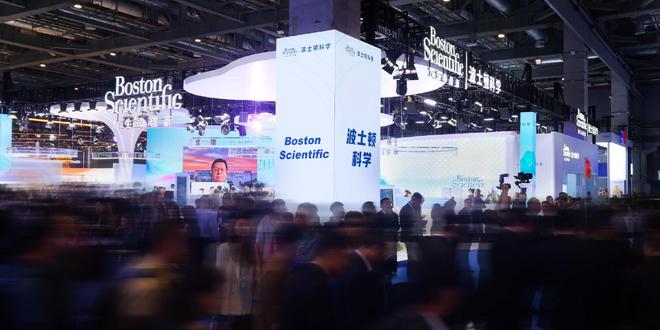
缘起进博,波士顿科学本土化“三级跳”
Jing Ji Guan Cha Bao· 2025-11-10 08:27
Core Insights - The eighth China International Import Expo (CIIE) has commenced in Shanghai, showcasing multinational medical device companies accelerating their localization efforts in China [2][3] - Boston Scientific has exhibited four unreleased products at the expo, all set to be produced at its Shanghai Lingang factory, marking a significant step in its localization journey [3][5] Localization Strategy - Boston Scientific's localization journey has progressed through three stages: from being an importer, to outsourcing production to local firms, and now establishing its own manufacturing facility in China [5][7] - The company has leveraged the Medical Device Registration Holder (MAH) system to facilitate local production, with the Polaris intravascular ultrasound system being a key milestone in this process [5][6] Recent Developments - In 2023, Boston Scientific made a strategic investment in Chinese medical device company Xianruida, enhancing its integration into the local supply chain and expanding its market reach [6][10] - The new factory in Lingang is designed to meet high standards and aims to become a leading smart factory for Boston Scientific globally, with plans for future expansion [6][7] Product Launches - By October 2024, the Lingang factory is expected to be operational, with four innovative products already in the pipeline for production, including the OptiCross/OptiCross HD catheter [9][12] - The AVVIGO+ intravascular ultrasound system, a complex machine developed with significant input from the Chinese team, is set to be one of the first products to be produced locally [12][14] Market Potential - The Chinese market is viewed as highly attractive due to its vast patient demand and the advantages of a local supply chain, which enhances efficiency and innovation [10][15] - Boston Scientific aims to better serve local markets and meet patient needs through its ongoing localization efforts, which are seen as a driving force for the company's growth in China [15]

智能型组织:“一将顶千军”的AI革命 | 人力资本论
Jing Ji Guan Cha Bao· 2025-11-10 07:36
Core Insights - The report by McKinsey outlines the evolution of organizational forms into three stages: Industrial Era (hierarchical and assembly line), Digital Era (cross-functional teams and agile iterations), and AI Era (collaboration between humans and AI agents) [2][3] - The concept of "Agentic Organization" is introduced, emphasizing that organizations will evolve into self-driving entities where human intelligence and AI capabilities co-create value [3][4] Organizational Paradigm Shift - AI is driving the most significant organizational paradigm shift since the Industrial and Digital Revolutions, leading to the emergence of "intelligent organizations" [3][4] - The productivity of a few high-performing individuals, enhanced by AI, will surpass that of traditional large teams, creating a new dynamic where individual strategic thinking is amplified by AI [3][4] Key Conclusions from the Report - Output concentration will increase, with a few efficient individuals achieving productivity levels previously thought impossible [4] - Organizational structures will transition from hierarchical to flat, networked, and highly autonomous team ecosystems [4] - The relationship between humans and machines will evolve from "humans using tools" to "humans and agents co-creating," necessitating a shift in leadership roles [4] - Competitive advantages will shift from scale and process efficiency to cognitive capabilities, data advantages, and collaborative speed [4] Practical Framework for Intelligent Organizations - Five pillars are proposed for building intelligent organizations: 1. **Business Model**: Companies must reconstruct competitive advantages through AI-native channels, AI-first workflows, and protected data ecosystems [7] 2. **Operational Model**: Traditional departmental silos will be replaced by outcome-focused intelligent teams [8] 3. **Governance Mechanism**: Real-time governance will be embedded in workflows, ensuring accountability and compliance [9] 4. **Talent and Culture**: New roles will emerge, and corporate culture will evolve to support human-AI collaboration [10] 5. **Technology and Data**: A dynamic ecosystem will be created where technology capabilities are not limited to IT departments [11] Controversies and Choices - The future of middle management is debated, with some arguing for its disappearance while others see a transformation into more valuable roles [14] - The evolution path of organizations may either be a complete overhaul into AI-native structures or a gradual integration of AI into existing operations [15] - The dual goal of leveraging AI for cost reduction while enhancing value creation is emphasized, advocating for a balanced approach [17] Implementation Steps - Companies should initiate a "flagship project" led by the CEO to drive strategic transformation [18] - Identifying "lighthouse domains" for pilot projects will help demonstrate AI's potential and facilitate broader organizational change [18] - Focus on three core transformations: shifting management focus from oversight to designing workflows, embedding corporate values into operational rules, and adopting an open-ecosystem approach to technology capabilities [19]