Zhong Guo Neng Yuan Wang

Search documents
太空算力中心具备颠覆性优势,HJT或为能源系统最优解
Zhong Guo Neng Yuan Wang· 2026-01-09 01:17
Group 1 - The emergence of "space computing" is driven by the increasing power demand in data centers due to global AI model advancements, leading to the deployment of high-performance satellites in low/mid orbits [1][2] - Space computing offers significant advantages over traditional ground data centers, including higher deployment efficiency, better energy efficiency, and lower cooling costs [1][2] - The "Zhijiang Laboratory + Guoxing Aerospace" collaboration has launched the "Trinity Computing Constellation" with 12 satellites in orbit, aiming for a future capacity of 1000 POPS [1][2] Group 2 - The energy system's weight significantly impacts the overall cost of satellites, with energy costs accounting for 22% of the total satellite economics [2] - Rollable solar arrays combined with flexible batteries are key to the development of space computing systems, with silicon-based HJT batteries being the most suitable for the new generation of rollable solar systems [2] - Companies like NexWafe and Solestial are accelerating their layouts in this area, and HJT batteries are also optimal for perovskite tandem applications, showing long-term evolution potential [2] Group 3 - The current mainstream orbits are LEO and SSO, with SSO providing stable sunlight year-round, making it the best choice for high-power data centers [3] - To address the shortage of orbital resources, space computing platforms are evolving towards large motherships and multi-satellite clusters, with Starcloud constructing a 4km x 4km solar mothership platform [3] - A 10 GW solar capacity can correspond to 448 Google Suncatcher satellites or 2 Starcloud motherships, indicating the scale of deployment needed [3] Group 4 - Investment recommendations focus on companies with overseas customer bases, such as HJT equipment leader Maiwei Co., Ltd. and Gaomei Co., Ltd., which has achieved mass production of 60μm ultra-thin silicon wafers [3]
涨价潮继续演绎,新技术协同发展
Zhong Guo Neng Yuan Wang· 2026-01-09 01:17
Group 1: Lithium Battery Market Insights - As of December 26, lithium carbonate prices reached 107,000 yuan/ton, an increase of 16% from the previous month, while lithium hydroxide prices were at 89,000 yuan/ton, up 11% month-on-month [1][2] - The lithium battery sector has shown strong performance since December 2025, with most segments outperforming the CSI 300 and SSE 50 indices [2] - The lithium battery electrolyte segment led the gains with an 8% increase, followed by positive growth in cathodes, lithium mines, and lithium battery separators [2] Group 2: Electric Vehicle Sales - In November, domestic wholesale sales of new energy passenger vehicles reached 1.57 million units, reflecting a year-on-year increase of 19% and a month-on-month increase of 5% [4] - Cumulative wholesale sales from January to November totaled 12.8 million units, representing a year-on-year growth of 30% [4] Group 3: Sodium Battery Development - The sodium-ion battery industry is entering a phase characterized by significant commercial growth, with applications in energy storage, two-wheeled vehicles, and passenger cars [3] - The sodium battery is evolving from a strategic supplement to lithium batteries to a competitive energy solution in its own right, particularly in energy storage and light-duty applications [3] Group 4: Energy Storage Market Trends - In November, domestic energy storage installations rebounded strongly to 11.6 GWh, marking a year-on-year increase of 31% and a month-on-month increase of 213% [4] - Cumulative installations from January to November reached 83.4 GWh, with a year-on-year growth of 28% [4] Group 5: Production and Pricing Trends - In January 2026, pre-production for batteries, cathodes, anodes, separators, and electrolytes is expected to increase by 29% to 52% year-on-year, despite a slight month-on-month decrease due to the Spring Festival [5] - Prices for lithium battery materials are rising, with cathode materials and electrolytes experiencing widespread increases, while lithium hexafluorophosphate saw a 15% decline [5] Group 6: Investment Recommendations - The lithium battery sector is anticipated to experience a significant price and volume increase in 2026, driven by breakthroughs in solid-state technology [7] - Companies recommended for investment include Ningde Times, Yiwei Lithium Energy, and Keda Li, particularly in segments like lithium carbonate and solid-state technology [7]



青岛国信发展集团增资至50亿,增幅约67%
Zhong Guo Neng Yuan Wang· 2026-01-09 01:15
青岛国信发展(集团)有限责任公司成立于2008年7月,法定代表人为刘鲁强,经营范围包括城乡重大基 础设施项目投资建设与运营、政府重大公益项目的投资建设与运营等。股东信息显示,该公司由青岛市 人民政府国有资产监督管理委员会全资持股。 天眼查工商信息显示,近日,青岛国信发展(集团)有限责任公司发生工商变更,注册资本由30亿人民币 增至50亿人民币,增幅约67%,同时,部分主要人员发生变更。 ...
诚通创新创业投资基金登记成立,出资额10亿
Zhong Guo Neng Yuan Wang· 2026-01-09 01:13
Group 1 - The article reports the establishment of the Chengtong Innovation and Entrepreneurship Investment Fund (Jiaxing) with a capital contribution of 1 billion RMB [1] - The fund's managing partner is Luo Ning, and its business scope includes venture capital and equity investment [1] - The fund is jointly funded by Zhejiang Xingnan Equity Investment Co., Ltd., Chengtong Kechuang Private Fund Management (Beijing) Co., Ltd., and Chengtong Kechuang Investment Fund (Beijing) Partnership (Limited Partnership) [1]

AI算力自主可控的全景蓝图与投资机遇
Zhong Guo Neng Yuan Wang· 2026-01-09 01:00
Core Viewpoint - The semiconductor industry, particularly the AI chip market in China, is projected to experience significant growth, with the market size expected to surge from 142.54 billion yuan in 2024 to 1,336.79 billion yuan by 2029, driven by government support and technological advancements in the domestic AI industry chain [1][2]. Group 1: Market Growth and Opportunities - The AI chip market in China is forecasted to grow from 1,425.37 billion yuan in 2024 to 13,367.92 billion yuan by 2029, indicating a substantial increase in market size [1][2]. - The growth is attributed to strong government policies and the maturation of key technological segments within the domestic AI industry chain, presenting critical development opportunities for local AI chip manufacturers [1][2]. Group 2: Policy Environment - In October 2022, the U.S. implemented export bans on high-end AI chips such as A100 and H100, which has led to ongoing restrictions on China's AI chip manufacturing capabilities [2]. - The Chinese government has raised concerns regarding security risks associated with NVIDIA's H20 computing chip, emphasizing the necessity for self-sufficiency in AI chip technology [2]. Group 3: Domestic AI Industry Chain Structure - The domestic AI industry chain is categorized into three stages: 1. **First Stage**: Focus on self-sufficiency in AI computing, storage, operational, and power chips, with key players including Huawei, Cambricon, and Haiguang Information [3]. 2. **Second Stage**: Emphasis on self-sufficiency in chip manufacturing processes, including wafer fabrication and packaging, which are critical for supporting AI chip demand [5]. 3. **Third Stage**: Development of foundational technologies such as equipment materials, EDA, and IP, with expectations for rapid increases in domestic production rates in the coming years [6]. Group 4: Beneficiary Companies - Companies expected to benefit from the growth in the AI chip market include Haiguang Information, Cambricon, Lanke Technology, Chipone, SMIC, Hua Hong Semiconductor, Northern Huachuang, Zhongwei Company, and Tongfu Microelectronics [6].
一季度制冷剂长协价格落地,关注PVDF价格持续修复
Zhong Guo Neng Yuan Wang· 2026-01-09 00:59
Core Viewpoint - The fluorochemical industry index underperformed compared to the broader chemical and stock market indices in December, indicating a weaker performance in the sector [2][3]. Group 1: Market Performance - As of December 31, the Shanghai Composite Index was at 3968.84 points, up 2.06% from November 28, while the CSI 300 Index rose 2.28% to 4629.94 points [2]. - The Shenwan Chemical Index increased by 4.43% to 4372.39 points, whereas the fluorochemical index rose only 1.89% to 2018.62 points, underperforming the Shenwan Chemical Index by 2.54 percentage points [2]. Group 2: Price Trends - In the first quarter, mainstream refrigerant long-term contract prices are expected to continue rising, with R32 contracts priced at 61,200 yuan/ton (up 1.66%) and R410A at 55,100 yuan/ton (up 3.57%) compared to Q4 2025 [2]. - R134a prices increased to 58,000 yuan/ton, R125 to 47,500 yuan/ton, and R410A to 54,500 yuan/ton, reflecting a month-on-month increase of 2,500 yuan/ton and 1,500 yuan/ton respectively [3]. Group 3: Production and Demand - Domestic air conditioning production is projected to grow by 11% year-on-year in January 2026, with January production at 7.86 million units (up 8.9%) and February at 6.48 million units (down 12.0%) [4]. - The liquid cooling technology is driving demand for fluorinated liquids and refrigerants, as traditional cooling methods reach their limits [4]. Group 4: Industry Developments - PVDF prices are rising due to increased production costs and improved supply-demand dynamics, with mainstream prices for different grades ranging from 54,000 to 60,000 yuan/ton [5]. - Key industry news includes mergers and expansions by companies like Dongyangguang and Dongyue Group, indicating ongoing consolidation and growth in the sector [5]. Group 5: Investment Recommendations - The tightening of refrigerant quotas is expected to maintain a balance in supply and demand for mainstream refrigerants like R32, R134a, and R125, suggesting potential for price increases [6]. - Companies with strong infrastructure and advanced technology in the fluorochemical sector, such as Juhua Co., Dongyue Group, and Sanmei Co., are recommended for investment [6].


“远达环保”更名为“电投水电” 相关资产整合落地
Zhong Guo Neng Yuan Wang· 2026-01-08 13:56
Group 1 - The company, State Power Investment Corporation Yuan Da Environmental Protection Co., Ltd., will change its stock name from "Yuan Da Environmental Protection" to "Dian Tou Hydropower" starting January 13, 2026 [1] - The company has completed the acquisition of 100% equity of Wiling Power and 64.93% equity of Changzhou Hydropower, marking a significant progress in its major asset restructuring [1] - The transition period for the asset acquisition is set from November 1, 2024, to October 31, 2025, with a share issuance price of 6.55 yuan per share, totaling 3.599 billion shares issued [1] Group 2 - Yuan Da Environmental Protection is the only environmental industry platform under State Power Investment Corporation, established in June 1994 and listed on the Shanghai Stock Exchange in November 2000 [2] - The company's core business includes air pollution control, industrial and municipal water treatment, carbon reduction, and energy waste recycling, making it a leading enterprise in industrial flue gas treatment, catalyst manufacturing, and CCUS in China [2]

奋进在高质量发展新征程上——山东能源新能源集团“十四五”回眸
Zhong Guo Neng Yuan Wang· 2026-01-08 13:19
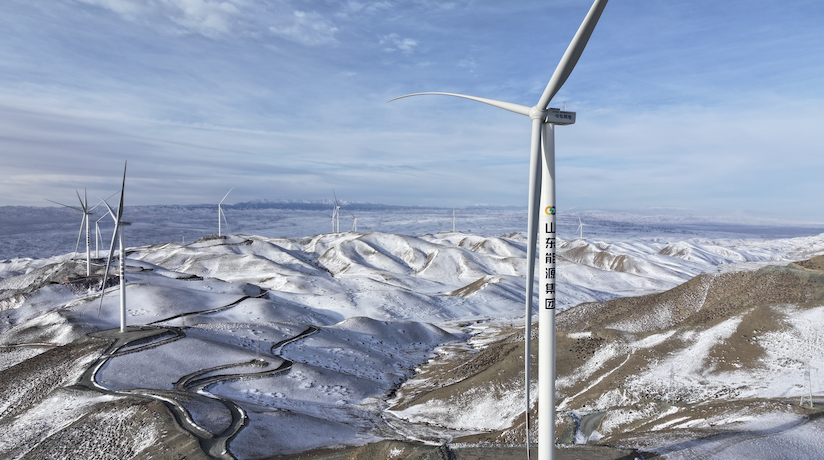
Core Viewpoint - The Shandong Energy New Energy Group is committed to high-quality development and aims to become a leading domestic power energy supplier during the 14th Five-Year Plan period, with significant investments and project advancements in renewable energy [1][3][5]. Group 1: Investment and Growth - During the 14th Five-Year Plan, the company invested a total of 40.8 billion yuan, achieving a total resource capacity exceeding 20 million kilowatts, with 58% from renewable energy sources [5]. - The installed capacity increased from less than 3 million kilowatts to over 10 million kilowatts, marking a growth of 313.4% [5]. - The average annual project commencement scale exceeded 3 million kilowatts, with a target of 4.25 million kilowatts for 2025, achieving an average annual growth rate of over 30% [6]. Group 2: Strategic Development - The company has established a diversified development path, integrating "wind, solar, thermal, and nuclear" energy sources, and has formed a robust industrial system characterized by "two wings, six bases, and one platform" [3][6]. - The company actively participates in national strategies such as the "dual carbon" goals and the "Western Development" initiative, contributing to the stability of the "West-to-East Power Transmission" strategy [7][9]. Group 3: Technological Innovation - The company has focused on innovation by collaborating with equipment manufacturers and research institutions, transforming production sites into research laboratories [10]. - Achievements include the establishment of the first intelligent wind farm in Shandong with primary frequency modulation capabilities and the development of a fully connected factory using 5G technology [10]. Group 4: Corporate Social Responsibility and Recognition - The company has integrated high-quality party building with operational management, creating a matrix of 49 distinctive party-building brands [13]. - The company has received numerous accolades, including the "National Quality Engineering Award" and recognition as a "National Specialized and Innovative 'Little Giant' Enterprise" [13]. Group 5: Future Outlook - Looking ahead to the 15th Five-Year Plan, the company aims to seize opportunities in energy transformation and enhance the quality and efficiency of its renewable energy projects [14]. - The company is positioned to continue its leadership in green, low-carbon, and high-quality development, striving to build a first-class domestic new energy power industry platform [14].

基本面持续承压 汽柴价格承压下行
Zhong Guo Neng Yuan Wang· 2026-01-08 11:00
本周国内汽柴油批发价格延续跌势,整体购销氛围平平。具体来看,周内国际原油震荡下行,新一轮变 化率负向区间波动,消息面维持利空发展。主营炼厂及地炼开工率均维持在高位,国内资源供应充裕。 受季节影响,汽油需求进入淡季。另外,随着气温的下降,基建、工矿活跃度降低,且部分工程单位陆 续收尾,柴油整体需求转弱。且节后归来,进入新一轮的销售周期,主营销售公司新年争取"开门红"行 情,报价纷纷回落,实际成交优惠政策宽松。中下游囤货意愿低迷,多持消库观望态度,市场购销氛围 表现平平。 进入下周,除非有新的地缘冲突升级,否则原油市场依旧被困扰在供应过剩的预期当中。市场对原油后 市预期普遍不佳,下周国际原油价格或低位徘徊,变化率或负向区间发展,零售价呈下调预期,消息面 难寻支撑。供应方面,山东地炼及主营炼厂开工率均存在小幅回升空间,国内成品油资源供应预计进一 步增加。需求方面,受多地低温天气影响,户外用油单位开工负荷下降,柴油需求表现疲软;汽油需求 虽有一定刚性支撑,但由于市场参与者普遍看淡后市,入市采购情绪谨慎,汽油需求难以显著改善。综 合来看,成品油市场偏弱的基本面格局短期难以改变,预计下周汽柴油价格整体将延续震荡下行趋势。 ...
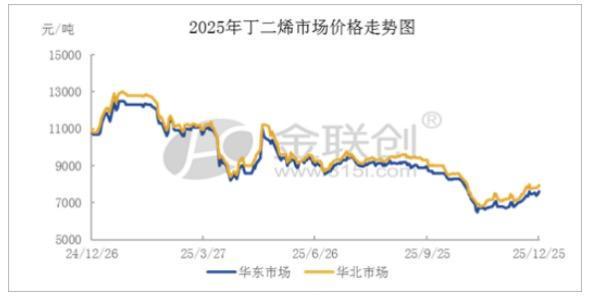
2025年丁二烯市场回顾与展望:供增需缓下的行业变局
Zhong Guo Neng Yuan Wang· 2026-01-08 11:00
Core Viewpoint - The domestic butadiene market in 2025 experienced fluctuations with a significant price drop compared to 2024, influenced by macroeconomic disturbances, new production capacities, high import volumes, and the performance of downstream synthetic futures [2][3][4][5][6] Group 1: Price Trends - In 2025, the average price of butadiene in Shandong was 9689 yuan/ton, a year-on-year decrease of 17.74%, with a high of 13150 yuan/ton and a low of 6800 yuan/ton [2] - The first quarter saw a strong price increase followed by a decline due to geopolitical factors and increased supply from the restart of certain production facilities [2] - The second quarter experienced significant price volatility, with a sharp drop in April due to U.S. tariffs and new production capacities coming online, followed by a recovery in May after positive trade talks between China and the U.S. [3] - In the third quarter, butadiene prices fluctuated widely, with tight supply in July leading to higher prices, but a subsequent easing of supply in August and September caused prices to decline [4] - The fourth quarter saw a "V"-shaped price trend, with prices hitting a low in November before recovering in December due to external market influences and improved demand from downstream synthetic rubber [5] Group 2: Supply and Demand Dynamics - The supply side in 2026 is expected to be robust with new butadiene facilities coming online, including those from Zhongsha Gulei and Huajin Aramco, alongside continued production from facilities that started in late 2025 [6] - Demand may be affected by slowing growth in natural rubber production and ongoing global trade conflicts, which could hinder the improvement of terminal demand [6] - The potential for increased butadiene exports due to the planned exit of some overseas ethylene facilities and the possibility of domestic facilities shifting to lighter hydrocarbons should be monitored closely [6]