Zhong Guo Neng Yuan Wang

Search documents
波司登2299元羽绒服充绒量86克
Zhong Guo Neng Yuan Wang· 2026-01-09 05:56
Group 1 - The core issue raised by consumers is the high price of a Bosideng down jacket, priced at 2099 yuan, which contains only 86 grams of down filling, leading to discussions about brand premium pricing [1] - Bosideng Co., Ltd. was established in June 1994, with a registered capital of 480 million yuan, and its business scope includes the export of self-produced clothing, down products, and bedding [1] - The company is jointly held by Kangbo Holdings Group Co., Ltd., Jiangsu Kangbo Investment Co., Ltd., and Gao Dekang, and has made over 40 external investments, with more than 30 companies currently in operation [1] Group 2 - Bosideng has registered multiple copyrights for advertising slogans, including "Authority Expert in Down Jackets," "Expert in Cold-Resistant Clothing in China," and "First Brand of Down Jackets (Cold-Resistant Clothing)" [1]
江长项目(长寿段)迎来新进展
Zhong Guo Neng Yuan Wang· 2026-01-09 05:17
主线14号桥左幅全长454米,共四联。桥梁上跨晏家联络道、现状河道和泄洪通道。桥梁左幅标准宽度 均为14.25米,路幅组成均为0.75米防撞护栏+12米车行道+1.5米人行道。。第一、二联上部结构采用现 浇预应力混凝土连续箱梁,第三联上部结构采用变截面现浇预应力混凝土连续箱梁,第四联上部结构采 用预制预应力混凝土T梁、结构及桥面均连续,下部结构采用圆墩加盖梁形,(桩承)重力式U型桥台。右 幅全长492米,共五联。第一、二联桥梁右幅标准宽度为13.5米、第三、四联桥梁右幅标准宽度为18.25 米、第五联桥梁右幅标准宽度为14.25米,路幅组成均为0.75米防撞护栏+(变化宽度)车行道+1.5米人行 道。第一、二和五联上部结构采用预制预应力混凝土T梁、结构及桥面均连续,第三联上部结构采用现 浇预应力混凝土连续箱梁,第四联上部结构采用变截面现浇预应力混凝土连续箱梁,下部结构采用圆墩 加盖梁形,(桩承)重力式U型桥台。 主线12号桥至收费站段单幅净宽12米,路面总计厚度总计0.8米,水泥稳定碎石层分为垫层、底基层、 基层,沥青混凝土面层分为上中下三层,目前摊铺工作已全面完成。 新年伊始,由重庆城投江长建设有限公司投资 ...
锂钴镍需求2050年增超10倍!关键矿产告急,中国靠数字化找矿破局?
Zhong Guo Neng Yuan Wang· 2026-01-09 02:38
Core Viewpoint - The global political and economic landscape is undergoing profound adjustments, with energy and mineral resources becoming increasingly strategic for national economies. Experts at the recent high-end forum emphasized the need for technological innovation and structural optimization to enhance the supply security and resilience of energy and mineral resources in China [1]. Group 1: Demand for Key Minerals - The demand for strategic mineral resources is rapidly increasing due to advancements in artificial intelligence, quantum technology, new energy, and new materials. The overall demand for mineral resources is on the rise, particularly as traditional manufacturing transitions to intelligent manufacturing [2]. - The demand for lithium, cobalt, and nickel is expected to grow more than tenfold by 2050, while the demand for copper and aluminum will continue to rise until it peaks after 2040. The value of minerals required for intelligent manufacturing is projected to increase by 3 to 7 times by 2050 [2]. - The supply of major minerals is highly concentrated in a few countries, with 80% of iron ore licenses in Australia and Brazil, and over 90% of cobalt production in the Democratic Republic of Congo. This concentration poses significant risks to supply chain security [2]. Group 2: Digitalization and Technological Innovation - To address challenges, enhancing domestic resource self-sufficiency and industry chain resilience is essential. Experts agree on the need for technological leadership to explore resource potential and improve utilization efficiency [3]. - Since the 14th Five-Year Plan, the Ministry of Natural Resources has invested nearly 450 billion yuan in new exploration strategies, achieving significant breakthroughs in resource security and structural optimization [3]. - Advanced technologies such as big data, artificial intelligence, and quantum computing are providing new approaches for precise mineral exploration and resource resilience assessment [4]. Group 3: Building a Resilient Resource Security System - Experts propose constructing a high-resilience resource security system through policy mechanisms, international cooperation, and talent development. This includes simplifying approval processes and promoting social capital participation in resource development [5]. - The current global mineral issues have evolved into a systemic problem involving national security, industrial competition, and technological sovereignty. There is a need for a non-confrontational multi-cooperation network to enhance global supply chain resilience [5]. - By 2035, China's energy supply security is expected to improve, but challenges remain in green production and resource recycling. The future development of mineral resources is anticipated to be characterized by excess quantity, lagging quality, structural imbalance, and leading efficiency [6].
通用航空市场稳步发展,低空运营未来可期
Zhong Guo Neng Yuan Wang· 2026-01-09 02:37
Core Viewpoint - The general aviation market is experiencing steady growth, with annual deliveries exceeding 4,000 aircraft for two consecutive years, and projected deliveries for 2024 are 4,197 units with a total value of $31.9 billion [1][3]. Global Market Overview - North America accounts for 70.4% of global deliveries, while the Asia-Pacific region shows the fastest growth [1][3]. - Fixed-wing aircraft dominate the market, representing 75.3% of global deliveries, with a trend towards higher-value models [1][3]. - According to Global Market Insights, the global general aviation market is expected to reach $40.2 billion by 2029, with a compound annual growth rate (CAGR) of 4.72% [1][3]. Industry Dynamics - Traditional general aviation aircraft manufacturing is currently led by companies in Europe and the United States, with a high market concentration exceeding 50% for fixed-wing aircraft and helicopters [3]. - The top three manufacturers of fixed-wing aircraft in 2024 are Cirrus Aircraft, Textron Aviation, and Piper Aircraft [3]. - Chinese companies are increasingly participating in the international market through acquisitions, such as Wan Feng Aviation's acquisition of Diamond Aircraft and Aviation Industry Corporation of China's acquisition of Cirrus Aircraft, yielding positive results [3]. Low-altitude Application Expansion - The low-altitude application scenarios are gradually expanding, with high entry barriers and significant Matthew effects, focusing on maritime transport, port piloting, and logistics delivery in the short term [4]. - General aviation operations are positioned in the midstream of the general aviation value chain, characterized by significant business differentiation and complex operational environments, which require high safety standards and present substantial financial, technical, and operational barriers [4]. - The development path for low-altitude applications in China is clear: starting with cargo operations before moving to passenger transport, and initially focusing on remote areas before integrating urban operations [4]. - As new aircraft technologies mature, reductions in acquisition, energy, personnel, and operational costs are expected to enhance the commercial viability of low-altitude operations [4]. - Compared to the U.S. industry, China's general aviation sector has immense growth potential, with significant gaps in infrastructure, aircraft numbers, and flight usage structures [4].
欧盟激进、美沙反对、中国务实!IMO净零表决延期背后的航运规则争夺战
Zhong Guo Neng Yuan Wang· 2026-01-09 02:20
Core Viewpoint - The International Maritime Organization (IMO) has postponed the vote on the net-zero framework for global shipping emissions by one year, indicating a slowdown in the decarbonization process of the shipping industry and reflecting complex negotiations among various stakeholders [1][2]. Group 1: Delay of the Net-Zero Framework - The IMO approved a draft net-zero framework in April 2025, aiming for the shipping industry to achieve net-zero greenhouse gas emissions by 2050, but the voting scheduled for October 2025 has been delayed by one year due to opposition from multiple countries, particularly the United States [2][3]. - The delay is attributed to procedural disputes and differing positions among developed and developing countries regarding emission responsibilities, cost-sharing, and technological pathways [2][6]. Group 2: Compliance System and Costs - The net-zero framework draft applies to ocean-going vessels over 5,000 gross tons, which account for over 85% of global shipping emissions, and includes stringent greenhouse gas intensity standards and a carbon pricing mechanism [3][5]. - The compliance system establishes annual targets for reducing greenhouse gas intensity (GFI) and introduces remedial units for vessels exceeding emissions limits, with prices set at $100 per ton for Tier 1 units and $380 per ton for Tier 2 units [4][5]. Group 3: Stakeholder Dynamics - The negotiations surrounding the net-zero framework have evolved into a deeper contest over the future rules of global shipping and the competitiveness of green economies, with developed countries seeking to leverage their technological advantages [6][7]. - Developing countries, represented by China, advocate for a balanced approach that recognizes different developmental stages and emphasizes the need for technology transfer and capacity building to ensure equitable participation in the green transition [7][8]. Group 4: Strategic Implications of the Delay - The postponement of the vote reflects the fragility of global climate governance consensus and may lead to uncertainty in investment decisions related to low-carbon fuel supply chains and vessel technology upgrades [8]. - The outcome of the net-zero framework will depend on resolving key issues in the coming year, including the willingness of developed countries to support developing nations and the ability of developing countries to propose constructive transition plans [8].
中石化中航油官宣重组,抢占绿色航空战略高地
Zhong Guo Neng Yuan Wang· 2026-01-09 02:12
Core Viewpoint - The merger between China Petroleum & Chemical Corporation (Sinopec) and China Aviation Oil Group (CAOG) is a historic integration that connects the entire aviation fuel supply chain from crude oil refining to airport refueling, enhancing energy security and supporting the green transition of the aviation industry [1][2]. Group 1: Strategic Advantages - Sinopec is the world's leading refiner and the top supplier of aviation kerosene in China, producing over 26 million tons of aviation fuel in 2023 [2]. - CAOG dominates the procurement, storage, and refueling of aviation fuel across major airports in China, acting as a bridge between refineries and aircraft [2]. - The merger aims to create a more efficient aviation fuel supply chain, allowing Sinopec to expand its market share through CAOG's distribution network while providing CAOG with stable upstream resource supply [2][3]. Group 2: Operational Efficiency - The integration will eliminate intermediary steps, facilitating the entry of Sinopec's aviation fuel products into the market and improving supply chain efficiency [3]. - CAOG will no longer need to independently procure aviation fuel from multiple refining companies, significantly shortening the supply chain [3]. - This deep integration of refining and terminal operations is expected to lower supply costs and enhance operational efficiency [3]. Group 3: Green Aviation Fuel Development - The merger is positioned to enhance the research, production, and application of Sustainable Aviation Fuel (SAF), with Sinopec being a pioneer in SAF technology and production [5]. - CAOG's control over airport storage and refueling systems is crucial for the market entry of SAF, creating a complete ecosystem for SAF application [5]. - The collaboration is anticipated to accelerate the development and commercialization of SAF, aligning with China's carbon neutrality goals [6]. Group 4: Market Dynamics and Future Outlook - The merger is expected to reshape the competitive landscape of the aviation fuel market in China, compelling other companies to seek new differentiation or collaboration strategies [8]. - By 2040, China's aviation fuel consumption is projected to reach approximately 75 million tons, with SAF's share expected to grow rapidly [6]. - The integration reflects a broader trend in the energy sector towards chain integration and collaborative ecosystems, enhancing resilience and profitability across the entire industry [8].

伊泰集团举办首届飞书效率先锋大赛 以数字化创新赋能高质量发展
Zhong Guo Neng Yuan Wang· 2026-01-09 01:27
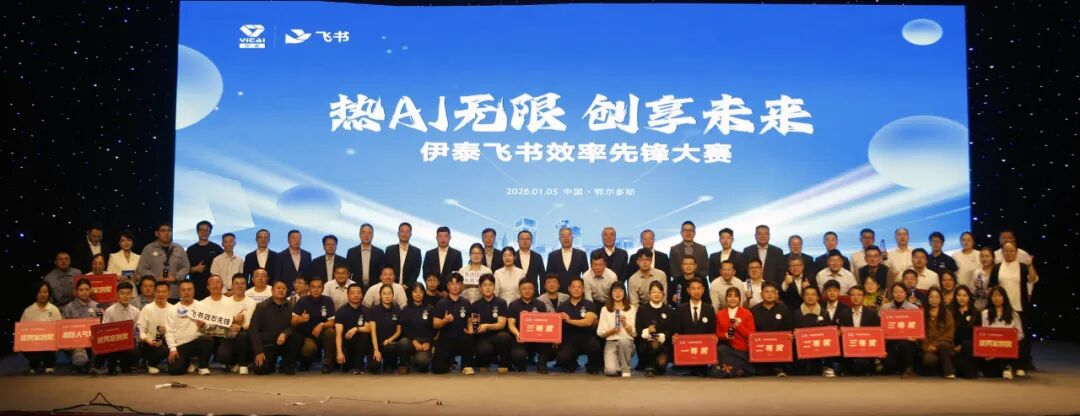
Core Insights - The event held by Yitai Group on January 5 aimed to deepen the integration of the Feishu office platform with business scenarios and stimulate digital innovation potential among all employees [2] - The competition showcased successful practices in digital transformation and highlighted the importance of digital tools in enhancing organizational efficiency and innovation [10] Group 1: Event Overview - The Feishu platform has been fully implemented at Yitai Group, achieving significant results with over 5,000 activated users and an activation rate of 98%, maintaining a stable activity level of 85% [4] - The competition featured 16 teams from various business areas, demonstrating the practical value of Feishu tools in improving efficiency, optimizing processes, and assisting decision-making [4] Group 2: Awards and Recognition - The "Yiluchangxing" team won first place for outstanding digital innovation, while "Yiqi Guanpeisheng. Xiaoyong Qixianfeng" and "Hua'an Xianfengdui" received second place [4] - An award ceremony recognized the establishment of the "Yitai-Feishu Efficiency Pioneer Official Alliance Enterprise," emphasizing the collaboration's achievements and future expectations [8] Group 3: Future Directions - Yitai Group's leadership expressed the need for a strategic collaboration mechanism, joint talent development, and the use of AI tools to enhance operational efficiency and management [8] - The company aims to integrate digital application results into performance evaluation systems to foster a culture of participation and excellence among all employees [10]

供应链安全事件催化,半导体材料/设备自主可控有望提速
Zhong Guo Neng Yuan Wang· 2026-01-09 01:21
Core Viewpoint - The semiconductor industry is experiencing a dual-driven investment logic due to heightened external risks and internal capacity expansion, leading to accelerated self-sufficiency in semiconductor materials and equipment [2][4]. Group 1: External Risks and Market Dynamics - Increasing geopolitical risks are prompting a reevaluation of reliance on foreign technology, particularly in critical supply chain segments [2][3]. - The recent ban on dual-use items to Japan is expected to enhance domestic manufacturers' willingness to adopt local solutions, especially in "bottleneck" areas [2][4]. Group 2: Investment and Capital Movements - Recent capital movements include Longxin's IPO aiming to raise approximately 30 billion yuan, SMIC's Southern factory increasing investment by over 7 billion USD, and the Big Fund increasing its stake in SMIC, indicating a comprehensive acceleration in capital layout [2][3]. - The integration of mature logic rights by major fab plants signifies a robust long-term fundamental outlook for the industry [2]. Group 3: Material and Equipment Developments - Domestic materials have transitioned from "single-point breakthroughs" to a "systematic support" phase, with a focus on high-end photolithography materials where domestic production remains low [3][4]. - Key domestic material leaders are proactively building capacity to meet future order demands, ensuring alignment with downstream production needs [3]. Group 4: Beneficiary Companies - Beneficiary companies in materials include Tongcheng New Materials, Jingrui Electric Materials, Nanda Optoelectronics, and others, while in equipment, companies like Changchuan Technology and ChipSource Micro are positioned to benefit from the evolving landscape [5].
2025年内蒙古能源系统数据出炉!装机规模、外送电量、绿氢产量等多项指标全国领先
Zhong Guo Neng Yuan Wang· 2026-01-09 01:21
Core Insights - Inner Mongolia's energy system aims for over 5% growth in industrial added value by 2025, with significant investments exceeding 300 billion yuan in major energy projects, accounting for 35% of the region's fixed asset investment [1] - The region has successfully completed a coal supply task of 795 million tons and has the highest total installed power capacity in the country, surpassing 300 million kilowatts, with electricity exports reaching 350 billion kWh for 21 consecutive years [1] - Wind power capacity has exceeded 10 million kilowatts, with a total of 35 million kilowatts of new energy capacity added, leading to a total of over 170 million kilowatts and a generation of 270 billion kWh, maintaining the top position in the country for over a decade [1] Energy Supply and Infrastructure - The power system's supporting and regulating capacity has been enhanced through the completion of the "Seven Horizontal and One Vertical" and "Four Horizontal and Six Vertical" 500 kV main grid frameworks in eastern and western Inner Mongolia [2] - New energy storage capacity has exceeded 17 million kilowatts, marking a 144% year-on-year increase [2] Development of New Productive Forces - The proportion of green and intelligent coal mines has reached 61% and 74% respectively, with ten technological equipment in hydrogen energy, energy storage, and new power systems recognized as major national equipment [3] - Green hydrogen production has surpassed 10,000 tons, leading the nation [3]
包钢绿色除尘技术成功出海
Zhong Guo Neng Yuan Wang· 2026-01-09 01:19
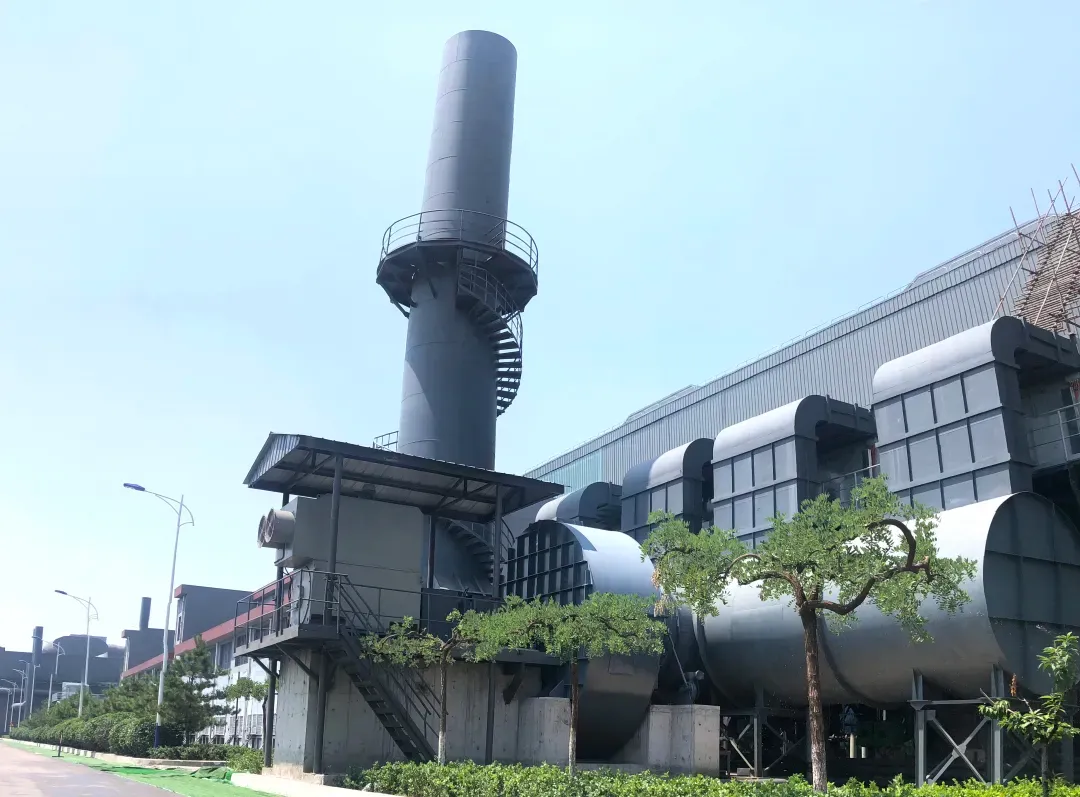
Core Insights - Sen Ding Company has successfully won a dust removal project in Vietnam, marking a significant advancement in its overseas green technology output following its entry into the European market with a mining dust removal project in Serbia [1][3] Group 1: Project Achievements - The dust removal system won in Vietnam utilizes CFD flow field simulation and BMI modeling technology for precise equipment structure optimization [1] - The self-developed "sonding" brand plastic burning board product can stabilize dust emission concentration below 5 milligrams per standard cubic meter, exceeding current international dust removal emission standards [1] Group 2: Market Expansion - Sen Ding Company has previously met stringent requirements for dust removal efficiency, energy consumption control, and safety standards in the European market, successfully signing contracts for dust removal projects in Serbia, South Korea, and India [3] - The dust removal technology has been applied in over 200 industrial applications domestically and internationally, covering key sectors such as steel, mining, and power [3] Group 3: Strategic Development - Baogang Group promotes green development and leverages its full industry chain advantages to cultivate green equipment manufacturing, establishing a new development path for green solution output [3] - Sen Ding Company holds over 30 patents and has led the formulation of industry standards for plastic burning board dust collectors, enhancing its development foundation [3] - The company aims to deepen technological innovation and international cooperation, contributing to Baogang Group's goal of becoming a world-class enterprise [3]