Zhong Guo Jing Ying Bao

Search documents
星空计划造车提速:11家新公司密集成立 CES2026将迎产品首秀
Zhong Guo Jing Ying Bao· 2025-12-28 08:26
("星空计划汽车"公众号称将亮相CES2026。"星空计划汽车"公众号/图) 追觅创始人打造的汽车新品牌将在即将到来的国际消费类电子产品展览会(以下简称"CES2026")迎来 首秀。 12月26日,"星空计划汽车"公众号发布一则推文。星空计划汽车在推文中表示,多年蓄力,亟待登 场,"让我们CES见!" 《中国经营报》记者注意到,企查查数据显示,星空计划(上海)汽车科技有限责任公司实际控制人为 追觅科技创始人兼CEO俞浩,其通过多层持股结构实际控制星空计划约77.76%的股权。 中经记者 杨让晨 石英婧 上海报道 2025年8月28日,追觅科技官宣造车,并表示将打造世界上速度最快的车,首款超豪华产品对标布加迪 威龙。 彼时,追觅科技方面表示,在新能源汽车高端化、全球化浪潮加速的背景下,真正能在国际层面树立认 知的中国豪华品牌仍屈指可数。"在这一稀缺窗口期中,公司看到了机遇,依托在智能硬件领域积累的 技术实力、全球渠道与品牌认知,实现从'智能家电'到'超豪华电动车'的战略跨越。" 值得注意的是,在12月23日—25日三天时间内,星空计划密集成立新公司。企查查数据显示,星空计划 (上海)汽车科技有限责任公司在上述 ...


耐克在华失速 高层坦言需调整策略
Zhong Guo Jing Ying Bao· 2025-12-28 04:57
Core Viewpoint - Nike is facing significant challenges in the Greater China market, necessitating a strategic overhaul to enhance brand differentiation and adapt to local consumer insights [1][3]. Financial Performance - For Q2 of FY2026 (September-November 2025), Nike reported total revenue of $12.427 billion, a year-on-year increase of approximately 1%, while net profit fell to $0.792 billion, a decline of 32% [1]. - Revenue from the Greater China region was $1.423 billion, down about 17% year-on-year, with direct sales (Nike Direct) declining by 18% and digital sales (Nike Digital) dropping by 36% [1]. - Earnings before interest and taxes (EBIT) in the Greater China region halved, decreasing by 49% [1]. Challenges Faced - Nike's management highlighted several ongoing challenges in the Greater China market, including decreased foot traffic, lower sell-through rates, and aging channel inventory [2]. - The brand's frequent discounting in digital channels has weakened its market influence, leading to increased discount rates, higher return rates, and rising costs associated with inventory clearance [2]. - In the fiscal quarter ending August 31, 2025, revenue in the Greater China region also declined to $1.512 billion, a 10% year-on-year drop [2]. Strategic Adjustments - Nike is implementing various measures in the Chinese market, including store upgrades, a focus on sports, reduced promotions, self-service inventory clearance, and adjusted purchasing plans [2]. - Total inventory has decreased by double digits compared to the previous year, with a 20% reduction in inventory items [2]. - Despite a 35% year-on-year drop in sales during the "Double 11" shopping festival, management indicated this was in line with their expectations [2]. Organizational Changes - Nike is undergoing a structural transformation, eliminating the positions of Chief Technology Officer and Chief Commercial Officer, while creating a new Chief Operating Officer role [3]. - The new COO will oversee end-to-end operations, including the technology department, and regional leaders will report directly to the CEO [3]. - The company is reducing manpower in stores and enhancing the management of product displays and retail presentation [3]. Competitive Landscape - The decline in Nike's performance in China is attributed to increasing competition, with local brands capturing approximately 60% of the market share among the top 20 brands [5]. - The 2025 version of a report by McKinsey and WFSGI indicates that traditional sports brands have lost 3% of market share from 2019 to 2024, while challenger brands are rising through targeted cultural marketing and omnichannel strategies [5]. - Local brands like Anta and Li Ning are gaining traction by investing in R&D and aligning closely with Chinese cultural symbols, creating a new consumer paradigm that emphasizes quality, cultural recognition, and price advantages [6]. Market Dynamics - The rise of domestic sports brands and the outdoor market is exerting pressure on Nike's market position [6]. - Local brands are perceived to better understand consumer psychology, focusing on product performance, unique design, and alignment with consumer values [6]. - Nike's recent product strategy has been criticized for being rigid, with a tendency towards luxury pricing, which contrasts with the more competitively priced offerings from local brands [6].

康师傅二代将接任CEO 亟须打破“增利不增收”局面
Zhong Guo Jing Ying Bao· 2025-12-28 04:52
Core Viewpoint - The transition of CEO position to Wei Hongcheng, a member of the founding family, indicates a complete control of ownership and management by the Wei family in Kang Shifu, amidst challenges in revenue growth despite profit increases [2][4][6]. Group 1: CEO Transition - Kang Shifu announced that Wei Hongcheng will become CEO starting in 2026, succeeding Chen Yingran, who is retiring [3]. - Wei Hongcheng, aged 43, has a strong educational background and has been leading Kang Shifu's beverage division since 2019, achieving steady revenue and profit growth [3][5]. - The change in leadership reflects a long-planned succession strategy within the Wei family, consolidating power in the hands of the second generation [4]. Group 2: Financial Performance - In the first half of 2025, Kang Shifu reported a revenue of 400.92 billion yuan, a decrease of 2.7% year-on-year, while net profit attributable to shareholders increased by 20.5% [6]. - The company's gross profit margin improved by 2.8% year-on-year, indicating effective cost management despite declining revenues [6]. - The convenience food and beverage segments are facing revenue declines, with instant noodle revenue dropping by 2.5% in the first half of 2025 [5][6]. Group 3: Market Challenges - Kang Shifu's market share in the instant noodle sector decreased from 36% in 2020 to 31% in 2024, while competitors like Nongfu Spring have seen significant growth [5]. - The beverage segment also faced challenges, with a decline in market share in the ready-to-drink tea category from 32% in 2022 to 29% in 2024 [5]. - The company is experiencing a reduction in the number of distributors, which fell from 76,875 in 2023 to 63,806 in the first half of 2025, indicating potential issues with its pricing strategy [6][7]. Group 4: Strategic Insights - Analysts suggest that Kang Shifu's pricing strategy, which involved significant price increases, may have contributed to the loss of distributors and could impact overall sales performance [6][7]. - The company is urged to focus on cost control, supply chain optimization, and product innovation to address market challenges and consumer demand [7]. - Future opportunities may lie in health-oriented products and understanding consumer trends better to drive innovation and growth [7].

361°品牌日宣布两项合作:续约亚奥理事会 牵手天津体育学院
Zhong Guo Jing Ying Bao· 2025-12-28 04:09
Core Insights - 361° announced a series of technological sportswear products and two strategic partnerships on its brand day, December 26, 2025 [1] - The partnerships include a renewed collaboration with the Olympic Council of Asia and a strategic agreement with Tianjin University of Sport to enhance industry-academia cooperation [1] Group 1: Strategic Partnerships - The partnership with the Olympic Council of Asia has been ongoing since the 2010 Guangzhou Asian Games, highlighting a long-term commitment to Asian sports development [1] - The Secretary General of the Olympic Council of Asia praised 361° for its contributions to the development of sports in Asia and expressed expectations for continued professional support and resource empowerment for Asian sports events [1] - 361° aims to strengthen its position as a leading Chinese sports brand by focusing on globalization, professionalism, and youthfulness [1] Group 2: Collaboration with Tianjin University of Sport - A strategic cooperation agreement was signed with Tianjin University of Sport, which has a strong research background and nearly 70 years of history [1][2] - The establishment of the "Tianjin University of Sport 361° Sports Technology Innovation Center" and a collaborative framework of "1 Academy + 1 Platform + 4 Projects" was announced [2] - The collaboration aims to integrate 361°'s experience in professional sports equipment with the university's research capabilities to accelerate the application of scientific research outcomes [2]
津保铁路开通运行10周年 赋能京津冀高质量发展
Zhong Guo Jing Ying Bao· 2025-12-27 16:05
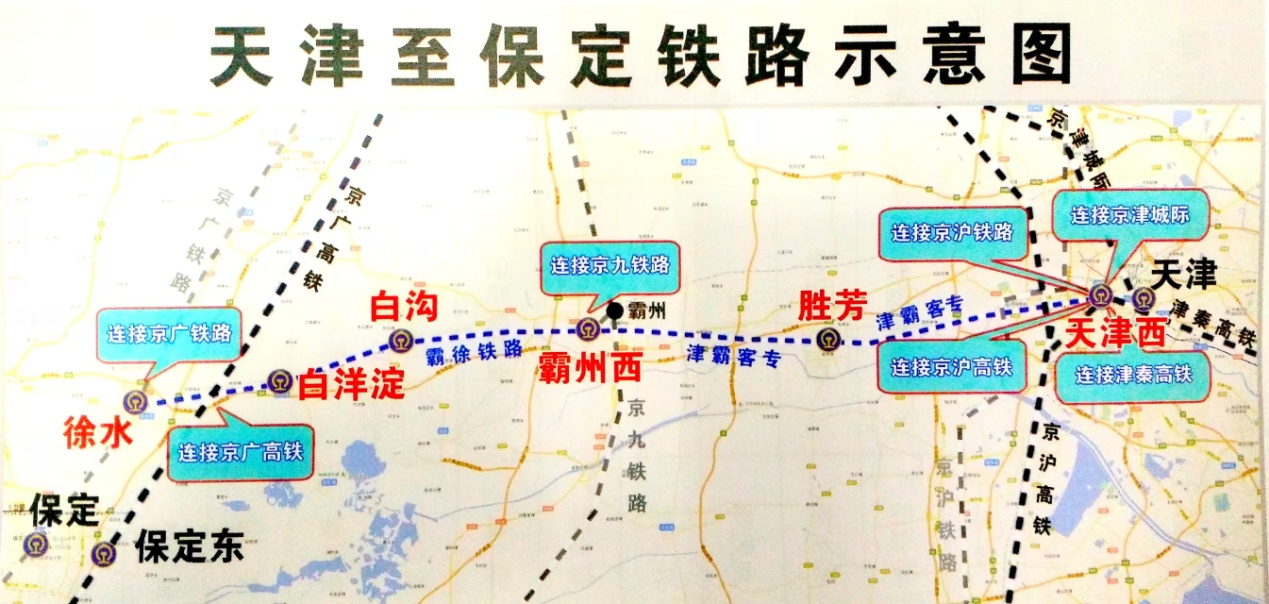
Core Viewpoint - The Tianjin-Baoding Railway has significantly transformed regional transportation and facilitated the collaborative development of the Beijing-Tianjin-Hebei area over the past decade, marking a milestone in the region's integration and connectivity [2][3]. Group 1: Operational Growth - The railway's capacity has increased dramatically, with the number of trains rising from 4.5 pairs at the start to 48 pairs currently, representing a 970% increase [2]. - Daily passenger volume has grown from under 2,000 to 4,400, a 120% increase, with a peak of 60,200 passengers on October 3, 2025, setting a new record [2]. - By November 30, 2025, the total number of passengers transported reached 98.073 million, nearing 100 million, supporting the alleviation of non-capital functions and enhancing public travel convenience [2]. Group 2: Regional Impact - The opening of the Tianjin-Baoding Railway is a key milestone in the Beijing-Tianjin-Hebei collaborative development plan initiated in 2015, facilitating seamless connections with existing rail networks [3]. - Travel times have been significantly reduced, with journeys from Tianjin to Baoding cut from 2.5 hours to under 1 hour, and from Tianjin to Shijiazhuang reduced from 3 hours to 1.5 hours [3]. - The railway has played a crucial role in the emergence of the Xiong'an New Area, contributing to the deepening of collaborative development in the region [3][4]. Group 3: Future Prospects - The Tianjin-Baoding Railway is positioned to continue serving as a transportation hub, promoting new achievements and breakthroughs in the collaborative development of the Beijing-Tianjin-Hebei region in the new era [4].
人形机器人与具身智能标准化技术委员会正式成立
Zhong Guo Jing Ying Bao· 2025-12-27 15:24
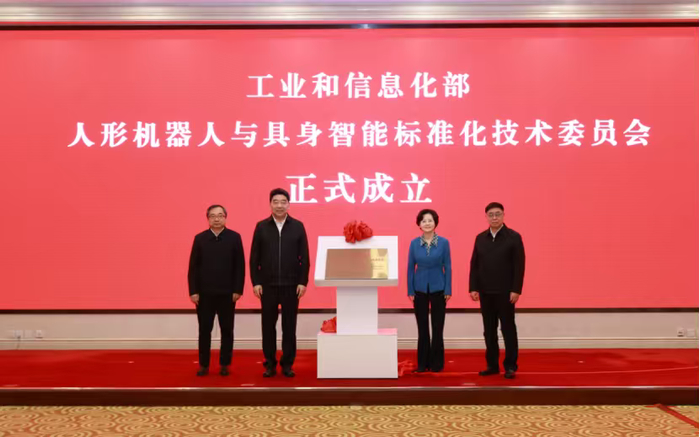
Core Viewpoint - The establishment of the Standardization Technical Committee for Humanoid Robots and Embodied Intelligence marks a significant step in advancing the standardization efforts in China's humanoid robot and embodied intelligence industry, which is experiencing rapid growth [3][4]. Group 1: Establishment and Purpose of the Committee - The Standardization Technical Committee was officially established on December 26, 2023, in Beijing, with key officials from the Ministry of Industry and Information Technology and other organizations present at the unveiling ceremony [1][2]. - The committee aims to systematically promote standardization in humanoid robots and embodied intelligence, addressing the urgent need for standards in various critical areas [3][4]. Group 2: Identified Standard Gaps - The most pressing standard gaps identified include those related to embodied data, operational capabilities, core component interfaces, simulation and testing, and safety ethics, which directly impact product compatibility, safety, and scalability [4][5]. - The committee plans to prioritize the development of standards for key interfaces, testing evaluations, and safety ethics, while also establishing a collaborative platform for industry, academia, and research [4][5]. Group 3: Categories of Standards Needed - The urgent standard gaps have been categorized into four types: foundational definition standards, intelligent standards focusing on the perception-decision-execution loop, adaptation standards to enhance data reusability, and safety standards to ensure mechanical, functional, and information safety [5][6]. - The committee emphasizes the need for a unified and open standard system that integrates artificial intelligence standards with humanoid robot standards [5][6]. Group 4: Balancing Standardization and Innovation - The committee faces the challenge of balancing "unified standards" with "inclusive technological innovation," especially in a rapidly evolving industry [6][7]. - It is essential to establish basic safety and reliability standards while allowing for diverse technological exploration and innovation [6][7]. Group 5: Ethical and Safety Standards - Ethical and safety standards for humanoid robots are increasingly becoming a focal point, necessitating parallel development alongside technical standards [7]. - The committee highlights the importance of addressing both physical safety and psychological ethical safety, as well as ensuring data privacy through standardized technical measures [7].

海南封关首周市场活跃 海口海关回应五大核心关切
Zhong Guo Jing Ying Bao· 2025-12-27 14:15
Core Viewpoint - The Hainan Free Trade Port has officially implemented a comprehensive policy system characterized by "one line open, two lines controlled, and freedom within the island," aimed at enhancing trade facilitation and regulatory efficiency [1][2]. Group 1: Policy Implementation and Impact - The first week of policy implementation saw over 400 million yuan in goods benefiting from the "zero tariff" policy, with duty-free consumption on the island increasing by 54.9% year-on-year [1]. - The "zero tariff" policy has expanded significantly, increasing the number of eligible tariff-free items from 1,900 to approximately 6,600, covering about 74% of all goods, a 53% increase compared to before the closure [3][4]. - The policy allows for the free circulation of "zero tariff" goods and their processed products among eligible entities, promoting industrial competitiveness and cluster effects [3]. Group 2: Regulatory Innovations - The customs authority has introduced a "smart + credit" regulatory model, which includes a smart regulatory platform that enables "one-time declaration, one-time inspection, and one-stop release" [2][6]. - The customs has established a collaborative mechanism with various departments to enhance data sharing and joint management, focusing on comprehensive governance and security [3][9]. - The introduction of electronic tracking for "zero tariff" goods and simplified customs procedures aims to improve operational efficiency and reduce costs for businesses [4][8]. Group 3: Industry Development Opportunities - The optimized "processing and value-added" tax exemption policy is expected to lower operational costs for enterprises and stimulate local industries such as agriculture and aquaculture [8]. - The policy changes facilitate the extension and collaboration of industrial chains, allowing for cumulative rules to apply across the entire island, thus promoting synergistic development [8]. - The regulatory framework supports the growth of local特色产业 by counting the value of self-produced goods towards the value-added calculation, making it easier for companies to meet the required thresholds for tax exemptions [8].
全国无偿献血者达1.4亿人 卫健委呼吁各单位每年组织员工无偿献血
Zhong Guo Jing Ying Bao· 2025-12-27 13:58
《中国经营报》记者了解到,国家卫健委12月17日发布并正在公开征求意见的《中华人民共和国献血法 (修订草案征求意见稿)》中,将"发挥制度优势,加大团体献血组织动员力度"作为一项重要拟增补内 容。征求意见稿还提出,拟延长献血年龄和缩短全血捐献间隔期,将献血者年龄上限由55周岁延长至65 周岁,并将两次全血采集间隔期由不少于6个月缩短为不少于90天。 血费报销跑腿多、周期长,曾是困扰无偿献血者及其家庭的突出问题。今年以来,国家卫健委推进"血 费减免一次都不跑",献血者无论在何地献血、用血,均可通过线上方式办理费用减免。同时,各地也 从多个维度发力,积极探索完善献血者权益保障机制。 "我国团体无偿献血仍有较大潜力,希望党政机关、企事业单位和社会组织每年都能组织员工参与团体 无偿献血,为保障血液采供用平衡作出积极贡献。"12月26日,在国家卫健委新闻发布会上,国家卫健 委医疗应急司司长高光明呼吁更多机构和个人加入团体无偿献血队伍,为亿万患者生命健康筑牢防线。 高光明介绍,自1998年《中华人民共和国献血法》实施以来,全国无偿献血者已达1.4亿人,累计献血 3.08亿人次,有效保障了临床用血需求和血液安全。 不过,团体 ...
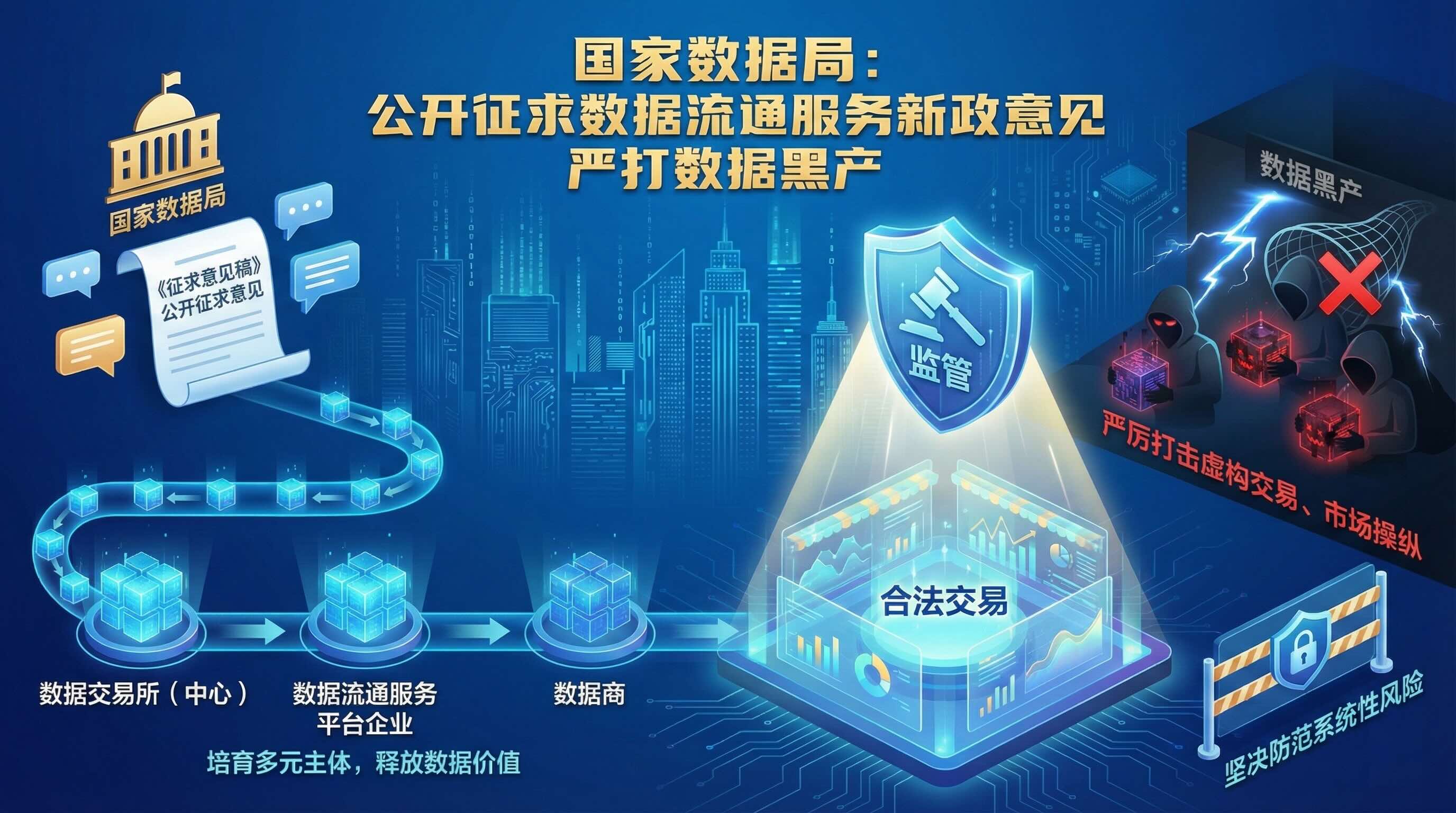
国家数据局:公开征求数据流通服务新政意见 严打数据黑产
Zhong Guo Jing Ying Bao· 2025-12-27 13:26
Core Insights - The National Bureau of Statistics released a draft opinion on December 26, 2025, aimed at fostering data circulation service institutions and accelerating the marketization and valuation of data elements [2] - The draft outlines the roles of various data circulation service institutions, including data exchanges, service platform enterprises, and data merchants, to enhance the development and utilization of data resources [2] Group 1: Objectives and Initiatives - The draft emphasizes the need to clarify the functional positioning of different data circulation service institutions to promote collaborative development and attract more participants in data circulation and utilization [2] - It encourages data exchanges to strengthen their comprehensive service functions and establish a full-chain data circulation transaction service system covering aggregation, registration, trading, and delivery [2] - The draft supports data platform enterprises in developing specialized services and innovating new models for data aggregation, processing, and trading [2] Group 2: Regulation and Risk Management - The draft highlights the importance of strengthening management of data exchanges, optimizing their layout, and controlling their numbers while considering integration and optimization [3] - It proposes the establishment of a cross-departmental collaborative regulatory mechanism to combat illegal activities such as fictitious trading and market manipulation [3] - The draft also suggests developing a due diligence exemption management mechanism and an innovative trial-and-error mechanism to encourage exploration within a legally compliant and risk-controlled framework [3]
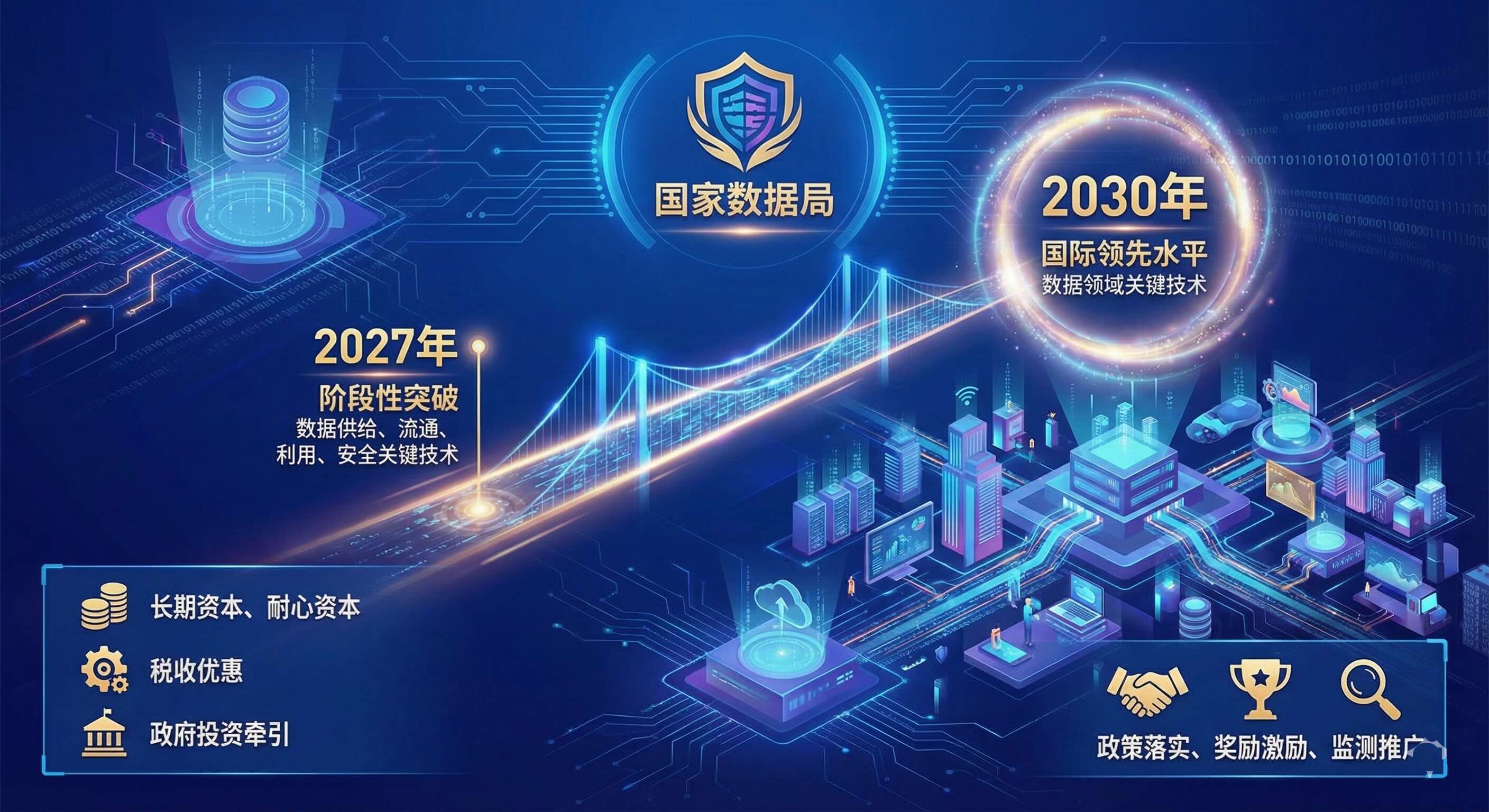
国家数据局:到2030年,数据领域关键技术达到国际领先水平
Zhong Guo Jing Ying Bao· 2025-12-27 13:26
2025年12月27日,国家数据局对外公布《国家数据局关于加强数据科技创新的实施意见》(以下简称《实施意见》)。 《实施意见》明确提出,到2027年,将建成一批具有引领性和支撑性的数据科技创新平台,形成以企业为主体、产学研用深度融合的高效创新机制,初步建 立数据驱动的产业创新体系,在数据供给、流通、利用、安全等关键技术和设备方面实现阶段性突破。到2030年,数据领域关键技术达到国际领先水平,数 据科技创新和产业生态体系实现整体性跃升,对数据要素市场体系建设形成有力支撑,数据要素对经济社会高质量发展的赋能作用全面显现。 中经记者索寒雪北京报道 在资金和政策支持方面,《实施意见》提出,将加强政府投资的牵引作用,引导金融机构加大对数据科技创新的支持力度,带动长期资本、耐心资本和优质 资本更多投向数据科技领域,鼓励投早、投小、投长期、投硬科技,逐步形成政府、市场和社会协同联动的持续稳定投入机制。同时,充分发挥高新技术企 业税收优惠、科技创新专项担保等政策激励作用,降低数据科技企业创新成本,并鼓励有条件的地方加大对数据科技创新的支持力度。 在政策落实层面,《实施意见》明确,国家数据局将建立常态化工作机制,统筹协调解决数 ...