
Zhong Guo Jing Ying Bao

Search documents
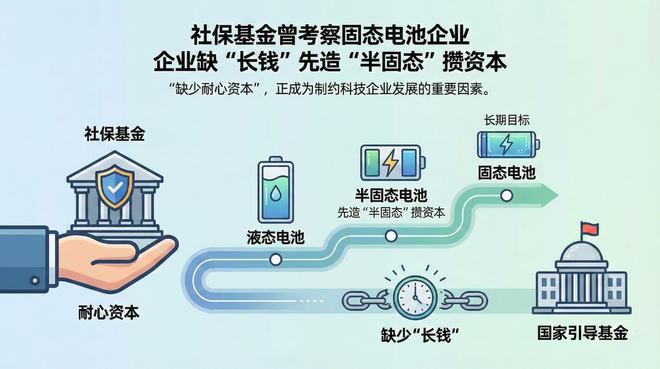
社保基金曾考察固态电池 企业因缺“长钱”先造“半固态”攒资本
Zhong Guo Jing Ying Bao· 2025-12-29 10:02
Core Viewpoint - The lack of patient capital is becoming a significant constraint on the development of technology companies, particularly in the context of critical stages of technological research and development [2] Group 1: Industry Challenges - Technology companies are more concerned about the premature exit of short-term capital than the technology itself during critical R&D phases, which can lead to funding chain disruptions and wasted investments [2] - The commercialization of solid-state batteries requires a systematic restructuring of the entire industry chain and ecosystem, which may take ten to twenty years to achieve [2][3] - Companies fear that investors may demand early exits before solid-state batteries are fully developed, jeopardizing their survival [2] Group 2: Market Strategy - To navigate these challenges, companies are opting for a "detour" strategy by initially entering the market with semi-solid batteries, which have higher technological maturity and lower requirements for existing production lines [3] - This approach allows companies to maintain market competitiveness, accumulate cash flow, and strengthen capital before fully advancing into the solid-state battery sector [3] Group 3: Capital Landscape - The lack of patient capital is a common issue faced by many Chinese technology companies, with long-term and stable capital primarily coming from pension funds and long-term life insurance funds [3] - In the primary market, both venture capital (VC) and private equity (PE) investments often require long cycles from project incubation to eventual exit, with some projects taking over ten years [4] - The current investment structure of many institutions struggles to support such lengthy investment cycles [4] Group 4: Policy Developments - The situation is expected to improve with the launch of the National Venture Capital Guidance Fund, which aims to mobilize social capital and provide stable funding for technology companies [4] - The fund will have a twenty-year lifespan, with ten years allocated for investment and another ten for exit, designed to offer more sustainable financial support for technology innovation [4]

从“广撒网”到“效果涌现”:百度AI营销2025攻坚之路
Zhong Guo Jing Ying Bao· 2025-12-29 08:13
Core Insights - Baidu held a significant AI marketing year-end communication meeting, revealing strategic advancements in AI-driven marketing amidst a challenging external environment and slowing internet advertising growth [1] - The company emphasized the need for a fundamental restructuring of its marketing system to meet evolving user demands, moving from traditional advertising methods to AI-enhanced solutions [1][2] Group 1: AI Marketing Evolution - Baidu's AI marketing team has transitioned from "frontier exploration" to "effect emergence," focusing on integrating large model capabilities into commercial products [1] - The introduction of the "New Search" feature allows users to receive structured summaries and interact with AI sales agents, enhancing user experience and conversion rates [2][3] Group 2: Comprehensive Marketing System - Baidu has developed an AI marketing system centered around "New Search, New Infrastructure, and New System," which includes various interconnected products designed to improve efficiency for B2B clients [3] - The system enables small business owners to set budgets and goals, automatically generating marketing materials and managing inquiries through AI [3][4] Group 3: Cost Reduction and Efficiency Gains - The AI sales agent has become a standard tool for businesses, significantly increasing customer engagement and lead generation, with daily service numbers reaching 33,000 [4][5] - The "Steering Wheel" platform utilizes AIGC technology to enhance video content production efficiency, generating over 1 million marketing materials daily [5][6] Group 4: Financial Performance and Future Outlook - Baidu's AI native marketing service revenue reached 2.8 billion yuan, marking a 262% year-on-year increase, indicating a successful transition from technical feasibility to commercial viability [6] - The company recognizes ongoing challenges, including the need for continuous optimization of large models and balancing the needs of large and small clients [6] - Looking ahead to 2026, Baidu aims to shift its focus from efficiency improvement to comprehensive business management, exploring dynamic communication strategies based on user profiles [6]

明年开始!新一代数字人民币生态体系将启动实施
Zhong Guo Jing Ying Bao· 2025-12-29 08:05
《行动方案》明确,银行机构为客户实名数字人民币钱包余额计付利息,遵守存款利率定价自律约定。 这一安排依据实质重于形式的思路,初步形成了相容性激励安排。由此,银行可以对数字人民币钱包余 额自主开展资产负债经营管理,由存款保险依法提供与存款同等的安全保障。对非银行支付机构而言, 数字人民币保证金与非银行支付机构客户备付金无差异。 (编辑:杨井鑫 审核:朱紫云 校对:颜京宁) 近日,中国人民银行党委委员、副行长陆磊在《金融时报》发表文章称,中国人民银行出台了《关于进 一步加强数字人民币管理服务体系和相关金融基础设施建设的行动方案》(以下简称"《行动方 案》"),新一代数字人民币计量框架、管理体系、运行机制和生态体系将于2026年1月1日正式启动实 施。 中经记者 郝亚娟 夏欣 上海、北京报道 ...

数字人民币正式进入2.0版:从数字现金时代迈入数字存款货币时代
Zhong Guo Jing Ying Bao· 2025-12-29 06:52
中经记者 许璐 李晖 北京报道 12月29日,中国人民银行党委委员、副行长陆磊在《金融时报》发表文章《守正创新 稳步发展数字人 民币》。 陆磊在文章中表示,在总结十年研发试点经验基础上,中国人民银行出台《关于进一步加强数字人民币 管理服务体系和相关金融基础设施建设的行动方案》(以下简称"《行动方案》"),新一代数字人民币 计量框架、管理体系、运行机制和生态体系将于2026年1月1日正式启动实施。 陆磊指出,新的制度安排在"双层架构"基础上,明确了客户在商业银行钱包中的数字人民币是以账户为 基础的商业银行负债,标志着数字人民币由现金型1.0版进入存款货币型数字人民币2.0版。 数字人民币处于领跑态势 陆磊指出,当前,境内和跨境数字人民币试验推广取得积极成效,在各国中央银行试验推进的项目中, 数字人民币处于领跑态势。 2016年,中国人民银行提出了具有数字货币特征的电子支付工具(DC/EP)的法定数字货币理论框架构 想,审慎科学稳健试点探索数字人民币(e-CNY)管理体系和运行机理。经反复论证和开放试点,初步 构建了数字人民币的生态体系,走出了一条以中央银行为主导,依托商业性金融机构和现有支付体系, 融合最新技术 ...
张宇贤:内需导向有效对冲“五峰碰头”压力
Zhong Guo Jing Ying Bao· 2025-12-29 06:33
Core Insights - The forum discussed the economic development blueprint for the "14th Five-Year Plan" period in China, focusing on key economic trends and policy directions [1] Group 1: Economic Trends - The "14th Five-Year Plan" period will face multiple challenges due to the "Five Peaks" phenomenon, which includes population, real estate, heavy chemical industry, exports, and carbon peak, all reaching their peak stages [2] - The peak of the labor population occurred in 2010, with total labor force peaking in 2012 and total population peaking in 2021, leading to increased downward pressure on economic growth and potential changes in consumer behavior [2] - The real estate sector peaked in 2021, coinciding with population peaks, indicating a long-term trend towards a stable real estate market [2] - The heavy chemical industry has reached its production peak, necessitating a transformation towards new growth drivers [2] - Export contributions to national economic growth are expected to stabilize during the "14th Five-Year Plan" period, making significant increases unlikely [2] - The carbon peak target set for 2030 imposes strict constraints on high-energy-consuming industries [2] Group 2: Development Dynamics - The simultaneous advancement of five trends—new industrialization, new urbanization, digitalization, green transformation, and population aging—will reshape the driving forces of economic development [2] - The "14th Five-Year Plan" represents a critical period for transitioning from old to new growth drivers, with the risk of falling into the "middle-income trap" as China aims to enter the ranks of high-income countries [3] - The shift from a high-growth economy to a stable growth model is inevitable, with economic growth expected to enter a phase below 5% [3] - Macro policies should focus on cross-cycle and counter-cyclical adjustments to prevent sharp declines in growth and extend the growth plateau [3] Group 3: Strategic Policy Directions - The strategic focus of the "14th Five-Year Plan" includes six key directions: entity-oriented, innovation-oriented, domestic demand-oriented, livelihood-oriented, green-oriented, and security-oriented [4] - The entity-oriented approach aims to strengthen the foundation of the real economy and promote high-quality development in manufacturing [4] - The innovation-oriented strategy emphasizes technological innovation and the cultivation of new productive forces [4] - The domestic demand-oriented approach seeks to mitigate external demand and investment pressures arising from the "Five Peaks" phenomenon [4] - The livelihood-oriented focus addresses issues related to population aging and social security improvements [4] - The green-oriented strategy supports low-carbon transitions and energy structure optimization to meet carbon peak targets [4] - The security-oriented approach is crucial for managing risks related to real estate and local government debt, ensuring the safety of industrial and supply chains [4]
中国一汽正式“入股”零跑 总金额超37亿元
Zhong Guo Jing Ying Bao· 2025-12-29 06:26
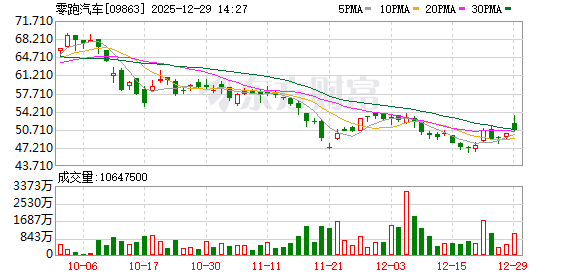
Group 1 - China FAW Group's subsidiary, FAW Equity Investment (Tianjin) Co., has signed a domestic share subscription agreement with Leap Motor, investing a total of RMB 3.744 billion for 74.832 million shares at RMB 50.03 per share, making FAW Equity a strategic shareholder of Leap Motor [2] - Approximately 50% of the investment will be allocated to research and development, 25% for operational funds and general corporate purposes, and the remaining 25% to expand sales and service networks and enhance brand awareness [2] - FAW's subsidiary, FAW Qixin Power (Changchun) Technology Co., has also signed a cooperation agreement with Leap Motor to strengthen strategic collaboration in capital and powertrain development [2] Group 2 - The collaboration is based on long-term strategic trust and technological complementarity between the two companies, aiming to deepen cooperation in areas such as intelligent connected new energy vehicle joint research and global layout [3] - The partnership is expected to accelerate the development of a new paradigm in the automotive industry and contribute to the high-quality development of China's automotive sector, transitioning from a "big automotive country" to a "strong automotive country" [3]


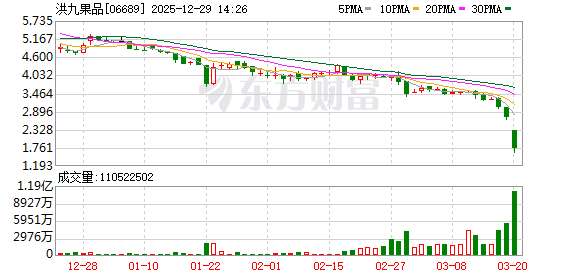
洪九果品“两头承压”终退市 水果“三巨头”各有难处
Zhong Guo Jing Ying Bao· 2025-12-29 06:25
Core Viewpoint - Hongjiu Fruit, known as the "first stock of fruit," is set to be delisted from the Hong Kong Stock Exchange after a year and a half of suspension due to failure to meet listing requirements and ongoing legal issues involving its executives [2][3]. Company Summary - Hongjiu Fruit was suspended from trading on March 20, 2024, and subsequently delisted on December 30, 2024, after failing to comply with the resumption guidance set by the Hong Kong Stock Exchange [2][3]. - The company faced significant scrutiny from KPMG regarding a sudden increase in prepayments, which rose by 3.42 billion yuan in the fourth quarter of 2023, raising concerns about the legitimacy of its suppliers [3][4]. - The only complete annual report during its listing was for 2022, showing revenue of 15.08 billion yuan, a 47% increase year-on-year, and a net profit of 1.45 billion yuan, a 33% increase [5][6]. - At its peak, Hongjiu Fruit's market capitalization exceeded 67 billion HKD [6]. Business Model and Financial Pressure - Hongjiu Fruit operated on an end-to-end business model, sourcing directly from producers and selling to various retail channels, with over 50% of its revenue coming from terminal wholesalers [7]. - The company faced dual pressures from high prepayments to suppliers and long accounts receivable, with trade receivables doubling from 3.707 billion yuan in 2021 to 7.667 billion yuan in 2022 [8]. - The cash flow was strained due to a combination of high prepayments and long receivables, leading to a significant increase in bank loans from 874 million yuan to 2.282 billion yuan [8]. Industry Changes - Other major players in the fruit market, such as Baiguoyuan and Xianfeng Fruit, are also experiencing difficulties, with Baiguoyuan reporting a 9.8% decline in revenue and a net loss of 386 million yuan in 2024 [10]. - The fruit market is undergoing significant changes, with high-end fruits becoming more accessible, leading to increased competition and a 15% average annual price decline for premium fruits from 2020 to 2025 [11][12]. - Consumer behavior is shifting towards more rational purchasing decisions, with a 28% decrease in the frequency of high-priced fruit purchases, while the consumption of quality domestic fruits has increased by 45% [11][12].
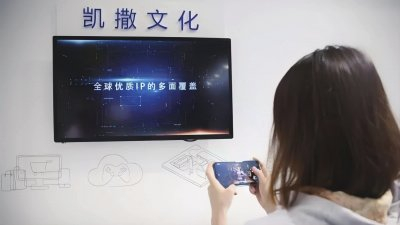
凯撒文化“摘帽”经营压力尚存
Zhong Guo Jing Ying Bao· 2025-12-28 16:22
Core Viewpoint - Caesar Culture has successfully removed the risk warning after rectification but continues to face financial losses, indicating ongoing challenges in its business performance [2][5]. Financial Performance - In the first three quarters of 2025, Caesar Culture reported revenue of 420 million yuan, a year-on-year increase of 28.62%, but incurred a net loss of 108 million yuan, a decline of 12.49% compared to the previous year [2][6]. Regulatory Issues - A year ago, Caesar Culture was penalized for inflating revenue, resulting in a fine of 4 million yuan and warnings issued to several executives [3][4]. - The company was found to have reduced bad debt provisions by 15.55% of its reported profit in 2021, amounting to 15.2467 million yuan [3]. Business Strategy - The company is focusing on its core business by continuing product development and optimizing its product structure to improve overall performance [7]. - Caesar Culture has a significant reserve of IP resources, including popular titles like "One Piece" and "Saint Seiya," which it aims to leverage for growth [7]. Asset Management - To support its operations, Caesar Culture has been mortgaging or selling non-core real estate assets, with plans to sell properties valued at 255 million yuan [8]. - As of September 2025, the company's investment properties were valued at 327 million yuan, reflecting a strategic shift to focus on its gaming business [8].

星空计划造车提速:11家新公司密集成立 CES2026将迎产品首秀
Zhong Guo Jing Ying Bao· 2025-12-28 08:26
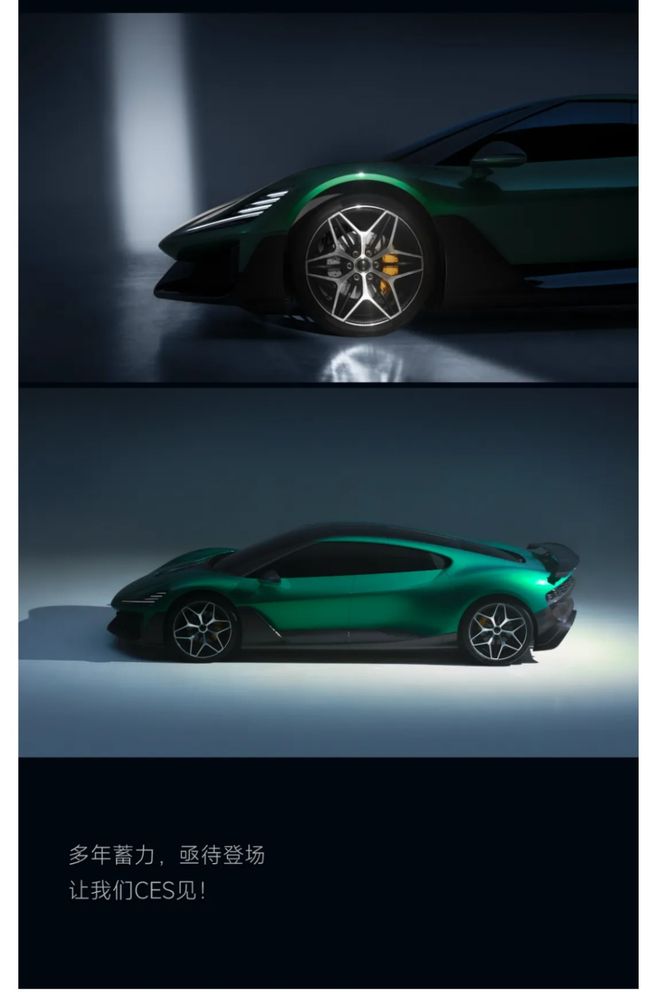
("星空计划汽车"公众号称将亮相CES2026。"星空计划汽车"公众号/图) 追觅创始人打造的汽车新品牌将在即将到来的国际消费类电子产品展览会(以下简称"CES2026")迎来 首秀。 12月26日,"星空计划汽车"公众号发布一则推文。星空计划汽车在推文中表示,多年蓄力,亟待登 场,"让我们CES见!" 《中国经营报》记者注意到,企查查数据显示,星空计划(上海)汽车科技有限责任公司实际控制人为 追觅科技创始人兼CEO俞浩,其通过多层持股结构实际控制星空计划约77.76%的股权。 中经记者 杨让晨 石英婧 上海报道 2025年8月28日,追觅科技官宣造车,并表示将打造世界上速度最快的车,首款超豪华产品对标布加迪 威龙。 彼时,追觅科技方面表示,在新能源汽车高端化、全球化浪潮加速的背景下,真正能在国际层面树立认 知的中国豪华品牌仍屈指可数。"在这一稀缺窗口期中,公司看到了机遇,依托在智能硬件领域积累的 技术实力、全球渠道与品牌认知,实现从'智能家电'到'超豪华电动车'的战略跨越。" 值得注意的是,在12月23日—25日三天时间内,星空计划密集成立新公司。企查查数据显示,星空计划 (上海)汽车科技有限责任公司在上述 ...
耐克在华失速 高层坦言需调整策略
Zhong Guo Jing Ying Bao· 2025-12-28 04:57
Core Viewpoint - Nike is facing significant challenges in the Greater China market, necessitating a strategic overhaul to enhance brand differentiation and adapt to local consumer insights [1][3]. Financial Performance - For Q2 of FY2026 (September-November 2025), Nike reported total revenue of $12.427 billion, a year-on-year increase of approximately 1%, while net profit fell to $0.792 billion, a decline of 32% [1]. - Revenue from the Greater China region was $1.423 billion, down about 17% year-on-year, with direct sales (Nike Direct) declining by 18% and digital sales (Nike Digital) dropping by 36% [1]. - Earnings before interest and taxes (EBIT) in the Greater China region halved, decreasing by 49% [1]. Challenges Faced - Nike's management highlighted several ongoing challenges in the Greater China market, including decreased foot traffic, lower sell-through rates, and aging channel inventory [2]. - The brand's frequent discounting in digital channels has weakened its market influence, leading to increased discount rates, higher return rates, and rising costs associated with inventory clearance [2]. - In the fiscal quarter ending August 31, 2025, revenue in the Greater China region also declined to $1.512 billion, a 10% year-on-year drop [2]. Strategic Adjustments - Nike is implementing various measures in the Chinese market, including store upgrades, a focus on sports, reduced promotions, self-service inventory clearance, and adjusted purchasing plans [2]. - Total inventory has decreased by double digits compared to the previous year, with a 20% reduction in inventory items [2]. - Despite a 35% year-on-year drop in sales during the "Double 11" shopping festival, management indicated this was in line with their expectations [2]. Organizational Changes - Nike is undergoing a structural transformation, eliminating the positions of Chief Technology Officer and Chief Commercial Officer, while creating a new Chief Operating Officer role [3]. - The new COO will oversee end-to-end operations, including the technology department, and regional leaders will report directly to the CEO [3]. - The company is reducing manpower in stores and enhancing the management of product displays and retail presentation [3]. Competitive Landscape - The decline in Nike's performance in China is attributed to increasing competition, with local brands capturing approximately 60% of the market share among the top 20 brands [5]. - The 2025 version of a report by McKinsey and WFSGI indicates that traditional sports brands have lost 3% of market share from 2019 to 2024, while challenger brands are rising through targeted cultural marketing and omnichannel strategies [5]. - Local brands like Anta and Li Ning are gaining traction by investing in R&D and aligning closely with Chinese cultural symbols, creating a new consumer paradigm that emphasizes quality, cultural recognition, and price advantages [6]. Market Dynamics - The rise of domestic sports brands and the outdoor market is exerting pressure on Nike's market position [6]. - Local brands are perceived to better understand consumer psychology, focusing on product performance, unique design, and alignment with consumer values [6]. - Nike's recent product strategy has been criticized for being rigid, with a tendency towards luxury pricing, which contrasts with the more competitively priced offerings from local brands [6].
